Back to My Beginnings

I became a visual artist , not as a photographer, not as a filmmaker, but as a storyteller using images and later video to tell the tales of other cultures, lands and people through my eyes and my journeys. My camera was my tool – it was a means to an end. The end being the story that needed to be told.

I’ve spent the last 30 some years documenting the world through my lens, whether it be for magazines like the National Geographic Traveler, Smithsonian or Travel & Leisure or for major corporations. I’ve been blessed and have truly lived a charmed life. But there have been times when I’ve started to go off kilter – or stray from the essence of my being. It’s easy to do, especially in a culture that is obsessed with the drive to succeed – the definition of success being to make a lot of money and have a lot of “things”. Don’t get me wrong – I also enjoy the rewards that money brings – but for me that means having the resources that help me to live a full life.

A few years back I was shooting a documentary on the Delta Blues Musicians and I spent a memorable afternoon with blues drummer Sam Carr. As we were winding up our conversation under the shade of old tree he sat back and said “I’ve lived a rich man’s life in a poor man’s shoes”. That comment has stayed with me over time and when Sam died last year, I was told that his family was grateful for the interview that I captured that day and used his comment as his epitaph. I was humbled and honored, but mostly felt richly rewarded that my personal project had touched the lives of others.

As we wind up our first stop in Africa on our round-the-world trip, some of the fears and trepidations I had that came with taking a risk, and heading out to the unknown for 3 months, have vanished. In their place is the calming realization that this was what I needed to do at this point in my life and I was grateful I had the means to do it and the stamina to travel on a shoestring budget. Africa puts things into perspective – this vast continent is so wild, colorful, rich, poor, exhausting and exhilarating all at the same time. Africa has taken its hold on me and has sparked my true spirit.

My daughter and I decided to take some time to get out of the city and go to Murchison Falls National Park, after shooting the first part of our documentary about people making a positive difference in the world. We saw
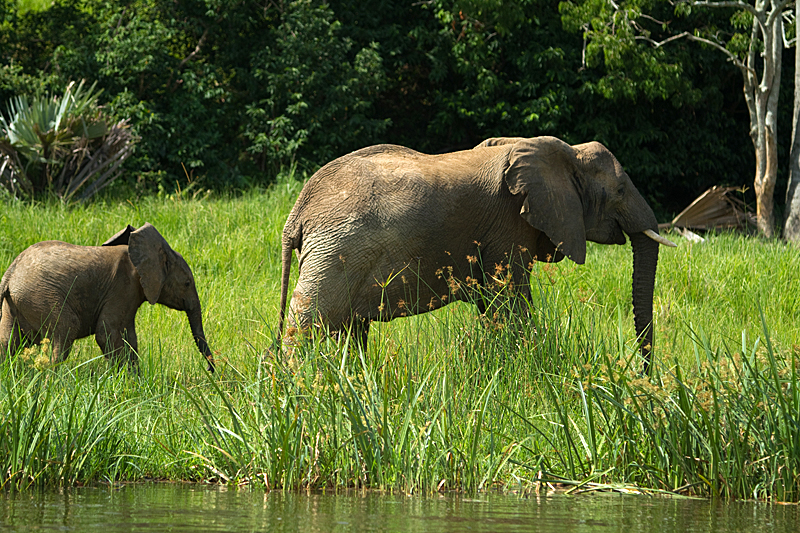
Elephants along the Nile

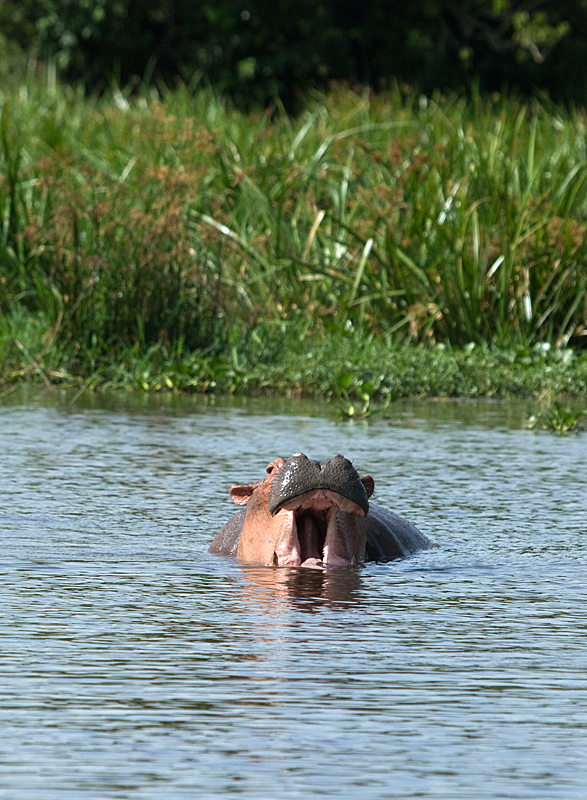
elephants, hippos,

Hippo on the Nile

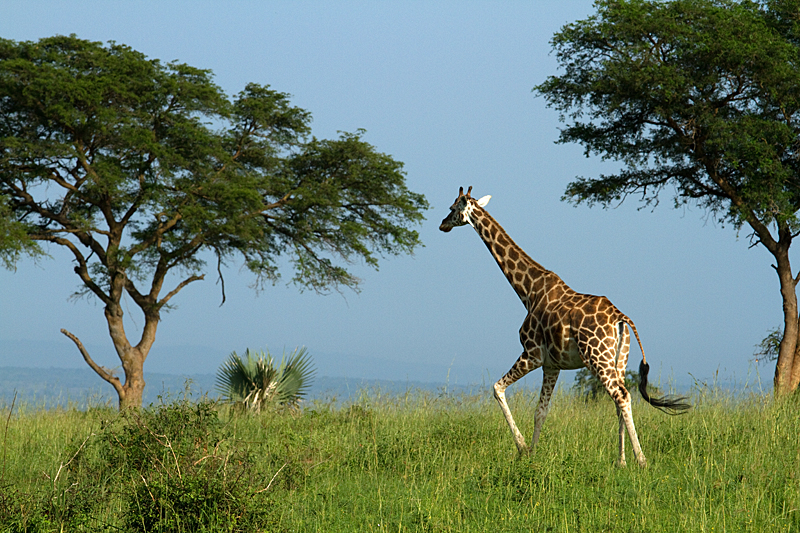
giraffes,

Giraffe, Murchison Falls National Park, Uganda

antelope, cape buffalo, baboons,

Baboon, Murchison Falls National Park, Uganda

slept in a tent and sat by a fire in the evenings under a canopy of stars that stretched from horizon to horizon. We chatted with people from countries all over the globe – all of us different yet with a common cause – the love of the journey.

Of course I shot still photos
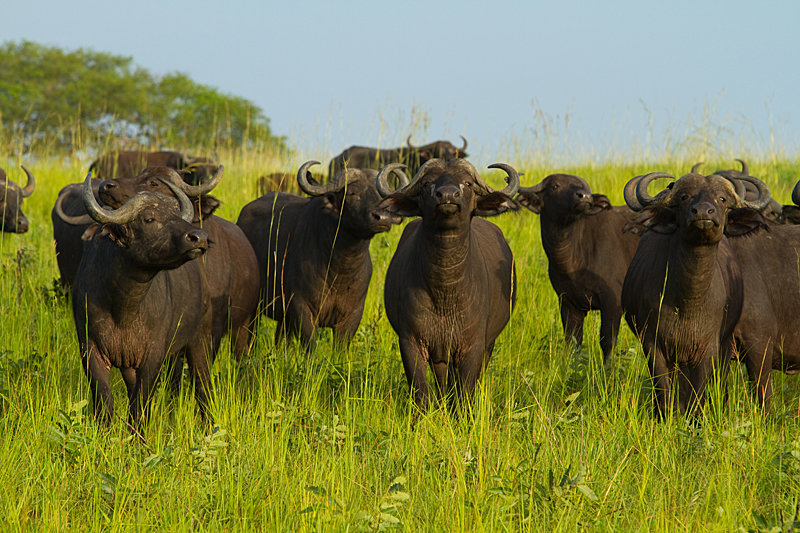
Cape Buffalo, Murchison Falls National Park, Uganda

as well as some VIDEO but more importantly I absorbed this rich experience and it energized my spirit and my soul. This is the “fire” that I need every now and then. I think we all need a spark every once in awhile and to get past the science of the photographic craft and back to the essence of the art and the story. That is what ultimately leads us to create the kind of visuals that will resonate with others. That spark is different for all of us but nevertheless an essential ingredient for the creative process. It’s not the tools, nor the techniques that define the message or create the images that strike a lasting chord with those who see them. I was fortunate that I learned that years ago and now I’m reminded of those lessons as I get back to my beginnings.

We leave Africa today and continue our journey – next stop Istanbul, Turkey and then on to Poland where our next subject awaits.

Add to FacebookAdd to DiggAdd to Del.icio.usAdd to StumbleuponAdd to RedditAdd to BlinklistAdd to TwitterAdd to TechnoratiAdd to Yahoo BuzzAdd to Newsvine

Photographers and Video

I’ve been reading a lot of the still photography forums over the past few weeks and I’ve seen a lot of questions about capturing sound with the hybrid HDSLR’s.  I’ve also seen some misleading information so I’ve decided to take a few minutes to clear up some misconceptions.

First – Audio is everything in video.  People can tolerate a mediocre image but if they can’t understand or hear the audio – they won’t watch.  See for yourself – turn the sound down on your TV and see how long you stay interested in the program – even if the image is stunning.

Second – You have many options of capturing audio with the HDSLR’s depending on what you are shooting.  I think many still photographers assume everyone is going to be shooting “indie films” with crews.  One of the things I find appealing about some of the new technology is that you don’t necessarily need a large crew and a Hollywood budget.  And sometimes, if discretion is in order, you’re better off with a small crew.  With that said – you should know how to capture good audio.

Third – NEVER use the camera to capture audio – it just isn’t good enough.  And I would probably say that you shouldn’t plug an external mic into the camera via the mini plug.  I don’t think the audio quality is good enough, especially for an interview.

Fourth – Either use a pre-amp with XLR inputs like a Beachtek or JuicedLink and an external microphone.  Make sure you get the mic close to the audio you want to capture.  And most importantly monitor the audio through a good set of headphones.

Fifth
– Capture your audio independently with a good quality digital recorder like the Samson H4n Zoom and sync it later in post.  Syncing sound in post is a snap with a great software application called Plural Eyes.

Lastly – Audio is everything!  And remember as you add video to your skill set, you’ll be using your ears as much as your eyes.

Add to FacebookAdd to DiggAdd to Del.icio.usAdd to StumbleuponAdd to RedditAdd to BlinklistAdd to TwitterAdd to TechnoratiAdd to Yahoo BuzzAdd to Newsvine

Shooting Video in the Field with the Canon 5D Mark II

The first two days of our Round the World Journey, shooting the documentary Opening Our Eyes has been quite full and I’ve faced numerous situations – really putting my tools to the test.

Our first full day was spent at the offices of Wrap Up Africa, which are located in Kampala, Uganda. In addition to shooting b-roll of tailors at work, we shot several interviews. Our main interview was with Wrap Up Africa’s founder, Letha Sandison, followed by interviews of a couple of her staff members. We also did interviews of some of the cancer victims that Letha has helped. Here is where I not only needed to be attentive to my technical details but be sensitive to the situation and the people that I was interviewing. Hearing some of their stories is heartbreaking and hard for many Americans to fathom. Sure, we all watch the travesties taking place throughout the world on the nightly news, but it’s quite another experience to speak with people who have experienced horrendous tragedies in their lives that are simply unimaginable.

One woman, Evelyn who works for Letha had been abducted and held captive by the LRA, which stands for the Lord’s Resistance Army, and is not exactly a charitable group. She managed to escape after most of her family had been killed in front of her. She is now raising three orphans who had been victims as well and works with Letha, helping others.

Our set up was simple and deliberately so. I set up the Canon 5D Mark II and captured my audio separately with the H4N Zoom. I had two mics – one shotgun on a small boom stand and another lav. I will sync them later in post. We chose a room that had ample window light as we are traveling with only a small camera light and nothing else. Our biggest challenge was that the cabinet installer decided to do his work the day we were shooting – so the sounds of hammering and drilling made up our ambient background sound. But the mics were placed close to our subjects and did a pretty good job of boosting their audio above the din of the environment.

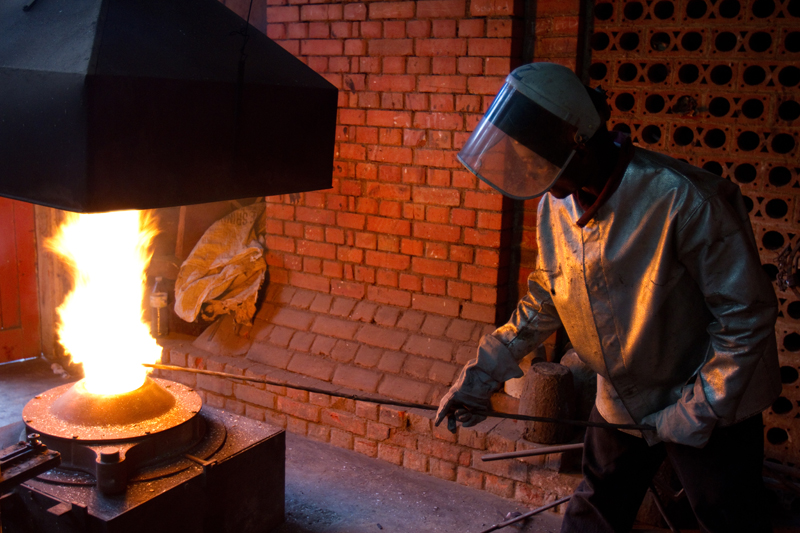
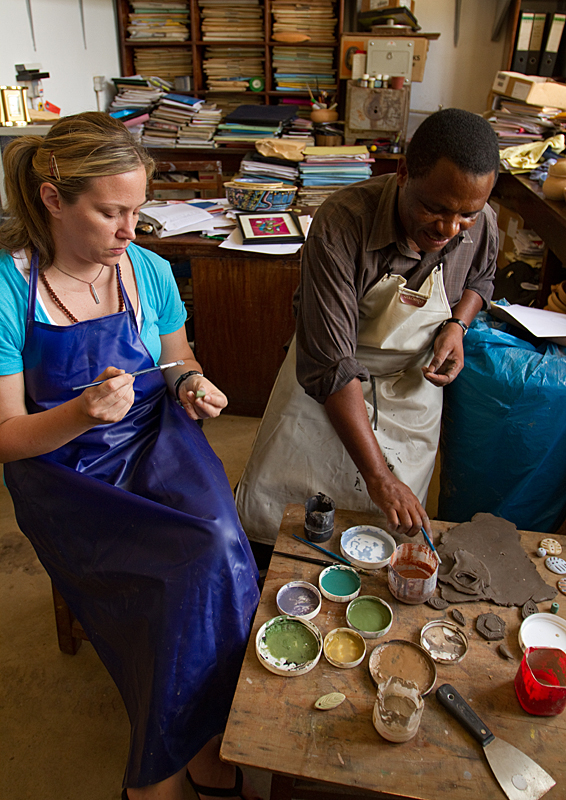
The next situation we faced was shooting b-roll in the dirty environments of a potter’s studio and a foundry. Again we used the Zoom to pick up the ambient sound of the environments. After a morning with the artists, we packed up quickly and headed to Mulago Hospital to visit the children’s cancer ward. We were not allowed to shoot video but we did shoot some still images and was happy to have the hybrid cameras that captured beautiful files – far better than frame grabs from a traditional video camera.

Then we headed to the market, which as usual is always a trying experience. For anyone who has traveled to congested third world environments, you know what I mean by “trying experience”. You must be aware of your personal belongings at all times, while shooting and I wish at times that I had eyes in the back of my head. On top of that I’m sensitive to those that don’t want to be photographed. It’s exhausting but at the same time exhilarating because of the exotic nature of the environment. My daughter wore the GoPro Hero helmet cam that is a tiny camera made for adventure sports but she had a lot of fun walking through the market recording the event with running video as we walked through the market.

I was shooting video with the Canon 5D Mark II and used a shotgun mic on top of the camera and run through a JuicedLink audio mixer. I’m embarrassed to say that somehow, even after lots of testing – I came back with no audio! Luckily the helmet cam Hero picked up very good ambient audio so I’m able to use that and layer it in post. In the chaos and confusion of the market, I probably didn’t set it up right and today I will do additional testing so as not to make that mistake in the future. But the video was captured beautifully and I will interweave those clips into the documentary with sound from the interviews and ambient sound from the Hero.

I am realizing one thing though and that there is nothing easy or streamlined when shooting video with these hybrid cameras. The results are stunning, but the shoot and workflow are much more tedious than when shooting with a video camera. Perhaps at the end of this three-month journey, I’ll be singing a different tune – I certainly hope so.
I’ll keep you posted as I get access to the Internet, which is iffy, and we’ve been off line for the last two days. But there’s something humbling about being off the grid and I’m learning to take it in stride and appreciate what I have. Today is Sunday and we are resting and storing up a bit of energy for the coming week. Please read more about our journey at Opening Our Eyes.

Add to FacebookAdd to DiggAdd to Del.icio.usAdd to StumbleuponAdd to RedditAdd to BlinklistAdd to TwitterAdd to TechnoratiAdd to Yahoo BuzzAdd to Newsvine

Ten Things Still Photographers Need to Know About Video

1.    Buying a DSLR is only a start.  Choose the right tool for the job.  A DSLR might not be the right tool for many video productions.  And keep in mind that most shooters spend sometimes twice as much as the price of these cameras on add-ons to make these cameras a viable solution.
2.    It’s more than just the shoot. There are many facets to video production. In fact positioning yourself as just a camera operator may not be the best business model.
3.    Shooting video is a different mind set than shooting still images.  I think differently when shoot video.  I think in sequences and in storyboard mode – not in moments in time.
4.    Audio is everything.  You can have the best visual in the world but if you don’t capture your audio properly – you’ve got nothing.
5.    Shoot horizontals.  There are no vertical TV sets – yet.
6.    Editing – Again the shoot is just one part of video production.  Editing is just as important and there is a steep learning curve that comes with it. But learning to edit and editing your own material will make you a better shooter.
7.    There’s no standardization of codec’s and formats.  It’s like the Wild West when it comes to standardization of codec’s.  There is no standardization!  Every time a new camera gets rolled out – it seems like there’s yet another format.
8.    Output – Here’s where a lot of people get confused.  How are you going to output it?  What type of file?  What platform – TV, web, big screen?
9.    Interviews – A lot of video productions require on camera interviews.  Many times the interviews drive the story – or create the backbone of the audio track.  Pay attention to good interviews and interviewers to learn the art  of getting good sound bites.
10.    Collaboration – Video production is ripe for collaboration.  Still photographers are more independent creatures.  Learn to surround yourself with people that will make you look god.

Add to FacebookAdd to DiggAdd to Del.icio.usAdd to StumbleuponAdd to RedditAdd to BlinklistAdd to TwitterAdd to TechnoratiAdd to Yahoo BuzzAdd to Newsvine

Tips for Getting Good Video Interviews

More and more still photographers are getting into video because of the appeal of the hybrid still cameras that also shoot video. Photographers love the visual coming out of these big chip cameras – what’s not to love? But they quickly find out that if they aren’t just going to be laying visuals down to a music track, they will need to start thinking about their audio – specifically a narrative track or one driven by sound bites from interviews. I work in the corporate sector, as well as create documentaries, so I do a lot of interviews. The interviews, along with a scripted voiceover comprise my audio track and drive the story.

I love doing interviews. That’s because I’ve always been a curious person and like to ask questions. I enjoy the “conversation”. I don’t want to become part of the video, even though I am usually the one asking the subject questions. My voice and my questions will not be heard in the final video, so I need to coach my subjects to paraphrase the question when they relay their answers. But before I get to the interview, I research my subject and come up with a good solid list of questions to ask in advance.

Here are some tips for getting good interviews:
1. Ask leading questions – not yes or no questions. Example: Instead of asking where do you work? Ask: Tell me about where you work.
2. Ask subject to paraphrase the question if you don’t want the interviewer to be part of the video.
3. Don’t step on your subject’s lines. Instruct your subject to pause before answering the question. In addition, make sure that you pause after your subject answers the question. Many times someone will add more insightful information to fill in that pause.
4. Ask the question more than once.
5. If your subject rambles – ask them to summarize their thoughts.
6. Use gestures to encourage and guide subjects – remember you don’t want to hear your comments.
7. Be a good listener – many times my best questions are follow up questions to something that the interviewee just said.
8. Pay attention to your subject’s answers because you’ll need to illustrate what the subject is talking about with B-roll.
9. Pick a suitable location for sound. Find a quiet environment and turn off all fans, motors, radios etc.
10. Record room tone – you’ll need it when you edit the sound bites

Add to FacebookAdd to DiggAdd to Del.icio.usAdd to StumbleuponAdd to RedditAdd to BlinklistAdd to TwitterAdd to TechnoratiAdd to Yahoo BuzzAdd to Newsvine

Standing on a 10 Foot Frozen Wave

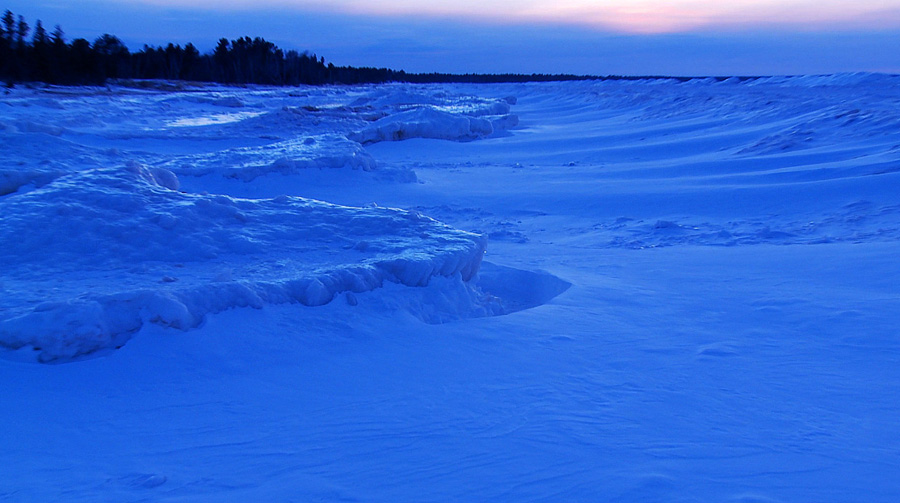
Yesterday I stood on top of a 10 foot frozen wave looking out over the vast icy seascape of Lake Superior. I was shooting footage of this endless field of frozen waves as the setting sun turned them every shade of blue, purple and orange. It was quiet – incredibly quiet – no car or airplane noise, no voices, and no sound of splashing water, not even the sound of a bird. The audiometers on my camera barely registered a blip and yet there was audio. Even dead silence has a sound.

I’ve been on the Upper Peninsula in the far northern reaches of Michigan, shooting footage for a family biography that I’m working on. I had recorded interviews with my mother’s siblings this past summer while attending a family reunion and I had been planning on returning to capture some winter footage to illustrate the stories they told during the interviews. My mother, her siblings and her parents grew up in northern Michigan during the Depression, farming, lumbering, and fishing – pretty much doing whatever they could to survive. Times were hard and living in such a remote, harsh climate didn’t make it any easier. Everyone did what he or she had to do.

While I’ve been in the UP, I’ve met a lot of people who are doing all types of things to survive during this lousy economy. Most I’ve met have several part time jobs. A couple of times I stopped to eat at a restaurant, there would be one woman tending the bar, waiting on tables and cooking the food. Because of it’s geographic location and its sparse population, the Upper Peninsula is kind of like a frontier and the people who live here, have the spirit to go with it.

As I stood on the top of this frozen wave in absolute silence I contemplated resiliency of the human spirit in the context of my own world. Certainly my business has changed – due to technology and the lousy economy. Because of technology, I am able to do more things than I could ten years ago. Because of the poor economy, I’ve had to do more things. Most other photographers I have talked to this past year have diversified their businesses – some shooting weddings, some shooting video and some working in other retail markets. I suppose we’re all just doing what we can to get through these changing times.

So I looked out over the endless view of frozen waves and into the orange glow of the setting sun. For an instant I became fearful of where I was when I looked behind me and saw a deep crevice that I could easily fall into if I lost my footing. But then I looked ahead to the orange glow on the horizon and I felt hope and with that a sense of security because I knew where I came from and I have the heart and spirit to survive.

Add to FacebookAdd to DiggAdd to Del.icio.usAdd to StumbleuponAdd to RedditAdd to BlinklistAdd to TwitterAdd to TechnoratiAdd to Yahoo BuzzAdd to Newsvine

Findings From the ASMP Motion/Video Study

ASMP recently formed a Motion/Video Study Group to explore how members have embraced video. Video has become much more prevalent in visual communications as electronic publishing continues to replace traditional print media. The increased availability and low cost of broadband has enabled and created a huge demand for video. At the same time, there is a convergence of our tools as “hybrid” cameras are capable of shooting both stills and video.

As head of the Motion/Video Study Group, I spoke at length with fourteen ASMP members who have integrated video into their businesses.

Some General Observations:

As expected, there was a wide range in responses as well as in the markets that each participant works in.

• Participants are working all across the spectrum in the video/motion sector – from simple multimedia projects (still images with sound/music) to big budget broadcast spots for ad agencies.
• Most people have either been asked by their clients if they also shoot video or they have presented video as an up sell to their existing clients.
• Participants are positioning themselves as producers, directors, camera operators or all of the above. Many have set up production companies.
• Almost all participants have created partnerships or work in collaboration with others – sound people, editors and camera operators to name a few. Video production is based on collaboration because of it’s many facets.
• The learning curve can be steep – especially for editing and motion graphics applications.
• There is a lot of confusion and chaos in terms of file and codec standardization.
• Ownership and copyright are handled in a variety of ways depending on the production, the market and how one has positioned themselves. Traditionally in video, the camera operator is a hired gun and does not maintain ownership of the content. Depending on the market – the ownership and copyright is maintained by the end client or the production company.
• Most shooters invoice their still images and video as separate line items when shooting both mediums on a job.
• All see opportunities in the video medium in almost all markets.

To see the full report please go to http://asmp.org/tutorials/getting-started.html

I would love to hear from others who have added video to their businesses.

The Family Story

This time of year we all try to spend more time with our families and loved ones. It’s also a time when we reflect on the people who are no longer with us. For the most part we rely on our memories and some scattered photographs or home movies.

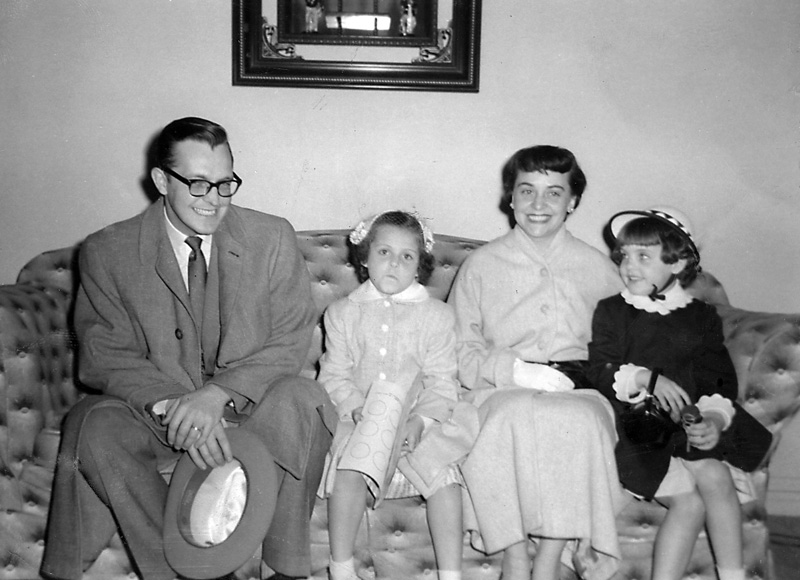
Mooney family dressed up for Easter. I'm the child smiling.

Some of the fondest memories I have of my mother, father and grandparents are of us sitting around the dinner table, long after the meal was over and listening to the family stories. Of course each person would tell the same story in an entirely different way – the way they remembered it.

Every family has stories – mine certainly does and I have started to collect information, photographs and even recordings of family members while they are still around to tell them. It’s such an easy thing to do with all the tools that technology has provided in the way of cameras and audio recorders.

I often think that as photographers and filmmakers we are not only the keepers of our own family stories but we are documenting the stories for other families through our images, recordings and videos. Here’s a recording of my Uncle Dorlen talking about fishing in Northern Michigan in the winter.

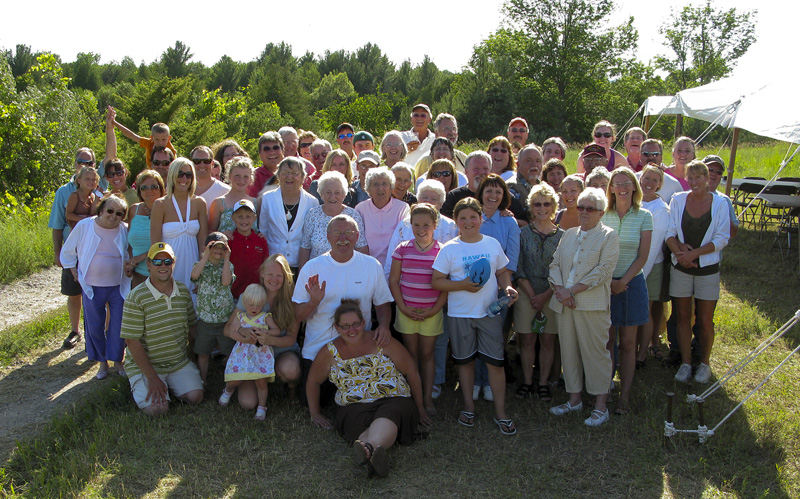
Family gathering at my Uncle "Frenchy's" memorial.

Essentially, we are creating an archive of our loved ones and the memories. And that is the most precious gift that I can give someone through the talents of my craft.

I was recently looking at someone’s vacation snapshots and it occurred to me just how precious those images are, certainly for the people in them and the people they know. I have always taken the family snapshots and have recently started video recording my relatives telling their stories through their own voices, preserving them for future generations.

So think about that – even if you just take out your iPhone or Flip this holiday season, start capturing life’s moments. You’ll be glad you did.

Add to FacebookAdd to DiggAdd to Del.icio.usAdd to StumbleuponAdd to RedditAdd to BlinklistAdd to TwitterAdd to TechnoratiAdd to Yahoo BuzzAdd to Newsvine

Video Production Tips

Don’t assume anything – ” But I thought ( fill in blank) was going to ( fill in blank).”

Keep an email trail – document everything between you and your client.

Keep a binder – it’s always good to keep a hard copy back up even if everything is recorded electronically.

What to look for on location:
• where the outlets are
• where the windows are and which direction they face
• do the windows have blinds or shades
• what is the ambient lighting in the room
• what kinds of ambient noise is in the location and can it be controlled
• what’s the best-spot for an interview
• where are the bathrooms
• where is the freight elevator
• where is parking
• what is the building contact person’s name and number

When packing for location – don’t leave things behind unless you absolutely have to. It is far better to have it and not need it, than need it and not have it.

Be redundant – bring extra connectors, adapters and cables. If you only bring one – it almost guarantees that one will fail.

Make friends with doormen, secretaries, building electricians, janitors, security guards – you will need these people on locations.

Whenever the call time is – be there early. I’m always the first one on set.

If you don’t schedule a rain day, you will end up needing one.

Always shoot the most important shot first thing of the day.

Maintain an attitude of calm and professionalism – the crew will look to you for the answers. If you show indecisiveness they will go off in all different directions.

Never label a video file or tape “Final” – Whenever you do – there always ends up being another revision.

Always break for lunch – working through lunch guarantees a hungry and cranky crew. Ultimately you won’t get 100% from a hungry crew, thus defeating the time saved.

Slate everything you can. Use the back of the slate for a white balance target. Also attach a printed color bar chart to the slate. This can be helpful in color correction later, matching scenes and/or cameras.

Tape/storage media is cheap. Don’t be afraid to overshoot. That extra b-roll or cut-aways will become valuable assets in post. Get room tone at the same time.

During the mic check for interviews, record a brief statement where each subject states their name, the date and that they are giving permission to be taped. Always make sure your subjects also sign hard copy waivers/releases.

Things always take longer than you think – so estimate more time when scheduling.

In post production back up projects as different versions. Save a clean sub master version without titles and lower-third graphics and where the audio tracks are not mixed down. Most likely you will get a request to change a graphic or a music track and it’s much easier to make those changes on a sub master than to have to redo an entire project.

When a client suddenly takes the project in an unexpected direction, save a version of the project file up to that point.

When editing with a room full of client people – only answer to the guy/gal who signs the checks.

Add to FacebookAdd to DiggAdd to Del.icio.usAdd to StumbleuponAdd to RedditAdd to BlinklistAdd to TwitterAdd to TechnoratiAdd to Yahoo BuzzAdd to Newsvine

Finding Your Passion

How does one find their passion?  How does one even define the word – passion?  The dictionary gives a few definitions. I’ll cite two:
– “intense or overpowering emotion such as love, joy, hatred, or anger.”
– “the object of somebody’s intense interest or enthusiasm”

Passion isn’t something you can teach someone – you just have to have it inside of yourself.  If you’re passionate about something – you just know.  I’m a photographer and a filmmaker .  But my passion is “telling the story” and I use my craft as a means to that end.  I’m interested in the human story and the cultural context that gives birth to those stories.

My insatiable desire to seek out and explore the human story has led me down many wonderful paths in my life. One of those paths led me to shoot a personal multimedia project on The Delta Blues Musicians.  My goal was to shoot environmental still portraits– as well as shoot video interviews of them .  I met my goal – at least in terms of creating an exhibition of still images and a short documentary – but I’ve never thought of this project as really being finished.  And that’s because I’m so passionate about the subject – “the blues”.

This past Friday, I headed down to Mississippi for Pinetop Perkins homecoming.  PinetopPinetop Perkins is a legendary boogie woogie piano player in the blues world.  He’s 96 years old and still going strong.  He is living proof of a man who is “living his passion.  I’ve become friends with Pinetop’s manager over the years and yesterday we got together over lunch to catch up on what was going on in our lives. I hadn’t been to the Delta for a few years and she was giving me the latest news on some of the musicians that I had interviewed for my film.  Four have since died – Little Milton, Robert Lockwood Jr., Ike Turner and most recently Sam Carr.

Pinetop’s manager is a very interesting woman who used to be an Anthropology professor at University of California at Berkeley.  She taught interview techniques as part of her ethnology classes.  When I had originally called her up to request an interview with Pinetop – she turned me down.  But not being one to take my first no – I asked her to check out my website and I also sent her a portrait I had taken of Sam Carr.  When she saw the photo I had taken of Sam – she changed her mind – she gave me my time with Pinetop.  She said that after she saw the portrait I took of Sam – she knew that  I understood “cultural context”

Yesterday at lunch she paid me another high compliment.  She told me that while she couldn’t quite dissect my “interview technique” (and she kind of rolled her eyes as she said it – because at times my techniques are quite comical) – she said that people just seem to be comfortable with me and  because of that they wanted to talk.  She also told me that I’ve been the only one to get a smile out of Robert Lockwood Jr. in an interview – but that’s another story.  Those comments were rewards in themselves for the efforts I’ve made on this project over the years – but there have been so many more.  Many rewards – all because of my passion for “the blues”.

Later that evening I got a chance to see Pinetop perform again.  I was backstage at the main festival stage – it was unusually chilly and I had a blanket with me.  Pinetop was sitting in the wings and I gave him my blanket as he waited for his cue.  He seemed so small and fragile.  When he got up to walk on stage and take his place at his keyboard before the crowd – he came alive.  And when he played his first note – I caught “it” in his eyes – a passion for his music and more than that – a passion to play for “his people”.  He didn’t want to leave last night – he played another song for “his people” and raised his arms in joy as the crowd embraced him.  It was a moment I’ll never forget.