Top 3 Tips for Photographers, Filmmakers, Writers – Everybody

I’ve had a long career with a lot of successes and failures. Here are 3 tips with examples of lessons I learned along the way.

Get rid of the resistance in your life – Long before I became a photographer, I was on a different path. I was studying architecture at Syracuse University. During the summer of my sophomore year my friend and I went on a hitchhiking journey to Canada. Along the way we stayed with people we met while on the road. I remember one such stay very well. It was pouring outside and we decided to just hang out rather than face the elements. There were quite a few other travelers sitting around the room smoking dope and talking about what everyone talked about those days – their disenchantment with the war (Vietnam) and everything else that was status quo.

Sunset, Arthur County, Nebraska
Sunset – Arthur County, Nebraska

One fellow erupted and said – “I’m sick and tired of hearing the same old complaints – why don’t you all do something about it.” Those words have stayed with me my entire life. To this day I try to get rid of the whiners in my life and be the one who does something.  My proudest achievement to date has been making the documentary Opening Our Eyes, a film about individuals who are creating positive change.

Don’t hide your vulnerabilities – It took me a long time before I could tell anyone one of my biggest embarrassments, but when I did it was liberating. I was working on an assignment about Martha’s Vineyard and Nantucket for the National Geographic Traveler Magazine. I had made an appointment to photograph Walter Cronkite, who was a well-known figure on Martha’s Vineyard. The day before our scheduled appointment, I called Mr. Cronkite to confirm. This was way before cell phones and email and even before everyone had answering machines and his phone just rang and rang and rang. I kept calling throughout the day and the same thing happened. By evening, I was upset because I thought that Mr. Cronkite had stood me up. That night, I had a terrible feeling. I thought perhaps that when I had re-written my production notes and contact info for the job, I might have written down the wrong number for Cronkite. I had kept my old notes and discovered that I had been calling the wrong number all day. Imagine how horrified I was when I discovered that it was I who had stood up Walter Cronkite – not the other way around. I called the correct number, Walter answered and I was profusely apologetic as I explained the situation. He was kind and understanding and rescheduled and then he said, “Why didn’t you look me up in the phone book?” I replied that I assumed someone of his stature would not be listed.   I learned never to make assumptions. It took me years before I could tell anyone this story. It’s really hard to admit mistakes but when you do, you gain trust.

Be who you are – not who you aren’t – I had just graduated from Brooks Institute and I wanted to pursue my passions. I wanted to be a photojournalist and use my craft to gain access to a world full of stories. Before I enrolled at Brooks, I had spent a year backpacking around the world. I had one camera and one lens and came back with my snapshots and a whole lot of desire. But it was a bad time for magazine photojournalism – Life Magazine had just folded (the second time) and everyone was telling me that if I wanted to make a living as a photographer, I needed to do commercial work. I bought into that and built a pretty good commercial photography portfolio. Then I went to see legendary NY photographer Jay Maisel, a man known for being blunt. He looked at my work, threw a print at me and told me it was “garbage”. Then he asked me if this was what I wanted to do.  I told him no, that I wanted to be a photojournalist but that everyone had been telling me to pursue commercial work. He asked me how old I was and I replied “25” and then he looked me straight in the eye and said, “You’re 25 years old and you’re already making compromises”. It changed my life and I remind myself every day to be who I am and dream big, even though I may have to settle for less.
My Top 3 Tips for Photographers and Filmmakers

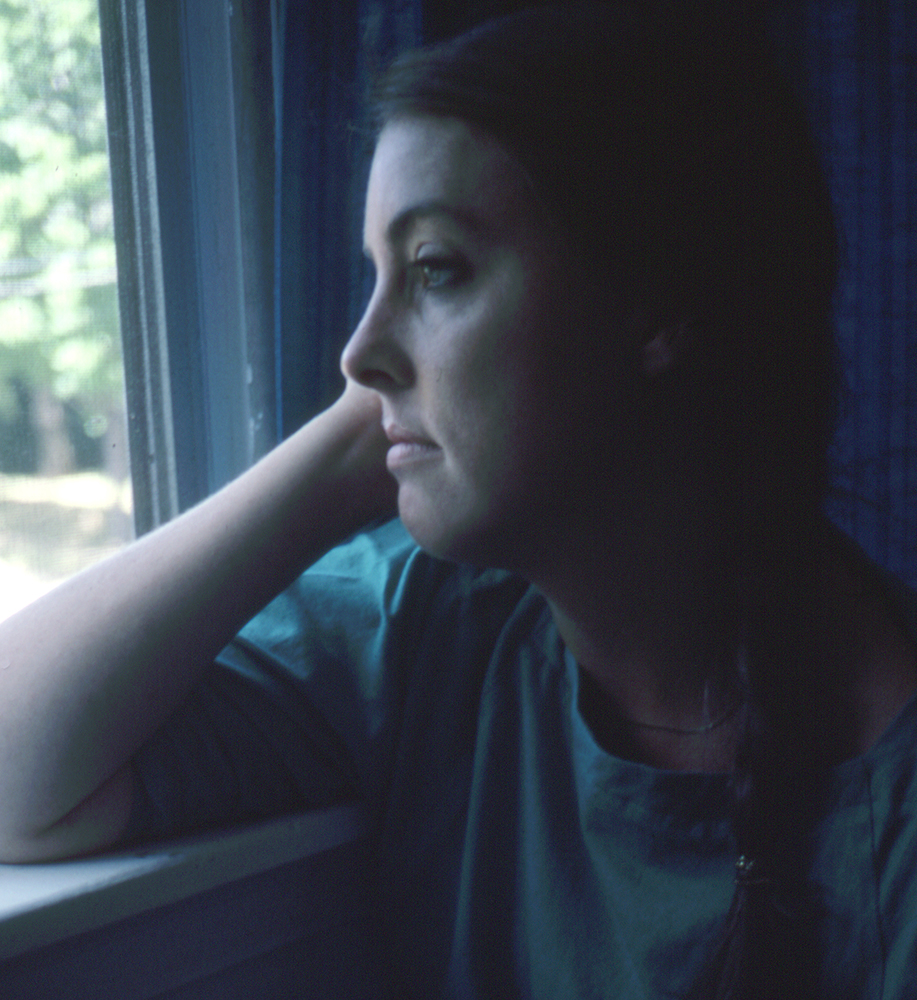
I’ve had a long career with a lot of successes and failures. Gail in Window1983Here are 3 tips with examples of lessons I learned along the way.

Get rid of the resistance in your life – Long before I became a photographer, I was on a different path. I was studying architecture at Syracuse University. During the summer of my sophomore year, my friend and I went on a hitchhiking journey to Canada. Along the way, we met and stayed with people we met. I remember one such stay very well. It was pouring outside and we decided to just hang out, rather than face the elements. There were quite a few other travelers sitting around the room, smoking dope and talking about what everyone talked about those days – their disenchantment with the war (Vietnam) and everything else that was status quo, when one fellow erupted and said – “I’m sick and tired of hearing the same old complaints – why don’t you all do something about it.” That stayed with me my whole life. To this day, I try to get rid of the whiners in my life and be the one who does something. My proudest achievement to date has been making the documentary Opening Our Eyes, a film about individuals who are creating positive change.

Don’t hide your vulnerabilities – It took me a long time before I could tell anyone one of my biggest embarrassments, but when I did it was liberating. I was working on an assignment about Martha’s Vineyard and Nantucket for the National Geographic Traveler Magazine. I had made an appointment to photograph Walter Cronkite, who was a well-known figure on Martha’s Vineyard. The day before our scheduled appointment, I called Mr. Cronkite to confirm. This was way before cell phones and email and even before everyone had answering machines and his phone just rang and rang and rang. I kept calling throughout the day and the same thing happened. By evening, I was upset because I thought that Mr. Cronkite had stood me up. That night, I had a terrible feeling. I thought perhaps that when I had re-written my production notes and contact info for the job, I might have written down the wrong number for Cronkite. I had kept my old notes and discovered that I had been calling the wrong number all day. Imagine how horrified I was when I discovered that it was I who had stood up Walter Cronkite – not the other way around. I called the correct number, Walter answered and I was profusely apologetic as I explained the situation. He was kind and understanding and rescheduled and then he said, “Why didn’t you look me up in the phone book?” I replied that I assumed someone of his stature would not be listed.   I learned never to make assumptions. It took me years before I could tell anyone this story. It’s really hard to admit mistakes but when you do, you gain trust.

Be who you are – not who you aren’t – I had just graduated from Brooks Institute and I wanted to pursue my passions. I wanted to be a photojournalist and use my craft to gain access to a world full of stories. Before I enrolled at Brooks, I had spent a year backpacking around the world. I had one camera and one lens and came back with my snapshots and a whole lot of desire. But it was a bad time for magazine photojournalism – Life Magazine had just folded (the second time) and everyone was telling me that if I wanted to make a living as a photographer, I needed to do commercial work. I bought into that and built a pretty good commercial photography portfolio. Then I went to see legendary NY photographer Jay Maisel, a man known for being blunt. He looked at my work, threw a print at me and told me it was “garbage”. Then he asked me if this was what I wanted to do.  I told him no, that I wanted to be a photojournalist but that everyone had been telling me to pursue commercial work. He asked me how old I was and I replied “25” and then he looked me straight in the eye and said, “You’re 25 years old and you’re already making compromises”. It changed my life and I remind myself every day to be who I am and dream big, even though I may have to settle for less.

“You’re Only 25 And You’re Already Making Compromises?”

There’s a story that I love to tell because it explains why I followed the path I did – in my career and my life.

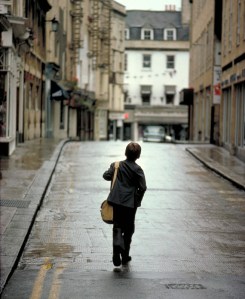
It was 1976 and I had just graduated from Brooks Institute in Santa Barbara, California.  I had my technically perfect portfolio and I was ready to set the world on fire.  British schoolboy, Bath, EnglandMy plan was to move back East, and pursue my dream of becoming a photojournalist.  That was where my heart was – “telling the story” through my images and I wanted to share those images through the pages of magazines. But even back then photo essays and the magazines that printed them were threatened by a bad economy and changing times. Look had just folded and Life was seeing its demise – the first time around.

Back then everyone told me that to make a living in photography you needed to get a studio and shoot commercially.  I bought into that, geared my first portfolio toward that and got a job assisting a commercial still life photographer.  But it didn’t feel right -it  wasn’t the right fit for me.  I had wanted to become a photographer to capture people and their cultures and what was going on in the world – not to shoot static objects in a New York City studio.

I had admired Jay Maisel’s work at the time, his eye for the detail and the streets of New York.  I decided to give him a call and ask if he had time to look at my portfolio and maybe give me a critique or some advice.  He agreed so we set up a time at his studio down in the Bowery. The late ’70’s was not a great time for NYC – economically speaking it was broke and Mayor Beame had just been turned down by the Feds for a bailout.  Just taking the trek down to that part of Manhattan at that time,  was an adventure in itself. Jay was a true pioneer in buying that old bank building back then. I’ll never forget the contrast between the graffiti covered exterior and amazing space inside.

Jay looked at every perfectly mounted print of technically perfect photographs and tossed them aside.  He looked at me and asked me if this was what I really wanted to do.  I started to go into a lengthy explanation of how I really wanted to be a photojournalist and proceeded to tell him all the reasons that I had given myself when I talked myself out of pursuing that dream.  And then I took out some snapshots of things I had shot on my travels before I even went to Brooks.  He looked at the images and told me that he could tell that this was what I should be doing.  And then he asked me how old I was.  I replied that I was 25.  He looked me straight in the eye and said “You’re 25 years old and you’re already making compromises?”.

It was a turning point in my life.  Every time I’m tempted to go off course, I remind myself of Jay’s words and I get back on track.