6 Reasons Why You Shouldn’t Take a DSLR Video Workshop

So many photographers think that buying a DSLR capable of shooting video and taking a workshop on how to use it, is all they’ll need to do in order to get into the business of video production.   They couldn’t be more wrong.  It’s kind of like someone buying a really “good” camera, and thinking that’s all they need to be able to shoot a professional photography assignment.  And yet, so many of my professional photographer colleagues continue to think that it’s about the camera, instead of the skill set.

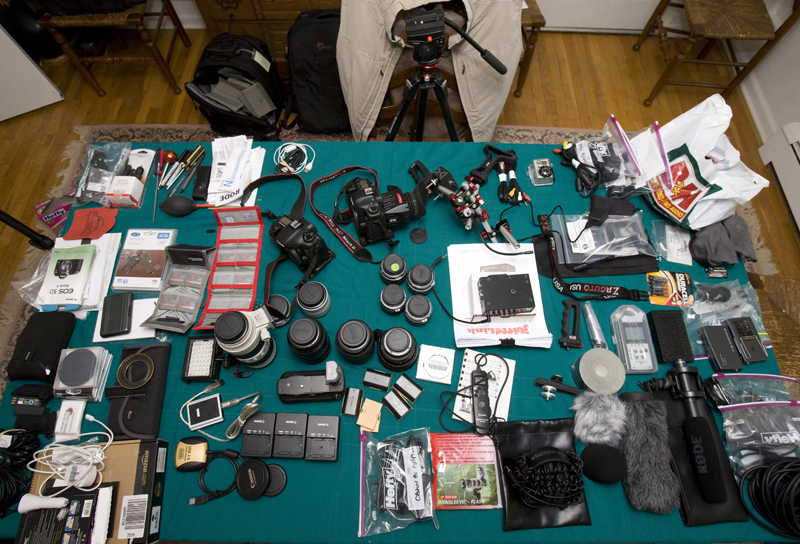
For starters, most of the professional video productions I do,I wouldn’t be able to shoot with a DSLR camera.  Don’t get me wrong, a DSLR can produce stunning video, but those cameras  fall short on certain tasks.  More importantly, they won’t necessarily meet the expectations that many high-end advertising art directors require. red cameraYou’ll look like a fool if you show up with your DSLR kit when they expected a lot more in the way of gear.

I get quite annoyed when I see the proliferation of DSLR video and filmmaking workshops that mislead photographers that this “tool” or camera will be sufficient for any and all video assignments – because it won’t.  It may be fine for a wedding shoot and I even made a feature length film with a DSLR, but for a lot of corporate jobs I shoot – it just doesn’t cut it.

My advice to photographers who want to learn video:

  • Learn how to think and shoot video.  It’s not just about the camera. When I shoot motion, I’m thinking and shooting much differently than I do for stills.
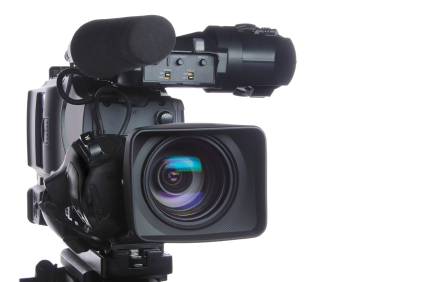
  • Pick the right camera for the job.  That means you’ll have to know how to use a traditional video camera or a more sophisticated camera like a RED or hire someone who does.
  • If you contain your video experience and knowledge to the DSLR, realize that your competition will be fierce.  The buy in price is low – so you won’t be the only one who thinks they can buy a relatively inexpensive camera and go after video jobs.
  • Stay away from DSLR workshops.  They are way too limited and limiting.  Plus, they are based on technology that changes way too fast.  It may be tempting – but you’ll place yourself in the lower end crowd and will most likely be competing on price.  How low are you prepared to go – or can you go and stay in business.
  • Learn video and/or filmmaking the right way.  Don’t make it dependent on a particular camera.  Learn the cinematic language and how to translate the message in a motion medium.
  • The business of video is much different than that of still photography.  If the workshop you are thinking about taking doesn’t address sound business practices – move on. You can lose your shirt on a video production if you don’t know how to price and/or structure your shoots.

Think about it.  If you were just starting out and learning photography – would you take a workshop that was about a particular camera?  Obviously not, so why would you approach learning video that way?

For more information about video production check out Gail’s guide  The Craft and Commerce of Video and Motion
5 Tips for Filmmakers (and other artists) for Building an Audience

The good news for Indie filmmakers, musicians, photographers and new media artists is that technology enables us to take control and distribute our own work to the masses or a more targeted niche audience.  The bad news is that even though we are able to reach a global audience without giving the lion’s share of our profits to an agent or distributor – it’s a lot of hard work.

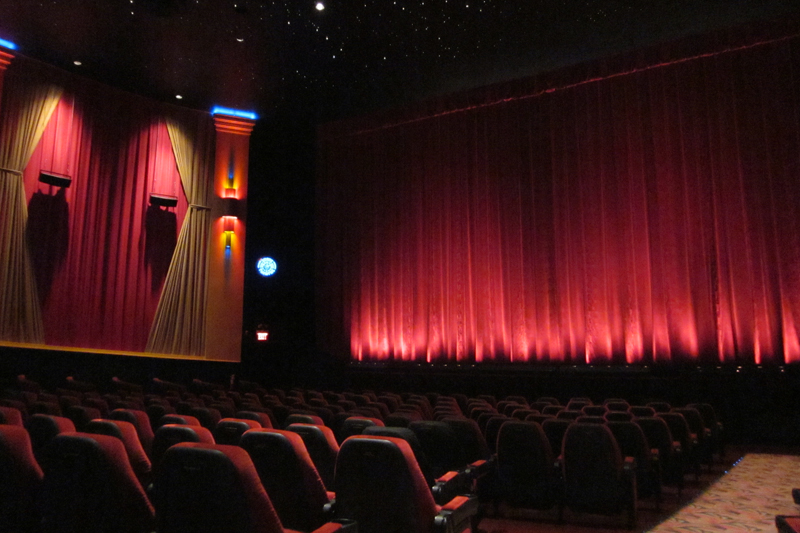
When I completed final production on my first feature documentary, Opening Our Eyes, I knew I was hardly finished with this film, not if I wanted people to see it. theater interioeIMG_0150Since most filmmakers make their movies to be seen, they need to decide how they want their movies distributed and marketed.  As a filmmaker, do you want to delegate this task to a distribution company or do it yourself?  Will you be one of the lucky 1% of filmmakers who get their films picked up for distribution?  If not, do you have a plan on how to do that?

1. Identify and build audience – Regardless if you decide to sign with a distributor or distribute your work yourself, the most important part of marketing and distributing a film is to identify and build your audience – and you should start building your audience before the film is finished.  As soon as I made a commitment to make a film, I started blogging about it.  I created a blog specifically about the film where my daughter and I talked about preparing for and taking a 99-day journey around the world. I also wrote about the making of the film on this blog where I talked about gearing up for it as well as the post-production process.  I didn’t realize it at the time, but I was building our niche audience.

2. Have a social media plan:

  • Decide on platforms – Twitter, Facebook, Tumblr, Google+, YouTube, Vimeo
  • Carve out the time to engage
  • Decide where the content will come from – behind the scenes photos or footage, blogs, podcasts?
  • Who and where is your audience? Find other Facebook groups or pages and followers who are interested in the same topic as yours.  Collaborate. Build your Twitter followers same way.

3. Finding true fans – Since most filmmakers will most likely NOT have a mega hit with huge profits, the best thing a filmmaker can do is build their “true fan” base.  First you should ask yourself how many “true fans” would you need to sustain yourself as a filmmaker? And by true fan, I mean people who are willing to buy whatever you are selling, be it a book, a DVD, a music download or a t-shirt.  The key to growing your core “true fans” is to engage them by sharing interesting content as opposed to just selling something.

4. Be consistent and stick with it – Like anything else, building an audience takes time.  Be prepared to constantly interact and engage your audience by sharing relevant and interesting content with them.  You’re building a tribe or a community.

5. Find likely partners – Making films is a collaborative effort.  Similarly, for filmmakers to be successful in marketing their films they need to find their core niche.  One great way to find your niche audience is to identify like minded groups and share links.  The non-profit my daughter works for partnered with us and we frequently share each other’s news with our followers.

How Motion is Changing the Future of Photography

Mid-19th century "Brady stand" photo...
Mid-19th century “Brady stand” photo model’s armrest table (Photo credit: Wikipedia)

A few years ago I heard visionary Ray Kurzweil speak at NAB (National Association of Broadcasting).  He was talking about the exponential rise of technology and how that would profoundly change people’s lives – and was.  His focus and predictions were mostly related to the advances we’ll see in medicine, but he relayed an analogy that has stuck with me.  He said:  (and I’ll paraphrase) that if you were in the horse and buggy industry at the turn of the century and thought of yourself as someone who sold buggies and whips, you most likely would  have gone out of business.  But if you were in the horse and buggy business and thought of yourself in the transportation business you most likely would have adapted, recognized that the future of transportation was in motor transport – and thrived.

The thing is, the ones who adapted early on – before the majority did – were the ones who made fortunes.  The ones, who waited until everyone embraced the automobile, either struggled to keep pace with the competition or died out.  I think we are at a tipping point as far as the future of the still photography business.  If we continue to think of still photography and motion as being two separate entities in the business of visual communications, it will be our demise.

Change never happens overnight.  Change is slow.  No one gets to be 400 lbs overnight; it’s a slow process.  But once it happens, it’s really hard to get back on track.  The changes that are taking place in the way we communicate are monumental, unlike any changes in the past.  I used to shoot a lot of annual reports, but not so many anymore.  I used to make a large portion of my income from the licensing of my stock images, but that income has dropped significantly because everyone has a camera and the supply of images is more than the demand.

I’m not an alarmist in predicting this change and in fact for someone my age who is on the tail end of his or her career, I wouldn’t be alarmed at all.  However, if I were just starting out in photography or even in my late 40’s or early 50’s and had another 20 + years ahead of me, I would not be complacent.

Some things still photographers should be thinking about:

  • Understand that there will probably not be a divide between the still photography and motion businesses.  This is really hard to envision because we tend to see things, by looking at the future in terms of the knowledge that we have on hand today.  But with motion cameras able to shoot 96 frames a second, and each frame being good enough to pull out and used as a still image, the changes for still photographers will be profound.
  • The concerns are not like those that a still photographer has had to face in the past, like when digital replaced film or when one needed to reinvent themselves as their markets changed. (For example when car shooters were phased out by CGI artists)  Shooting motion is a different mindset all together.  It also has profound differences in the way you run your business. While a still photographer of today, may find opportunities to shoot motion for their existing still clients, that too is rapidly changing.   I don’t think this will be an option much longer for still photographers. I think that motion shooters will be shooting motion and in the process creating stills as opposed to still photographers providing the motion content and the stills.  Just like a professional still photographer distinguishes his or herself from an amateur photographer who has an expensive camera, so do motion shooters distinguish themselves from the still photographer who seems to have little regard for the craft and knowledge of motion and thinks they will “just” start shooting motion when the time comes. It’s not going to be “just” that simple, especially if you’re late to the game.
  • Understand that technology affects everything and will continue to do so.  You may think  in terms of what’s possible today and that it would be incredibly labor intensive to go through tens of thousands of motion frames to pull out still images. But advances in technology will change that as well in the future. Technology affects everything.   Realize that software is changing too and that the edit process for pulling out frames will be easier and more streamlined in the future.  In fact, an editor’s job description will change greatly and that may be a job that is in high demand in the future. Even now, just do a quick search on LinkedIn and you’ll see that while there are very few job listings for still photographers, there’s a lot of demand for video editors.

Bottom line – start recognizing that photography and video are not separate businesses any longer.  Start understanding that will have an affect on the  future of the still photography business especially in terms of licensing, because traditionally motion camera operators work under work for hire agreements.  While still images won’t go away, that doesn’t mean that still photographers will be creating them in the future.

What Still Photographers Need to Know About Convergence

We should not think in terms of how we can apply the newest tools of the trade to what how we are shooting today, but rather think about how these tools and future versions may be applied to what we will be doing in the years to come.  We also need to remember that it is not just creatives that are determining what we shoot with, how we shoot it and where the imagery will be used, it’s the top executives and money folks from the camera manufacturers, the advertising executives, broadcast networks, movie studios and magazine and newspaper publishers.  They set the stage and the content creators and receivers of the content or the “audience” react.

We as creatives have a choice of what tools to use – everything from an iPhone to a camera like the

English: Canon 5d Mark II set up for cinema st...
English: Canon 5d Mark II set up for cinema style shooting (Photo credit: Wikipedia)

RED, able to produce 5k resolution stills shooting at 96 frames a second at a 200th of a second.  We make our decisions when choosing which tools to use based on a number of factors – affordability  and determining which tool or camera is the best one for a particular job.  Many times, it’s the end use that is the deciding factor. We need to remember that not only our tools are changing, but so is the way the information or content is delivered as we rapidly move away from print to electronic delivery.  Simply put, mobile devices have dramatically changed the way consumers are receiving content and information.

Who could have imagined just a few years ago that a phone could take photographs that weren’t just “good enough” but really good in terms of resolution and delivery?  We need to keep in mind that the limitations of today will most likely not be there in the future.  Technology is changing our lives and our businesses in an exponential way and will continue to do so.  If we are smart and want to stay in business, we need to look forward and imagine what’s next, rather than look at what is or what was.

When I started my still photography business more than 30 years ago, a photographer needed certain technical skills.  We needed to be able to focus a camera and that was tough if you were shooting fast moving action subjects and we needed to know how to get an accurate exposure.  The cameras of today have pretty much eliminated those skills with auto focus and exposure.  Still photographers still need to know how to light but as software becomes more sophisticated will that be a necessary skill set of the future?

When I’m giving a seminar to still photographers who are thinking of moving into motion, I start out by explaining the differences of the two mediums.  Still images are moments in time and video is time in motion.  That explanation sounds simple but it’s quite profound when you think in terms of convergence.  While today’s cameras have pretty much eliminated the skill sets of knowing how to properly focus and expose an image, a photographer or camera operator still has to be able to capture the “decisive moment” – that is where the skill set comes to play.  But is that still true today and will it remain so in the future with motion cameras able to shoot at 96 frames a second at a fast shutter speed with 5K resolution? Why would a client need a photographer to shoot still images when they can pull frames from a motion shoot?  They wouldn’t, especially when most camera operators in the motion sector are working under “work for hire” contracts and they don’t hold the copyright to the footage and/or still images or frame grabs from that footage.  That’s a game changer for the still photography business and licensing of images.

I read an interview once with Vincent LaForet and he was telling a story about having a discussion with a DP at a Red event shortly after the Red One came out.  He asked, “Who in the world would want to shoot a still image with this huge Red camera with a Cine lens?  It’s insane. Why wouldn’t I go out with my 5D Mark II that shoots RAW?”  The DP answered “We want to take your still jobs away from you, just like you want to take our video jobs away from us with your HD SLR’s.”

That was a few years ago.  Now I know a lot of high end still photographers who are shooting with smaller, more affordable and high-resolution motion cameras to shoot still photography jobs and so are DP’s.  That’s convergence and who knows what the future may bring, but one thing is for sure – it’s best to be knowledgeable in both.

How to Become a Still and Motion Hybrid

I’ve been living the life of a still and motion hybrid for the last 13 years.  Sometimes my work is weighted toward still imagery and sometimes more toward motion.  These days, it seems more like the two mediums have merged and my time is evenly balanced between both.

This past month I’ve talked to a lot of filmmakers as I’ve traveled around the film festival circuit with my film, but I’ve also talked to lots of photographers at Photo Plus Expo and other photographer gatherings.  I started to notice a difference in the conversations I was having with still photographers and filmmakers.  Filmmakers were usually talking about “the story” and the conversations were more like listening to the unveiling of a movie.  Still photographers, tended to talk more about how they executed “the story”.

When I talk to “hybrids”, the conversations are a blend of telling the story, with a bit of “execution” thrown in. I’m starting to notice something new in visual communications with a new aesthetic developing.  This recently became very apparent to me when I was asked to be a juror on the 1st AP-AI Motion Arts Awards.   I looked at over 50 entries and what I saw was a very unique look emerging.  What I saw was motion through a still photographer’s eye and it was incredibly exciting.

As technology continues to change how society communities, I truly believe that we as photographers need to think of ourselves as more than just someone who shoots still imagery.  As print gives way to electronic delivery, photography will take on a broader meaning as to how it’s executed.

Some things to keep in mind going forward:

  • Hang around with people who are embracing change.

From Seth Godin:

“Who you hang out with determines what you dream about and what you

collide with.

And the collisions and the dreams lead to your changes.

And the changes are what you become.

Change the outcome by changing your circle.“

  • Stop thinking of video or motion as a separate market
  • Stop giving yourself reasons NOT to do something.
  • Say YES more often
  • Remember the “tools” and the “medium” are just a means to an end. We have a whole array of new tools to create with and platforms that allow us to communicate globally.  Get excited about that.

Mistakes Professional Still Photographers Make When “Moving” to Video

1.  They forget about the story – it’s not your camera that tells the story – it’s the person using the camera. Pretty visuals, slapped into a motion timeline with music, doesn’t necessarily tell a story.  Video is a story telling medium – don’t forget that.

2.  They think they already know how to shoot – if you think because you are a professional photographer and all you need to do is get a camera with a “video mode” on it, you are mistaken. Shooting in motion is far different than shooting still images. An experienced motion shooter can spot a video shot by a still photographer with little know how, right away.

3.  Thinking audio isn’t important – audio is more important than the visual when producing video.  Hire a sound person to do it right, but don’t discount it.

4.  Thinking the DSLR camera is all you need for video productions – this is a biggie.  How are you going to go after professional video jobs if this is the only tool in your kit?  Sure you can rent a RED – but make sure you are as proficient with this tool as your competition is before hanging out your “motion” shingle.

5.  Positioning themselves just as DP’s or Directors and thinking you’ll maintain ownership of your work. If you assume the role of a camera operator, DP or even a director – you will be in a work for hire position in most markets.  Position yourself as a producer – shoot if you want to – and direct – but realize that you’ll be just one rung on the “content ladder”.

6.  They don’t learn interview skills – this is what separates the pros from the still shooters who have DSLR cameras and think that’s all they need.  I’d say about  70% of my work includes on camera interviews.  Even though I ask the questions- I’m not on camera, my subject is.   I not only need to know how to ask the right questions and get great audio, but I need to produce a usable interview clip for an editor. That means knowing how to get great soundbites. This is one area I excel in – it’s all about rapport with your subject.

7.  They try to compete in “old business model” markets – Everyone wants to shoot broadcast spots and feature films (or short films) so they think that after shooting motion for only a few months – or even a year – they will be able to compete in the high end business of video production.  First, this market, like the still photography market,  has changed drastically, mostly marginalized by still photographers who are just starting to shoot motion,  shooting jobs for next to nothing because they have no understanding of this “business”.

8.  Learning the “how to’s” in terms of gear – but nothing about the business – this is also a biggie.  There are so many “how to shoot motion” workshops and roadshows out there but no one seems to be teaching the business end of things.  Still photographers think they already know “the business” but quickly realize that they don’t, and they put themselves out of business in this medium – before they’ve barely started.

9.  Teaching “how to” workshops in video with little or no experience – I can’t tell you how many photographers have called me for technical advice about some pretty basic stuff in terms of video,  and four months later they are teaching workshops. Please don’t become part of the problem and send more shooters out into this field without teaching them something about business. And if you are considering taking a workshop – do your homework and take the workshop from someone who is accomplished in this field and has done something.

10. They forget about the story – I know that’s #1 but it needs reinforcing.

ASMP and Motion

I’m on the National Board of Directors of the ASMP, The American Society of Media Photographers.  About four years ago, I was asked if I had ever thought about running for the board.  The person who had asked me this question, knew that I had been shooting video in addition to still photography and thought that it might be a good idea to have someone on the board who had an understanding of this medium.  That was four years ago, and even though I had been shooting video for over 10 years – the “explosion” of this medium (in terms of the demand) had really just started.

I did run, served three years, ran again and got elected. I’ve shared my knowledge of this medium through meetings, seminars, blogs, emails and during Q&A’s when I screen my film.

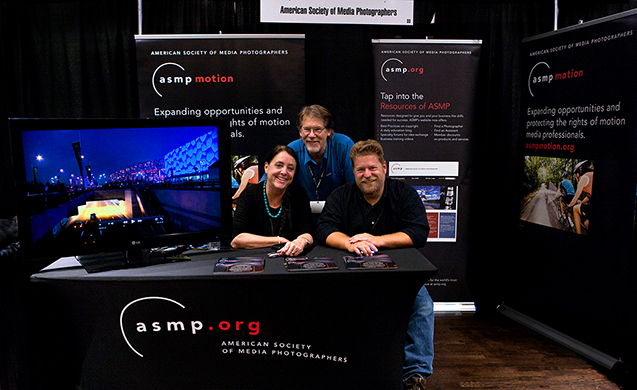
Gail Mooney, Tom Kelly and Chris Hollo at ASMP booth, DV East

This past Wednesday, I spent my day manning the ASMP booth at DV East Expo. Former national board member (and now President of the ASMP Tennessee Chapter) Chris Hollo and my partner Tom Kelly joined me.  We were well prepared with a large flat screen monitor displaying a loop of our members work. I was intimate with the reel as I had just finished editing it and I was very impressed with the quality of the work.  It certainly was an attention grabber.

So, what was ASMP, a trade organization of still photographers, doing at a video expo? Essentially, we were there to provide a community and reach out to other professionals who are shooting both mediums and provide information about sound business practices.  If this demographic does not understand the value of copyright or value the concept of licensing, then it will ultimately affect the way business is done in the still photography industry.

Some people may think that ASMP is becoming too inclusive or is creating more of a problem by suggesting that video may be the answer for its members, only for them to find out, that industry is glutted as well.  The old business models of bloated production companies with fat budgets are hanging on for dear life, along with the old business models of the film industry.  But if you think outside the box, especially in terms of how you structure your photography business – the opportunities are out there.

ASMP doesn’t cease to be an advocate for its still photographers who have no interest in motion – it’s actually making the entire industry healthier by educating the hybrid competition.  A lot of the people I talked to yesterday, shot both still photography and video, but even the ones who just shot video – called themselves “photographers” and they all had questions about “the business”.

I’m so closely associated with  “video” by members of this society; they tend to forget that I am a photographer.  I don’t call myself a photographer simply because I spend 50% of my time shooting still images, or call myself a videographer because I spend the other 50% of my time producing video. I don’t want to define myself by my tools, at all. I “see” as a photographer, with the vision of a filmmaker and the heart of a storyteller.  I also have a strong desire to stay in business doing what I love to do.  By being an advocate for sound business practices across these mediums, I get a lot more back than I give.  All photographers’ benefit, regardless of what type of cameras they shoot with.

Friend and fellow board member Ed McDonald, tells his own story about how he had become too rigid at one point in his career, as far as how he perceived himself and what kind of photographer he was. He found that when he became more flexible in how he “defined” himself, his business got better. As I think about Ed’s story, I know we have a lot in common.  For me, when I stopped restricting myself to just shooting still images – not only my business got better – so did my still photography. Shooting motion has made me a better still photographer because it has made me a better storyteller.

I got an email late last night from someone I ran into at the expo.  They wrote:

“Thanks for your vision and inspiration and all you’ve done for ASMP.”  So simple and so poignant and I thought – “isn’t that what I was supposed to do?”

How a Passion Begins

There are a million things I should be doing right now. My husband and I just returned from a 6 day road trip to Chicago to see our daughter, Erin and all the “stuff” of life piled up while we were away. I should be out in the yard picking up dozens of littered branches that had come down in a storm that happened while we were gone – and yet I’m compelled to write.

Writing became a habit a few years ago, when I would wake up early in the mornings with my mind fully active and spinning with ideas.  Instead of tossing and turning in bed, I would get up, go to the computer and write – like this morning. I was encouraged by a friend to share some of those writings through blogging, so I did. I know that I break every blogging rule, because I write what happens to be on my mind, instead of being consistent to a theme and I generally don’t provide a lot of links, but somehow readers like these ramblings. Regardless, writing is something that is part of me now.

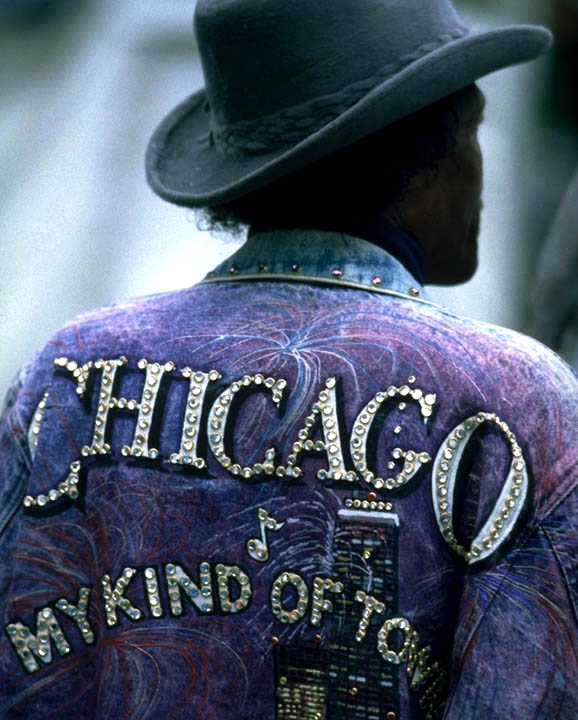
This past weekend we happened to be in Chicago while the Chicago Blues Festival was going on, so of course we had to devote a day to it.  It was a bittersweet experience as so many blues legends had passed away this year and it wasn’t the same without them – Pinetop Perkins, Willy “Big Eyes” Smith and Hubert Sumlin to name a few. But being at this festival brought me back to the first time I attended the Chicago Blues Festival

Junior Wells

in 1993 when I was in Chicago shooting a story on the city for the National Geographic Traveler Magazine. My plan was to cover the festival for one day as part of the story – I ended up going all three days and that’s when my passion for the blues began.

I hadn’t even thought of shooting video back then, but 2 years later my partner Tom and I began shooting 35mm motion footage for stock – and that’s when my passion for motion began.  Funny, within a two year period, two passions surfaced in my life and collided into the making my first short documentary The Delta Bluesmen, six years later.

As I listened to the music last Saturday in Grant Park, my mind wandered in a million directions, but once again I thought about how the universe works – that is if you don’t fight it.  The times in my life when I have just followed my instincts, have been the most gratifying times of all.  Most of the time, I was simply listening to a higher voice inside, instead of following the dogma of the day. It hasn’t always worked out and I’ve had my share of rejections, but that all goes into the messy mix of life.

I try to not linger on the negativity that comes with “rejection” and focus on the “rewards”.  There may not have been as many as I would have liked – but they would not have happened at all, without the lead up.  It all comes with the many years that go into the “overnight successes”.  Life’s too short to put road blocks in my own way or talk myself out of doing something with a hundred “great” reasons to rationalize it. And so – I’ll take the bitter with the sweet any day.

Pioneering in Video

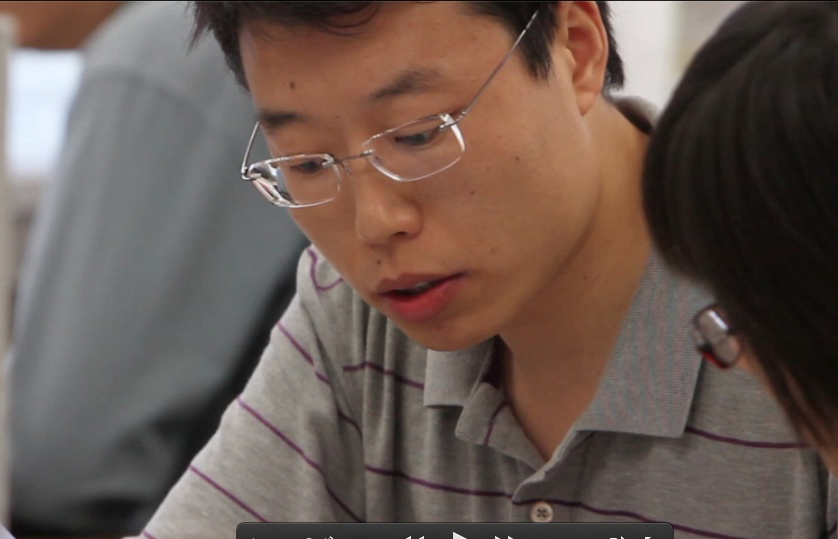
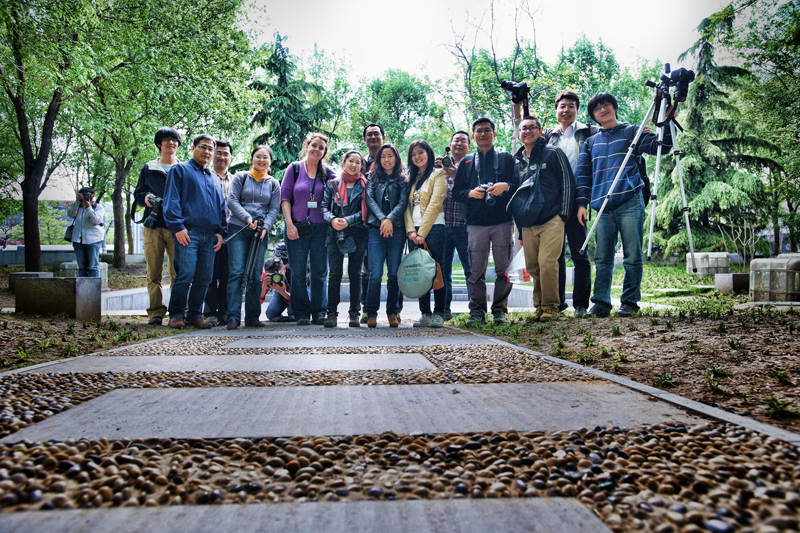
I’ve been in China for the past two weeks, teaching video journalism to some of the best photojournalists in China.  Last night at dinner, the top director of the program told me (via my interpreter) that Xinhua, China’s biggest news agency, was setting up their multimedia department to stay current with how news is communicated in this day and age.  She thanked me for teaching and inspiring her journalists in this medium and said that I was an honorable “pioneer”.

I never set out to be a pioneer when I first started shooting video and motion in the mid ‘90’s – I merely recognized that when the “tools” of this medium became affordable, it was now possible for me to tell my stories in another dynamic way.  But I never turned my back on still photography and I would say that it still makes up about 50% of my business – at least in the time that I devote to it.  I would also say that while I spend 50% of my time split between both mediums – I make more than 75% of my income from shooting motion – capitalizing on not just making income from shooting video but also on the other elements like editing.

I started thinking about the aspect of being a pioneer and the more I thought about it, the more I realized that I wasn’t trying to set new ground at all – I was really just challenging myself and more importantly staying true to why I became a photographer and that was to communicate.

I’ve given a lot of workshops to still photographers who want to move into video.  Generally there are two types of photographers – the ones who think that because they have been “shooting” for many years, they “just” need to understand a new mode on their cameras and the ones who embrace the fact that this is an entirely different medium and they understand that they are novices, and are eager to learn how to communicate in a different way.  It’s usually the cocky photographers that fail miserably and end up with a string of unconnected “moments in time” to a music track.

Ever since the first DSLR that incorporated a video mode hit the scene, I’ve seen more and more still shooters, move into motion.  After only a couple of months, I even see some of them teaching workshops.  It amazes me, because many times some of these same shooters have been hypercritical of “amateurs” coming into their profession with their auto everything “point and shoot” cameras.  I’ve had some shooters tell me that they aren’t going into motion, because they think that when these tools  become easier to use and more automated – the same thing that has happened to the profession of still photography will happen in video.  I disagree with this notion but more importantly I think that this attitude is usually a mechanism people use to talk themselves out of challenging themselves and are reluctant to “change. ” Just like when still photography moved from film to digital – the ones who got left behind were usually the ones who tried to convince themselves that digital would never be as good as film.

I cannot take credit for being a pioneer in video.  There are many who came before me that were true pioneers and I feel that would discredit them and their efforts.  I’m simply a storyteller and I’m happy that I’m still passionate enough about telling the story that I continue to find the best way to tell the stories that I am meant to tell.

Thanks to the gracious people in China and the Xinhua News Agency for recognizing and embracing the future and being keen to learn.  Perhaps many of these students will not shoot multimedia – but learning how to shoot in motion has made me a better still photographer and will make them better shooters as well.

Week One – Teaching in China

I’ve just wrapped up week one, teaching Chinese photojournalists, in Beijing, to think and shoot in motion.  Like any new job or new experience – the first day or the first week – is always the hardest.  The week flowed like any good story, with “ups” and “downs” but by Friday afternoon – my students triumphed and amazed me.

It’s difficult to teach any “still” photographer “motion” because so many photographers are so gear oriented, they underestimate the most important part of the process – thinking and shooting in motion.  I find that many times, still photographers think that all they need to do is switch their DSLR’s to “video mode” and shoot.  There’s a certain attitude amongst some professional photographers – that all they really need to do is get a camera that’s capable of shooting video.  But they quickly realize that there is a lot more to learn.

Day one, we talked about thinking and shooting in sequencing.  It took longer to get this message across, simply because everything needed to be translated into Chinese.  I showed examples that helped and then gave them an assignment to shoot a sequence of video clips that told the story.  The next day we reviewed the work of the students and they quickly understood the successful attempts and the not so successful results.  They also realized how different shooting motion is from shooting stills.  I had told them in class that “stills are moments in time” and “video is time in motion” but until they actually tried to shoot that way – and then analyzed their results in the critique – did they begin to understand. Many made the common mistake of moving the camera, rather than letting the motion happen in front of the camera and many produced video clips that didn’t relate to one another.

Day two we started to talk about audio.  That’s a subject that all still photographers underestimate because they don’t realize the importance of capturing good audio.  They think that their camera mics are sufficient in this task. After all, they are capturing sound.  It’s not until they can hear the difference between good audio and bad audio that they really begin to understand that audio is more important than the visual.  I could see the light bulbs going off the next day in the critique that they were beginning to understand this important concept.

Day three we talked more about the importance of audio and that when shooting with a DSLR camera, it is essential that they capture audio with an external microphone and a separate digital audio recorder.  After a morning in the classroom, we all headed out for a field trip.  I set up a situation where I did an interview of a subject and they shot the b-roll.  That evening, we broke into 3 groups (video is a collaborative effort) and they set off to capture a story, using everything we had learned in the past 3 days

Day four, we put a small dent into learning the vast editing application, Adobe Premiere.  That was perhaps the most challenging day for all of us.  I’m somewhat new to Premiere, since I’ve been editing in Final Cut Pro for the last 10 years, but it was the most viable solution since most of the students were using PC’s and Premiere is cross plat formed.  We learned the basics in the morning and in the afternoon – the hard work began.  The next day, we would be joining the other 3 groups who had been learning things like lighting and Lightroom and the clock was ticking to get their assignments edited.  I cannot even begin to tell you how amazed I was at how far these students had come in just 4 days – it was remarkable.

The next morning we showed our completed projects to the entire student body and other faculty.  Based on the resounding applause – I believe we amazed them as well. That evening we were all beyond exhausted, but my students invited me out for a “banquet”.  I was lucky  – many in my group spoke some English – so the evening was spent sharing stories and cultural experiences and food and drink.  It created a bank of memories that I will cherish.

We had two days of rest and our first day; we headed to a remote area of the Great Wall.  I shot some still images and then I needed to just take pause.  As the other 3 teachers continued to shoot – I knew I needed to stop and just take a moment to put the camera down and really “see” where I was.  I needed that time to absorb not only the week I had spent but to relish the “now” and think about where I was in the context of the world.  It’s those moments, when I put the camera down, that always create the memories that linger in my mind forever more.