SB3 – Get Inspired

If you haven’t registered for the ASMP Strictly Business 3 conference yet, I would highly suggest that you do so.  They will be held in three locations starting next week: January 21-23 in Los Angeles; February 25-27 in Philadelphia; and April 1-3 in Chicago.

There’s an incredible line up of speakers presenting workshops on pricing, estimating, copyright, workflow, strategic career planning, successful portfolios and branding and video production. I’ll be presenting two workshops: “Thinking in Motion” and “Shooting Video with the DSLR”.

Branding expert Colleen Wainwright will deliver her keynote “Making People Love You Madly: Selling Yourself in a Postmodern Marketplace”.  Tom Kennedy, whom I’ve know since his days at the National Geographic Magazine will give a keynote “Learning New Skills for the Changing Media Landscape”.

This conference series is meant for everyone, not just photographers who are beginning their careers.  In fact, I think that photographers who have been in business for many years will benefit equally, if not more than a shooter who is new to the business.

I have been in business for over 30 years and I have found that one of the most dangerous things that can happen to a creative person,  is for them to become complacent, especially in a business like photography.  It’s even more deadly to become complacent these days in our fast changing world of technology.  We not only need to stay current with our skills, we need to keep our vision fresh.

When I got into video and motion more than a decade ago, I was looking for something to excite me.  I felt that even though my business was successful and that I had accomplished many of my creative goals, the spark was getting dim inside me and at times I felt like I was reinventing the wheel.  So, I set out on a learning curve and have been soaking up information ever since.

I love to learn and I have found that the more I wonder and grow, the better off I am creatively and the more successful I am in business.  I’ve also found that networking and collaborating with my peers has opened my eyes to all sorts of possibilities that I never knew existed.  I think that’s what makes the SB3 conference so powerful – the sharing of information with our peers.  You don’t get that from online learning.

We live in a time where anything is possible.  Come to SB3 in LA, Philadelphia and Chicago and be prepared to be inspired.

Add to FacebookAdd to DiggAdd to Del.icio.usAdd to StumbleuponAdd to RedditAdd to BlinklistAdd to TwitterAdd to TechnoratiAdd to Yahoo BuzzAdd to Newsvine

Listen Up – Audio is Everything

Audio is everything in video. I can’t stress this enough. Most times “capturing audio” is a skill that still photographers don’t have. If your job is on the line – my suggestion is hire a good sound guy. If you’re doing a personal project and want to learn more about getting good sound, here are some tips.

• Don’t use the camera’s internal microphones, except for reference.
• Never use “auto” when recording audio. Turn off the AGC (automatic gain control) on the DSLR cameras.
• Get your microphones in close. For b-roll situations, you can get away with a shotgun mic mounted on the camera. But microphones mounted on cameras can pick up camera noises.
• Use a good wind screen or dead cat when outside. Even if you’re inside, on a windy day, with windows open, you can pick up wind noise.
• Use a good set of headphones. Over the ear is best but earbuds can be used in a pinch. Your audio meters tell you that you’re getting sound, but not if the sound is any good.
• Use shotgun microphones for your interviews. Get them in close to your subject – no more than 1-3 feet away.
• Lav microphones, attached to lapels can be used wired or wirelessly. Be careful with your positioning to avoid unnecessary noise from hair or jewelry.
• Go wired whenever you can. Resort to wireless solution if wired isn’t possible.
• Use an omni-directional or cardiod microphone when you are in more acontrolled situation and you want your sound coming from more directions.
• Don’t cross your audio cords with your electrical cords. This causes a hum that you will detect if you are wearing headphones.

Pay attention to audio. Start letting your ears do more of the work. Every room and situation has its own sound. Listen up.

Add to FacebookAdd to DiggAdd to Del.icio.usAdd to StumbleuponAdd to RedditAdd to BlinklistAdd to TwitterAdd to TechnoratiAdd to Yahoo BuzzAdd to Newsvine

Editing Tips for Multimedia and Video

A few days ago, I wrote a blog about “having a point” – or telling a story when you create multimedia pieces. Of course you have to have an overall idea and focus to start with, but below are some editing tips on how to make it come together in the editing room.

  • Edit with a purpose. Why are you making the “cut” where you are? Are you cutting on the action? Are you cutting on the beat of the music? What’s the reason behind your cut?
  • Set a pace or rhythm. Just like writing, where you have pauses in sentences with commas, edit your visuals to your narrative or interview soundbites, cutting after words and phrases.
  • Use image sequences to transition between different ideas and themes.
  • Let your images linger on the screen, giving time to breathe between them.
  • Cut on the beat or against the beat of music. Edit the music and let it become part of your piece, rather than just a background soundtrack.
  • Adjust the volume of your music – lowering it during interviews and raising it when there is no narrative or dialog.
  • Use audio fades between music cuts to soften the cut.
  • Insert room tone between cuts in interview soundbites, making the cuts less apparent.
  • Use interview footage sparingly – when introducing someone or when someone is expressing emotion on the screen.
  • Identify interview subject with name and title text in lower third.
  • Use text that’s easy to read and break it up over many slates. Leave the slate on the screen long enough to read twice.
  • Always start with your strongest images.
  • Don’t “move” all your still images – leave some static on the screen.
  • Don’t use dissolves.
  • When working with media from DSLR cameras, keep the media in the DCIM folders for logging and transferring into Final Cut Pro with the plug-in. If you have taken your media out of the DCIM folders – then create a new DCIM folder for the purposes of importing the media into FCP.

Remember to keep the story in mind at all times. When you think you have the story laid down in a rough cut – have friends over to watch it. Ask them what the story was. If they don’t know or can’t tell you, then you have more work to do.

Add to FacebookAdd to DiggAdd to Del.icio.usAdd to StumbleuponAdd to RedditAdd to BlinklistAdd to TwitterAdd to TechnoratiAdd to Yahoo BuzzAdd to Newsvine

“Here’s an Idea – Have a Point”

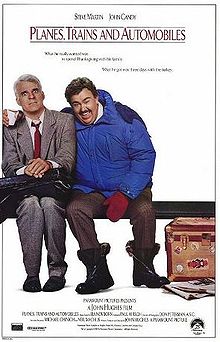
One of my favorite holiday movies is “Planes, Trains and Automobiles” with Steve Martin and John Candy. There’s a great scene in the movie where Steve Martin loses it and starts a rant directed toward Candy’s character, Del Griffith. Del, is a “nice guy” who talks incessantly. Martin’s character, Neal Page, an uptight ad man, frustrated by the day’s travel mishaps, finally explodes at his travel companion Del after one too many stories and says – “here’s an idea – when you tell a story, have a point!”

Am I the only one who has been oversaturated with multimedia and video pieces that are little more than pretty visuals to music? Don’t get me wrong, there are plenty of pieces that I do like, but there are far too many where I get bored and bail mid-way through because there is no point – there is no story.

Worse yet, the audio or music track many times feels like it has no connection to the visuals. It may be a great piece of music and provide pacing for the video, but it doesn’t complement the story. And there are times that the music is the most interesting part about the piece – if you take it away, what do you have? Most likely a pagination of moving and/or still images – like pages in a magazine or prints on a gallery wall. Independent and isolated vignettes with a music track – but no story- just eye candy.

What holds my interest is a story, where all the elements of audio, music, video clips, stills, text and narrative are parts of the whole and each one is integral in telling the story. I don’t think I’m alone in being interested in the story. Humans have enjoyed “the story” since the beginning of time. It doesn’t matter if it’s told verbally in a one on one conversation, in a multimedia piece, or in a major motion picture – a good story is a key ingredient for human interest. We all love a good story.

Personally, there is so much out there to watch these days on any given site that hosts videos, if I’m going to invest time in viewing something – I want it to have a point. If it doesn’t when I get to the end – I feel somehow let down.

I’m sure some of you will disagree with me on these thoughts and many of you may get loads of satisfaction from watching pretty visuals laid down to music and that’s OK. I’ve just had my fill of pretty content splashed before me, becoming a blurred palette in my head.

So, here’s an idea – have a point.

Add to FacebookAdd to DiggAdd to Del.icio.usAdd to StumbleuponAdd to RedditAdd to BlinklistAdd to TwitterAdd to TechnoratiAdd to Yahoo BuzzAdd to Newsvine

How Do You Tell the Story?

I’ve said it hundreds of times – “the story is everything”, “without a story, you’ve got pretty pictures to a soundtrack”. So, how do you tell a story? How do you do it?

A friend called me the other day, struggling with this very question, of how do you tell the story? He was putting together a multimedia piece and he had captured sound and had taken photos during an event and was about to record an audio interview. I wasn’t sure at first, if he was asking about the mechanics of how to edit a story together in Final Cut– or was he asking me for guidance on how to tell the story? Those are two completely different discussions.

I thought back to when I was just starting to learn video journalism and had taken the Platypus Workshop. We had to tell our commitment or our story idea to an instructor, before we could start executing it. If the idea wasn’t delivered clearly and concisely, we went back to the drawing board to nail down the idea or the focus.

Every story starts out with an idea. Ideas have always come pretty easily to me, usually in spurts. All sorts of environments or activities can trigger ideas.

Seth Godin did a blog about a week ago titled, Where do ideas come from? Here are a couple of my favorites:

  • Ideas come out of the corner of the eye, or in the shower, when we’re not trying
  • Ideas come in spurts, until you get frightened. Willie Nelson wrote three of his biggest hits in one week
  • Ideas occur when dissimilar universes collide
  • Ideas fear experts, but they adore beginner’s mind. A little awareness is a good thing
  • Ideas hate conference rooms, particularly conference rooms where there is a history of criticism, personal attacks or boredom

Once I get the idea, I then start focusing it in my head. I play out the movie in my mind. What is the message? Whose message is it – mine? – the client’s? What is the motivation for the piece? A call to action? Once I get a pretty clear idea of what the story is that I’m trying to tell, then I start to put the pieces together. First I gather and capture all the assets that I’ll need, the interviews, b-roll, still photos etc. Then, when it’s time to edit the story, I’ll have a much clearer focus of how I will edit the pieces together to deliver the message.

Right now, I’m editing a feature length documentary, that is made up of ten different stories about ten different people in various corners of the globe. All together, the ten stories are unified by the theme of “the power of the individual in making a difference in the world”. Essentially the idea is, global stories about the power of one. That has been my underlying story from the moment of concept, to shooting it, to editing it all together.

So, how do you tell the story?  For me, it’s focusing on the “idea” at all times and editing toward that purpose.  There are hundreds of ways to tell the same story, but you need to know what the story is before you can begin to tell it.

Add to FacebookAdd to DiggAdd to Del.icio.usAdd to StumbleuponAdd to RedditAdd to BlinklistAdd to TwitterAdd to TechnoratiAdd to Yahoo BuzzAdd to Newsvine

New Stuff

I haven’t done a lot of tech talking lately, but a couple of new items have me thinking that way. Here’s some interesting news about products, firmware upgrades and video delivery.

To start with, for all of you who own a Samson H4N Zoom digital recorder, and have been frustrated that you aren’t able to independently change recording levels on inputs 1 and 2 – you now can. Here is a link to the firmware download and instructions.

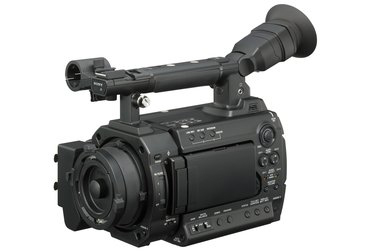
For all you “big chip” aficionados, Sony just announced the PMW-F3

Sony PMW F3

camera with a 35mm CMOS imager. However, with a price tag around $16,000 for the body and an extra $7000 for a set of three Sony prime lenses, it seems more like a competitor in the RED market, rather than in the DSLR niche.

Read more about it on engadget

PhotoCinenews.com had a great blog post by August Bradley, a couple of weeks ago that I almost missed, Thoughts On Motion Portfolios.

August writes:

“We recently went through the process of re-designing our website with one of the primary new objectives being adding motion content. So I did extensive research on the websites of directors, cinematographers, and leading production companies to see how they presented videos. I was surprised at how little effort most are making in this area.

I suspect the thinking of the directors and cinematographers is that nobody hires them for a serious commercial gig by discovering their website. It’s very much a matter of relationships and playing the inside game.

But I also think the world is changing fast with the barriers to entry lowering in the motion world, and with talented people increasingly able to compete on creativity rather than on access to expensive cameras and lights. The importance of a strong web presence is rising and becoming fundamental for directors and cinematographers.

So I set out to find the best-in-class practices and leading suppliers of related tools. I found some methods of integrating and presenting video to be more engaging than others.”

Read more

PhotoCinenews has also announced that the DVD set of their 2010 PhotoCine Expo is hot off the presses. It’s an 8 disc set of presentations from 14 filmmakers. I am honored to be one of them and as one who attended many of the other presentations, I can tell you it’s worth every penny. Check it out.

Here’s a big piece of news released yesterday. ” Steve Jobs to launch iPad Newspaper with Rupert Murdock” by Chris Matyszczyk.

Chris writes:

“Women’s Wear Daily offers a report that this iPad-o-newsthingy, which has been in covert development for several months, will be called “The Daily.” It will, apparently, have as its pulsating spirit “a tabloid sensibility with a broadsheet intelligence.”

Oh, and there is a price for this melange of the tabloid heart with a broadsheet mind. A ticklingly enticing 99 cents a week.

The Daily will, apparently not enjoy such dated concepts as a print edition or even a Web edition. Instead it will be beamed straight to the iPad (or Galaxy, if you can afford one) from News Corp.’s high pod somewhere in Manhanttan.”

And here’s another milestone news item about YouTube. “YouTube: 35 hours of video uploaded every minute” by Don Reisinger

“YouTube attributes the growth to several factors. First, the company’s decision to increase time limits from 10 minutes to 15 minutes per video has helped. It also pointed to the site’s file size limit of 2GB. With the help of mobile phones, YouTube said that consumers are finding it relatively simple to quickly add videos to the site. It also doesn’t hurt that “more companies [are] integrating our APIs to support upload from outside of YouTube.com.”

Lastly, a thank you to everyone who has contributed to my film Opening Our Eyes, on Kickstarter.  We have gone past our half way point, meaning we are more than halfway toward our goal.  And to anyone who may be thinking of making a contribution – it’s a win/win because you get a DVD of the film if you make a $25 contribution.  The money will all go toward the hire of a professional editor who will give the film the polish it needs to have a chance at wider distribution – and with that, the possibility of inspiring more change makers in the world.  Here’s the link – please pass it along to people you know who may like to be a backer.

There you have it – a mixed bag of some interesting “new stuff”.

Add to FacebookAdd to DiggAdd to Del.icio.usAdd to StumbleuponAdd to RedditAdd to BlinklistAdd to TwitterAdd to TechnoratiAdd to Yahoo BuzzAdd to Newsvine

The Power We Have as Visual Creators

The last two weeks have been enlightening and humbling for me, and I’ll try to share some of the thoughts that have been racing through my mind.

I was honored to be asked to speak about video, at ASMP’s Ohio Valley Chapter’s Photo Tech conference last week.  It’s a great event and an enthusiastic and engaged group of people.  I also had the pleasure of seeing Walt Jones presentation:  “CGI – Friend or Foe”.  Walt is a talented photographer and CGI artist.  He is in my opinion a new breed of visual communicators.  He started out by showing examples of “images” and asking the audience if they were photos or CGI.  I was 100% wrong with every one of my guesses.  The point is – I couldn’t tell the difference.  I was in awe of the power of these relatively new tools that we as “image creators” have at our fingertips.

It really got me thinking that “seeing is NOT believing” anymore and the ramifications of that.  I started thinking of the ethical consequences and how in the wrong hands this power can be misused. But as I tossed those thoughts around in my head, I realized that this is really nothing new as far as the power we, as visual creators have, to manipulate an image or skew the story or the message.  Even before Photoshop and similar applications hit the scene, we as image creators could sway opinion or belief, just by what we chose to show, or not show.  If you look back in history, photographs, film and TV, have swayed public opinion long before the tools of Photoshop and CGI.

Yesterday, I got an email from a photographer, Aaron Huey, with a link to his Ted talk.  He told the story of the Lakota Sioux Indians through his words and his images.  He presented a timeline of this tribe’s history through his words, as he showed his images of modern day Lakota on their reservation or as he refers to it – their prisoner of war camp.  It was one of the most powerful Ted talks, I have ever seen.  It also reinforced the notion of the “power” that we all have as visual creators.

I’ve been thinking about that power a lot, and the responsibility that comes with it and that I believe that we all have the obligation, to use it wisely.  A few years ago, I created a documentary entitled Freedom’s Ride, a story about two diverse groups of high school students who rode the bus together to Alabama, tracing back the Civil Rights Movement of the 1960’s. The words of one teacher that I interviewed have stayed with me.  He said, “we can pass all the laws we want – but we can’t legislate morality”.   I’ve been thinking about that statement a lot this week.  It’s never been more important than it is now, because of the tools of technology, that we make sure our moral compasses are in check and headed in the right direction.

Add to FacebookAdd to DiggAdd to Del.icio.usAdd to StumbleuponAdd to RedditAdd to BlinklistAdd to TwitterAdd to TechnoratiAdd to Yahoo BuzzAdd to Newsvine

Should You Be Thinking About Video?

For the past two years I’ve been traveling around the country presenting a seminar called “Should I Be Thinking of Video” for ASMP (American Society of Media Photographers.  This seminar had become quite popular with still photographers as interest in video escalated, partly due to the hybrid cameras and partly due to the increased demand for video content for the web and mobile devices.  The iPad in particular is a game changer and everyone seems to be keen on either creating video content or buying it.

With this rush to find or produce video, I’ve seen quite of few people attend these seminars because they feel they have to get onboard.  A few weeks ago, someone in the audience, who appeared quite annoyed, raised their hand and said, “but you didn’t answer the question – should I be thinking of video”.  He went on to say that there was nothing new about video and weren’t there plenty of videographers already out there. I replied that he needed to answer that question himself.  I could only provide him with background information about video production but that decision as far as if he should embrace video was for him to make.  I also said that yes there were plenty of videographers out there working in traditional markets that have been around for decades.  What is new is the increased demand for video because we as a society are moving more toward an electronic means of communication and away from print.

I think the most important point here is that no matter what creative path you may wish to pursue, you need to have a reason for doing it.  For me, I started shooting video more than a decade ago because as a storyteller, I felt the need for motion and sound to adequately tell the stories that I wanted to tell.  I certainly wasn’t chasing a trend – not that video is a trend.  Just like in still photography, it’s not about the tool or the camera, it’s about your vision and if you don’t know why or if you should be shooting video then how can you possibly have a clear vision.

I can probably better answer the question “should you be thinking of video?” this way.  If it’s because you have a camera that is also capable of shooting in video mode then then the answer is no – you shouldn’t be thinking of video, because you will be a technician or a button pusher and will compete with every other person who has that same tool. But if you are thinking, seeing and feeling projects and stories that are all about motion and sound, then you’ve answered that question for yourself.

Add to FacebookAdd to DiggAdd to Del.icio.usAdd to StumbleuponAdd to RedditAdd to BlinklistAdd to TwitterAdd to TechnoratiAdd to Yahoo BuzzAdd to Newsvine

Photo Plus Expo 2010 Etc.

What a difference a year makes.  I’ve been going to Photo Expo since it started, whenever that was some 20 or 30 years ago. It used to be held at the Coliseum, New York’s old convention center, when it was much smaller.  Over the years Photo Expo got bigger and bigger, with huge sections of the floor devoted to lab equipment and hundreds of other booths displaying everything from cameras to computer software.

The last few years the Expo has gotten smaller.  Gone is all the lab equipment of course, but also not present are some of the big vendors like Adobe and Apple.  This year was the first year there was another photographic event happening simultaneously, called “Shoot NYC….an advanced photography forum”.  This event was hosted by Hasselblad and Broncolor, and just few blocks away from Javits. I didn’t get a chance to get down there but I heard rave reviews from those who went saying it felt like it was geared more for the “professional”.

One difference I have noticed over the years of attending Photo Expo is the shift in the attendees, more toward retail photographers and prosumers. That was reflected both on the floor and in the seminar selections. There was an entire seminar track this year devoted to weddings and portraits. Another sign of the times was seeing an entire seminar track devoted to video and multimedia, as opposed to one or two seminar choices in previous years. I could only find one seminar this year about stock photography; actually it was about microstock in particular. That’s a big change from when there were a dozen seminars relating to stock photography to choose from.

I presented a seminar with Paula Lerner called “Multimedia and Video” and was part of a panel for a seminar called “Ethics and Photography” which was streamed live globally, but I did find time to sit in on a couple of very interesting sessions.  One of my favorites was “Affordably Simple Marketing”, given by Juliette Wolf Robin.  She provided a lot of terrific tangible information.   I also enjoyed seeing and hearing Lauren Greenfield talking about her documentary work.  And even though I’m not a teacher, I found “Teaching in the 21st Century” quite interesting.  As always Blake Discher’s seminar on “Sales and Negotiating for Photographers” was fantastic and fresh. I also attended ASMP‘s annual member meeting where Tom Kennedy spoke about the new media landscape which was right on target.

The floor was smaller and as mentioned before, Adobe and Apple not present.  Canon and Nikon had a lot of action and interest with their hybrid DSLR cameras as expected and I saw a lot more third party gear for the hybrids displayed – Zacuto rigs, Redrock Micro rigs, and Glidecams, along with fluid head video tripods.  This trend is not going away and in fact isn’t a trend at all, as we move more and more toward electronic publishing with magazines scrambling to produce versions for the iPad and get their app designed.

The annual “bash” was more of a bust, leaving people hungry and thirsty due to no food being offered (except bags of potato chips) and a cash bar.  It was held at the Intrepid, which sounded like it was going to be interesting, but not a great venue for a party.  But it was nice to see my friends and colleagues and catch up with them.

It will be interesting to see what this event will look like next year – I can only guess that there will be plenty more changes.

Add to FacebookAdd to DiggAdd to Del.icio.usAdd to StumbleuponAdd to RedditAdd to BlinklistAdd to TwitterAdd to TechnoratiAdd to Yahoo BuzzAdd to Newsvine

“Kickstarting” a Passion Project

For anyone who has been reading my blog, you know a few things about me – I love to dialog and share with others, my work and my pleasure are one in the same and I always have a passion project that I’m working on.

I can’t say that I’ve always been like this.  In the beginning of my career it was a lot harder to dialog and share with people – pre-social media and email.  And as my career took hold and I became busier with work, I didn’t have time for sharing or personal projects.  But for someone like me who is a dreamer, I was starting to burn out.

When I started exploring the video medium in the late 90’s, it triggered a spark in me.  I started thinking and dreaming about all the stories that I wanted to tell – that would be possible for me to tell – through this medium.  One of my first attempts at telling a story with video was a short documentary I did on my daughter’s youth symphony.  I couldn’t have picked a harder subject if I tried because it was all about sound, which I knew nothing about.  And anyone who has ever shot a musical concert knows that it’s almost impossible to do with only one camera.  But I naively pursued with this project and learned a lot in the process.

My next passion project was The Delta Blues Musicians that I envisioned as a multimedia project combining still environmental portraits of these musicians along with video interviews, capturing their life’s stories.  It was a lot of work and for the most part, I went it alone – doing everything myself.  For anyone who has ever tried to shoot both stills and video on the same job, you know it’s not an easy thing to do.  That project will always be near and dear to my heart and continues to reward me in ways that I never knew were possible.

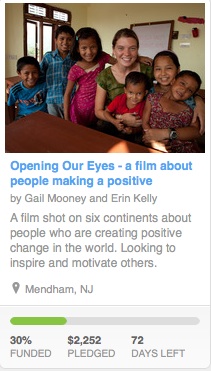
There have been other passion projects since these first two and my head is usually full of ideas that are rumbling around, just waiting for the right time to surface. I am in the midst of a project now, Opening Our Eyes that is perhaps the most ambitious one I’ve ever dreamed up. This past weekend I launched the project on Kickstarter.  Kickstarter is a website that posts creative projects for the purposes of finding funds. It’s a perfect example of crowd funding where one can donate anywhere from $1 to $10,000 to the project of their choice, and in the process make someone’s idea come to life.

I launched Opening Our Eyes on Thursday and within 3 days we reached 30 % of our goal. We still have a long way to go and have another 71 days to get fully funded.  The way Kickstarter works is that if you don’t get funded 100%, then all bets are off and you don’t receive anything.  So, I’m doing my best to do what I like the least and that is make a pitch for pledges.  My intent is to secure enough funds so that I can collaborate with a professional editor and raise the bar on the film that my daughter and I shot this past summer on our 99-day adventure around the world, about people who are making a positive difference in the world.

It’s really a win/win for anyone who chooses to give – even a pledge of $25 will get us closer to our goal and you’ll receive a DVD of our film when it’s finished.  So please check out our project on Kickstarter and pass this link along to others.  Ultimately our goal is to inspire and motivate other change-makers through the power of our film. We know we can do it with everyone’s help and it will make you feel good to give – it always does.

Add to FacebookAdd to DiggAdd to Del.icio.usAdd to StumbleuponAdd to RedditAdd to BlinklistAdd to TwitterAdd to TechnoratiAdd to Yahoo BuzzAdd to Newsvine