More Convergence – DSLR’s + Video = VSLR

It seems like this has been the year of the video capable DSLR or VSLR. Not only are manufacturers continuing to roll out new models but third party companies have made a big business out of selling attachments or add-ons for these cameras.

Dabblers as well as professional still photographers have gotten into video because the entry level has become easier and more affordable with the advent of these cameras. While traditional news crews haven’t embraced the new hybrid cameras yet, filmmakers have created a cult around them. I must confess that although technically I have had my hands on these cameras, I have not done any test runs using them in the field.  But it is on my list of things to do.

What’s Out There Now

The Nikon D90 shooting 720p was the first DSLR camera to shoot video in HD.  Canon followed with its impressive 5D Mark II which raised the bar by shooting full frame 1080p with external mic input and recently rolled theyout the Canon 7D with variable frame rates for under $2000!

The most attractive features of these hybrid cameras besides the price, is the ability to change lenses, have controllable depth of field and large sensors that work phenomenally in low light situations. However there are limitations that traditional video cameras that come at a higher price don’t have.  Camera stability is one problem due to how the shooter needs to hold the camera because they are designed to shoot in video mode with the mirror up. Since the camera operator must see and focus using the LCD monitor instead of steadying their eye up against the viewfinder, it’s harder to stabilize the camera when hand holding it. Audio capture is very basic as well and must be supplemented in some way.

Third Party Options

Because of these limitations, third party manufacturers have gotten in the game by designing add-ons. Zacuto

zfinderfeature
Z-Finder

has come up with a few interesting items.  One item is the Z-Finder DSLR Viewfinder, which is a device that fits over a 3” LCD and provides magnification for better focusing. It runs around $400.  Hoodman lpp3.0(front)provides a lower cost version called the Hoodloupe without the same optics but at a quarter of the cost.

An added benefit to using these viewfinders is that it provides another contact point with the shooter’s body and therefore provides more stability.  There are also camera support systems available that help remedy the need for better stability in “run and gun”

RapidfireFeaturepic
Rapid Fire

situations where the shooter can’t use a tripod.  Zacuto makes two stabilization devices, the DSLR Rapid Fire and the Quick Draw each designed with a different type of shooting situation in mind. In addition a Cavision has come up with a shoulder mount device the  RS5DM2SET-S.

Package for 5DII-8
Cavision shoulder mount

As far as audio is concerned, if you want to move beyond a supplemental external mic that’s plugged into the camera and use a more professional audio solution you’ll need balanced XLR inputs which will also enable you to use multiple external mics off the camera. Beachtek makes the DXA-5D for around $375 and juiceLink has come up with the juicedLink CX231 for about $300.
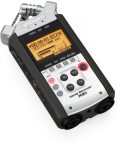
H4n_slant-web
Samson H4n

Or you can capture your audio with a stand-alone recorder like the Samson Zoom H4n, also around $300 and sync it later in post.

Regardless of how you ultimately “trick out” your VSLR (video single lens reflex)  you can be sure that there will continually be newer models and solutions as technology keeps moving forward.   Pro Video Coalition puts out a great newsletter online keeping us abreast of the latest tools.  Check out their DSLR Shootout where they test these hybrids and adaptors. Take Dirck Halstead’s Platypus Workshop now incorporating the new DSLR’s in the program. And become a Facebook fan of From Still to Motion for ongoing information and updates.  It’s an exciting time with loads of possibilities.

Add to FacebookAdd to DiggAdd to Del.icio.usAdd to StumbleuponAdd to RedditAdd to BlinklistAdd to TwitterAdd to TechnoratiAdd to Yahoo BuzzAdd to Newsvine

If the Idea Just Won’t Quit Ya – Take Notice

If anyone’s been paying attention to my last few posts you would have noticed that I’ve been very introspective of late.  That’s usually what happens to me when I’m about to make a change or embark on a personal project. '60's psychedelic VW vanI have found that when unexpected and random events happen in my life and I take notice and then question why – I’m ready for my next chapter.

I have a friend who is a freelance writer and lives nearby. We frequently take long walks through the miles of preserved natural open land that lie within our community.  We are both creatives and we’ve discovered that it’s a wonderful environment for conversation and bouncing ideas off of one another.  On a recent walk I was talking about an idea that just won’t leave my head and another thought that’s just starting to morph into a more concrete plan.

At one point she questioned that perhaps I should segway the ideas into assignments from magazines or online publishers – like that would somehow legitimize my effort.  I told her that if I have an idea that I feel so strongly about that I’m ready to proceed on my own  – then I didn’t feel the need to get validation from someone else. That my passion for the subject matter usually carried me through and was all the validation I needed.

I’ve worked on a quite few personal projects over the years, both still photography and video as well as combinations of both.  There hasn’t been one project that hasn’t been rewarding on many levels. Of course there’s the personal satisfaction and growth that I initially receive.  And there’s the incredible feeling I get from knowing my work has touched someone or had an impact on them.  And there are always the residual rewards that lead to new connections and future projects or jobs.

Someone once told me “pay attention to those thoughts in your head that just won’t quit ya”. So I think I will.

Add to FacebookAdd to DiggAdd to Del.icio.usAdd to StumbleuponAdd to RedditAdd to BlinklistAdd to TwitterAdd to TechnoratiAdd to Yahoo BuzzAdd to Newsvine

Converging Technologies and Photo Plus Expo 2009

I’ve been attending the Photo Expo for as long as I can remember, back when it used to be at the old Convention Center at Columbus Circle.  It changed over the years, growing in size, moving to Javits and now shrinking, taking up ½ the floor space it used to.  Times SquareThat could be yet another sign of the economy, or how the photographic industry has changed over the years – or both.
This year is the first year there will be a Video Pavilion, where manufacturers can showcase their products and attendees can get a glimpse of how the converging industries of photography and video continue to change the paradigm of how we deliver our visual message.

Another profound change on the floor this year is the absence of the Adobe booth.  I can’t remember a time when Adobe has not been an exhibitor at Photo Expo.  Has the economy played a part in that – or is it another sign of changing times in the photography business?

It will be interesting this year to observe who is exhibiting and what the new “cool” tools are?  Like last year when Canon displayed their first hybrid camera the 5D – a still camera that also shoots video – their booth, along with Nikon will be the “main attraction”. Video continues to be the hot topic.

Gone are the manufacturers of lab equipment, along with the last vestiges of film. Gone are Apple and Adobe – maybe next year?  Or will next year look more like NAB”s (National Association of Broadcasters) show in Las Vegas as we continue to move from ink and print to electronic delivery?

Making Still Images Move

Burlesque
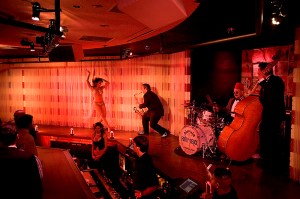
Burlesque club, Las Vegas (click image for motion sample)

I’m often asked how to prep still images and how to make them move in a multimedia/video piece.  My initial response to this question is to reply with a series of questions – “Why do you want to make your images move?” “What’s your motivation? What do you want to communicate to the viewer?” “Do you need sound and movement to better tell your story?”

I’m not one to do things just because I can – I need a reason.  For me a still image is an entity in and of itself – a moment in time to be studied and contemplated.  When I present still images in a multimedia presentation – those “moments in time” become part of a greater whole.  That new entity becomes a different visual message with sound and motion becoming the underlying spine of the piece.  Added information that’s needed to convey that particular story. The still images become sequences and the sound and movement of the piece create the “feel” and “pace” of the whole.

As far as the practical aspects of creating a multimedia piece – the first step is to choose an editing software that works into your workflow.  I use Final Cut Pro Studio on a Mac.  I use Final Cut Pro (within the suite)  if I don’t have a lot of images to edit but lately I’ve been using Motion (also included in the Studio suite)  – because it’s easy – once you know it. You don’t need the depth of these software applications  to create a simple multimedia piece.  There are plenty of software applications to choose from  – iMovie and FCP Express in the Apple family, Adobe Premiere (cross platformed if using an Intel Mac) , Sony Vegas for PC’s  and simpler programs like Soundslides or Audacity.

There are many tutorials on this subject – check out Ken Stone or Lynda.com – both great places to learn.  In the meantime I will share my recipe for how I size and prep my images for multimedia presentations.  Like anything else, there are hundreds  of ways to get to the same end – but these are my suggestions that I find work best.  Another note – I use large image sizes so that I when I bring the images into my editing timeline – I have room to zoom into the images without having to  enlarge them beyond 100% in the video application.

My sizing/prepping suggestions for still images:

RGB color mode

Srgb color profile for SD (standard def)

HDTV (Re.709) color profile for HD (hi def)

Tiff, PSD or PNG – better than Jpeg

Don’t over sharpen image – it will jitter on screen

Use de-interlace filter for web videos – but this is something you need to test – I don’t always like the effect this filter has.

Sizing – I always upsize my images 2.5 x needed for video timeline  if I will be moving them “Ken Burns” style. Below are different specs for HD and SD and different aspect ratios:

Standard Def – DV NTSC 4:3 – 1800x1350x72 (pixels)(res)

Standard Def – NTSC 16:9 – 2132x1200x72 (pixels)(res)

HD – 720p – 3200x1800x72 (pixels)(res)

HD – 1080i – 4800x2700x72 (pixels)(res)

It’s really never been easier to prep still images in an application like Photoshop because there are lots of built in presets. I always prep all my assets and import them into my editing software before I even begin to edit.  That way I don’t need to depart from the edit and lose a train of thought whenever I need to add a still image or other graphic.

Have fun – and when you do decide to move an image – ask yourself why first?

Why I (Still) Shoot Still Images

Even though I’ve been shooting motion for over 10 years, I still spend half my time shooting still images. When my story can be or should be told with images that are “moments in time” then a still camera is always my tool of choice.

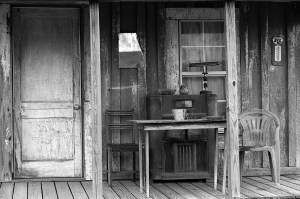
For me there is a certain timeless quality of a still image. Still images are meant to be explored by the eye while lingering on the “moment” captured. Perhaps a better way to explain the power that I find within still photographs is to show you some recent images I shot. Hopsons_shack

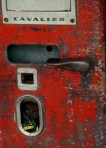
This past weekend I visited a favorite spot of mine. It’s an old plantation in Mississippi and every time I visit, I see it in a different way. But I always see it in a timeless way – it’s like time just stopped there.Hopsons_vending_J2X8487 Even though this plantation is worlds away from my cultural norm – I get a feeling of comfort mixed with a bit of melancholy for my own past when I’m there.
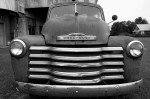
I could put these images in a multimedia format and add a narrative or a music track. But the question I ask myself is why? Hopsons_car_grillJ2X8622Will it add or will it distract? What piece of music should I use and what will that add to the story? Will the music overpower the piece – because many times it can. And too many times people try to add music to mediocre images to make them more exciting.Hopsons_car_J2X8561
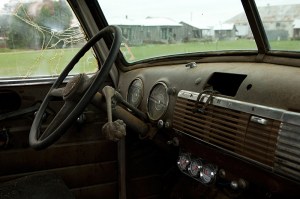
A still image has the power to capture the eye of the viewer and make them want to know more. If an image I make draws the viewer in – to see that moment in time – just as I saw it – when I shot it – then I’ve done my job as a storyteller.

Add to FacebookAdd to DiggAdd to Del.icio.usAdd to StumbleuponAdd to RedditAdd to BlinklistAdd to TwitterAdd to TechnoratiAdd to Yahoo BuzzAdd to Newsvine

Finding Your Passion

How does one find their passion?  How does one even define the word – passion?  The dictionary gives a few definitions. I’ll cite two:
– “intense or overpowering emotion such as love, joy, hatred, or anger.”
– “the object of somebody’s intense interest or enthusiasm”

Passion isn’t something you can teach someone – you just have to have it inside of yourself.  If you’re passionate about something – you just know.  I’m a photographer and a filmmaker .  But my passion is “telling the story” and I use my craft as a means to that end.  I’m interested in the human story and the cultural context that gives birth to those stories.

My insatiable desire to seek out and explore the human story has led me down many wonderful paths in my life. One of those paths led me to shoot a personal multimedia project on The Delta Blues Musicians.  My goal was to shoot environmental still portraits– as well as shoot video interviews of them .  I met my goal – at least in terms of creating an exhibition of still images and a short documentary – but I’ve never thought of this project as really being finished.  And that’s because I’m so passionate about the subject – “the blues”.

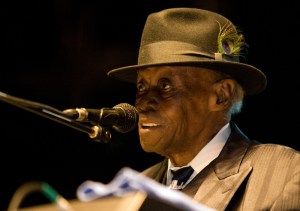
This past Friday, I headed down to Mississippi for Pinetop Perkins homecoming.  PinetopPinetop Perkins is a legendary boogie woogie piano player in the blues world.  He’s 96 years old and still going strong.  He is living proof of a man who is “living his passion.  I’ve become friends with Pinetop’s manager over the years and yesterday we got together over lunch to catch up on what was going on in our lives. I hadn’t been to the Delta for a few years and she was giving me the latest news on some of the musicians that I had interviewed for my film.  Four have since died – Little Milton, Robert Lockwood Jr., Ike Turner and most recently Sam Carr.

Pinetop’s manager is a very interesting woman who used to be an Anthropology professor at University of California at Berkeley.  She taught interview techniques as part of her ethnology classes.  When I had originally called her up to request an interview with Pinetop – she turned me down.  But not being one to take my first no – I asked her to check out my website and I also sent her a portrait I had taken of Sam Carr.  When she saw the photo I had taken of Sam – she changed her mind – she gave me my time with Pinetop.  She said that after she saw the portrait I took of Sam – she knew that  I understood “cultural context”

Yesterday at lunch she paid me another high compliment.  She told me that while she couldn’t quite dissect my “interview technique” (and she kind of rolled her eyes as she said it – because at times my techniques are quite comical) – she said that people just seem to be comfortable with me and  because of that they wanted to talk.  She also told me that I’ve been the only one to get a smile out of Robert Lockwood Jr. in an interview – but that’s another story.  Those comments were rewards in themselves for the efforts I’ve made on this project over the years – but there have been so many more.  Many rewards – all because of my passion for “the blues”.

Later that evening I got a chance to see Pinetop perform again.  I was backstage at the main festival stage – it was unusually chilly and I had a blanket with me.  Pinetop was sitting in the wings and I gave him my blanket as he waited for his cue.  He seemed so small and fragile.  When he got up to walk on stage and take his place at his keyboard before the crowd – he came alive.  And when he played his first note – I caught “it” in his eyes – a passion for his music and more than that – a passion to play for “his people”.  He didn’t want to leave last night – he played another song for “his people” and raised his arms in joy as the crowd embraced him.  It was a moment I’ll never forget.

What Camera Should I Buy?

If I had a dollar for everytime someone asked me what camera they should buy – I could retire.  These days I get a lot of “what video camera should I buy?”  That question is almost impossible to answer without more information.  So I usually reply with my own onslaught of questions “What are you going to be shooting?”, “What editing software will you be using?” , “Are you concerned about getting “natural sound” or will you be using the “video” and not the “audio” from the camera?”.  And of course the big question “What’s your budget?”.

One thing that complicates making a choice in video cameras is that unlike still cameras – video cameras shoot different types of files – mpeg2, native quicktime, HDV, AVCHD.  In addition some shoot to tape, some shoot to cards and some shoot to discs.  Then of course there’s the basic consideration of SD or HD.  And not all HD files are alike.  Sounds confusing and overwhelming doesn’t it?  And it can be so my advice is always to work backwards.

Start by identifying the type of shoots you’ll be doing – corporate interviews or beautiful imagery intended to be shown to a music track.  Where will it be shown?  Broadcast? Web? DVD’s?  And how will you edit it? What platform? What editing software? To help guide you with selecting the right camera for the editing software you have or intend to purchase I have come across some great links to compatablity charts. Adobe Premiere and Final Cut This is a great place to start to see if that reasonably priced prosumer camera that outputs AVCHD files will work with the prosumer version of the editing program you have or will you have to purchase the full pro program.  I have seen lots of posts on listservs with people who need help editing files from the camera they just bought and loosing a lot of time in the process, not to mention the frustration they put themselves through.

There’s all kinds of cool cameras coming on the market everyday and lots of people jumping on the bandwagon as seen in the success of the RED and the hybrid Canon 5D II. http://tiny.cc/KmAOK There’s a lot of great things about both these cameras but before you plunk down the money – ask yourself if it’s the right tool for you.  Unless money is no object, you’ll want to make sure that your investment in a camera will serve your purpose.  There’s a tool for everything.  Here’s another interesting camera that recently debuted.  If you’re an action adventure shooter – it could be the camera for you.  http://tiny.cc/3owdX

My advice is to make a pros and cons list before you even look at cameras.  That way you won’t be overwhelmed by the tools – but will choose the tool that is the right tool and the “means to your end”.

Mobile Video Explosion

Apple’s new iPhone 3Gs has had a huge impact on YouTube since it’s debut this month. In fact video uploads are up 400% each day since the new iPhone came on the market. But aside from the impact of the iPhone, YouTube uploads have increased 1700% over the last six months.

Those statistics are not only phenomenal, but could be the tip of the iceberg when it comes to uploading and sharing videos. No doubt there will be a deluge of some really bad videos that will be bounced around.  But just think how this technology can effectively  convey your message or your company’s message – if presented in a creative, and strategic way. When a web video is done well – it can circle the globe exponentially and virally in a matter of hours. Never before has it been as easy to share video.

The downside of course to any new technology or gadgets is that people jump on the bandwagon without first defining what it is they want to do with it – and why. Just like with the rise in popularity of social media marketing, a business needs to determine how and when to embrace these new tools and do so in a way that’s consistent with their brand or message.

Some thoughts on how you can utilize web videos in your business:
1. How to’s or instructional videos
2. Behind the scenes showing how you or your staff work
3. Client testimonials
4. Relaying your company’s message

And remember just because every one is doing it – doesn’t mean it’s right for you. You need to answer that question for yourself.  But if you do embrace video in your marketing efforts – if done right, it can create awareness around the world and it’s never been easier.

Travel and Video

When I started out as a still photographer over 30 years ago, I knew I wanted to travel. And that’s exactly what I did, I traveled the world on assignment for magazines such as National Geographic Traveler, Travel & Leisure, Islands, Smithsonian and many more. I shot over 18 stories for National Geographic Traveler alone.

Over those years, I found myself doing a lot of observing as well as interacting and listening to people from cultures around the globe. I was fascinated by their stories. I documented my observations through my images and when it all came together perfectly my visuals told their story.

Many times I would feel the need to add audio or movement to fully capture the spirit of a place. When digital video came along and now HD it was a dream come true. Technology making all that possible for an independent shooter.

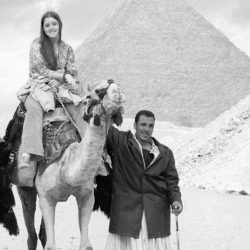
Travel and the medium of video are a perfect match. Adding the sounds of a destination or a recorded conversation adds another dimension to a story. Much of what I remember from past trips I’ve taken are the sounds of the environment. The prayer chants from a mosque in Giza at dawn – the bells of a sleigh in the snow in Banff- a yell from a street vendor in NYC – children laughing in a school yard in Blarney, Ireland. All ideal elements for a video format.

As well as adding the dimension of sound, shooting video allows you to add movement. Photographs are moments in time – video is time in motion. When you shoot travel, you want to immerse yourself in the place you’re in to get a full sense it. Whether it’s dance or a bustling market or a ferris wheel, video captures the energy of a place. I got fabulous footage from shooting from a ferris wheel. It acted like a giant jib when I shot from the ride as the wheel came around.

As far as shooting travel, adding video to my skills has opened up new ways of seeing many places I had been to dozens of times before. And with smaller and more discreet cameras, I can be less obtrusive. Video and travel – a perfect match.

Trigger Finger

One tip I give to still photographers who segway into video is “don’t shoot like a still photographer”. By that I mean don’t fall into the trap of turning off the camera too soon – let it run. Still photgraphers shoot moments in time – video shooters shoot time in motion.

I had a still photographic assignment a few years back to shoot a story on the LL Bean’s workshops. LL Bean gives skeet shooting lessons and fly fishing lessons etc. I set out to cover a group who would be learning the basic techniques of how to shoot skeet targets with a shotgun. I got to the location early and had some time to kill – no pun intended. The instructor asked me if I wanted to give it a try. Now I’m a person who had never even seen a gun up close, let alone shot one – so I declined. But after about 10 minutes of gentle coaxing, I said yes.

The instructor gave me safety tips on handling a firearm and then I was ready to try my hand at shooting the clay targets. He pulled – I aimed – and shot the target dead on. We both laughed and he said – beginners luck. He told me to give it another try. He pulled – I aimed and I shot it dead on again. After the third try with the same results – he looked at me and said that he thought I had been kidding him when I told him that I had never picked up a gun before. Then it occurred to me that I’ve been aiming and shooting “targets” my entire career as a still photographer. It had become a natural instinct.

So when I teach still photographers how NOT to shoot video like a still photographer, my biggest challenge is to help them overcome this learned instinct of shooting “moments”. It’s a tough instinct to break but stop yourself and let the camera roll on.