Hitting a Nerve

English: camera Français : video
English: camera Français : video (Photo credit: Wikipedia)

What an interesting week it has been. This past Friday (the day before a long holiday weekend), on impulse, and feeling a little lazy, I shared a link on Facebook to a blog that I had written 8 months ago, How Motion is Changing the Future of Photography.  I didn’t expect to get thousands of hits in 2 days time – it had barely gotten noticed when I posted it the first time, back in February, 2013.

What had happened was that Rob Haggart linked to it from his blog, APhotoEditor and it went viral after that – all around the world.  That’s what amazes me about the age we live in, that something someone says, or writes can be heard globally in record time.  It truly demonstrates the power of “one”.   It’s staggering and something I never would have imagined some 35 years ago when I began my career as a still photographer.  In fact, most of what is happening now in photography. I never could have imagined – not in my grandest dreams.

What surprised me most about the comments I received from that post, was that most folks just couldn’t begin to imagine the future that I was contemplating in my writings. With the convergence of cameras, in regards to stills and video, I imagined a future, where a still image might not be captured by a “still camera” or by a “still photographer” for that matter.  A still image may come from a “frame grab” captured by a video camera.  I struck a nerve for sure, and most people thought I was predicting the demise of still photographs – perhaps because of Ron’s headline, excerpted from my text “ I think we are at a tipping point as far as the future of the still photography business”.

To be clear, I do think the photography “business” is at a tipping point, but not just because of the convergence of still and video cameras, but because of the glut of imagery.  The iPhone has been the game changer in that sense. Everyone has become a photographer and has a camera on them at all times, taking, sending and sharing millions of still images globally every day.  What that means in terms of the still photography industry is that if you want to stay in business as a professional photographer, you will need to create something that is authentic and unique to only you AND more importantly, you will need to provide a product or service that a market is willing to pay for – and pay enough that will sustain you in an industry that requires a reinvestment in tech and gear every two years, minimally.

In my attempt to “get off easy”, by rerunning a blog that I had written and previously posted more than a half a year ago, I learned a couple of things:

  1. Timing is everything
  2. It’s all perspective.

That’s the one good thing about getting older; I have a lot more perspective.  I’ve learned that the future is not at all like I imagined it would be.  I never could have imagined half the things that are happening right now.  And I’m sure that if I’m still alive 20 years from now, it will be a future filled with things and ideas that I could never even begin to imagine.

I will be moderating a panel at PPE this year, sponsored by ASMP “How Motion is Changing the Future of Still Photography”.   Our panelists include, Vincent LaForet, Brian Storm and Chase Jarvis.  Join us, it will be a discussion you won’t want to miss.

The Biggest Mistake Photographers Make in Video Post-Production

English: High end linear editing suite, 1999.
English: High end linear editing suite, 1999. (Photo credit: Wikipedia)

I’ll make it simple and provide a quick answer to the title statement  – “What is the biggest mistake photographers make in the post production process, when they are just starting out?  They think they need to do it all them selves.

Photographers are independent creatures by nature. Most are solo entrepreneurs who create visual content for a living. But when they enter into the business of video production, unless they have decided to work solely as a hired camera operator, they will have to deal with a lot of other creative needs and variables – producing, lighting, shooting, sound, editing, music, motion effects, sound mixing, and color grading to name a few.  Unless you are pursuing a career as a backpack journalist, which I have the utmost respect for; you can’t possibly do it all.  If you try, you will either go broke, or you will put limits on the quality of your product.

I know how to edit – meaning I know the editing software.  But that doesn’t make me an editor.  I realized early on, how the craft that a good editor brings to a project could greatly raise the bar on what I produce.  Generally, I try to look at all my shot footage and do a very rough first edit.  This not only familiarizes me with my material, it helps me keep costs down. I did that on my film, and with 150 hours of footage, it was a long and tedious process.  But it also made me intimate with what I had shot so I was helpful to my editor and it made the collaborative process very creative and focused on the story.

Too many photographers stop them selves from getting into video because they think they have to learn how to edit and that it would be another huge software program to learn.  Don’t let that be a stumbling block.  You can delegate that task to someone who already knows how. More than likely you won’t be composing music for your videos or creating complex motion graphics. You don’t need to learn and do everything and in fact, working with an editor frees you up to start working on another job.  It’s a more profitable use of your time, especially when you are invoicing the post-production costs as part of the job.

There are times when I love to work in a solo style or with a very small crew.  I love the intimacy it brings to the production.  But when it comes to post-production, working in a collaborative way with other professionals is one of the things I love most about video production.  It has been a very powerful and creative force in my life and has challenged me in wonderful ways.

One Million Miles

Yesterday, I took a look at my United Airlines frequent flyer statement, and realized that I had flown 822,571 miles with that airline!

United Airlines Boeing 777–200 landing in the ...
United Airlines Boeing 777–200 landing in the Blue Tulip livery. (Photo credit: Wikipedia)

I was 177,429 miles away from a million lifetime flight miles. And that’s just the miles that I’ve flown with United!  It doesn’t include all the miles I’ve flown on other airlines, nor any of the miles I’ve flown using reward tickets. And it doesn’t include the miles I flew traveling around the world during the making of my film, Opening Our Eyes.

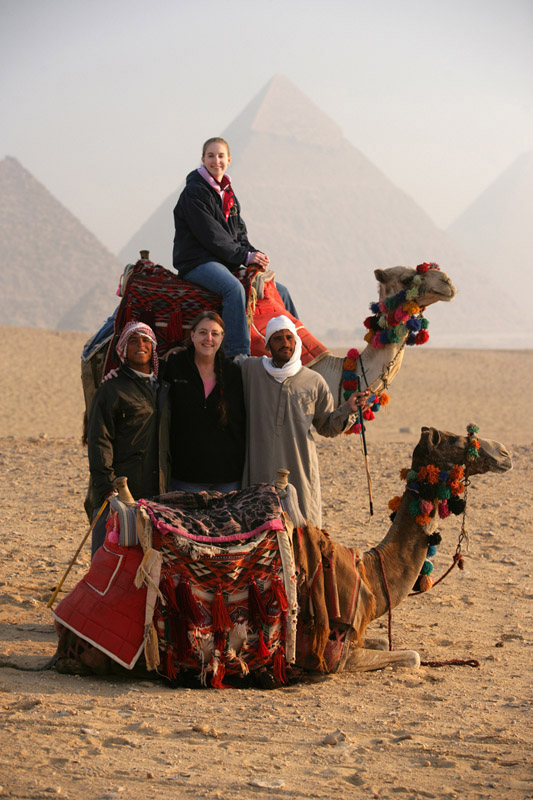
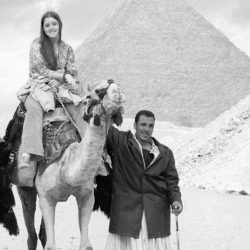
As I looked at that number, and thought about all those miles, Gail Mooney and daughter Erin Kelly, Giza, EgyptI couldn’t help but think about the destinations, the purpose and the motivation behind them. When I set out to live the life of a “traveler” at the young age of 19, I had absolutely no idea of how that would mold my life.  As a professional photographer, I’ve gone to the corners of the globe on dream assignments for magazines and corporations and loved every bit of it – my work has always been my pleasure.  When I wasn’t working, I’d still find a reason to travel, whether on a press junket or simply exploring the world with my husband and daughter.  Some of my favorite family memories are from our travels to Peru and Egypt.

I will always be a traveler.  I am a nomadic creature and I have a huge curiosity about our world and its people. For me, travel is more than going from point A to point B. Sure, there are plenty of times, on corporate jobs when I travel somewhere to photograph a particular person or a place and I’m never there long enough to get a sense of the place I am in.  But, for the most part, I travel to a destination to find out more about that place and tell the visual story of that particular place and its people.

As I thought about all those miles traveled, I started to think about reaching the “Million Miler” status with United.  I was only 177,429 miles away!  That may seem like a lot to many of you, and it might seem like no big deal to others, but to me it seems like a very attainable goal.  In fact, when I started to think about reaching that goal, I thought that I could easily attain that in 3 year’s time – just in time for a milestone birthday.  That’s something to consider and I shall.  I certainly have the motivation; I just need to define the destinations and more importantly the purpose.

Any suggestions?  I’m open to your thoughts.

Condensing a Life

I have lived in the house that I am in for 19 years. For a kid who grew up going to a new school every year until the fourth grade, this has been the longest I have ever lived anywhere.  My husband and I raised a child in this home.  We also work here, running our photography business out of a separate section of the house.  What that means is that we’ve done a lot of living in this house and with that comes the accumulation of “stuff”.

When you live the kind of life I do, always moving forward with new projects and exploring the world, you don’t realize what a past you’ve had until you begin the process of getting rid of things you no longer need.  That’s what I have been doing recently, sorting through years worth of “stuff” and tossing what I don’t need anymore.

I spent the day yesterday, taking on just one small corner of my office, going through folders that contained everything from old stock photo delivery memos, caption information for dozens of destinations, financial information, old contact info, lists of goals and good intentions and LOTS of correspondence.

And that’s where I got totally sidetracked from my mission, looking through almost 20 years of correspondence.  There were many letters from a friend who died long ago.  My friend had also been a mentor to me, and his letters were thoughtful, insightful and full of encouragement. I suppose I have kept those letters all these years to remind me of where I was at during that time in my life.

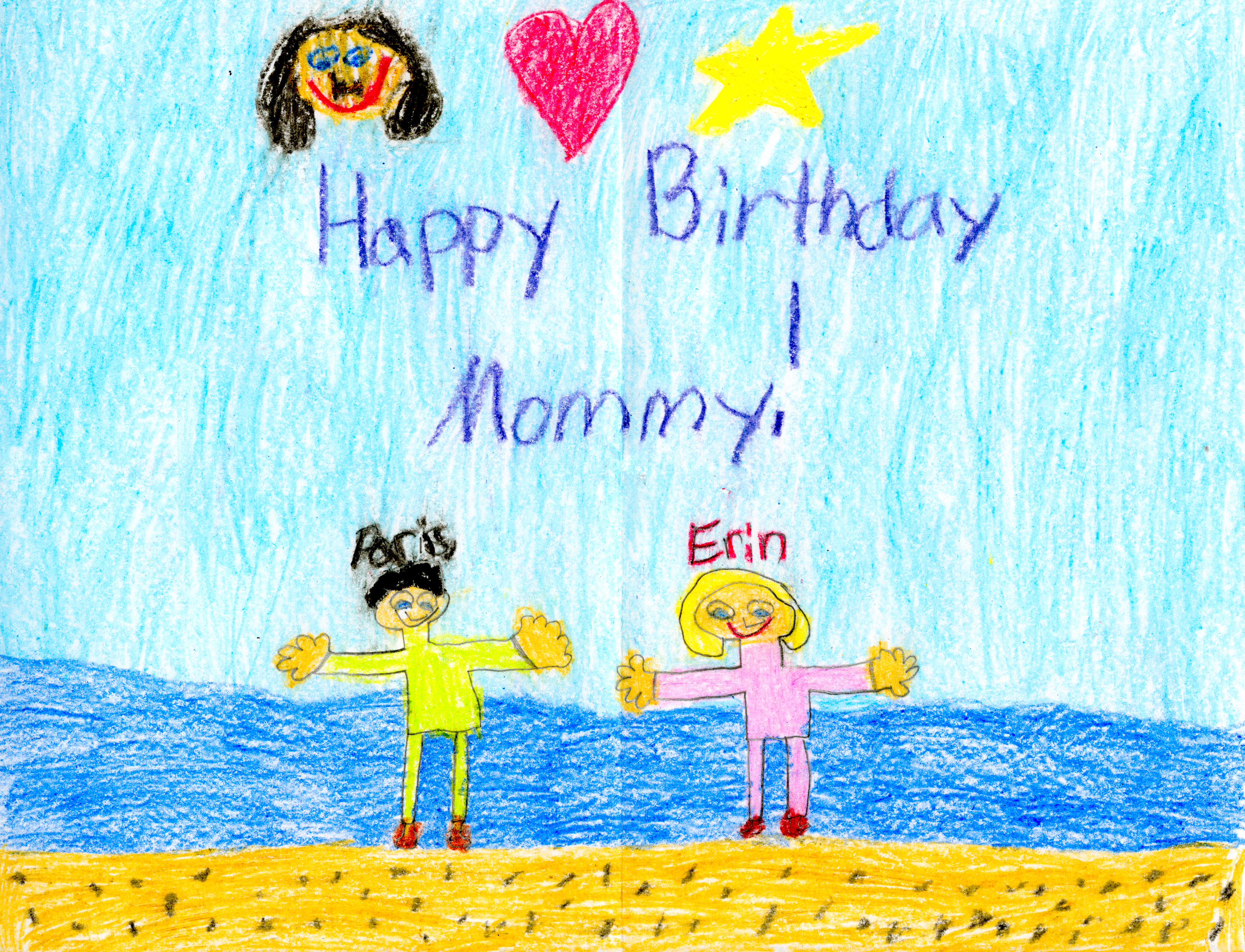
There were plenty of other letters and note cards from people who have been part of my life, including a card from my daughter withErin+Paris at the beach 1995 Happy Birthday Mommy a crayon drawing inside that she had made.  It brought back of vivid memory of when I had received it.  It was my birthday and I had been on a very long assignment, shooting in France, and as great as that sounds, (and it was) it was also hard because I missed my family terribly.

It was a bittersweet experience, going through decades of correspondence, but I’m grateful that I kept some of it.  It was like tangible evidence of chapters of my life and it somehow felt more real than my electronic archives do.  And so, while I spent hours shredding documents, feeling like I was in the movie Argo, there’s just some things I’m not quite ready to let go of. For now those tangible memoirs will stay in that corner of the office until the next edit.

How Video Has Helped My Still Photography Business

After a slow spell, which I can’t say I ever get used to after 30 plus years of freelancing, the phone started ringing.  The calls were all in regards to still photography assignments.  Having been a still photographer for most of my life, that wasn’t unusual, but what was interesting was that I beat out my competition – other still photographers – because I knew video.

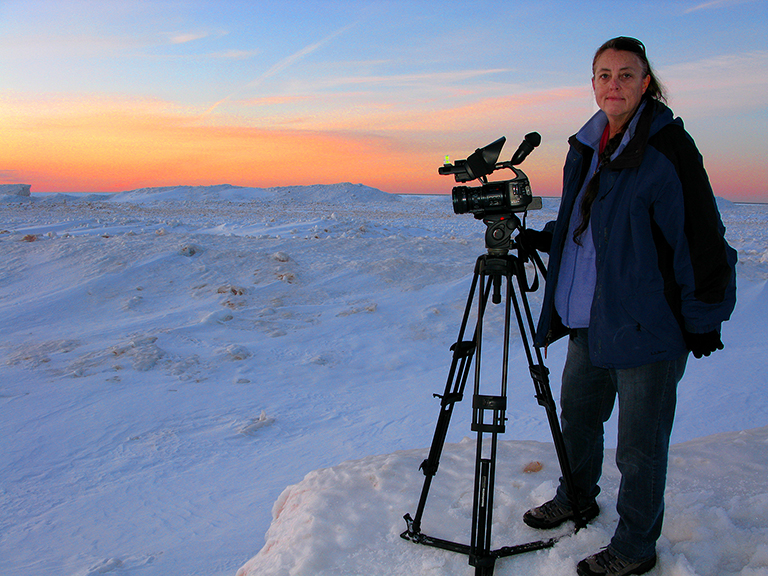
Times have sure changed. When I started exploring the medium of video, over 15 years ago, I didn’t abandon my still photography10Ft.WaveI simply added another skill set.  Most of my clients over the years have hired me to shoot one or the other, and sometimes both.  But what I see happening now is that as print moves to electronic delivery, my still photographic clients are also looking for a “photographer” that can shoot video components on a still photography assignment.  They need multimedia content for mobile devices and online platforms that cry out for movement and sound.

I don’t think of myself as a “still photographer” or a “videographer”.  First of all, I absolutely hate the word videographer because it smacks of a dated notion of what video used to be.  I think of myself as an “imaging professional” or sometimes a “new media producer” or sometimes just a “storyteller” because that’s what I do – I tell a client’s story, or deliver their message to their targeting audience.  I don’t define myself by the tool I use.

With convergence happening not only in the cameras we shoot with but in the media we create, I will opt for the “tool” or camera(s) that enable me to tell the story I need to tell, in the best way possible.  I’ve been thinking that way since I first forayed into video.  It’s nice to know that now my clients are thinking that way too.

Photographers – Grow or Die

I’ve been a professional photographer for over 35 years.  While some may look at that sentence and think I must surely be “over the hill” – others may look at that and say “wow, she must have been doing something right, to stay in business that long”. I suppose, it all depends on the outlook of the person.

Personally, I truly believe that the secret to longevity in any career field is to be open-minded as to how they define themselves.  One thing I have never done is define myself by the tools I use. Just because one has expensive camera gear, it doesn’t make them a “professional photographer”.  If that was the case, then who are you if you have a camera that happens to shoot both still images and video?

I’m really amazed when photographers define themselves by the tools of their trade.  I think with the way things are going in terms of how technology continues to affect our industry, if a photographer defines him/herself in such narrow terms – it’s the kiss of death.

When technology enabled me to explore video production without having to make a prohibitively investment in expensive “tools”, the creative part of me wanted to take full advantage of those new opportunities that were coming my way.  After all, I’m a storyteller and I shouldn’t have to limit myself to one medium, but rather choose the

Category:Wikipedia requested photographs of ph...
(Photo credit: Wikipedia)

right  tool (camera)  to use that best tells the story that I need to tell.  Sometimes that means delivering the message in video and sometimes the story is better told with still images.

Because I was an early adaptor of video (at least from a still photographer’s point of view), many of my peers equate me with just shooting video.  Many assume I’ve abandoned still photography, which couldn’t be further from the truth.  The real truth is, my clients see me as an imaging professional, who is able to deliver their message with the medium(s) that is best suited for the job.  These days with print publication giving way to electronic delivery, clients are delighted that I am able to fulfill their needs because I am proficient in both video and stills and most times they need both.

My curiosity for exploring a variety of mediums and tools has not only kept me in business – it’s kept me from getting jaded and stale. I am a photographer.  I am a director of photography.  I am an imaging professional and am thrilled to still be in business at a time when we have so many tools and options in how we are able to deliver a visual message.

10 Ways Photographers are Their Own Worst Enemies

  1. They talk themselves out of things.  – Telling themselves that it wouldn’t matter if they learned new skills or shot new images or whatever they didn’t want to make the effort to do.
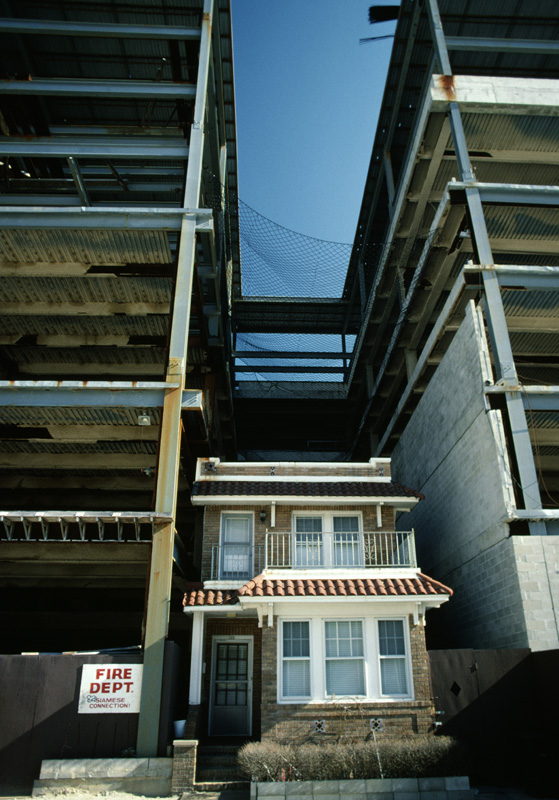
  2. They try to “educate” their clients (sometimes a bit too much) instead of collaborating and possibly learning from them.  A lot of “older” photographers are like this when they are working with younger art buyers or directors. I think the energy needs to work both ways.House surrounded by construction site, Atlantic City, NJ
  3. They give themselves an A for effort for starting something but too many times their starts lead to nowhere if they don’t have an end goal in mind.
  4. They don’t open themselves up to networking with others by attending industry meetings or events.
  5. They treat their clients like their enemies where one needs to win instead working toward a positive outcome for both.
  6. They make the mistake of creating for an audience, instead of creating for them selves.  (Thanks to Seth Godin for that thought)
  7. They take workshops or pay for a service and then don’t utilize them. I’ve been guilty of this too many times.
  8. They don’t shoot for the pleasure of it.
  9. They rely too much on commissioned work instead of taking advantage of new opportunities and ways in which to market and sell their own projects.
  10. They don’t stay true to themselves.

Ten Things Photographers Should do in 2013

Be optimistic – I’m going to start with the hardest one of all, because it’s really difficult to be optimistic these days.  But I find that if I can maintain a positive attitude and turn my thoughts to what is possible, I actually open myself up to more opportunities in my life, instead of creating more roadblocks.

Be open to possibilities. – Be more flexible in how you perceive things and who you are. 500x_housecanon copyChange is always happening, but it’s usually gradual.  Most people don’t take notice until “change” forces their hand to act.  It’s always better to be proactive than reactive so embrace “change” as an ever-present fact of life that creates opportunities for those who are open to seeing them.

Collaborate – Photographers are very independent creatures and collaboration is not part of their norm. As the “photography” business continues to change, photographers will find that collaborating with other artists will make their own businesses stronger.

Diversify – I’m not quite so sure why so many photographers are so rigid in how they define who they are and what they do.  Having a “style” is great, but the trick is to not to be so narrowly defined by that style, so that when styles change, you don’t find yourself obsolete by your own design. It’s kind of like being type cast, where your audience or your clients can only see you in one way.

Concentrate more on “the story”– I had the opportunity to speak with a lot of still photographers and filmmakers this past year and I began to notice a difference in the conversations I was having with each.  Most times, filmmakers would be telling me a story, whereas still photographers would be telling me how they executed a photograph, or essentially telling me the “back story” of the creation of the image. It’s all interesting but “the story” is the bottom line – if that doesn’t come through to the viewer – the rest doesn’t matter – including how it was executed.

Be authentic – be true to yourself.  That means that you have to trust your gut instead of second guessing it.  This is hard, especially when things don’t always work out the way you had hoped.  Step away from the “noise” and listen to the voice inside.

Fail more. – Rejection is a tough pill to swallow but it usually means that you are either pushing yourself to try new things, you are too far ahead of your time or it just wasn’t meant to be.  If you look at successful people you’ll see that most have had failures and rejections in their lives but they stuck with it – instead of letting failure defeat them.

Self-Initiate more projects. – I don’t like to call non-commissioned work, “personal projects”. That co notates that there is no monetary value and these days, just the opposite could be true.  With more and more lopsided contracts  being presented to photographers for commissioned work, a photographer has a better chance to make more money and keep ownership of their work by creating self-initiated projects.  But they need to be prepared to work hard.

Forget about the past except to learn from mistakes. – You can’t change the past but you can learn from it and then, move on.  Look toward the future but make sure you take time to enjoy the “now”.

Realize that in the scheme of things, you are just one small speck in the universe. – I think we all get way too stressed about things that really don’t matter and we let those things control our life.  When we become more conscious of that, we really begin to live life.

The Difference Between Photographers & Filmmakers

Red carpet of the Palais des Festivals et des ...
Red carpet of the Palais des Festivals et des Congrès during the 2001 Cannes Film Festival. (Photo credit: Wikipedia)

I am winding down after a couple of intense months, traveling the film festival circuit with my documentary Opening Our Eyes.  I have enjoyed every bit of it, but it wore me out – in a good way.

I find that when I am “out there”, I get richly rewarded in many ways.  I think what I enjoyed the most about the film festivals, and what was the most beneficial to me, was the opportunity to dialog with other filmmakers.  I learned a lot in the process. But what stood out to me was how different these conversations were from conversations that I have with my still photographer colleagues.

Many times the conversations I was having with other filmmakers were centered on a story.  That should come as no surprise because that’s what filmmakers do – they tell stories.  But filmmakers tell stories “cinematically”, so when they are talking about the story that they are currently working, or a story idea they want to pursue, they speak in great visual detail so I see a very clear picture in my head.

My conversations with my still photographer peers, in terms of craft, are more apt to be about how they created an image.  Photographers generally talk more about the role they played in making the photo, like how they lit it or the gear they used.  Sometimes, photographers will tell me a story about what they went through to make a photograph and those stories can be very interesting and entertaining, but again the conversation is more about the execution of the image – than the story of the image.

Lately I’ve been trying to figure out how and where I fit into the mix. The truth is, I remain in the middle – a true hybrid.  I realize that ever since I can remember, I have always seen stories playing out cinematically in my head, so I guess I have always had a filmmaker’s mind even though it lay dormant for most of my professional career.  On the other hand, as a still photographer and one who has been an observer of life through my camera I see things like light and composition.

So, I am a true hybrid and I can see my still photographic “eye” in the motion work I create. Others who have seen my film have remarked about the composition and lighting, because it does look different and stands out from other documentaries.  Sometimes that has been a good thing and sometimes not.  Regardless, it is what it is – a creation from a still photographer’s eye applied to motion.

Embrace the differences – see what happens.

Copyright, Contracts and the Independent Photographer

Most photographers hold copyright sacred.  By law, (in the United States) a photographer holds the copyright to his or her work, unless they transfer it to another person, company, institution or organization.  Generally, this happens in a “work for hire” situation.  But it appears that this is becoming more and more the standard in contracts between photographers and the clients who are commissioning them.

This is happening more frequently in editorial markets, where magazines see the added value of the photographs that they commission, beyond their original usage and want to keep that additional revenue, rather than relinquish it to the photographer.  Many publications have partnered with stock agencies for the purpose of “reselling” the images.  Historically, photographers would benefit from relicensing their photographs when shooting for publications. Editorial assignments paid much lower rates than commercial commissions so in return a photographer would receive a credit and in most cases could make additional money by relicensing their images for other uses.  That is quickly changing.

Photographers have been so narrowly focused on just holding on to their copyright, they haven’t been paying much attention to the details in the contracts. Some contracts being offered, transfer the photographer’s copyright to the magazine and in turn offer the photographer a small percentage of any future commissions made from the “resale” of their images, but this of course is a percentage of the magazine’s commission after the stock agency takes their cut.  A lot of photographers think that’s better than not getting anything at all.  But is it?

What’s most alarming in some of the recent contracts that I have seen, is a clause that states that the photographer will hold the magazine harmless if there should be any legal consequences resulting from their images.  So, contractually, even though a photographer no longer holds the copyright to the images they were commissioned to create, nor maintains any control over how those images are used (by the magazine or the stock agency) they are liable if there are legal consequences.

The devil is in the details.  Read the contracts. Do the math and ask yourself if you’ll still be in business in 5 years.  As for me, I see new opportunities beyond commissioned work and one of the many rewards is that I will hold the copyright to the images (still or motion) that I create.