Why Photographers Need to Stop Thinking of Video as a Market

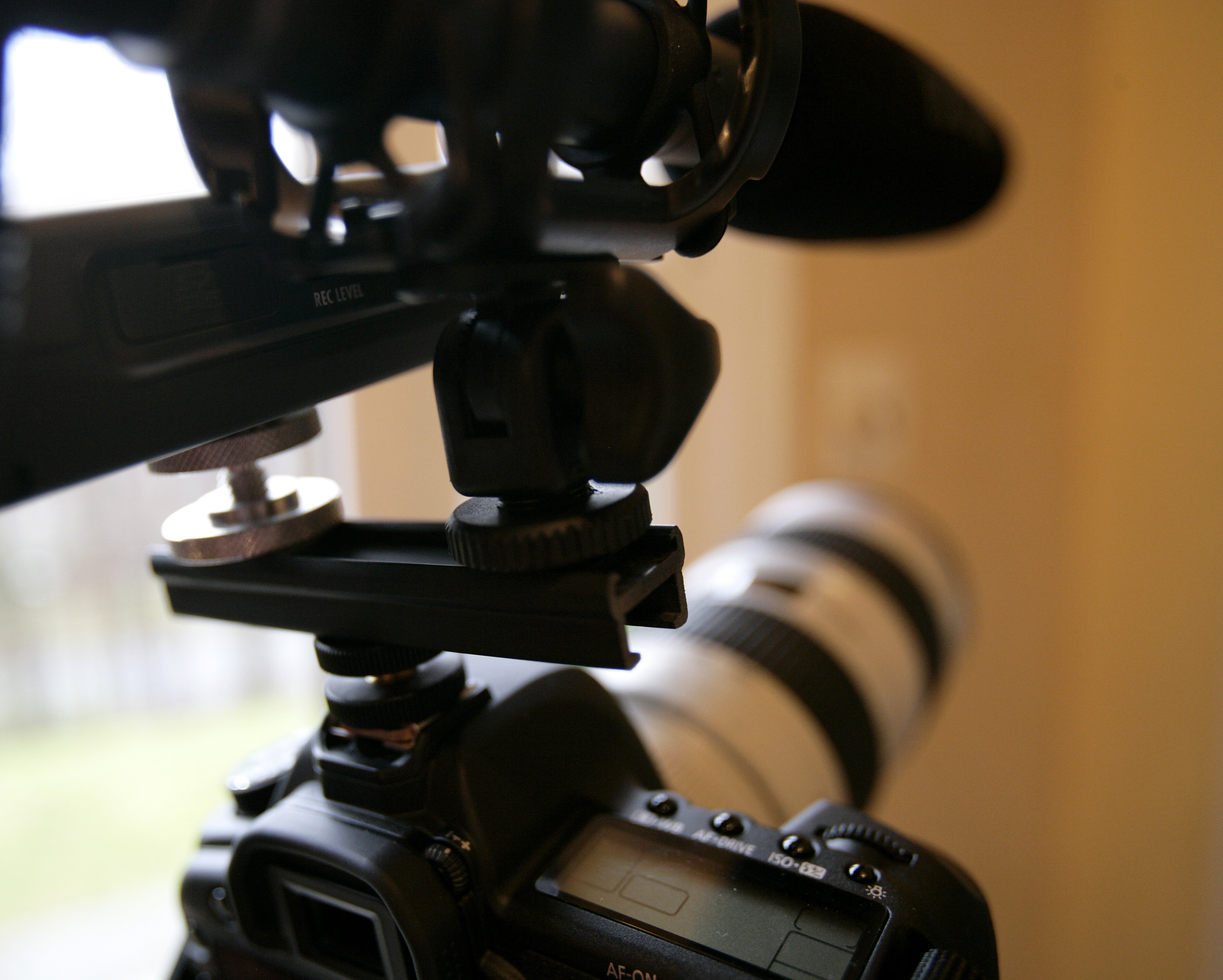
I find that many still photographers I talk to either want to “get into video” – or they don’t.  In either case, most photographers think of video as an entirely separate market. The truth is, video is not a market at all.  It’s simply another visual medium a “photographer” can use to express themselves with, convey a story, or hopefully do both.

I have been a still photographer for over 30 years and a motion shooter for over 15, but I have been a storyteller since I started talking.  I have not abandoned my still photography, by any means, In fact if anything, adding motion to my skill set has made me a better photographer.

These days, I work with whatever medium that best conveys the message or story that I need to deliver.  I not only think about that in creative terms but also in how the story will be delivered and to whom. Last week

English: Cover of the February 17, 1933 (vol. ...
English: Cover of the February 17, 1933 (vol. 1 issue 1), first issue of News-Week magazine (now Newsweek). The issue features seven photographs from the week’s news on the cover. Featured are: Adolf Hitler, Franklin Roosevelt, Joseph Stalin, Franz von Papen. The issue has 32 pages and cost 10 cents. (Photo credit: Wikipedia)

Newsweek announced they were no longer going to publish a print edition. Clearly that will have a trickle down effect on paper sales, printers, advertising agencies, on down to photographers. It won’t just affect photographers shooting for Newsweek, but will also have an impact on commercial photographers as well. It will affect many markets.

We, as a society are communicating differently and everything is in flux because of it. People are getting their news immediately and on demand, on their phones and other mobile devices.  How can a print edition of a news magazine compete with that?  It can’t. How will advertisers react to that?  That’s the million-dollar question, isn’t it?  How can an advertiser monetize the “mobile platform”?  Do they make a viewer watch a short ad at the front end of a story?  As we communicate more and more using smaller devices, advertisers and marketers will need to come up with new ways of reaching their target audience.

Technology is a double-edged sword. It forces change on all of us but it also opens up opportunities.  The advertisers will be able to know exactly the audience they ARE attracting, based on information gathered from analytics.  Independent photographers can use technology the same way, if they open their minds up to new ideas and start to see opportunities.  But that will only happen if they start to see video as just another medium to work with, instead looking at it as a separate market, and telling themselves that’s not what they do.

I had the privilege recently of being a juror on a “motion” competition.  I was very encouraged by what I saw and I looked at over 50 videos.  I saw something new and different.  I saw the “photographic eye“ applied to motion. I saw a different visual aesthetic emerging.  Makes sense doesn’t it?  Photographers creating in a new way using new tools for a society that communicates differently.
ASMP and Motion

I’m on the National Board of Directors of the ASMP, The American Society of Media Photographers.  About four years ago, I was asked if I had ever thought about running for the board.  The person who had asked me this question, knew that I had been shooting video in addition to still photography and thought that it might be a good idea to have someone on the board who had an understanding of this medium.  That was four years ago, and even though I had been shooting video for over 10 years – the “explosion” of this medium (in terms of the demand) had really just started.

I did run, served three years, ran again and got elected. I’ve shared my knowledge of this medium through meetings, seminars, blogs, emails and during Q&A’s when I screen my film.

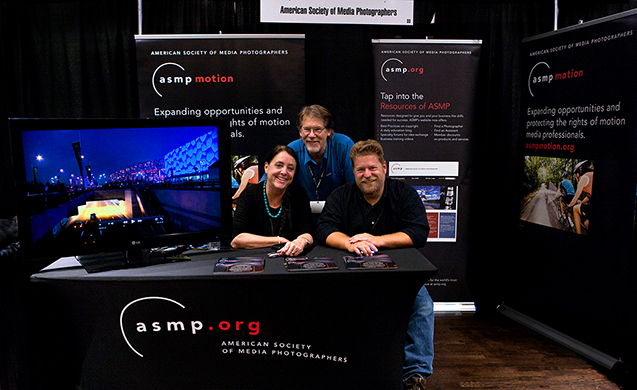
Gail Mooney, Tom Kelly and Chris Hollo at ASMP booth, DV East

This past Wednesday, I spent my day manning the ASMP booth at DV East Expo. Former national board member (and now President of the ASMP Tennessee Chapter) Chris Hollo and my partner Tom Kelly joined me.  We were well prepared with a large flat screen monitor displaying a loop of our members work. I was intimate with the reel as I had just finished editing it and I was very impressed with the quality of the work.  It certainly was an attention grabber.

So, what was ASMP, a trade organization of still photographers, doing at a video expo? Essentially, we were there to provide a community and reach out to other professionals who are shooting both mediums and provide information about sound business practices.  If this demographic does not understand the value of copyright or value the concept of licensing, then it will ultimately affect the way business is done in the still photography industry.

Some people may think that ASMP is becoming too inclusive or is creating more of a problem by suggesting that video may be the answer for its members, only for them to find out, that industry is glutted as well.  The old business models of bloated production companies with fat budgets are hanging on for dear life, along with the old business models of the film industry.  But if you think outside the box, especially in terms of how you structure your photography business – the opportunities are out there.

ASMP doesn’t cease to be an advocate for its still photographers who have no interest in motion – it’s actually making the entire industry healthier by educating the hybrid competition.  A lot of the people I talked to yesterday, shot both still photography and video, but even the ones who just shot video – called themselves “photographers” and they all had questions about “the business”.

I’m so closely associated with  “video” by members of this society; they tend to forget that I am a photographer.  I don’t call myself a photographer simply because I spend 50% of my time shooting still images, or call myself a videographer because I spend the other 50% of my time producing video. I don’t want to define myself by my tools, at all. I “see” as a photographer, with the vision of a filmmaker and the heart of a storyteller.  I also have a strong desire to stay in business doing what I love to do.  By being an advocate for sound business practices across these mediums, I get a lot more back than I give.  All photographers’ benefit, regardless of what type of cameras they shoot with.

Friend and fellow board member Ed McDonald, tells his own story about how he had become too rigid at one point in his career, as far as how he perceived himself and what kind of photographer he was. He found that when he became more flexible in how he “defined” himself, his business got better. As I think about Ed’s story, I know we have a lot in common.  For me, when I stopped restricting myself to just shooting still images – not only my business got better – so did my still photography. Shooting motion has made me a better still photographer because it has made me a better storyteller.

I got an email late last night from someone I ran into at the expo.  They wrote:

“Thanks for your vision and inspiration and all you’ve done for ASMP.”  So simple and so poignant and I thought – “isn’t that what I was supposed to do?”

Personal Projects

When I first started out in photography – professionally speaking – it wasn’t customary to show “personal work” to a potential “commercial” customer.  At that time, in the late 70’s, art directors and designers wanted to see that you could “shoot” the things that they needed shot.  So, if you aspired to shoot the

English: Double Stuf Oreos, by Nabisco.
English: Double Stuf Oreos, by Nabisco. (Photo credit: Wikipedia)

Oreo cookie ads – you needed to have an image of Oreo cookies in your portfolio.

This was always a dilemma for me because my photography was “personal”. I became a photographer as a means to an end – the end being that it would enable me to live a lifestyle that I wanted to live.  I knew early on that I wanted to live a life, full of people, places and adventures along the way.  I wanted to live the kind of life that stories are written about.  And, I wanted to get paid for it. I wanted to make that lifestyle the foundation of my career. How bold and naïve of me to think that I could make my business – my pleasure.  Yet, somehow I managed to do just that and I have had the most extraordinary life because I was foolish enough to think I could.

Times have changed –they always do – and now art directors want to look at a photographer’s personal work.  They want to see what a photographer “has to” shoot to fulfill their vision.  It’s not only acceptable now to show personal work to a commercial client – it’s a must.  And it’s never been easier for a photographer to show many facets of their work and career via social media platforms and blogs. It’s also a lot of  hard work.

For me, it’s never been difficult to find something that I’m passionate enough about to be able to spend the kind of time and resources that’s necessary to complete it.  I think that’s the key to starting and completing anything – it has to be something that you really want to do. If you don’t really want to do something, even though you know it will be a good thing to do, you’ll just end up giving yourself reasons and excuses whenever a task needs doing.

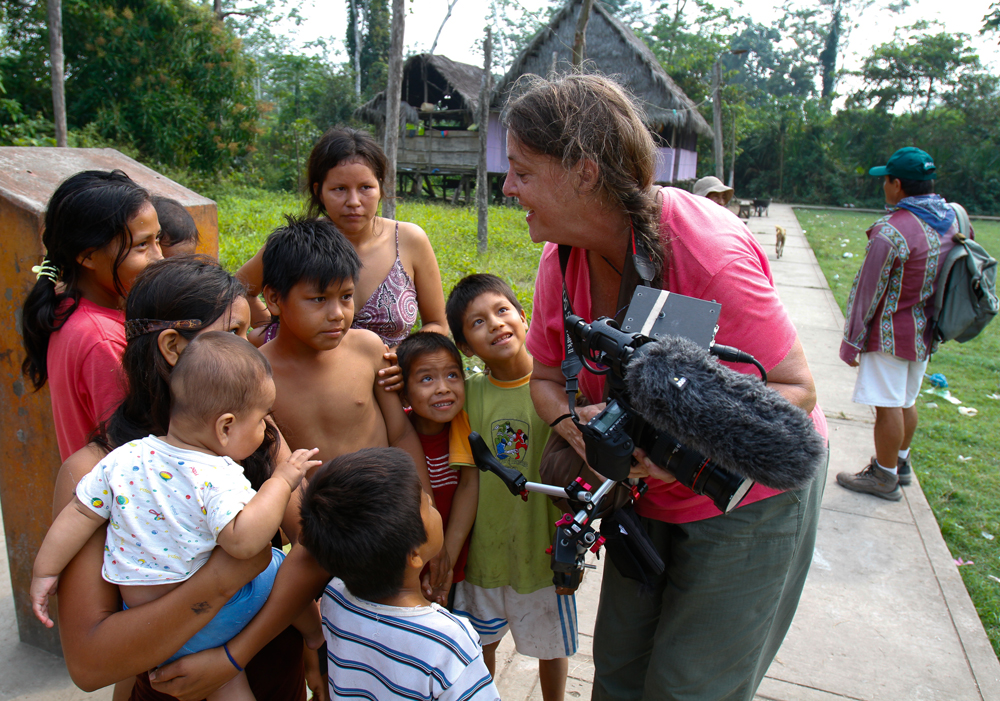
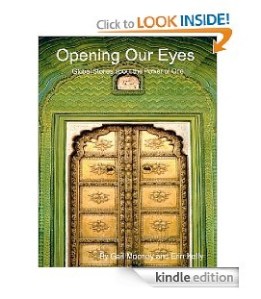
For the most part, my personal projects have picked me, not the other way around.  They’ve all started with an idea that just wouldn’t leave my mind. Then I’d start to see my idea in vivid imagery as it played out cinematically in my head.  That’s how my film project, Opening Our Eyes, got started – with an idea that planted itself in my brain, until it was time for me to act on it.  Thankfully, the idea didn’t go away and that I did act on it.  It’s hard to believe that I’m still acting on this idea, more than two years later.  But, I have learned that making a film is a process.  A young filmmaker told me that “a film is never finished – but there comes a time when you are ready to let go”.

I supposed you could say that this film has been my ultimate personal project.  The fact that it was collaboration with my daughter Erin makes it even more personal.  But the lines between work and personal and family have always been blurred in my life.  That’s exactly the life that I set out to live.

Monetization of Photography in Spite of a Lousy Economy

I talk to a lot of photographers. I don’t define the word “photographer” by the type of camera he or she shoots with. Whether someone is shooting with a still camera, a traditional video camera, a motion picture film camera or a hybrid camera that shoots both stills and motion – a “photographer” these days is apt to embrace more than one of these tools.

Regardless of the tools you may use, I’ve come up with a few tips on how photographers can stay afloat and make money in this continued stagnant economy.

  • Think outside the box – don’t think of yourself as one who just shoots still images. Even your “still” clients will have a need for motion imagery these days.  It may not warrant the need for them to hire a big video production crew to make a broadcast spot.  But it could be one of your corporate clients needs a “talking head” for their website. Even if you don’t shoot motion or don’t want to – collaborate with someone who has these skills to fill your client’s needs instead of sending your clients  elsewhere.
  • You don’t need someone else to commission your services in order for you to make a living. When photographers take on personal projects, not only are they creating a buzz and getting noticed by potential clients, they are also creating their own “content” to monetize. It is possible now to get our content to market without the need of a middleman. Portals are open and plentiful to all.
  • Take advantage of what is “free”, rather than be put out of business by it. There are so many ways to build your brand and get noticed without spending a fortune. The costs of building and maintaining a website have dropped significantly because of advances in technology. And utilizing social media to create a buzz and get the word out about your company is virtually free with Facebook, Twitter,LinkedIn and YouTube. But be prepared to do the work and discipline yourself because this territory is ripe with distractions.
  • Re-purpose your content. If you’ve been blogging or have something useful to share – consider packaging your “knowledge” into ePubs, podcasts or “how to” webinars. One thing I’ve learned about making an ePub is that you can either do it yourself or hire a formatter so that it gets to market quickly – via Amazon, Barnes and Noble or the iTunes platform. Price it right – and offer more than one ePub at a time. (I’m working on my 2nd ePub now) In this market, if someone has just spent $3 or $4 to buy your ePub and they see you have another one for sale – it’s not a big stretch for them to buy that other book you offer at the same time.
  • Collaborate with others. Partner with others to put on webinars, podcasts, call in phone seminars etc. Use this opportunity to build your own brand. Don’t always feel that you have to be the only “act” offered. In fact many times, if you join forces with other creatives, it will get you further than if you are the only speaker in a half filled room. Get out there and get noticed and learn from your colleagues at the same time.
  • Be authentic. I cringe when I write that word because it has become a bit trite. I guess in a way I have always been authentic. In fact I just can’t help myself. If you are true to yourself, you will be ready, eager and able to work hard on your dreams. And hard work is exactly what is necessary to make it in this profession.  You’ve got to want it bad enough in order to do the work. If you are a clone of other photographers, you’re career will be short lived. I guarantee the photographers that you are emulating will be “moving on” because their passion is driving them to new things. So, what happens to the cloned versions then?
  • Don’t focus solely on the money. Easy to say and really hard to embrace when you can’t pay your mortgage. But look at any successful person – I don’t care which business you choose to look toward in terms of finding successful people – but you’ll see that most people who have “made it big” were not driven by the money. I’m not saying that money is not important, but if you are solely focused on the money and not on the act of creating – it will show.   Being too focused on the  money part of the equation, can sometimes push it away. People sense it. It’s human nature to want to be around a “winner” – not someone who is begging for a job to keep them afloat financially.
  • Be patient. Everything turns around. While the old days and ways of doing things won’t come back, better opportunities will replace them. Don’t be paralyzed by your own fears. Do what you can that won’t cost you a lot of money and there is plenty you can do. Work social media, learn new skills – audio, editing, writing etc., network with people, create new content for ePubs, webinars, and podcasts. Use your imagination, pursue what you are passionate about and when the economy turns around – you’ll be ready.

Add to FacebookAdd to DiggAdd to Del.icio.usAdd to StumbleuponAdd to RedditAdd to BlinklistAdd to TwitterAdd to TechnoratiAdd to Yahoo BuzzAdd to Newsvine

Why Did You Want to Become a Photographer?

That was one of the questions posed to me during an interview this past weekend. A young woman had asked to interview me for a college paper she was writing. The call and the questions started out somewhat clinical, most likely another task or paper that she needed to check off her list. She proceeded through the usual list of questions: “Did you go to photography school?” “What type of photography are you interested in?” So on and so forth.

I could hear her typing my answers and I paused to let her catch up. But then she asked a question that really struck me on many levels. “Did you get into photography because it was cheaper?” I asked her what she meant by that – did she mean the tools of the trade were cheaper? When she responded “yes”, I told her that was somewhat of a misnomer and that the first cameras I bought (mechanical ones) I had used for 10 years. I added that now, because of the exponential impact of technology on my profession, my cameras and the software I need on the post end, have to be upgraded at least every two or three years, and that was only part of the investment required in the “tools of the trade.”

As she typed my response, I felt myself getting a bit anxious and I started speaking rapidly. I told her that even if that were true – meaning that I got into the photographic profession because it was cheaper – that would have been the absolute worst reason for me or anyone else, to choose photography as a profession. I went on to say that you need to be passionate about some aspect of photography that makes you want to do it more than anything, if you want to have a chance of sustaining yourself financially in this profession. Pursue photography because it brings you joy and that if you are getting into it because the entry level costs were “cheaper” you’ll simply be competing with thousands or tens of thousands of button pushers.

I went on to tell her that I became a photographer as a means to an end. I had been studying architecture in college and after two years left school to travel. I traveled the world for a year and came back knowing that I wanted to pursue a lifestyle that would incorporate travel but more importantly fill my endless curiosity of people and cultures and exploration. I wanted to become a storyteller, and became a photographer as a means to that end.

As the interview progressed I noticed the typing started to diminish as I told her that I have never separated my business from my pleasure and that they have always been tied together throughout my life. Simply put – my business is my pleasure. I talked about my frustrations starting out as one of a handful of women in a man’s world and for the most part a man’s profession – at least in the early days. I talked about the endless stream of rejections and the “wins” that seemed to pop into my life when I needed them most, rescuing me in the knick of time, just when I was thinking of quitting and moving into another career. I told her that unless she really wanted to do photography, she wouldn’t survive in this profession. I talked about my mentors when I was her age and how grateful I am that I had those people in my life. I relayed a couple of anecdotes about things my mentors had said to me and how those words had been pivotal moments in my life and that when things got tough, I drew upon those words of wisdom to get me through the day.

Then there was a very loud audible sigh, followed by a long period of silence and my mind raced through the various things that I had said to her. Was I too harsh? Did I paint too bleak of picture? Or worse yet – did I make it sound too easy and that all she had to do was “just do it”. I felt this overwhelming sense of responsibility that maybe I said something that was going to dictate the rest of her life and I kind of panicked in that moment of silence. And then she said “thank you so much for talking to me today, I started out just wanting to write my paper, and I’m going to have a great paper, but you have no idea how much talking to you has helped me.” She went on to tell me that she had been struggling with a decision that she was trying to make between going to law school and going to film school. I told her that she needed to make that decision all by herself and that it wasn’t a decision that anyone else could make for her – not I – not her parents – not anyone else. I told her to dig down deep into herself for the answer, beyond the influence of others, the dogma of the day and all the noise. And most importantly to remember that it was her life and that she got to choose how to live it and that she had every right to change her mind along the way.

Quite honestly, it has been one of those “onion” months for me, with layers of setbacks and second-guessing myself. I got off the phone feeling good about paying forward what I have learned along my way and in that moment, I realized that this might be my “purpose” at this point in my life. The day had turned into one of those sweet “strawberry days”. She didn’t know it, but she had helped me as much as she said I had helped her. It’s those conversations and those little moments that keep me going, and come to my rescue, just in the knick of time.

I would love to hear from you all – why did you want to become a photographer?  Something you say or write just may help someone and paying it forward is the best feeling in the world.

Add to FacebookAdd to DiggAdd to Del.icio.usAdd to StumbleuponAdd to RedditAdd to BlinklistAdd to TwitterAdd to TechnoratiAdd to Yahoo BuzzAdd to Newsvine

A Solo Act

Video is very much a collaborative effort, and that’s exactly what I love about it. I’ve made some wonderful connections and partnerships while creating my documentary, Opening Our Eyes.

But every now and then, I find that I need to go “solo”.  I am a storyteller and a bit of a wanderer by heart and it had led to an interesting life – a life full of people, cultures and far flung destinations around the world. I have found that when I travel solo, I become more absorbed into the culture of where I am. I have no one with me to distract me or draw my attention away.

I’ve spent many years, traveling, observing and shooting stories for magazines all over the globe. In looking at my old work or even when editing new work, I’ve noticed a similarity in “feeling” among many of my images. There’s a quiet contemplative mood that shows through. In my people photos this “mood” is apparent in the connection that I make with my subjects – whether in a posed or candid photo. With my landscapes there’s more of a serene, yet melancholy moment.

I’ve come to realize that this “feeling” in many of my still images come my perspective as an”individual” who is solo when shooting. I can always tell which images I’ve shot when I’ve been by myself as opposed to those shot when traveling with a group. It’s hard to put into words, but when I’m alone and I’m exploring, I shoot differently. I see differently. I interact differently and people react differently to me.

So, I will always make room for both ways of working in my life – collaboratively and as a solo act. Each one brings its own rewards into my life and to my craft.

Add to FacebookAdd to DiggAdd to Del.icio.usAdd to StumbleuponAdd to RedditAdd to BlinklistAdd to TwitterAdd to TechnoratiAdd to Yahoo BuzzAdd to Newsvine

The Problem With (Most) Video/Motion Workshops

This has been something that has been weighing on my mind for months now – ever since the seemingly “overnight sensation” of people giving video workshops as well as the growing number of still photographers that are feeling the need to take these workshops.

The biggest problem that I see with all the video/motion workshops that are out there is that they oversimplify video production and take the approach that the single independent still photographer can learn and do it all – produce, operate the camera, capture good audio and manage the post-production and edit.  I suppose to be fair – while it may be true that the independent still shooter can learn all facets of video production, that is not the best approach as far as setting up a viable business model for a video production company.

Video is a collaborative medium.  While I may be able take just about any video production from soup to nuts single handedly – I know that the production would suffer if I did.  I learned a long time ago to build a team of good sound people, editors and even camera operators that I can draw on to hire on a need be basis.  They make the production and me look good and that’s what keeps my clients coming back.  It also allows my business to grow because I can take on more projects. If I’m not entrenched in all aspects of the production. It frees me up to start production on another project while still in post-production of a previous project.  If you are a one-man band, you not only don’t have this option but you actually make yourself look small in the process.

Video and motion have many facets to them.  I advocate that the best business models are when one positions themselves at the top of the content creation ladder by overseeing the production of the whole and hiring the appropriate crew that will facilitate the process.  By recognizing the differences between this business model and the “solo” model that most independent photographers work under, you’ll have a much better shot of maintaining ownership of your work and creative vision as well as having the potential to grow your business beyond your own singular capabilities.

The other problem with workshops that over simplify the process of video production by promising that you will be up and running after a one day workshop is that they are centered around learning the gear and the software which changes by the month.  If you learn just the gear du jour and not focus on the business of video production you will be in competition with other independent dabblers and that’s a quick way to the poor house in terms of sustainability.

A week doesn’t go by when I don’t get at least a dozen calls or emails from still photographers who feel they need to get into video and are overwhelmed by the learning curve.  I tell them that the best thing they can do is NOT to try and learn all these skills themselves and that in fact that will only delay their entry into the video production, business if that is what they are after.  A better way is to keep your focus on your vision, apply that to a sustainable business model that will incorporate video and collaborate with others who will make you look good and help you grow your business.

Add to FacebookAdd to DiggAdd to Del.icio.usAdd to StumbleuponAdd to RedditAdd to BlinklistAdd to TwitterAdd to TechnoratiAdd to Yahoo BuzzAdd to Newsvine

Five Top Tips for Emerging Photographers

I talk to a lot of young aspiring photographers these days and invariably I am asked, “What advice would you give someone who is just starting their career in photography? – Is there a future? – Can I make a living?”

I don’t have a crystal ball but I do have 35 years of experience behind me but yet the enthusiasm and outlook of a 25 year old.  I remind myself of what I learned from my mentors when I was just starting out. One mentor, who shaped my career, was art director Adrian Taylor of Travel & Leisure Magazine. Adrian taught me a lot – about magazines, about the story, about style and taste and most importantly he gave me the confidence to believe in myself.  Adrian gave two young, naïve photographers, my partner and myself a chance and in return – we always gave it our all every time we set out to shoot a story.

Add to FacebookAdd to DiggAdd to Del.icio.usAdd to StumbleuponAdd to RedditAdd to BlinklistAdd to TwitterAdd to TechnoratiAdd to Yahoo BuzzAdd to Newsvine

With that said, I would not be where I am today if it had not been for mentors like Adrian Taylor and my greatest joy at this point in my life is to pay that forward to photographers just starting their careers.

  • Learn video – Video is no longer a “specialty niche” or in fact a separate genre at all.  In the very near future – which is already upon us – a photographer will need to know how to shoot both stills and motion – or partner with someone who does.
  • Stay true to what your inner voice is telling you.  For example, if your passion is to be a photojournalist, don’t listen to people who are telling you that photojournalism is dead and that newspapers are a thing of the past.  While “printed” newspapers may be dying out – journalism and photojournalism is not.  Don’t let others’ dogma determine what your path should be.
  • Collaborate with your peers.  When I was first starting out, photographers kept their clients, their techniques and their ideas to themselves.  But I have found that whenever I have collaborated with others – we all push the bar to the next level – each bringing their own strong suits to the project.  As a subject of my film Opening Our Eyes told me “We’ve got to shine each other up.”
  • You don’t need the validation of others to proceed with your idea and make it into a tangible plan and product.  As far as publishing and/or distribution is concerned – the gates to the kingdom are open and the kingdom is the entire world.  We are living in a time of empowerment for the individual and for a content creator that is profound.  If you are willing to do the work – the rewards are bountiful.
  • Act on the ideas that don’t go away.  It’s easy to let resistance sabotage you.  Resistance comes from many places – your loved ones, friends, your peers – but mostly yourself.  Stop talking yourself out of ideas and start acting on the ones that just won’t quit you.

I have made my work my pleasure in my life.  I have always found it difficult to separate the two.  When you feel that – you’ll know you are on the right path.

Burning Bridges

I used to have a friend who would tell me that my life was made up of circles, each one completing the ring like segments of my life.  The truth is that’s not unique to me – that’s life in general.

It’s Photo Plus Expo week in New York City, when photographers from around the world gather at Javits to look at new gear, take part in seminars and network.  I don’t think I have missed an Expo since they began over 30 years ago. A lot has changed in the photography business over the past 30 years, but one thing is for certain and that is – it’s a very small world as far as the people who are part of this business.

Last night, I went to a couple of parties where I ran into quite a few people that I’ve met over the span of my career.  Some I had done commissioned assignments for, some I had met through seminars that I had given and some were just old friends that I hadn’t seen in a very long time.  But a couple of folks who approached me last night, and struck up a conversation, were people who had totally blown me off in years past – people who had simply ignored me.  In every instance, these had been people who had recently experienced a shift in their own lives and now had a sudden interest in me and in what I was doing – to further their own gain.

I know that I have burned a few bridges in my lifetime and I’m sure there are some I’m not even aware of. (Anyone who tells you that they haven’t burned bridge is just simply not aware.)  Some of those bridges, I have tried to rebuild and have succeeded. and some were beyond repair.  What I have learned – and wish I had learned 20 years ago – is that everything comes around in your life, no matter how much you have grown or changed – the past is always present. And it seems easier sometimes to change the past – but of course that’s not possible.

What I’m finding now is that due to profound changes in the photography business as well as the lingering lousy economy, that the same people, who had ignored me or dismissed me a few years ago, were now acting like my “best friend”.  I’m sure they didn’t remember how dismissive they had been to me – in fact I doubt that I was even on their radar at the time.  But circumstances had changed in their lives and now they were taking notice of me and even asking for my help. I suppose I could say that they had burned a bridge with me but then again in most of these situations there had never been a bridge to burn to begin with.

The point is, you never know how your past will affect your future.  You may think that you are in a position where you have no need for certain people in your life and be dismissive.  But nothing lasts forever and if there is anything that I’ve learned by getting older – it’s just that.  Our lives are made up of circles, each one connecting our past with our future.  Consider that when dealing with people who come in and out of your life – because nothing ever stays the same.  Many times you’ll find out that those people that you thought  you had no use for in your past – may be key in your future.   Hindsight is the best sight and you always get the best light from a burning bridge.

Add to FacebookAdd to DiggAdd to Del.icio.usAdd to StumbleuponAdd to RedditAdd to BlinklistAdd to TwitterAdd to TechnoratiAdd to Yahoo BuzzAdd to Newsvine

What to do When in a Slump

There are all types of slumps – creative, financial, relationship and personal. I’m sure there are others, but those are what come to mind – I’ve experienced all of them. I think that comes with living the kind of life I lead. There are times when it seems like I’m on a never ending roller coaster ride with lots of ups and lots of downs. The one thing I try to do when I’m in whatever kind of slump I’m experiencing,  is to focus on the areas that seem to be working in my life.  I’ve learned to take the bitter with the sweet.

Here’s some other remedies I have found that help get me out of a slump:

  • GET OUT – I mean that literally as well as figuratively. I break the pattern of what I am doing that doesn’t seem to be working and “get out” of that place. I also literally – get out – I change my environs – I get together with friends.
  • TRY SOMETHING NEW – I do something that I may have been thinking about, but I usually talk myself out of with every rational reason I shouldn’t do it. So, I follow my irrational instincts.
  • WALK AWAY – This is especially true when you are dealing with something technical and you just don’t “get it”. There have been days when I have struggled with something that wasn’t working – like when editing in Final Cut Pro – and I need to give myself some time away from the problem. But this only works if you aren’t up against a tight deadline. I try not to force a learning curve into situations with tight deadlines.
  •  FOCUS ON WHAT IS GOING RIGHT – There is always something to be grateful for – focus on that.
  • BE STILL – I think this is perhaps the most important remedy that I have learned to embrace and that is – to give something time and not  force it. If something is meant to happen then it will – and in its own time.

Every one of these “remedies” is pretty much centered around the same thing,  and that is to recognize that there will always be slumps in one way or another – but they will make those sweet times that much sweeter.

Add to FacebookAdd to DiggAdd to Del.icio.usAdd to StumbleuponAdd to RedditAdd to BlinklistAdd to TwitterAdd to TechnoratiAdd to Yahoo BuzzAdd to Newsvine