Status Quo, Fear and Other Stupid Human Tricks

I went to my town meeting last night. It was a typical “town meeting” where everyone needed to be “right”, and no one was winning. A citizen came up to the mic during the public hearing session and made a statement that really resonated with me. He said “ No one ever wants to change the status quo It’s human nature not to want change. Everyone has their little power centers that they want to hold onto”.

I had a flashback that brought me back to a smoke filled room of dirty dishes with leftover remnants of brown rice and a whole lot of people having the same old discussion of how we all needed to stop “ the War” and change the world. That was almost 40 years ago but I’ll remember like it was yesterday when a “freak” came in and said “Why doesn’t somebody f……. do something? You’re all just sitting around and talking – like the status quo”

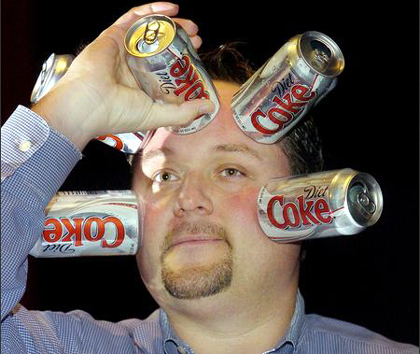
Photo Source Mr. Snodgrass

To be honest, I don’t think there is a status quo. Nothing ever stays the same. You either move forward or drop back, but there is no stepping in place. It’s not sustainable. And that’s nothing new – it’s always been true – but never more than today due to the exponential rise in technology. And it has never been more true in regards to the state of the photographic industry. I see so many photographers paralyzed by their own fears of taking a risk and thinking outside their own boxes.

Few people overcome their fear of change and rise to the occasion of “doing something” as opposed to reacting to something. Most plod along, feeling no control over their destiny – letting fate take its course. A lot of photographers are just hoping to “ride it out” until there is nothing left of their businesses.

Every once in a while, somebody makes a bold move and looks at “change” as an opportunity. History proves me right. If you look back through time, you will see a pattern. At the most pivotal times of change – the cream always rises to the top – and the sludge gets left behind – on the bottom.

As far as the photography industry – I think it’s time to decide if we are ready to “embrace” change and rise to the top or die a slow death. But we have to start seeing the opportunities that always come with change.

Add to FacebookAdd to DiggAdd to Del.icio.usAdd to StumbleuponAdd to RedditAdd to BlinklistAdd to TwitterAdd to TechnoratiAdd to Yahoo BuzzAdd to Newsvine

The Eyes of Our Times

I was looking through my emails and social media posts and I saw something on my Facebook feed that Daymon J. Hartley posted. It was a link to a lightbox of 9/11 images on Time Magazine’s website. It was a collection of images that had run in a variety of magazines and newspapers in the days that followed that tragic event. Along with the images ran comments from the picture editors, why they had chosen that particular image.

As I looked through the images, I was overcome with emotion and moved right back to a very deep place within, remembering the pain, the fear and disbelief of what happened that day. This time I looked at the images online. Ten years ago I first saw these photographs in print publications. Regardless of how I saw these images, in print or electronically – the effect was still the same.

It reminded me of how powerful our photographs and videos are. We are the eyes of our times, the ones to document history. We not only record history in imagery, sound and motion, but we have the power to create the future. History has been rewritten by imagery. Take the Civil Rights Movement in the 1960’s in America. Photographs created awareness of what was happening in the South and put the eyes of the world upon us. That forced change.

As photojournalists and video journalists and non-professionals as well, we need to realize the power of what we do and the influence it can make. It’s a responsibility I take seriously. I feel that it’s not just my duty to document history as it unfolds, but it’s my right to do so as well. These days those rights are being questioned in some places. We need to be diligent in keeping those rights in America. Isn’t that what makes our country different?

As we race towards a destination unknown with technology quickening the pace – let’s be mindful who is controlling the portals of the future – so that future generations can learn from the past.

Add to FacebookAdd to DiggAdd to Del.icio.usAdd to StumbleuponAdd to RedditAdd to BlinklistAdd to TwitterAdd to TechnoratiAdd to Yahoo BuzzAdd to Newsvine

Conversation with Director/Editor Erik Freeland

I was extremely fortunate that Erik Freeland of Springhouse Films was the editor on our film Opening Our Eyes.  I learned a lot from Erik through our collaboration.  I thought I would share some of Erik’s insights about the art of editing.

What makes a good editor?

Knowing a little bit about everything. Art history, popular culture, physics, linguistics, music… it gives you more points of reference for understanding and presenting the story. Attention to detail is very important because in the end, nothing goes unnoticed by the audience. I guess I’d have to say patience is tremendously important –– even though computers do amazing things, editing is at its core a tedious process.

We all seem to wear more than one hat these days – do you? If so do those skill sets complement each other and how?

I started in this business as an editor but really wanted to have more control over the material I was editing. I’ve have been fortunate to be able to also have a career as a director. Understanding those two disciplines and knowing what is possible in each allows me to visualize the editing process more during the shoot.

I know from editing projects myself, it has made me a better shooter. For still photographers who may not want to edit their own projects – what tips can you give to them about shooting video and motion?

Don’t cut too soon. Be patient and let a shot evolve.

When shooting a scene or a moment in time, think of it as different framings: the wide establishing shot, a medium shot of the main action or subject and little details that can serve as cutaways to prolong the scene or intercut the other shots while masking breaks in continuity.

Plan your movement of the camera and commit to it. When you start a pan, resist the temptation to reframe the shot mid-move. Keep it moving for long enough to make the shot usable in the edit and cut only if it really falls apart.

Keep in mind how much footage you are shooting vis a vis what you will want to end up with. You don’t want to miss anything important but a lot of redundant footage can really be a liability in your edit.

What does a well-edited film mean to you?

Many things. I think first and foremost, it’s about clear storytelling. It shouldn’t be confusing and leave the viewer behind. The editing shouldn’t stylistically overpower the story. Secondly, the rhythm of the cutting should help move the film and should be sympathetic to its tone. Third, it should move you, surprise you, change your mind, do something… I suppose I could say the same things are equally important in directing a film.

As an editor, you can have a lot of influence over the meaning and arc of a story. How much influence should an editor have? Does it depend on the director?

An editor should exercise as much as they can… without upsetting the collaborative balance. Everyone involved in the film should influence it to the best of their ability. Otherwise, their contribution to the process is short-changed. Of course, every working relationship is different and some are less collaborative.

What makes a good director?

I think some of the same qualities that make a good editor are part of a being good director. Knowing a little bit about everything as a director for instance, allows you to tell many types of stories and immerse yourself in the subject matter. Attention to detail, multi-tasking capabilities, being able to verbally communicate about visuals are of course all important skills. There is also a balance between focus and objectivity. A good director is fused with the film –– totally absorbed in every detail. At the same time, they have to be able to look at it and all decisions objectively and from a distance, almost like the eventual viewer.

What makes a good story?

Characters you care about, conflict and location, location, location…

What’s more difficult – editing a 2 minute piece for the web or a feature length film?

Hmmm, that’s a hard one. Kind of like asking which is better night or day.

Does editing have trends? Maybe you can point out a couple of examples of style over the years.

OK, first I don’t profess to be a film historian but I try to keep up on things. I tend to watch the films I like the most over and over. Technology has certainly created trends in film editing and directing. Advancements in keying technologies, motion tracking and motion capture as well as realistic CGI environments are but some of the major trends that have changed the way films look and are edited. Probably the closest things to trends specific to editing have been related to timing and pacing. The time-lapse of “Koyaanisqatsi” in the early 80’s, the repetition and multiple outcomes of “Run Lola Run” and the quick cutting shorthand jump-cuts and time-compression in Guy Ritchie’s films like “Snatch” have all had a huge influence over the editing of their time.

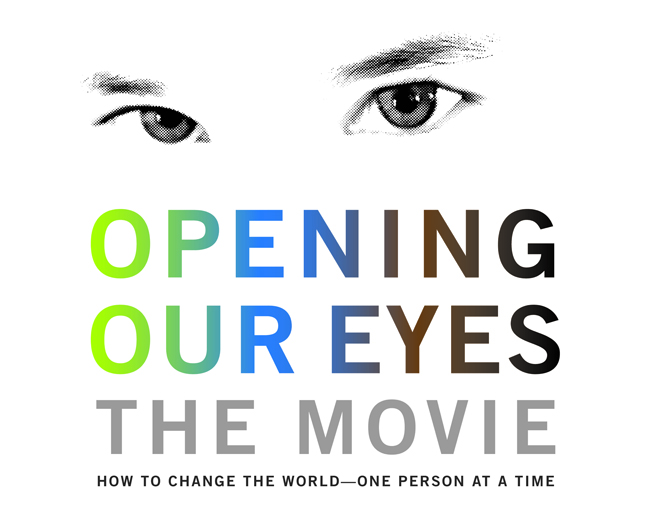
The Movie “One Sheet”

If I thought that by finishing my film, I was done – I was sorely mistaken.  My work has just begun.  What would have been the point of putting my heart and soul into a film for the past year and a half, if no one sees it? That means there’s a lot more work on my part, getting it out there – distributing it, marketing it and promoting it.  All that takes time, money and expertise.

I’ve been reading Jon Resiss’ book “Think Outside the Box Office” “The Ultimate Guide to Film Distribution and Marketing for the Digital Era”.  It’s become my bible. For starters, it lays out what a filmmaker needs to do to get their film out there, create an audience and make money.

In terms of publicity, every film needs a good press kit, which should include:
•    One Sheet – with tag line
•    Synopses – long and short
•    Cast and Crew Bios
•    Director’s statement or interview
•    Production stills and video interviews for the electronic press kit.
•    Production stories – something interesting about the making of the film.
•    Technical specs

When I first heard the term “one sheet”, I wasn’t quite sure what that was.  It’s pretty much what it says it is – a one-sheet piece of paper describing your film, but it it’s concise with provocative visuals and a catchy “tag line”, designed to peak interest, whether it is with the press or the movie going public.

A “one sheet” can also be what most of us call movie posters.  They are essentially the same thing – a one sheet with imagery and text to capture someone’s attention.   Some movie one sheets are works of art in their own right and become collectibles.  Think of some of the best ones that you have seen over the years.

Sounds like it should be fun – coming up with a “one sheet” for the movie, but even though I have a lot of great content for a “one sheet”, I don’t have the skills needed to create a composite for a movie poster. There are people who just design movie posters – that’s their niche.

I’ve learned a lot in the process of making a film.  The most important thing, I’ve learned is to make relationships and collaborate with others who can bring their expertise to the project.  It’s not only a rewarding process, but it raises the bar on the final outcome.

Add to FacebookAdd to DiggAdd to Del.icio.usAdd to StumbleuponAdd to RedditAdd to BlinklistAdd to TwitterAdd to TechnoratiAdd to Yahoo BuzzAdd to Newsvine

The D.I.Y. Age

The world is full of possibilities these days.  In fact, for the individual and their “reach” globally – it’s staggering how many possibilities exist that didn’t just a couple of years ago.

We can not only create in a more affordable way with inexpensive equipment and leaner crews – we can also get our creations out to the world without the need for a publisher or a stock agency or a film distributor.

We can do all those things due to the exponential growth of technology.  But we also need to recognize that all those possibilities come with a cost, in terms of dollars as well as man-hours.  Each one of those possibilities takes time and money in order to become a reality.

Even the path to getting money or financing these days has changed because of crowd funding.  But like anything else you need to stand out amongst the noise, so who knows how long this trend can sustain itself.

If you’re planning a personal project, keep in mind that you will need to not only create it but find a way to get it out there after completion.  Expect to put time and money into:

•    Self – Publishing – this includes hiring a designer and researching self-publishing partners like www.lulu.com in the print publishing world. They also offer downloads. In the motion world, you have options like Amazon, iTunes and Netflix.
•    Marketing, PR and advertising – This is definitely an area where you will need money and expertise. Jon Reiss in his book “Think Outside the Box Office” suggests that it will take an investment for at least as much as you spent creating your film.
•    Crowd funding – The crowd funding sites provide you a portal if your project is accepted but you need to do the work as far as getting people to know about your project and fund it.
•    Bookings – Whether it is an exhibit or a movie or a lecture – you need someone to book venues for you.  This could also mean finding sponsors.

The bottom line is really kind of an old fashioned notion in a high tech age and that is – the prize is out there is you’re willing to do the work.

Add to FacebookAdd to DiggAdd to Del.icio.usAdd to StumbleuponAdd to RedditAdd to BlinklistAdd to TwitterAdd to TechnoratiAdd to Yahoo BuzzAdd to Newsvine

Authenticity

It’s a humid, Saturday morning in the dog days of summer.  There’s a dozen things I should be doing – paying the bills, doing the laundry, filling out film festival submissions and catching up on the endless little details that have consumed me with my film.

And yet, I write.  I started writing about 7 years ago when I would wake up super early in the morning with my mind spinning with ideas and not allowing me to turn over and go back to sleep.  So, I ‘d get out of bed and write about whatever was running through my mind at the time and I would put those thoughts out there in my blog. Colleen Wainwright is running a whole series of interviews with writers on her blog as part of a fund raiser and I was honored to be included.

In the beginning, I got a lot of encouragement from a friend who gave me the confidence to write more and I did. Some days the words would just pour out of me and many times, I’d see them quoted later in other people’s blogs and I couldn’t believe that I had written them – almost like an out of body experience.   Now, writing has become a habit and a way for me to organize my thoughts and turn chaos into order and thus my dreams into realities.

Many people tell me that I’m incredibly open and honest.  I’ve always found that interesting – the fact that was something to comment on – but at the same time feeling very flattered.  If someone tells me that I’m the “real deal”, that’s about as high of a compliment that one can give me.

If “authenticity” comes across in my writing or in the visuals that I create, then I think that I’m must be doing something right, because I use my words and my images to connect with people and that really only happens when I’m being true to myself.  I think people can sense that – it’s not something you can fake.  You’re either genuine – or you’re not.

To be honest, because I am “genuine” and tend to “tell it like it is” – it has been a blessing and a curse – but I can’t seem to help myself.  I’m a sucker for a good cause and I’m one to always strive for consensus as opposed to “getting my way” or motivated by a personal agenda.  When, I’m on purpose and not driven by ego – good things happen – and like-minded people are “attracted” to me like little magnets in the universe.

Now, I’ll go do the laundry.

Add to FacebookAdd to DiggAdd to Del.icio.usAdd to StumbleuponAdd to RedditAdd to BlinklistAdd to TwitterAdd to TechnoratiAdd to Yahoo BuzzAdd to Newsvine

Don’t Re-Invent Yourself

I’ve come to hate the expression “re-invent” yourself.  It’s not only become a bit trite, but it’s caused a lot of unnecessary anxiety.

If one feels that they need to do a makeover, he/she is often coming from a place in one’s life where they feel they have failed.  They may be at a low point in their life, either financially or emotionally and they have the desire to become someone else.

I’ve been thinking that perhaps we all have it wrong.  I don’t think we need to abandon who we really are and try to become someone we aren’t.  That never works. Creatively speaking, whenever I have approached my work as in need of a “makeover”, I have fallen victim to trends.  We all do I suppose, in an effort to “look current”.

That may work for a while, at least financially speaking – but then again maybe not.  I think my best work has come from my true self.  It’s pure but it can be raw. It’s what I just can’t stop myself from doing.  That is what resonates with others.  I think that happens when I am very clear on my vision. It affects people in a primal, yet subtle way.

Maybe we shouldn’t try to re-invent ourselves. Maybe we should just listen to who we really are and trust that voice.

Add to FacebookAdd to DiggAdd to Del.icio.usAdd to StumbleuponAdd to RedditAdd to BlinklistAdd to TwitterAdd to TechnoratiAdd to Yahoo BuzzAdd to Newsvine

How to Deal with Criticism

As I get ready to show a sneak preview of my film Opening Our Eyes this week in Traverse City, Michigan, I do so with excitement – but also trepidation.  I have to be prepared for whatever the response and feedback might be.  Most likely, it will be a mixture of praise and criticism – and everything in between.  I also know when taking a chance and entering into new territory – like making a feature film – I open myself up to both positive and not so positive thoughts and comments.

It’s not easy to accept criticism, yet I have found that if I stay true to what it is that I am trying to accomplish and put the criticisms and comments in perspective – I’m far better off.

I try to keep the following things in mind:

Not to take harsh comments personally.  This is tough, because let’s face it when you’ve put your heart and soul into something, it can be very hurtful to hear unkind comments and criticisms. Since, I have made my life’s work – my life’s passion – there’s a fine line between the personal and the work. So I remind myself to think of all criticisms as related to my work.

Consider the source.  I try to remember that this is just one person’s opinions and even if that person is an “expert” or think they are – their perspective can be coming from a whole different place than what I had envisioned.  I’ve also found that many times, the worst criticisms come from people who may have their own issues they are reflecting on.

Step back and think before reacting.  I have learned “to be still” and to take time to digest all comments before reacting positively or negatively to them. Many times harsh words need to be heard – and can be the push I need to make “it” better.  Then it’s up to me to decide if I should respond to those comments and incorporate those suggestions into whatever I am creating – or not. In the past, I have made the mistake of taking everyone’s helpful comments and suggestions to heart, only to end up with a big mess that’s neither “here nor there”.

Trust my instincts. I try to keep in mind that I need to stay true to my own vision. If comments and suggestions are helpful in guiding me there – then I take them to heart. There are times when even though I know the message or story that I want to tell – I need guidance on how to do that.  So, I try to consider all feedback, but to keep it in context with my own vision.

Remind myself that I have done something. This is the most important thing of all – to remind myself that even though what I have created is not perfect – I have done what a lot of others never do and that is bring my idea to reality.  Many times the harshest critics are people frustrated that they have not overcome their own inertia.

Steven Pressfield writes about resistance and criticism in the The War of Art:

“ If you find yourself criticizing other people, you’re probably doing it out of resistance. When we see others beginning to live their authentic selves, it drives us crazy if we have not lived out our own.

Individuals who are realized in their own lives almost never criticize others. If they speak at all, it is to offer encouragement.  Watch yourself.  Of all the manifestations of “resistance” most only harm ourselves. Criticism and cruelty harm others as well.”

Add to FacebookAdd to DiggAdd to Del.icio.usAdd to StumbleuponAdd to RedditAdd to BlinklistAdd to TwitterAdd to TechnoratiAdd to Yahoo BuzzAdd to Newsvine

The NON Convergence of Still Photography and Video

Many people, myself included have written about the convergence of stills and video. In fact ever since Vincent LaFloret paved the way, shooting video in a cinematic way with the Canon Eos 5D Mark II, it seems like every still  photographer wants to shoot video with a DSLR . At the same time, high end “video cameras” – not still cameras that also shoot video – but a high end camera like the RED is capable of capturing stunning stills from frame grabs and they aren’t just good enough – they’re great.

I suppose in this sense one could argue that there is not only a convergence of our tools – meaning a camera that is capable of shooting high quality video and still images – but that it also may mean – the end of still photography. I don’t have a crystal ball but if one defines a still image as a “moment in time” then still photography will never go away. If you have a camera that shoots hi res video and can pick and choose the exact frame that fits your still image needs – then we need to realize that this is a convergence of our “tools”  not the the end of creating still imagery.

I love to point out the differences of still photography and video because for me, and many others who shoot both still photographs and video, we think differently when shooting these mediums.

  • A still image is a moment in time.
  • Video is time in motion
  • A still image is one that is meant to linger on – where one can take pause
  • Motion imagery is made up of  a variety of shots and sequences
  • Video provides more information – there’s sound and  movement
  • Still images leave more for viewer interpretation
  • Still images deliver a message visually
  • Video delivers a message utilizing sight and sound

Everyone of these differences requires us to put our minds in a different place. When shooting video, I need to think about what shot will come before and what shot will come after the shot I’m about to shoot. I have to think that way or I won’t have the goods to cut with in the editing room. The message or story gets crafted further in post production with music and interviews and each element plays its part in the feel and arc of the story.

When I’m shooting still images, I must tell the story in that one frame and timing is everything – it’s the “decisive moment”. So, one must ask is it the same – is it even fair – to grab that “moment in time” from a video clip where the camera operator didn’t make a conscious decision when shooting that decisive moment ?

The point is with everyone talking about “convergence” and taking that to mean the demise of still photography – I have to wonder. Is it the end of still photography? Personally, I don’t think so. I think that it merely means a convergence of the tools – not what we create with those tools.

Add to FacebookAdd to DiggAdd to Del.icio.usAdd to StumbleuponAdd to RedditAdd to BlinklistAdd to TwitterAdd to TechnoratiAdd to Yahoo BuzzAdd to Newsvine

The Making of a Movie with a DSLR

It’s been a wild ride since I first began this journey of making a feature film with a DSLR camera – in my case, the Canon Eos 5D Mark II. I had already completed three short documentaries to date – all made with traditional video cameras from my first Canon XL-1 to my current HD Sony EX-1. But this time I was heading out on a 99-day journey around the globe, with my 23 year old daughter in search of ordinary people on six continents, who were making a difference in the world, and we had to pack light.

We were “the crew” – the two of us. We had to work efficiently and with gear that would fit into two backpacks and would endure the adventure as we traveled to 17 different countries on 30 flights. I also wanted to shoot both still images and motion, so I opted for the DSLR solution. Of course, I was enchanted by the “big chip” and the cinematic look of these cameras, but I was also thinking of my gear in practical terms – how I was traveling – how I would be shooting – and of course the desired outcome.

You can read more about the gear I took here.

So with my daughter “running sound”, doing the interviews with our subjects, shooting still images, and navigating us through the subway systems in Moscow and Buenos Aires, and me taking care of all the logistics and  shooting both video and stills, we came back 99 days later with almost 3000 gigabytes of content – that’s approx. 150 hours of footage and 5000 still image captures!

I wasn’t mentally prepared for what came next and that was 2 intensive months on my part ingesting all the content into my editing system, transcoding and adding metadata to the files and culling through hours of interview soundbites until I had cut it down to three . It was grueling and my winter months were spent putting in 14 hour days – 7 days a week. I was overwhelmed, yet somehow driven by some force.  It was a lot of work, it was tedious and it was daunting – but yet it was my passion and somehow this inexplicable “force” got me through it.

I raised money along the way through crowd funding on Kickstarter and with that, I hired an editor. After I handed the project off to my editor, Erik Freeland of Springhouse Films, there was a huge sigh of relief on my part. I knew the post production had a long way to go but, I also knew that I had to let it go for a while and step back. Working with Erik has been amazing in itself and he has brought enormous value to this project and film. I have learned a lot from his insights and his talents in knowing how to” tell a story”, and we are finally coming to the completion of this film. Or at least in getting the “first cut” done for a sneak preview on July 17th, at the State Theater in Traverse City, Michigan. The screening is by invitation only and if you would like to attend, just drop me an email at gail@openingoureyes.net and tell me how many people would like to attend.

Since I first dreamed up this project in the final days of 2009, to the departure of our trip in the Spring of 2010, to where we are now, it has been a continual journey on every level imaginable. And I have had many angels working on my behalf – my husband Tom Kelly who has been the “wind beneath my wings” and without his support none of this would have been possible, my extended family who have been amused over the years with my schemes and dreams, my dear friends Angel Burns and Ally Raye who have believed in me and this project and have made incredibly exciting things happen for this film. (I’m not quite ready to divulge some of those exciting things publicly, just yet), Maria Grillo and Jason Harvey at The Grillo Group who have been so giving with their time and talents and created all the graphic design for the film’s release, and so many other “angels” who have helped me with foreign translations, been financial backers, helped me spread the word globally, and every person who was there for me when I needed support and encouragement. I am deeply grateful to have all these people in my life.

We live in an empowering time. When I began my career as a still photographer, over 30 years ago, I never would have imagined doing any of this. In fact just two years ago, none of this would have been possible. Our dreams are as big as we want them to be. I have seen this dream clearly from the start and each day I get closer and closer to seeing it become a reality.

Watch the Trailer

Add to FacebookAdd to DiggAdd to Del.icio.usAdd to StumbleuponAdd to RedditAdd to BlinklistAdd to TwitterAdd to TechnoratiAdd to Yahoo BuzzAdd to Newsvine