Wipe Your Knees Before Entering

Back in the eighties when I was starting out, every six months or so I made the pilgrimage to Washington DC to see Bob Gilka, The Director of Photography at the National Geographic Magazine.  He was the guy who decided if you would shoot for the magazine.  He was accessible, answered his own phone and made appointments to look at work. How times have changed.
Gilka was a man of few words and because of that seeing him was always a bit intimidating.  If all you had were images to show – and nothing to say, you’d pretty much be in and out of his office in the amount of time it took to click through your slides. Knowing this, I did my homework prior to the appointment. I’d come up with about 10 query ideas, research back issues of the magazine to make sure they hadn’t been done before and have at least one idea written up in a story proposal.

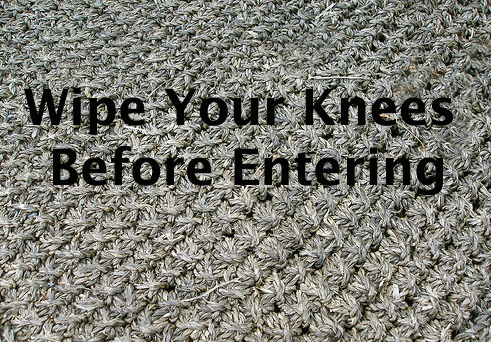
I’ll never forget the first time I went to Gilka’s office.  His secretary met me in the lobby, and led me to a small area just outside his office.  There on his door was a doormat –with words that read “Wipe Your Knees Before Entering”.  Talk about feeling intimidated – as if it wasn’t intimidating enough just to be meeting with the Director of Photography  at the  National Geographic.

So every six months or so I would show my images and pitch my ideas.  This went on for about two years.  Each time I went I would almost test myself to see how long I could stay in his office.  I would do my best to sell my story pitches that I felt the strongest about and he would reply – “done it –doing it – or – don’t want to do it”.  This coupled with a few words of encouragement in regards to some of my photographs would pretty much be it as far as feedback.

Then one day he kept me waiting.  He had been detained in a meeting.  I had scheduled a pretty tight day to maximize my trip to Washington – so the delay had thrown a wrench into me keeping my other appointments that I had scheduled.  When Gilka did show up and apologized, I was already feeling quite anxious and showed it.  I told him that I didn’t have much time because I had to be across town at the Smithsonian in 20 minutes.  He picked up the phone, called Declan Haun, the picture editor I was headed to see at Smithsonian Magazine and explained that Gail Mooney was running late due to his tardiness.  Then he proceeded to look at my pictures and hear me out.

When I did get to the Smithsonian, it was amusing to see how curious Declan Haun was to find out who this Gail Mooney was that got Bob Gilka to call ahead for her. The very next month, I got a call from Bob Gilka offering me my first assignment.  Guess I just needed to show my real self. I had sufficiently shown my interest and determination in wanting to shoot for them. And I had demonstrated my photographic ability through my images.  But it was when I showed my true spirit that he knew that I could shoot for them.  I just had to get over my fright.

Add to FacebookAdd to DiggAdd to Del.icio.usAdd to StumbleuponAdd to RedditAdd to BlinklistAdd to TwitterAdd to TechnoratiAdd to Yahoo BuzzAdd to Newsvine

Looking For People Making a Difference

Maybe it started after seeing James Natchwey speak at Photo Plus Expo – the desire to create awareness with my camera. But I think it started long ago and in fact goes back to my roots and why I wanted to be a photographer. Simply put, I know that a camera can be a powerful tool in bringing awareness to a cause and with that the ability to bring about change.

I’ve always been interested in the power of the individual, those that are so passionate about a conviction they let nothing stop them. One young woman Maggie Doyne who graduated from high school with my daughter 5 years ago, decided to travel instead of going off to college. She wound up in a small village in Nepal and using her babysitting money, started a school/orphanage for Nepalese children orphaned by war. Learn more about Maggie’s Kopila Valley Children’s Home.

But what’s equally impressive about Maggie is that she speaks to students about how they can make a difference, thus planting seeds in the minds of our youth. That’s a powerful thing and each one of those people she speaks to has the potential do something that could make a difference.

This leads me to the point of this blog and how you can help. I’m embarking on an international project – to make a documentary that features people who are truly making a difference around the world. I am currently searching for those people who have a compelling story to tell. For this project, I am not looking for those who are specifically working for an NGO or some type of organization, such as the Peace Corps, because their stories – the stories of those organizations – have already been widely told.

I am searching for individuals who have embarked on their own personal projects to help make the world a better place – people who have followed their passions, ambitions, dreams, to start something that they care about. Their projects do not have to be massive or overly ambitious – it could be something as basic as restoring old churches in Russia. The people can be natives of their country or expatriates, young or old. Ideally, I would like to find 7 people, one on each continent.

So, if you know someone who is making a difference, please let me know.  gail@kellymooney.com And if you don’t know someone, please pass this blog along and get the word out virally. My hope is that by using my skills to tell these stories, I will play my part in paying it forward.

Add to FacebookAdd to DiggAdd to Del.icio.usAdd to StumbleuponAdd to RedditAdd to BlinklistAdd to TwitterAdd to TechnoratiAdd to Yahoo BuzzAdd to Newsvine

Do

More Convergence – DSLR’s + Video = VSLR

It seems like this has been the year of the video capable DSLR or VSLR. Not only are manufacturers continuing to roll out new models but third party companies have made a big business out of selling attachments or add-ons for these cameras.

Dabblers as well as professional still photographers have gotten into video because the entry level has become easier and more affordable with the advent of these cameras. While traditional news crews haven’t embraced the new hybrid cameras yet, filmmakers have created a cult around them. I must confess that although technically I have had my hands on these cameras, I have not done any test runs using them in the field.  But it is on my list of things to do.

What’s Out There Now

The Nikon D90 shooting 720p was the first DSLR camera to shoot video in HD.  Canon followed with its impressive 5D Mark II which raised the bar by shooting full frame 1080p with external mic input and recently rolled theyout the Canon 7D with variable frame rates for under $2000!

The most attractive features of these hybrid cameras besides the price, is the ability to change lenses, have controllable depth of field and large sensors that work phenomenally in low light situations. However there are limitations that traditional video cameras that come at a higher price don’t have.  Camera stability is one problem due to how the shooter needs to hold the camera because they are designed to shoot in video mode with the mirror up. Since the camera operator must see and focus using the LCD monitor instead of steadying their eye up against the viewfinder, it’s harder to stabilize the camera when hand holding it. Audio capture is very basic as well and must be supplemented in some way.

Third Party Options

Because of these limitations, third party manufacturers have gotten in the game by designing add-ons. Zacuto

zfinderfeature
Z-Finder

has come up with a few interesting items.  One item is the Z-Finder DSLR Viewfinder, which is a device that fits over a 3” LCD and provides magnification for better focusing. It runs around $400.  Hoodman lpp3.0(front)provides a lower cost version called the Hoodloupe without the same optics but at a quarter of the cost.

An added benefit to using these viewfinders is that it provides another contact point with the shooter’s body and therefore provides more stability.  There are also camera support systems available that help remedy the need for better stability in “run and gun”

RapidfireFeaturepic
Rapid Fire

situations where the shooter can’t use a tripod.  Zacuto makes two stabilization devices, the DSLR Rapid Fire and the Quick Draw each designed with a different type of shooting situation in mind. In addition a Cavision has come up with a shoulder mount device the  RS5DM2SET-S.

Package for 5DII-8
Cavision shoulder mount

As far as audio is concerned, if you want to move beyond a supplemental external mic that’s plugged into the camera and use a more professional audio solution you’ll need balanced XLR inputs which will also enable you to use multiple external mics off the camera. Beachtek makes the DXA-5D for around $375 and juiceLink has come up with the juicedLink CX231 for about $300.

H4n_slant-web
Samson H4n

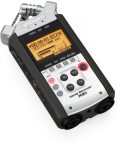
Or you can capture your audio with a stand-alone recorder like the Samson Zoom H4n, also around $300 and sync it later in post.

Regardless of how you ultimately “trick out” your VSLR (video single lens reflex)  you can be sure that there will continually be newer models and solutions as technology keeps moving forward.   Pro Video Coalition puts out a great newsletter online keeping us abreast of the latest tools.  Check out their DSLR Shootout where they test these hybrids and adaptors. Take Dirck Halstead’s Platypus Workshop now incorporating the new DSLR’s in the program. And become a Facebook fan of From Still to Motion for ongoing information and updates.  It’s an exciting time with loads of possibilities.

Add to FacebookAdd to DiggAdd to Del.icio.usAdd to StumbleuponAdd to RedditAdd to BlinklistAdd to TwitterAdd to TechnoratiAdd to Yahoo BuzzAdd to Newsvine

If the Idea Just Won’t Quit Ya – Take Notice

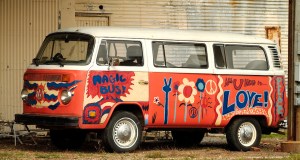
If anyone’s been paying attention to my last few posts you would have noticed that I’ve been very introspective of late.  That’s usually what happens to me when I’m about to make a change or embark on a personal project. '60's psychedelic VW vanI have found that when unexpected and random events happen in my life and I take notice and then question why – I’m ready for my next chapter.
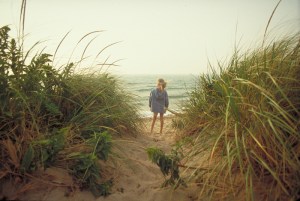
I have a friend who is a freelance writer and lives nearby. We frequently take long walks through the miles of preserved natural open land that lie within our community.  We are both creatives and we’ve discovered that it’s a wonderful environment for conversation and bouncing ideas off of one another.  On a recent walk I was talking about an idea that just won’t leave my head and another thought that’s just starting to morph into a more concrete plan.

At one point she questioned that perhaps I should segway the ideas into assignments from magazines or online publishers – like that would somehow legitimize my effort.  I told her that if I have an idea that I feel so strongly about that I’m ready to proceed on my own  – then I didn’t feel the need to get validation from someone else. That my passion for the subject matter usually carried me through and was all the validation I needed.

I’ve worked on a quite few personal projects over the years, both still photography and video as well as combinations of both.  There hasn’t been one project that hasn’t been rewarding on many levels. Of course there’s the personal satisfaction and growth that I initially receive.  And there’s the incredible feeling I get from knowing my work has touched someone or had an impact on them.  And there are always the residual rewards that lead to new connections and future projects or jobs.

Someone once told me “pay attention to those thoughts in your head that just won’t quit ya”. So I think I will.

Add to FacebookAdd to DiggAdd to Del.icio.usAdd to StumbleuponAdd to RedditAdd to BlinklistAdd to TwitterAdd to TechnoratiAdd to Yahoo BuzzAdd to Newsvine

Facing Our Fears

I read a post “Lessons from Childhood” by Judy Herrmann this week on ASMP’s Strictly Business Blog that really hit home.  She was talking about a children’s book that she was reading to her daughter that touched upon one of the universal themes of life – facing your fears.  The story talks about a young turtle with a cracked shell being reluctant to get an x-ray because it would show how scared he was inside. Dr. Bear assures him that bravery isn’t about fearlessness, but rather “doing what you have to do, no matter how scared you feel.”

I remember reading those same childhood tales to my own daughter when she was young. erin_dunes And it reminded me of when she was in her sophomore year of college and headed to Santiago, Chile to study for 6 months.  I sensed she was anxious and afraid of the unknown – a perfectly natural response, and she was holding it inside. I asked her if she was afraid and she hesitated a bit, perhaps not wanting to show me her vulnerable side and she finally replied – yes, a little.  I told her that just about everything I’ve ever done that’s been most rewarding in my life – were the things that I was most afraid of doing.
I’ve spent a lifetime facing my fears and if I really break it down, I realize that what I fear most is the possibility of rejection.  That if I put myself out there, reaching down into my deepest self and presenting that to others and it wasn’t embraced, how devastated I would be.  I wish I could say that whenever I have faced my fears and put myself out there through my work or in my personal life that it always had a happy ending.  Quite honestly, for every step forward, there have been at least two steps back.  And like the turtle, I have taken solace and crawled into my shell at times.

Ultimately, though someone or something comes along that pierces that armor and I reach out – facing my fears once again.  And every so often I get rewarded in a million different ways.  That’s what keeps me going, what I keep my eye on – that even though the setbacks and rejections far outnumber the successes – they all play into making the triumphs that much sweeter and meaningful.

And so I face my fears and push myself over and over – seeking, exploring and never really feeling comfortable, even after all these years. But I know no other way, nor would I choose another way because it’s far scarier to live a life inside a shell.

Add to FacebookAdd to DiggAdd to Del.icio.usAdd to StumbleuponAdd to RedditAdd to BlinklistAdd to TwitterAdd to TechnoratiAdd to Yahoo BuzzAdd to Newsvine

The Power to Move and Influence

How often are we really moved in our lives by something we see or hear?  Whether it be a printed photograph, a film, a song or a book, I’m sure there are times we all recall seeing or hearing something that has really moved us.  Sometimes we’ve been moved to take action on something that’s been stirring inside us because those lyrics or visuals just won’t leave our heads.

These days we are so bombarded by “content” from every direction we turn that it’s hard to let anything sink in.  The message gets lost amongst the clutter of mediocrity. We get blinded by all the packaging and fizz and just don’t see or hear what people are trying to say – if they are saying anything at all. The human connections don’t seem to be made.

Last night I went to see Jackson Browne in concert.  I knew it would be an intimate experience because it was just Jackson playing an acoustic set  – no band  – just Jackson and the audience.  As I took my seat in the theater I saw the simple set on stage – one chair – one small table with a cup of tea on it – one amplifier, a keyboard and his guitars.  Granted there were 16 guitars for Jackson to choose from throughout the night – but ultimately it was about as simple and as basic as it gets.

I have been following Jackson Browne since his early days when I was living in California. I grew up with his music and lyrics over the years as it changed with the times and his own life’s experiences. I fell in love with his music and to his music.  I’ve been amazed and inspired by his incredible gift to connect with people on a very intimate and personal level.

As I looked around at the faces in the theater last night as he played in such a pure and simple way, I could see that I wasn’t the only one that had been taken to another place.  The women in the audience were in love with him and the men were in awe. We were with him the entire evening listening to every word and note.

As his music lingers in my head today, I can’t help but think about all the stories that are in my head that are dying to get out. I remind myself to pay attention to those stirrings because in my heart I know that those are the very thoughts that I need to listen to. The one thing that I’ve learned over the years is that the ideas that are closest to my heart are the very ones I need to act on because ultimately they will rise above the clutter and resonate with others.

Thanks Jackson for your inspiration.

“You’re Only 25 And You’re Already Making Compromises?”

There’s a story that I love to tell because it explains why I followed the path I did – in my career and my life.

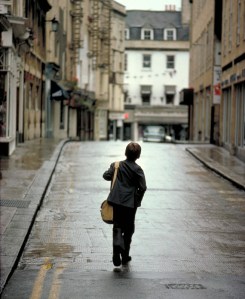
It was 1976 and I had just graduated from Brooks Institute in Santa Barbara, California.  I had my technically perfect portfolio and I was ready to set the world on fire.  British schoolboy, Bath, EnglandMy plan was to move back East, and pursue my dream of becoming a photojournalist.  That was where my heart was – “telling the story” through my images and I wanted to share those images through the pages of magazines. But even back then photo essays and the magazines that printed them were threatened by a bad economy and changing times. Look had just folded and Life was seeing its demise – the first time around.
Back then everyone told me that to make a living in photography you needed to get a studio and shoot commercially.  I bought into that, geared my first portfolio toward that and got a job assisting a commercial still life photographer.  But it didn’t feel right -it  wasn’t the right fit for me.  I had wanted to become a photographer to capture people and their cultures and what was going on in the world – not to shoot static objects in a New York City studio.

I had admired Jay Maisel’s work at the time, his eye for the detail and the streets of New York.  I decided to give him a call and ask if he had time to look at my portfolio and maybe give me a critique or some advice.  He agreed so we set up a time at his studio down in the Bowery. The late ’70’s was not a great time for NYC – economically speaking it was broke and Mayor Beame had just been turned down by the Feds for a bailout.  Just taking the trek down to that part of Manhattan at that time,  was an adventure in itself. Jay was a true pioneer in buying that old bank building back then. I’ll never forget the contrast between the graffiti covered exterior and amazing space inside.

Jay looked at every perfectly mounted print of technically perfect photographs and tossed them aside.  He looked at me and asked me if this was what I really wanted to do.  I started to go into a lengthy explanation of how I really wanted to be a photojournalist and proceeded to tell him all the reasons that I had given myself when I talked myself out of pursuing that dream.  And then I took out some snapshots of things I had shot on my travels before I even went to Brooks.  He looked at the images and told me that he could tell that this was what I should be doing.  And then he asked me how old I was.  I replied that I was 25.  He looked me straight in the eye and said “You’re 25 years old and you’re already making compromises?”.

It was a turning point in my life.  Every time I’m tempted to go off course, I remind myself of Jay’s words and I get back on track.

Tools of Change and New Distribution

Up early again, my mind restless and spinning with ideas, thoughts and reflections on last week’s Photo Expo in New York City.  Ironically this year’s Expo didn’t really reveal anything “new” for me in the way of new toys and tools of the trade.  What was new was the obvious absence of Adobe on the exhibitor floor – a sign of the economic times?  Or is it  a sign of how the photographic business is shifting – from professional to prosumer?

While in NYC I took time to see Robert Frank’s exhibition “The Americans” at the MET.  His beautiful images have stayed in my head and no doubt will provoke me to jump-start one of the many projects that continue to bubble to the surface in my mind.  But there was one thing I read in context of the exhibition and that was a statement made about the camera being a “tool of change” during Frank’s time. I started thinking about that and realize that the camera, whether it be a still camera or a motion camera is still a “tool of change”.  James Natchwey’s images are powerful examples of that.

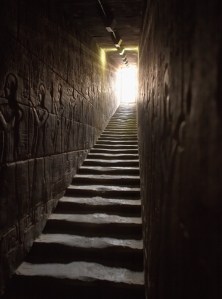
What is radically different today is our means of distribution – of getting our imagery seen.  No tool has the power to make a difference or a change if what it creates is never seen.  I started thinking about the demise of newspapers and print in general and I was dismayed about the future Temple of Horus, Edfu, Egyptand the still photos that may never be seen.
With the Internet and global distribution, the playing field has been leveled and democratized and anyone can share anything they create with the rest of the world – right?  Maybe not – because ultimately the web is controlled.  It’s controlled by what search engines find and how information is ranked. Listen to Eric Schmidt, Google’s CEO talk about the Internet of the future.  Even Facebook now is deciding which friends will see our news feed.  That default can be changed of course – but you have to be aware of it to change it.  How many of us are aware? And I mean that in the broadest sense, meaning aware of what and how our information is delivered.

All the “free” content we get these days over the web excites us all.  It’s great – but even free comes at a price.  I can only hope that future generations will understand the underlying cost of  “free content” and be aware of who is controlling distribution in this new paradigm.

Life on the Road and My Favorite Place

When I was a little girl my mom used to take my sister and I to Walgreens to get an ice cream sundae.  Back then, like other drug stores and five and dimes, you could get a bite to eat at the counter.  I had a game that I’d play every time we’d go.  I’d sit on the stool and spin myself around. I would assign exotic destinations to various landing spots that the stool would stop spinning – and determine that those were the places that I would travel to in my life.  I somehow knew back then that “the road” would become a huge part of my life.

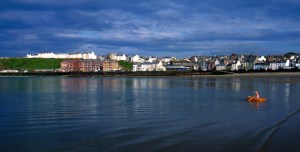
Over the years people have asked me “Where is your favorite place that you’ve ever been?”. To be honest, I hated that question because I never had an answer.  There were too many places, all different in their own way that attracted me to them.Iom peel boat And then about 10 years ago I had an assignment for Islands Magazine to cover the Isle of Man.
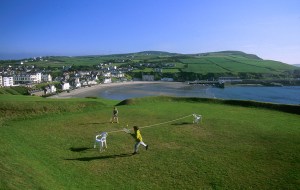
The island pulled me in from the start. I felt a strange sense of belonging, a connection that I couldn’t explain.  The air was cool and pure with a constant wind that blew across the island from one sea to the other.  It’s a small island located in the Irish Sea somewhere between Ireland and Scotland.  An island that’s reminiscent of Ireland 50 years ago –port erin an island where time seems to have stopped.
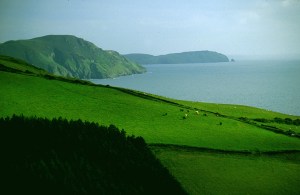
Because the island is small, I didn’t feel the usual rapid pace that I have felt on previous assignments where I was given too much to cover and too little time.  I could linger and catch the moods of the island and the vibe of the people.  It was a magical place with open, cinematic vistas of aiom scenic patchwork of every shade of green you can imagine, stretching from the barren upland’s to the blue of the sea.  The sea was always present.
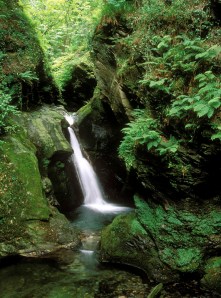
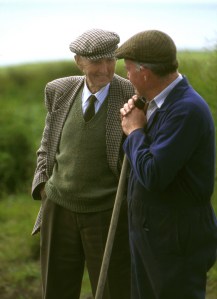
There were secret glens with waterfallwaterfalls and I thought that fairies must surely live there, somewhere beneath the ferns.  The island was enchanting on every level.  One day I came upon a crowd of people in a field.  I asked someone what was going on and they replied that it was a turnip weeding contest.  How wonderful I thought, a contest to weed a field.  I spent the morning caught up in the event, taking a few images, but mostly just talking with peoplemen iom and storing those conversations in my head.
And then like every other time I’ve taken to the road – my journey came to an end and it was time for me to leave.  There’s a legend on the island that every time the Queen of England comes to the Isle of Man (the island is an independent nation), the great god Mananan covers the island in a mist, so that she won’t find her way there and take the isle back.  The night before I left, a dense fog enveloped the isle and I thought the gods didn’t want me to leave – and I didn’t want to leave.  But the fog lifted and it was my time to go, but I knew that I finally had an answer to the question “Where is your favorite place you’ve been?”

Robert Frank, “The Americans” and The Road

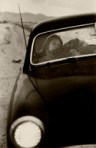
I went to see Robert Frank’s “The Americans” this past week at the Met in New York City. I have always been a fan of Frank, not so much for his fashion photography but his photographic observations of “us”robertfrank_10.T – us Americans, our culture at that time in our history.  He was an observer of “all” people not just the beautiful ones captured on the pages of Harper’s Bazaar, and he captured those observations for generations to come.

As I took my time looking at the prints and contact sheets displayed, I was able to get a glimpse of how he shot – what his camera lingered on and where he went from there.  I could see his thought process in how he made his selections, looking at the frames circled with his red grease pencil. I read his letters to his colleague Walker Evans, another favorite of mine and I got a much better sense of him as a person and photographer.  I watched an early video that he filmed and was amazed by how he pushed his own photographic boundaries into another medium.  The exhibition provided a wealth of insight and information on Frank, his project “The Americans” and a time in our country’s history – and I was captivated.

His images linger in my head and remind me of my beginnings in photography and “why” I became a photographer.  Like Frank, I’m an observer of all people, of cultures and use my camera as a means to capture my observations and share them with others.  My passion is rooted in my own personal road trips; I have taken over the years with my camera. It has triggered in me the desire to explore, to embark on another journey with my camera and see where it takes me.

I’ve spent a career and a lifetime “on the road”, always the traveler, observing and capturing the daily lives of others – not the famous, but the common man.  Not the horrific, the outrageous, the exotic for those reasons  – but because they’re part of the world I live in.  My hope is that I the images I leave behind, will provide others a glimpse of that time, that space, those lives that I stumbled upon during a lifetime spent on the road.