5 Ways to Leap Forward and Get Unstuck

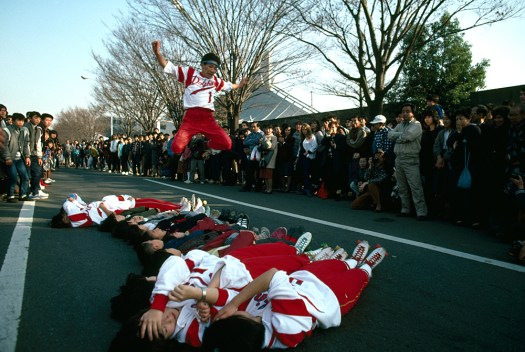
Roller skaters jump over teammates, Tokyo, JapanIt’s February 29th and that means we all get an extra day this year. Let’s celebrate leap year by taking action to leap forward – not just today, but every day this year and every year.

  • Finish something you started. This could be anything from an online course, a book you put down, a personal project etc. I always tell myself that a start is a start to nowhere if you don’t finish it.
  • Identify one thing that you’ve talked yourself out of (for all the right reasons) and take action on it. This could lead to the start of something. After you’ve faced your fear or resistance and have overcome your inertia – follow up with a plan for completion.
  • Toss out one bad habit. It’s easy to fall into a rut with bad habits. Identify one bad habit and change it. Start easy. If you find yourself starting your day in an unproductive manner change it. If you begin your day by checking your emails and then letting it consume your entire morning then start your day by tackling something that you keep putting off before you get distracted by someone else’s urgency.
  • Get rid of the resistance in your life. Are you letting toxic people derail you? Misery loves company but I’d rather hang out with people who energize me than those who bring me down. There are plenty of people on both sides of the misery camp. Surround yourself with those who add value to your life and stay away from those who suck the life out of you.
  • Tell yourself you can. Take notice how often you stop yourself by telling yourself you can’t. Really take note and every time you find yourself in that default mode of “I can’t” – tell yourself you can. You are your thoughts so be careful of what you tell yourself.

7 Things I Learned About the Business of Photography

It’s a Business – You may catch some lucky breaks in your career or you may be an incredibly gifted photographer – but if you want to make a living taking pictures and sustain yourself financially,

Times Square New York City

you will need to manage your art and your career as a business. That means find a way to make a profit in pursuing your craft.

It’s Not Personal – Keep emotions out of your business decisions. This is a tough thing to manage because it’s usually at odds with the passion that energizes the creative side of you. I think my best work is very personal but I try to avoid the pitfalls of letting my emotions cloud my business decisions that are in my best interests. That could mean walking away from a job or a bad contract.

You’re Selling Value – If want to make money and stay in business, you need to understand your value or your photography’s value in the marketplace. Are you unique, have special skills or access to places other don’t, have one of a kind images, or are you simply a really good professional photographer who a client can hire with complete confidence? The answer to that question can help you assess your value in the marketplace. If you don’t know what your value is, then it will be very tough to sell yourself. You can’t sell what you don’t believe in.

“Always be Marketing” – I learned this from James Malinchak – America’s Big Money Speaker. I’ve never been comfortable selling myself, which is somewhat odd in that my dad was a great salesman. It always felt a bit disingenuous to me to toot my own horn, and no doubt I missed a lot of opportunities by not doing so. It’s tough to sell ones self and many of us are better off having a rep or an agency do that for us. But, I have found that the best marketing happens organically, when I’m at conference or a social gathering and connections are more personal.

Be Proactive Not Reactive – Change is inevitable. If you want to sustain your business, you can’t get complacent. Keep in mind two things: 1. Nothing lasts forever and 2. There will always be cycles of ups and downs. As Robert Frank said the other night when I heard him speak “Keep your eyes open”. He said that in answer to the question, “What advice would you give students?” and I’m sure he was speaking about creativity, but if you allow yourself to become complacent as an artist – your business will surely suffer.

Don’t Burn Bridges – Singer/songwriter Don Henley wrote; don-henley-don-henley-sometimes-you-get-the-best-light-from-a-burning“Sometimes you get the best light from a burning bridge”. Isn’t that the truth? It’s also a lesson that I have learned the hard way. Think twice before you say something or react in a way that might come back to bite you.

Relationships are Key – Most business people will tell you that their best clients have been from referrals. It’s a lot easier to create a bond with a new client when you have already been vetted. Some relationships are easier to manage than others. Some are good and some are toxic. It’s up to you to sort through which relationships you want to nurture or abandon.

More practical tips can be found in The Craft and Commerce of Video and Motion

The Value of the Experienced (Old) Photographer

I don’t think of my self as old, except at times when a part of my body doesn’t act or react the way it used to. But, I would say that many of my colleagues would call me old, chronologically speaking. The premature deaths of Glenn Frey, David Bowie, Natalie Cole and Alan Rickman – all in the span of a few weeks and all in their late ‘60’s, has given me pause to look at my own mortality. It has also given me resolve to make the most of each day.

The fact is there is nothing we can do about our age.

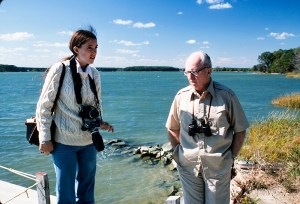
Gail Mooney with James Michener, Chesapeake Bay, MD
Gail Mooney with James Michener, Chesapeake Bay Photo © Thomas Kelly

Unlike other things in life that we can change, we can’t change our age. But we don’t need to allow a youth-obsessed culture, define our value. I’ve grown weary of the dismissive attitude our culture has about aging. It’s especially frustrating for me as a photographer, filmmaker, and creative entrepreneur. Creativity comes from the spirit within. Our spirit never ages, so neither does our desire and need to create. I’ve never felt more in tune with my spirit and my authentic self than I do now. I never imagined that would happen at this point in my life but I’ve never felt more creatively alive.

I get bewildered and frustrated when society perceives my value as somehow diminished, simply because of my age, but then I look at my assets.

  • Experience – There are no short-cuts when it comes to experience. It’s earned over years of trial and error on the job and in life.
  • Problem Solving – I wish I had kept track of all the problems I’ve solved on assignments as well as in personal life. Countless decisions and consequences to learn from. I’ve gotten pretty good at it.
  • Creativity – I take more chances and push myself in terms of my craft now, than at any other time in my career. I’m not afraid to try something different because I realize that failure is part of the process. So, I hate it when getting older is equated with getting stale. Sure, some folks do but there are so many people in my generation that are still incredibly vibrant and innovative. Check out my latest personal project, “Like A Woman”, short films and still portraits of women working in male-dominated professions.
  • Perspective – I’ve lived through profound changes in the span of my life. They haven’t always been easy to deal with. Technology has changed everything – how we do business, how we communicate, and how we interact, globally. My generation has experienced both the analog and the digital world. Hopefully, most of us are able to see the merits of each. Change is inevitable, it always has been. I’ve been around long enough to experience many cycles of change, and I can tell you for certain, nothing lasts forever. I try not to let change intimidate me, but rather let it excite me to embrace what it has to offer. That has opened me up to all sorts of possibilities.
  • Wisdom – It’s true that we get wiser as we age but only because we’ve had a lot more mistakes to learn from. Whether we’ve learned from our heartbreaks or from the stupid things we’ve done, we’ve grown despite it. Wisdom is kind of like experience – there are no short-cuts to getting there.

I’d love to hear others’ thoughts on this topic and their perspectives.


Business Tips for Photographers Who (Also) Shoot Video

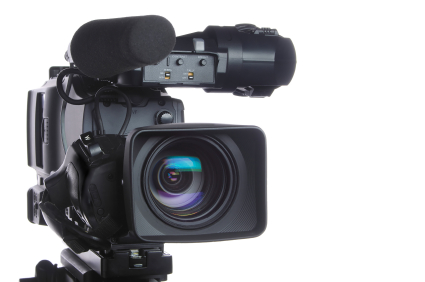
In the blogging world of photography and motion, there is a lot written about gear and how to use it, but precious little written about “the business”.  Chances are, if you are a photographer who has been in business for more than 10 years, then you know that technology has not only changed our tools, it has changed the way we do business.Professional high definition video camera, isolated on white background

For starters, we are doing business in a global economy, and with that comes pluses and minuses. One big plus is that we are able to reach a much wider audience, than ever before. That is, if you have an understanding of how to do that and take advantage of the opportunities that are out there.  The minus or downside is, if we don’t adapt our dated business models, in a business that has seen monumental changes, we will not be able to compete.

Commercial photographers are in the visual communications business.  We create imagery that delivers a message or tells a story for a variety of “markets” including; advertising, corporate, architectural and editorial.  Each market has a need for visual content and these days that encompasses both still photography and video.  In the last couple of years, the lines dividing these two mediums have faded away, at least in terms of how content is consumed in our culture.

Here are a couple of tips to help photographers prosper in our “multi-media” world:

  • Decide what your company will offer.  Will you only provide still imagery?  Or will you expand your business and offer both still photography and video? Are you quick to answer: “I don’t want anything to do with video”? The problem with that answer is that most of your clients will probably have a need for video.  Are you going to send them away to your competition?  Or will you keep your clients “in house” and take care of their video needs and hire or outsource your competition? That’s a different way of thinking and has the potential to broaden your revenue stream.
  • Decide what role you will play if your company does offer video?  Will you be the director and work with a camera operator?  Or will you assume the role of a DP (Director of Photography) and direct as well as operate the camera?
  • What will you outsource and what will you keep in house?  Maybe you want to expand your business by offering both still photography and motion, but you’d prefer to just shoot the still photography and outsource the video.  In that case, you could assume the role of producer and oversee or outsource the video production.
  • Reassess your insurance.  Video productions have a lot more variables. They also usually have larger crews.  More than likely, you will need to upgrade your current insurance policy to accommodate and cover that.
  • Change your paperwork.  Make sure that you go through your talent and property releases and modify the language for multi-media.  Change any boilerplate contract language to include video (motion).
  • Licensing.  Regardless, if you decide not to expand into video production, you will have to contend with the fact that your still images won’t always be used in a stand-alone fashion.  Many still images will be commissioned and/or licensed as part of multi-media projects and that has a dramatic effect on licensing. And if you do decide to expand into video production, in your role as a producer, you will be licensing other people’s work.
  • Understand new business models.  Let’s face it, things have changed in the business of photography.  Photography has become ubiquitous and the competition is fierce.  You are not only competing with professional photographers – you’re competing with semi-pros, amateurs AND video production companies.  One thing is certain, it’s never been more important to have an understanding of multiple mediums and to be unique and stand out amongst the noise. There are no templates you should follow.  You have to be authentic and true to yourself.

Check out more tips and information in my ePub, The Craft and Commerce of Video and Motion.


10 Things Freelance Photographers Should Do in 2016

Be optimistic – I’m going to start with the hardest one of all, because it’s really difficult to be optimistic these days.  But I find that if I can maintain a positive attitude and turn my thoughts to what is possible, I actually open myself up to more opportunities in my life, instead of creating more roadblocks.

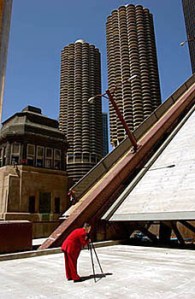
Be open to possibilities. – Be more flexible in how you perceive thingsphotographer on bridge, Chicago, IL and who you are. Change is always happening, but it’s usually gradual.  Most people don’t take notice until “change” forces their hand to act.  It’s always better to be proactive than reactive so embrace “change” as an ever-present fact of life that creates opportunities for those who are open to seeing them.
Collaborate – Photographers are very independent creatures and collaboration is not part of their norm. As the “photography” business continues to change, photographers will find that collaborating with other artists will make their own businesses stronger.

Diversify – I’m not quite so sure why so many photographers are so rigid in how they define who they are and what they do.  Having a “style” is great, but the trick is to not to be so narrowly defined by that style, so that when styles change, you don’t find yourself obsolete by your own design. It’s kind of like being type cast, where your audience or your clients can only see you in one way.

Concentrate more on “the story”– I had the opportunity to speak with a lot of still photographers and filmmakers this past year and I began to notice a difference in the conversations I was having with each.  Most times, filmmakers would be telling me a story, whereas still photographers would be telling me how they executed a photograph, or essentially telling me the “back story” of the creation of the image. It’s all interesting but “the story” is the bottom line – if that doesn’t come through to the viewer – the rest doesn’t matter – including how it was executed.

Be authentic – be true to yourself.  That means that you have to trust your gut instead of second guessing it.  This is hard, especially when things don’t always work out the way you had hoped.  Step away from the “noise” and listen to the voice inside.

Fail more. – Rejection is a tough pill to swallow but it usually means that you are either pushing yourself to try new things, you are too far ahead of your time or it just wasn’t meant to be.  If you look at successful people you’ll see that most have had failures and rejections in their lives but they stuck with it – instead of letting failure defeat them.

Self-Initiate more projects. – I don’t like to call non-commissioned work, “personal projects”. That co notates that there is no monetary value and these days, just the opposite could be true.  With more and more lopsided contracts  being presented to photographers for commissioned work, a photographer has a better chance to make more money and keep ownership of their work by creating self-initiated projects.  But they need to be prepared to work hard.

Forget about the past except to learn from mistakes. – You can’t change the past but you can learn from it and then, move on.  Look toward the future but make sure you take time to enjoy the “now”.

Realize that in the scheme of things, you are just one small speck in the universe. – I think we all get way too stressed about things that really don’t matter and we let those things control our life.  When we become more conscious of that, we really begin to live life.

Telling Your Family Story

This time of year we try to spend more time with our families and loved ones. It’s also a time of year when we reflect on the people who are no longer with us. For the most part, we rely on our memories and some scattered photographs or home movies and videos.

Some of my fondest memories are of my mother, father and grandparents sitting around the dinner table, long after the holiday meal was over and telling or retelling the family stories. Of course, everyone would recall the same story in an entirely different way – the way they remembered it.

Every family has stories – mine certainly does and I have started to

Mooney family, Easter Sunday, Chicago, IL  (1956-57?)
Mooney Family, Chicago, IL


collect information, photographs and even recordings of family members while they are still around to tell them. It’s such an easy thing to do with the tools that technology has provided – easy to use cameras, audio recorders,  and of course, phones that shoot photos and video.

I often think that as photographers and filmmakers we are not only the keepers of our own family stories but we are documenting the stories for other families, through our still images, recordings and videos. Essentially, we are creating an archive of our loved ones and the memories. I believe that is the most precious gift that I can give someone through the talents of my craft. In fact we set up a separate niche of our business, Conteur Productions, to do just that – to archive the family stories in beautifully crafted cinematic videos. The idea isn’t just to string together old still photographs and footage to music, but to capture the stories of our loved ones, on camera while they are still here to tell them in their voice. Imagine, the legacy we leave future generations? My mom is no longer alive but I wish I captured her telling her stories, if only to hear her giggle when she got to the punch line.

As the art of conversation, gives way to virtual communication in our culture, our family stories are fading away with each passing generation. Well, the stories are still there of course, but they often get overlooked in the distractions of our high tech culture. But at the end of the day, it’s our family stories that should be preserved. They remind us of who we are and where we came from and that is priceless.

So as you gather your family together this holiday season – start capturing those life’s moments. You’ll be glad you did.


What Does a Photographer Look Like?

When I started out as a commercial photographer more than three decades ago, it was a very different profession than it is today. It wasn’t just different in terms of technology – it was different culturally. When I went out into the workforce in 1977, it was definitely a man’s profession.

I never really thought of myself as a female photographer, just – a photographer. I didn’t think the additional gender adjective needed to be part of the conversation – yet it was at that time. Sometimes it surfaced in social settings. One time, an art director who I worked for, introduced me to a very famous photographer who shook my hand and said, “You don’t look like a photographer!” And I thought to myself, “what does a photographer look like?”

It was worse when the gender bias surfaced in the workplace. I’m not sure if having a male business partner made the situation better or worse. I do know that the assumption was always that my partner Tom Kelly, was the photographer and that I was either his rep or his assistant. That assumption negated itself during a pre-production meeting or on the job, but I needed to make my presence known.

Things have changed…….slowly, over the years in the photography profession. There are far more women in the industry now than when I first started. It’s certainly not the exclusive male dominated industry that it used to be, but there are plenty of professions that still are – the movie industry is a perfect example. There are plenty of other examples of gender bias in the workforce, which is what motivated my project, Like A Woman.

Like a Woman is a series of environmental still portraits and short films about women working in male dominated professions. The idea was first inspired by Lauren Greenfield’s Like A Girl campaign. I loved the campaign and even though I felt hopeful that younger girls are growing up a bit more empowered than girls of my generation, that statement “Like a Girl” still lingers as a demeaning remark. I wanted to flip the narrative and make the statement, Like A Woman an empowering expression said with pride.

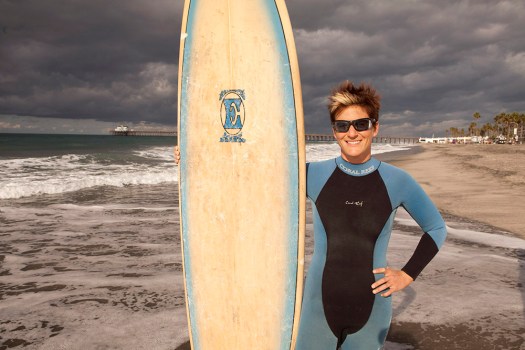
To date, I’ve interviewed 5 women from all different professions – architecture, engineering, auto mechanics, organic farming and industrial photography.

Jenna Close, Oceanside, CA
Jenna Close with surfboard, Oceanside, CA

I’ve just completed one on industrial photographer, Jenna Close. You can see it on the Like a Woman Vimeo Channel. Jenna demonstrates that women have come a long way in terms of having successful careers in photography, but she reminds me that there are still undertones of subtle gender bias. Things are changing, but until the gender adjectives disappear entirely from the conversation, we need to stay mindful and not drift into complacency.

If you know a woman working in a male dominated profession, who you think would make a great subject for Like A Woman, please contact me. mailto:gail@kellymooney.com

The Value of Personal Projects for Photographers

For as long as I can remember, in my professional life as a photographer, I’ve always had a personal project that I was working on. I’d either be thinking about an idea that I wanted to explore or I’d be actively producing and shooting something. I never felt that I had to do personal projects. I did them because I wanted to.

Taking/making photographs has never been just a job for me. It’s not something that I look forward to retiring from. It’s something that makes me feel like I am “on purpose” and living the life I am meant to live. It’s also how I communicate and connect with people. That brings me joy especially when my imagery creates awareness or provokes thought.

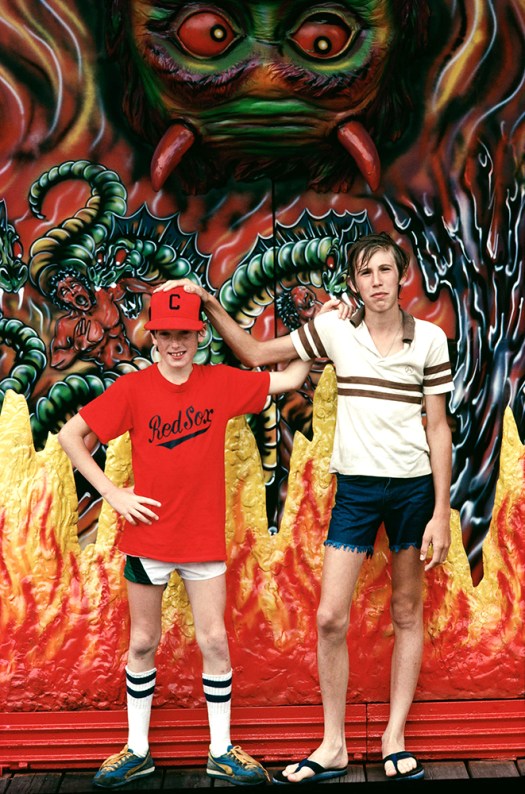
One summer, early in our careers, my husband/partner and I decided to photograph the Jersey Shore.

Jersey Shore
Wildwood, NJ   ©Kelly/Mooney

We shot every weekend that summer, from the perspective of a bicycle, as we peddled our way through different towns along the shore. We spent one memorable afternoon in Wildwood taking portraits of all sorts of people,  in front of the graphic facade of a fun house. Some of those images created decades ago, still resonate in a timeless way.

There are very few images that I am still drawn to decades after I shoot them. Most of the images with staying power were shot on personal projects. Those images came from a personal place, my unique way of seeing the world at that point in time.

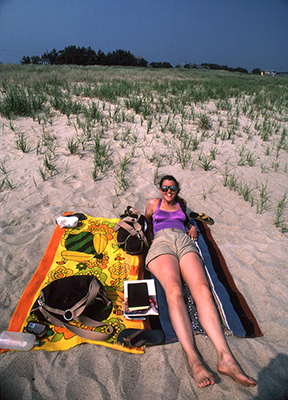
Gail - NJ Shore
Gail – NJ Shore

Those are the images that still speak to me and resonate with others.

I’m not quite sure I could come up with an exact dollar value on the personal projects I have done. Many have been monetized in in a variety of ways.  But the true value goes far deeper than the pocketbook.

What am I working on now?  Check it out.

How to be Productive in a World Full of Distractions

I’m an organized person. I need to be organized otherwise I feel that my life is in chaos. Scraps of paperI’ve always been able to define an end goal and break down the tasks that need to be completed in order to attain that goal. I am able to prioritize tasks and assign deadline dates. I’ve always been pretty good at getting things done. I have to be – I’m an independent entrepreneur.

My business is visual communications. I create storytelling images and films for corporations and non-profits. I market myself to buyers who commission still photography and video production for that market. These buyers work for ad agencies, in-house corporate agencies, non-profits or publishing companies.

My business has changed dramatically since I opened shop over 3 decades ago. The possibilities and tools that are available to small independent entrepreneurs to use in their marketing strategies are endless. The problem is the vast amounts of opportunities ends up being a double-edged sword because it overwhelms most of us. There are endless ways to target a global audience through, social media channels, electronic ads, online portals/websites/blogs, emailer promotions, print promotions, print and online directories……….the list goes on and on.

It simply becomes overwhelming and seemingly impossible at times, for me to address all the needs of a small business, to keep our business afloat. What I’ve found is that it’s never been more important than it is now in our tech driven culture, to be organized and focused and not succumb to distractions.

Here are some tools that help:

Basecamp – essential management tool if you’re collaborating with others.

Wunderlist – organize your personal/business life. Notes, notifications, reminders, due dates and share lists with colleagues and family. Free

Post Planner – If you or your company engages their audience on Facebook, this app saves you time and boosts engagement. Schedules your posts – finds content.

Sweet Process – Do you feel like you have to learn all over again, every time you do the same things? It could be a workflow for creating emailers for example. This app systemizes and records your process. Essential in employee transitions.

Magical Pad – Organize – be more productive – get things done. Projects, Tasks, Brainstorming.

StayFocusd – Are you super distractible and find yourself spending hours on social media and not getting anything done? Perhaps you should install this app if you are a Chrome user. It will limit the amount of time that you can spend on time-wasting websites.

New Website, New Reel, New Look for Kelly/Mooney

It had been far too long since we did a redesign of our website – more than 5 years. Not only the industry (visual communications) has changed in the past 5 years, but so has our KM Logobusiness. More and more, clients are asking us to provide visual solutions in mixed mediums for a variety of uses – print, the web and social media. That’s been true especially with our editorial and corporate clients. It’s rare when a client comes to us for just one photograph for one usage.

With that said, we wanted a new website that would demonstrate the scope of our business. The first thing I did was to define the look and functionality of the website as well as what I wanted the website to communicate to potential buyers. We knew that a template site with just our still images no longer represented our business. We also knew that we wanted a website that would speak to our client’s needs and the services we provide that meet those needs.

My list of must haves for our website:

  • A site I could manage and update easily.
  • A site I could move to another server if I chose to do so.
  • A “scrolling” website. In researching numerous websites, the scrolling or parallax scrolling websites appealed to me and I began to see them everywhere – small and large film companies, graphic designers, non-profits, etc. We wanted a site that told the Kelly/Mooney story.
  • Messaging throughout the site communicating to potential buyers, what we do, the services we provide, how we work and who we are.
  • Intuitive navigation.
  • A site that would not only show our work but our experience as well.

I should point out that before I even got to this point, I had spent over a year culling through a vast archive of our work – literally terabytes of still images and footage – both digital and analog. I did the task over time, sifting through new work and old, trying to distill it down to the best representation of what we do, what we want to do and our self-initiated work. . Ultimately sorting through this body of work, not only served the purpose for the website but resulted in a new reel as well.

Challenges:

  • One of the biggest challenges we’ve always had was showing one unique vision because there are two of us. This website shows our combined work throughout the galleries, but it’s the first time we show individual galleries for Kelly & Mooney.
  • New reel – I took 7 hours of footage down to a 90 sec. reel. And then I re-edited it! That doesn’t take into account the time I spent sifting through music selections to pick the right piece for the soundtrack of the reel.
  • Picking images – We have a huge body of work because of the longevity of our careers. Ultimately we selected mostly recent work, but we didn’t want to discount our classic images so we decided to create a legacy gallery.
  • Realizing that I sized the images too big. In addition to the images having long load times, they bogged down the site by adding to the size making it a double digit Gig file. I had to go back to the images and resize them all. That was not fun as I’m not a big fan of going backwards.
  • Finishing the site at the beginning of the summer and then cutting it back all summer long because it was just too overwhelming. No doubt, there’s still editing that should be done on the site but at a certain point we had to launch. We finally did on Oct. 6, 2015. That in itself was traumatic. Right after we went live, somehow I deleted a critical file, which shut down the site. I was very fortunate that I had great support from our host server who had everything restored within the hour.
  • This is the first time I’ve ever built a website. It was frustrating, challenging and scary. I thought that my limited knowledge of  Wordpress  from working on my blog would be enough to create a WordPress website. It wasn’t, and it has been a huge learning curve for me. But I wasn’t the only one who worked on this website and I’d like to acknowledge the people who helped me through my meltdowns: my partner Tom Kelly, my colleague Jan Klier, and all the lifesavers at DreamHost (our host server) and folks at Envato who designed the WordPress theme.

This will continue to be a work in progress and I welcome comments and suggestions. http://kellymooney.com/