10 Tips for Sustaining a Long Career as a Professional Photographer

Grow or die – My good friend and coach Ian Summers coined that phrase. He also taught me that growth requires a temporary surrender of security.

Be yourself – There’s a great quote – “be yourself because everyone else is taken” Many folks say that you need to have your own vision but I really don’t like this phrase because it is overused and is not really specific or clear – to the point that most of us get frustrated if we don’t feel we have “a vision”. Your gut will let you know when you’re “on purpose”.

Don’t operate in a vacuum – Photographers are independent creaturesYJ2X9041 for the most part. Take joy in collaborating and/or networking. Expand your networks to include all types of folks – not just your fellow photographers. This is how and where ideas are born.
Don’t focus on the gear – I get weary of people asking me about my gear or the age old question “Does that camera take good pictures?” – to which I reply “It depends on the operator.”

Embrace failure – Or at least don’t let your fear of failure stop you. Try instead asking yourself “what’s the worst thing that could happen?” Let’s face it, we don’t do brain surgery, so for the most part, our fears don’t involve fatalities.

Do the work – I believe it was Malcolm Gladwell who said that it took 10,000 hours to get good at something. If you want to sustain a long career in any career, be prepared to do the work to get good at it.

Get rid of the resistance – It’s really easy to give yourself lots of seemingly logical reasons why NOT to do something. Try replacing your reasons NOT to do something, with why you SHOULD. Get rid of the people in your life that are giving you resistance – they’re poison. Read more about resistance in Steven Pressfield’s The War of Art.

Don’t set out to prove yourself – Instead strive to improve. This attitude is ultimately more beneficial and leads to better self esteem. It’s also not dependent on someone else’s validation or approval.

Enjoy the good times – but be prepared for the bad times. Nothing stays the same – ever. Don’t let those glory days mislead you or your ego. There are always competitors waiting in the wings.

Keep your passion and enthusiasm – If you don’t, you’ll never survive this business. And if you have to ask “should I be a professional photographer or practice law?” I would have to answer – “practice law”. If you have to ask that question, it’s an indication that the passion isn’t there.

If you are thinking of expanding your skills with video,  check out my book “The Craft and Commerce of Video and Motion”

2014 NAB Wrap Up

Still photographers and motion shooters love to get a “first”  look at “new gear”. Here are a few interesting items I saw last week at the NAB Show (National Association of Broadcasters):

Cameras

  • Black Magic Ursa A 4K camera 2014 NAB Showat an affordable price (around $6,500) that will be shipping in July. They’re calling it the first user upgradable-camera because you can change the sensor and the lens mount. It looks like this will be a great camera for filmmaking and documentaries.
  • Sony A7s Sony’s latest mirrorless camera features a wide-dynamic-range sensor and amazing sensitivity. With this camera, Sony didn’t jump into the megapixel competition against other camera manufacturers, but instead concentrated on image quality at staggering ISO’s. I would use this camera more as a still camera, but it’s small and it also shoots 4Kvideo.
  • GoPro  This company continues to innovate and make products that provide shooters with the tools that allow them to come up with incredibly creative solutions, especially in sports/action content.

Storage/Monitors

  •  Atomos has created the Ninja Star, a tiny ProRes Recorder for theGoPro Hero 3 that has an HDMI-out port and allows you to loop the signal through the Ninja Star and out to a monitor for composition or review. Atomos also debuted their Shogun, a combination seven-inch monitor and recorder with 4K capability.
  • G-Speed Studio by G-Techology This product, a hardware RAID 4-Bay Thunderbolt 2 storage solution, won the “Best Storage of NAB 2014 Award.” The G-SPEED Studio is a storage device with room for four hard drives and is configurable to RAID 0, 1, 5, 6, or 10. You can bring the total storage up to 24TB; at a lesser amount, the sustained 660MB/s transfer rate will get your files going quick.

Sliders/Stabilizers/Helicopters

  • Kessler Unidrive This is a motion control system (slider) that’s automated to enhance your production values.
  • Shape ISEE 1 Camera Stabilizer for GoPro A very cool device to stabilize your action GoPRo footage. The SHAPE ISEE I is a handheld gimbal-based stabilizer for GoPro cameras and smartphones. The powered, self-calibrating ISEE I enables steady shots with the GoPro and features a joystick for up/down tilting of the camera.
  • DJI’s Phantom 2 Vision Plus with Gimbal and GPS The latest addition to DJI’s quadcopter lineup gives you stunning images at a super affordable price ($1,000, or $1,099 for a version with extra battery). The copter has a 1080P camera that supports Adobe DNG RAW, which is great for workflow. There are also features that allow you to stream video to your smartphone in real time and to synchronize your phone with the quadrocopter through WiFi up to 700 meters away.
  • Syrp Genie Time Lapse & Magic Carpet Slider This is a motion controller coupled with a simple slider that provides a relatively low-cost solution for great time-lapse photography.
  • GimbalGunner A new device designed for run-and-gun video shooting. It’s essentially a cross between a two-axis gimbal and shoulder-mounted rig.

Software

  • There were hundreds of booths demoing software, but perhaps the most impressive of the bunch for me was the iZotope RX 3 2014 NAB ShowThis audio postproduction software will take away your fears about working with sound. I saw a demo in which it fixed substantial audio issues with the push of a button. Technology continues to make our lives easier. There is an incredible deal on the software until May 1, with prices slashed from $749 to $249. I don’t advocate capturing bad audio, but you’ll want this repair tool if you do.

Lighting

  • Litepanels This company launched its new Hilio series, versatile panels that emit a raw, narrow beam that provides high-intensity light for long throws.

“A Photograph is the Biography of a Moment”

Facebook can be a real time suck for me if I let it, but every once in a while I find out about something that makes a mark on me in some way.  Today, I saw an interesting story posted, about a photographer, Art Shay who was in his nineties.  Art was reflecting upon the photographic legacy he will leave behind, when he dies.

Going through his lifetime of images, it was clear what has been his favorite subject matter – his wife. His wife, Florence, passed away 2 years ago, and as Art picked up a framed photograph of one of his favorite shots of her, he teared up a little and said, “a photograph is the biography of a moment”.

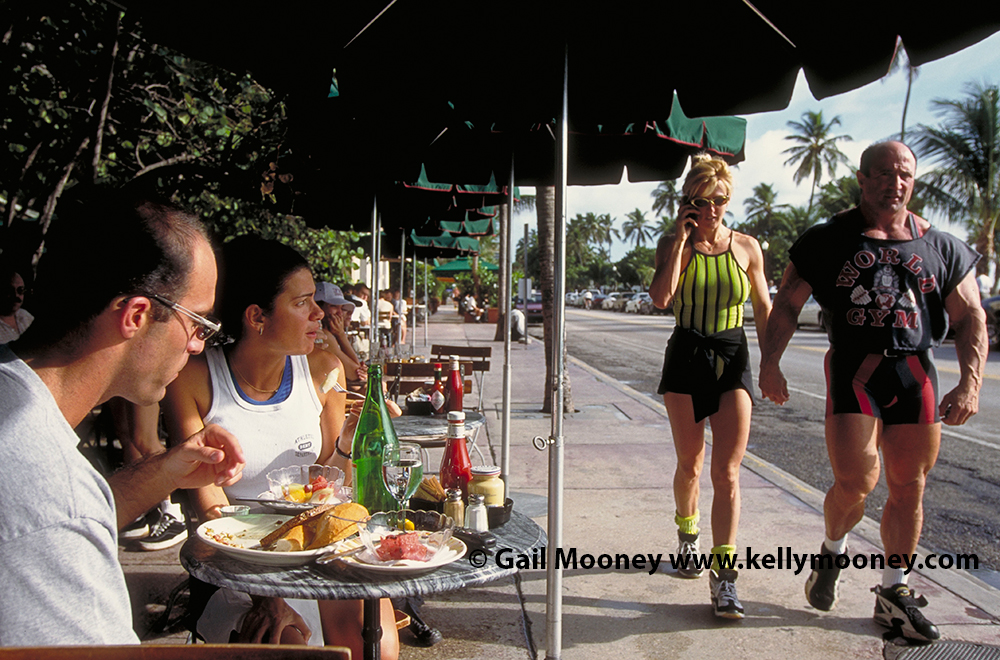
That line hit home and it got me thinking about “the moment” People watching, South Beach, Miami, Floridaand how I have spent a lifetime, capturing them.  That is the power a still photograph has – to capture the moment and preserve it in time.

Think about how your recall your own personal history or the era you grew up in.  How do you remember things?  For me, many of my memories of childhood are drawn from old photographs, when someone who had a camera, snapped a moment in time.  We all remember history through images that have become the icons of their time.

Still photography is a powerful medium.  It captures that one special moment in time and preserves it forever.  It has the power to provoke and to move people to action. It can give you hope or fill you with despair. It can bring a tear to your eye or a smile to your face. “A photograph is the biography of the moment”.

Art Shay has an exhibit of his work: “My Florence: Photographs by Art Shay” at the Museum of Contemporary Photography at Columbia College in Chicago till May 24, 2014.


How to Sustain a Long Career in Photography

I came across this old “tear sheet” in the process of cleaning out the attic.  Tom and I have dozens of boxes containing over 35 years of printed collateral with our “work” in it.

Tom Kelly and Gail Mooney

This brochure cover was from a shoot for I Love NY.  Clearly it was a low budget job, based on the fact that we were also the “talent” in our own photograph.  When this photo was shot, we were just starting out in the business of photography. It’s hard to believe that it’s been over 35 years since we started Kelly/Mooney Photography, because it seems like yesterday.   As I sifted through decades of work, I started thinking  – “What is it that sustains a career?”

Some thoughts:

Don’t let age define you.  Let’s face it; we’re a youth obsessed culture. It’s not easy getting older, especially when you’re in a creative business like photography where “fresh” is equated with “young”. But there’s absolutely nothing you can do about your age.  You can’t change it.  It’s like your height – it is what it is.  But you can choose how you think about it. If you tell yourself that you’re old – you will be.

Take more risks – not less. Why not?  What is the worst that could happen?  Am I the only one who thinks this way?  I guess I was lucky that my mom and dad put those types of thoughts in my head a long time ago and they’ve served me well.  Why should I change my outlook now, when I have fewer years on the planet?

You’ll fail more than you succeed.  I sure have.  In the last couple of years I’ve been rejected more times than not, but only because I have been challenging myself more than at any other time in my career.  I have always “been on the move” in my life and my career and I am not one to stay too complacent or static.  There are just too many things left to explore.

Fear comes with the territory.  Fear is what motivated me to start writing.  For me fear would often visit in the wee small hours of the morning.  My mind would bounce from one unfounded worry to another and I couldn’t turn off the chaos in my head. So rather than toss and turn for hours, I got out of bed and started to write down my thoughts. It’s amazing how trivial some of the worries looked in the light of the day, written on a sheet of paper.

Listen to the ideas that don’t go away.  We all have ideas.  But how many of us act on them?  Less than 5%.  When I have an idea that just won’t “quit me”, I take action. The first thing I do is I commit to the idea.  Then I tell someone – someone I respect, because then I have to carry it out – just to save face.  I call it forced accountability.

Don’t take things for granted.  Nothing stays the same or lasts forever.  Be grateful for your loyal clients and show your gratitude.  Business is all about relationships and it is amazing how people seem to pop in and out of your life.  Doors are always closing and windows are eternally opening in a well-lived life.  Recognize those times when they happen.

Always wonder.  My spirit has not aged past 25 years old.  I still have dreams and they are vivid and real in my mind.  My dreams are propelled by my insatiable curiosity about everything. Many years ago I made the choice to become a professional photographer because I knew that my camera would give me access to a rich and rewarding life and to interesting people, places and cultures. My cameras (“my tools”) are still a means to a life of wonderment.

How the Beatles Influenced Me as a Photographer & Businesswoman

With all the hype happening this week around the 50th Anniversary of the Beatles coming to America, I couldn’t help but reflect how much this band influenced my own career as a photographer and filmmaker.

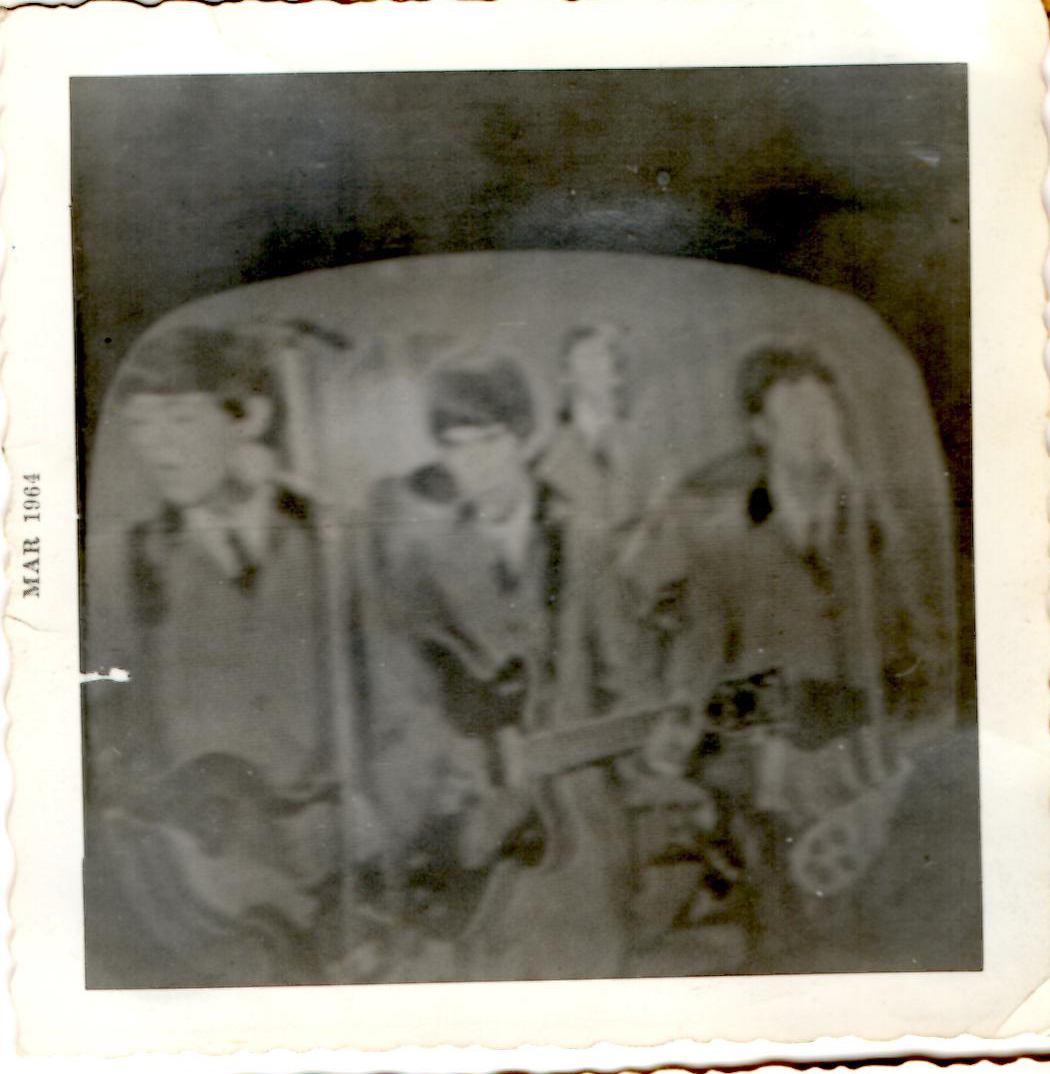
  1. I was inspired me to “capture” history (and use my camera as a means to that end). Beatles on Ed Sullivan Show - February 9, 1964To start with, the first pictures that I remember taking as a child were photos I snapped of the Beatles on the Ed Sullivan Show.  I vividly remember as I anxiously awaited the show to begin, that I needed to document it somehow.  It was just too important not too.  In fact it was so important that I have kept that snapshot in a small box of memorabilia for 50 years! I’ve spent a career documenting some of the most incredible places, people and events of my time.
  2. They inspired me to be a storyteller.  I used to orally tell stories to just about anyone who would listen to me when I was a very young child.  But when the Beatles hit the scene, about the same time I started noticing the opposite sex, I turned my fantasies into my own written stories.  I’m still writing stories and now translating them into ePubs, books and movies.
  3. They expanded my universe.  I began to “see” things differently because of the Beatles.  I became aware of different cultures, countries, music and wit. It was like an awakening for me and I knew then that I wanted to explore as many cultures and experiences as I could. I’ve spent a lifetime exploring the unknown.
  4. They taught me to always learn, grow and challenge myself. I grew up as a child and later a teenager, during one of the most pivotal and changing decades in America. As the Beatles moved beyond the “feel good” and innocent lyrics of songs like “She loves you…..yeah, yeah, yeah”, to the lyrical depths found on the Sergeant Pepper’s Lonely Hearts Club Band album, I too was changing.  It was like we were growing together. I remind myself daily to always be learning, exploring, growing and challenging myself and that has helped me stay fresh in my career.
  5. I learned that “The Beatles” were more than the sum of 4 individuals. John, Paul, George and Ringo all brought their own unique talents and personalities to make up the most phenomenal band of all time.  But they were also savvy enough to know they needed expert guidance and collaborated with great people like Brian Epstein and George Martin.  It taught me the importance of collaboration and to surround myself with people who have talents that I don’t possess.

How This Beatlemanic Became a Photographer

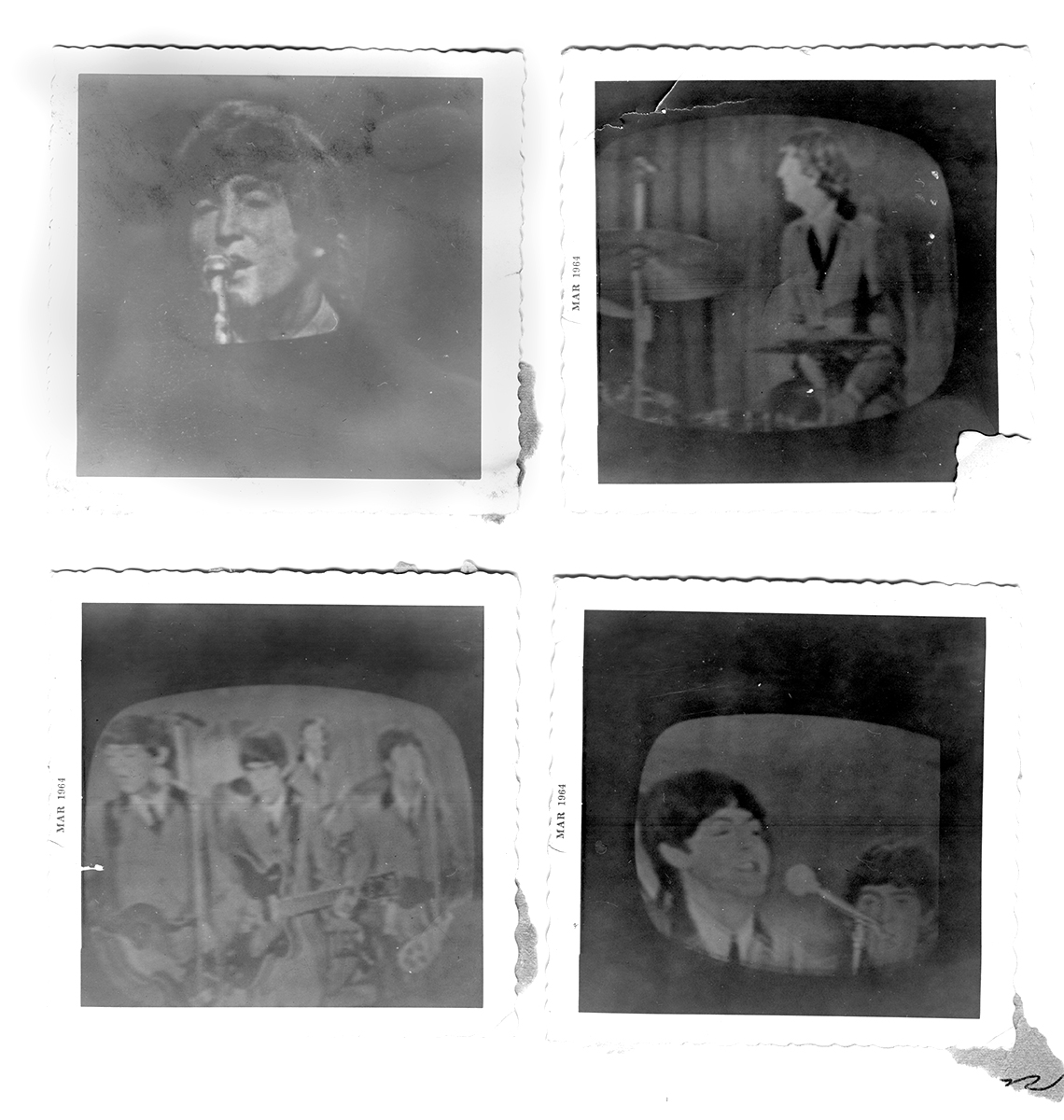
It’s hard to believe it’s been almost 50 years since I took these pictures off of our TV screen. Beatles on Ed Sullivan Show - February 9, 1964 I remember that night like it was yesterday, in vivid detail.

The Beatles had just come to America for the first time, and I was counting down the days until they were scheduled to appear on the Ed Sullivan Show.  I had been soaking up every bit of news about the Beatles all week. In those days that meant listening to the radio as DJ’s gave a blow-by-blow account of what those “crazy lads from Liverpool” were doing.

My family and I were living in Rochester, NY at the time.  I was not quite a teenager, and it was the very first time I fell in love. First with Paul, because he was the cutest and non-threatening.  Later with John, because he was a bit rebellious and he appealed to the adventurous part of me that was emerging.

The day the Beatles were to appear on the Ed Sullivan Show just dragged by.  Dinner was particularly excruciating and each minute seemed like an hour.  My sister and I had commandeered the TV set and no one was getting near it to change the channel.  It was a black & white set – a color TV was prohibitively expensive in those days. I don’t remember who had the idea to take pictures that night but luckily we had some film in the Instamatic. I took just four shots that night.  It was the end of the roll and each click was precious and I remember waiting for the right moments.

I can see by the date stamps on the prints (March 1964), that it took us a month to get the film developed.  That was record speed for my family.  We usually had a year’s worth of holiday pictures on one roll of film when we dropped it off at the drug store for processing.  Luckily the film in the camera was at the end of the roll that evening – otherwise it may have taken months to see photos.

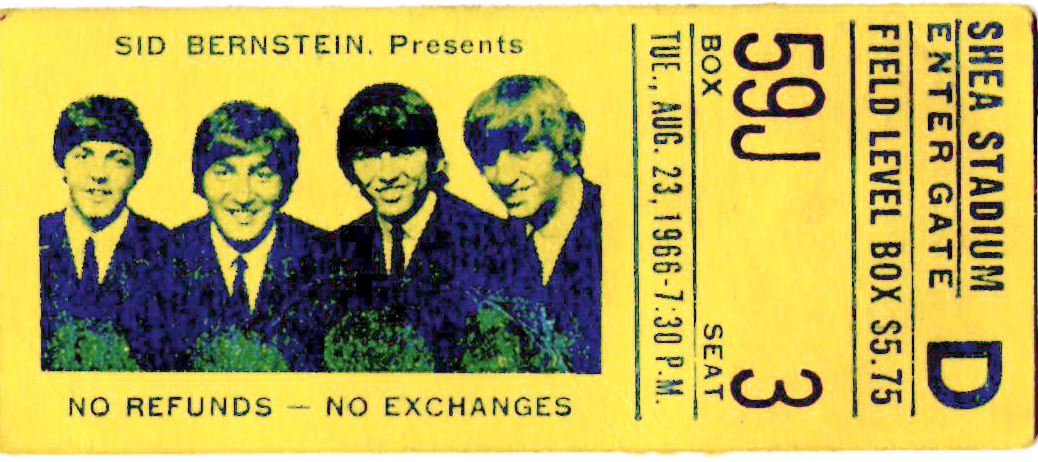
I pasted those photos into my scrapbookBeatlesTicket4 copy almost 50 years ago and they’ve been there ever since, along with my other Beatle memorabilia including my ticket for their performance at Shea Stadium in 1966.  We had moved to the NYC area about a year after I shot these photos, and I actually got to see the Beatles perform twice at Shea – ’65 and ’66.

As I look back at that night on February 9, 1964, I can see where my passion for recording moments in history came from and I’ve been photographing them ever since.

What Happened to Professionalism – or Manners?

What does it mean to be a professional?  Regardless of the business you’re in, a professional is someone who treats their clients and their vendors with respect.  That means that everyone should be mindful of his or her manners.8__CS_d_072151  Yes, manners! That may sound old fashioned but being courteous to people never goes out of style.

Some things that define a “professional”:

  • Professionals know how to get the job done, on time and on schedule.
  • Professionals don’t learn on the job.
  • A professional should respect everyone on his or her team – EVERYONE plays a part that makes the whole stronger, even the “guy” who gets coffee.
  • A professional has good manners – that usually means treating people how they wish to be treated.
  • A professional understands that situations change.  That means that the assistant you are dealing with at a magazine or ad agency may just be in a position to hire YOU some day.  Don’t burn your bridges.
  • A professional has an understanding of their clients’ position.  Understanding works both ways. Good clients who are professional will also have an understanding of what their “vendors” are up against.
  • Professionals understand that they don’t work in a vacuum – especially these days.  Bad manners don’t stay isolated – they trickle down.
  • A professional doesn’t ignore people, especially people who they depend on. We are all busy and we all have only 24 hours in our day.  That doesn’t give you a reason to ignore someone.  Unfortunately, this happens all the time, but if you have asked someone to provide you with an estimate for a job that you need to produce and they take their time to provide you with one – give them the courtesy of letting them know if they didn’t get the job.  Remember, they are helping you come up with figures you need to produce the job.  If someone invests their time to do that, don’t you think they deserve to know the outcome?

Remember, we are all connected.  We are all humans, with families, bills to pay, kids to put in college, parents who may be sick etc. etc.  Regardless if we are the one who is dangling the proverbial carrot or on the receiving end of it – I think perhaps we should realize that respect and good manners is the hallmark of a professional.

Letting Go

This past weekend our film, Opening Our Eyes, Kathmandu, Nepalhad its premiere in New York City. We have been in dozens of film festivals and events all over the world but for whatever insignificant reasons, we had never screened in New York.  I think of NYC as my “hometown”, even though I have never lived inside “the city”. It’s where many of our friends, clients and colleagues are and it has been our “home base” for over 35 years.

Despite the fact that the temperatures were in the single digits and there had been a major snowstorm the night before, so many of our oldest and dearest friends, along with some new ones, showed up. Even Nisha, a young Nepalese girl who is in the movie – came out on that cold night. I have been in front of many audiences over the years and have enjoyed it immensely, but I can honestly say that this was the most meaningful experience I’ve ever had. To be able to share my film – a body of work that I put a lot of hard work, heart and soul into – with my peers and people I’ve known since my beginnings, was pure joy.

In a way, the night brought things full circle in regards to the film.  A lot of filmmakers “open” or premiere in their hometowns.  Once again, I did things a little backwards, by “closing” in my home turf, as this may be the film’s last festival screening. I don’t have plans to pursue more festivals – but I never know what’s lies ahead, in the way of opportunities, and am open to possibilities.  This project and this journey have rewarded me in hundreds of ways and no doubt will continue to enrich my life. The film will still be available for screenings at educational venues and community events.  It’s also available on DVD and streaming.  My daughter, Erin and I made this film to inspire and motivate others to create positive change in our world, and we hope that message continues to spread globally.

A young filmmaker I met at one of the festivals I attended told me, “a filmmaker never finishes a film – he(she) just knows when to let go.”  I am able to “let go”,  because I know that this experience has set the stage for the next events in my life.

“Everyone has Oceans to fly, if they have the Heart to do it. Is it reckless? Maybe. But what do dreams know of boundaries?”
 
– Amelia Earhart

6 Social Media Marketing Mistakes to Avoid

I must admit, I’m not an SEO or Social Media guru.  In fact, on a scale of 1 – 10 (10 being extremely interesting), I’d give this topic a 3.  But, after reading Gary Vaynerchuk’s book “Jab, Jab, Jab, Right Hook,” (which I would give a 10), I’ve shifted my thinking entirely.  I also realized why, the topic has had little interest for me – most of the books, articles and blogs I had read were full of formulaic tips  – but none of the advice and tips felt like a good fit who I was and what I had to offer.  And in fact if I had applied some those tips to my blog or my Facebook posts, I would have done myself and my business a disservice by not being “myself” – or authentic.

Some social media marketing mistakes to avoid:

  • Putting the wrong content on a platform – Each platform, (Facebook, Twitter, LinkedIn, Pinterest, Instagram etc.) has it’s own “native” language or how the community communicates  and interacts with one another.  A good marketer understands that “context” is just as important as content.  Your content must provide the same value to the viewer that is native to that platform. Your content should fit in with what drives people to that platform.
  • Content is not memorable – Your content should be something that people want to share. ooe fb [age Facebook uses edge rank, which determines who and how many people see your posts.  The more shares, comments and likes, the better your edge rank and the more people who see your posts.  Keep your content, informative, entertaining or both and give people the desire to share.
  • Selling too often – You have to “give” more than you “sell” on social media platforms. If every post you make is a pitch for your products, no one will be interested, let alone want to share them.
  • Text is too long – Twitter has a cut off, but Facebook doesn’t.  Keep in mind that more and more people are viewing your posts on mobile devices and simply won’t read lots of information.  Provide more info via links. Make sure your text is provocative and entertaining.
  • No use of imagery – If you don’t have an image in your posts on platforms like Facebook or Tumblr, you won’t attract attention.  People will just move on to something that catches their eye on their news feed.  And, make sure the images you post are good and professional – they’re a reflection of your business. Make sure you overlay your logo on your images.
  • No call to action – Remember you are ultimately selling your products and your services, so don’t forget to give your viewers a call to action.  But don’t confuse them by giving them too many.

New Business Models in Photography and Motion – in a Global Economy

Manchester Airport, Manchester, England

This topic comes up a lot these days.  You  could apply “new business models” to just about any business – not just photography and video. Photography and video, in and of themselves are not business models at all, but rather they are mediums that are used commercially, non-commercially and personally. The business end of photography and video comes when you determine how you want to apply them in terms of today’s markets.

Today’s markets are global.  That’s good news and bad news, depending on the type of work you do.  If you are a stock photographer or even if you have expanded that into also shooting stock motion footage – your inventory or your content must be unique in some way in order to sustain that type of business model in our global economy. You will need to stand out and offer something unique,  if you pursue this type of market.

If you are a commissioned commercial or editorial photographer, cinematographer, or director, the competition is fierce and once again, if you don’t have a unique style or vision, most likely you will end up playing by others’ rules or signing “their” lopsided contracts.  It comes down to supply and demand of talent and work, and you will either compete with price or offer something that you do better than your competition.

The good news is, if you are willing to do the work, the world is your stage.  The portals for distribution of your “content” are open to all and as “creatives” we are no longer dependent on middlemen.  When I get asked to talk about “new business models”, I always look for where the new opportunities are.  Where will I be able to carve out my own “new business model”, rather than having to adapt others’ ideas of what that may be.  There is a big difference in those two approaches.

I am carving out a business model for who I am creatively, and where I see the most opportunities for what I do well.  When I am authentic to who I am and apply this to my work, I am able to deliver my own unique vision and reach the right audience,  while maintaining ownership and control over the licensing of my work.  I am able to do that not only because technology has enabled me to do that, but more importantly because I have set myself apart from everyone else who has a camera.

Think about it.  What are your strengths? What are your passions?  Now imagine a business model based on your answers. The world is our stage.