What Makes a Professional (Photographer)?

I heard a remark made recently, by a colleague of mine.  I was with a group of photographers and we were discussing what makes a photographer, professional. stock-80 At a time when it seems like just about everybody is a photographer, and we are bombarded with thousands of images on a daily basis, what separates a “pro” from an amateur? My colleague stated, “A pro “makes” photographs – an amateur “takes” them”.  While that sounded like a reasonable distinction, it implied that photographers who shot “found moments” were not “professionals”.  What about photojournalists then, who are bound by ethics not to contrive an image?  So, I started thinking, “What set of criteria is used to determine what makes a photographer, a professional?”
Inspired by Steven Pressfield’s book The War of Art, I will paraphrase, some of the qualities that Pressfield points out that define us as professionals:

  • “We show up every day” – no matter what.
  • We are committed for the long haul and the stakes are high. We need to feed our families and survive.
  • “We accept remuneration for our labor.” (I’ll add, we expect remuneration)  We love what we do but we work for the money.
  • We master our craft. This doesn’t stop. A professional is always trying to master their technique.
  • We act in the face of fear.  This is certainly applicable to a “war photographer”, but I would go further and say that it takes courage to follow a career path of photography.  Courage and commitment.
  • “A professional self-validates.”  We don’t need others to commission us, in order for us to work.  We are passionate about what we do and we will create regardless if we are commissioned or not.
  • “A professional reinvents himself. “  If you aren’t reinventing yourself, then you probably aren’t taking enough risks.  A professional knows not to play it safe – not in a creative profession.
  • A professional doesn’t take rejection or failure personally.  I have learned first hand, that whenever I have taken a leap and challenged myself, it has always come with rejection or some may say, failure.  Personally, I don’t equate rejection with failure.  Failure implies it’s the end of the story.  Rejection needs to take place, in order to get to the next chapter of the story.

I would highly recommend reading, The War of Art. It’s a must for anyone contemplating a creative career.  As far as my thoughts about using the criteria,  “making” or “taking” a photo to determine who is a professional photographer – let’s just say that a professional photographer is always “making” a photograph, regardless if it is contrived or not.  It is a conscious decision of a professional photographer, when and which “moments” to capture.  We show up every day, to do our job, whether it’s in a studio or a war zone. We are consistent, responsible and accountable.  We are in it for the long haul.  It’s our passion.  It’s our life. It’s our craft and our gift to the world, a legacy of images that define the time we live in.
The Value of Photography

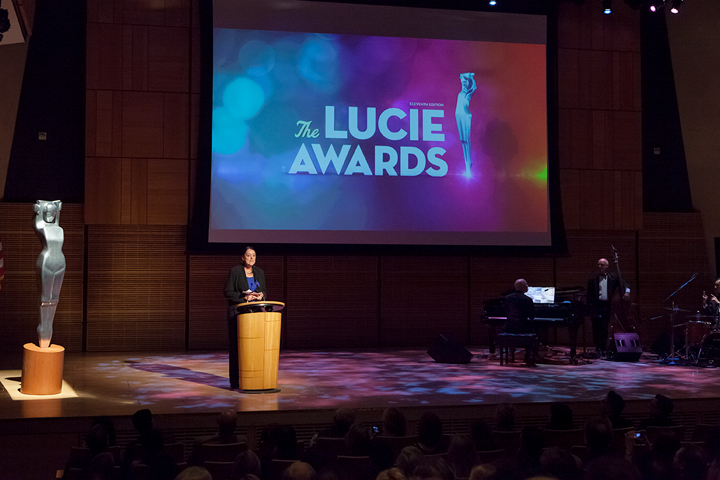
The who’s who of photography gathered last night, at Carnegie Hall to honor the “masters” of their trade at the Lucie Awards. The Lucies are like the Oscars of the “photographic industry”.

2013 Lucie Awards, Carnegie Hall ©Thomas Kelly
2013 Lucie Awards, Carnegie Hall
©Thomas Kelly

I had been asked to step in to present the “2013 Deeper Perspective Photographer of the Year Award”. on behalf of the ASMP when Executive Director, Gene Mopsik and President, Ed McDonald couldn’t attend.

I don’t usually get nervous about things like this, but I was last night. As I stood in the wings with photographer John H. White, who was waiting to go on stage to accept his Lucie, for Achievement in Photojournalism, I was mesmerized as I watched John.  He seemed to glow and I felt his grace, his humility and his gratitude.  It was a moment in my life that will stay with me forever.  It was calming. I watched and listened to his acceptance speech on the monitor backstage, and I was deeply touched.  So was the audience, as evidenced in their standing ovation.

John H. White is not a “rock star” type of photographer.  His images don’t “shock and awe”, not in the way a war photographer’s images do. John’s photographs capture the subtle moments of the human experience.  His legacy of images show us life as it really is.

This past spring, after 35 years with the Chicago Sun Times, John and the rest of the newspaper’s photographic staff were fired.  It was a huge blow to the photographic community, magnified by the fact that even John H. White, the “chairman” was “let go”, without even as much as a thank you. John wasn’t bitter about it though.  Michelle Agins wrote a wonderful article for the New York Times where she quoted John: “A job’s not a job because of labor law,” he said. “It’s just something you love. It’s something you do because it gives you a mission, a life, a purpose, and you do it for the service of others.”

All he had wanted to hear from the executives who let him go was two words that never came: thank you. But even then, he did not respond with anger.

John spoke more about the Sun Times’ firings in an interview with NPR where he said: “I will not curse the darkness. I will light candles. I will live by my three “F” words: faith, focus and flight. I’ll be faithful to life, my purpose in life, my assignment from life. Stay focused on what’s really important, what counts.” He repeated those three “F” words last night as he accepted his award.  The audience was humbled.  John had shed his light.

I have been thinking a lot lately, about the value of photography and the value that a professional brings to this craft.  John H. White and his archive of work is a stellar example.  His images, capturing the subtleties of life stand out amongst the noise.  They make us take notice of what is often over looked – the quieter moments of life.

As far as what a professional photographer brings to the world, I think John stated it best: “Every day, a baby is born. Every day, someone dies. Every single day. And we capture everything in between. You think of this thing called life and how it’s preserved. It’s preserved through vision, through photographs.”

As John walked off the stage and back into the wings, I felt enveloped by his glow that had seemed to magnify.  I caught his eye for a moment and said “thank you”. He nodded, and flashed his wonderful smile and in that moment, we connected and shared our understanding, of the “value” of photography.

The Past Always Seems Better…….But Was It?

Chris Guillebeau struck a chord with his blog today ,“ The Past Wasn’t Better. Choose the Present Instead”, .  He relayed a story about a time his friends got together for a “gaming session”. They had ordered an emulator, which allowed them to play the games of their youth on the modern gaming console of the time.  They realized after a couple of hours of playing the “old games” that the games weren’t as fun as what they remembered.  They were very simplistic and hard – dying over and over again and not advancing to the next level wasn’t fun – it was frustrating.

Chris made the point that it’s easy to look back with fondness on the good ole days, but our memories get distorted as time passes and sometimes what we looked back on with fondness, never happened.

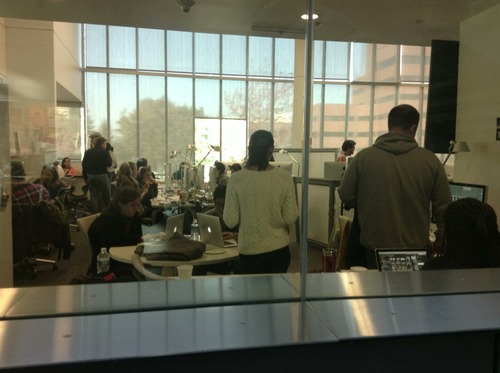
I had an interesting and somewhat similar experience this past weekend.  I had been invited to speak and coach at the 2013 Syracuse University Fall Workshops, which ASMP had contributed to as a sponsor.tumblr_muyzapUjbp1qe6iepo1_500  It was an intensely creative 3-day workshop where journalism students from the Newhouse School, came together with some of the best editors, designers, photographers and multimedia producers working in journalism. It was a hands-on workshop, where students worked with their coaches, to produce their projects (stories), under a tight 3-day deadline. What stood out to me this weekend, was that the “learning” wasn’t a one-way experience.  I learned as much as I shared – from the other coaches, as well as from the students. I’m sure I’m not the only coach, who picked up some tips from their students this weekend. I was also inspired and amazed at what is possible now, in terms of new ways to tell a story.

Sure, there are days when I’m simply overwhelmed by technology and the continued learning curve that comes with it.  And sometimes, I look back and fantasize how much better it was in the past.  At the workshop, one of my students had more than her share of technology mishaps.  At one point after losing hours of work, due to a software glitch along with not being able to access her audio files, somewhere in “the cloud”, she remarked with exasperation “ I wish things were like they used to be”.  She meant when things were tangible and analog. I quickly replied, “No you don’t because this 3 day workshop would have taken 3 months”. It was a moment when we both had the same realization that Chris Guillebeau had – our memories and perceptions of the old days are sometimes blurred and over glorified.

As much as we remember and long for the old days, the fact is we have it pretty good now.  There’s not a day that goes by that I don’t remind myself of that.  I choose to focus on what I am able to do in the present rather than look back at what was. If we choose to stay in the past and remember things being better then they are now, we’ll miss out on a whole lot of possibilities. As Chris beautifully sums it up: “Let go of the glory days.  Live in the present and build for the future.”

What Happened to Attribution?

English: Logo of LIFE magazine.
English: Logo of LIFE magazine. (Photo credit: Wikipedia)

We lost one of the icons of photojournalism last week, Bill Eppridge.  If you haven’t heard of his name, then surely you have seen his photographs.  One of his photographs, a black & white image of the lifeless body of Senator Robert Kennedy on the floor of a hotel kitchen after he had been murdered, has become one of the signature images of the 1960’s. It has been etched into my memory since the first time I saw it in 1968.

Bill was one of his generation’s greatest photojournalists.  His images graced the pages of Life Magazine, documenting the tumultuous decade of the ‘60’s.  His colleagues at Life at that time included notables such as Alfred Eisenstaedt, George Silk, Paul Schutzer, Eve Arnold and Bob Gomel.  I know that because I used to pour over our weekly copy of Life Magazine and I saw their names printed under their photographs.

Imagine that, a photographer’s credit appearing under their image. I say that sarcastically because nowadays photographers’ credits seem to have all but disappeared.  If an image (especially a stock image) is credited in a magazine, many times it will only say “Getty Images” or “AP”.  Why is that?  It doesn’t cost the magazine any more money to credit the photographer who shot it – nor does it take anything away from Getty or AP.  Why not credit an image  ie: photographer name/Getty Images?  When and why did someone somewhere at Getty or a publishing house decide to omit a photographer’s name?

It seems to me, that in the virtual world we live in, where trust and authenticity has given way to blurred or hidden identities, we would want to know who the person was that took the picture we are looking at.  We all know a corporation didn’t go out and shoot it – sometimes putting their life on the line.

As a photographer, I insert a clause in my contracts that states that  a penalty will be charged if my credit is omitted. That is if it’s my contract, but too many times stock photo agencies don’t require a photographer’s credit and in fact don’t seem to want it.  Why?  I would love to know why. I also wonder if this new precedent will affect our future photographic archives by making them less tangible, less personal.  That would be a tragedy.  What makes an image linger in our minds, decades after a picture is taken is that it makes the captured moment – real.  I can assure you that when a photographer decides which moment to capture, it’s about as real and personal as it gets.  Why not give credit to that moment and that photographer who captured it? Don’t you think that future generations will appreciate it if we do?

Hitting a Nerve

English: camera Français : video
English: camera Français : video (Photo credit: Wikipedia)

What an interesting week it has been. This past Friday (the day before a long holiday weekend), on impulse, and feeling a little lazy, I shared a link on Facebook to a blog that I had written 8 months ago, How Motion is Changing the Future of Photography.  I didn’t expect to get thousands of hits in 2 days time – it had barely gotten noticed when I posted it the first time, back in February, 2013.

What had happened was that Rob Haggart linked to it from his blog, APhotoEditor and it went viral after that – all around the world.  That’s what amazes me about the age we live in, that something someone says, or writes can be heard globally in record time.  It truly demonstrates the power of “one”.   It’s staggering and something I never would have imagined some 35 years ago when I began my career as a still photographer.  In fact, most of what is happening now in photography. I never could have imagined – not in my grandest dreams.

What surprised me most about the comments I received from that post, was that most folks just couldn’t begin to imagine the future that I was contemplating in my writings. With the convergence of cameras, in regards to stills and video, I imagined a future, where a still image might not be captured by a “still camera” or by a “still photographer” for that matter.  A still image may come from a “frame grab” captured by a video camera.  I struck a nerve for sure, and most people thought I was predicting the demise of still photographs – perhaps because of Ron’s headline, excerpted from my text “ I think we are at a tipping point as far as the future of the still photography business”.

To be clear, I do think the photography “business” is at a tipping point, but not just because of the convergence of still and video cameras, but because of the glut of imagery.  The iPhone has been the game changer in that sense. Everyone has become a photographer and has a camera on them at all times, taking, sending and sharing millions of still images globally every day.  What that means in terms of the still photography industry is that if you want to stay in business as a professional photographer, you will need to create something that is authentic and unique to only you AND more importantly, you will need to provide a product or service that a market is willing to pay for – and pay enough that will sustain you in an industry that requires a reinvestment in tech and gear every two years, minimally.

In my attempt to “get off easy”, by rerunning a blog that I had written and previously posted more than a half a year ago, I learned a couple of things:

  1. Timing is everything
  2. It’s all perspective.

That’s the one good thing about getting older; I have a lot more perspective.  I’ve learned that the future is not at all like I imagined it would be.  I never could have imagined half the things that are happening right now.  And I’m sure that if I’m still alive 20 years from now, it will be a future filled with things and ideas that I could never even begin to imagine.

I will be moderating a panel at PPE this year, sponsored by ASMP “How Motion is Changing the Future of Still Photography”.   Our panelists include, Vincent LaForet, Brian Storm and Chase Jarvis.  Join us, it will be a discussion you won’t want to miss.

What Professional Photographers Can Learn From Kodak

To cut right to the point, Kodak

The logo from 1987 to 2006. "Evolution of...
The logo from 1987 to 2006. “Evolution of our brand logo”. Eastman Kodak . . Retrieved 2007-09-26 . (Photo credit: Wikipedia)

found out that “quality” wasn’t necessarily what the public wanted.  In Seth Godin’s blog today, “Misunderstanding quality”, he states:

“It turns out that what people actually wanted was the ability to take and share billions of photos at vanishingly small cost. The ‘quality’ that most of the customer base wanted was cheap and easy, not museum quality.”

He goes on to say:

“Quality is not an absolute measure”

Before you shoot me, or Godin, stop and think about the world we live in where we are bombarded by millions of images daily.  Some are great, some mediocre and some are really bad in terms of quality.  Add to that the millions of videos on You Tube and we are witnessing an avalanche of imagery.  It makes my eyes glaze over and my head hurt just to think about it, let alone try to digest it all. But the fact is that we have become a culture where imagery is quickly replacing text to communicate.

So, with imagery becoming so prolific in terms of how we communicate, why are so many professional photographers struggling or going the way of Kodak and Polaroid?  Because they assume that the general public wants quality images.  Quite honestly I wonder if most people these days even notice the difference. Like Seth says, they just want to take photos and share them with their friends. Ironically, companies like Kodak, Polaroid, and other camera manufacturers, along with the ever-growing supply of electronic platforms enable us to do this easily and cheaply.

So how does a “professional” photographer compete in a culture that doesn’t always appreciate or need quality imagery?  Two suggestions – recognize what the market wants and is willing to pay for and produce something that is unique and authentic to whom you are.  Oh, and one more thing – don’t whine about the state of the industry because it won’t do you any good.  Instead, of looking in the rear view mirror and lamenting the past, embrace the opportunities that technology has brought to our craft and prosper. And remember that “change” is inevitable, so stop resisting it.

6 Reasons Why You Shouldn’t Take a DSLR Video Workshop

So many photographers think that buying a DSLR capable of shooting video and taking a workshop on how to use it, is all they’ll need to do in order to get into the business of video production.   They couldn’t be more wrong.  It’s kind of like someone buying a really “good” camera, and thinking that’s all they need to be able to shoot a professional photography assignment.  And yet, so many of my professional photographer colleagues continue to think that it’s about the camera, instead of the skill set.

For starters, most of the professional video productions I do,I wouldn’t be able to shoot with a DSLR camera.  Don’t get me wrong, a DSLR can produce stunning video, but those cameras  fall short on certain tasks.  More importantly, they won’t necessarily meet the expectations that many high-end advertising art directors require. red cameraYou’ll look like a fool if you show up with your DSLR kit when they expected a lot more in the way of gear.

I get quite annoyed when I see the proliferation of DSLR video and filmmaking workshops that mislead photographers that this “tool” or camera will be sufficient for any and all video assignments – because it won’t.  It may be fine for a wedding shoot and I even made a feature length film with a DSLR, but for a lot of corporate jobs I shoot – it just doesn’t cut it.

My advice to photographers who want to learn video:

  • Learn how to think and shoot video.  It’s not just about the camera. When I shoot motion, I’m thinking and shooting much differently than I do for stills.
  • Pick the right camera for the job.  That means you’ll have to know how to use a traditional video camera or a more sophisticated camera like a RED or hire someone who does.
  • If you contain your video experience and knowledge to the DSLR, realize that your competition will be fierce.  The buy in price is low – so you won’t be the only one who thinks they can buy a relatively inexpensive camera and go after video jobs.
  • Stay away from DSLR workshops.  They are way too limited and limiting.  Plus, they are based on technology that changes way too fast.  It may be tempting – but you’ll place yourself in the lower end crowd and will most likely be competing on price.  How low are you prepared to go – or can you go and stay in business.
  • Learn video and/or filmmaking the right way.  Don’t make it dependent on a particular camera.  Learn the cinematic language and how to translate the message in a motion medium.
  • The business of video is much different than that of still photography.  If the workshop you are thinking about taking doesn’t address sound business practices – move on. You can lose your shirt on a video production if you don’t know how to price and/or structure your shoots.

Think about it.  If you were just starting out and learning photography – would you take a workshop that was about a particular camera?  Obviously not, so why would you approach learning video that way?

For more information about video production check out Gail’s guide  The Craft and Commerce of Video and Motion

One Million Miles

Yesterday, I took a look at my United Airlines frequent flyer statement, and realized that I had flown 822,571 miles with that airline!

United Airlines Boeing 777–200 landing in the ...
United Airlines Boeing 777–200 landing in the Blue Tulip livery. (Photo credit: Wikipedia)

I was 177,429 miles away from a million lifetime flight miles. And that’s just the miles that I’ve flown with United!  It doesn’t include all the miles I’ve flown on other airlines, nor any of the miles I’ve flown using reward tickets. And it doesn’t include the miles I flew traveling around the world during the making of my film, Opening Our Eyes.

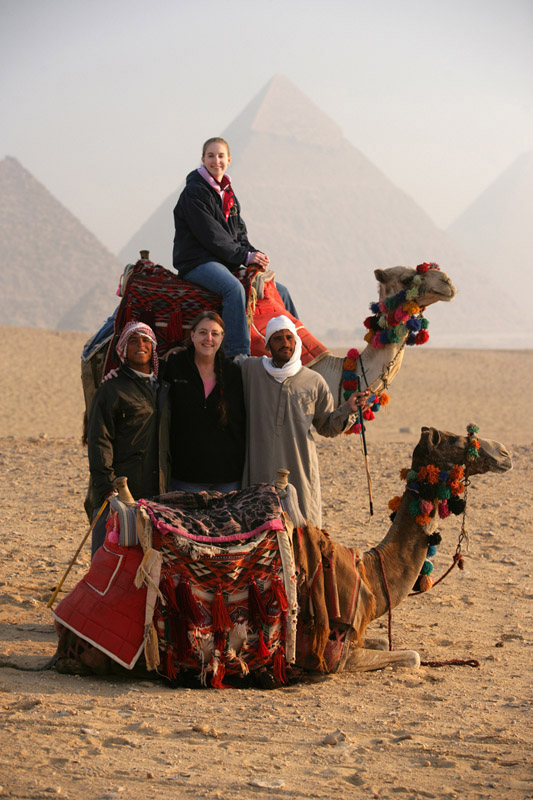
As I looked at that number, and thought about all those miles, Gail Mooney and daughter Erin Kelly, Giza, EgyptI couldn’t help but think about the destinations, the purpose and the motivation behind them. When I set out to live the life of a “traveler” at the young age of 19, I had absolutely no idea of how that would mold my life.  As a professional photographer, I’ve gone to the corners of the globe on dream assignments for magazines and corporations and loved every bit of it – my work has always been my pleasure.  When I wasn’t working, I’d still find a reason to travel, whether on a press junket or simply exploring the world with my husband and daughter.  Some of my favorite family memories are from our travels to Peru and Egypt.

I will always be a traveler.  I am a nomadic creature and I have a huge curiosity about our world and its people. For me, travel is more than going from point A to point B. Sure, there are plenty of times, on corporate jobs when I travel somewhere to photograph a particular person or a place and I’m never there long enough to get a sense of the place I am in.  But, for the most part, I travel to a destination to find out more about that place and tell the visual story of that particular place and its people.

As I thought about all those miles traveled, I started to think about reaching the “Million Miler” status with United.  I was only 177,429 miles away!  That may seem like a lot to many of you, and it might seem like no big deal to others, but to me it seems like a very attainable goal.  In fact, when I started to think about reaching that goal, I thought that I could easily attain that in 3 year’s time – just in time for a milestone birthday.  That’s something to consider and I shall.  I certainly have the motivation; I just need to define the destinations and more importantly the purpose.

Any suggestions?  I’m open to your thoughts.

Wipe Your Knees Before Entering

I just learned that Bob Gilka, legendary Director of Photography at the National Geographic for over 20 years passed away yesterday.  He was 96 years old.  Bob was the “real deal” and he will be missed by many, but his legacy lives on in all the photographers careers that he shaped and mentored. I am reposting a blog that I wrote about Bob on December 1, 2009.  Rest in peace Mr. Gilka.

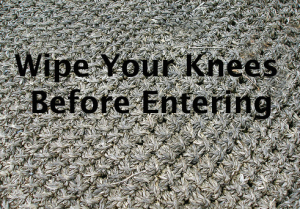
Back in the eighties when I was starting out, every six months or so I made the pilgrimage to Washington DC to see Bob Gilka, The Director of Photography at the National Geographic Magazine.  He was the guy who decided if you would shoot for the magazine. doormat2  He was accessible, answered his own phone and made appointments to look at work. How times have changed.

Gilka was a man of few words and because of that seeing him was always a bit intimidating.  If all you had were images to show – and nothing to say, you’d pretty much be in and out of his office in the amount of time it took to click through your slides. Knowing this, I did my homework prior to the appointment. I’d come up with about 10 query ideas, research back issues of the magazine to make sure they hadn’t been done before and have at least one idea written up in a story proposal.

I’ll never forget the first time I went to Gilka’s office.  His secretary met me in the lobby, and led me to a small area just outside his office.  There on his door was a doormat –with words that read “Wipe Your Knees Before Entering”.  Talk about feeling intimidated – as if it wasn’t intimidating enough just to be meeting with the Director of Photography  at the  National Geographic.

So every six months or so I would show my images and pitch my ideas.  This went on for about two years.  Each time I went I would almost test myself to see how long I could stay in his office.  I would do my best to sell my story pitches that I felt the strongest about and he would reply – “done it –doing it – or – don’t want to do it”.  This coupled with a few words of encouragement in regards to some of my photographs would pretty much be it as far as feedback.

Then one day he kept me waiting.  He had been detained in a meeting.  I had scheduled a pretty tight day to maximize my trip to Washington – so the delay had thrown a wrench into me keeping my other appointments that I had scheduled.  When Gilka did show up and apologized, I was already feeling quite anxious and showed it.  I told him that I didn’t have much time because I had to be across town at the Smithsonian in 20 minutes.  He picked up the phone, called Declan Haun, the picture editor I was headed to see at Smithsonian Magazine and explained that Gail Mooney was running late due to his tardiness.  Then he proceeded to look at my pictures and hear me out.

When I did get to the Smithsonian, it was amusing to see how curious Declan Haun was to find out who this Gail Mooney was that got Bob Gilka to call ahead for her. The very next month, I got a call from Bob Gilka offering me my first assignment.  Guess I just needed to show my real self. I had sufficiently shown my interest and determination in wanting to shoot for them. And I had demonstrated my photographic ability through my images.  But it was when I showed my true spirit that he knew that I could shoot for them.  I just had to get over my fright.

The Top 5 Mistakes the Chicago Sun-Times Made

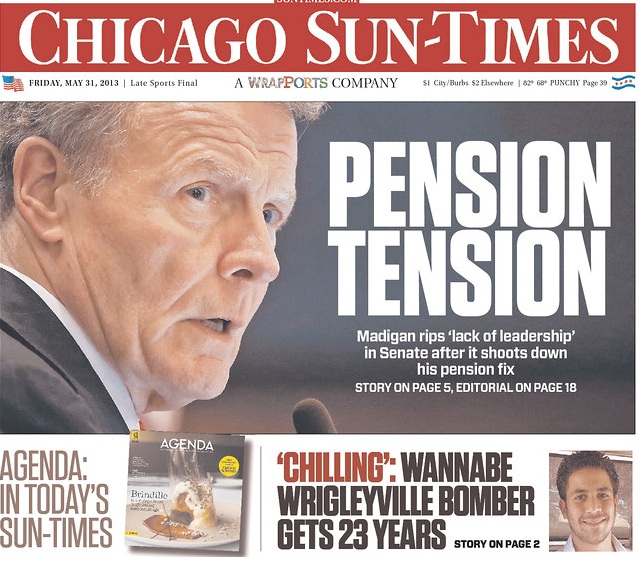
There’s been quite a lot of talk over the last couple days about the Chicago Sun-Times ChicagoSunTimeslaying off their entire staff of photographers.  When media writer Robert Feder posted on his Facebook Page , he was flooded with nasty comments about what the paper was doing.

“Sun-Times reporters begin mandatory training today on “iPhone photography basics” following elimination of the paper’s entire photography staff. “In the coming days and weeks, we’ll be working with all editorial employees to train and outfit you as much as possible to produce the content we need,” managing editor Craig Newman tells staffers in a memo.”

There has been general outrage amongst professional photographers on listservs and social media channels adding to the extreme angst that already exists in this demographic.  I’ve been giving this a lot of thought, not only over the last couple of days but over the last decade as technology has thrust enormous change on my industry.  If I allow myself to look at the state of professional photography as an unsustainable profession because of these technological changes, than that’s what it will be – an unsustainable profession for me.  But if I turn the “problem” into an “opportunity” and realize that technology has brought me a lot more possibilities in how to monetize my craft, then I will have a profession that I will be able to sustain.

Biggest Mistakes that the Sun-Times Made when they got rid of their staff photographers:

  1. Cheated their readers.  Their readers will see the difference in the photographs that their paper is running.  A professional photojournalist doesn’t just take a picture – they capture a storytelling image.  They are visual communicators and they are good at it.  They make the viewer feel, empathize or connect with their images. I don’t think it will take a long time before their readers see that the paper’s photos aren’t any better than theirs or their friends and have no reason to get the story from the Sun-Times.
  2. Focused on the technology – the iphone.  How many times have I said “It’s not about the tool”?  Do I think that the iphone isn’t a viable tool for taking good photos?  No, in fact if it is the only “camera” you have on hand when a story is breaking – then it becomes the best camera for the job.  On the other hand, the same day the paper sent the memo out to their staff about the layoffs, their front page was covered with images that one wouldn’t have a chance of getting if all they had was an iphone.
  3. Burdened their writers with another job.  Let’s face it, something is going to suffer.  Just like when I try to shoot both video and still images on the same job myself, I always feel like I have the wrong camera for the wrong moment.  A lot of my writer friends can take pretty good photographs, and some merely make a “reference” shot of what’s happening, instead of an image that captures a story.  A writer’s workflow is different than that of a photographer.  Writers go out in the field and gather facts and write the story for the most part, back at the office.  A photographer does pretty much everything in the field.  Nowadays, many times that includes the edit.  Something will suffer, when one person sets out to do two totally different types of jobs.
  4. Made their “cuts” in the wrong place.  They undermined what a professional photojournalist brings to their paper.  You can’t find a more passionate, committed group than photojournalists.  They work long hours, under terrible conditions – many times dangerous ones, receive a lousy pay, but will go above and beyond to deliver “the story”.  Some say this was a “union busting” move and that after a decent amount of time, the paper will begin to hire photographers who will work for less and no benefits.  If that’s the case, then shame on them for cutting out health benefits for such a committed group of people. In the long run,  that is not a sustainable business model.
  5. They forgot that technology works both ways.  Let’s hope that photographers don’t forget that they can use technology to their advantage – that is if they can get past their fear.  Alex Garcia of the Chicago Tribune, writes in a blog post:  “Fear is the worst and greatest enemy of photographers. Why? Physiologically, fear triggers the fight or flight complex. You can’t think creatively, imaginatively and proactively when your entire body is pumping blood and adrenaline to the parts of your body necessary to fight barbarians at the gate. It pushes your body into a reactive-about-to-become-a-victim state of mind. The very creativity that is your unique selling proposition as a photographer is crippled. Your body become’s your mind’s worst enemy.

We no longer need a publisher to publish our images.  With technology we can create and publish with a variety of platforms and portals.  Just take a look at Issuu a portal for digital publishing. With a modest amount of effort, I put together a test for a new magazine called “The Back Story”.  Future issues will be composed of my image outtakes from the dozens of commissioned assignments that I’ve shot over the years.  Maybe, down the road it will include other photographers’ work and give the readers an opportunity to see the images that never ran and get “the back story.”

Fear not, my fellow professional photographers.  We are in a position of opportunity if we begin to realize that and make a conscious effort to change our mindset.  We don’t have  control over the choices that the Sun-Times or any other newspaper makes. We only have control over how we react to those changes. If we think and act smart and not from a position of fear, maybe one of the best business decisions we can make is to take control, and create and publish story telling images that the public will want to see.  And the public  won’t be finding those kinds of images in the Chicago Sun-Times.