Condensing a Life

I have lived in the house that I am in for 19 years. For a kid who grew up going to a new school every year until the fourth grade, this has been the longest I have ever lived anywhere.  My husband and I raised a child in this home.  We also work here, running our photography business out of a separate section of the house.  What that means is that we’ve done a lot of living in this house and with that comes the accumulation of “stuff”.

When you live the kind of life I do, always moving forward with new projects and exploring the world, you don’t realize what a past you’ve had until you begin the process of getting rid of things you no longer need.  That’s what I have been doing recently, sorting through years worth of “stuff” and tossing what I don’t need anymore.

I spent the day yesterday, taking on just one small corner of my office, going through folders that contained everything from old stock photo delivery memos, caption information for dozens of destinations, financial information, old contact info, lists of goals and good intentions and LOTS of correspondence.

And that’s where I got totally sidetracked from my mission, looking through almost 20 years of correspondence.  There were many letters from a friend who died long ago.  My friend had also been a mentor to me, and his letters were thoughtful, insightful and full of encouragement. I suppose I have kept those letters all these years to remind me of where I was at during that time in my life.

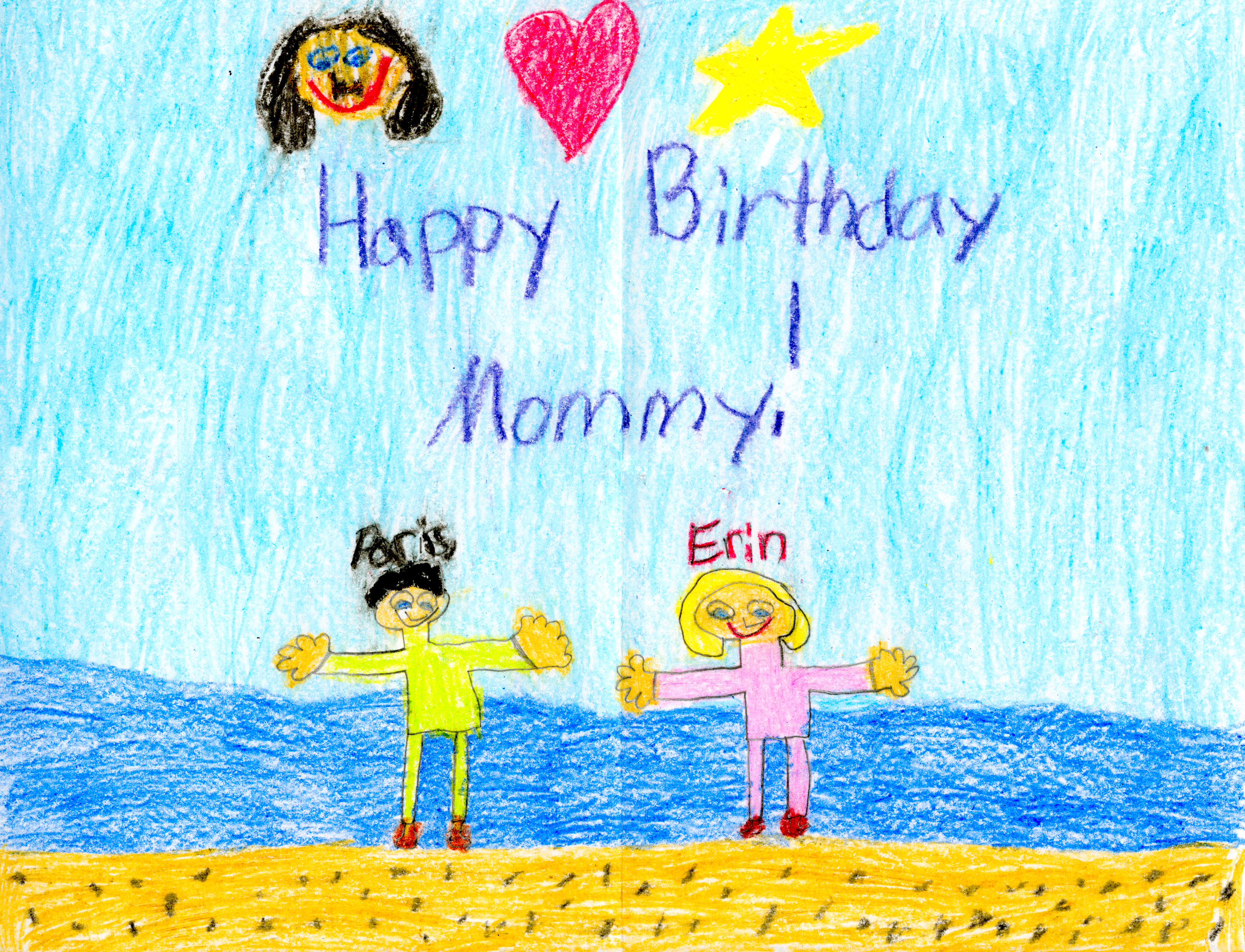
There were plenty of other letters and note cards from people who have been part of my life, including a card from my daughter withErin+Paris at the beach 1995 Happy Birthday Mommy a crayon drawing inside that she had made.  It brought back of vivid memory of when I had received it.  It was my birthday and I had been on a very long assignment, shooting in France, and as great as that sounds, (and it was) it was also hard because I missed my family terribly.
It was a bittersweet experience, going through decades of correspondence, but I’m grateful that I kept some of it.  It was like tangible evidence of chapters of my life and it somehow felt more real than my electronic archives do.  And so, while I spent hours shredding documents, feeling like I was in the movie Argo, there’s just some things I’m not quite ready to let go of. For now those tangible memoirs will stay in that corner of the office until the next edit.
Storytelling – Words or Pictures?

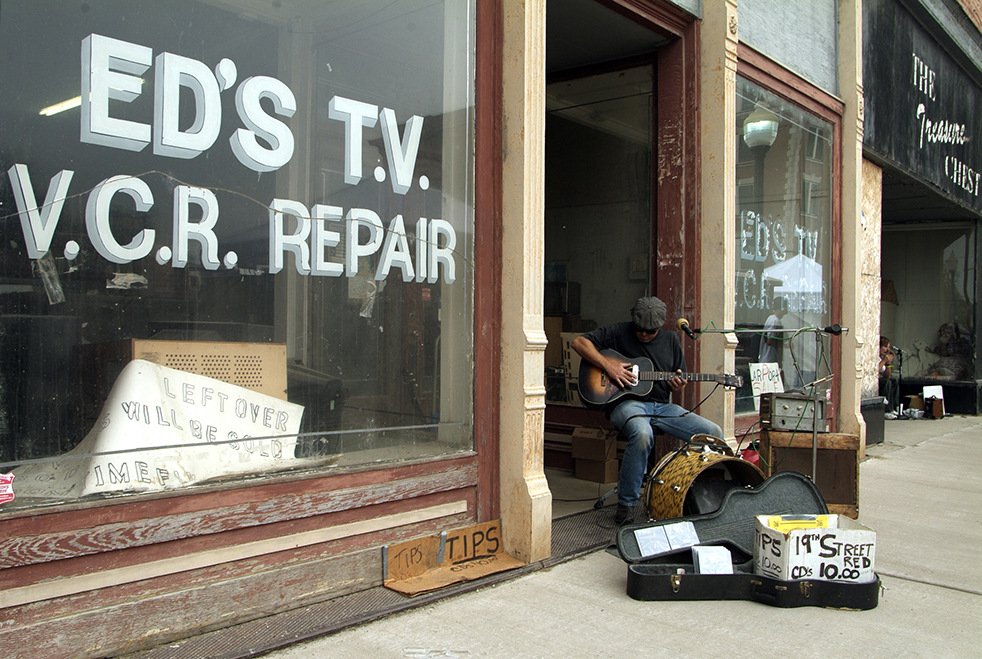
I have always been a visual communicator.  For over 35 years I have been making a living taking photographs for magazines all over the world.  I have always “seen” the world and captured its stories through visuals.  Somehow, it was far easier for me to communicate with images than with words.  Sidewalk performer King Biscuit Festival Helena, ArkansasBut it was also a bit frustrating for me because many times when I was photographing a person, I felt like I was leaving a portion of their story untold.

When I photograph people, invariably I spend a good deal of time talking and listening to them.  It’s this rapport that usually enables me to capture a more intimate photograph. For me, this has always been my favorite part of the “process”, yet I never had an outlet for my subjects’ words, other than through the captions of my photographs.

When I started producing documentaries, my conversations with my subjects finally had an outlet through their recorded interviews that became the backbone of the “script”.  Even though the script was not something that I wrote using my own words, I was instrumental in the process because I was selecting the words and giving them an order.  I was involved in the process and structure of screenwriting.

In recent years, I have become fascinated with story structure and screenwriting.  I have read numerous books on the topic of screenwriting and this past weekend I decided to immerse myself in an intensive 3-day workshop with John Truby.  John has taught some of the best screenwriters around.  I knew going into this, it was going to be a great and informative workshop, but I had no idea how rewarding it would be.  Essentially, John gave me knowledge of the “process” and the structure of storytelling to enable me to take an idea and turn it into a really good story.

I have come away from this workshop with a deeper understanding and respect for a well-written story.   We can all spot poor writing in a film.  It stands out.  Even the layman who knows nothing about “the process” or story structure can identify really bad writing.  The audience may not know why the story or the film doesn’t work – they just know it doesn’t and they’re not buying it.  Like any other craft, screenwriting has gone through stylistic changes over the years, but the fundamentals remain.  After all, telling stories is as old as time and there has always been a constant – and that is “the audience”.  Ultimately the audience will decide if a writer has done their job well.

I think those of us who are “content creators” in this era of multi-media communications need to broaden our understanding of all kinds of mediums in order to effectively communicate.  Many times, I see creatives become too narrowly focused on their one set of tools and in the process lose sight of their end goal  – and that is to deliver the message or story to the audience.  Ultimately, the audience will always let you know if you’ve hit the mark or not because they are looking at the “whole” and not the “parts” of the story.

We Are All Broadcasters

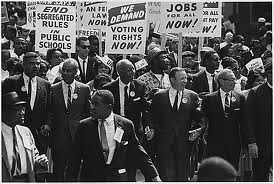
Back in the early1960’s, during the height of the Civil Rights Movement marchersthe world watched as violence and hatred played out every night on TV.  A few years later, we watched the horrors of the Vietnam War taking place on the other side of the globe, from the comfort of our living rooms. Those broadcasts made an indelible mark on me at the time, growing up in my fairly sheltered life in suburbia.  They opened my eyes to the world and I took it all in.

Yesterday, a tragic bombing occurred during the Boston Marathon that took the lives of three people and injured dozens more.  Seconds, after the first of the two bombs went off, everyone who was connected to the Internet, immediately knew what had happened, regardless of where they were in the world.  Photos, video and sound recordings went viral – globally and instantly.  Along with the “bonified” news broadcasts transmitted in real time, rumor and speculation spread instantly as well.

In the 50 plus years that have gone by since those early days of “live” news coverage, bringing “awareness” into our homes, technology continues to impact our lives in a profound way.  We are connected globally and there’s no turning back that clock.  We are no longer isolated from what is taking place anywhere and everywhere on the planet.

We are all collective participants. We can tweet, blog, post images and video on Facebook and numerous other social media platforms without really needing anyone’s validation, permission or vetting whatsoever.  Think of the power in that.  It gives everyone a voice on a global scale.  But along with that comes responsibility. It used to be that if you saw something written in a newspaper or heard it on the evening nightly news on TV, it was true and you could believe it.  But now what do we do?  How can we decipher and determine what we see and hear online is true and accurate? Ultimately, we need to make those judgments ourselves.

I’ve been thinking about this all morning, and I can only hope that as we become more connected through technology, that we start to embrace our similarities as human beings, instead of being split apart by our differences.  For those of us who are documenting the world through images and video, whether professionally or not, we are broadcasting on a global scale, on a daily basis.  Think about the power of that and the responsibility.

6 Ways Video has Made Me a Better Photographer

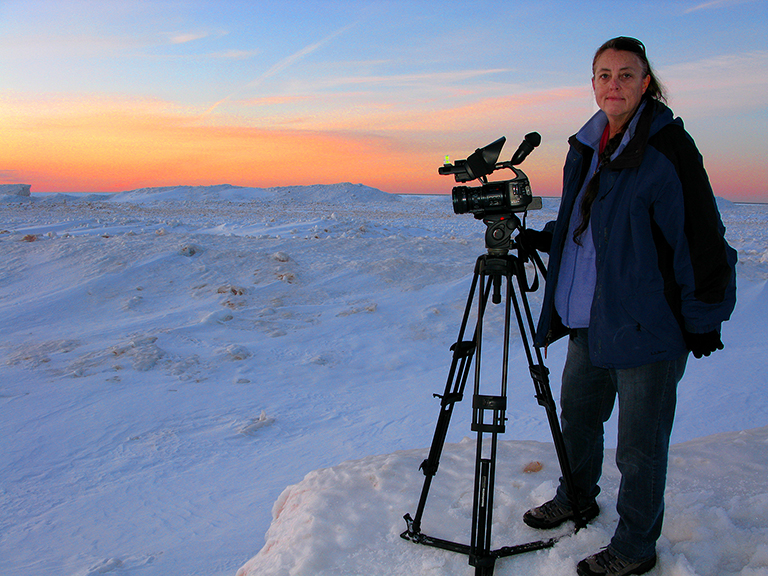
Lately, I’m finding that I “get the job” because I know how to shoot video. What’s odd is that these are still photography assignments and I was NOT hired to shoot video, but because I knew how to shoot video. What I’ve discovered is that many clients love the “eye” of the “hybrid”.

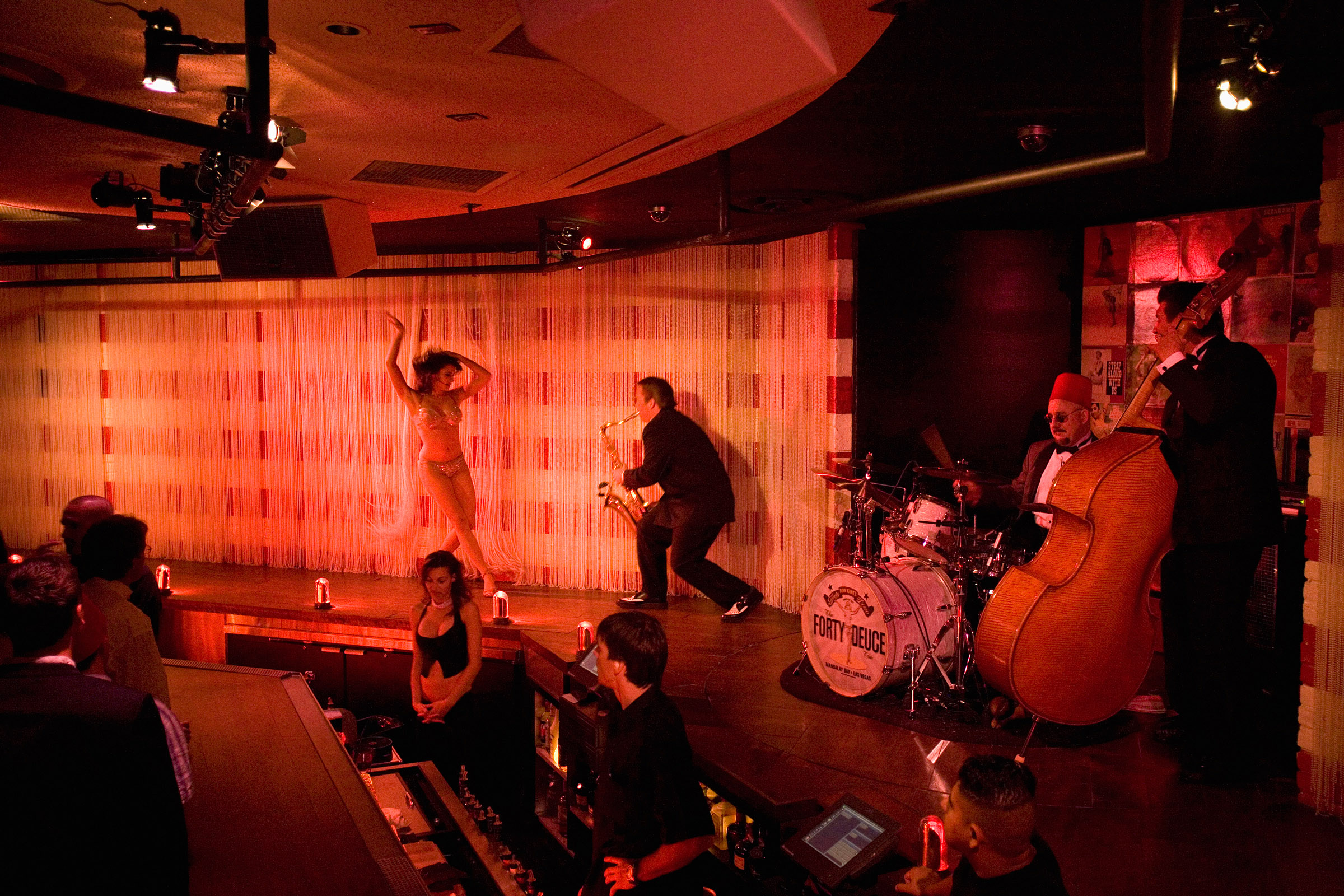
I’ve been thinking about what is it about the “eye of a hybrid” that clients are finding attractive. Forty Deuce burlesque club, Las Vegas, Nevada In a nutshell, it’s the eye of a master storyteller.  That’s because the medium of video is the perfect medium for telling a story. It encompasses movement, action, pace, rhythm and sound to engage, entice and feel.

I got a call this week for an editorial still photo assignment.  As usual, there was the customary business paperwork, but the client also provided a “shot list”.  I’ve been shooting editorial assignments for over 35 years and have had all kinds of direction. Sometimes, I’m given a writer’s manuscript and I’ve come up with my own shot list and sometimes I’m just told to come up with a variety of images.  But this “shot list” was intriguing because it read more like a shooting script for a video project.  As I read through the list, I could see how the person who had written it – had the “eye of a hybrid”.

Here are some of the suggested shots and “direction” from the list they provided:

(This is how I think and shoot in video. It has made me a better still photographer)

Cover it – Get comprehensive coverage – different perspectives, focal lengths, wide, medium and close-ups.  When I shoot video I will get a variety of angles as well as a variety of focal lengths because I know I will need plenty of b-roll to work with when editing the story together.

Get sequences – Get a variety of mini stories with people interacting. I am accustomed to thinking about how my “shots” will come together as part of the whole video that I’m working on.  Now, I approach a still editorial assignment like this as well. It’s kind of like of a moving pagination of imagery in my head.

Get storytelling images – With still photography I need to make sure those independent shots or moments in time also tell a story and stand on their own.  They can’t just be “wowy zowy” photos as Bob Gilka of the National Geographic used to say when I showed him an eye grabbing and colorful, abstract image.

Action/motion – make the images “feel”.  One that that motivated me to start exploring motion was because I was finding that it was difficult for me to convey the feeling of motion in a still image.  I’m finding that it’s easier for me to convey movement in a still image now because my eye is trained to look for it.

Give the images sound – (like a hammer hammering)Natural sound gives a video the element of reality.  It’s almost like it gives the video a well-needed extra layer or dimension.  When I’m shooting still images, I look for images that will illustrate the “sound” of an environment.

Shoot more – Give me more to choose from.  Again, you can never have enough b-roll when you are shooting video so I have naturally started shooting more on still photography shoots and my clients love having the abundance of choice.

How Video Has Helped My Still Photography Business

After a slow spell, which I can’t say I ever get used to after 30 plus years of freelancing, the phone started ringing.  The calls were all in regards to still photography assignments.  Having been a still photographer for most of my life, that wasn’t unusual, but what was interesting was that I beat out my competition – other still photographers – because I knew video.

Times have sure changed. When I started exploring the medium of video, over 15 years ago, I didn’t abandon my still photography10Ft.WaveI simply added another skill set.  Most of my clients over the years have hired me to shoot one or the other, and sometimes both.  But what I see happening now is that as print moves to electronic delivery, my still photographic clients are also looking for a “photographer” that can shoot video components on a still photography assignment.  They need multimedia content for mobile devices and online platforms that cry out for movement and sound.

I don’t think of myself as a “still photographer” or a “videographer”.  First of all, I absolutely hate the word videographer because it smacks of a dated notion of what video used to be.  I think of myself as an “imaging professional” or sometimes a “new media producer” or sometimes just a “storyteller” because that’s what I do – I tell a client’s story, or deliver their message to their targeting audience.  I don’t define myself by the tool I use.

With convergence happening not only in the cameras we shoot with but in the media we create, I will opt for the “tool” or camera(s) that enable me to tell the story I need to tell, in the best way possible.  I’ve been thinking that way since I first forayed into video.  It’s nice to know that now my clients are thinking that way too.

Words of Wisdom For and From Young Photographers

I’m on the advisory board of the YPA (Young Photographers Alliance) and while there are times that I feel I am on one too many boards and spreading myself too thin these days, it’s nights like last night that make it all worthwhile.

Last night was the Mentee/Mentor Exhibition and Awards Ceremony at the Calumet Gallery in New York City.  I must confess that I really didn’t want to go for a couple of reasons:  I needed to get up at 3:30AM to leave for the airport (this morning) and I’ve been in a bit of a funk that I can’t seem to shake myself out of and I didn’t want to be one of those negative cynical people bringing the “mood” down.  But I’m also one of those people that everyone can count on – so I did my best to rise to the occasion.

Before the affair, there was a meeting with the young photographers (mentees) and the mentors to receive and give feedback.  One of the students said that they wished some of their time with their mentors had been spent discussing the “business” of photography – something she didn’t feel she was learning in school.  I pointed out that there was a lot of information about business practices on the ASMP website, including contract shares and encouraged the students to check it out.  And then I told them that the best “business” advice I could give them was to be true to themselves and that if they did that and didn’t stray from their “purpose” that would set that apart from their competition because there is only one “you”.

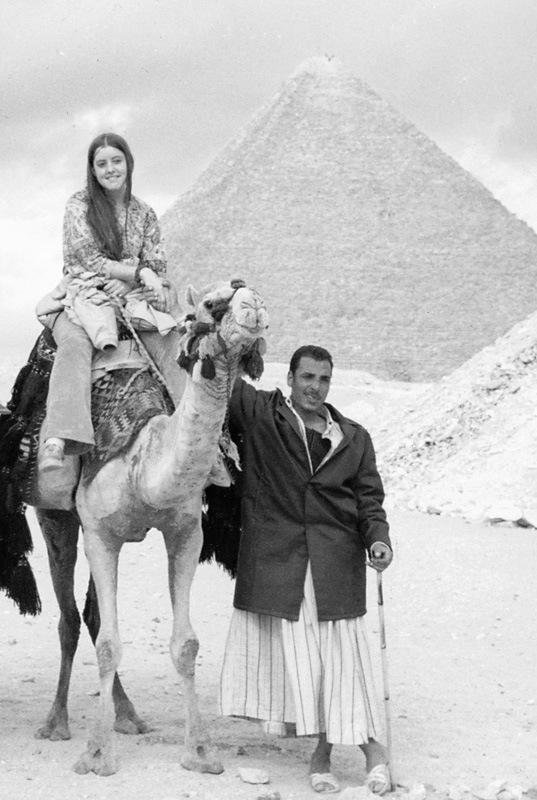
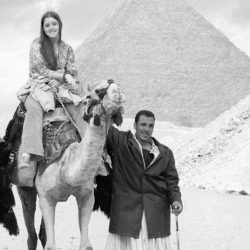
And then I relayed my “Jay Maisel” story as I have dozens of times. Gail at the Great Pyramids 1971 I had gone to see Jay when I was just starting out.  My heart and my passion was in photojournalism, but countless professional photographers had told me that I couldn’t make a living doing that kind of work – so I when I went to see Jay, I had my “commercial” portfolio with me, which I thought was pretty good.  He looked at it, pushed it back at me and said, “ This is crap – this isn’t what you want to do is it?”  I said no and told him that I wanted to be a photojournalist.  He asked me how old I was to which I replied “25 years old”.  He looked me straight in the face and said, “You’re 25 years old and you’re already making compromises”.

I told the kids that it was a turning point in my life and that whenever I strayed from my purpose – and felt it – over the last 35 years – I remembered Jay’s words.  Then one of the students asked me a question that I hadn’t ever been asked when telling that story over the years.  She said “What was it about your work that made him think your heart wasn’t in it?”  I hadn’t really ever thought about that – I had always focused on what I wanted to do instead.  But when she asked that question, I had to reply, “I really don’t know”.

I’ve been thinking about it all morning on my way from Newark to San Francisco and I wonder – was it the work that felt empty or impersonal?  Or was it the way I looked when I handed it to him?  Or was it both?  I’m waiting for my next leg to Honolulu and then on to Molokai to meet up from one of my mentors, PF Bentley who taught me everything I know about how to tell a story in motion. I’ll have another 7 hours to contemplate that question and even if I never come up with the answer, that question pulled me out of my funk.  Just in time to once again put my head in an “open” place to learn and get back on purpose.

How Motion is Changing the Future of Photography

Mid-19th century "Brady stand" photo...
Mid-19th century “Brady stand” photo model’s armrest table (Photo credit: Wikipedia)

A few years ago I heard visionary Ray Kurzweil speak at NAB (National Association of Broadcasting).  He was talking about the exponential rise of technology and how that would profoundly change people’s lives – and was.  His focus and predictions were mostly related to the advances we’ll see in medicine, but he relayed an analogy that has stuck with me.  He said:  (and I’ll paraphrase) that if you were in the horse and buggy industry at the turn of the century and thought of yourself as someone who sold buggies and whips, you most likely would  have gone out of business.  But if you were in the horse and buggy business and thought of yourself in the transportation business you most likely would have adapted, recognized that the future of transportation was in motor transport – and thrived.

The thing is, the ones who adapted early on – before the majority did – were the ones who made fortunes.  The ones, who waited until everyone embraced the automobile, either struggled to keep pace with the competition or died out.  I think we are at a tipping point as far as the future of the still photography business.  If we continue to think of still photography and motion as being two separate entities in the business of visual communications, it will be our demise.

Change never happens overnight.  Change is slow.  No one gets to be 400 lbs overnight; it’s a slow process.  But once it happens, it’s really hard to get back on track.  The changes that are taking place in the way we communicate are monumental, unlike any changes in the past.  I used to shoot a lot of annual reports, but not so many anymore.  I used to make a large portion of my income from the licensing of my stock images, but that income has dropped significantly because everyone has a camera and the supply of images is more than the demand.

I’m not an alarmist in predicting this change and in fact for someone my age who is on the tail end of his or her career, I wouldn’t be alarmed at all.  However, if I were just starting out in photography or even in my late 40’s or early 50’s and had another 20 + years ahead of me, I would not be complacent.

Some things still photographers should be thinking about:

  • Understand that there will probably not be a divide between the still photography and motion businesses.  This is really hard to envision because we tend to see things, by looking at the future in terms of the knowledge that we have on hand today.  But with motion cameras able to shoot 96 frames a second, and each frame being good enough to pull out and used as a still image, the changes for still photographers will be profound.
  • The concerns are not like those that a still photographer has had to face in the past, like when digital replaced film or when one needed to reinvent themselves as their markets changed. (For example when car shooters were phased out by CGI artists)  Shooting motion is a different mindset all together.  It also has profound differences in the way you run your business. While a still photographer of today, may find opportunities to shoot motion for their existing still clients, that too is rapidly changing.   I don’t think this will be an option much longer for still photographers. I think that motion shooters will be shooting motion and in the process creating stills as opposed to still photographers providing the motion content and the stills.  Just like a professional still photographer distinguishes his or herself from an amateur photographer who has an expensive camera, so do motion shooters distinguish themselves from the still photographer who seems to have little regard for the craft and knowledge of motion and thinks they will “just” start shooting motion when the time comes. It’s not going to be “just” that simple, especially if you’re late to the game.
  • Understand that technology affects everything and will continue to do so.  You may think  in terms of what’s possible today and that it would be incredibly labor intensive to go through tens of thousands of motion frames to pull out still images. But advances in technology will change that as well in the future. Technology affects everything.   Realize that software is changing too and that the edit process for pulling out frames will be easier and more streamlined in the future.  In fact, an editor’s job description will change greatly and that may be a job that is in high demand in the future. Even now, just do a quick search on LinkedIn and you’ll see that while there are very few job listings for still photographers, there’s a lot of demand for video editors.

Bottom line – start recognizing that photography and video are not separate businesses any longer.  Start understanding that will have an affect on the  future of the still photography business especially in terms of licensing, because traditionally motion camera operators work under work for hire agreements.  While still images won’t go away, that doesn’t mean that still photographers will be creating them in the future.

What Still Photographers Need to Know About Convergence

We should not think in terms of how we can apply the newest tools of the trade to what how we are shooting today, but rather think about how these tools and future versions may be applied to what we will be doing in the years to come.  We also need to remember that it is not just creatives that are determining what we shoot with, how we shoot it and where the imagery will be used, it’s the top executives and money folks from the camera manufacturers, the advertising executives, broadcast networks, movie studios and magazine and newspaper publishers.  They set the stage and the content creators and receivers of the content or the “audience” react.

We as creatives have a choice of what tools to use – everything from an iPhone to a camera like the

English: Canon 5d Mark II set up for cinema st...
English: Canon 5d Mark II set up for cinema style shooting (Photo credit: Wikipedia)

RED, able to produce 5k resolution stills shooting at 96 frames a second at a 200th of a second.  We make our decisions when choosing which tools to use based on a number of factors – affordability  and determining which tool or camera is the best one for a particular job.  Many times, it’s the end use that is the deciding factor. We need to remember that not only our tools are changing, but so is the way the information or content is delivered as we rapidly move away from print to electronic delivery.  Simply put, mobile devices have dramatically changed the way consumers are receiving content and information.

Who could have imagined just a few years ago that a phone could take photographs that weren’t just “good enough” but really good in terms of resolution and delivery?  We need to keep in mind that the limitations of today will most likely not be there in the future.  Technology is changing our lives and our businesses in an exponential way and will continue to do so.  If we are smart and want to stay in business, we need to look forward and imagine what’s next, rather than look at what is or what was.

When I started my still photography business more than 30 years ago, a photographer needed certain technical skills.  We needed to be able to focus a camera and that was tough if you were shooting fast moving action subjects and we needed to know how to get an accurate exposure.  The cameras of today have pretty much eliminated those skills with auto focus and exposure.  Still photographers still need to know how to light but as software becomes more sophisticated will that be a necessary skill set of the future?

When I’m giving a seminar to still photographers who are thinking of moving into motion, I start out by explaining the differences of the two mediums.  Still images are moments in time and video is time in motion.  That explanation sounds simple but it’s quite profound when you think in terms of convergence.  While today’s cameras have pretty much eliminated the skill sets of knowing how to properly focus and expose an image, a photographer or camera operator still has to be able to capture the “decisive moment” – that is where the skill set comes to play.  But is that still true today and will it remain so in the future with motion cameras able to shoot at 96 frames a second at a fast shutter speed with 5K resolution? Why would a client need a photographer to shoot still images when they can pull frames from a motion shoot?  They wouldn’t, especially when most camera operators in the motion sector are working under “work for hire” contracts and they don’t hold the copyright to the footage and/or still images or frame grabs from that footage.  That’s a game changer for the still photography business and licensing of images.

I read an interview once with Vincent LaForet and he was telling a story about having a discussion with a DP at a Red event shortly after the Red One came out.  He asked, “Who in the world would want to shoot a still image with this huge Red camera with a Cine lens?  It’s insane. Why wouldn’t I go out with my 5D Mark II that shoots RAW?”  The DP answered “We want to take your still jobs away from you, just like you want to take our video jobs away from us with your HD SLR’s.”

That was a few years ago.  Now I know a lot of high end still photographers who are shooting with smaller, more affordable and high-resolution motion cameras to shoot still photography jobs and so are DP’s.  That’s convergence and who knows what the future may bring, but one thing is for sure – it’s best to be knowledgeable in both.

Photographers – Grow or Die

I’ve been a professional photographer for over 35 years.  While some may look at that sentence and think I must surely be “over the hill” – others may look at that and say “wow, she must have been doing something right, to stay in business that long”. I suppose, it all depends on the outlook of the person.

Personally, I truly believe that the secret to longevity in any career field is to be open-minded as to how they define themselves.  One thing I have never done is define myself by the tools I use. Just because one has expensive camera gear, it doesn’t make them a “professional photographer”.  If that was the case, then who are you if you have a camera that happens to shoot both still images and video?

I’m really amazed when photographers define themselves by the tools of their trade.  I think with the way things are going in terms of how technology continues to affect our industry, if a photographer defines him/herself in such narrow terms – it’s the kiss of death.

When technology enabled me to explore video production without having to make a prohibitively investment in expensive “tools”, the creative part of me wanted to take full advantage of those new opportunities that were coming my way.  After all, I’m a storyteller and I shouldn’t have to limit myself to one medium, but rather choose the

Category:Wikipedia requested photographs of ph...
(Photo credit: Wikipedia)

right  tool (camera)  to use that best tells the story that I need to tell.  Sometimes that means delivering the message in video and sometimes the story is better told with still images.

Because I was an early adaptor of video (at least from a still photographer’s point of view), many of my peers equate me with just shooting video.  Many assume I’ve abandoned still photography, which couldn’t be further from the truth.  The real truth is, my clients see me as an imaging professional, who is able to deliver their message with the medium(s) that is best suited for the job.  These days with print publication giving way to electronic delivery, clients are delighted that I am able to fulfill their needs because I am proficient in both video and stills and most times they need both.

My curiosity for exploring a variety of mediums and tools has not only kept me in business – it’s kept me from getting jaded and stale. I am a photographer.  I am a director of photography.  I am an imaging professional and am thrilled to still be in business at a time when we have so many tools and options in how we are able to deliver a visual message.

10 Ways Photographers are Their Own Worst Enemies

  1. They talk themselves out of things.  – Telling themselves that it wouldn’t matter if they learned new skills or shot new images or whatever they didn’t want to make the effort to do.
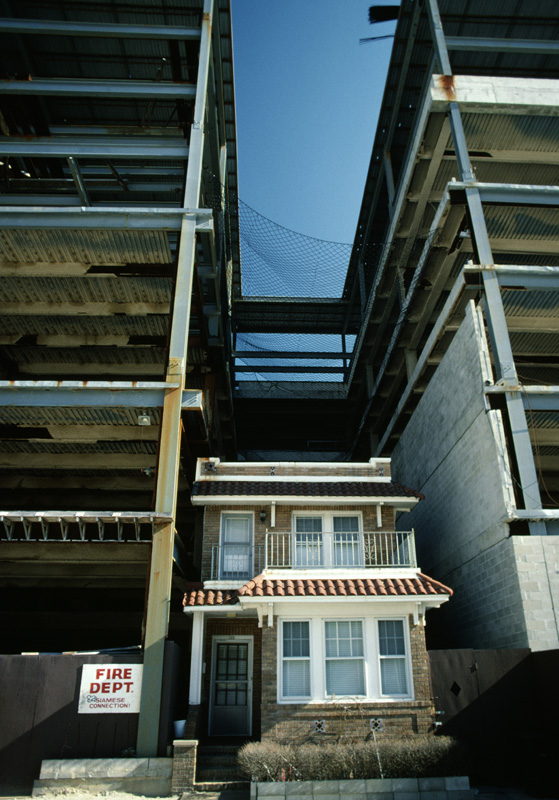
  2. They try to “educate” their clients (sometimes a bit too much) instead of collaborating and possibly learning from them.  A lot of “older” photographers are like this when they are working with younger art buyers or directors. I think the energy needs to work both ways.House surrounded by construction site, Atlantic City, NJ
  3. They give themselves an A for effort for starting something but too many times their starts lead to nowhere if they don’t have an end goal in mind.
  4. They don’t open themselves up to networking with others by attending industry meetings or events.
  5. They treat their clients like their enemies where one needs to win instead working toward a positive outcome for both.
  6. They make the mistake of creating for an audience, instead of creating for them selves.  (Thanks to Seth Godin for that thought)
  7. They take workshops or pay for a service and then don’t utilize them. I’ve been guilty of this too many times.
  8. They don’t shoot for the pleasure of it.
  9. They rely too much on commissioned work instead of taking advantage of new opportunities and ways in which to market and sell their own projects.
  10. They don’t stay true to themselves.