1. Buying a DSLR is only a start. Choose the right tool for the job. A DSLR might not be the right tool for many video productions. And keep in mind that most shooters spend sometimes twice as much as the price of these cameras on add-ons to make these cameras a viable solution.
2. It’s more than just the shoot. There are many facets to video production. In fact positioning yourself as just a camera operator may not be the best business model.
3. Shooting video is a different mind set than shooting still images. I think differently when shoot video. I think in sequences and in storyboard mode – not in moments in time.
4. Audio is everything. You can have the best visual in the world but if you don’t capture your audio properly – you’ve got nothing.
5. Shoot horizontals. There are no vertical TV sets – yet.
6. Editing – Again the shoot is just one part of video production. Editing is just as important and there is a steep learning curve that comes with it. But learning to edit and editing your own material will make you a better shooter.
7. There’s no standardization of codec’s and formats. It’s like the Wild West when it comes to standardization of codec’s. There is no standardization! Every time a new camera gets rolled out – it seems like there’s yet another format.
8. Output – Here’s where a lot of people get confused. How are you going to output it? What type of file? What platform – TV, web, big screen?
9. Interviews – A lot of video productions require on camera interviews. Many times the interviews drive the story – or create the backbone of the audio track. Pay attention to good interviews and interviewers to learn the art of getting good sound bites.
10. Collaboration – Video production is ripe for collaboration. Still photographers are more independent creatures. Learn to surround yourself with people that will make you look god.
Tips for Getting Good Video Interviews
More and more still photographers are getting into video because of the appeal of the hybrid still cameras that also shoot video. Photographers love the visual coming out of these big chip cameras – what’s not to love? But they quickly find out that if they aren’t just going to be laying visuals down to a music track, they will need to start thinking about their audio – specifically a narrative track or one driven by sound bites from interviews. I work in the corporate sector, as well as create documentaries, so I do a lot of interviews. The interviews, along with a scripted voiceover comprise my audio track and drive the story.
I love doing interviews. That’s because I’ve always been a curious person and like to ask questions. I enjoy the “conversation”. I don’t want to become part of the video, even though I am usually the one asking the subject questions. My voice and my questions will not be heard in the final video, so I need to coach my subjects to paraphrase the question when they relay their answers. But before I get to the interview, I research my subject and come up with a good solid list of questions to ask in advance.
Here are some tips for getting good interviews:
1. Ask leading questions – not yes or no questions. Example: Instead of asking where do you work? Ask: Tell me about where you work.
2. Ask subject to paraphrase the question if you don’t want the interviewer to be part of the video.
3. Don’t step on your subject’s lines. Instruct your subject to pause before answering the question. In addition, make sure that you pause after your subject answers the question. Many times someone will add more insightful information to fill in that pause.
4. Ask the question more than once.
5. If your subject rambles – ask them to summarize their thoughts.
6. Use gestures to encourage and guide subjects – remember you don’t want to hear your comments.
7. Be a good listener – many times my best questions are follow up questions to something that the interviewee just said.
8. Pay attention to your subject’s answers because you’ll need to illustrate what the subject is talking about with B-roll.
9. Pick a suitable location for sound. Find a quiet environment and turn off all fans, motors, radios etc.
10. Record room tone – you’ll need it when you edit the sound bites
Putting Together a DSLR Video Kit – And Why
I was in Chicago a couple of weeks ago and stopped by Zacuto. Zacuto is a business that has made outfitting DSLR cameras for video a specialty. They have cleverly engineered an assortment of their 3rd party add-ons that take these cameras to a higher level. They have also provided solutions to overcome some of these cameras shortcomings. Depending on the genre you are working in, documentary work, corporate, indie films or photojournalism will ultimately determine which way you’ll need to “trick” these cameras out.
I was looking for products that were designed to help with camera stability, focus aids and audio when using the Canon 5D or 7D which I will soon be purchasing. My motivation for buying these cameras wasn’t because I was moving to video for the first time, because I’ve been shooting video for 11 years and already have a high-end HD camera – the Sony EX-1. The main reason that I will be buying these hybrid cameras is that I am undertaking a global project where I will be shooting both still images and video where I will literally be traveling around the world for a three month period and I can only bring what I can carry on my back. So taking two camera systems was out of the question.
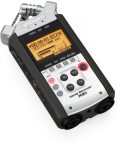
I tested quite a few items at Zacuto but finally settled on the following solutions. For my audio needs I will use my existing Sennheiser shot gun mic and lav/transmitter/receiver kit. But I decided to capture my audio independently using the Samson H4 Zoom digital audio recorder and will sync it later in post. I also opted for the EZ-Finder that is an eyepiece that snaps on over the monitor. This not only makes it easier to focus in the sunlight, but provides a point of stabilization as well. Speaking of stabilization, I have also opted for the DSLR Sharp Shooter rig that comes with a shoulder mount, Zgrip Z-mount and mini baseplate with quick release adaptor. I supplemented that rig with a FLEX-DSLR remote trigger and a 3.4 lb. counterbalance weight.
I’m glad that I personally visited Zacuto and tried out the rig – fitted to me. It felt right and fit with the way I am accustomed to shooting. A hybrid solution that bridges the still photo and video worlds. I’ll need a lighter weight tripod and am hoping to keep my Manfrotto fluid head. I’ll need to purchase a backup MacBook Pro and portable hard drives because my workflow will be tapeless and therefore redundant.
That’s going to be a lot of gear on my back. Guess I’ll be packing light when it comes to my personal needs.
Telling Stories in Multimedia and Video
Rather than paraphrase here what I have already written, I will simply direct you to an article that I wrote for Adbase that just went online http://tiny.cc/h5kWV
Several tips on how to tell the “story” through the medium of motion to how to size images to achieve that timeless Ken Burns effect.
Bottom line – it’s all about the story.
The DSLR as a Business Model
Sounds silly doesn’t it – “The DSLR as a Business Model”? That’s because it is silly to think that a camera can define or be a business model. But that’s what so many still photographers are doing – thinking that because they buy a DSLR capable of shooting video, they have gotten got into the business of video production.
Let’s start with the fact that in video production, the shoot and the camera is just one part of the process. There’s also sound, script writing, editing and output that one must know how to do or collaborate with people who know how. And if you position yourself as “just” a camera operator, you will quickly find out that not only you will have no ownership and control over the full process – but you will be missing out on making income on other facets of the video production process. For this reason, I position myself as a producer/director.
Even if you want to position yourself as a shooter, you shouldn’t be defining yourself by your tool – but by your vision. If you do define yourself by a camera that is very affordable and that lowers the bar on the entry level into video production – you’ll be competing with everyone else at that bottom level. Not to mention that shooting video is much different than shooting still images. I think and shoot differently when I’m shooting video – keeping my eye on the big picture and how I will get into and out of a shot.
Lastly, there are a lot of things I like about the DSLR’s, namely the extraordinary visual and the fact that I can shoot both mediums with one camera. But there are some shortcomings of these cameras that will keep you out of certain markets in the video arena.
Here are a few disadvantages these hybrid cameras have:
Audio – The built-in mic is not acceptable and the camera doesn’t have a professional XLR input. There is also no way to monitor audio with headphones. Best way to achieve good audio with these cameras is to capture it with a separate digital recorder like the Samson H4 Zoom.
Stability – With video you are shooting time in motion – not moments in time – so it’s critical to hold the camera steady. This is no easy feat when you have no brace points. Because you are shooting with the mirror up – you aren’t looking through the viewfinder and thus bracing your eye against the camera body. There are attachments that go over the LCD monitor and provide an eyepiece like the Zacuto Ez-finder.
Rolling Shutter or Jello Effect – The effect occurs when you quickly pan the camera and causes vertical lines to distort. So don’t do fast pans and eliminate anyone walking into and out of the frame quickly.
Editing – DSLR cameras record in AVCHD format using the H.264 codec. This usually means more time spent converting or rendering the files when you bring them into your editing system.
Frames Rates – 30P vs 24P – Converting your frame rate from 30P to 24P to achieve that film-like look – can be somewhat problematic with audio drifting and getting out of sync. Some cameras now have variable frame rates to choose from.
Bottom line – think beyond the camera if you’re thinking about getting into video production. Define yourself by your vision – not your tool.
Mistakes Still Photographers Make When Shooting Video With a DSLR
- They don’t understand the importance of audio and don’t use external microphones. Audio is everything in video.
- They think in “moments in time” and start shooting video too late or stop shooting too soon. You need to let the camera linger longer.
- They don’t shoot sequences with a beginning, middle and end.
- They don’t think in “storyboard mode” – You should ask yourself “How will I get into and out of a shot and what’s next in the story?”
- They don’t shoot enough B-roll with variations in angles and focal lengths – very important in the editing process.
- They move the camera instead of letting the motion take place in front of the camera.
- They turn the camera vertically. There aren’t too many vertical TV sets and monitors.
- They don’t use a tripod forgetting that video is “time in motion”. It’s one thing to hold a camera steady for 1/60th of a second and quite another to hold the shot steady for 10 seconds.
- They don’t consider the frame rate and how that will affect workflow and editing.
- Aren’t careful keeping their sensors clean from dust. Retouching video is a lot more involved than spotting still images.
- They “throw” some video clips in with the still photography job, not putting an added value on them and thus setting a bad precedent with clients.
- They don’t consider the output and the type of file to be delivered. There are dozens of formats and codecs in video. Choose according to your target audience and viewing platform or device.
Video News
I came across some interesting things this week, so I am passing them along.
One was the much anticipated announcement of the debut of the Scarlet – a new camera from the same company that makes The Red. There have been a lot of rumors about this camera over the past year and it will be rolled out in 2010. Check out Philip Bloom’s blog about it. And here’s another post on FreshDV with information about the Scarlet.
If you’re a Sony EX-1 shooter, here’s an interesting tip along with a how-to-video on using the Zacuto Z-finder with that camera. This viewfinder was made for the Canon 5d, but Martijn Schroevers found a clever way to attach it to the LCD of the Sony EX-1.
Next up is yet another new video camera format from Sony – NXCAM. The NXCAM can record 1920 x 1080 images at 24Mbps (50i or 25p), as well as supporting 720/50p and Standard Definition recording.
Very interesting but I wish these camera manufacturers would standardize formats and codecs.
I also came across a very interesting company called Wistia. They allow you to share and host your videos but in addition they offer heatmap tracking which gives you a visual spectrum of how your visitors watch your videos and what attracts them or confuses them.
And to give you an idea of how much web video viewing has exploded, here’s an online channel Expotv where consumers send in video product reviews. No fancy production values but an interesting concept of sharing information that has really caught on.
With all those news items I figured it was about time I changed my header – gone is that template blue – replaced by something more relevant to the blogger.
Watching TV Without The Sound – A Lesson In Editing
Every morning I spend an hour on the treadmill while plugged into my iPod listening to music. Sometimes the TV is turned on but with the sound turned off. I have found that just “watching” TV and in particular the commercials, is a great way to learn editing technique. I’m not distracted by the audio so I can better see how the elements get cut together.
Commercials need to get their message out in 15 seconds so the cuts are generally quick and the story needs to be told in an efficient manner. Action-reaction shots, cutaways, close-ups, sequencing – all stand out to my eye because I’m not distracted by the sound. It makes for a great lesson in editing. I notice the visual storyline – what shots are bumped up together, how long they stay on the screen and how they all make up the whole in presenting the message.
Conversely, if I have the TV on in another room (with the audio) and I’m just listening, I can usually get the message without seeing any visuals. That’s why great audio is essential – it drives the story. If people can’t hear something or understand it because the audio is poor quality, the piece fails to engage.
So try it sometime. Watch TV without the sound and notice how the story is told through the visuals and how they are cut together. It will help make you a better editor. And then try watching a video that you create with and without the sound. It’s a great way to see if you are telling the story that you meant to tell.
Video Production Tips
Don’t assume anything – ” But I thought ( fill in blank) was going to ( fill in blank).”
Keep an email trail – document everything between you and your client.
Keep a binder – it’s always good to keep a hard copy back up even if everything is recorded electronically.
What to look for on location:
• where the outlets are
• where the windows are and which direction they face
• do the windows have blinds or shades
• what is the ambient lighting in the room
• what kinds of ambient noise is in the location and can it be controlled
• what’s the best-spot for an interview
• where are the bathrooms
• where is the freight elevator
• where is parking
• what is the building contact person’s name and number
When packing for location – don’t leave things behind unless you absolutely have to. It is far better to have it and not need it, than need it and not have it.
Be redundant – bring extra connectors, adapters and cables. If you only bring one – it almost guarantees that one will fail.
Make friends with doormen, secretaries, building electricians, janitors, security guards – you will need these people on locations.
Whenever the call time is – be there early. I’m always the first one on set.
If you don’t schedule a rain day, you will end up needing one.
Always shoot the most important shot first thing of the day.
Maintain an attitude of calm and professionalism – the crew will look to you for the answers. If you show indecisiveness they will go off in all different directions.
Never label a video file or tape “Final” – Whenever you do – there always ends up being another revision.
Always break for lunch – working through lunch guarantees a hungry and cranky crew. Ultimately you won’t get 100% from a hungry crew, thus defeating the time saved.
Slate everything you can. Use the back of the slate for a white balance target. Also attach a printed color bar chart to the slate. This can be helpful in color correction later, matching scenes and/or cameras.
Tape/storage media is cheap. Don’t be afraid to overshoot. That extra b-roll or cut-aways will become valuable assets in post. Get room tone at the same time.
During the mic check for interviews, record a brief statement where each subject states their name, the date and that they are giving permission to be taped. Always make sure your subjects also sign hard copy waivers/releases.
Things always take longer than you think – so estimate more time when scheduling.
In post production back up projects as different versions. Save a clean sub master version without titles and lower-third graphics and where the audio tracks are not mixed down. Most likely you will get a request to change a graphic or a music track and it’s much easier to make those changes on a sub master than to have to redo an entire project.
When a client suddenly takes the project in an unexpected direction, save a version of the project file up to that point.
When editing with a room full of client people – only answer to the guy/gal who signs the checks.
More Convergence – DSLR’s + Video = VSLR
It seems like this has been the year of the video capable DSLR or VSLR. Not only are manufacturers continuing to roll out new models but third party companies have made a big business out of selling attachments or add-ons for these cameras.
Dabblers as well as professional still photographers have gotten into video because the entry level has become easier and more affordable with the advent of these cameras. While traditional news crews haven’t embraced the new hybrid cameras yet, filmmakers have created a cult around them. I must confess that although technically I have had my hands on these cameras, I have not done any test runs using them in the field. But it is on my list of things to do.
What’s Out There Now
The Nikon D90 shooting 720p was the first DSLR camera to shoot video in HD. Canon followed with its impressive 5D Mark II which raised the bar by shooting full frame 1080p with external mic input and recently rolled theyout the Canon 7D with variable frame rates for under $2000!
The most attractive features of these hybrid cameras besides the price, is the ability to change lenses, have controllable depth of field and large sensors that work phenomenally in low light situations. However there are limitations that traditional video cameras that come at a higher price don’t have. Camera stability is one problem due to how the shooter needs to hold the camera because they are designed to shoot in video mode with the mirror up. Since the camera operator must see and focus using the LCD monitor instead of steadying their eye up against the viewfinder, it’s harder to stabilize the camera when hand holding it. Audio capture is very basic as well and must be supplemented in some way.
Third Party Options
Because of these limitations, third party manufacturers have gotten in the game by designing add-ons. Zacuto

has come up with a few interesting items. One item is the Z-Finder DSLR Viewfinder, which is a device that fits over a 3” LCD and provides magnification for better focusing. It runs around $400. Hoodman
provides a lower cost version called the Hoodloupe without the same optics but at a quarter of the cost.
An added benefit to using these viewfinders is that it provides another contact point with the shooter’s body and therefore provides more stability. There are also camera support systems available that help remedy the need for better stability in “run and gun”

situations where the shooter can’t use a tripod. Zacuto makes two stabilization devices, the DSLR Rapid Fire and the Quick Draw each designed with a different type of shooting situation in mind. In addition a Cavision has come up with a shoulder mount device the RS5DM2SET-S.
As far as audio is concerned, if you want to move beyond a supplemental external mic that’s plugged into the camera and use a more professional audio solution you’ll need balanced XLR inputs which will also enable you to use multiple external mics off the camera. Beachtek makes the DXA-5D for around $375 and juiceLink has come up with the juicedLink CX231 for about $300.

Or you can capture your audio with a stand-alone recorder like the Samson Zoom H4n, also around $300 and sync it later in post.
Regardless of how you ultimately “trick out” your VSLR (video single lens reflex) you can be sure that there will continually be newer models and solutions as technology keeps moving forward. Pro Video Coalition puts out a great newsletter online keeping us abreast of the latest tools. Check out their DSLR Shootout where they test these hybrids and adaptors. Take Dirck Halstead’s Platypus Workshop now incorporating the new DSLR’s in the program. And become a Facebook fan of From Still to Motion for ongoing information and updates. It’s an exciting time with loads of possibilities.