
One of the blogs that I regularly read is Copyblogger, which provides a lot of great information and insights into content marketing. This past week, Brian Clark wrote a post entitled, The Future of Content Marketing. He writes:
“A bunch of really smart people got together in 1880 to predict the future, according to Jeff Stibel in his intriguing book Breakpoint. These experts were called on to predict how the rapidly growing Gotham would manage into the next century and beyond.
The prognosis was not positive.
NYC was a major source of American innovation in 1880. Skyscrapers, subways, stock exchanges — and it was doubling in size every 10 years. 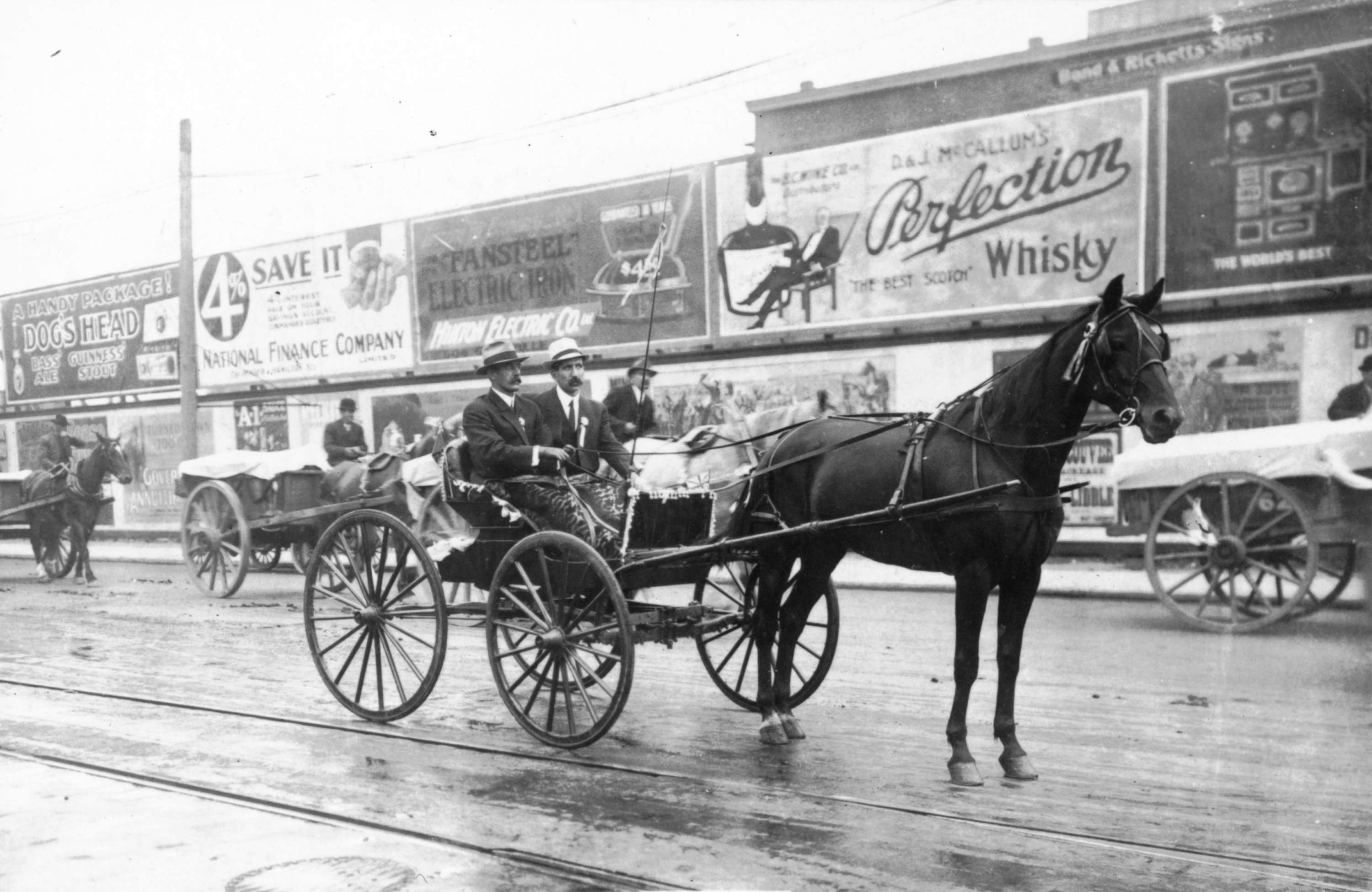 The experts were concerned by this growth, because they projected by 1980, you’d need six million horses to transport all the people who would live there.”
Folks were predicting the future of New York City, looking at it through the eyes of what was technologically possible then. They were more concerned about all the horses and the “crap” that would be produced, than they were about greenhouse gases, because nobody knew what that was.
When I re-ran a blog post How Motion is Changing the Future of Photography, I used a similar analogy, that Ray Kurzweil had given when I heard him speak at NAB. Ray said that, at the turn of the century (the beginning of the 1900’s), if you thought of yourself as being in the “horse and buggy business”, you were doomed to fail because of advent of the automobile. But if you saw yourself in the “transportation business”, you thrived, no doubt because you broadened your view to include the automobile. In my blog, I compared that analogy to what is happening in the still photography business, as the mediums of still imagery and video converge. I received a lot of responses from that post, mostly from people who argued that still photographs would always be around. I don’t disagree with them. I do think there will still be still images in the future – however, I think the still photography business will drastically change from how it is now.
Interestingly enough, every year I’m asked to bid on a still photography assignment for a tourism client. Yesterday, I received the bid packet and there was a profound change. They were not asking for a quote for still photography. They were asking for a quote for video – and not just video – but video shot on a RED camera so that they could pull frame grabs from the footage and use those “still images” in their ads. Now, that’s a game changer.
There’s always a danger in predicting the future and that’s because we tend to use and be influenced by the information and the knowledge that we have now – in the present. What I’ve learned in my many years on this Earth is that the future will be nothing like how we imagine it will be. I know that because what I imagined the future to be, some 35 years ago when I set out to make a career as a still photographer, was very limited in terms of how technology has changed things.
The human need to create will continue to mold a future that is way beyond what most of us could ever imagine.


 Journeys of a Hybrid