Cultural Context and Photography

I became a photographer because of my passion for people and the cultures of the world. Photography has given me access to all sorts of people from various cultures and backgrounds. My camera is my tool – my means to my end. And that is to tell peoples’ stories through my images – whether they be still or moving.

I was going through some images this week that I had shot in Easter Island a few years ago. Easter Island had always been a destination high on my list of “must sees” and it lived up to my every expectation. It was remote and wild with a constant wind that energized me. A place in the world that somehow felt untouched, unlike so many other destinations in the world that have suffered from the negative effects of the onslaught of visitors due to their own intrigue or beauty. In Easter Island the culture still felt real.
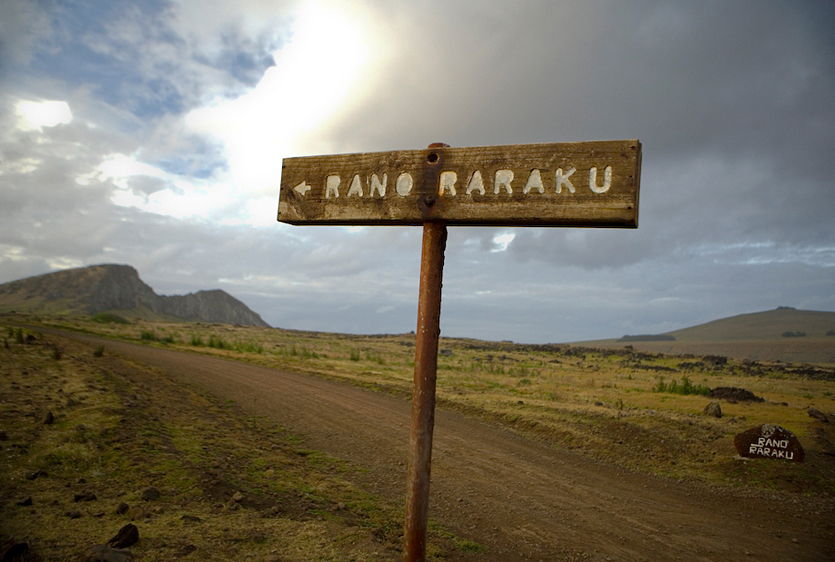
The first few days my partner and I spent driving around the island, which isn’t hard to do because of the virtue of its size. In the main town, I noticed that most of the people I saw out and about were men. Men with exotic looks riding through town bareback on horses with their long black hair blowing in the wind. It was quite a provocative sight speaking both as a photographer and as a woman.

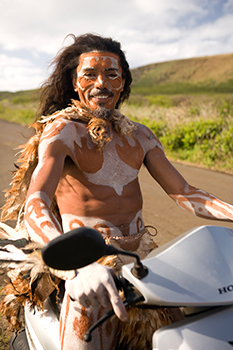
After attending a dance performance one evening I made arrangements to photograph one of the dancers – out in the natural environs of the island. I wanted to capture the spirit and the feeling of the people and the land. Tom, my partner and I met up with our subject who was in typical “western” attire and not made up. He asked us if we would transport his “weapons” in our vehicle as he couldn’t manage that on his scooter, and we obliged.
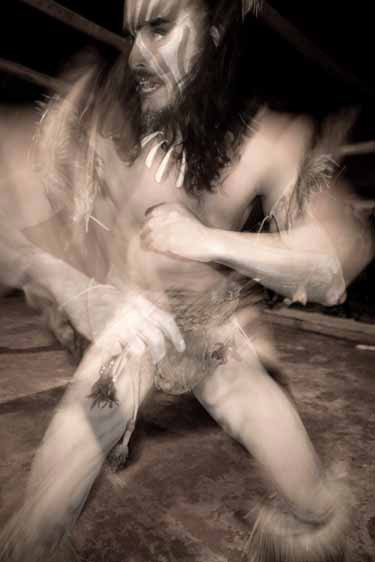
He followed behind us on his scooter to the location that we had previously scouted and then he proceeded to strip down to nothing. Here we were in this incredible wild environment between an extinct volcano and the sea with a native man totally naked standing in the road – applying his makeup, using the side mirror of our car. I instinctively knew that even though these were not the images that I had planned in my head – these were images that told the story of his culture in a unique context.
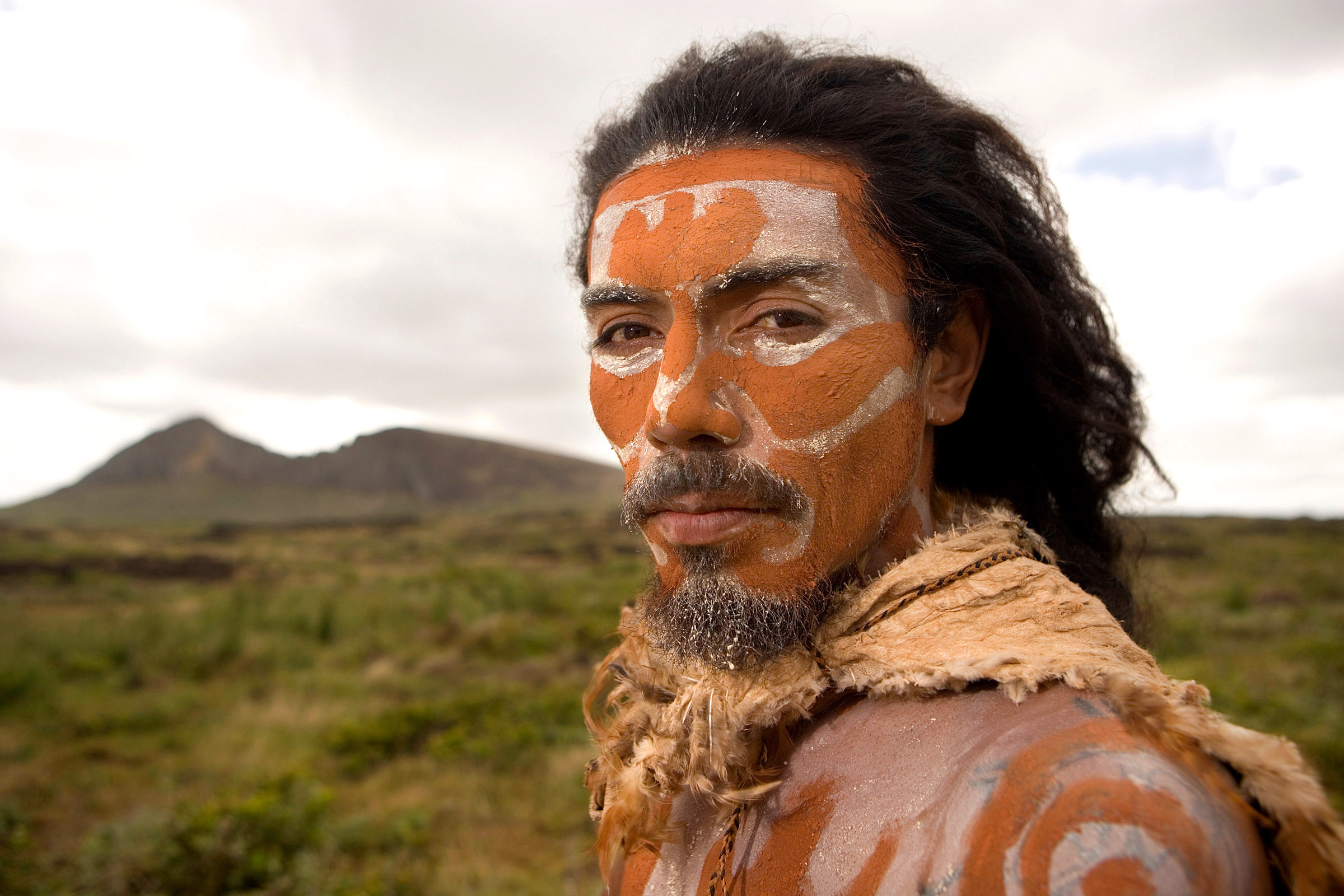
We went on to photograph a wonderful array of environmental portraits and at the end of the day we took a “crew” photo of our little group. And then he got back on his modern day scooter, in all his tribal glory and I took a few parting shots. It’s days like this that is why I became a photographer.
Add to FacebookAdd to DiggAdd to Del.icio.usAdd to StumbleuponAdd to RedditAdd to BlinklistAdd to TwitterAdd to TechnoratiAdd to Yahoo BuzzAdd to Newsvine

Fear, Blame and Responsibility

The title of this entry alone will probably stop most people from reading on, but for those of you who’ve continued,  be prepared for some cold harsh comments.

I had a lousy weekend – one of those weekends where everything went wrong – first the power steering went on my car while I was driving, then my printer broke – I got a message saying something like it was past it’s life – and then I fell halfway down the basement steps and landed hard on my elbow. My elbow is still throbbing but as long as I can move my arm, I think I’ll opt out of a trip to the emergency room because I can’t afford the medical bills – I’m already strapped by paying an annual premium of $18,000 with a $7500 deductible on each occurrence. What’s wrong with that scenario? But I’ll rant about that another time.

What really bothered me most this weekend – even with all the crap above – were some comments made in response to an entry I wrote as a contributor on the blog of my trade association. My entry was about “The Business of Video Production” and it was the last post of the week in a series of posts about video. The person writing the comments was clearly upset that his photographic trade association had been blogging about video. He was angry that so called “experts” who had themselves just recently gotten into video by buying a DSLR were claiming to be “god’s gift to video production” and encouraging members to move into video which he was sure was a terrible business move. I took offense with his words. I have been involved in video production for over 11 years and not new to the game as he implied and I don’t shoot with a DSLR but a “real” video camera and even if I did – the tool in itself doesn’t define my skills as a motion shooter. But what bothered me was the fact that he took his time to complain about a blog entry that I wrote, in my own free time with the good intentions of “sharing” my knowledge with my peers. No good deed goes unpunished.

After thinking about it, I realized that  I had written something that he didn’t want to hear. He wanted to hear that the photography business will go back to the way it used to be. He was angry and he took it out on me. He needed someone to point the finger at – to blame for the poor economy and its effect on the photo business. This morning Seth Godin wrote a blog entitled “Frightened, clueless or uniformed” where he writes “In the face of significant change and opportunity, people are often one of the three.” And this was a perfect example where this person was all three.

My first reaction was to question why I should devote my time to writing and sharing with others through social media only to be criticized for it.  But I’m not one to retreat and let the whiners of the world win.  I was raised by a father who was a city smart kid growing up on Chicago’s West Side and a mother who grew up in the remote reaches of the Upper Peninsula in Michigan.  They didn’t tolerate whiners and complainers and people who wouldn’t take responsibility for themselves. They taught me that if I wanted something, it was up to me to make it happen and if I didn’t – I had no one to blame but myself.  More importantly they taught me to believe that I could achieve anything I put my mind to. And that is how I try to live my life – in pursuit of my dreams.

So my suggestion to people who don’t happen to like what I’m suggesting or writing about – make some suggestions yourself.  Contribute – share – do something positive for yourself and others.  Come up with solutions – find opportunities – keep your mind open to possibilities.  Stop kicking the dog.  Stop being angry that things aren’t the way they used to be and start looking at how things are better because of technology  – and start using it to make a positive change in your life.

Life’s too short to spend it complaining.

Add to FacebookAdd to DiggAdd to Del.icio.usAdd to StumbleuponAdd to RedditAdd to BlinklistAdd to TwitterAdd to TechnoratiAdd to Yahoo BuzzAdd to Newsvine

Telling Stories in Multimedia and Video

Rather than paraphrase here what I have already written, I will simply direct you to an article that I wrote for Adbase that just went online http://tiny.cc/h5kWV

Several tips on how to tell the “story” through the medium of motion to how to size images to achieve that timeless Ken Burns effect.

Bottom line – it’s all about the story.

Add to FacebookAdd to DiggAdd to Del.icio.usAdd to StumbleuponAdd to RedditAdd to BlinklistAdd to TwitterAdd to TechnoratiAdd to Yahoo BuzzAdd to Newsvine

The DSLR as a Business Model

Sounds silly doesn’t it – “The DSLR as a Business Model”? That’s because it is silly to think that a camera can define or be a business model. But that’s what so many still photographers are doing – thinking that because they buy a DSLR capable of shooting video, they have gotten got into the business of video production.

Let’s start with the fact that in video production, the shoot and the camera is just one part of the process. There’s also sound, script writing, editing and output that one must know how to do or collaborate with people who know how. And if you position yourself as “just” a camera operator, you will quickly find out that not only you will have no ownership and control over the full process – but you will be missing out on making income on other facets of the video production process. For this reason, I position myself as a producer/director.

Even if you want to position yourself as a shooter, you shouldn’t be defining yourself by your tool – but by your vision. If you do define yourself by a camera that is very affordable and that lowers the bar on the entry level into video production – you’ll be competing with everyone else at that bottom level. Not to mention that shooting video is much different than shooting still images. I think and shoot differently when I’m shooting video – keeping my eye on the big picture and how I will get into and out of a shot.

Lastly, there are a lot of things I like about the DSLR’s, namely the extraordinary visual and the fact that I can shoot both mediums with one camera. But there are some shortcomings of these cameras that will keep you out of certain markets in the video arena.

Here are a few disadvantages these hybrid cameras have:

Audio – The built-in mic is not acceptable and the camera doesn’t have a professional XLR input. There is also no way to monitor audio with headphones. Best way to achieve good audio with these cameras is to capture it with a separate digital recorder like the Samson H4 Zoom.

Stability – With video you are shooting time in motion – not moments in time – so it’s critical to hold the camera steady. This is no easy feat when you have no brace points. Because you are shooting with the mirror up – you aren’t looking through the viewfinder and thus bracing your eye against the camera body. There are attachments that go over the LCD monitor and provide an eyepiece like the Zacuto Ez-finder.

Rolling Shutter or Jello Effect – The effect occurs when you quickly pan the camera and causes vertical lines to distort. So don’t do fast pans and eliminate anyone walking into and out of the frame quickly.

Editing – DSLR cameras record in AVCHD format using the H.264 codec. This usually means more time spent converting or rendering the files when you bring them into your editing system.

Frames Rates – 30P vs 24P – Converting your frame rate from 30P to 24P to achieve that film-like look – can be somewhat problematic with audio drifting and getting out of sync. Some cameras now have variable frame rates to choose from.

Bottom line – think beyond the camera if you’re thinking about getting into video production.  Define yourself by your vision – not your tool.

Add to FacebookAdd to DiggAdd to Del.icio.usAdd to StumbleuponAdd to RedditAdd to BlinklistAdd to TwitterAdd to TechnoratiAdd to Yahoo BuzzAdd to Newsvine

Video – Hot Medium for Higher Ed Marketing

Last night my daughter forwarded a link to a blog entry she wrote for Lipman Hearne, the marketing firm that she works for. Lipman Hearne specialises in PR and marketing for non profits and institutions – many of their clients are colleges and universities.

She wrote about a new trend, “LipDub” that is quickly being embraced by universities and becoming part of their marketing and communications strategies. “LipDub is part virtual campus tour and part music video that showcases a college’s campus and student life in a creative and entertaining way.”

This MTV type video trend apparently started in Europe when students decided to create a video to “show the world” that studying doesn’t have to be boring. The idea quickly caught on in Canada and the US and has moved beyond its grass-roots beginnings and is being adapted by marketers who find the approach uniquely appealing in this niche.

The videos that I have seen remind me a bit of the popular “Playing for Change” – Stand By Me video that went viral on YouTube last year. They are clever, well executed and very engaging. Check out what John Hopkins created. Definitely not your run of the mill amateur video but rather a very entertaining and professionally produced web video.

The big point here is that video is the medium of choice when targeting this demographic and quickly making those glossy brochures a thing of the past.

Add to FacebookAdd to DiggAdd to Del.icio.usAdd to StumbleuponAdd to RedditAdd to BlinklistAdd to TwitterAdd to TechnoratiAdd to Yahoo BuzzAdd to Newsvine

Findings From the ASMP Motion/Video Study

ASMP recently formed a Motion/Video Study Group to explore how members have embraced video. Video has become much more prevalent in visual communications as electronic publishing continues to replace traditional print media. The increased availability and low cost of broadband has enabled and created a huge demand for video. At the same time, there is a convergence of our tools as “hybrid” cameras are capable of shooting both stills and video.

As head of the Motion/Video Study Group, I spoke at length with fourteen ASMP members who have integrated video into their businesses.

Some General Observations:

As expected, there was a wide range in responses as well as in the markets that each participant works in.

• Participants are working all across the spectrum in the video/motion sector – from simple multimedia projects (still images with sound/music) to big budget broadcast spots for ad agencies.
• Most people have either been asked by their clients if they also shoot video or they have presented video as an up sell to their existing clients.
• Participants are positioning themselves as producers, directors, camera operators or all of the above. Many have set up production companies.
• Almost all participants have created partnerships or work in collaboration with others – sound people, editors and camera operators to name a few. Video production is based on collaboration because of it’s many facets.
• The learning curve can be steep – especially for editing and motion graphics applications.
• There is a lot of confusion and chaos in terms of file and codec standardization.
• Ownership and copyright are handled in a variety of ways depending on the production, the market and how one has positioned themselves. Traditionally in video, the camera operator is a hired gun and does not maintain ownership of the content. Depending on the market – the ownership and copyright is maintained by the end client or the production company.
• Most shooters invoice their still images and video as separate line items when shooting both mediums on a job.
• All see opportunities in the video medium in almost all markets.

To see the full report please go to http://asmp.org/tutorials/getting-started.html

I would love to hear from others who have added video to their businesses.

On the Road (Again)

I’ve been doing a lot of traveling these days, quick one or two-day stays in cities all around the US. But that’s not the kind of traveling I do when I’m on a destination shoot where get totally absorbed in a city because I’m there to tell that city’s story through my images.

These days a lot of my travels are quick trips in and out of cities all around the country, giving seminars for AMSP to still photographers who are thinking about getting into video. So I rarely have time to see the “sights” of the cities and really get my bearings on where I am.

One thing I do try to do while I’m on the road is walk because that is what I do when I’m home and it helps me get clarity on the day. This morning I went out for a walk in the area just outside my hotel. As I walked by various chain restaurants and stores, I almost forgot where I was, because it could have been just about anywhere in America. And that kind of made me sad – that in the US, our towns and cities have lost their unique attributes.

When I got back to my hotel, I saw a posting from a friend on Facebook on how photography introduces you to people whose lives and stories humble you. His words really hit home because I became a photographer for this very reason – to allow me the privilege of meeting people and hearing their stories. For me, photography and my camera have always been a “means to an end”.

Then I realized, that a place isn’t really defined or not defined by its stores and restaurants but by its people. And that even though I may only be in a place for a quick overnight – I always try to connect with the people. Whether that may be a chat with a taxi driver or a waitress or with some of the wonderful people I meet when I do a seminar.

Such is my life, enjoying and being humbled by all the people and their stories as I continue my travels. How lucky I am – to be able to combine my career in photography with my passions.

Add to FacebookAdd to DiggAdd to Del.icio.usAdd to StumbleuponAdd to RedditAdd to BlinklistAdd to TwitterAdd to TechnoratiAdd to Yahoo BuzzAdd to Newsvine

The Future and Video

Video seems to be the hot topic these days amongst still photographers. Their clients are coming to them and asking them if they shoot video and many are starting to incorporate video into their still photography businesses to be able to fill their clients’ needs.

We all spend more and more time getting our information and communicating electronically. When you analyze that, you quickly realize that there has been a shift in the way that we as a culture communicate, and that has changed our industry – still photography. Not because a still photograph is obsolete or has lost it’s impact, but because the traditional outlets for still photography are slowly disappearing – print newspapers and magazines.

We can debate which medium – still photography or video – delivers a visual message better – but it would be a pointless debate. Truth is, a viewer is meant to linger on still images, while motion mediums are meant to hit us with the added dimensions of movement and sound. Neither medium is better than the other and neither medium is going away. At least not as far as I can see.

The real debate shouldn’t be which medium is better, because there isn’t a one size fits all answer. Some things are visually communicated better in stills and some things are better in motion. The real question we should all be asking ourselves from a business point of view is – What are our clients asking for? And – Are we in a position to fill our clients’ needs?

I see a future where I shoot still images and video. Some jobs will call for still photography and some will call for video depending on the message or the story that our clients want us to tell. I want to position my business to be able to solve my clients’ needs with whatever medium does that best.

Add to FacebookAdd to DiggAdd to Del.icio.usAdd to StumbleuponAdd to RedditAdd to BlinklistAdd to TwitterAdd to TechnoratiAdd to Yahoo BuzzAdd to Newsvine

Talking Techy – New Video Gadgets

As far back as I can remember, ever since being the only woman in my graduating class at Brooks Institute, I’ve been in a male dominated business. Along with that comes a lot of tech talk and I’d like to think that I can hold my own “talking techy”.

Lots of new gadgets and tools have been announced in the last couple of weeks. The much-anticipated Scarlet camera has been formally announced for spring – early summer 2010. Check out the 3K Scarlet prototype along with some other new gadgets from the RED folks, and you too will be amazed. And the proposed price – less than $3000 for a 3K video camera that shoots RAW.

Another interesting camera to debut is the Panasonic full HD 3D camcorder camera. Pretty cool, but I wondered how one will look at their 3D footage? Panasonic thought of that as well, and introduced 5 new 3D HD TV sets.

Check out MacVideo’s blog on CES 2010 predictions for digital cameras – smaller, video, interchangeable lenses and wifi enabled are all new features to watch for this year.

And Skype enabled HD televisions are coming so Skype users will now be able to make HD video (phone) calls as long as they have an HD web cam and plenty of bandwidth.

I played around with the popular hybrid cameras, the Canon 7D and Canon 5DMarkII over the holidays. I absolutely love the visuals that these cameras create but they felt clumsy to me, being the street shooter that I am, because I couldn’t look through the viewfinder to focus while shooting. I had to use the LCD monitor on the back of the camera to focus, which was tough outdoors and it also made the camera hard to stabilize because it wasn’t braced up against my eye. I do realize that there are 3rd party viewfinders available that attach to the back of the camera which help with focusing in bright sunlight but also helps with camera stabilization.

Lastly, I wanted to check out a company I heard about called Animoto.com. They provide a subscription based service where one can upload still images, video clips and text and a video is automatically created from your assets (or theirs)  in a matter of minutes. They also have an interesting selection of licensed music to choose from, which you can use in your videos. I literally spent less than an hour of my time to register, upload my video clips, choose a piece of music and create a short 30-second video.

2010 has just begun and I’m already overwhelmed by all the new toys and gadgets.

Add to FacebookAdd to DiggAdd to Del.icio.usAdd to StumbleuponAdd to RedditAdd to BlinklistAdd to TwitterAdd to TechnoratiAdd to Yahoo BuzzAdd to Newsvine

The Power of Social Media

My last blog entry, I wrote about the DO’s and DON’T’s of Social Media. The next day I put some of some of those tips to work.

I am embarking on a personal project, Opening Our Eyes. The idea behind the project is to make a documentary that features people who are making a difference around the world – people who have followed their dreams, passions and ambitions and started their own personal projects that help make the world a better place. Ordinary people who are doing extraordinary things.

In looking for these people or subjects of the documentary, I wanted to utilize the power of social media and my connections and friends, to not only find “leads” but also to make the entire project an interactive experience from the start. So, two days ago I launched a simple website and blog and gave the idea a name, “Opening Our Eyes – Global Stories About the Power of One”.

My daughter Erin is teaming up with me on this project. She lives in Chicago – I live in NJ – but with social media we can bridge that divide as well as get the involvement of all our separate “friends”. Using a company called SquareSpace and their amazing publishing software, I was able to set up a simple blog and website and get it online in less than a day. It site will grow as we both continue to add content and relevant links and information, but by getting the idea “out there” and providing a way for feedback and dialog to take place – we are building our own community at the same time.

After the site was created, I created a fan page on Facebook with information about the project and links to the website. I also registered the blog with Network Blogs and inserted a “follow this blog” button on the fan page. And then I tweeted about project on Twitter, which automatically shows up, on my own personal FB . I also sent out about 50 emails to people I know.

The response has been overwhelming. Within a day I have received over 50 ideas about people and their projects. We’ve had well over 300 hits on the site and almost 40 fans on Facebook. Now that might not seem like a lot to some people – but to us it was an amazing response in such a short time.

As the project takes shape fueled by the interest and eagerness of our participants we are building a community and opening others’ eyes to the “power of one”.

Add to FacebookAdd to DiggAdd to Del.icio.usAdd to StumbleuponAdd to RedditAdd to BlinklistAdd to TwitterAdd to TechnoratiAdd to Yahoo BuzzAdd to Newsvine