Conversation with Director/Editor Erik Freeland

I was extremely fortunate that Erik Freeland of Springhouse Films was the editor on our film Opening Our Eyes.  I learned a lot from Erik through our collaboration.  I thought I would share some of Erik’s insights about the art of editing.

What makes a good editor?

Knowing a little bit about everything. Art history, popular culture, physics, linguistics, music… it gives you more points of reference for understanding and presenting the story. Attention to detail is very important because in the end, nothing goes unnoticed by the audience. I guess I’d have to say patience is tremendously important –– even though computers do amazing things, editing is at its core a tedious process.

We all seem to wear more than one hat these days – do you? If so do those skill sets complement each other and how?

I started in this business as an editor but really wanted to have more control over the material I was editing. I’ve have been fortunate to be able to also have a career as a director. Understanding those two disciplines and knowing what is possible in each allows me to visualize the editing process more during the shoot.

I know from editing projects myself, it has made me a better shooter. For still photographers who may not want to edit their own projects – what tips can you give to them about shooting video and motion?

Don’t cut too soon. Be patient and let a shot evolve.

When shooting a scene or a moment in time, think of it as different framings: the wide establishing shot, a medium shot of the main action or subject and little details that can serve as cutaways to prolong the scene or intercut the other shots while masking breaks in continuity.

Plan your movement of the camera and commit to it. When you start a pan, resist the temptation to reframe the shot mid-move. Keep it moving for long enough to make the shot usable in the edit and cut only if it really falls apart.

Keep in mind how much footage you are shooting vis a vis what you will want to end up with. You don’t want to miss anything important but a lot of redundant footage can really be a liability in your edit.

What does a well-edited film mean to you?

Many things. I think first and foremost, it’s about clear storytelling. It shouldn’t be confusing and leave the viewer behind. The editing shouldn’t stylistically overpower the story. Secondly, the rhythm of the cutting should help move the film and should be sympathetic to its tone. Third, it should move you, surprise you, change your mind, do something… I suppose I could say the same things are equally important in directing a film.

As an editor, you can have a lot of influence over the meaning and arc of a story. How much influence should an editor have? Does it depend on the director?

An editor should exercise as much as they can… without upsetting the collaborative balance. Everyone involved in the film should influence it to the best of their ability. Otherwise, their contribution to the process is short-changed. Of course, every working relationship is different and some are less collaborative.

What makes a good director?

I think some of the same qualities that make a good editor are part of a being good director. Knowing a little bit about everything as a director for instance, allows you to tell many types of stories and immerse yourself in the subject matter. Attention to detail, multi-tasking capabilities, being able to verbally communicate about visuals are of course all important skills. There is also a balance between focus and objectivity. A good director is fused with the film –– totally absorbed in every detail. At the same time, they have to be able to look at it and all decisions objectively and from a distance, almost like the eventual viewer.

What makes a good story?

Characters you care about, conflict and location, location, location…

What’s more difficult – editing a 2 minute piece for the web or a feature length film?

Hmmm, that’s a hard one. Kind of like asking which is better night or day.

Does editing have trends? Maybe you can point out a couple of examples of style over the years.

OK, first I don’t profess to be a film historian but I try to keep up on things. I tend to watch the films I like the most over and over. Technology has certainly created trends in film editing and directing. Advancements in keying technologies, motion tracking and motion capture as well as realistic CGI environments are but some of the major trends that have changed the way films look and are edited. Probably the closest things to trends specific to editing have been related to timing and pacing. The time-lapse of “Koyaanisqatsi” in the early 80’s, the repetition and multiple outcomes of “Run Lola Run” and the quick cutting shorthand jump-cuts and time-compression in Guy Ritchie’s films like “Snatch” have all had a huge influence over the editing of their time.
Authenticity

It’s a humid, Saturday morning in the dog days of summer.  There’s a dozen things I should be doing – paying the bills, doing the laundry, filling out film festival submissions and catching up on the endless little details that have consumed me with my film.

And yet, I write.  I started writing about 7 years ago when I would wake up super early in the morning with my mind spinning with ideas and not allowing me to turn over and go back to sleep.  So, I ‘d get out of bed and write about whatever was running through my mind at the time and I would put those thoughts out there in my blog. Colleen Wainwright is running a whole series of interviews with writers on her blog as part of a fund raiser and I was honored to be included.

In the beginning, I got a lot of encouragement from a friend who gave me the confidence to write more and I did. Some days the words would just pour out of me and many times, I’d see them quoted later in other people’s blogs and I couldn’t believe that I had written them – almost like an out of body experience.   Now, writing has become a habit and a way for me to organize my thoughts and turn chaos into order and thus my dreams into realities.

Many people tell me that I’m incredibly open and honest.  I’ve always found that interesting – the fact that was something to comment on – but at the same time feeling very flattered.  If someone tells me that I’m the “real deal”, that’s about as high of a compliment that one can give me.

If “authenticity” comes across in my writing or in the visuals that I create, then I think that I’m must be doing something right, because I use my words and my images to connect with people and that really only happens when I’m being true to myself.  I think people can sense that – it’s not something you can fake.  You’re either genuine – or you’re not.

To be honest, because I am “genuine” and tend to “tell it like it is” – it has been a blessing and a curse – but I can’t seem to help myself.  I’m a sucker for a good cause and I’m one to always strive for consensus as opposed to “getting my way” or motivated by a personal agenda.  When, I’m on purpose and not driven by ego – good things happen – and like-minded people are “attracted” to me like little magnets in the universe.

Now, I’ll go do the laundry.

Add to FacebookAdd to DiggAdd to Del.icio.usAdd to StumbleuponAdd to RedditAdd to BlinklistAdd to TwitterAdd to TechnoratiAdd to Yahoo BuzzAdd to Newsvine

Working With a Professional Editor

I know how to edit. Well, I should say I know Final Cut Pro. Knowing how to use a particular software and knowing how to edit – to tell the story, are two different things. Just like taking a photograph skillfully is more than just knowing how to use a camera.

I have done a relatively decent job editing projects in the past, but nothing has ever been longer than a half hour in length. Nothing has ever been as demanding as what I have been working on over this past year and a half.

After traveling around the world last summer, on a 99-day adventure, shooting a feature length film about people who are making a difference, with just a slim crew (myself and my daughter), and an even slimmer budget, financed with airline miles and hotel rewards, I returned with over 150 hours of footage and 5000 still images.

After a bleak winter of endless days of trying to make sense and order of all my content, I managed to get a very rough storyline down with interview sound bites and do a first cut on the b-roll. But there was a long way to go to get this looking like the film that I imagined in my head. I knew I wanted to work with a professional editor who would not only help me, but also would bring their own vision and craft to the film and most importantly “move the story”.

I’ve been working with Erik Freeland, from Springhouse Films over the past few months and I am simply in awe of what he has brought to the film. I’ve learned so much by collaborating with Erik. Not, little tips and shortcuts in terms of Final Cut but how to tell a story cinematically. I’m beginning to learn about the craft of editing and how the nuances of timing and juxtaposition of clips and interviews can move the story forward – or not.

As a shooter, I’m paying attention to movement in a scene and following the action. An editor looks for just the right part of the action in the clip – and how that clip will juxtapose with another clip. Not only the timing of the action within the clip is important, but also the timing of the duration of the clip itself is critical to the pacing of the film.

Timing is everything in editing – it’s almost like making a musical composition timing and pacing the highs and the lows of the story. In fact a big part of the editing process is integrating the music, adding yet another dimension to weave the viewer in and out of the story. Music is the heart of a film, the emotional backbone. Without music – the film has no heart.

So in a way, a good editor is a mixture between a technician, a storyteller and someone who has rhythm. An interesting combination for sure. It’s been a wonderful experience collaborating with my editor, Erik and I think what has made it work so well is that we have respect for what each other has brought to this project. We have both learned and grown along the way and pushed ourselves creatively. What more can you hope for? That’s the beauty of collaboration.

Add to FacebookAdd to DiggAdd to Del.icio.usAdd to StumbleuponAdd to RedditAdd to BlinklistAdd to TwitterAdd to TechnoratiAdd to Yahoo BuzzAdd to Newsvine

Misplacing My Muse

It’s been a couple of weeks since I’ve written in my blog. That’s not like me. To be honest, I just haven’t felt like writing. I thought that I had lost my muse – like it was some real person in my life who had “cut me off”. Whether the reason that I was giving myself for not wanting to write was real or fictionalized – I just didn’t have the desire – so I didn’t. I started writing a couple of years ago, when I would wake up at 4AM with my mind spinning and couldn’t get back to sleep. So, I got out of bed and wrote about whatever was going through my head at the time.

My daughter Erin (and others) will tell you that I’m an extrovert. That’s accurate for the most part, but I also have another side that surfaces every so often that makes me want to withdraw. And that’s when I have the urge to “feed my head”. I read a lot and have conversations with friends who plants seeds in my head that may turn up later in another project. I’m refueling. I’m tuning into myself.

But getting back to the whole “muse” notion. I think I may have been confusing a “muse” as being someone who was real in my life. Someone who would stimulate my mind with fresh ideas and encourage me to pursue them. Sure, I have had people in my life that did just that for me. But what I really think was happening was more subtle – or at least was subtle to my conscious mind. My perceived “muses” were really just causing me to look into my inner voice and myself. In other words the “muse” was inside me.

I’m not sure what is a more frightening thought – to think that a muse is someone tangible who may come into and out of my life leaving me vulnerable to these outside forces – or that a muse is my own inner voice who just doesn’t seem to shut up some days. Maybe a muse is a bit of both – my inner voice but also how I choose to react to outside forces.

Regardless, I have learned to go with the flow of energy that is there in the present. It’s far better than to fight it. That’s not to say that I don’t fight “resistance” and I do not define resistance solely as outside forces. In fact, most resistance comes from my own mind and ego – always trying to rationalize and give me good reasons why I should not pursue something – why I should not confront my fears.

So if there are weeks that go by and I seem to have disappeared – if in fact the disappearances are even noticed amongst the other distractions of life – know that I am taking some time off to feed my own head.

I’m just trying to sing the song I was meant to sing.

Add to FacebookAdd to DiggAdd to Del.icio.usAdd to StumbleuponAdd to RedditAdd to BlinklistAdd to TwitterAdd to TechnoratiAdd to Yahoo BuzzAdd to Newsvine

The Story and Hereafter

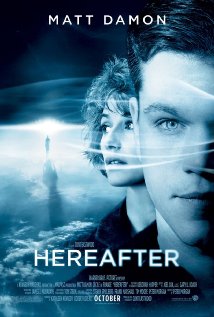
I recently watched the movie Hereafter, another film where Clint Eastwood shows his amazing creativity and ability to tell a story. It’s a film that lingers in your mind and keeps you thinking on many levels.

The official synopsis:

“A drama centered on three people who are haunted by mortality in different ways. George (Damon) is a blue-collar American who has a special connection to the afterlife. On the other side of the world, Marie (de France), a French journalist, has a near-death experience that shakes her reality. And when Marcus (Frankie/George McLaren), a London schoolboy, loses the person closest to him, he desperately needs answers. Each on a path in search of the truth, their lives will intersect, forever changed by what they believe might-or must-exist in the hereafter.”

It’s actually three stories that come together at the very end of the film. Eastwood and writer Peter Morgan (The Last King of Scotland. Frost/Nixon) were brilliant in the way they introduced us to the characters in one of the stories within the movie. We see two adolescent twin boys in a photo studio having their portrait taken.  The photographer is chatting them up, trying to get expressions out of them. We know within the first minute of dialog how vastly different the two boys are, even though they appear to be identical. A simple yet powerful way to set up the story for that particular part of the film.

The cinematography was extraordinary and a reason in itself to see the movie. In the beginning of the movie is some of the most vivid underwater cinematography I have ever seen as the camera captures the ravages of a tsunami.  The footage was vivid and real, yet poetic and surreal at the same time. It was also incredibly intimate. In fact throughout the entire movie I felt like I was inside the film or a part of it because of the intimacy of the cinematography.  I’d like to watch the film again and just try to look at it with my eye on the craft of cinematography.

As far as the story structure, it’s not easy to make a film that is made up of separate stories, yet connected in an organic way. Connected in a way that makes sense to the viewer and doesn’t feel forced. One great example of a film that does this well is Love Actually. Eastwood also pulls it off in Hereafter. He  is a master storyteller and he seamlessly brings us back and forth between the three stories leaving us wondering how at times how they are connected to one another yet not being distracted by it.

I’ve been reading a lot about storytelling and story structure lately and I can appreciate when I see it done well in a film or a book or even at a party.  I think sometimes we take the art of storytelling for granted because when it’s done well it goes unnoticed.  Go see Hereafter.  Clint Eastwood continues to amaze.

Add to FacebookAdd to DiggAdd to Del.icio.usAdd to StumbleuponAdd to RedditAdd to BlinklistAdd to TwitterAdd to TechnoratiAdd to Yahoo BuzzAdd to Newsvine

Believing in the Impossible

It’s such a big leap isn’t it?  To really believe that anything is possible. For me it’s far easier to believe that anything I put my mind to is possible than to think that everything is hopeless. It’s a simple mindset and a way of life.

Think about it for a minute.  When you are convinced that you have the ability to make the impossible – possible – then you will put your dreams into action.  You will take that chance and by doing so you are creating your own reality instead of reacting to what others have created for you which may not be in your best interests.

I’ve never been a big fan of hearing “you can’t do that” or “it won’t work”.  Those are fighting words to me because no one can predict the future – so I find comments like that offensive to my very being. I’ve come up with my own theories about why there are so many naysayers in the world.  One theory is that misery loves company and because there are some people who stop themselves – they seem to take comfort in deterring others from their dreams.

Stay away from the naysayers and remind yourself that they don’t know the future – nobody does.  Hang around people who are crazy enough to brazenly go forward and pursue those thoughts and dreams that live deep inside themselves because they are listening to their inner spirit.

They say the spirit inside never ages.  I believe that and I know when I feel aligned with my spirit because I feel child like – filled with wonder, curiosity and belief in myself and my dreams. When I tell people about my wild notions, they get caught up in my passions and spur me on.  These days with social media we have the power to turn one person’s simple idea into a collective thought – into a possibility.  Imagine the power in that thought. That’s the power of the individual to create change and change starts with that one crazy thought that someone had who listened to their spirit inside.

Let’s hear some of your own crazy notions.  Who knows it just may spark something in someone and change their life.

Add to FacebookAdd to DiggAdd to Del.icio.usAdd to StumbleuponAdd to RedditAdd to BlinklistAdd to TwitterAdd to TechnoratiAdd to Yahoo BuzzAdd to Newsvine

I Must Have Been Crazy to Think I Could Do It

….But I did.  Last night I shipped 3 hard drives with almost 5 terabytes of media to my editor. After 2 very long months of extremely long days – every day – I got through the “first edit” of my documentaryIt’s by no means finished, there’s a lot more editing needed to cut it down by half, there’s music to be composed and a narrative that has to be written, but I take great joy in the fact that I got through this part of the process – because it damn near killed me.

When shooting a documentary, you don’t work with a script or a storyboard – or at least I don’t.  I have a pretty solid idea of the “story” when I set out to shoot, but there’s always twists and turns with every situation and every interview.  But I love surprises and I make room for serendipity to happen.  What results is a lot of content that needs to be crafted and arced into a story.  And I’ve just finished defining that story and laying the foundation.

It hasn’t been easy.  In fact there have been times when I’ve wanted to walk away from this because it was so overwhelming.  Trying to tie 11 different stories into one, and looking through 150 hours of footage multiple times can be overwhelming for a team of editors, let alone one individual. I’ve also had my share of low moments these past few months with a grant application rejected and a broken promise by a friend, but somehow I got through it.  I got through it because I had desire.

Having a strong desire for whatever it is one wants to achieve is essential.  Many times we say we really want something, but that is far different than having a true desire to make something happen. In order to stick to something (anything) and follow through with it – no matter what – that desire must be strong and come from within.  It’s something that can’t be copied, taught or faked – you either have it or you don’t. It comes when you are true to yourself.

It’s hard to stay true to yourself.  Many times, well meaning friends or spouses try to distract you from your purpose.  I see this happen a lot when a significant other, who may not understand that in the creative world, the line between work and pleasure is quite blurred and sometimes may feel somewhat resentful of all the time their partner spends on “work”.  I’m lucky in that my husband is also my business partner and has a full understanding of those blurred lines between work and pleasure.  He also knows that when I have such a strong desire to do something, that he shouldn’t get in the way of me following that desire.  That is truly selfless and well meaning.

Since beginning this lofty project, I’ve gotten a lot of calls from people who are in a slump for one reason or another.  They look to me for some kind of guidance.  I don’t really know what to say, other than to tell them to listen to their true self – the one underneath the clutter of the ego – and to trust what it tells you. If I get one of those calls during one of those low moments in my life, I try really hard to stay positive even though I feel like a big fake, because I’ve temporarily succumbed to my own self doubts.  At those times, I try to be utterly honest, relaying the bitter with the sweet and say that bad times don’t last forever. But you have to let your spirit shine.

I wrote a blog once about the human spirit. I feel that the spirit inside me is ageless.  I know when people come up to me and say “you look good” – what they really see is my spirit – which never gets old because I keep it alive. When I’m true to myself, my spirit soars and I look back at my defeats and rejections with a different understanding and acceptance.

So today, with my spirit in tact and my desire ever so strong, I rejoice in the fact that I accomplished something – something that’s really meaningful.  That brings a big smile to my face and great joy in my heart.  What a feeling – it’s priceless.

Add to FacebookAdd to DiggAdd to Del.icio.usAdd to StumbleuponAdd to RedditAdd to BlinklistAdd to TwitterAdd to TechnoratiAdd to Yahoo BuzzAdd to Newsvine

Monday Morning Quarterbacking

Ok, I’m just going to come right out and say it.  I was one of the few people in America who did NOT watch the Super Bowl yesterday.  Before you try to enlighten me as to the merits of the game and sentence me to watch NFL highlights, let me just say I don’t like football.  Just never got into the touchy feeliness of the sport. And besides, I’m still chained to my editing station – finally starting to see light at the end of the tunnel.

But this morning I couldn’t escape the pundits grading and scoring the Super Bowl commercials as I clicked through the morning programs looking for the “news”.  It was interesting to hear their “take” on what commercials were successful.  Most of the pundits made their assessments through the eyes of their “ad men” (and women) persona, debating which commercials caught the attention of the viewers.

One “expert” frequently commented, “now this one had people telling their friends – be quiet – I want to hear the commercial.  I’m not quite sure what Super Bowl party this person went to, but no doubt it was a party made up of other advertising folks. Now, I’ve had very limited experience attending Super Bowl parties, but as for the ones I have been to – nobody has ever said “be quiet – so I can hear the commercial”.  With that said, as I watched many of the spots this morning via YouTube, some of the most effective commercials required no listening at all. Check out this one for Bridgestone.

I guess the creatives who made this spot go to the same kind of parties as I do –  parties where people don’t ask someone to turn the volume up for the commercials.  Actually, I’ve learned a lot about editing by watching TV commercials with the sound off.  The “story” either becomes apparent – or not.

The New York Times did a pretty good critique of the ads this morning. But what I found most interesting was the running commentary from the “average Joes” via Twitter and Facebook.  No doubt some of these advertising experts were paying as much attention to the social media chatter this morning as Mumbarak’s men were. Hands down, the Chrysler “Detroit” spot won the most hearts – mine included. It drew me in from the start and kept me the entire two minutes.  Imagine that – a two minute commercial! When was the last time you saw that?  A beautiful mini-film told in credible brevity. Quite frankly, to me it would have been just as effective without Eminem or any celebrity for that matter. It evoked emotion – that’s what kept me watching.

At the end of the day, the commercials that resonated most with just about everyone – pundit and laymen alike were the ones that told a simple story that rang true with the human spirit.  Works every time.  To tell those stories, one needs to get out of the meeting rooms and late nights at the office and spend more time living life. Otherwise, what you end up with is a bunch of people creating commercials about what they think life is like.

Add to FacebookAdd to DiggAdd to Del.icio.usAdd to StumbleuponAdd to RedditAdd to BlinklistAdd to TwitterAdd to TechnoratiAdd to Yahoo BuzzAdd to Newsvine

Telling the Story with the DSLR

The sub-title should read…”or with any camera for that matter”.  For those of you not new to this blog, you know that my mantra is “it’s not about the tool”.  And my other mantra is “embrace collaboration”.

But back to the thought behind this blog entry and that is “telling the story”.  I recently read a great book that a dear friend had given me about screenwriting called “Save the Cat” by Blake Snyder. Snyder’s book is geared more toward writing a fictional screenplay, as opposed to writing a narrative for a documentary, but I thought it would be helpful for me as far as learning more about the dynamics of story telling – and indeed it was.

Snyder talks about the different genres that most movies fall into.  The category that my documentary came closest to if I was writing a fictional piece was what he referred to as The Golden Fleece. Blake writes:

“The name comes from the myth of Jason and the Argonauts and yet it’s always about the same thing: A hero goes “on the road” in search of one thing and winds up discovering something else – himself.”

“Like the twists of any story, the milestones of The Golden Fleece are the people and incidents that our hero or heroes encounter along the way.  The theme of every Golden Fleece movie is internal growth, how the incidents affect the hero is, in fact, the plot.

“It’s not the mileage we’re racking up that makes a good Golden Fleece, it’s the way the hero changes as he goes”.

Wow, I thought as Snyder’s words resonated with me and how I “saw” the documentary that I was in the midst of editing.  In my case, I had many heroes who in setting out to make a positive difference in the world had also experienced intense and rewarding personal growth.  I too had changed and grown, along with my daughter who journeyed with me to tell our subjects’ stories.

As I read more of Snyder’s book, my vision of our film became much clearer in my head.  This week, I had a meeting with the editor who will be collaborating with me on this film.  I’m thankful that I was able to have a face to face meeting with him where we could both get a better feel for each other and more importantly  – the story.  We had a wonderful conversation about the story that I wanted to tell – the heroes – the conflicts – all those things that are part of a good story.  I knew we were on the same page when he said: “It’s not about the trip – it’s about the journey”.

Or as Snyder writes:
“It’s not the incidents encountered.  It’s what the hero(es) learn about himself from the incidents that make the story work.”

We’ll see if I can do my heroes justice in telling their stories, but I’m not alone in this task.  I’ll be collaborating with an editor who not only has an understanding of “the story” but the skills and ability to make it come to life. What joy.

Add to FacebookAdd to DiggAdd to Del.icio.usAdd to StumbleuponAdd to RedditAdd to BlinklistAdd to TwitterAdd to TechnoratiAdd to Yahoo BuzzAdd to Newsvine

“Here’s an Idea – Have a Point”

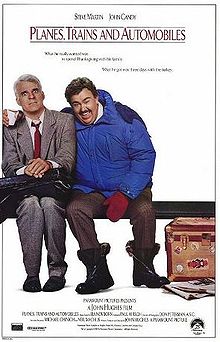
One of my favorite holiday movies is “Planes, Trains and Automobiles” with Steve Martin and John Candy. There’s a great scene in the movie where Steve Martin loses it and starts a rant directed toward Candy’s character, Del Griffith. Del, is a “nice guy” who talks incessantly. Martin’s character, Neal Page, an uptight ad man, frustrated by the day’s travel mishaps, finally explodes at his travel companion Del after one too many stories and says – “here’s an idea – when you tell a story, have a point!”

Am I the only one who has been oversaturated with multimedia and video pieces that are little more than pretty visuals to music? Don’t get me wrong, there are plenty of pieces that I do like, but there are far too many where I get bored and bail mid-way through because there is no point – there is no story.

Worse yet, the audio or music track many times feels like it has no connection to the visuals. It may be a great piece of music and provide pacing for the video, but it doesn’t complement the story. And there are times that the music is the most interesting part about the piece – if you take it away, what do you have? Most likely a pagination of moving and/or still images – like pages in a magazine or prints on a gallery wall. Independent and isolated vignettes with a music track – but no story- just eye candy.

What holds my interest is a story, where all the elements of audio, music, video clips, stills, text and narrative are parts of the whole and each one is integral in telling the story. I don’t think I’m alone in being interested in the story. Humans have enjoyed “the story” since the beginning of time. It doesn’t matter if it’s told verbally in a one on one conversation, in a multimedia piece, or in a major motion picture – a good story is a key ingredient for human interest. We all love a good story.
Personally, there is so much out there to watch these days on any given site that hosts videos, if I’m going to invest time in viewing something – I want it to have a point. If it doesn’t when I get to the end – I feel somehow let down.

I’m sure some of you will disagree with me on these thoughts and many of you may get loads of satisfaction from watching pretty visuals laid down to music and that’s OK. I’ve just had my fill of pretty content splashed before me, becoming a blurred palette in my head.

So, here’s an idea – have a point.

Add to FacebookAdd to DiggAdd to Del.icio.usAdd to StumbleuponAdd to RedditAdd to BlinklistAdd to TwitterAdd to TechnoratiAdd to Yahoo BuzzAdd to Newsvine