Storytelling – Words or Pictures?

I have always been a visual communicator.  For over 35 years I have been making a living taking photographs for magazines all over the world.  I have always “seen” the world and captured its stories through visuals.  Somehow, it was far easier for me to communicate with images than with words.  Sidewalk performer King Biscuit Festival Helena, ArkansasBut it was also a bit frustrating for me because many times when I was photographing a person, I felt like I was leaving a portion of their story untold.
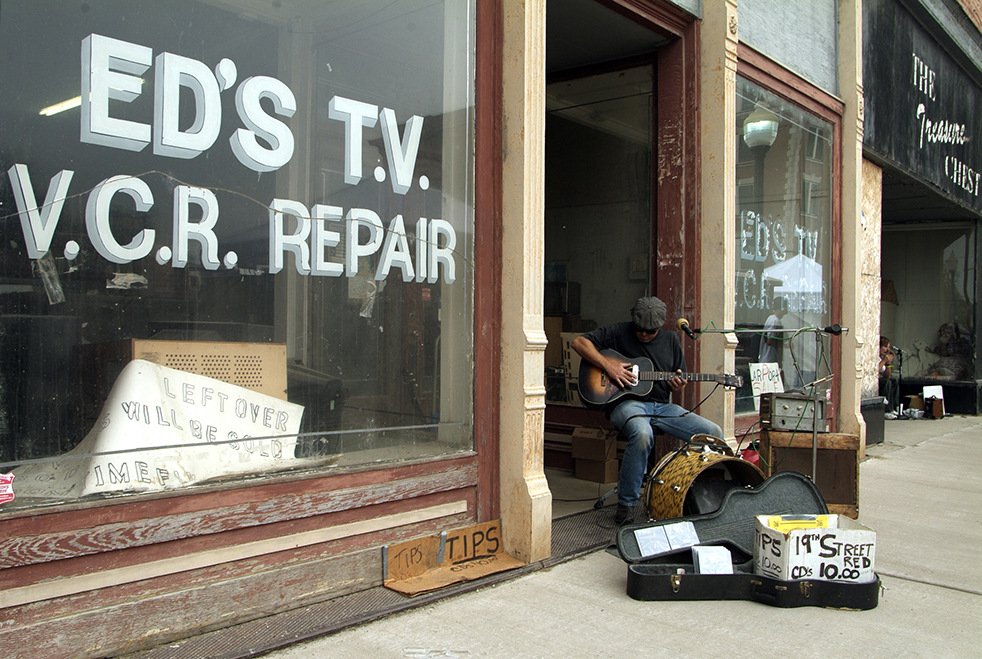
When I photograph people, invariably I spend a good deal of time talking and listening to them.  It’s this rapport that usually enables me to capture a more intimate photograph. For me, this has always been my favorite part of the “process”, yet I never had an outlet for my subjects’ words, other than through the captions of my photographs.

When I started producing documentaries, my conversations with my subjects finally had an outlet through their recorded interviews that became the backbone of the “script”.  Even though the script was not something that I wrote using my own words, I was instrumental in the process because I was selecting the words and giving them an order.  I was involved in the process and structure of screenwriting.

In recent years, I have become fascinated with story structure and screenwriting.  I have read numerous books on the topic of screenwriting and this past weekend I decided to immerse myself in an intensive 3-day workshop with John Truby.  John has taught some of the best screenwriters around.  I knew going into this, it was going to be a great and informative workshop, but I had no idea how rewarding it would be.  Essentially, John gave me knowledge of the “process” and the structure of storytelling to enable me to take an idea and turn it into a really good story.

I have come away from this workshop with a deeper understanding and respect for a well-written story.   We can all spot poor writing in a film.  It stands out.  Even the layman who knows nothing about “the process” or story structure can identify really bad writing.  The audience may not know why the story or the film doesn’t work – they just know it doesn’t and they’re not buying it.  Like any other craft, screenwriting has gone through stylistic changes over the years, but the fundamentals remain.  After all, telling stories is as old as time and there has always been a constant – and that is “the audience”.  Ultimately the audience will decide if a writer has done their job well.

I think those of us who are “content creators” in this era of multi-media communications need to broaden our understanding of all kinds of mediums in order to effectively communicate.  Many times, I see creatives become too narrowly focused on their one set of tools and in the process lose sight of their end goal  – and that is to deliver the message or story to the audience.  Ultimately, the audience will always let you know if you’ve hit the mark or not because they are looking at the “whole” and not the “parts” of the story.
10 Ways Photographers are Their Own Worst Enemies

  1. They talk themselves out of things.  – Telling themselves that it wouldn’t matter if they learned new skills or shot new images or whatever they didn’t want to make the effort to do.
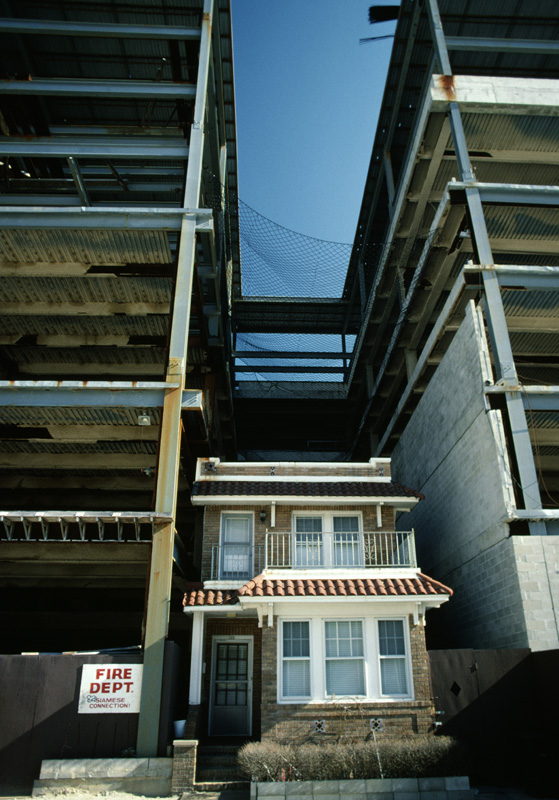
  2. They try to “educate” their clients (sometimes a bit too much) instead of collaborating and possibly learning from them.  A lot of “older” photographers are like this when they are working with younger art buyers or directors. I think the energy needs to work both ways.House surrounded by construction site, Atlantic City, NJ
  3. They give themselves an A for effort for starting something but too many times their starts lead to nowhere if they don’t have an end goal in mind.
  4. They don’t open themselves up to networking with others by attending industry meetings or events.
  5. They treat their clients like their enemies where one needs to win instead working toward a positive outcome for both.
  6. They make the mistake of creating for an audience, instead of creating for them selves.  (Thanks to Seth Godin for that thought)
  7. They take workshops or pay for a service and then don’t utilize them. I’ve been guilty of this too many times.
  8. They don’t shoot for the pleasure of it.
  9. They rely too much on commissioned work instead of taking advantage of new opportunities and ways in which to market and sell their own projects.
  10. They don’t stay true to themselves.

The Difference Between Photographers & Filmmakers

Red carpet of the Palais des Festivals et des ...
Red carpet of the Palais des Festivals et des Congrès during the 2001 Cannes Film Festival. (Photo credit: Wikipedia)

I am winding down after a couple of intense months, traveling the film festival circuit with my documentary Opening Our Eyes.  I have enjoyed every bit of it, but it wore me out – in a good way.

I find that when I am “out there”, I get richly rewarded in many ways.  I think what I enjoyed the most about the film festivals, and what was the most beneficial to me, was the opportunity to dialog with other filmmakers.  I learned a lot in the process. But what stood out to me was how different these conversations were from conversations that I have with my still photographer colleagues.

Many times the conversations I was having with other filmmakers were centered on a story.  That should come as no surprise because that’s what filmmakers do – they tell stories.  But filmmakers tell stories “cinematically”, so when they are talking about the story that they are currently working, or a story idea they want to pursue, they speak in great visual detail so I see a very clear picture in my head.

My conversations with my still photographer peers, in terms of craft, are more apt to be about how they created an image.  Photographers generally talk more about the role they played in making the photo, like how they lit it or the gear they used.  Sometimes, photographers will tell me a story about what they went through to make a photograph and those stories can be very interesting and entertaining, but again the conversation is more about the execution of the image – than the story of the image.

Lately I’ve been trying to figure out how and where I fit into the mix. The truth is, I remain in the middle – a true hybrid.  I realize that ever since I can remember, I have always seen stories playing out cinematically in my head, so I guess I have always had a filmmaker’s mind even though it lay dormant for most of my professional career.  On the other hand, as a still photographer and one who has been an observer of life through my camera I see things like light and composition.

So, I am a true hybrid and I can see my still photographic “eye” in the motion work I create. Others who have seen my film have remarked about the composition and lighting, because it does look different and stands out from other documentaries.  Sometimes that has been a good thing and sometimes not.  Regardless, it is what it is – a creation from a still photographer’s eye applied to motion.

Embrace the differences – see what happens.

Stressing the Story

Years ago, a colleague wrote an article about me for a trade magazine and entitled it “Gail Mooney – Past and Future Storyteller”.  Before that was written, I had never really thought of calling myself a storyteller, even though I had lived my entire life pursuing “the story”. In fact, it was because of my infatuation with people’s stories that I became a photographer and filmmaker. The pursuit of the story is what has driven me in making my own choices in life

But having a love for the story is far different than being able to tell a story. Regardless, if the story is told through still images, movies, songs, poems or books, the story must come through in order to resonate with an audience. I’ve been reading a lot about screenwriting lately, and how a story is written and structured for the movies.  Certain things must take place within the structure to make a story work.

  • Characters should be well defined and developed in the first third of the film.  The audience will need to get enough information about the characters in order to care, one way or another.
  • Stories should have conflict and contrast – just like life.  In every good film there is usually a low point right before a character prevails or a situation turns itself around.
  • Cinema has a language all of its own in how it tells and drives the story. The choice of lens or the way the camera is moved and from what angle, conveys to the audience a feeling. Make conscious choices and decisions as to what cinematic tools you use and why.
  • They say editing is the last line of defense for the story.  Every cut an editor makes has a profound effect on how the audience will feel.  An editor is able to tell a story in a hundred different ways, based on what clips they choose, how they cut them together and their selection of music.

I was very fortunate when I first started learning video.  I took the Platypus Workshop with PF Bentley and Dirck Halstead and they always stressed  “the story”.  I remember that I couldn’t even begin to shoot my project until I got my “commitment” (story) ok’d by Dirck or PF.  In order for them to commit to my story, I needed to commit to it first and they knew I wouldn’t be able to do that until I knew the story well enough to tell it.

Knowing and communicating your story in any medium simply means always being present in what your doing.  When the choices and decisions become obvious and effortless, then you know that you are telling the story you meant to tel

Mistakes Professional Still Photographers Make When “Moving” to Video

1.  They forget about the story – it’s not your camera that tells the story – it’s the person using the camera. Pretty visuals, slapped into a motion timeline with music, doesn’t necessarily tell a story.  Video is a story telling medium – don’t forget that.

2.  They think they already know how to shoot – if you think because you are a professional photographer and all you need to do is get a camera with a “video mode” on it, you are mistaken. Shooting in motion is far different than shooting still images. An experienced motion shooter can spot a video shot by a still photographer with little know how, right away.

3.  Thinking audio isn’t important – audio is more important than the visual when producing video.  Hire a sound person to do it right, but don’t discount it.

4.  Thinking the DSLR camera is all you need for video productions – this is a biggie.  How are you going to go after professional video jobs if this is the only tool in your kit?  Sure you can rent a RED – but make sure you are as proficient with this tool as your competition is before hanging out your “motion” shingle.

5.  Positioning themselves just as DP’s or Directors and thinking you’ll maintain ownership of your work. If you assume the role of a camera operator, DP or even a director – you will be in a work for hire position in most markets.  Position yourself as a producer – shoot if you want to – and direct – but realize that you’ll be just one rung on the “content ladder”.

6.  They don’t learn interview skills – this is what separates the pros from the still shooters who have DSLR cameras and think that’s all they need.  I’d say about  70% of my work includes on camera interviews.  Even though I ask the questions- I’m not on camera, my subject is.   I not only need to know how to ask the right questions and get great audio, but I need to produce a usable interview clip for an editor. That means knowing how to get great soundbites. This is one area I excel in – it’s all about rapport with your subject.

7.  They try to compete in “old business model” markets – Everyone wants to shoot broadcast spots and feature films (or short films) so they think that after shooting motion for only a few months – or even a year – they will be able to compete in the high end business of video production.  First, this market, like the still photography market,  has changed drastically, mostly marginalized by still photographers who are just starting to shoot motion,  shooting jobs for next to nothing because they have no understanding of this “business”.

8.  Learning the “how to’s” in terms of gear – but nothing about the business – this is also a biggie.  There are so many “how to shoot motion” workshops and roadshows out there but no one seems to be teaching the business end of things.  Still photographers think they already know “the business” but quickly realize that they don’t, and they put themselves out of business in this medium – before they’ve barely started.

9.  Teaching “how to” workshops in video with little or no experience – I can’t tell you how many photographers have called me for technical advice about some pretty basic stuff in terms of video,  and four months later they are teaching workshops. Please don’t become part of the problem and send more shooters out into this field without teaching them something about business. And if you are considering taking a workshop – do your homework and take the workshop from someone who is accomplished in this field and has done something.

10. They forget about the story – I know that’s #1 but it needs reinforcing.

ASMP and Motion

I’m on the National Board of Directors of the ASMP, The American Society of Media Photographers.  About four years ago, I was asked if I had ever thought about running for the board.  The person who had asked me this question, knew that I had been shooting video in addition to still photography and thought that it might be a good idea to have someone on the board who had an understanding of this medium.  That was four years ago, and even though I had been shooting video for over 10 years – the “explosion” of this medium (in terms of the demand) had really just started.

I did run, served three years, ran again and got elected. I’ve shared my knowledge of this medium through meetings, seminars, blogs, emails and during Q&A’s when I screen my film.

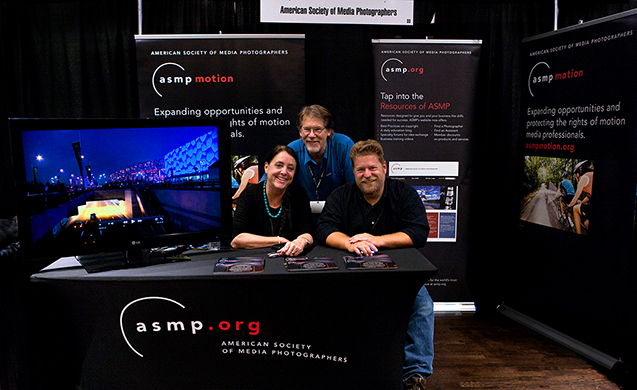
Gail Mooney, Tom Kelly and Chris Hollo at ASMP booth, DV East

This past Wednesday, I spent my day manning the ASMP booth at DV East Expo. Former national board member (and now President of the ASMP Tennessee Chapter) Chris Hollo and my partner Tom Kelly joined me.  We were well prepared with a large flat screen monitor displaying a loop of our members work. I was intimate with the reel as I had just finished editing it and I was very impressed with the quality of the work.  It certainly was an attention grabber.

So, what was ASMP, a trade organization of still photographers, doing at a video expo? Essentially, we were there to provide a community and reach out to other professionals who are shooting both mediums and provide information about sound business practices.  If this demographic does not understand the value of copyright or value the concept of licensing, then it will ultimately affect the way business is done in the still photography industry.

Some people may think that ASMP is becoming too inclusive or is creating more of a problem by suggesting that video may be the answer for its members, only for them to find out, that industry is glutted as well.  The old business models of bloated production companies with fat budgets are hanging on for dear life, along with the old business models of the film industry.  But if you think outside the box, especially in terms of how you structure your photography business – the opportunities are out there.

ASMP doesn’t cease to be an advocate for its still photographers who have no interest in motion – it’s actually making the entire industry healthier by educating the hybrid competition.  A lot of the people I talked to yesterday, shot both still photography and video, but even the ones who just shot video – called themselves “photographers” and they all had questions about “the business”.

I’m so closely associated with  “video” by members of this society; they tend to forget that I am a photographer.  I don’t call myself a photographer simply because I spend 50% of my time shooting still images, or call myself a videographer because I spend the other 50% of my time producing video. I don’t want to define myself by my tools, at all. I “see” as a photographer, with the vision of a filmmaker and the heart of a storyteller.  I also have a strong desire to stay in business doing what I love to do.  By being an advocate for sound business practices across these mediums, I get a lot more back than I give.  All photographers’ benefit, regardless of what type of cameras they shoot with.

Friend and fellow board member Ed McDonald, tells his own story about how he had become too rigid at one point in his career, as far as how he perceived himself and what kind of photographer he was. He found that when he became more flexible in how he “defined” himself, his business got better. As I think about Ed’s story, I know we have a lot in common.  For me, when I stopped restricting myself to just shooting still images – not only my business got better – so did my still photography. Shooting motion has made me a better still photographer because it has made me a better storyteller.

I got an email late last night from someone I ran into at the expo.  They wrote:

“Thanks for your vision and inspiration and all you’ve done for ASMP.”  So simple and so poignant and I thought – “isn’t that what I was supposed to do?”

How a Passion Begins

There are a million things I should be doing right now. My husband and I just returned from a 6 day road trip to Chicago to see our daughter, Erin and all the “stuff” of life piled up while we were away. I should be out in the yard picking up dozens of littered branches that had come down in a storm that happened while we were gone – and yet I’m compelled to write.

Writing became a habit a few years ago, when I would wake up early in the mornings with my mind fully active and spinning with ideas.  Instead of tossing and turning in bed, I would get up, go to the computer and write – like this morning. I was encouraged by a friend to share some of those writings through blogging, so I did. I know that I break every blogging rule, because I write what happens to be on my mind, instead of being consistent to a theme and I generally don’t provide a lot of links, but somehow readers like these ramblings. Regardless, writing is something that is part of me now.

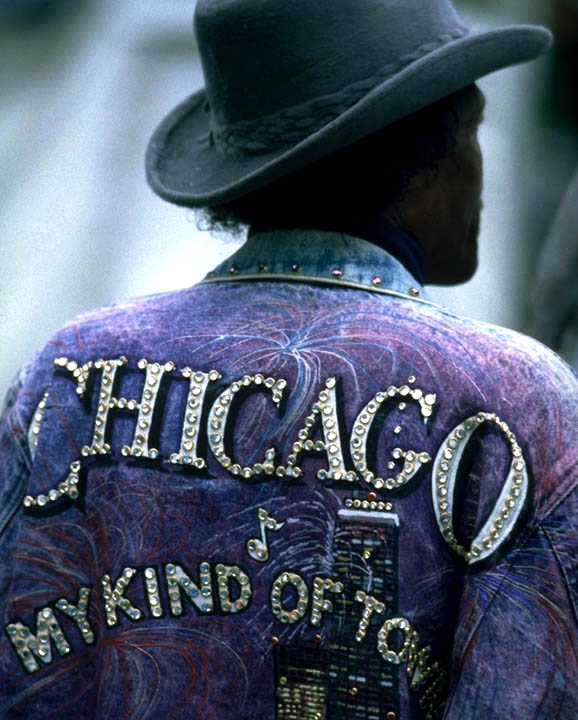
This past weekend we happened to be in Chicago while the Chicago Blues Festival was going on, so of course we had to devote a day to it.  It was a bittersweet experience as so many blues legends had passed away this year and it wasn’t the same without them – Pinetop Perkins, Willy “Big Eyes” Smith and Hubert Sumlin to name a few. But being at this festival brought me back to the first time I attended the Chicago Blues Festival

Junior Wells

in 1993 when I was in Chicago shooting a story on the city for the National Geographic Traveler Magazine. My plan was to cover the festival for one day as part of the story – I ended up going all three days and that’s when my passion for the blues began.

I hadn’t even thought of shooting video back then, but 2 years later my partner Tom and I began shooting 35mm motion footage for stock – and that’s when my passion for motion began.  Funny, within a two year period, two passions surfaced in my life and collided into the making my first short documentary The Delta Bluesmen, six years later.

As I listened to the music last Saturday in Grant Park, my mind wandered in a million directions, but once again I thought about how the universe works – that is if you don’t fight it.  The times in my life when I have just followed my instincts, have been the most gratifying times of all.  Most of the time, I was simply listening to a higher voice inside, instead of following the dogma of the day. It hasn’t always worked out and I’ve had my share of rejections, but that all goes into the messy mix of life.

I try to not linger on the negativity that comes with “rejection” and focus on the “rewards”.  There may not have been as many as I would have liked – but they would not have happened at all, without the lead up.  It all comes with the many years that go into the “overnight successes”.  Life’s too short to put road blocks in my own way or talk myself out of doing something with a hundred “great” reasons to rationalize it. And so – I’ll take the bitter with the sweet any day.

Pioneering in Video

I’ve been in China for the past two weeks, teaching video journalism to some of the best photojournalists in China.  Last night at dinner, the top director of the program told me (via my interpreter) that Xinhua, China’s biggest news agency, was setting up their multimedia department to stay current with how news is communicated in this day and age.  She thanked me for teaching and inspiring her journalists in this medium and said that I was an honorable “pioneer”.

I never set out to be a pioneer when I first started shooting video and motion in the mid ‘90’s – I merely recognized that when the “tools” of this medium became affordable, it was now possible for me to tell my stories in another dynamic way.  But I never turned my back on still photography and I would say that it still makes up about 50% of my business – at least in the time that I devote to it.  I would also say that while I spend 50% of my time split between both mediums – I make more than 75% of my income from shooting motion – capitalizing on not just making income from shooting video but also on the other elements like editing.

I started thinking about the aspect of being a pioneer and the more I thought about it, the more I realized that I wasn’t trying to set new ground at all – I was really just challenging myself and more importantly staying true to why I became a photographer and that was to communicate.

I’ve given a lot of workshops to still photographers who want to move into video.  Generally there are two types of photographers – the ones who think that because they have been “shooting” for many years, they “just” need to understand a new mode on their cameras and the ones who embrace the fact that this is an entirely different medium and they understand that they are novices, and are eager to learn how to communicate in a different way.  It’s usually the cocky photographers that fail miserably and end up with a string of unconnected “moments in time” to a music track.

Ever since the first DSLR that incorporated a video mode hit the scene, I’ve seen more and more still shooters, move into motion.  After only a couple of months, I even see some of them teaching workshops.  It amazes me, because many times some of these same shooters have been hypercritical of “amateurs” coming into their profession with their auto everything “point and shoot” cameras.  I’ve had some shooters tell me that they aren’t going into motion, because they think that when these tools  become easier to use and more automated – the same thing that has happened to the profession of still photography will happen in video.  I disagree with this notion but more importantly I think that this attitude is usually a mechanism people use to talk themselves out of challenging themselves and are reluctant to “change. ” Just like when still photography moved from film to digital – the ones who got left behind were usually the ones who tried to convince themselves that digital would never be as good as film.

I cannot take credit for being a pioneer in video.  There are many who came before me that were true pioneers and I feel that would discredit them and their efforts.  I’m simply a storyteller and I’m happy that I’m still passionate enough about telling the story that I continue to find the best way to tell the stories that I am meant to tell.

Thanks to the gracious people in China and the Xinhua News Agency for recognizing and embracing the future and being keen to learn.  Perhaps many of these students will not shoot multimedia – but learning how to shoot in motion has made me a better still photographer and will make them better shooters as well.

Teaching Video Journalism in China

Chinese flag, Beijing, China.
Chinese flag, Beijing, China. (Photo credit: Wikipedia)

I’m sitting in the Continental (United) airport lounge at EWR, waiting to board a flight for Beijing.  I’m headed to China for 4 weeks to teach Chinese journalists, video journalism.  My mind is spinning with ideas, questions and the usual array of “what ifs” as I take on another adventure.

About two years ago, I started saying “yes” to opportunities that presented themselves to me – or at the very least, I began to consider opportunities, rather than to talk myself out of things, right off the bat.  Because, of that mind set, I’ve been going where life seems to take me and it has presented quite a few interesting adventures.  It’s not that I’m foolhardy and doing things on a whim – it’s that I have been listening to myself – my inner voice – and it has been my guiding force.

I’m told that the Chinese are hungry for “western” knowledge.  But what I have to teach them is something universal, and that is – how to tell a story – using the medium of video.  Seems so basic and simple – how to tell a story – and I suppose it is, but like anything else, it’s simple if you understand it.  The key to understanding something is to have the desire to learn.  Some people say they want to learn – but that’s different than really having the desire to learn.

Some folks feel threatened by this seemingly insatiable desire of the Chinese to learn all things western.  I’m also finding that when people feel threatened by something – they try to “stop” whatever it is they are feeling threatened by.  It’s one of those stupid human tricks that folks have played since the beginning of mankind.  I process this behavior pattern as unproductive and unsustainable. It rarely works as far as eliminating a perceived threat.  You simply can’t totally eliminate desire.

Rather than stop others from growth – a better way is to better yourself.  I’d rather put my energies into where I want to go in my life – than in trying to squash other people’s hopes and dreams.  I’ve also found that what goes around – comes around.  When you “give” and “help” others – you ultimately create a better world – or “space” for everyone.

So, as my mind races this morning with my hopes, my expectations and enthusiasm – I try to keep the nagging doubts and fear at bay.  I tell myself that it’s natural to have concerns.  But I also tell myself that I can either let my concerns consume me and turn into fear or I can welcome the “unknown” and embrace the opportunity at hand.  I’ll let my inner voice guide me because it seems to be doing a good job.

Add to FacebookAdd to DiggAdd to Del.icio.usAdd to StumbleuponAdd to RedditAdd to BlinklistAdd to TwitterAdd to TechnoratiAdd to Yahoo BuzzAdd to Newsvine

The Love and Angst of Learning

I don’t think there has ever been a point in my life when there wasn’t something that I didn’t want to learn about.  I’m just a very curious person who has an insatiable desire to learn. I’ve been learning about filmmaking over the last two years and I am addicted to learn more.  I am realizing that I have always thought in a cinematic way.  As a photographer, I saw my stories as films – a pagination of images – combining to form the story in my mind’s eye. I am so intrigued right now with the craft and structure of screen writing, and want to learn more.  I have a story in my head that I want to “get out” and I see the visual elements playing out in my head.  Now, I’m starting to “hear” the story and the words and I want to learn how to craft those elements into the beginning of a screenplay.

Last Christmas, I got the Rosetta Stone course for Spanish.  When I was traveling with Erin in South America, she became my translator and I was really frustrated that I couldn’t understand the language, so I vowed to learn Spanish.  I’ve been trying to squeeze in the time to learn electronically, but it’s so hard for me.  Languages have always been difficult for me – even English.  Really the only way to learn a language is to immerse your self into it.  I try to tune into conversations when I hear Spanish being spoken and make feeble attempts to participate.  Slowly, I’m getting better but I doubt I will ever be able to roll my r’s.  I have found though that when I “relax” and imagine myself as someone who is fluent in the language, I do much better.  The same thing happened when I was in New Zealand last fall and I got on an ATV vehicle for the first time.  I just pictured myself as being one with the machine and I did just fine.

Lately, I’ve been teaching myself editing with Adobe Premiere.  With Final Cut Pro going to a completely different program, I wanted to expand and learn Premiere.  But, what really prompted me to learn is that I will be going to China for a month, to teach Chinese journalists how to “tell stories in motion”.  I knew I needed to learn an editing application that was cross-platformed and Adobe Premiere was the obvious choice.  Learning Premiere has been easy, especially with Lynda.com. I am such a big fan of Lynda.com. Of course, knowing how to edit helps.  Essentially it’s not much different than Final Cut.  Things are named differently, but the basics are the same.  There are also a lot of things that I love, especially the easier integration with other Adobe products like After Effects, Photoshop and Bridge.  Now the Adobe Suite has a screenwriting application, Story. Could that be the nudge needed to follow through on the screenplay that’s beginning to play out in my head?

So, my learning path continues. But I’m also playing my part by passing along what I know.  Things have a way of coming full circle.

Add to FacebookAdd to DiggAdd to Del.icio.usAdd to StumbleuponAdd to RedditAdd to BlinklistAdd to TwitterAdd to TechnoratiAdd to Yahoo BuzzAdd to Newsvine