The Difference Between Photographers & Filmmakers

Red carpet of the Palais des Festivals et des ...
Red carpet of the Palais des Festivals et des Congrès during the 2001 Cannes Film Festival. (Photo credit: Wikipedia)

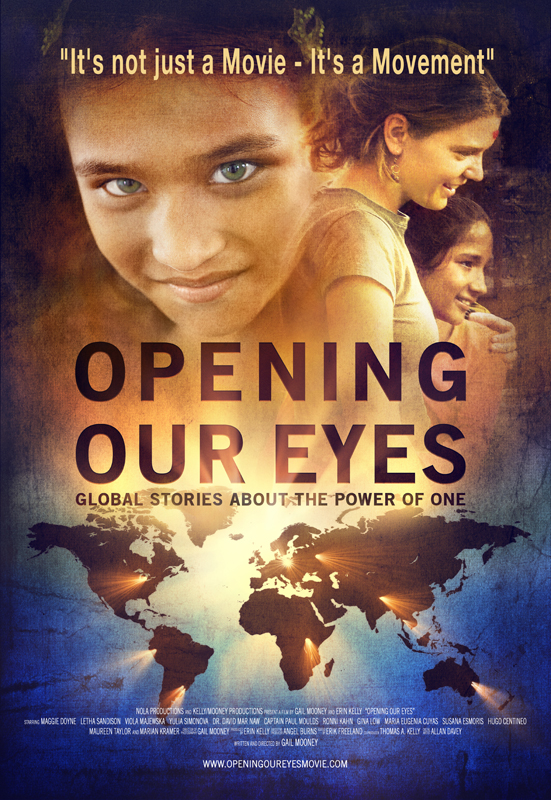
I am winding down after a couple of intense months, traveling the film festival circuit with my documentary Opening Our Eyes.  I have enjoyed every bit of it, but it wore me out – in a good way.

I find that when I am “out there”, I get richly rewarded in many ways.  I think what I enjoyed the most about the film festivals, and what was the most beneficial to me, was the opportunity to dialog with other filmmakers.  I learned a lot in the process. But what stood out to me was how different these conversations were from conversations that I have with my still photographer colleagues.

Many times the conversations I was having with other filmmakers were centered on a story.  That should come as no surprise because that’s what filmmakers do – they tell stories.  But filmmakers tell stories “cinematically”, so when they are talking about the story that they are currently working, or a story idea they want to pursue, they speak in great visual detail so I see a very clear picture in my head.

My conversations with my still photographer peers, in terms of craft, are more apt to be about how they created an image.  Photographers generally talk more about the role they played in making the photo, like how they lit it or the gear they used.  Sometimes, photographers will tell me a story about what they went through to make a photograph and those stories can be very interesting and entertaining, but again the conversation is more about the execution of the image – than the story of the image.

Lately I’ve been trying to figure out how and where I fit into the mix. The truth is, I remain in the middle – a true hybrid.  I realize that ever since I can remember, I have always seen stories playing out cinematically in my head, so I guess I have always had a filmmaker’s mind even though it lay dormant for most of my professional career.  On the other hand, as a still photographer and one who has been an observer of life through my camera I see things like light and composition.

So, I am a true hybrid and I can see my still photographic “eye” in the motion work I create. Others who have seen my film have remarked about the composition and lighting, because it does look different and stands out from other documentaries.  Sometimes that has been a good thing and sometimes not.  Regardless, it is what it is – a creation from a still photographer’s eye applied to motion.

Embrace the differences – see what happens.
Stressing the Story

Years ago, a colleague wrote an article about me for a trade magazine and entitled it “Gail Mooney – Past and Future Storyteller”.  Before that was written, I had never really thought of calling myself a storyteller, even though I had lived my entire life pursuing “the story”. In fact, it was because of my infatuation with people’s stories that I became a photographer and filmmaker. The pursuit of the story is what has driven me in making my own choices in life

But having a love for the story is far different than being able to tell a story. Regardless, if the story is told through still images, movies, songs, poems or books, the story must come through in order to resonate with an audience. I’ve been reading a lot about screenwriting lately, and how a story is written and structured for the movies.  Certain things must take place within the structure to make a story work.

  • Characters should be well defined and developed in the first third of the film.  The audience will need to get enough information about the characters in order to care, one way or another.
  • Stories should have conflict and contrast – just like life.  In every good film there is usually a low point right before a character prevails or a situation turns itself around.
  • Cinema has a language all of its own in how it tells and drives the story. The choice of lens or the way the camera is moved and from what angle, conveys to the audience a feeling. Make conscious choices and decisions as to what cinematic tools you use and why.
  • They say editing is the last line of defense for the story.  Every cut an editor makes has a profound effect on how the audience will feel.  An editor is able to tell a story in a hundred different ways, based on what clips they choose, how they cut them together and their selection of music.

I was very fortunate when I first started learning video.  I took the Platypus Workshop with PF Bentley and Dirck Halstead and they always stressed  “the story”.  I remember that I couldn’t even begin to shoot my project until I got my “commitment” (story) ok’d by Dirck or PF.  In order for them to commit to my story, I needed to commit to it first and they knew I wouldn’t be able to do that until I knew the story well enough to tell it.

Knowing and communicating your story in any medium simply means always being present in what your doing.  When the choices and decisions become obvious and effortless, then you know that you are telling the story you meant to tel

How a Passion Begins

There are a million things I should be doing right now. My husband and I just returned from a 6 day road trip to Chicago to see our daughter, Erin and all the “stuff” of life piled up while we were away. I should be out in the yard picking up dozens of littered branches that had come down in a storm that happened while we were gone – and yet I’m compelled to write.

Writing became a habit a few years ago, when I would wake up early in the mornings with my mind fully active and spinning with ideas.  Instead of tossing and turning in bed, I would get up, go to the computer and write – like this morning. I was encouraged by a friend to share some of those writings through blogging, so I did. I know that I break every blogging rule, because I write what happens to be on my mind, instead of being consistent to a theme and I generally don’t provide a lot of links, but somehow readers like these ramblings. Regardless, writing is something that is part of me now.

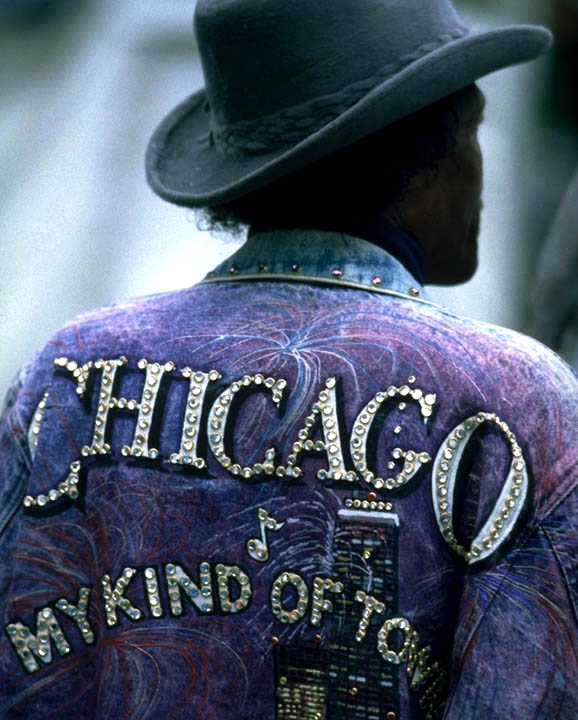
This past weekend we happened to be in Chicago while the Chicago Blues Festival was going on, so of course we had to devote a day to it.  It was a bittersweet experience as so many blues legends had passed away this year and it wasn’t the same without them – Pinetop Perkins, Willy “Big Eyes” Smith and Hubert Sumlin to name a few. But being at this festival brought me back to the first time I attended the Chicago Blues Festival

Junior Wells

in 1993 when I was in Chicago shooting a story on the city for the National Geographic Traveler Magazine. My plan was to cover the festival for one day as part of the story – I ended up going all three days and that’s when my passion for the blues began.

I hadn’t even thought of shooting video back then, but 2 years later my partner Tom and I began shooting 35mm motion footage for stock – and that’s when my passion for motion began.  Funny, within a two year period, two passions surfaced in my life and collided into the making my first short documentary The Delta Bluesmen, six years later.

As I listened to the music last Saturday in Grant Park, my mind wandered in a million directions, but once again I thought about how the universe works – that is if you don’t fight it.  The times in my life when I have just followed my instincts, have been the most gratifying times of all.  Most of the time, I was simply listening to a higher voice inside, instead of following the dogma of the day. It hasn’t always worked out and I’ve had my share of rejections, but that all goes into the messy mix of life.

I try to not linger on the negativity that comes with “rejection” and focus on the “rewards”.  There may not have been as many as I would have liked – but they would not have happened at all, without the lead up.  It all comes with the many years that go into the “overnight successes”.  Life’s too short to put road blocks in my own way or talk myself out of doing something with a hundred “great” reasons to rationalize it. And so – I’ll take the bitter with the sweet any day.

Teaching Video Journalism in China

Chinese flag, Beijing, China.
Chinese flag, Beijing, China. (Photo credit: Wikipedia)

I’m sitting in the Continental (United) airport lounge at EWR, waiting to board a flight for Beijing.  I’m headed to China for 4 weeks to teach Chinese journalists, video journalism.  My mind is spinning with ideas, questions and the usual array of “what ifs” as I take on another adventure.

About two years ago, I started saying “yes” to opportunities that presented themselves to me – or at the very least, I began to consider opportunities, rather than to talk myself out of things, right off the bat.  Because, of that mind set, I’ve been going where life seems to take me and it has presented quite a few interesting adventures.  It’s not that I’m foolhardy and doing things on a whim – it’s that I have been listening to myself – my inner voice – and it has been my guiding force.

I’m told that the Chinese are hungry for “western” knowledge.  But what I have to teach them is something universal, and that is – how to tell a story – using the medium of video.  Seems so basic and simple – how to tell a story – and I suppose it is, but like anything else, it’s simple if you understand it.  The key to understanding something is to have the desire to learn.  Some people say they want to learn – but that’s different than really having the desire to learn.

Some folks feel threatened by this seemingly insatiable desire of the Chinese to learn all things western.  I’m also finding that when people feel threatened by something – they try to “stop” whatever it is they are feeling threatened by.  It’s one of those stupid human tricks that folks have played since the beginning of mankind.  I process this behavior pattern as unproductive and unsustainable. It rarely works as far as eliminating a perceived threat.  You simply can’t totally eliminate desire.

Rather than stop others from growth – a better way is to better yourself.  I’d rather put my energies into where I want to go in my life – than in trying to squash other people’s hopes and dreams.  I’ve also found that what goes around – comes around.  When you “give” and “help” others – you ultimately create a better world – or “space” for everyone.

So, as my mind races this morning with my hopes, my expectations and enthusiasm – I try to keep the nagging doubts and fear at bay.  I tell myself that it’s natural to have concerns.  But I also tell myself that I can either let my concerns consume me and turn into fear or I can welcome the “unknown” and embrace the opportunity at hand.  I’ll let my inner voice guide me because it seems to be doing a good job.

Add to FacebookAdd to DiggAdd to Del.icio.usAdd to StumbleuponAdd to RedditAdd to BlinklistAdd to TwitterAdd to TechnoratiAdd to Yahoo BuzzAdd to Newsvine

The Love and Angst of Learning

I don’t think there has ever been a point in my life when there wasn’t something that I didn’t want to learn about.  I’m just a very curious person who has an insatiable desire to learn. I’ve been learning about filmmaking over the last two years and I am addicted to learn more.  I am realizing that I have always thought in a cinematic way.  As a photographer, I saw my stories as films – a pagination of images – combining to form the story in my mind’s eye. I am so intrigued right now with the craft and structure of screen writing, and want to learn more.  I have a story in my head that I want to “get out” and I see the visual elements playing out in my head.  Now, I’m starting to “hear” the story and the words and I want to learn how to craft those elements into the beginning of a screenplay.

Last Christmas, I got the Rosetta Stone course for Spanish.  When I was traveling with Erin in South America, she became my translator and I was really frustrated that I couldn’t understand the language, so I vowed to learn Spanish.  I’ve been trying to squeeze in the time to learn electronically, but it’s so hard for me.  Languages have always been difficult for me – even English.  Really the only way to learn a language is to immerse your self into it.  I try to tune into conversations when I hear Spanish being spoken and make feeble attempts to participate.  Slowly, I’m getting better but I doubt I will ever be able to roll my r’s.  I have found though that when I “relax” and imagine myself as someone who is fluent in the language, I do much better.  The same thing happened when I was in New Zealand last fall and I got on an ATV vehicle for the first time.  I just pictured myself as being one with the machine and I did just fine.

Lately, I’ve been teaching myself editing with Adobe Premiere.  With Final Cut Pro going to a completely different program, I wanted to expand and learn Premiere.  But, what really prompted me to learn is that I will be going to China for a month, to teach Chinese journalists how to “tell stories in motion”.  I knew I needed to learn an editing application that was cross-platformed and Adobe Premiere was the obvious choice.  Learning Premiere has been easy, especially with Lynda.com. I am such a big fan of Lynda.com. Of course, knowing how to edit helps.  Essentially it’s not much different than Final Cut.  Things are named differently, but the basics are the same.  There are also a lot of things that I love, especially the easier integration with other Adobe products like After Effects, Photoshop and Bridge.  Now the Adobe Suite has a screenwriting application, Story. Could that be the nudge needed to follow through on the screenplay that’s beginning to play out in my head?

So, my learning path continues. But I’m also playing my part by passing along what I know.  Things have a way of coming full circle.

Add to FacebookAdd to DiggAdd to Del.icio.usAdd to StumbleuponAdd to RedditAdd to BlinklistAdd to TwitterAdd to TechnoratiAdd to Yahoo BuzzAdd to Newsvine

Paying it Forward – It’s Amazing

I got the best email yesterday. It was from a young man who had attended a seminar I had given at Yale for ASMP on “Should I Be Thinking of Video”. I remember that evening well. I had recently returned from a 3-month journey circling the globe with my daughter creating a documentary on people making a positive difference in the world.
I was still very much in the same head-set that I had been for the past few months – one full of peace and belief in myself. I had just come off an intensive period where I was “walkin’ the walk” and I was practicing what I preached.

The young man, Brian, wrote, that he had attended my seminar with his father, who was a photographer and that he, himself had grown up wanting to make movies. So, my seminar was a perfect combination for them. Then Brian wrote “That night you inspired me.” My heart jumped when I read it. He went on to remind me of things that I had said that evening – about overcoming fears in order to realize your dreams – in my case traveling the world to make a movie. Leaving the known behind – for the unknown. Telling yourself “yes” instead of giving yourself reasons not to.

Brian said that he had recently landed his first job of his career as a structural engineer. He loved it, but he also had a great desire to travel. That night he went home and furiously “googled” anything about traveling the world and beyond. He came across the website of “Engineers Without Borders” and as serendipity would have it, they were having their monthly meeting that week.

To make a long, but interesting story, short, Brian went to that meeting that week, and talked with some people during a break who were organizing a trip to a village in India.

©Brian Skelcher

Then they invited him to go with them in February. He was astounded. And then he did the same thing many of us do in similar situations – he started giving himself every rational reason why he shouldn’t/couldn’t possibly do something like this. In Brian’s case – how could he ask his new boss for 3 weeks of time off?

That night when Brian heard me speak, was about a year and a half ago. In the email he sent to me yesterday, he talked about spending the last year editing his 15 hours of footage, down to a 40 minute piece. He told me that it hadn’t been easy and that he frequently read my blog posts where I had written about my similar experiences with post-production – magnified. What I had shared had helped him through it – angst and all.

My favorite line in his email read:

“So, I’m finally done with my movie, although there’s things I wish I had done differently, I did my best and I’m glad it’s finished! The final product is one thing, but the journey to get there is another, and the past 18 months have been such an amazing experience for me! I owe it all to you! Sorry for the long email but I’ve been waiting 18 months to tell you my story!!”

Brian just launched a Kickstarter campaign to send another engineer to Nepal for a similar project. You can find out more about it here: http://www.kickstarter.com/projects/videotaping/welcome-to-abheypur-the-movie

I think back on that evening and the year and a half in between. I’ve gone through two tough winters, doing the kind of work that needs to be done, but nevertheless takes its toll on my heart and my soul. That evening, my spirit was alive and well. Brian and others felt it and it moved them to a place they wanted to be. And now, after a tough winter, that same “energy” has come back around to me through Brian’s email. It has reminded me to stay the course and stay on purpose. Thanks Brian.

Add to FacebookAdd to DiggAdd to Del.icio.usAdd to StumbleuponAdd to RedditAdd to BlinklistAdd to TwitterAdd to TechnoratiAdd to Yahoo BuzzAdd to Newsvine

Why Did You Want to Become a Photographer?

That was one of the questions posed to me during an interview this past weekend. A young woman had asked to interview me for a college paper she was writing. The call and the questions started out somewhat clinical, most likely another task or paper that she needed to check off her list. She proceeded through the usual list of questions: “Did you go to photography school?” “What type of photography are you interested in?” So on and so forth.

I could hear her typing my answers and I paused to let her catch up. But then she asked a question that really struck me on many levels. “Did you get into photography because it was cheaper?” I asked her what she meant by that – did she mean the tools of the trade were cheaper? When she responded “yes”, I told her that was somewhat of a misnomer and that the first cameras I bought (mechanical ones) I had used for 10 years. I added that now, because of the exponential impact of technology on my profession, my cameras and the software I need on the post end, have to be upgraded at least every two or three years, and that was only part of the investment required in the “tools of the trade.”

As she typed my response, I felt myself getting a bit anxious and I started speaking rapidly. I told her that even if that were true – meaning that I got into the photographic profession because it was cheaper – that would have been the absolute worst reason for me or anyone else, to choose photography as a profession. I went on to say that you need to be passionate about some aspect of photography that makes you want to do it more than anything, if you want to have a chance of sustaining yourself financially in this profession. Pursue photography because it brings you joy and that if you are getting into it because the entry level costs were “cheaper” you’ll simply be competing with thousands or tens of thousands of button pushers.

I went on to tell her that I became a photographer as a means to an end. I had been studying architecture in college and after two years left school to travel. I traveled the world for a year and came back knowing that I wanted to pursue a lifestyle that would incorporate travel but more importantly fill my endless curiosity of people and cultures and exploration. I wanted to become a storyteller, and became a photographer as a means to that end.

As the interview progressed I noticed the typing started to diminish as I told her that I have never separated my business from my pleasure and that they have always been tied together throughout my life. Simply put – my business is my pleasure. I talked about my frustrations starting out as one of a handful of women in a man’s world and for the most part a man’s profession – at least in the early days. I talked about the endless stream of rejections and the “wins” that seemed to pop into my life when I needed them most, rescuing me in the knick of time, just when I was thinking of quitting and moving into another career. I told her that unless she really wanted to do photography, she wouldn’t survive in this profession. I talked about my mentors when I was her age and how grateful I am that I had those people in my life. I relayed a couple of anecdotes about things my mentors had said to me and how those words had been pivotal moments in my life and that when things got tough, I drew upon those words of wisdom to get me through the day.

Then there was a very loud audible sigh, followed by a long period of silence and my mind raced through the various things that I had said to her. Was I too harsh? Did I paint too bleak of picture? Or worse yet – did I make it sound too easy and that all she had to do was “just do it”. I felt this overwhelming sense of responsibility that maybe I said something that was going to dictate the rest of her life and I kind of panicked in that moment of silence. And then she said “thank you so much for talking to me today, I started out just wanting to write my paper, and I’m going to have a great paper, but you have no idea how much talking to you has helped me.” She went on to tell me that she had been struggling with a decision that she was trying to make between going to law school and going to film school. I told her that she needed to make that decision all by herself and that it wasn’t a decision that anyone else could make for her – not I – not her parents – not anyone else. I told her to dig down deep into herself for the answer, beyond the influence of others, the dogma of the day and all the noise. And most importantly to remember that it was her life and that she got to choose how to live it and that she had every right to change her mind along the way.

Quite honestly, it has been one of those “onion” months for me, with layers of setbacks and second-guessing myself. I got off the phone feeling good about paying forward what I have learned along my way and in that moment, I realized that this might be my “purpose” at this point in my life. The day had turned into one of those sweet “strawberry days”. She didn’t know it, but she had helped me as much as she said I had helped her. It’s those conversations and those little moments that keep me going, and come to my rescue, just in the knick of time.

I would love to hear from you all – why did you want to become a photographer?  Something you say or write just may help someone and paying it forward is the best feeling in the world.

Add to FacebookAdd to DiggAdd to Del.icio.usAdd to StumbleuponAdd to RedditAdd to BlinklistAdd to TwitterAdd to TechnoratiAdd to Yahoo BuzzAdd to Newsvine

The Money Game

I’ve learned a lot about the “entertainment” industry in the process of creating our documentary Opening Our Eyes. But I was a bit surprised to learn how one show derives its content. I won’t mention specifics, because I don’t believe that this particular way of doing business is unique to this one show.

A couple of days ago, I received an email from one of the subjects in our film asking for my counsel about a high profile program that is syndicated on various cable channels. The show essentially does short segments on organizations and/or companies that have stories of educational value.

I looked through the electronic info kit that they had sent and it sounded great, because they guaranteed placement for the 5-6 minute piece within the program, which would run on a couple of large cable networks. They also guaranteed a 1- minute spot on CNN and Fox News. Plus the production company would deliver a file ready for web so that an organization could upload it to their site and/or deliver DVD’s to potential funders or clients.

I continued to read the attached PDF’s which listed the production requirements and workflow that would take place if “they” were selected to be profiled. But what stood out and surprised me was the line that stated that a payment of almost $30,000 would be required, if they were chosen to participate. Quite honestly, I was a bit shocked. Here was a production company that was creating a syndicated program and expecting the subjects to finance it.

I’m almost certain that this company also makes a hefty sum from the cable networks who in turn get money from their advertisers. That doesn’t surprise me a bit. But I didn’t know that it had become part of the game to make revenue off the subjects of the stories!

Perhaps that might not sound all that bad because it’s just business in a free economy, but quite honestly it has really changed my thinking about networks that run stories about people, organizations or institutions that have educational value. Now when I watch a show like this, I will question the credibility of the causes and organizations that are being profiled, because I know that this “door to distribution” is only open for those who can pay. And that doesn’t necessarily mean that the stories they run are about the most deserving subjects or even the most compelling stories. It simply means that the people behind these stories had the funds to “pay to play”.

I think back on all the extraordinary people that we met last summer while making our documentary. Most of them would be hard put to find this kind of money and if they did they would probably put it right back into their causes and the people they are trying to help – not a production company that is making money off both ends. I went in the “red” doing this documentary with the hopes that it will cause a shift in the way we think and that it will move people to action to make a difference in the world. I figured that’s the least I could do – use my skills as a storyteller to create a film that would raise awareness and help all our subjects and their programs.
Would I like to make money on this film? I’d be happy if I broke even. I’d be even happier if this film was seen by hundreds of thousands of people. But I wouldn’t dream of charging my subjects money.

Ronni Kahn of Oz Harvest told me “Just go out and do something – not for the money not for the recognition but for the sake of doing”. I suppose that’s exactly what Erin and I did. And that in itself has been the biggest reward of all.

Add to FacebookAdd to DiggAdd to Del.icio.usAdd to StumbleuponAdd to RedditAdd to BlinklistAdd to TwitterAdd to TechnoratiAdd to Yahoo BuzzAdd to Newsvine

Burning Bridges

I used to have a friend who would tell me that my life was made up of circles, each one completing the ring like segments of my life.  The truth is that’s not unique to me – that’s life in general.

It’s Photo Plus Expo week in New York City, when photographers from around the world gather at Javits to look at new gear, take part in seminars and network.  I don’t think I have missed an Expo since they began over 30 years ago. A lot has changed in the photography business over the past 30 years, but one thing is for certain and that is – it’s a very small world as far as the people who are part of this business.

Last night, I went to a couple of parties where I ran into quite a few people that I’ve met over the span of my career.  Some I had done commissioned assignments for, some I had met through seminars that I had given and some were just old friends that I hadn’t seen in a very long time.  But a couple of folks who approached me last night, and struck up a conversation, were people who had totally blown me off in years past – people who had simply ignored me.  In every instance, these had been people who had recently experienced a shift in their own lives and now had a sudden interest in me and in what I was doing – to further their own gain.

I know that I have burned a few bridges in my lifetime and I’m sure there are some I’m not even aware of. (Anyone who tells you that they haven’t burned bridge is just simply not aware.)  Some of those bridges, I have tried to rebuild and have succeeded. and some were beyond repair.  What I have learned – and wish I had learned 20 years ago – is that everything comes around in your life, no matter how much you have grown or changed – the past is always present. And it seems easier sometimes to change the past – but of course that’s not possible.

What I’m finding now is that due to profound changes in the photography business as well as the lingering lousy economy, that the same people, who had ignored me or dismissed me a few years ago, were now acting like my “best friend”.  I’m sure they didn’t remember how dismissive they had been to me – in fact I doubt that I was even on their radar at the time.  But circumstances had changed in their lives and now they were taking notice of me and even asking for my help. I suppose I could say that they had burned a bridge with me but then again in most of these situations there had never been a bridge to burn to begin with.

The point is, you never know how your past will affect your future.  You may think that you are in a position where you have no need for certain people in your life and be dismissive.  But nothing lasts forever and if there is anything that I’ve learned by getting older – it’s just that.  Our lives are made up of circles, each one connecting our past with our future.  Consider that when dealing with people who come in and out of your life – because nothing ever stays the same.  Many times you’ll find out that those people that you thought  you had no use for in your past – may be key in your future.   Hindsight is the best sight and you always get the best light from a burning bridge.

Add to FacebookAdd to DiggAdd to Del.icio.usAdd to StumbleuponAdd to RedditAdd to BlinklistAdd to TwitterAdd to TechnoratiAdd to Yahoo BuzzAdd to Newsvine

Being Yourself

Yesterday, I gave a talk and showed a bit of my film, Opening Our Eyes,

Movie poster for Opening Our Eyes

at the PACA conference in New York City.  I had been asked by ASPP to speak about the making of the film and my plans for distribution.  To tell you the truth, even though I’m always thrilled to show and/or talk about the film, I was a bit nervous with this crowd.  PACA stands for the Picture Archive Council of America and its member include some of the biggest stock photo agencies in the world, including Getty, Corbis, Masterfile and Alamy. I was nervous because part of my message was that I no longer needed the validation or others to get my stories to market.

I thought my message would be somewhat threatening, because I was telling the audience that content creators no longer needed the traditional gatekeepers of the past, to get their stories “out there.”  That because of technology, it was possible for the individual to have a global reach and if one is willing to do the work – the prize is all theirs – meaning the monetary rewards.

I had a tough time slot to speak – right after lunch  –  I knew that I would be dimming the lights for the film and that is never a good thing to do in that time slot.  But, Tom Kennedy had given his very inspirational talk about new media and new opportunities in the  marketplace.  I had heard Tom’s talk  as part of ASMP’s SB 3 series this past year – and I knew that my presentation was a great follow up to his – and in fact it was almost like a case study example of what Tom was talking about.

My presentation went amazingly well and as I looked out into the dimly lit audience as the film was playing – I couldn’t see any closed eyes.  I felt that I made a connection, and that perhaps in some small way, I had made a difference.  Maybe, I just got people thinking about what they could do to make a difference in their own lives.  And maybe I had influence beyond that.  But, I know that I stayed true to myself.  My intent was not to come off as threatening  – but I did want to make people feel a tiny bit uncomfortable.  It’s when we get uncomfortable that we push ourselves to a better place.

My message was simple.  Someone doesn’t need to lose – in order for someone else to win.

Add to FacebookAdd to DiggAdd to Del.icio.usAdd to StumbleuponAdd to RedditAdd to BlinklistAdd to TwitterAdd to TechnoratiAdd to Yahoo BuzzAdd to Newsvine