A Year Ago Today – The Beginning of Our Documentary and the DSLR

It was exactly a year ago today that I left with my daughter on a 99-day journey around the world to create a documentary about people on six continents who were making a difference in the world. I was not new to video or documentaries, having shot motion for over twelve years and completing three short films.  But this was big – not in the sense of “big production” or “big crew” or certainly not “big budget” – it wasn’t any of those things but it was indeed BIG.

I had no idea how big it turned out to be.  The trip in itself was almost the easy part, although don’t get me wrong – it was arduous on every level.  What was overwhelming was taking the project from idea to completion.  Had I known how overwhelming it has been at times, I may have reconsidered – or at the very least had a bigger crew.

The crew was my daughter and myself.  I shot video. She shot stills.  She interviewed the subjects and ran sound.  I operated the camera and shot B-Roll.  She research, scheduled and pre-interviewed the subjects and I worked on all the logistics – travel, travel needs and gear.  I thought about gear long and hard and decided to go with the hybrid cameras, in my case the Canon 5D Mark II and the Canon 7D.  I wanted to capture both stills and video, but I didn’t want to bring two separate camera systems, so I chose the hybrids. I have written a lot about the gear but the all time most popular post I wrote was about my gear for this 99-day journey.

We returned in September with over 150 hours of footage and over 5000 still images.  Wow!  Talk about overwhelming. I spent 2 solid months of my winter getting the footage into a manageable rough timeline – or at least the sound bites. I handed it off to my editor Erik Freeland of Springhouse Films and he hopes to get me his rough cut this weekend.  I’ve had many conversations with Erik over the past month or so about the story(s) and the arc of the film and he truly understands how to tell a story.  I am extremely grateful that I was able to hire a professional editor and it never would have been possible, without my successful run with Kickstarter.

I have been working a lot in the back scenes with distribution options and I am thrilled with what I am finding.  This is the time for “the documentary”.  It’s possible with small budgets and crews to make a powerful film that can be seen in hundreds of various venues well past the big screen movie houses and film festivals.  It’s an amazing time for “the individual” and what can be accomplished because of technology. That’s another blog for another time though.

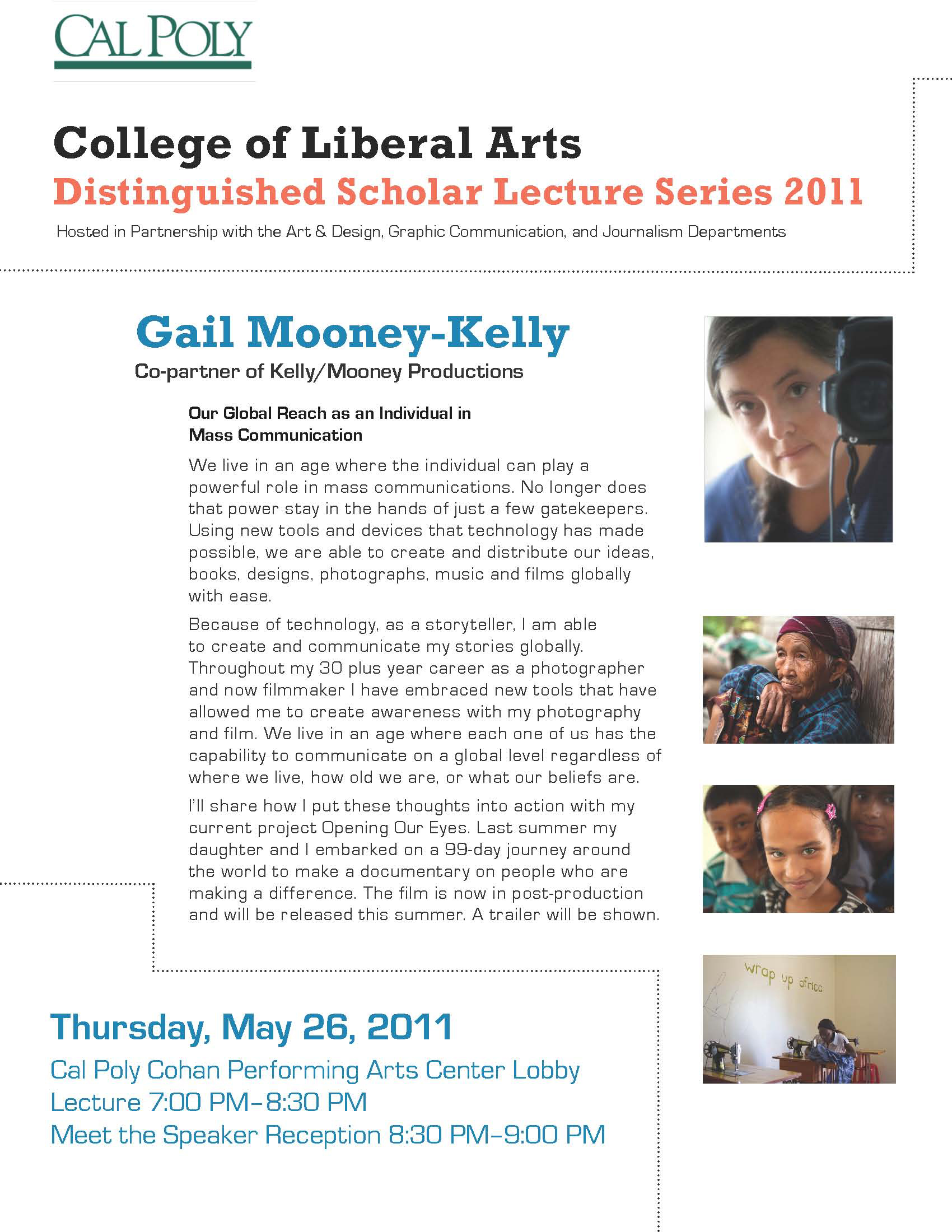
I’m headed to California this afternoon to speak at Cal Poly tomorrow evening. Join me if you’re in the area.  For old time’s sake, I took my Eagle Creek bag  – which I had circumvented the globe with.  It seemed like the right thing to do.

Add to FacebookAdd to DiggAdd to Del.icio.usAdd to StumbleuponAdd to RedditAdd to BlinklistAdd to TwitterAdd to TechnoratiAdd to Yahoo BuzzAdd to Newsvine

Top 5 Mistakes Photographers Make Moving From Stills to Motion

1.    Give it away – One of the best opportunities that still photographers have when expanding their businesses with video is to offer their new services to their existing clients.  I hear from so many still photographers who squash this opportunity from the start by throwing in the video clips for free  because they are still learning.  First of all, I’m not a fan of learning on the job, but more importantly if you give your new skills away because you’re still learning, then the question is “At what point will you be good enough or have learned enough to charge for it?” Who decides that you or your client?
2.    Audio is an afterthought – Capturing good audio is more important than making a great  image.  If a viewer cannot understand the dialog, they will walk away.  Don’t make audio an afterthought.  Hire a good sound person.
3.    Position themselves as “just” a shooter – If you position yourself as just a camera person, then you will not only lose a lot of creative control, but you will leave money on the table by not making a profit on the other aspects of a video production.  I position myself as a producer.  That’s not to say that I don’t also shoot a job, but I oversee the entire production and charge accordingly for pulling together all the pieces.
4.    Don’t collaborate  – Get over the one man band, solo creature model and surround yourself with a crew of experts that will make you look good.  Build a team of editors, sound mixers, motion graphics artists etc.
5.    Forget about the story – Every good product, including commercial videos have a great story.  You can have the best production values in the world, but if you don’t tell a good story, it will not resonate with your audience or your client.

Add to FacebookAdd to DiggAdd to Del.icio.usAdd to StumbleuponAdd to RedditAdd to BlinklistAdd to TwitterAdd to TechnoratiAdd to Yahoo BuzzAdd to Newsvine

Change

Change Who likes change? Other than needing a change of scenery every now and then, change is usually tough to take. I grew up with change. My family moved 10 times before I got out of high school.

Kindergarten, Chicago, IL

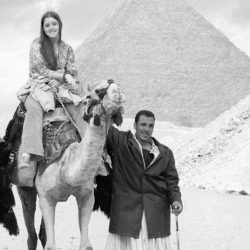
I was always the “new kid”. (Hint: I’m in the second to last row. I was also the “tall kid” even in Kindergarten)

No, my dad wasn’t in the military and we weren’t on the lam – he was just climbing the corporate ladder. He’d get promoted or there would be a new sibling and we’d move to a bigger house or he’d get promoted and transferred and we’d move to a totally different place leaving our friends and familiarities behind.

I’m not complaining, nor saying that I feel slighted by having that constant change in my life. It was the life I knew and I suppose I always looked at it with open eyes and curiosity about what was next to come. Of course, if I thought about the friends and sometimes family that I was leaving behind, it made it much harder.

Perhaps growing up in a constant state of change made me more flexible in dealing with all the changes affecting my business these days. Both still photography and video production have been profoundly changed by a bad economy and technology. Kind of like a double whammy. At least with technology the sword cuts both ways and also provides opportunities. It’s usually during the tough times when the economy is bad when innovation happens. Sometimes people just have to be forced to make changes in their lives, even if what they have been doing hasn’t been working. I was asked to speak at Cal Poly on the theme The Role of Mass Communication and Media Technology in Today’s Global Economy: A Multidiscipline Approach. Specifically, they wanted me to talk about how I was using technology to communicate in a global market. I started thinking about how this past year I had vigorously embraced new tools and a new business model, integrated with the Internet and social media to create a mixed media project that will ultimately result in a feature film, a book, an e-book and maybe even an exhibition. I didn’t have a big team behind me, nor did I have a lot of money. We had a two-person crew- myself and my daughter, an editor and my husband working the PR, the social media and the back support. We raised some money on Kickstarter with the help of our backers and we’ve had musicians offer us their music and talents to our film. We are extremely grateful for all of the support worldwide and it could never have happened without advances in technology.

The fact is that we live in such an amazing time where something like this is even possible. It is a time of empowerment for the individual. Technology is democratizing and is leveling the playing field especially in terms of distribution. The locks are gone and the gates to distribution are open and affordable. Within a month of uploading the trailer to my film on Vimeo, it has been played in 95 countries – that’s almost ½ the countries in the world. What a staggering thought in terms of mass communication!

Going forward my ultimate plan at this point in time is to distribute the film through iTunes or Netflix and DVD’s through Amazon. More importantly, I would like to set up 100’s of screenings in communities all over America – maybe even all over the world – and use the film to move people to action. Kind of like a grass roots effort to motivate people to make a difference in their communities. Imagine what kind of an effect that would have if it spread virally through the world. Just Imagine.

Add to FacebookAdd to DiggAdd to Del.icio.usAdd to StumbleuponAdd to RedditAdd to BlinklistAdd to TwitterAdd to TechnoratiAdd to Yahoo BuzzAdd to Newsvine

The Story and Hereafter

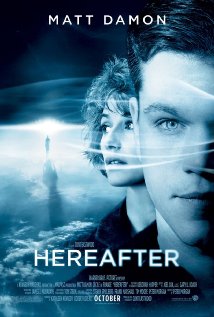
I recently watched the movie Hereafter, another film where Clint Eastwood shows his amazing creativity and ability to tell a story. It’s a film that lingers in your mind and keeps you thinking on many levels.

The official synopsis:

“A drama centered on three people who are haunted by mortality in different ways. George (Damon) is a blue-collar American who has a special connection to the afterlife. On the other side of the world, Marie (de France), a French journalist, has a near-death experience that shakes her reality. And when Marcus (Frankie/George McLaren), a London schoolboy, loses the person closest to him, he desperately needs answers. Each on a path in search of the truth, their lives will intersect, forever changed by what they believe might-or must-exist in the hereafter.”

It’s actually three stories that come together at the very end of the film. Eastwood and writer Peter Morgan (The Last King of Scotland. Frost/Nixon) were brilliant in the way they introduced us to the characters in one of the stories within the movie. We see two adolescent twin boys in a photo studio having their portrait taken.  The photographer is chatting them up, trying to get expressions out of them. We know within the first minute of dialog how vastly different the two boys are, even though they appear to be identical. A simple yet powerful way to set up the story for that particular part of the film.

The cinematography was extraordinary and a reason in itself to see the movie. In the beginning of the movie is some of the most vivid underwater cinematography I have ever seen as the camera captures the ravages of a tsunami.  The footage was vivid and real, yet poetic and surreal at the same time. It was also incredibly intimate. In fact throughout the entire movie I felt like I was inside the film or a part of it because of the intimacy of the cinematography.  I’d like to watch the film again and just try to look at it with my eye on the craft of cinematography.

As far as the story structure, it’s not easy to make a film that is made up of separate stories, yet connected in an organic way. Connected in a way that makes sense to the viewer and doesn’t feel forced. One great example of a film that does this well is Love Actually. Eastwood also pulls it off in Hereafter. He  is a master storyteller and he seamlessly brings us back and forth between the three stories leaving us wondering how at times how they are connected to one another yet not being distracted by it.

I’ve been reading a lot about storytelling and story structure lately and I can appreciate when I see it done well in a film or a book or even at a party.  I think sometimes we take the art of storytelling for granted because when it’s done well it goes unnoticed.  Go see Hereafter.  Clint Eastwood continues to amaze.

Add to FacebookAdd to DiggAdd to Del.icio.usAdd to StumbleuponAdd to RedditAdd to BlinklistAdd to TwitterAdd to TechnoratiAdd to Yahoo BuzzAdd to Newsvine

Commitment

I was stunned yet not surprised yesterday when I heard the tragic news that Tim Hetherington had been killed in Libya.  I’m grateful that I had seen Hetherington speak and present his work at Photo Plus in 2009. I remember being awed by the intimacy of his photographs and motion.  The viewer felt that they were right there in the action because Hetherington had been – and relayed that story to us.

We know about Hetherington and his work mostly because his documentary Restrepo had been nominated for an Oscar last year.  But how many other men and women who document the wars and the natural disasters, putting themselves in harms way on a daily basis, do we ever even hear about? That’s because it is not about them, it’s about what they are photographing or filming or writing about.  It’s about making others aware.

I once thought that I wanted to be a hard news photojournalist because there is a big part of me that loves to be where the action is.  But I also know that living that kind of life takes its toll especially on ones personal life.  I didn’t know if I could achieve the kind of balance in my life that I felt was important, pursuing that type of photography.  So I went the way of shooting more editorial feature pieces with a focus on people. I also thought that I might be the type of person who would become overly emotionally invested when on site and perhaps not able to fulfill my journalistic responsibilities.

I will always have the utmost respect and admiration for all the working journalists, photojournalists and video journalists out there who give us these incredibly intimate stories, risking their own safety over and over again. They do it for precious little financial reward.  They do it because good journalism is necessary for a healthy society. I’m forever grateful.

The Amazing Age of Convergence ….

…where anything is possible. I’ve haven’t written in awhile because I’ve been traveling. Last week I was in Chicago presenting a seminar at ASMP’s SB3 Seminar. It was the last one in a series and now I’m kind of going through withdrawal. There was so much sharing of information and ideas that no one wanted the conferences to end. But now we all need to initiate some of those ideas and apply some of the things we’ve learned. And that’s the part we can’t forget about – doing the work that will bring our ideas to fruition.

In my last blog I wrote about believing that the impossible is possible. I don’t mean to over simplify that notion and to say that all we have to do is have a positive mindset and things will happen for us. What I really mean to say is that without the belief that we have the power to do anything we put our minds to –we would never try – we would never give something a chance to happen. But along with that comes plenty of times when it just doesn’t happen – the first time, the second and third time and many times after that. And that’s when we need try again – and maybe harder.

The good news is that these days it seems like all our tools are converging to make just about anything possible. We no longer need someone to validate our ideas because we can validate our own. We have affordable cameras that shoot stunning still images and video. We have non-linear editing software to create the stories and we have Facebook and Twitter to get the word out about them. We have crowd funding sites like Kickstarter to raise money so that we can make our ideas a reality. And when our videos are finished we can upload them to YouTube or Vimeo and share them. We can also distribute our creations through image portals, downloaded Apps or through iTunes.

Last week I uploaded a trailer for my documentary Opening Our Eyes. As of today people in 71 countries have played the trailer! I sent the link to less than 30 people and they passed it on, embedded it on Facebook and blogs and it took on a life of its own. That simply amazes me because of the power that we now have to connect and communicate with just about anyone, anywhere in the world. That’s revolutionary. That’s a game changer. That’s powerful.

I’ve just arrived in Las Vegas to attend the NAB show. The National Association of Broadcasters has one of the world’s largest broadcast conferences in the world. All the movers and shakers of the broadcast world are here to network, make announcements about new products and learn. It will be another solid week of input overload with my head bursting with ideas and possibilities. And every one of the ideas has the real possibility of happening because of the age we live in.

If only I had more time.

Believing in the Impossible

It’s such a big leap isn’t it?  To really believe that anything is possible. For me it’s far easier to believe that anything I put my mind to is possible than to think that everything is hopeless. It’s a simple mindset and a way of life.

Think about it for a minute.  When you are convinced that you have the ability to make the impossible – possible – then you will put your dreams into action.  You will take that chance and by doing so you are creating your own reality instead of reacting to what others have created for you which may not be in your best interests.

I’ve never been a big fan of hearing “you can’t do that” or “it won’t work”.  Those are fighting words to me because no one can predict the future – so I find comments like that offensive to my very being. I’ve come up with my own theories about why there are so many naysayers in the world.  One theory is that misery loves company and because there are some people who stop themselves – they seem to take comfort in deterring others from their dreams.

Stay away from the naysayers and remind yourself that they don’t know the future – nobody does.  Hang around people who are crazy enough to brazenly go forward and pursue those thoughts and dreams that live deep inside themselves because they are listening to their inner spirit.

They say the spirit inside never ages.  I believe that and I know when I feel aligned with my spirit because I feel child like – filled with wonder, curiosity and belief in myself and my dreams. When I tell people about my wild notions, they get caught up in my passions and spur me on.  These days with social media we have the power to turn one person’s simple idea into a collective thought – into a possibility.  Imagine the power in that thought. That’s the power of the individual to create change and change starts with that one crazy thought that someone had who listened to their spirit inside.

Let’s hear some of your own crazy notions.  Who knows it just may spark something in someone and change their life.

Add to FacebookAdd to DiggAdd to Del.icio.usAdd to StumbleuponAdd to RedditAdd to BlinklistAdd to TwitterAdd to TechnoratiAdd to Yahoo BuzzAdd to Newsvine

Editing a Trailer

Like anything else the best way to learn how to do something is to “see” how it’s done.  I wanted to create a trailer for my documentaryI’m working with a professional editor on this project but while he is getting acquainted with over 160 hours of footage, I wanted to challenge myself to see if I could create a trailer.

For me, it’s always much harder to edit a very short piece. Everything becomes more critical – every cut – every shot – every sound bite and sound effect – every slate and every high and low in the music. And trailers are the ultimate shorts. You need to peak someone’s interest and make them wanting more.

I started paying attention to the trailers on DVD’s and online. I watched them to see how they were constructed. I analyzed them and paid close attention to things like sound effects, music and slates and if it made me want to see the movie.  There were a couple of trailers in particular that I really liked, each for different reasons.  One trailer was for the film I Am.  This trailer gave me some ideas on how to use music and text to deliver the story idea in a concise way and get people’s attention. I also liked it because it was just vague enough to intrigue me but not to confuse me.  Another trailer I like is Dennis Connor’s Breaking Boundaries; the Art of Alex Masket.  There are a lot of things I love about this trailer.  Dennis’s subject Alex Masket couldn’t communicate verbally so Dennis blended visuals of Alex using other people’s sound bites as the narrative.  He also had a beautiful jazzy musical score composed for the trailer.

My challenge was that I had to make a trailer for a film that was about 11 stories. The first thing that I needed to remind myself was that it really wasn’t about  11 stories.  It was about 11 people but ultimately one story.  With that thought I started pulling together  my strongest sound bites.  One benefit of spending all that time editing the past few months was that I was very intimate with the interview footage and I knew where to look for the gems.  I was looking for provocative remarks that left one wondering and they needed to be short and to the point.

Once I got the stand out sound bites on a timeline I started looking for some live action footage and other b-roll.  Then I began to interweave the appropriate visuals with the sound bites – pacing them – giving the piece a bit of time to breathe.  I also added slates with text to help tell the story.

Once I got it down to a reasonable length – in my case 3:45 – which is still a minute too long – I started looking for the perfect music.  I came across Neosounds.com a royalty free music site with some of the best RF music out there.  Picking music for me is like picking wallpaper, going back and forth until everything starts to sound the same.  After making a few painful decisions, I integrated my musical choices into the timeline.  There was still something missing and that was sound effects.  There are hundreds of great free sound effects that come with Soundtrack Pro.  I picked a couple of them to boost and emphasize certain spots in the trailer but I wanted to keep them subtle.  For example I used a sound effect of a motorcycle in one spot and a jet engine taking off in another.

What has resulted from this exercise are two variations of a trailer.  I am sharing these both with everyone because I would like feedback. I don’t want to influence opinion here, other than to say one trailer has a bit of more information than the other. One is also 15 sec. longer. Any and all comments are welcome.

Which one should I use?

Watch the links in this order.

http://www.vimeo.com/21241911

http://www.vimeo.com/21376387

Add to FacebookAdd to DiggAdd to Del.icio.usAdd to StumbleuponAdd to RedditAdd to BlinklistAdd to TwitterAdd to TechnoratiAdd to Yahoo BuzzAdd to Newsvine

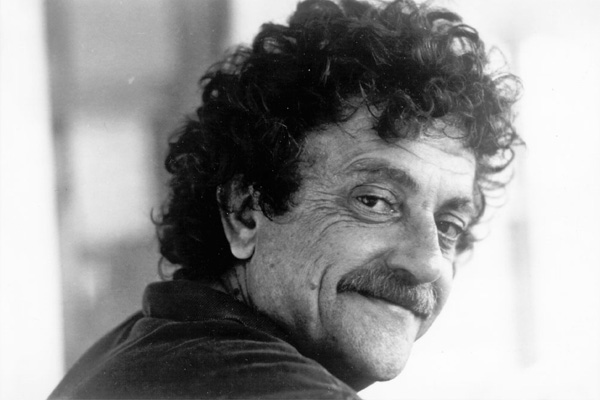
Editing Tips From Kurt Vonnegut

Recently I came across a blog article entitled “Writing Tips from Kurt Vonnegut” which was posted on Melody Godfred’s blog “Write in Color”. It was short and sweet and to the point, listing 8 great tips. Two of those tips really resonated with me because at the time I read them, I was entrenched in editing my documentary and I was struggling with a couple of story issues.

  • Write to please just one person. If you open a window and make love to the world, so to speak, your story will get pneumonia.
  • Start as close to the end as possible.

For the most part when I write I’m usually writing with someone in mind. But I realized when I was editing the 11 stories of this documentary, I was getting caught up in trying to tell too many stories for too many people with their needs in mind. And in the process, I wasn’t getting anywhere in telling the central story of the film. After reading these words of wisdom from Vonnegut, the master of storytelling, I stepped back and envisioned myself with a friend, telling the story of my film and it became clear what I needed to do.

One thing I’ve always done when editing video is to create the beginning and the end first and then fill in the middle. So when I read the tip about starting as close to the end as possible, it reinforced the idea that I needed to have a very clear idea on how I was going to end this film. I had already decided that I wanted to contrast the beginning and the ending visuals so I applied this thinking to the story itself.
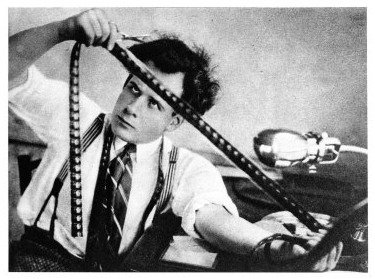
I get a lot of questions from people about the mechanics of editing video – like how to do certain things in Final Cut Pro or Adobe Premiere – and I answer the best I can. But I also point out that it’s easy to get caught up in what the software can do and forget about the story that you’re trying to tell. My advice is to read as much as you can about the craft of storytelling. I learned a lot about story structure from Blake Snyder’s book Save the Cat. I learned that every good story has a few key ingredients – irony, conflict, resolution, a hero, change – all basic universal themes. Tutorials on Final Cut aren’t going to help your storytelling skills and without a good story – you might just have some “eye candy” to music.

There is just one more tip from Vonnegut that I’ll leave you with – make sure you check out the other 5 tips.

  • Use the time of a total stranger in such a way that he or she will not feel the time was wasted.

Add to FacebookAdd to DiggAdd to Del.icio.usAdd to StumbleuponAdd to RedditAdd to BlinklistAdd to TwitterAdd to TechnoratiAdd to Yahoo BuzzAdd to Newsvine

I Must Have Been Crazy to Think I Could Do It

….But I did.  Last night I shipped 3 hard drives with almost 5 terabytes of media to my editor. After 2 very long months of extremely long days – every day – I got through the “first edit” of my documentaryIt’s by no means finished, there’s a lot more editing needed to cut it down by half, there’s music to be composed and a narrative that has to be written, but I take great joy in the fact that I got through this part of the process – because it damn near killed me.

When shooting a documentary, you don’t work with a script or a storyboard – or at least I don’t.  I have a pretty solid idea of the “story” when I set out to shoot, but there’s always twists and turns with every situation and every interview.  But I love surprises and I make room for serendipity to happen.  What results is a lot of content that needs to be crafted and arced into a story.  And I’ve just finished defining that story and laying the foundation.

It hasn’t been easy.  In fact there have been times when I’ve wanted to walk away from this because it was so overwhelming.  Trying to tie 11 different stories into one, and looking through 150 hours of footage multiple times can be overwhelming for a team of editors, let alone one individual. I’ve also had my share of low moments these past few months with a grant application rejected and a broken promise by a friend, but somehow I got through it.  I got through it because I had desire.

Having a strong desire for whatever it is one wants to achieve is essential.  Many times we say we really want something, but that is far different than having a true desire to make something happen. In order to stick to something (anything) and follow through with it – no matter what – that desire must be strong and come from within.  It’s something that can’t be copied, taught or faked – you either have it or you don’t. It comes when you are true to yourself.

It’s hard to stay true to yourself.  Many times, well meaning friends or spouses try to distract you from your purpose.  I see this happen a lot when a significant other, who may not understand that in the creative world, the line between work and pleasure is quite blurred and sometimes may feel somewhat resentful of all the time their partner spends on “work”.  I’m lucky in that my husband is also my business partner and has a full understanding of those blurred lines between work and pleasure.  He also knows that when I have such a strong desire to do something, that he shouldn’t get in the way of me following that desire.  That is truly selfless and well meaning.

Since beginning this lofty project, I’ve gotten a lot of calls from people who are in a slump for one reason or another.  They look to me for some kind of guidance.  I don’t really know what to say, other than to tell them to listen to their true self – the one underneath the clutter of the ego – and to trust what it tells you. If I get one of those calls during one of those low moments in my life, I try really hard to stay positive even though I feel like a big fake, because I’ve temporarily succumbed to my own self doubts.  At those times, I try to be utterly honest, relaying the bitter with the sweet and say that bad times don’t last forever. But you have to let your spirit shine.

I wrote a blog once about the human spirit. I feel that the spirit inside me is ageless.  I know when people come up to me and say “you look good” – what they really see is my spirit – which never gets old because I keep it alive. When I’m true to myself, my spirit soars and I look back at my defeats and rejections with a different understanding and acceptance.

So today, with my spirit in tact and my desire ever so strong, I rejoice in the fact that I accomplished something – something that’s really meaningful.  That brings a big smile to my face and great joy in my heart.  What a feeling – it’s priceless.

Add to FacebookAdd to DiggAdd to Del.icio.usAdd to StumbleuponAdd to RedditAdd to BlinklistAdd to TwitterAdd to TechnoratiAdd to Yahoo BuzzAdd to Newsvine