6 Reasons Why You Shouldn’t Take a DSLR Video Workshop

So many photographers think that buying a DSLR capable of shooting video and taking a workshop on how to use it, is all they’ll need to do in order to get into the business of video production.   They couldn’t be more wrong.  It’s kind of like someone buying a really “good” camera, and thinking that’s all they need to be able to shoot a professional photography assignment.  And yet, so many of my professional photographer colleagues continue to think that it’s about the camera, instead of the skill set.

For starters, most of the professional video productions I do,I wouldn’t be able to shoot with a DSLR camera.  Don’t get me wrong, a DSLR can produce stunning video, but those cameras  fall short on certain tasks.  More importantly, they won’t necessarily meet the expectations that many high-end advertising art directors require. red cameraYou’ll look like a fool if you show up with your DSLR kit when they expected a lot more in the way of gear.

I get quite annoyed when I see the proliferation of DSLR video and filmmaking workshops that mislead photographers that this “tool” or camera will be sufficient for any and all video assignments – because it won’t.  It may be fine for a wedding shoot and I even made a feature length film with a DSLR, but for a lot of corporate jobs I shoot – it just doesn’t cut it.

My advice to photographers who want to learn video:

  • Learn how to think and shoot video.  It’s not just about the camera. When I shoot motion, I’m thinking and shooting much differently than I do for stills.
  • Pick the right camera for the job.  That means you’ll have to know how to use a traditional video camera or a more sophisticated camera like a RED or hire someone who does.
  • If you contain your video experience and knowledge to the DSLR, realize that your competition will be fierce.  The buy in price is low – so you won’t be the only one who thinks they can buy a relatively inexpensive camera and go after video jobs.
  • Stay away from DSLR workshops.  They are way too limited and limiting.  Plus, they are based on technology that changes way too fast.  It may be tempting – but you’ll place yourself in the lower end crowd and will most likely be competing on price.  How low are you prepared to go – or can you go and stay in business.
  • Learn video and/or filmmaking the right way.  Don’t make it dependent on a particular camera.  Learn the cinematic language and how to translate the message in a motion medium.
  • The business of video is much different than that of still photography.  If the workshop you are thinking about taking doesn’t address sound business practices – move on. You can lose your shirt on a video production if you don’t know how to price and/or structure your shoots.

Think about it.  If you were just starting out and learning photography – would you take a workshop that was about a particular camera?  Obviously not, so why would you approach learning video that way?

For more information about video production check out Gail’s guide  The Craft and Commerce of Video and Motion
5 Tips for Filmmakers (and other artists) for Building an Audience

The good news for Indie filmmakers, musicians, photographers and new media artists is that technology enables us to take control and distribute our own work to the masses or a more targeted niche audience.  The bad news is that even though we are able to reach a global audience without giving the lion’s share of our profits to an agent or distributor – it’s a lot of hard work.

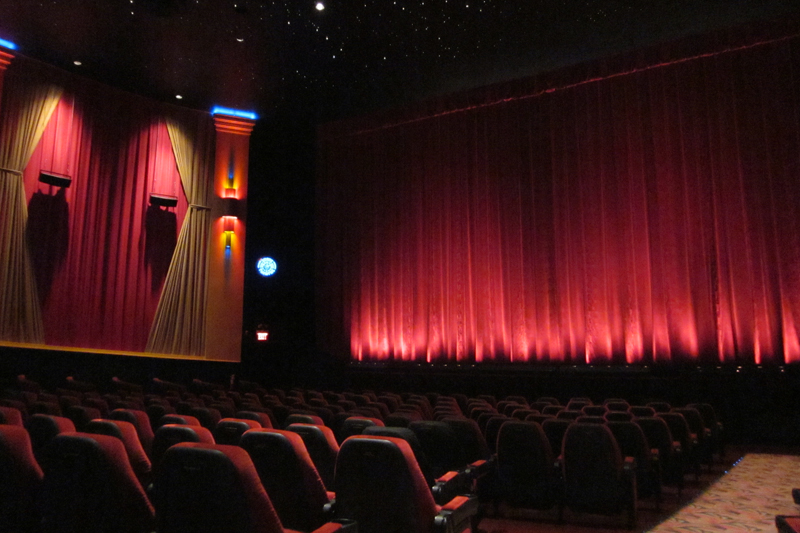
When I completed final production on my first feature documentary, Opening Our Eyes, I knew I was hardly finished with this film, not if I wanted people to see it. theater interioeIMG_0150Since most filmmakers make their movies to be seen, they need to decide how they want their movies distributed and marketed.  As a filmmaker, do you want to delegate this task to a distribution company or do it yourself?  Will you be one of the lucky 1% of filmmakers who get their films picked up for distribution?  If not, do you have a plan on how to do that?

1. Identify and build audience – Regardless if you decide to sign with a distributor or distribute your work yourself, the most important part of marketing and distributing a film is to identify and build your audience – and you should start building your audience before the film is finished.  As soon as I made a commitment to make a film, I started blogging about it.  I created a blog specifically about the film where my daughter and I talked about preparing for and taking a 99-day journey around the world. I also wrote about the making of the film on this blog where I talked about gearing up for it as well as the post-production process.  I didn’t realize it at the time, but I was building our niche audience.

2. Have a social media plan:

  • Decide on platforms – Twitter, Facebook, Tumblr, Google+, YouTube, Vimeo
  • Carve out the time to engage
  • Decide where the content will come from – behind the scenes photos or footage, blogs, podcasts?
  • Who and where is your audience? Find other Facebook groups or pages and followers who are interested in the same topic as yours.  Collaborate. Build your Twitter followers same way.

3. Finding true fans – Since most filmmakers will most likely NOT have a mega hit with huge profits, the best thing a filmmaker can do is build their “true fan” base.  First you should ask yourself how many “true fans” would you need to sustain yourself as a filmmaker? And by true fan, I mean people who are willing to buy whatever you are selling, be it a book, a DVD, a music download or a t-shirt.  The key to growing your core “true fans” is to engage them by sharing interesting content as opposed to just selling something.

4. Be consistent and stick with it – Like anything else, building an audience takes time.  Be prepared to constantly interact and engage your audience by sharing relevant and interesting content with them.  You’re building a tribe or a community.

5. Find likely partners – Making films is a collaborative effort.  Similarly, for filmmakers to be successful in marketing their films they need to find their core niche.  One great way to find your niche audience is to identify like minded groups and share links.  The non-profit my daughter works for partnered with us and we frequently share each other’s news with our followers.

The Top 5 Mistakes the Chicago Sun-Times Made

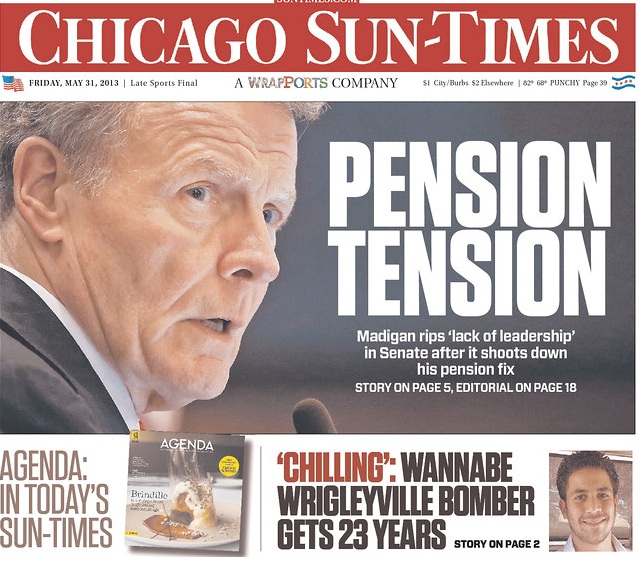
There’s been quite a lot of talk over the last couple days about the Chicago Sun-Times ChicagoSunTimeslaying off their entire staff of photographers.  When media writer Robert Feder posted on his Facebook Page , he was flooded with nasty comments about what the paper was doing.

“Sun-Times reporters begin mandatory training today on “iPhone photography basics” following elimination of the paper’s entire photography staff. “In the coming days and weeks, we’ll be working with all editorial employees to train and outfit you as much as possible to produce the content we need,” managing editor Craig Newman tells staffers in a memo.”

There has been general outrage amongst professional photographers on listservs and social media channels adding to the extreme angst that already exists in this demographic.  I’ve been giving this a lot of thought, not only over the last couple of days but over the last decade as technology has thrust enormous change on my industry.  If I allow myself to look at the state of professional photography as an unsustainable profession because of these technological changes, than that’s what it will be – an unsustainable profession for me.  But if I turn the “problem” into an “opportunity” and realize that technology has brought me a lot more possibilities in how to monetize my craft, then I will have a profession that I will be able to sustain.

Biggest Mistakes that the Sun-Times Made when they got rid of their staff photographers:

  1. Cheated their readers.  Their readers will see the difference in the photographs that their paper is running.  A professional photojournalist doesn’t just take a picture – they capture a storytelling image.  They are visual communicators and they are good at it.  They make the viewer feel, empathize or connect with their images. I don’t think it will take a long time before their readers see that the paper’s photos aren’t any better than theirs or their friends and have no reason to get the story from the Sun-Times.
  2. Focused on the technology – the iphone.  How many times have I said “It’s not about the tool”?  Do I think that the iphone isn’t a viable tool for taking good photos?  No, in fact if it is the only “camera” you have on hand when a story is breaking – then it becomes the best camera for the job.  On the other hand, the same day the paper sent the memo out to their staff about the layoffs, their front page was covered with images that one wouldn’t have a chance of getting if all they had was an iphone.
  3. Burdened their writers with another job.  Let’s face it, something is going to suffer.  Just like when I try to shoot both video and still images on the same job myself, I always feel like I have the wrong camera for the wrong moment.  A lot of my writer friends can take pretty good photographs, and some merely make a “reference” shot of what’s happening, instead of an image that captures a story.  A writer’s workflow is different than that of a photographer.  Writers go out in the field and gather facts and write the story for the most part, back at the office.  A photographer does pretty much everything in the field.  Nowadays, many times that includes the edit.  Something will suffer, when one person sets out to do two totally different types of jobs.
  4. Made their “cuts” in the wrong place.  They undermined what a professional photojournalist brings to their paper.  You can’t find a more passionate, committed group than photojournalists.  They work long hours, under terrible conditions – many times dangerous ones, receive a lousy pay, but will go above and beyond to deliver “the story”.  Some say this was a “union busting” move and that after a decent amount of time, the paper will begin to hire photographers who will work for less and no benefits.  If that’s the case, then shame on them for cutting out health benefits for such a committed group of people. In the long run,  that is not a sustainable business model.
  5. They forgot that technology works both ways.  Let’s hope that photographers don’t forget that they can use technology to their advantage – that is if they can get past their fear.  Alex Garcia of the Chicago Tribune, writes in a blog post:  “Fear is the worst and greatest enemy of photographers. Why? Physiologically, fear triggers the fight or flight complex. You can’t think creatively, imaginatively and proactively when your entire body is pumping blood and adrenaline to the parts of your body necessary to fight barbarians at the gate. It pushes your body into a reactive-about-to-become-a-victim state of mind. The very creativity that is your unique selling proposition as a photographer is crippled. Your body become’s your mind’s worst enemy.

We no longer need a publisher to publish our images.  With technology we can create and publish with a variety of platforms and portals.  Just take a look at Issuu a portal for digital publishing. With a modest amount of effort, I put together a test for a new magazine called “The Back Story”.  Future issues will be composed of my image outtakes from the dozens of commissioned assignments that I’ve shot over the years.  Maybe, down the road it will include other photographers’ work and give the readers an opportunity to see the images that never ran and get “the back story.”

Fear not, my fellow professional photographers.  We are in a position of opportunity if we begin to realize that and make a conscious effort to change our mindset.  We don’t have  control over the choices that the Sun-Times or any other newspaper makes. We only have control over how we react to those changes. If we think and act smart and not from a position of fear, maybe one of the best business decisions we can make is to take control, and create and publish story telling images that the public will want to see.  And the public  won’t be finding those kinds of images in the Chicago Sun-Times.


What Still Photographers Need to Know About Convergence

We should not think in terms of how we can apply the newest tools of the trade to what how we are shooting today, but rather think about how these tools and future versions may be applied to what we will be doing in the years to come.  We also need to remember that it is not just creatives that are determining what we shoot with, how we shoot it and where the imagery will be used, it’s the top executives and money folks from the camera manufacturers, the advertising executives, broadcast networks, movie studios and magazine and newspaper publishers.  They set the stage and the content creators and receivers of the content or the “audience” react.

We as creatives have a choice of what tools to use – everything from an iPhone to a camera like the

English: Canon 5d Mark II set up for cinema st...
English: Canon 5d Mark II set up for cinema style shooting (Photo credit: Wikipedia)

RED, able to produce 5k resolution stills shooting at 96 frames a second at a 200th of a second.  We make our decisions when choosing which tools to use based on a number of factors – affordability  and determining which tool or camera is the best one for a particular job.  Many times, it’s the end use that is the deciding factor. We need to remember that not only our tools are changing, but so is the way the information or content is delivered as we rapidly move away from print to electronic delivery.  Simply put, mobile devices have dramatically changed the way consumers are receiving content and information.

Who could have imagined just a few years ago that a phone could take photographs that weren’t just “good enough” but really good in terms of resolution and delivery?  We need to keep in mind that the limitations of today will most likely not be there in the future.  Technology is changing our lives and our businesses in an exponential way and will continue to do so.  If we are smart and want to stay in business, we need to look forward and imagine what’s next, rather than look at what is or what was.

When I started my still photography business more than 30 years ago, a photographer needed certain technical skills.  We needed to be able to focus a camera and that was tough if you were shooting fast moving action subjects and we needed to know how to get an accurate exposure.  The cameras of today have pretty much eliminated those skills with auto focus and exposure.  Still photographers still need to know how to light but as software becomes more sophisticated will that be a necessary skill set of the future?

When I’m giving a seminar to still photographers who are thinking of moving into motion, I start out by explaining the differences of the two mediums.  Still images are moments in time and video is time in motion.  That explanation sounds simple but it’s quite profound when you think in terms of convergence.  While today’s cameras have pretty much eliminated the skill sets of knowing how to properly focus and expose an image, a photographer or camera operator still has to be able to capture the “decisive moment” – that is where the skill set comes to play.  But is that still true today and will it remain so in the future with motion cameras able to shoot at 96 frames a second at a fast shutter speed with 5K resolution? Why would a client need a photographer to shoot still images when they can pull frames from a motion shoot?  They wouldn’t, especially when most camera operators in the motion sector are working under “work for hire” contracts and they don’t hold the copyright to the footage and/or still images or frame grabs from that footage.  That’s a game changer for the still photography business and licensing of images.

I read an interview once with Vincent LaForet and he was telling a story about having a discussion with a DP at a Red event shortly after the Red One came out.  He asked, “Who in the world would want to shoot a still image with this huge Red camera with a Cine lens?  It’s insane. Why wouldn’t I go out with my 5D Mark II that shoots RAW?”  The DP answered “We want to take your still jobs away from you, just like you want to take our video jobs away from us with your HD SLR’s.”

That was a few years ago.  Now I know a lot of high end still photographers who are shooting with smaller, more affordable and high-resolution motion cameras to shoot still photography jobs and so are DP’s.  That’s convergence and who knows what the future may bring, but one thing is for sure – it’s best to be knowledgeable in both.

Photographers – Grow or Die

I’ve been a professional photographer for over 35 years.  While some may look at that sentence and think I must surely be “over the hill” – others may look at that and say “wow, she must have been doing something right, to stay in business that long”. I suppose, it all depends on the outlook of the person.

Personally, I truly believe that the secret to longevity in any career field is to be open-minded as to how they define themselves.  One thing I have never done is define myself by the tools I use. Just because one has expensive camera gear, it doesn’t make them a “professional photographer”.  If that was the case, then who are you if you have a camera that happens to shoot both still images and video?

I’m really amazed when photographers define themselves by the tools of their trade.  I think with the way things are going in terms of how technology continues to affect our industry, if a photographer defines him/herself in such narrow terms – it’s the kiss of death.

When technology enabled me to explore video production without having to make a prohibitively investment in expensive “tools”, the creative part of me wanted to take full advantage of those new opportunities that were coming my way.  After all, I’m a storyteller and I shouldn’t have to limit myself to one medium, but rather choose the

Category:Wikipedia requested photographs of ph...
(Photo credit: Wikipedia)

right  tool (camera)  to use that best tells the story that I need to tell.  Sometimes that means delivering the message in video and sometimes the story is better told with still images.

Because I was an early adaptor of video (at least from a still photographer’s point of view), many of my peers equate me with just shooting video.  Many assume I’ve abandoned still photography, which couldn’t be further from the truth.  The real truth is, my clients see me as an imaging professional, who is able to deliver their message with the medium(s) that is best suited for the job.  These days with print publication giving way to electronic delivery, clients are delighted that I am able to fulfill their needs because I am proficient in both video and stills and most times they need both.

My curiosity for exploring a variety of mediums and tools has not only kept me in business – it’s kept me from getting jaded and stale. I am a photographer.  I am a director of photography.  I am an imaging professional and am thrilled to still be in business at a time when we have so many tools and options in how we are able to deliver a visual message.

Why Photographers Need to Stop Thinking of Video as a Market

I find that many still photographers I talk to either want to “get into video” – or they don’t.  In either case, most photographers think of video as an entirely separate market. The truth is, video is not a market at all.  It’s simply another visual medium a “photographer” can use to express themselves with, convey a story, or hopefully do both.

I have been a still photographer for over 30 years and a motion shooter for over 15, but I have been a storyteller since I started talking.  I have not abandoned my still photography, by any means, In fact if anything, adding motion to my skill set has made me a better photographer.

These days, I work with whatever medium that best conveys the message or story that I need to deliver.  I not only think about that in creative terms but also in how the story will be delivered and to whom. Last week

English: Cover of the February 17, 1933 (vol. ...
English: Cover of the February 17, 1933 (vol. 1 issue 1), first issue of News-Week magazine (now Newsweek). The issue features seven photographs from the week’s news on the cover. Featured are: Adolf Hitler, Franklin Roosevelt, Joseph Stalin, Franz von Papen. The issue has 32 pages and cost 10 cents. (Photo credit: Wikipedia)

Newsweek announced they were no longer going to publish a print edition. Clearly that will have a trickle down effect on paper sales, printers, advertising agencies, on down to photographers. It won’t just affect photographers shooting for Newsweek, but will also have an impact on commercial photographers as well. It will affect many markets.

We, as a society are communicating differently and everything is in flux because of it. People are getting their news immediately and on demand, on their phones and other mobile devices.  How can a print edition of a news magazine compete with that?  It can’t. How will advertisers react to that?  That’s the million-dollar question, isn’t it?  How can an advertiser monetize the “mobile platform”?  Do they make a viewer watch a short ad at the front end of a story?  As we communicate more and more using smaller devices, advertisers and marketers will need to come up with new ways of reaching their target audience.

Technology is a double-edged sword. It forces change on all of us but it also opens up opportunities.  The advertisers will be able to know exactly the audience they ARE attracting, based on information gathered from analytics.  Independent photographers can use technology the same way, if they open their minds up to new ideas and start to see opportunities.  But that will only happen if they start to see video as just another medium to work with, instead looking at it as a separate market, and telling themselves that’s not what they do.

I had the privilege recently of being a juror on a “motion” competition.  I was very encouraged by what I saw and I looked at over 50 videos.  I saw something new and different.  I saw the “photographic eye“ applied to motion. I saw a different visual aesthetic emerging.  Makes sense doesn’t it?  Photographers creating in a new way using new tools for a society that communicates differently.

Stressing the Story

Years ago, a colleague wrote an article about me for a trade magazine and entitled it “Gail Mooney – Past and Future Storyteller”.  Before that was written, I had never really thought of calling myself a storyteller, even though I had lived my entire life pursuing “the story”. In fact, it was because of my infatuation with people’s stories that I became a photographer and filmmaker. The pursuit of the story is what has driven me in making my own choices in life

But having a love for the story is far different than being able to tell a story. Regardless, if the story is told through still images, movies, songs, poems or books, the story must come through in order to resonate with an audience. I’ve been reading a lot about screenwriting lately, and how a story is written and structured for the movies.  Certain things must take place within the structure to make a story work.

  • Characters should be well defined and developed in the first third of the film.  The audience will need to get enough information about the characters in order to care, one way or another.
  • Stories should have conflict and contrast – just like life.  In every good film there is usually a low point right before a character prevails or a situation turns itself around.
  • Cinema has a language all of its own in how it tells and drives the story. The choice of lens or the way the camera is moved and from what angle, conveys to the audience a feeling. Make conscious choices and decisions as to what cinematic tools you use and why.
  • They say editing is the last line of defense for the story.  Every cut an editor makes has a profound effect on how the audience will feel.  An editor is able to tell a story in a hundred different ways, based on what clips they choose, how they cut them together and their selection of music.

I was very fortunate when I first started learning video.  I took the Platypus Workshop with PF Bentley and Dirck Halstead and they always stressed  “the story”.  I remember that I couldn’t even begin to shoot my project until I got my “commitment” (story) ok’d by Dirck or PF.  In order for them to commit to my story, I needed to commit to it first and they knew I wouldn’t be able to do that until I knew the story well enough to tell it.

Knowing and communicating your story in any medium simply means always being present in what your doing.  When the choices and decisions become obvious and effortless, then you know that you are telling the story you meant to tel

Teaching Video Journalism in China

Chinese flag, Beijing, China.
Chinese flag, Beijing, China. (Photo credit: Wikipedia)

I’m sitting in the Continental (United) airport lounge at EWR, waiting to board a flight for Beijing.  I’m headed to China for 4 weeks to teach Chinese journalists, video journalism.  My mind is spinning with ideas, questions and the usual array of “what ifs” as I take on another adventure.

About two years ago, I started saying “yes” to opportunities that presented themselves to me – or at the very least, I began to consider opportunities, rather than to talk myself out of things, right off the bat.  Because, of that mind set, I’ve been going where life seems to take me and it has presented quite a few interesting adventures.  It’s not that I’m foolhardy and doing things on a whim – it’s that I have been listening to myself – my inner voice – and it has been my guiding force.

I’m told that the Chinese are hungry for “western” knowledge.  But what I have to teach them is something universal, and that is – how to tell a story – using the medium of video.  Seems so basic and simple – how to tell a story – and I suppose it is, but like anything else, it’s simple if you understand it.  The key to understanding something is to have the desire to learn.  Some people say they want to learn – but that’s different than really having the desire to learn.

Some folks feel threatened by this seemingly insatiable desire of the Chinese to learn all things western.  I’m also finding that when people feel threatened by something – they try to “stop” whatever it is they are feeling threatened by.  It’s one of those stupid human tricks that folks have played since the beginning of mankind.  I process this behavior pattern as unproductive and unsustainable. It rarely works as far as eliminating a perceived threat.  You simply can’t totally eliminate desire.

Rather than stop others from growth – a better way is to better yourself.  I’d rather put my energies into where I want to go in my life – than in trying to squash other people’s hopes and dreams.  I’ve also found that what goes around – comes around.  When you “give” and “help” others – you ultimately create a better world – or “space” for everyone.

So, as my mind races this morning with my hopes, my expectations and enthusiasm – I try to keep the nagging doubts and fear at bay.  I tell myself that it’s natural to have concerns.  But I also tell myself that I can either let my concerns consume me and turn into fear or I can welcome the “unknown” and embrace the opportunity at hand.  I’ll let my inner voice guide me because it seems to be doing a good job.

Add to FacebookAdd to DiggAdd to Del.icio.usAdd to StumbleuponAdd to RedditAdd to BlinklistAdd to TwitterAdd to TechnoratiAdd to Yahoo BuzzAdd to Newsvine

Technology – Connecting our Past and our Future

These days with social media it is so easy to connect with people all over the globe.  We can make new friends and reconnect with old friends with ease. We can use social media to share knowledge and ideas or simply stay in touch with friends.

One thing I have learned in reconnecting with friends from the past is that even though time has passed and changes have transformed our lives – the underlying character traits of most people, remain the same.  If someone I knew had been an adventurous soul in college or high school – they were still adventurous souls.  At least this has been my experience when I have reconnected with people from my past.

Quite honestly at this point in my life, I am so involved with my “now”, I don’t really have the urge to dig into my past. I’ve never been to any of my high school reunions and there have been many.  But when I do reconnect with people from my past, they are always people I have a natural and lasting connection with.  What attracted me to those people then, are usually the same things that attract me to them now and vice versa.

With any type of relationship, I take the attitude that the people who are in my life are those that are meant to be there at this time. There’ll be good relationships and not so good relationships, but each is meant to play its purpose in my life.  The same holds true in business relationships – there’s always an ebb and tide in most relationships, and we learn by it…. Or we should.  There’s the sweet and the bitter side to anything in life and it’s almost like those two ingredients need to be there for a “life well lived.”

I’ve learned a lot about filmmaking and the art of storytelling over the last couple of years, and the one thing that stands out, is that every story needs a “conflict” or an “opposition”. Every story needs contrast.  If it doesn’t – it’s not a good story – at least in terms of the entertainment business of films, TV shows, books, magazines etc.  I’ve been thinking about that a lot lately and I try to identify those themes when I watch a movie or read a book.  There is always an element of conflict or opposition to almost all stories and stories are taken from real life.

So when I look at my ultimate story –my life’s story –I tell myself to accept both the pain and the joys of life, because they are meant to be there. They are part of the process. I tell myself to expect the unexpected and leave any and all possibilities open. I tell myself to bridge the past with the now and allow the future to be what it’s meant to be for a life well lived.

Add to FacebookAdd to DiggAdd to Del.icio.usAdd to StumbleuponAdd to RedditAdd to BlinklistAdd to TwitterAdd to TechnoratiAdd to Yahoo BuzzAdd to Newsvine

Monetization of Photography in Spite of a Lousy Economy

I talk to a lot of photographers. I don’t define the word “photographer” by the type of camera he or she shoots with. Whether someone is shooting with a still camera, a traditional video camera, a motion picture film camera or a hybrid camera that shoots both stills and motion – a “photographer” these days is apt to embrace more than one of these tools.

Regardless of the tools you may use, I’ve come up with a few tips on how photographers can stay afloat and make money in this continued stagnant economy.

  • Think outside the box – don’t think of yourself as one who just shoots still images. Even your “still” clients will have a need for motion imagery these days.  It may not warrant the need for them to hire a big video production crew to make a broadcast spot.  But it could be one of your corporate clients needs a “talking head” for their website. Even if you don’t shoot motion or don’t want to – collaborate with someone who has these skills to fill your client’s needs instead of sending your clients  elsewhere.
  • You don’t need someone else to commission your services in order for you to make a living. When photographers take on personal projects, not only are they creating a buzz and getting noticed by potential clients, they are also creating their own “content” to monetize. It is possible now to get our content to market without the need of a middleman. Portals are open and plentiful to all.
  • Take advantage of what is “free”, rather than be put out of business by it. There are so many ways to build your brand and get noticed without spending a fortune. The costs of building and maintaining a website have dropped significantly because of advances in technology. And utilizing social media to create a buzz and get the word out about your company is virtually free with Facebook, Twitter,LinkedIn and YouTube. But be prepared to do the work and discipline yourself because this territory is ripe with distractions.
  • Re-purpose your content. If you’ve been blogging or have something useful to share – consider packaging your “knowledge” into ePubs, podcasts or “how to” webinars. One thing I’ve learned about making an ePub is that you can either do it yourself or hire a formatter so that it gets to market quickly – via Amazon, Barnes and Noble or the iTunes platform. Price it right – and offer more than one ePub at a time. (I’m working on my 2nd ePub now) In this market, if someone has just spent $3 or $4 to buy your ePub and they see you have another one for sale – it’s not a big stretch for them to buy that other book you offer at the same time.
  • Collaborate with others. Partner with others to put on webinars, podcasts, call in phone seminars etc. Use this opportunity to build your own brand. Don’t always feel that you have to be the only “act” offered. In fact many times, if you join forces with other creatives, it will get you further than if you are the only speaker in a half filled room. Get out there and get noticed and learn from your colleagues at the same time.
  • Be authentic. I cringe when I write that word because it has become a bit trite. I guess in a way I have always been authentic. In fact I just can’t help myself. If you are true to yourself, you will be ready, eager and able to work hard on your dreams. And hard work is exactly what is necessary to make it in this profession.  You’ve got to want it bad enough in order to do the work. If you are a clone of other photographers, you’re career will be short lived. I guarantee the photographers that you are emulating will be “moving on” because their passion is driving them to new things. So, what happens to the cloned versions then?
  • Don’t focus solely on the money. Easy to say and really hard to embrace when you can’t pay your mortgage. But look at any successful person – I don’t care which business you choose to look toward in terms of finding successful people – but you’ll see that most people who have “made it big” were not driven by the money. I’m not saying that money is not important, but if you are solely focused on the money and not on the act of creating – it will show.   Being too focused on the  money part of the equation, can sometimes push it away. People sense it. It’s human nature to want to be around a “winner” – not someone who is begging for a job to keep them afloat financially.
  • Be patient. Everything turns around. While the old days and ways of doing things won’t come back, better opportunities will replace them. Don’t be paralyzed by your own fears. Do what you can that won’t cost you a lot of money and there is plenty you can do. Work social media, learn new skills – audio, editing, writing etc., network with people, create new content for ePubs, webinars, and podcasts. Use your imagination, pursue what you are passionate about and when the economy turns around – you’ll be ready.

Add to FacebookAdd to DiggAdd to Del.icio.usAdd to StumbleuponAdd to RedditAdd to BlinklistAdd to TwitterAdd to TechnoratiAdd to Yahoo BuzzAdd to Newsvine