Tools of Revolutionary Change Are In Everybody’s Hands

I heard Ray Kurzweil speak yesterday at the NAB conference. His keynote address was titled: Acceleration of Technology in the 21st Century and simply put, I was knocked out by his insights and clarity on our changing world. The Wall Street Journal describes Kurzweil as the “restless genius” and Ray has been included in PBS’ list of “16 revolutionaries who made America”, along with inventors of the past two centuries.

To hear people like Ray Kurzweil speak, is exactly why I attend the NAB conference every year. Sure, it’s fun(and overwhelming) to walk the show floor and see the latest and greatest tech tools and toys, but my focus is always on listening to and soaking up whatever bits of insights I can from visionaries like Kurzweil.

In speaking about information technology and its affect on us all, Ray stated “There’s no way to establish the same business model and social contract and protect intellectual property if the public doesn’t embrace and respect it”.  Just look at what happened in the early days of shifting from analog to digital, and how the recording industry reacted when it became easy to “share” music electronically. When they tried to hold onto their old business model and along with that bullied the “public” – it pretty much blew up in their face.

We all should have learned from that. But if you look back to when photography went from the analog to the digital world – many photographers made that same mistake with their clients. Ray goes on to say that “technology progresses in an exponential manner and if you measure the underlying trends in technology – it’s predictable”. “Our intuition is linear”. What that means is that this paradigm shift in information technology is only going to accelerate.

He went on to say that “once things become based on information technology, they progress exponentially”. This is happening right now in the world of healthcare and medicine. As it too becomes based more on information technology as far as research and development, it’s not hit and miss or trial and error anymore.

Information technology is democratizing our world. One could say that this is a prime reason for political systems like the old USSR to collapse. It’s hard to control a country’s people when they are open to information. ” The tools of revolutionary change are in everybody’s hands”. Kurzweil cites the example of the Chinese and Google. He says, “When you limit your own success like the Chinese with Google, ultimately you will strangle yourself”.

So what can photographers and other creative types get out of all this? We must recognize that if we base our business model on our gadgets and our tools – we will limit our own success or worse yet create our own demise because the tools of disruptive change are in everybody’s hands. But if we understand that and build a business model that is not based solely on technology but on our vision and it’s perceived as “fair” to our clients and the public – then we will thrive. We need to open our eyes and adjust as to how we distribute our intellectual content.

I’ll leave you with a simple analogy that Ray cites: In the early 1900’s if you saw yourself in the horse and buggy business, you should have been concerned. But if you saw yourself in the transportation business, then you saw opportunity as the automobile changed that paradigm. So, if you see yourself and define yourself by what camera you shoot with – you’re in big trouble as technology races forward. But if you see yourself as a visual communicator and embrace the opportunities made possible by technology – then you’ll survive and thrive.

Add to FacebookAdd to DiggAdd to Del.icio.usAdd to StumbleuponAdd to RedditAdd to BlinklistAdd to TwitterAdd to TechnoratiAdd to Yahoo BuzzAdd to Newsvine

Should I Be Thinking of Video – Or Not?

I give a seminar to still photographers for ASMP entitled “Should I Be Thinking of Video?” It’s a broad overview of the different facets of video production along with how I have positioned myself in this medium and where I think some of the opportunities are. I’m quick to point out what it’s not – it’s not going to tell you everything you need to know to make video part of your business and it’s not about how to use your DSLR. And if anyone promises that they can teach you that in two hours – they’re lying. But most importantly, I can’t possibly answer the question “should I be shooting video” for each individual in the room. And that’s because there is no ONE answer to that question – that’s up to the individuals to decide for themselves.

I think perhaps I should point out some reasons why one shouldn’t be thinking of video:

Fear – Because you are consumed with fear of your future. It’s understandable to be afraid when the world as you know it,  is changing. But if you are so focused on the thought that you have to do something because technology has changed your business to the extent that it just isn’t there anymore, instead of focusing on how you can use technology to grow your business – then you’ll paralyze your mind to new possibilities.
The Camera – If you are getting into video because your still camera is capable of shooting video and you’re not concentrating on thinking and seeing in motion, then you’ll end up with isolated video clips that have no relation to one another and you’ll have a rude awakening in the editing room when you realize you have no clue on how you’re going to put together a cohesive story.
Because everyone else is – With all this talk of video of late, everyone feels they need to jump on board. The truth is video may not be the answer for some photographers. And it may not be the best medium for the markets you work in.

You should be thinking of video if:
• You think that motion and sound is the best way to visually communicate your clients’ story or message.
• You recognize the power of collaboration in this medium
• You understand that there’s a learning curve and there’s no magic bullet.

I cannot tell you if video is the answer for you – that’s up to you to make that decision for yourself. I can only tell you what’s involved and guide you through the process.

When my daughter was growing up, I was always careful not to make all her decisions for her. It was a hard thing to do because many times she wanted me to and I wanted to but I didn’t. I knew if I made all her decisions for her that I wouldn’t be doing her any favors in the long run – because sooner or later she’d be out on her own without me there telling her what she should or shouldn’t do. I think it was one of the hardest things I had to do as a parent.

It’s been challenge this year scheduling time for my production business, along with traveling around giving these seminars. As much as I enjoy sharing information with others through these seminars, I know that I need to be doing what I love most and that is being a visual communicator. So, I’m taking to the road on May 25th – around the world actually, working on a personal project Opening Our Eyes. I need to get back to some real quality time of creating. And the best part – my daughter decided that she wants to join me and be part of this – and she made this decision all on her own.

Add to FacebookAdd to DiggAdd to Del.icio.usAdd to StumbleuponAdd to RedditAdd to BlinklistAdd to TwitterAdd to TechnoratiAdd to Yahoo BuzzAdd to Newsvine

The Race To The Bottom and/or Video

I’m waking up to a beautiful day in San Diego and thinking about my old California days when I lived in Santa Barbara and attended Brooks Institute.  That was a long time ago but whenever I’m in southern California, my head goes back to my beginnings – my beginnings with my husband and partner and my beginnings of my career as a photographer.

Sounds funny now when I mention career and photographer in the same sentence.  But that’s the way it was back then (mid ‘70’s) when you had to be technically savvy to make a good photograph – a technically good photograph that is.  These days just about anybody can create a technically good photograph because of how technology has changed the tools of our trade.  And that’s why it’s gotten harder and harder to make a career out of photography.

It seems like there’s a race to the bottom in photography these days. By that I mean that a lot of photographers will do just about anything to get the job – from giving away rights to almost doing the job for nothing.  I almost can’t blame them when they are facing mounting bills and the phone rings less and less and they consistently get undercut by their peers.  On the other hand I have to wonder, is technology totally to blame for the race to the bottom or did we do it to ourselves?

I talk to lots of photographers these days because I give short seminars about video. A lot of photographers have clients who are asking for video and they want to respond to that.  A lot of photographers see their business dwindling as print needs dry up and as we move to electronic publishing. With that of course comes even more of a demand for video content. And a lot of photographers are there because still cameras are now capable of shooting video.

I cringe when I hear that someone’s motivation for getting into video is because of a tool.  I cringe because I know that it’s not about the tool and that one should really focus on what makes them unique – and how they “see” things.  Right now, you have to still be technically savvy to be able to produce decent videos – with good sound and edited well. Is it only a matter of time before technology makes these tools so good that just about anybody can shoot good video? Perhaps.

I strongly suggest that photographers get out of their solo independent ways of thinking and embrace collaboration when they move into video.  Get away from the tool centric way of thinking.  Surround yourself with people who you can work with – sound people, editors, and musicians.  Place more importance on thinking in motion and storytelling in motion.  And most importantly, produce your own videos, even if that means taking a chance.  Work directly with clients instead of being just one rung on the ladder.  Otherwise you’ll be on the content rung, which is way down at the bottom of ladders these days.

So, while I’m sitting here on a beautiful morning in San Diego and California dreaming – I’m remembering a lot of my peers from my old Brooks Institute days.  I think about what they are doing now – are they still working in photography?  I think the ones who are the ones who shot images that had some soul and went way beyond being technically perfect.

Add to FacebookAdd to DiggAdd to Del.icio.usAdd to StumbleuponAdd to RedditAdd to BlinklistAdd to TwitterAdd to TechnoratiAdd to Yahoo BuzzAdd to Newsvine

The “Dancing Inca” and Video

When I was a young woman, newly married, my mother decided to have a psychic come to her house one evening and hold individual sessions with all of her family members. My mother was searching for something at the time, which I didn’t know then but I do know now – but that’s a story for another time.

There were two things that I remember from that “psychic reading”. One was that he told me that in a past life I had been an Inca and that I had fallen off a cliff and had broken my hip. The second thing he told me was that I was going to be shooting video.

As for the Inca past life comment – I recently had to consult a chiropractor after a night of dancing at a fundraiser had left my right hip inflamed, sending shooting pains down my sciatic nerve. When the chiropractor asked me what I did to cause this, I told him about the dancing, but not the Inca part – that was probably best left unsaid.
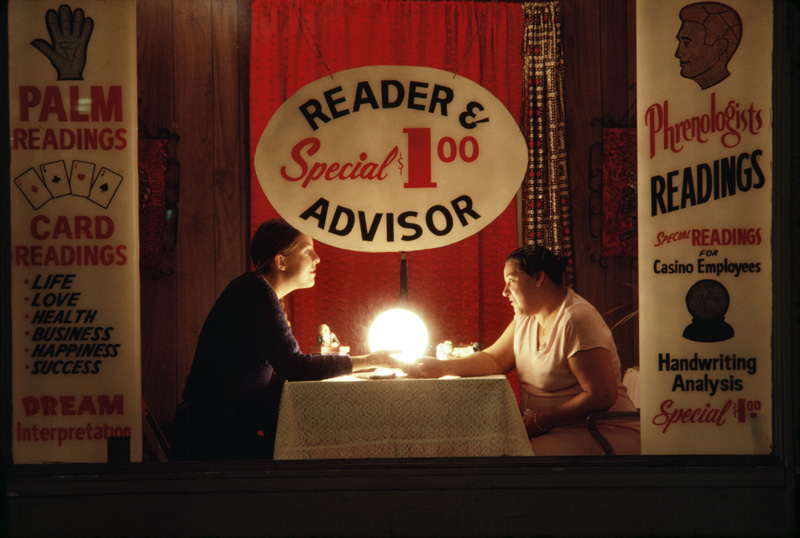
As far as the video prediction, he had a crystal ball into my future, but at the time I thought – video? Are you kidding? I equated video with soap operas and really bad late night commercials. I was a young still photographer just getting a name in the magazine world and starting to make some money in the corporate sector. I couldn’t have been less interested in video at that time.

Fast forward to now. I’ve been shooting video with traditional video tools for over ten years. I give seminars to still photographers who may be thinking of getting into video and I have just made a big investment in both money and mental power and have embraced the HD DSLR tools for an upcoming project I am working on Opening Our Eyes.

I’m not the only still photographer thinking of video these days – it seems like everybody is. As print platforms give way to electronic ones like the iPad that debuted this past weekend, the way we communicate is rapidly changing and along with that there is a huge demand for video. On the April 12th cover of Time Magazine is a portrait of Steve Jobs and inside a review of the iPad entitled “Do We Need the iPad?” The writer Lev Grossman wraps up the article nicely:

“If I have a beef with the iPad, it’s that while it’s a lovely device for consuming content, it doesn’t do much to facilitate its creation. The computer is the greatest all-purpose creativity tool since the pen. It put a music studio, a movie studio, a darkroom and a publishing house on everybody’s desk. The iPad shifts the emphasis from creating content to merely absorbing and manipulating it. It mutes you, turns you back into a passive consumer of other people’s masterpieces. In that sense, it’s a step backward. Not much of a fairy-tale ending. Except for the people who are selling content. Read more: http://www.time.com/time/business/article/0,8599,1976932-2,00.html#ixzz0k3oIUDqY

In Time’s editor’s column “Ushering In a New Era”, Managing Editor Richard Stengel talks about making the magazine available on electronic devices like the iPad and Time will soon be delivering it’s entire contents to paying customers as a self contained application that can be downloaded to the iPad. Sports Illustrated is ready to go electronic as well.

If this doesn’t send a signal to still photographers the need to diversify and embrace video – what will?  With print moving to electronic delivery – the demand for video will increase. I sit on the National Board of ASMP and we recognize this changing paradigm. In fact that is exactly how I came to be involved with the Board of ASMP. I was asked to run for the Board because of my video experience. It’s been a year since I’ve been on the board and in that time I have set up a motion/video committee with the intention of gathering and sharing information about video production.  So far, through the efforts of the committee  an online resource for video was developed and has been uploaded to the ASMP website.

I continue to learn as technology drives us forward and I continue to network and collaborate with people. One person that I’ve learned a lot from is Richard Harrington of Rhed Pixel. Richard is one of those guys that never seem to sleep. He runs a successful business, teaches, writes and shares a lot of information on various forums like Creative Cow and on his own blog. I’ve also worked with Richard’s team of motion graphics animators on an industrial that I produced last year. I continue to learn from Richard who has just written a book called “From Still to Motion” that I can’t wait to get my hands on. It’s all about working with the hybrid DSLR cameras.

Looks like that psychic was right – at least about the video. Not sure about the past life Inca thing but it makes you wonder doesn’t it? Was it destiny? Or was it just that I was a restless soul at the time wanting to learn more about how I could tell a story and with what tools.  Not really sure – I’m just glad that I followed those instincts.

Add to FacebookAdd to DiggAdd to Del.icio.usAdd to StumbleuponAdd to RedditAdd to BlinklistAdd to TwitterAdd to TechnoratiAdd to Yahoo BuzzAdd to Newsvine

Fast, Cheap and Good

A colleague of mine, Blake Discher just wrapped up a seminar series for ASMP entitled I Stink at Negotiating. In his presentation, Blake says I tell my clients when they ask for fast, cheap and good – they can pick two.  Such a simple statement – but right on target as far as advice for negotiating.

Photographers want their clients to know the difference between what they can offer as professionals compared to any amateur with a camera.  They want to be paid accordingly for their experience.  They want their clients to understand the difference between what they bring to the table compared to a non professional.

But there seems to be a disconnect between that philosophy and how still photographers perceive themselves in terms of adding video to their business. Many think that by buying a DSLR camera that shoots stunning video visuals, that’s all it takes to get into the video production business. The problem is they are thinking the same way their clients are who can’t discern the difference between a professional and someone who has a camera that also shoots video.

Technology has once again lowered the bar for entry level into video production. And still photographers who equate buying a still camera capable of shooting video with being a professional motion shooter or videographer are forgetting some real important factors.

1.    You think totally differently when shooting video.
2.    There’s a lot more facets to video production than just the shoot.
3.    Most people who are working on professional motion productions and are using a DSLR or VSLR camera have spent more than twice the price of the camera on third party accessories.
4.    There’s a steep learning curve of other aspects of video production – namely capturing good audio, editing, and output.
5.    Video is a collaborative process with an entirely different workflow than still photography.

Still photographers have a hard time with #5 because by nature they are independent creatures used to controlling and doing everything themselves.  But video is all about collaboration and as soon as one realizes the power of networking, collaborating and partnerships – they understand the concept of video production and raising their own bar by collaborating with others.

I recently gave a seminar in Portland, OR where I had a chance to talk to Andy Batt who is quite knowledgeable with VSLR’s and has produced some beautiful work with them.  I learned a lot from Andy about some of the idiosyncrasies of theses cameras.  I don’t own one yet, although I will be purchasing a Canon 5d and 7D along with additional Zacuto accessories for a personal project I’ll be working on, where I will be shooting both stills and video and will be living out of a backpack for three months. So to economize on space – this seemed like the right way to go.
Andy and I do totally different things and work in totally different markets but we can learn from each other.  Andy works with large crews and on big productions.  I work more journalisticaly, with small crews in direct corporate and institutional markets.  But we both know that it’s not just about the equipment and it’s not a one size fits all when it comes to choices made in that regard.  We also know that it’s not a one size fits all when it comes to pricing and in terms of usage and licensing.  What might play in one market – simply won’t in another.

The point is buying a VSLR isn’t what will get you in the game of video production.  There’s more to it.  And there isn’t just a rack of template prices that apply to all.  We are hired for who we are, how we see, how we work and our experience. The ones who will be successful will understand that it’s not about just having a camera capable of shooting good visuals.  The ones who don’t understand will be expected to deliver Fast, Cheap and Good.

Add to FacebookAdd to DiggAdd to Del.icio.usAdd to StumbleuponAdd to RedditAdd to BlinklistAdd to TwitterAdd to TechnoratiAdd to Yahoo BuzzAdd to Newsvine

Putting Together a DSLR Video Kit – And Why

I was in Chicago a couple of weeks ago and stopped by Zacuto. Zacuto is a business that has made outfitting DSLR cameras for video a specialty. They have cleverly engineered an assortment of their 3rd party add-ons that take these cameras to a higher level. They have also provided solutions to overcome some of these cameras shortcomings. Depending on the genre you are working in, documentary work, corporate, indie films or photojournalism will ultimately determine which way you’ll need to “trick” these cameras out.

I was looking for products that were designed to help with camera stability, focus aids and audio when using the Canon 5D or 7D which I will soon be purchasing. My motivation for buying these cameras wasn’t because I was moving to video for the first time, because I’ve been shooting video for 11 years and already have a high-end HD camera – the Sony EX-1.   The main reason that I will be buying these hybrid cameras is that I am undertaking a global project where I will be shooting both still images and video where I will literally be traveling around the world for a three month period and I can only bring what I can carry on my back. So taking two camera systems was out of the question.

I tested quite a few items at Zacuto but finally settled on the following solutions. For my audio needs I will use my existing Sennheiser shot gun mic and lav/transmitter/receiver kit. But I decided to capture my audio independently using the Samson H4 Zoom digital audio recorder and will sync it later in post. I also opted for the EZ-Finder that is an eyepiece that snaps on over the monitor. This not only makes it easier to focus in the sunlight, but provides a point of stabilization as well. Speaking of stabilization, I have also opted for the DSLR Sharp Shooter rig that comes with a shoulder mount, Zgrip Z-mount and mini baseplate with quick release adaptor. I supplemented that rig with a FLEX-DSLR remote trigger and a 3.4 lb. counterbalance weight.

I’m glad that I personally visited Zacuto and tried out the rig – fitted to me. It felt right and fit with the way I am accustomed to shooting. A hybrid solution that bridges the still photo and video worlds. I’ll need a lighter weight tripod and am hoping to keep my Manfrotto fluid head. I’ll need to purchase a backup MacBook Pro and portable hard drives because my workflow will be tapeless and therefore redundant.

That’s going to be a lot of gear on my back. Guess I’ll be packing light when it comes to my personal needs.

Add to FacebookAdd to DiggAdd to Del.icio.usAdd to StumbleuponAdd to RedditAdd to BlinklistAdd to TwitterAdd to TechnoratiAdd to Yahoo BuzzAdd to Newsvine

Fear, Blame and Responsibility

The title of this entry alone will probably stop most people from reading on, but for those of you who’ve continued,  be prepared for some cold harsh comments.

I had a lousy weekend – one of those weekends where everything went wrong – first the power steering went on my car while I was driving, then my printer broke – I got a message saying something like it was past it’s life – and then I fell halfway down the basement steps and landed hard on my elbow. My elbow is still throbbing but as long as I can move my arm, I think I’ll opt out of a trip to the emergency room because I can’t afford the medical bills – I’m already strapped by paying an annual premium of $18,000 with a $7500 deductible on each occurrence. What’s wrong with that scenario? But I’ll rant about that another time.

What really bothered me most this weekend – even with all the crap above – were some comments made in response to an entry I wrote as a contributor on the blog of my trade association. My entry was about “The Business of Video Production” and it was the last post of the week in a series of posts about video. The person writing the comments was clearly upset that his photographic trade association had been blogging about video. He was angry that so called “experts” who had themselves just recently gotten into video by buying a DSLR were claiming to be “god’s gift to video production” and encouraging members to move into video which he was sure was a terrible business move. I took offense with his words. I have been involved in video production for over 11 years and not new to the game as he implied and I don’t shoot with a DSLR but a “real” video camera and even if I did – the tool in itself doesn’t define my skills as a motion shooter. But what bothered me was the fact that he took his time to complain about a blog entry that I wrote, in my own free time with the good intentions of “sharing” my knowledge with my peers. No good deed goes unpunished.

After thinking about it, I realized that  I had written something that he didn’t want to hear. He wanted to hear that the photography business will go back to the way it used to be. He was angry and he took it out on me. He needed someone to point the finger at – to blame for the poor economy and its effect on the photo business. This morning Seth Godin wrote a blog entitled “Frightened, clueless or uniformed” where he writes “In the face of significant change and opportunity, people are often one of the three.” And this was a perfect example where this person was all three.

My first reaction was to question why I should devote my time to writing and sharing with others through social media only to be criticized for it.  But I’m not one to retreat and let the whiners of the world win.  I was raised by a father who was a city smart kid growing up on Chicago’s West Side and a mother who grew up in the remote reaches of the Upper Peninsula in Michigan.  They didn’t tolerate whiners and complainers and people who wouldn’t take responsibility for themselves. They taught me that if I wanted something, it was up to me to make it happen and if I didn’t – I had no one to blame but myself.  More importantly they taught me to believe that I could achieve anything I put my mind to. And that is how I try to live my life – in pursuit of my dreams.

So my suggestion to people who don’t happen to like what I’m suggesting or writing about – make some suggestions yourself.  Contribute – share – do something positive for yourself and others.  Come up with solutions – find opportunities – keep your mind open to possibilities.  Stop kicking the dog.  Stop being angry that things aren’t the way they used to be and start looking at how things are better because of technology  – and start using it to make a positive change in your life.

Life’s too short to spend it complaining.

Add to FacebookAdd to DiggAdd to Del.icio.usAdd to StumbleuponAdd to RedditAdd to BlinklistAdd to TwitterAdd to TechnoratiAdd to Yahoo BuzzAdd to Newsvine

The DSLR as a Business Model

Sounds silly doesn’t it – “The DSLR as a Business Model”? That’s because it is silly to think that a camera can define or be a business model. But that’s what so many still photographers are doing – thinking that because they buy a DSLR capable of shooting video, they have gotten got into the business of video production.

Let’s start with the fact that in video production, the shoot and the camera is just one part of the process. There’s also sound, script writing, editing and output that one must know how to do or collaborate with people who know how. And if you position yourself as “just” a camera operator, you will quickly find out that not only you will have no ownership and control over the full process – but you will be missing out on making income on other facets of the video production process. For this reason, I position myself as a producer/director.

Even if you want to position yourself as a shooter, you shouldn’t be defining yourself by your tool – but by your vision. If you do define yourself by a camera that is very affordable and that lowers the bar on the entry level into video production – you’ll be competing with everyone else at that bottom level. Not to mention that shooting video is much different than shooting still images. I think and shoot differently when I’m shooting video – keeping my eye on the big picture and how I will get into and out of a shot.

Lastly, there are a lot of things I like about the DSLR’s, namely the extraordinary visual and the fact that I can shoot both mediums with one camera. But there are some shortcomings of these cameras that will keep you out of certain markets in the video arena.

Here are a few disadvantages these hybrid cameras have:

Audio – The built-in mic is not acceptable and the camera doesn’t have a professional XLR input. There is also no way to monitor audio with headphones. Best way to achieve good audio with these cameras is to capture it with a separate digital recorder like the Samson H4 Zoom.

Stability – With video you are shooting time in motion – not moments in time – so it’s critical to hold the camera steady. This is no easy feat when you have no brace points. Because you are shooting with the mirror up – you aren’t looking through the viewfinder and thus bracing your eye against the camera body. There are attachments that go over the LCD monitor and provide an eyepiece like the Zacuto Ez-finder.

Rolling Shutter or Jello Effect – The effect occurs when you quickly pan the camera and causes vertical lines to distort. So don’t do fast pans and eliminate anyone walking into and out of the frame quickly.

Editing – DSLR cameras record in AVCHD format using the H.264 codec. This usually means more time spent converting or rendering the files when you bring them into your editing system.

Frames Rates – 30P vs 24P – Converting your frame rate from 30P to 24P to achieve that film-like look – can be somewhat problematic with audio drifting and getting out of sync. Some cameras now have variable frame rates to choose from.

Bottom line – think beyond the camera if you’re thinking about getting into video production.  Define yourself by your vision – not your tool.

Add to FacebookAdd to DiggAdd to Del.icio.usAdd to StumbleuponAdd to RedditAdd to BlinklistAdd to TwitterAdd to TechnoratiAdd to Yahoo BuzzAdd to Newsvine

Mistakes People Make When Starting a Video Production Business

  • They focus too much on the “tools” and not the “technique”. These days video equipment is relatively cheap. Therefore the entry-level bar has been lowered for video production. Learn your skill set and be unique – have your own vision or point of view that separates you from the rest.
  • They skimp on the audio, tripod and lighting. The camera is just one piece of equipment you need. You also need independent external microphones to be able to capture good audio as well as a good tripod with a fluid head. If you’re going to be shooting indoors or doing interviews – you’ll  need some lighting equipment. You can either go the route of hot lights or LED panels which are portable and cool but costly.
  • They forget about the editing and output. Shooting  is one thing – editing it and getting it “out” is another. Learning to edit will make you a better shooter. You quickly realize in the editing room what you SHOULD have shot in the field.
  • They don’t diversify. This is important when first starting out. It will pay the bills and will help you get better at what you do. And it may also help you in find your niche.
  • They forget about marketing. Lots of people have equipment and even more people have great ideas but if they don’t promote their business, they’ll spend their days waiting for the phone to ring.
  • They don’t realize that business is about people – not just the tech. Work on your people skills and your business will flourish.
  • They don’t network. Networking of course is critical for  getting new business.  It’s also beneficial to network with other people in the video production business. Video production is all about collaboration, so it’s essential that you get to know shooters, sound mixers and editors. Join listserv groups and go to meet-ups in your area.
  • They under-estimate what a job will cost in both time and resources. There are many facets to video production – the shoot, audio, editing, music, graphics, motion graphics, scripts, voiceovers and delivery. If you won’t be facilitating all those facets – then you need to determine how much it will cost and present that in your estimate.
  • They don’t draw up a production schedule. This is essential to keeping a job on target. Make sure that each step of the project has a delivery date specified and signed off on.
  • They don’t realize that they are under insured. Many people coming from a still photography background don’t realize that their current insurance policy does not necessarily cover video production.
  • Add to FacebookAdd to DiggAdd to Del.icio.usAdd to StumbleuponAdd to RedditAdd to BlinklistAdd to TwitterAdd to TechnoratiAdd to Yahoo BuzzAdd to Newsvine

Print vs Electronic – What Is The Future?

Just yesterday I was talking about the good and bad of social media and the potential pitfalls with time management. My routine each morning is to check for any news items on Twitter or Facebook or bookmarked blogs after catching up on my email. This morning there was one post on Facebook that caught my eye and was definitely worth the click through.

Via Mashable.com was Time Inc. Show Us Their Idea of The Future of Magazines [Video]. It was about how publishers are preparing digital versions of their magazines for the Apple Tablet. Apple hasn’t even officially confirmed they are working on this device. Embedded in the post was a pretty sophisticated demo of Sports Illustrated.

Amazing as the demo was – it had its critics. Check out Gizmodo’s post Time’s Manhattan Project Will Explode Like the Atomic Bomb It Is. The article questions how it’s any different from a web page and at ten times the cost. They state it’s pretty packaging but still stale and dead.

The future of publishing is an interesting debate. I suppose it really all comes down to how we the consumers want our information. What do you think?

Add to FacebookAdd to DiggAdd to Del.icio.usAdd to StumbleuponAdd to RedditAdd to BlinklistAdd to TwitterAdd to TechnoratiAdd to Yahoo BuzzAdd to Newsvine