How a Film Can Make a Difference

I never fully realized the power that is within me to make a difference, until recently.  Last summer, my daughter and I spent time with extraordinary people who were providing homes for orphans, feeding the hungry and curing the ill.  They were all people we met while making a documentary about the change makers in our world – people who are making our planet a better place.
Our goal was to inspire and motivate others as to what they can do to make a difference in their own communities. Our goal was to cause a shift, in culture and in thought – from “what in it for me?” to “what can I do?” We’ve just begun to submit this documentary to film festivals and show sneak previews to small audiences but I can already tell that this film has affected change and the potential it has to move people to action.

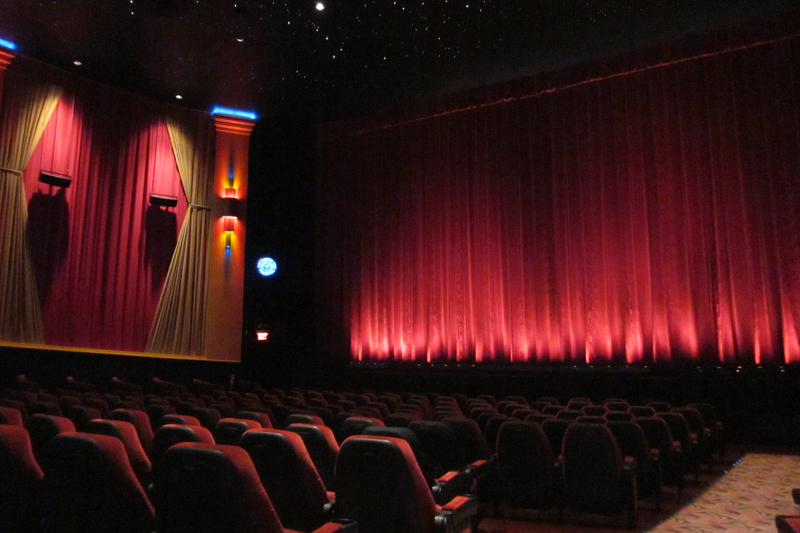
From our first sneak preview at the beautiful State Theater in Traverse City, MI to a recent screening at MIS in Sao Paulo, Brazil, I feel the energy in the room and the collective desire to strive for a better world.  I feel the power of film and the power within me as a storyteller and filmmaker. I feel the time for this film is now and that people are hungry for hope.

Many documentaries take the critical point of view and certainly have more conflict. Opening Our Eyes is different from other docs in that it shines a light on what IS being done to create positive change by individuals all over the world.  Somehow by showing the small acts, this film makes all of us believe that we can create change as well. It empowers us to believe in the possibilities and gives us the hope we seem to be yearning for these days.

When I first conceived of the idea for this film, inspired by friend and neighbor Maggie Doyne, I was looking for some positive hope myself.  I was tired of listening to the hundreds of “experts” on TV talking and all of them needing to be “right” – and nothing was getting any better. That was long before the Arab Spring and the Occupy movements. What I was sensing was the rest of the world was feeling the same way I was and decided to do something about it.

Time will tell if the film continues to create awareness and moves people to action, but at least I’m hopeful again.

Please consider supporting our effort by making a contribution to our IndieGoGo campaign, which only has a few weeks, left to go. And it’s tax deductible.

We can’t do it without your help.

Add to FacebookAdd to DiggAdd to Del.icio.usAdd to StumbleuponAdd to RedditAdd to BlinklistAdd to TwitterAdd to TechnoratiAdd to Yahoo BuzzAdd to Newsvine

Sassed by a Hooker in Vegas

OK, I admit it,  Las Vegas is not my favorite place in the world, but it is thought provoking.  After spending a couple of glorious weeks in New Zealand with its dramatic natural landscapes and warm, trusting people (I was surprised to find out that they have no airport security for domestic flights in NZ), I was thrown into a culture shock by heading straight to Vegas.

Whenever I’m in Vegas, I feel like I’m in one of those awful reality shows where everyone exudes bad behavior.  What do you expect from a city that encourages bad behavior in their advertising campaign.  It’s a non-stop show of human excess and decadence.  It’s great for people-watching but it depletes the soul.

One evening a group of friends and I watched the endless parade of humanity –  at its worst.  Women wearing outfits that they definitely don’t look good in, everybody over imbibing on something or other and hustlers of all kinds – everywhere. So, I was amused when a hooker caught my glance and made a remark about me looking at her.  Isn’t that’s what she’s going for – to be noticed?

I suppose I’m at a point in my life where I have no use for an environment that is the opposite of what is important in my life – tranquility and beauty.  I wonder – what is it that attracts people to this destination – is it the chance of getting “lucky”? Or is it a place they feel they can go to be their “real” self. If so, I wonder why they need Vegas for that?

I don’t get it but I was happy to go home – or back to New Zealand.

Add to FacebookAdd to DiggAdd to Del.icio.usAdd to StumbleuponAdd to RedditAdd to BlinklistAdd to TwitterAdd to TechnoratiAdd to Yahoo BuzzAdd to Newsvine

Competing With Yourself

I started writing this blog a couple of days after I got to New Zealand. Now I am in the airport lounge waiting for my departure after an incredible 16 days in this country.

When I began this post, I had just won the Bronze award for Travel Photographer of the Year at the SATW (Society of American Travel Writers) convention in Wellington, New Zealand. I was up against some pretty stiff competition from some of the best travel photographers in the world, so it was an honor that I greatly appreciated.

On the last evening of the convention, they announced the winners of the Photographer Shootout that had taken place the first 3 days of the trip. The starting point was the Auckland airport where all the photographers involved were given their own vehicle – each identical in every way so as not to give anyone an unfair advantage. You could make your own itinerary and go anywhere you wanted to on the North Island – as long as you returned the car in Wellington – 3 days later by 5PM.

The weather was mixed as it usually is during springtime in most countries. We had some clouds, some sun and one morning of hard rain. One of the challenges of course was driving on the left side but that wasn’t as frustrating as the lack of a “shoulder” along the road to pull off to when I saw a magnificent sight – which was just about every 5 minutes. The distances were deceiving and invariably I had twice as much on my itinerary that I ended up getting to.

When I finally returned the car, I was happy to be rid of it – weary of the winding roads that were quite challenging at times. I felt good about the photos I had captured – but not overwhelmed by them because there were so many that I knew I had missed. When they announced that I had won second place silver portfolio – I was surprised and delighted because it had been so challenging for me on many levels. I’m mostly a people and city photographer, so in a country that’s known more for their scenery than large population centers – I was constantly pushing myself out of my norm.

I think that is why the shoot out reward is particularly meaningful to me. I wasn’t trying to beat out my competition and in fact I didn’t feel like someone else needed to lose in order for me to win. I felt good that I had pushed myself out of my comfort zone and every time I have done that, I have been richly rewarded. It was nice to be recognized by my peers and it was nice to win a prize but the best part of all was the feeling that I gave myself. I succeeded in what I had set out to do and that was to try something new and face some trepidations.

The older I get I realize that it’s all about the journey – not the destination.

Add to FacebookAdd to DiggAdd to Del.icio.usAdd to StumbleuponAdd to RedditAdd to BlinklistAdd to TwitterAdd to TechnoratiAdd to Yahoo BuzzAdd to Newsvine

It’s All Connected

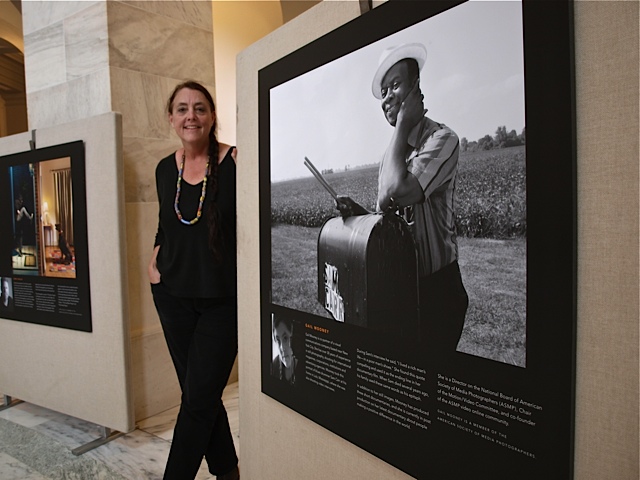
Over the past couple of weeks, I’ve had numerous experiences where things I’ve done in the past have resurfaced in ways I couldn’t have imagined. Last week blues musician Willie “Big Eyes” Smith passed away. He was one of the only two Delta blues musicians still living who had been part of my first short documentary The Delta Bluesmen. That same week, I had a photograph hanging in an exhibit by the Copyright Alliance, Recording Our History: Faces Behind the Camera, in the Senate building rotunda in our nation’s capitol. It was a portrait of blues drummer Sam Carr, who I had photographed and interviewed for that same project, over ten years ago.

I knew if Sam were alive he would have been humbled and honored,

Gail Mooney with her portrait of blues drummer Sam Carr in Senate Rotunda, Washington DC ©Eugene Mopsik

as was I, to have his portrait displayed in such a historic setting. I couldn’t help but “feel” proud at that moment in time. Sure, I felt proud of myself and Sam but I also felt a sense of pride to live in a country where I could still freely walk the halls of the Senate building, past the offices of the powerful of today and the ghosts from yesterday. I didn’t expect to feel that way. I was surprised and comforted that we still have this kind of access to our representatives.

It got me thinking about the trip I took last summer with my daughter when we left the country for 99 days, shooting Opening Our Eyes. We had circled the globe and had visited countries that crossed the spectrum politically, economically and socially. Our journey truly did open our eyes and when we returned to the U.S., it was a big adjustment. What hit me most was that everyone needed to be right, especially in Washington DC. I couldn’t watch TV for months because all I saw was 500 channels of “experts” pontificating and no one was getting anywhere. Worse yet, we all suffer.  I remember a time, when I was growing up during the Kennedy era and we asked what we could do for others, instead of what we could “gain” for ourselves.

It’s a year later and I still don’t watch much TV. I’ve found myself  absorbed back into the “culture” of America. But as I walked through those venerable halls of the Senate building, I was reminded of my purpose. I’m a storyteller. I voice the stories of people like Sam Carr so that future generations will remember the way things used to be. History gives us perspective and we can learn from it – or not. Without perspective – we can’t remain free.

Add to FacebookAdd to DiggAdd to Del.icio.usAdd to StumbleuponAdd to RedditAdd to BlinklistAdd to TwitterAdd to TechnoratiAdd to Yahoo BuzzAdd to Newsvine

The Making of a Movie with a DSLR

It’s been a wild ride since I first began this journey of making a feature film with a DSLR camera – in my case, the Canon Eos 5D Mark II. I had already completed three short documentaries to date – all made with traditional video cameras from my first Canon XL-1 to my current HD Sony EX-1. But this time I was heading out on a 99-day journey around the globe, with my 23 year old daughter in search of ordinary people on six continents, who were making a difference in the world, and we had to pack light.

We were “the crew” – the two of us. We had to work efficiently and with gear that would fit into two backpacks and would endure the adventure as we traveled to 17 different countries on 30 flights. I also wanted to shoot both still images and motion, so I opted for the DSLR solution. Of course, I was enchanted by the “big chip” and the cinematic look of these cameras, but I was also thinking of my gear in practical terms – how I was traveling – how I would be shooting – and of course the desired outcome.

You can read more about the gear I took here.

So with my daughter “running sound”, doing the interviews with our subjects, shooting still images, and navigating us through the subway systems in Moscow and Buenos Aires, and me taking care of all the logistics and  shooting both video and stills, we came back 99 days later with almost 3000 gigabytes of content – that’s approx. 150 hours of footage and 5000 still image captures!

I wasn’t mentally prepared for what came next and that was 2 intensive months on my part ingesting all the content into my editing system, transcoding and adding metadata to the files and culling through hours of interview soundbites until I had cut it down to three . It was grueling and my winter months were spent putting in 14 hour days – 7 days a week. I was overwhelmed, yet somehow driven by some force.  It was a lot of work, it was tedious and it was daunting – but yet it was my passion and somehow this inexplicable “force” got me through it.

I raised money along the way through crowd funding on Kickstarter and with that, I hired an editor. After I handed the project off to my editor, Erik Freeland of Springhouse Films, there was a huge sigh of relief on my part. I knew the post production had a long way to go but, I also knew that I had to let it go for a while and step back. Working with Erik has been amazing in itself and he has brought enormous value to this project and film. I have learned a lot from his insights and his talents in knowing how to” tell a story”, and we are finally coming to the completion of this film. Or at least in getting the “first cut” done for a sneak preview on July 17th, at the State Theater in Traverse City, Michigan. The screening is by invitation only and if you would like to attend, just drop me an email at gail@openingoureyes.net and tell me how many people would like to attend.

Since I first dreamed up this project in the final days of 2009, to the departure of our trip in the Spring of 2010, to where we are now, it has been a continual journey on every level imaginable. And I have had many angels working on my behalf – my husband Tom Kelly who has been the “wind beneath my wings” and without his support none of this would have been possible, my extended family who have been amused over the years with my schemes and dreams, my dear friends Angel Burns and Ally Raye who have believed in me and this project and have made incredibly exciting things happen for this film. (I’m not quite ready to divulge some of those exciting things publicly, just yet), Maria Grillo and Jason Harvey at The Grillo Group who have been so giving with their time and talents and created all the graphic design for the film’s release, and so many other “angels” who have helped me with foreign translations, been financial backers, helped me spread the word globally, and every person who was there for me when I needed support and encouragement. I am deeply grateful to have all these people in my life.

We live in an empowering time. When I began my career as a still photographer, over 30 years ago, I never would have imagined doing any of this. In fact just two years ago, none of this would have been possible. Our dreams are as big as we want them to be. I have seen this dream clearly from the start and each day I get closer and closer to seeing it become a reality.

Watch the Trailer

Add to FacebookAdd to DiggAdd to Del.icio.usAdd to StumbleuponAdd to RedditAdd to BlinklistAdd to TwitterAdd to TechnoratiAdd to Yahoo BuzzAdd to Newsvine

A Year Ago Today – The Beginning of Our Documentary and the DSLR

It was exactly a year ago today that I left with my daughter on a 99-day journey around the world to create a documentary about people on six continents who were making a difference in the world. I was not new to video or documentaries, having shot motion for over twelve years and completing three short films.  But this was big – not in the sense of “big production” or “big crew” or certainly not “big budget” – it wasn’t any of those things but it was indeed BIG.

I had no idea how big it turned out to be.  The trip in itself was almost the easy part, although don’t get me wrong – it was arduous on every level.  What was overwhelming was taking the project from idea to completion.  Had I known how overwhelming it has been at times, I may have reconsidered – or at the very least had a bigger crew.

The crew was my daughter and myself.  I shot video. She shot stills.  She interviewed the subjects and ran sound.  I operated the camera and shot B-Roll.  She research, scheduled and pre-interviewed the subjects and I worked on all the logistics – travel, travel needs and gear.  I thought about gear long and hard and decided to go with the hybrid cameras, in my case the Canon 5D Mark II and the Canon 7D.  I wanted to capture both stills and video, but I didn’t want to bring two separate camera systems, so I chose the hybrids. I have written a lot about the gear but the all time most popular post I wrote was about my gear for this 99-day journey.

We returned in September with over 150 hours of footage and over 5000 still images.  Wow!  Talk about overwhelming. I spent 2 solid months of my winter getting the footage into a manageable rough timeline – or at least the sound bites. I handed it off to my editor Erik Freeland of Springhouse Films and he hopes to get me his rough cut this weekend.  I’ve had many conversations with Erik over the past month or so about the story(s) and the arc of the film and he truly understands how to tell a story.  I am extremely grateful that I was able to hire a professional editor and it never would have been possible, without my successful run with Kickstarter.

I have been working a lot in the back scenes with distribution options and I am thrilled with what I am finding.  This is the time for “the documentary”.  It’s possible with small budgets and crews to make a powerful film that can be seen in hundreds of various venues well past the big screen movie houses and film festivals.  It’s an amazing time for “the individual” and what can be accomplished because of technology. That’s another blog for another time though.

I’m headed to California this afternoon to speak at Cal Poly tomorrow evening. Join me if you’re in the area.  For old time’s sake, I took my Eagle Creek bag  – which I had circumvented the globe with.  It seemed like the right thing to do.

Add to FacebookAdd to DiggAdd to Del.icio.usAdd to StumbleuponAdd to RedditAdd to BlinklistAdd to TwitterAdd to TechnoratiAdd to Yahoo BuzzAdd to Newsvine

The “Real” Cost of Shooting Video With the DSLR

There was an interesting thread on  ASMP’s video listservlast week. It started when a still photographer asked if a particular

My DSLR Gear

DSLR camera would help him get into the game  – of video.

Jan Allklier, a Seattle based photographer, shooting both stills and motion summed it up:

“If you simply want to ‘explore the medium’ a hybrid DSLR may well be the right ROI, although it really will only give you a flavor for moving images, not the workflow of professional moving image production, which encompasses a wide range all the way from feature film, to corporate work, to webisodes for small business; and many tools and skills well beyond the image capture device at hand.”

Kevin Kamin, Minneapolis based shooter, reminds us that it’s not just about the camera (or tool), but about the story:

“I understand why some photographers are looking to expand into video, it’s definitely doable, but I believe there is a tremendous underestimation of what  is required to do so. I feel like video is being perceived as simply moving photographs-95% of the videos I’ve seen on commercial photographer’s website are not at a professional level (most feel like overly long, clunky, rough cuts that lack sophistication and a clarity of message). They say that ‘people who are good with a hammer tend to think everything is a nail’ So along that idea, many 
of the videos feel like videos made by photographers, who haven’t fully grasped the spirit of the medium. People can enjoy a still photograph for a minute or 
two, if it is compelling and engaging, but if you have three seconds of video footage that doesn’t move the story or lingers 15 frames too long, you just lost your viewer no matter how pretty it looks. Photography functions differently 
within time based media. 
 Storytelling is the core of video. “

And Chuck Fadely, of the Miami Herald, connects the dots for us, first by passing along a link to Shane Hurlbut Visuals blog that lists the “standard” movie making rental gear for DSLR video. More importantly, Chuck  reminds us that shooting motion is a skill set.  It’s a different way of seeing and shooting.

“The hardest thing about video for a still photographer is learning to shoot in a totally different way. You’ve got to learn to shoot in sequences, with transitions. It takes years to overcome the habits you’ve built up as a still photog — like reframing, adjusting exposure, following action — which are death in video. 

I was a news and feature photog with several decades of experience, with extensive lighting skills, good technical ability, and a knack for learning new stuff. I switched over to video full time and it was shocking how little transferred over. Video is a different beast.”

This was one of the easiest blog posts that I’ve ever written and maybe the most beneficial for readers.  It brings up another important point and that is how much we can learn from each other.  When I started shooting motion back in the mid ‘90’s – there really weren’t any listservs or social media forums where my peers were so forthcoming with information.

When people ask me why I’m so giving and sharing with my knowledge, I always tell them that I get back so much more than I give. What a great time to be alive.

Add to FacebookAdd to DiggAdd to Del.icio.usAdd to StumbleuponAdd to RedditAdd to BlinklistAdd to TwitterAdd to TechnoratiAdd to Yahoo BuzzAdd to Newsvine

The Amazing Age of Convergence ….

…where anything is possible. I’ve haven’t written in awhile because I’ve been traveling. Last week I was in Chicago presenting a seminar at ASMP’s SB3 Seminar. It was the last one in a series and now I’m kind of going through withdrawal. There was so much sharing of information and ideas that no one wanted the conferences to end. But now we all need to initiate some of those ideas and apply some of the things we’ve learned. And that’s the part we can’t forget about – doing the work that will bring our ideas to fruition.

In my last blog I wrote about believing that the impossible is possible. I don’t mean to over simplify that notion and to say that all we have to do is have a positive mindset and things will happen for us. What I really mean to say is that without the belief that we have the power to do anything we put our minds to –we would never try – we would never give something a chance to happen. But along with that comes plenty of times when it just doesn’t happen – the first time, the second and third time and many times after that. And that’s when we need try again – and maybe harder.

The good news is that these days it seems like all our tools are converging to make just about anything possible. We no longer need someone to validate our ideas because we can validate our own. We have affordable cameras that shoot stunning still images and video. We have non-linear editing software to create the stories and we have Facebook and Twitter to get the word out about them. We have crowd funding sites like Kickstarter to raise money so that we can make our ideas a reality. And when our videos are finished we can upload them to YouTube or Vimeo and share them. We can also distribute our creations through image portals, downloaded Apps or through iTunes.

Last week I uploaded a trailer for my documentary Opening Our Eyes. As of today people in 71 countries have played the trailer! I sent the link to less than 30 people and they passed it on, embedded it on Facebook and blogs and it took on a life of its own. That simply amazes me because of the power that we now have to connect and communicate with just about anyone, anywhere in the world. That’s revolutionary. That’s a game changer. That’s powerful.

I’ve just arrived in Las Vegas to attend the NAB show. The National Association of Broadcasters has one of the world’s largest broadcast conferences in the world. All the movers and shakers of the broadcast world are here to network, make announcements about new products and learn. It will be another solid week of input overload with my head bursting with ideas and possibilities. And every one of the ideas has the real possibility of happening because of the age we live in.

If only I had more time.

Editing 150 Hours of Footage From a DSLR

As I roll away the miles, driving the ten hour trip to Michigan to rendezvous with my daughter Erin to film the last of our subjects for our documentary Opening Our Eyes, I realize how desperately I needed a long road trip – just cruising down the highway.  I have been in utter isolation for the past month, editing over 150 hours of footage that we had shot over our ultimate road trip around the world this past summer.  Little did I know that the 99-day journey would be the easy part of this project.

This past month there have been many times that I became so overwhelmed with the process of editing that I wanted to throw my hands up in surrender and just give up.  But somehow I plowed through it, many days putting in 14 plus hours.  I was on a mission and listening to the words of my subjects got me through it.  After all these were some of the most inspirational people I had every met, so revisiting them through their interviews was a constant reminder of the goal of this film which is to create awareness and inspire and motivate others to make a difference and create change.

Ultimately, my challenge is to take ten (soon to be eleven) different stories of people across the globe who are making a positive difference in the world.  After finally getting the tedious tasks finished, of transcoding files and sorting through the good from the bad clips, I arrived at a point where I needed to start telling “THE” story.  Meaning I needed to determine how I could best structure the film to convey the common themes between my subjects.

In order to see the story clearly – I needed to get away from the technology. So as the miles roll by, the story becomes  more vivid in my head.  I see the hero(s), the themes, the commonality and the arc of the story as the stories intertwine.  I won’t give away too much information other than to say that the solution is simple.  They aren’t eleven different stories after all. It’s really a global story about the power of one.  How one individual can create positive change and not only effect generations to come but change themselves as well. It’s a basic human story that resonates with all of us.

When I started writing this blog I was going to talk about editing tech tips. Somehow as the miles rolled by and my head became clear of the intense electronic input from the past month, I not only saw the story, but I felt it.  I had gotten back on track and gotten to the heart of the story.

Add to FacebookAdd to DiggAdd to Del.icio.usAdd to StumbleuponAdd to RedditAdd to BlinklistAdd to TwitterAdd to TechnoratiAdd to Yahoo BuzzAdd to Newsvine

Telling the Story with the DSLR

The sub-title should read…”or with any camera for that matter”.  For those of you not new to this blog, you know that my mantra is “it’s not about the tool”.  And my other mantra is “embrace collaboration”.

But back to the thought behind this blog entry and that is “telling the story”.  I recently read a great book that a dear friend had given me about screenwriting called “Save the Cat” by Blake Snyder. Snyder’s book is geared more toward writing a fictional screenplay, as opposed to writing a narrative for a documentary, but I thought it would be helpful for me as far as learning more about the dynamics of story telling – and indeed it was.

Snyder talks about the different genres that most movies fall into.  The category that my documentary came closest to if I was writing a fictional piece was what he referred to as The Golden Fleece. Blake writes:

“The name comes from the myth of Jason and the Argonauts and yet it’s always about the same thing: A hero goes “on the road” in search of one thing and winds up discovering something else – himself.”

“Like the twists of any story, the milestones of The Golden Fleece are the people and incidents that our hero or heroes encounter along the way.  The theme of every Golden Fleece movie is internal growth, how the incidents affect the hero is, in fact, the plot.

“It’s not the mileage we’re racking up that makes a good Golden Fleece, it’s the way the hero changes as he goes”.

Wow, I thought as Snyder’s words resonated with me and how I “saw” the documentary that I was in the midst of editing.  In my case, I had many heroes who in setting out to make a positive difference in the world had also experienced intense and rewarding personal growth.  I too had changed and grown, along with my daughter who journeyed with me to tell our subjects’ stories.

As I read more of Snyder’s book, my vision of our film became much clearer in my head.  This week, I had a meeting with the editor who will be collaborating with me on this film.  I’m thankful that I was able to have a face to face meeting with him where we could both get a better feel for each other and more importantly  – the story.  We had a wonderful conversation about the story that I wanted to tell – the heroes – the conflicts – all those things that are part of a good story.  I knew we were on the same page when he said: “It’s not about the trip – it’s about the journey”.

Or as Snyder writes:
“It’s not the incidents encountered.  It’s what the hero(es) learn about himself from the incidents that make the story work.”

We’ll see if I can do my heroes justice in telling their stories, but I’m not alone in this task.  I’ll be collaborating with an editor who not only has an understanding of “the story” but the skills and ability to make it come to life. What joy.

Add to FacebookAdd to DiggAdd to Del.icio.usAdd to StumbleuponAdd to RedditAdd to BlinklistAdd to TwitterAdd to TechnoratiAdd to Yahoo BuzzAdd to Newsvine