Photographers/Filmmakers as Publishers/Producers

It’s been a busy year, trying to manage jobs and lots of road trips giving seminars for ASMP to photographers who may be contemplating video.  I’ve enjoyed meeting my peers and sharing information through my presentations as well as on my blog, but I need to take some time to get back in the field and capture my own “moments” and “motion”. I need to spend some time “doing” right now and ultimately that will make what I have to share that more valuable and meaningful. So I will be embarking in a couple of weeks on a “passion project” that will take me around the world for 99 days.

It’s an exciting time to be working on a personal project because of various distribution possibilities and portals that are in everybody’s hands.  Ten years ago when I got started in video, technology made it possible for me to create documentaries and films without the need of large crews and big budgets.  And now with the web, fast download speeds, video host sites, mobile devices and itunes – I can – we all can be publishers and producers and get our content out globally. The pipelines have been democratized and it’s a very empowering position.
I’ve spent a career on the road and on assignment for various publications and corporations.  I’ve been fortunate to have worked for magazines like National Geographic Traveler, Smithsonian and Travel & Leisure shooting stories on destinations and people all over the world. I suppose you could say that I lived the life I dreamed of. I was shooting these assignments at a time when magazines were giving me ample time in the field to come back with a story – back when travel magazines ran stories as opposed to survey pieces or celebrity profiles. More importantly, I maintained the copyright of my images and was free to market them as I wished after a standard embargo period was over – usually around 90 days.

These days many publishers issue “work for hire” contracts, so essentially photographers are giving up their copyright. Photographers have always been strong advocates for copyright and I include myself in that position.  But in our advocacy to keep strong copyright laws in place, we end up fighting for that right for large corporations and publishing empires who ultimately take away our copyright in lopsided contracts.  And for the most part these contracts are not negotiable.  You either agree and take the job or you don’t.

These days because of technology we can be our own publishers and deliver our stories and other content in a number of different ways.  Sure it means taking the risk up front but that in itself brings its own rewards. It’s very liberating to be shooting and answering only to myself – not second-guessing someone else.  I take more chances creatively because I’m not afraid to fail.  And every time I’ve ever done that, I’ve grown and the rewards have been many – both creatively and financially.

I don’t know exactly how and where my Opening Our Eyes project will be distributed when I complete my journey.  But these days – it could be a book, a multimedia exhibition, a feature film distributed through itunes or on a DVD through Amazon, various magazine articles or broadcast.  I could package the journey and the back-story and give talks to universities.  An endless sea of possibilities.  What an amazing time we live in where we can all make our dreams come true.

Add to FacebookAdd to DiggAdd to Del.icio.usAdd to StumbleuponAdd to RedditAdd to BlinklistAdd to TwitterAdd to TechnoratiAdd to Yahoo BuzzAdd to Newsvine

Shooting With the Canon 5D Mark II

Two weeks from today, I will depart for a 99-day journey circling the globe working on a passion project Opening Our Eyes.  It will be both an adventure and a humbling experience.  But right now I’m getting down to the wire and trying to tie up a million loose ends.

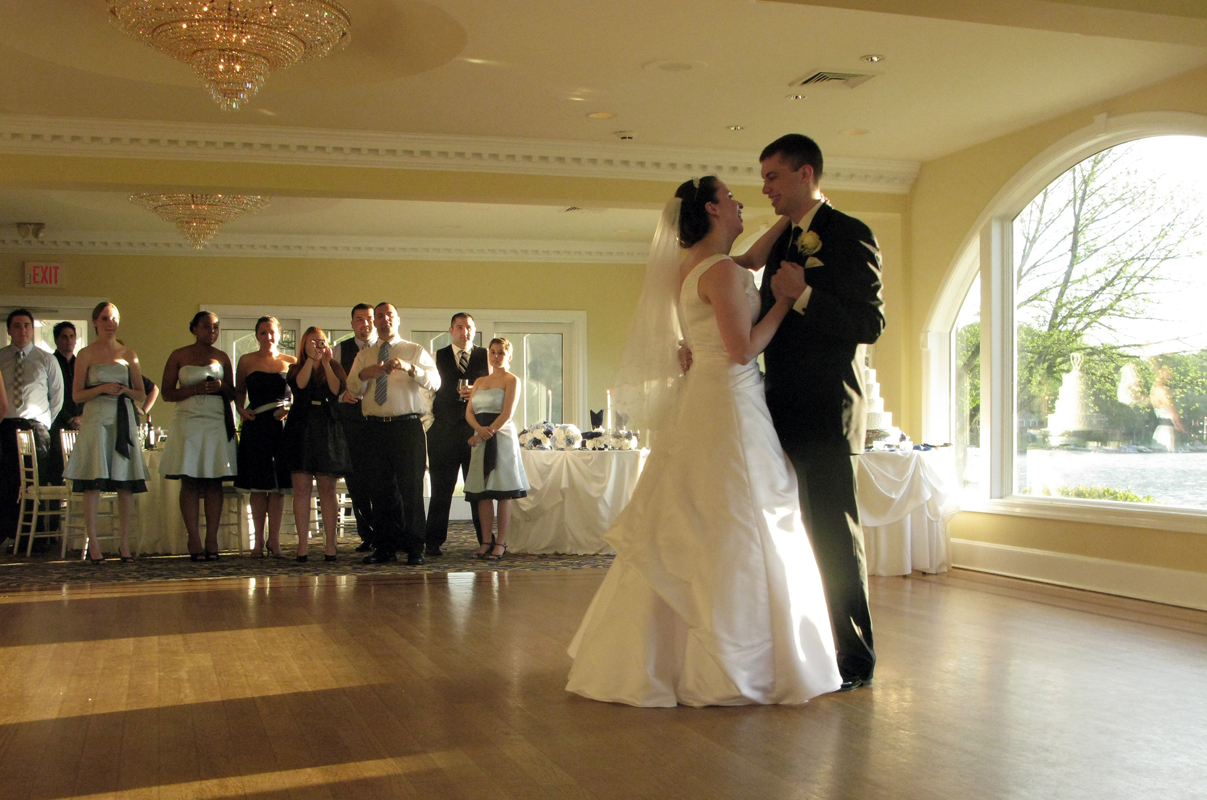
This past weekend, I took a break from the details to attend the wedding of my nephew – my sister’s oldest son.

Chris and Trish Saal ©Thomas Kelly

I thought this would be a great opportunity to really do a test run with my new Canon 5D Mark II with the Zacuto rig Striker.  I wanted to capture good audio as well so I ran the Rode mic via XLR connection to the JuicedLink DT454.  To be honest, I was going to capture the audio two different ways – via the JuicedLink and also straight from the mic to the camera via mini jack, but I forgot to bring the XLR to mini jack cord so I ended up capturing all my audio via the JuicedLink. Because the 5D has had a firmware upgrade where I was able to turn off the AGC, I used the JuicedLink with the AGC disabler turned off. But until Canon issues a firmware upgrade for the 7D that allows you to turn off the AGC, you can use the JuicedLink to disable it.

Ultimately this combination was a nice way of working candidly.  I had the Rode mic and JuicedLink attached to an extender on the top of the camera, although I will probably attach the JuicedLink to the Zacuto rig in the future, leaving just the mic on the camera’s hot shoe.  But either way, I was able to get good ambient sound and/or spontaneous sound bites from people. I had done previous testing to know that I first needed to calibrate the camera audio by going into manual settings and dialing the audio down half way.  Then I dialed the volume down on the JuicedLink to whatever setting is necessary according to the meter levels.  In a noisy atmosphere with loud music like a wedding reception, I had it dialed way down.  You never want “hot” audio where the volume levels are spiked.

The image is simply stunning and I am really sold on the look. I shot in late afternoon sunlight as well as on a dark dance floor and the camera handled both beautifully.  The Striker rig with the Zacuto Z-Finder Pro 3Xworked great for stabilization and I didn’t find the focusing to be as hard as I thought it would be.  The Z-Finder Pro 3X is very sharp with built in diopters.  The striker is light and with the camera strap around my neck, it was easy to be in standby mode, relieving some of the stress on my hands.

I did notice though that I tended to start shooting more with a still “moment” mentality rather than in video/motion b-roll.  When I shoot video I have a mantra running through my head to “shoot and move” – meaning shoots lots of variations, from wide shots to close-ups from a variety of angles.  When shooting at the reception I found myself defaulting to one spot – rather than covering the angles and focal lengths, but then again I was caught up in the “personal” moment of the event so I wasn’t thinking too much about “getting the job done”.

All in all I have to say that I really loved working with this camera and I definitely love the “feel” of the images.  I can’t wait to really test it out over the next three months, and I’ll keep you posted.  See a short video “snippet”.

Add to FacebookAdd to DiggAdd to Del.icio.usAdd to StumbleuponAdd to RedditAdd to BlinklistAdd to TwitterAdd to TechnoratiAdd to Yahoo BuzzAdd to Newsvine

The Future of Photography

Ethan G. Salwen posed the question on his After Capture blog “Where do you see the photography industry going in the next 5 years?” He asked that the answer be stated in 50 words or less. I’ll give it a try – and this paragraph doesn’t count.

Still photography will be delivered via electronic platforms – the web and mobile devices. Print magazines will still exist but only in genres that don’t deal with timely subject matter. Still cameras will continue to morph as hybrids capable of shooting video and sent wirelessly to the Internet.

That was 48 words but maybe just enough. Who really knows what the industry will look like but I do know it will continue to change with the exponential growth of information technology. And along with the technological changes will come new business models. That part is predictable.

Two years ago I attended the Photo Plus Expo in New York City. I saw a talk listed in the schedule called “The Future of Photography” so I headed to the theater to listen. When I got there a sign was in the doorway and it read “The Future of Photography – Canceled”. I hoped that wasn’t an omen and then I thought “I’m glad I learned video”.

Add to FacebookAdd to DiggAdd to Del.icio.usAdd to StumbleuponAdd to RedditAdd to BlinklistAdd to TwitterAdd to TechnoratiAdd to Yahoo BuzzAdd to Newsvine

Copyright and Video

As still photographers move and expand into video because of the convergence of their tools, they often ask me about copyright, licensing and usage and how to apply that to video.  Essentially they are trying to apply a licensing business model from their still photography and sometimes that doesn’t work in video production.

The biggest distinction between shooting video and shooting still images is that for the most part a video camera operator is just one of the many creative people involved in a video production.  So unless the camera operator is also the producer and in charge of the entire production, including the hiring of the crew, they will be working in a “work for hire” situation.  One video project can’t have every collaborator on a project maintaining ownership of their part of the whole.

Depending on the job and the market you work in will ultimately determine who will maintain ownership, copyright and control.  Generally speaking the end client or video production company holds the copyright to the finished production.  This is why I made a conscious decision when I got into video many years ago, to position myself as a producer and not “just” a content provider. I wanted to maintain creative control and ownership of my projects.

But even in still photography these days, I see more and more “work for hire” contracts, and in market sectors like editorial where that wasn’t the case just five years ago.  Sometimes I feel that in our efforts to protect copyright laws, we end up fighting for that right for big corporate entities that in turn grab those rights from the creators through lopsided contracts.

Something to think about – maybe with new eyes.  Perhaps we need to start thinking of ourselves as “publishers” rather than just content providers.  It’s never been more possible to be a publisher, because distribution has been democratized by the web, giving all of us a pipeline to a global audience.

It’s time to look at our creative businesses with new eyes and not just on the creative part of the process – but the business part as well.  I’d love to hear others’ thoughts and ideas on this topic.

Add to FacebookAdd to DiggAdd to Del.icio.usAdd to StumbleuponAdd to RedditAdd to BlinklistAdd to TwitterAdd to TechnoratiAdd to Yahoo BuzzAdd to Newsvine

Should I Be Thinking of Video – Or Not?

I give a seminar to still photographers for ASMP entitled “Should I Be Thinking of Video?” It’s a broad overview of the different facets of video production along with how I have positioned myself in this medium and where I think some of the opportunities are. I’m quick to point out what it’s not – it’s not going to tell you everything you need to know to make video part of your business and it’s not about how to use your DSLR. And if anyone promises that they can teach you that in two hours – they’re lying. But most importantly, I can’t possibly answer the question “should I be shooting video” for each individual in the room. And that’s because there is no ONE answer to that question – that’s up to the individuals to decide for themselves.

I think perhaps I should point out some reasons why one shouldn’t be thinking of video:

Fear – Because you are consumed with fear of your future. It’s understandable to be afraid when the world as you know it,  is changing. But if you are so focused on the thought that you have to do something because technology has changed your business to the extent that it just isn’t there anymore, instead of focusing on how you can use technology to grow your business – then you’ll paralyze your mind to new possibilities.
The Camera – If you are getting into video because your still camera is capable of shooting video and you’re not concentrating on thinking and seeing in motion, then you’ll end up with isolated video clips that have no relation to one another and you’ll have a rude awakening in the editing room when you realize you have no clue on how you’re going to put together a cohesive story.
Because everyone else is – With all this talk of video of late, everyone feels they need to jump on board. The truth is video may not be the answer for some photographers. And it may not be the best medium for the markets you work in.

You should be thinking of video if:
• You think that motion and sound is the best way to visually communicate your clients’ story or message.
• You recognize the power of collaboration in this medium
• You understand that there’s a learning curve and there’s no magic bullet.

I cannot tell you if video is the answer for you – that’s up to you to make that decision for yourself. I can only tell you what’s involved and guide you through the process.

When my daughter was growing up, I was always careful not to make all her decisions for her. It was a hard thing to do because many times she wanted me to and I wanted to but I didn’t. I knew if I made all her decisions for her that I wouldn’t be doing her any favors in the long run – because sooner or later she’d be out on her own without me there telling her what she should or shouldn’t do. I think it was one of the hardest things I had to do as a parent.

It’s been challenge this year scheduling time for my production business, along with traveling around giving these seminars. As much as I enjoy sharing information with others through these seminars, I know that I need to be doing what I love most and that is being a visual communicator. So, I’m taking to the road on May 25th – around the world actually, working on a personal project Opening Our Eyes. I need to get back to some real quality time of creating. And the best part – my daughter decided that she wants to join me and be part of this – and she made this decision all on her own.

Add to FacebookAdd to DiggAdd to Del.icio.usAdd to StumbleuponAdd to RedditAdd to BlinklistAdd to TwitterAdd to TechnoratiAdd to Yahoo BuzzAdd to Newsvine

The Race To The Bottom and/or Video

I’m waking up to a beautiful day in San Diego and thinking about my old California days when I lived in Santa Barbara and attended Brooks Institute.  That was a long time ago but whenever I’m in southern California, my head goes back to my beginnings – my beginnings with my husband and partner and my beginnings of my career as a photographer.

Sounds funny now when I mention career and photographer in the same sentence.  But that’s the way it was back then (mid ‘70’s) when you had to be technically savvy to make a good photograph – a technically good photograph that is.  These days just about anybody can create a technically good photograph because of how technology has changed the tools of our trade.  And that’s why it’s gotten harder and harder to make a career out of photography.

It seems like there’s a race to the bottom in photography these days. By that I mean that a lot of photographers will do just about anything to get the job – from giving away rights to almost doing the job for nothing.  I almost can’t blame them when they are facing mounting bills and the phone rings less and less and they consistently get undercut by their peers.  On the other hand I have to wonder, is technology totally to blame for the race to the bottom or did we do it to ourselves?

I talk to lots of photographers these days because I give short seminars about video. A lot of photographers have clients who are asking for video and they want to respond to that.  A lot of photographers see their business dwindling as print needs dry up and as we move to electronic publishing. With that of course comes even more of a demand for video content. And a lot of photographers are there because still cameras are now capable of shooting video.

I cringe when I hear that someone’s motivation for getting into video is because of a tool.  I cringe because I know that it’s not about the tool and that one should really focus on what makes them unique – and how they “see” things.  Right now, you have to still be technically savvy to be able to produce decent videos – with good sound and edited well. Is it only a matter of time before technology makes these tools so good that just about anybody can shoot good video? Perhaps.

I strongly suggest that photographers get out of their solo independent ways of thinking and embrace collaboration when they move into video.  Get away from the tool centric way of thinking.  Surround yourself with people who you can work with – sound people, editors, and musicians.  Place more importance on thinking in motion and storytelling in motion.  And most importantly, produce your own videos, even if that means taking a chance.  Work directly with clients instead of being just one rung on the ladder.  Otherwise you’ll be on the content rung, which is way down at the bottom of ladders these days.

So, while I’m sitting here on a beautiful morning in San Diego and California dreaming – I’m remembering a lot of my peers from my old Brooks Institute days.  I think about what they are doing now – are they still working in photography?  I think the ones who are the ones who shot images that had some soul and went way beyond being technically perfect.

Add to FacebookAdd to DiggAdd to Del.icio.usAdd to StumbleuponAdd to RedditAdd to BlinklistAdd to TwitterAdd to TechnoratiAdd to Yahoo BuzzAdd to Newsvine

What Video Storytelling is Not

It was bound to happen – still photographers shooting video like still images – as DSLR’s became hybrids, capable of shooting both stills and video.  I’m starting to see video clips strung together in a timeline – like a pagination of images in a magazine – but without a cohesive storyline told through edited sequences or an audio/narrative track telling the story.   It’s neither here nor there – not achieving the lingering power of a still photograph, nor utilizing the power of motion and sound to give a story more dimension.
The problem as I see it when I come across these “samples” is that these still photographers are not thinking in motion.

I think totally differently when I shoot video than when I shoot stills.  Stills are moments in time – video is time in motion.  That means that when I shoot video I’m always thinking about the big picture – how will I get into and out of a shot.  What is coming before this shot and what is coming after?  I know to think this way because I’ve edited my own material.  Editing video is a great way to learn how to be a better shooter.  It becomes very clear in the editing room – what you should have shot to be able to cut together a cohesive story.

I learned video storytelling at one of the Platypus Workshops from Dirck Halstead and PF Bentley.  PF continues to inspire me with his storytelling skills in the video medium as he explores shooting with an HD-DSLR.  Check out a couple of his videos – beautiful storytelling and creatively executed.

So once again – it’s not about the tool – the camera.  Don’t think that because you buy a DSLR capable of shooting video that’s all there is to it.  If you really want to use the power of these new cameras – it starts with your vision and how to relay that in motion.

Add to FacebookAdd to DiggAdd to Del.icio.usAdd to StumbleuponAdd to RedditAdd to BlinklistAdd to TwitterAdd to TechnoratiAdd to Yahoo BuzzAdd to Newsvine

Gearing Up With HD DSLR’s

Last week was incredibly stressful. I had been dealing with obtaining visas – a somewhat monumental task of which I had no control over, in preparation for my upcoming project Opening Our Eyes, that will literally take me around the world.

On one of my many trips to New York City, I went to B&H and purchased some gear I needed for the Opening Our Eyes documentary that I will be shooting. The gear I bought included – Canon 5D and Canon 7D cameras with extra batteries, (2) 16 GB Sandisk Extreme compact flash cards (I’ll need more), Manfrotto 190CX3 light weight carbon fiber tripod with the Manfrotto 701 fluid head (I needed a small tripod and head that will fit in a backpack),  Samson Zoom H4N digital audio recorder, 2 GB Sandisk SD card for audio, recorder, Rode Shotgun mic with “dead cat”, Delvcam Camera Mount Adaptor (this attaches to bottom of H4N Zoom recorder giving it a hot shoe plate), Rycote Hot Shoe Extension/Extender (this attaches to the hot shoe on the top of the camera giving you extra room for devices – for me, the H4N Zoom recorder and a shock mount for the Rode mic) an adaptor so I can hardwire my Tram lav to the Zoom digital recorder, XLR cords of various lengths, and a couple of Rugged Lacie portable hard drives (500GB)

This weekend, I decided to familiarize myself with the new gear and do some testing. I was looking forward to getting back to my “purpose” for the trip and leave the administrative nightmares behind. I am not a shopper, nor am I a gadget freak. I buy new equipment when I have a need for it as opposed to because it exists. There’s something to be said about sticking with gear that you are comfortable with so that you can concentrate solely on the creative, but because of the pace of technology we are somewhat forced to keep current with our tools.

Whenever I add a new tool to my bag of tricks – I go through a process. First experiencing the thrill of something brand new in my hands. When I first took the Samson H4N Zoom out if it’s little coffin like plastic case and held it in my hands it was a sensual experience because of its design and what they make it out of. The second phase of the “new gear process” is reading the manuals and figuring out how things work. With the Zoom this was a bit frustrating and I am one who is already familiar with audio devices, so I can only imagine the frustration for someone who is not audio savvy. It’s such a sophisticated little mixer with so many choices that it took some time getting used to it. After much testing I settled on the 4Channel mode.

Over the weekend I tested both the Canon 5D and 7D cameras, recording sound with their internal mics as well as with a shotgun mic on camera plugged directly into the camera with an XLR to mini plug cord. I also tested both cameras, recording the audio separately through the H4N Zoom using the shotgun on the camera, and with the shotgun on a boom closer to the subject. Then I tested my Tram mic hard wired into the recorder and finally I did a test with the Tram and shotgun mics recorded on separate tracks on the Zoom.

After the tests, I brought both the video and audio files into Final Cut Pro. I had also purchased Philip Blooms 7D tutorial and in the workflow section he mentions how sluggish and problematic it is to work with the H264 files that come directly out of the camera. He recommends converting the files to Apple Pro Res LT either using compressor or MPEG StreamClip which is faster. I tried it both ways and he’s right the MPEG StreamClip is much faster. After I converted the files into Apple Pro Res LT, I imported them into Final Cut along with the WAV audio files. Incidentally, I shot everything at 24 frames a second and recorded the audio as WAV files at 48KHZ. In addition, I recorded sound through the camera, even though I was capturing my audio with an independent device. I knew I would use it as a reference when syncing the sound in post. My next step was to sync the audio files with the video/audio files coming from the camera. I used a clapper when recording so syncing was pretty easy. Philip Bloom mention using a software called PluralEyes for help with syncing audio and video in post but I have not yet purchased it. I did find out that you need to keep good organizational notes when shooting so that you can easily match up the audio files with the camera files later on. I decided that I like using the 4Channel mode with the digital recorder and using two external mics along with the stereo pair on the recorder. In post I can uncheck “stereo pair” and work on each channel independently.

So after a weekend of playing with the new gear, I went through the gamut of emotions from the thrill of newness to the incredible frustration of learning something new before the light bulb goes off. It will take a while to get to the third phase of the “new gear process” and that’s becoming very comfortable with the tools. And I can almost guarantee when that comfortable feeling start to happen, there will be something new that I’ll need to buy.

Add to FacebookAdd to DiggAdd to Del.icio.usAdd to StumbleuponAdd to RedditAdd to BlinklistAdd to TwitterAdd to TechnoratiAdd to Yahoo BuzzAdd to Newsvine

Ten Things Still Photographers Need to Know About Video

1.    Buying a DSLR is only a start.  Choose the right tool for the job.  A DSLR might not be the right tool for many video productions.  And keep in mind that most shooters spend sometimes twice as much as the price of these cameras on add-ons to make these cameras a viable solution.
2.    It’s more than just the shoot. There are many facets to video production. In fact positioning yourself as just a camera operator may not be the best business model.
3.    Shooting video is a different mind set than shooting still images.  I think differently when shoot video.  I think in sequences and in storyboard mode – not in moments in time.
4.    Audio is everything.  You can have the best visual in the world but if you don’t capture your audio properly – you’ve got nothing.
5.    Shoot horizontals.  There are no vertical TV sets – yet.
6.    Editing – Again the shoot is just one part of video production.  Editing is just as important and there is a steep learning curve that comes with it. But learning to edit and editing your own material will make you a better shooter.
7.    There’s no standardization of codec’s and formats.  It’s like the Wild West when it comes to standardization of codec’s.  There is no standardization!  Every time a new camera gets rolled out – it seems like there’s yet another format.
8.    Output – Here’s where a lot of people get confused.  How are you going to output it?  What type of file?  What platform – TV, web, big screen?
9.    Interviews – A lot of video productions require on camera interviews.  Many times the interviews drive the story – or create the backbone of the audio track.  Pay attention to good interviews and interviewers to learn the art  of getting good sound bites.
10.    Collaboration – Video production is ripe for collaboration.  Still photographers are more independent creatures.  Learn to surround yourself with people that will make you look god.

Add to FacebookAdd to DiggAdd to Del.icio.usAdd to StumbleuponAdd to RedditAdd to BlinklistAdd to TwitterAdd to TechnoratiAdd to Yahoo BuzzAdd to Newsvine

Sustaining the Human Spirit

It’s been a tough year for a lot of people. It hasn’t been all that great for me but I’m thankful that I’m still able to make a living doing what I love – telling stories through still imagery and video. But it hasn’t been easy and this month in particular has truly taxed my spirit.

So how does one keep going when faced with the frustration of not getting “the job” and all the rest of the feelings that come with that – feelings of insecurity or hopelessness or worse? What does one do to rise above the negative feelings that will only lead to more negativity, anger and despair?

Yesterday was one of those days for me. Got a couple of emails that didn’t destroy me but left me pretty well bruised. For me many times my hurt manifests itself as anger – at least at first – which only makes things worse. So I try to put things in perspective and also try to understand. I try to understand why I didn’t get “the job” and use this knowledge to raise my own bar, so the next time I will land the job.
And if I’m feeling rejected on a personal level – I try to get outside myself and understand how my actions or words have affected someone else.

Sounds easy – but it’s easier said than done. Sometimes I don’t want to “understand” but rather I want to be understood. And when that doesn’t happen, I put up walls – barriers meant to protect me from being hurt again. That ends up doing more harm than good because it also prevents any positive things from entering my life. And many times those barriers that I erect give me a temporary safe haven – but end up being an empty place to be.

I am a passionate person and many times people are drawn to me because of that. I open myself up to people giving too much – too soon. People are drawn to my spirit and my strength and my ability to face my fears. They also know I’m the type of person who is there for them – they just know. A friend recently told me that during a difficult time – he knew I was there. Even though there was nothing I could do to make things right – he knew I was there and that was a comfort.

I think that pretty much sums up a basic need in all of us – to have someone we know who is there for us during the rough patches of life. I think we all need that and we all need a little understanding. If we know that or even sense that – we can get through difficult times.

Photographers are more vulnerable to bad times than most I think, because they are such independent creatures. They are usually out there doing a solo act. If they don’t have a support system in place with friends and family – they generally have a real hard time dealing with slumps.

One thing I love about working in video production is that it is a collaborative effort. You work with others and draw from their strengths. When working with the “right” group of people – it’s a wonderful thing. Even if you’re in charge and the buck stops with you – you know you have people who you can count on. That’s so important and basic to human happiness.

So when I have a bad day and I feel like my support system is non-existent – what do I do? I try to dig deep and find that inner strength in myself that others seem to find appealing and even take comfort in. And I hope I find it.

Add to FacebookAdd to DiggAdd to Del.icio.usAdd to StumbleuponAdd to RedditAdd to BlinklistAdd to TwitterAdd to TechnoratiAdd to Yahoo BuzzAdd to Newsvine