5 Ways to Leap Forward and Get Unstuck

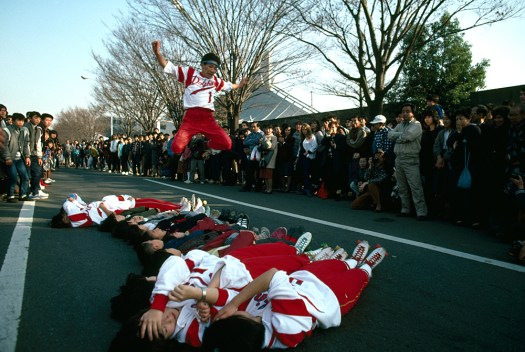
Roller skaters jump over teammates, Tokyo, JapanIt’s February 29th and that means we all get an extra day this year. Let’s celebrate leap year by taking action to leap forward – not just today, but every day this year and every year.

  • Finish something you started. This could be anything from an online course, a book you put down, a personal project etc. I always tell myself that a start is a start to nowhere if you don’t finish it.
  • Identify one thing that you’ve talked yourself out of (for all the right reasons) and take action on it. This could lead to the start of something. After you’ve faced your fear or resistance and have overcome your inertia – follow up with a plan for completion.
  • Toss out one bad habit. It’s easy to fall into a rut with bad habits. Identify one bad habit and change it. Start easy. If you find yourself starting your day in an unproductive manner change it. If you begin your day by checking your emails and then letting it consume your entire morning then start your day by tackling something that you keep putting off before you get distracted by someone else’s urgency.
  • Get rid of the resistance in your life. Are you letting toxic people derail you? Misery loves company but I’d rather hang out with people who energize me than those who bring me down. There are plenty of people on both sides of the misery camp. Surround yourself with those who add value to your life and stay away from those who suck the life out of you.
  • Tell yourself you can. Take notice how often you stop yourself by telling yourself you can’t. Really take note and every time you find yourself in that default mode of “I can’t” – tell yourself you can. You are your thoughts so be careful of what you tell yourself.
Business Tips for Photographers Who (Also) Shoot Video

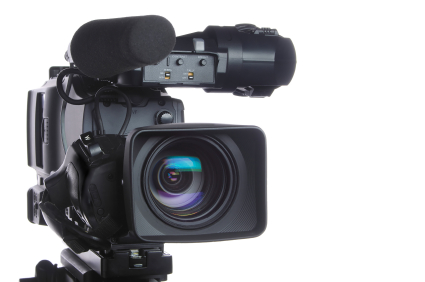
In the blogging world of photography and motion, there is a lot written about gear and how to use it, but precious little written about “the business”.  Chances are, if you are a photographer who has been in business for more than 10 years, then you know that technology has not only changed our tools, it has changed the way we do business.Professional high definition video camera, isolated on white background

For starters, we are doing business in a global economy, and with that comes pluses and minuses. One big plus is that we are able to reach a much wider audience, than ever before. That is, if you have an understanding of how to do that and take advantage of the opportunities that are out there.  The minus or downside is, if we don’t adapt our dated business models, in a business that has seen monumental changes, we will not be able to compete.

Commercial photographers are in the visual communications business.  We create imagery that delivers a message or tells a story for a variety of “markets” including; advertising, corporate, architectural and editorial.  Each market has a need for visual content and these days that encompasses both still photography and video.  In the last couple of years, the lines dividing these two mediums have faded away, at least in terms of how content is consumed in our culture.

Here are a couple of tips to help photographers prosper in our “multi-media” world:

  • Decide what your company will offer.  Will you only provide still imagery?  Or will you expand your business and offer both still photography and video? Are you quick to answer: “I don’t want anything to do with video”? The problem with that answer is that most of your clients will probably have a need for video.  Are you going to send them away to your competition?  Or will you keep your clients “in house” and take care of their video needs and hire or outsource your competition? That’s a different way of thinking and has the potential to broaden your revenue stream.
  • Decide what role you will play if your company does offer video?  Will you be the director and work with a camera operator?  Or will you assume the role of a DP (Director of Photography) and direct as well as operate the camera?
  • What will you outsource and what will you keep in house?  Maybe you want to expand your business by offering both still photography and motion, but you’d prefer to just shoot the still photography and outsource the video.  In that case, you could assume the role of producer and oversee or outsource the video production.
  • Reassess your insurance.  Video productions have a lot more variables. They also usually have larger crews.  More than likely, you will need to upgrade your current insurance policy to accommodate and cover that.
  • Change your paperwork.  Make sure that you go through your talent and property releases and modify the language for multi-media.  Change any boilerplate contract language to include video (motion).
  • Licensing.  Regardless, if you decide not to expand into video production, you will have to contend with the fact that your still images won’t always be used in a stand-alone fashion.  Many still images will be commissioned and/or licensed as part of multi-media projects and that has a dramatic effect on licensing. And if you do decide to expand into video production, in your role as a producer, you will be licensing other people’s work.
  • Understand new business models.  Let’s face it, things have changed in the business of photography.  Photography has become ubiquitous and the competition is fierce.  You are not only competing with professional photographers – you’re competing with semi-pros, amateurs AND video production companies.  One thing is certain, it’s never been more important to have an understanding of multiple mediums and to be unique and stand out amongst the noise. There are no templates you should follow.  You have to be authentic and true to yourself.

Check out more tips and information in my ePub, The Craft and Commerce of Video and Motion.


Telling Your Family Story

This time of year we try to spend more time with our families and loved ones. It’s also a time of year when we reflect on the people who are no longer with us. For the most part, we rely on our memories and some scattered photographs or home movies and videos.

Some of my fondest memories are of my mother, father and grandparents sitting around the dinner table, long after the holiday meal was over and telling or retelling the family stories. Of course, everyone would recall the same story in an entirely different way – the way they remembered it.

Every family has stories – mine certainly does and I have started to

Mooney family, Easter Sunday, Chicago, IL  (1956-57?)
Mooney Family, Chicago, IL


collect information, photographs and even recordings of family members while they are still around to tell them. It’s such an easy thing to do with the tools that technology has provided – easy to use cameras, audio recorders,  and of course, phones that shoot photos and video.

I often think that as photographers and filmmakers we are not only the keepers of our own family stories but we are documenting the stories for other families, through our still images, recordings and videos. Essentially, we are creating an archive of our loved ones and the memories. I believe that is the most precious gift that I can give someone through the talents of my craft. In fact we set up a separate niche of our business, Conteur Productions, to do just that – to archive the family stories in beautifully crafted cinematic videos. The idea isn’t just to string together old still photographs and footage to music, but to capture the stories of our loved ones, on camera while they are still here to tell them in their voice. Imagine, the legacy we leave future generations? My mom is no longer alive but I wish I captured her telling her stories, if only to hear her giggle when she got to the punch line.

As the art of conversation, gives way to virtual communication in our culture, our family stories are fading away with each passing generation. Well, the stories are still there of course, but they often get overlooked in the distractions of our high tech culture. But at the end of the day, it’s our family stories that should be preserved. They remind us of who we are and where we came from and that is priceless.

So as you gather your family together this holiday season – start capturing those life’s moments. You’ll be glad you did.


What Does a Photographer Look Like?

When I started out as a commercial photographer more than three decades ago, it was a very different profession than it is today. It wasn’t just different in terms of technology – it was different culturally. When I went out into the workforce in 1977, it was definitely a man’s profession.

I never really thought of myself as a female photographer, just – a photographer. I didn’t think the additional gender adjective needed to be part of the conversation – yet it was at that time. Sometimes it surfaced in social settings. One time, an art director who I worked for, introduced me to a very famous photographer who shook my hand and said, “You don’t look like a photographer!” And I thought to myself, “what does a photographer look like?”

It was worse when the gender bias surfaced in the workplace. I’m not sure if having a male business partner made the situation better or worse. I do know that the assumption was always that my partner Tom Kelly, was the photographer and that I was either his rep or his assistant. That assumption negated itself during a pre-production meeting or on the job, but I needed to make my presence known.

Things have changed…….slowly, over the years in the photography profession. There are far more women in the industry now than when I first started. It’s certainly not the exclusive male dominated industry that it used to be, but there are plenty of professions that still are – the movie industry is a perfect example. There are plenty of other examples of gender bias in the workforce, which is what motivated my project, Like A Woman.

Like a Woman is a series of environmental still portraits and short films about women working in male dominated professions. The idea was first inspired by Lauren Greenfield’s Like A Girl campaign. I loved the campaign and even though I felt hopeful that younger girls are growing up a bit more empowered than girls of my generation, that statement “Like a Girl” still lingers as a demeaning remark. I wanted to flip the narrative and make the statement, Like A Woman an empowering expression said with pride.

To date, I’ve interviewed 5 women from all different professions – architecture, engineering, auto mechanics, organic farming and industrial photography.

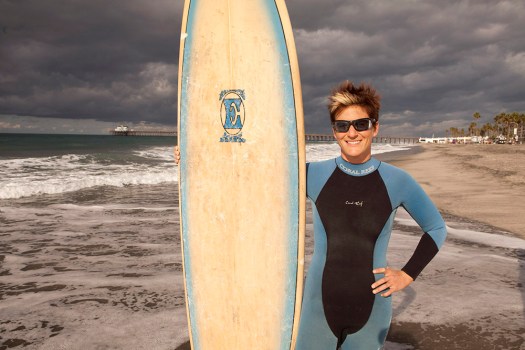
Jenna Close, Oceanside, CA
Jenna Close with surfboard, Oceanside, CA

I’ve just completed one on industrial photographer, Jenna Close. You can see it on the Like a Woman Vimeo Channel. Jenna demonstrates that women have come a long way in terms of having successful careers in photography, but she reminds me that there are still undertones of subtle gender bias. Things are changing, but until the gender adjectives disappear entirely from the conversation, we need to stay mindful and not drift into complacency.

If you know a woman working in a male dominated profession, who you think would make a great subject for Like A Woman, please contact me. mailto:gail@kellymooney.com

New Website, New Reel, New Look for Kelly/Mooney

It had been far too long since we did a redesign of our website – more than 5 years. Not only the industry (visual communications) has changed in the past 5 years, but so has our KM Logobusiness. More and more, clients are asking us to provide visual solutions in mixed mediums for a variety of uses – print, the web and social media. That’s been true especially with our editorial and corporate clients. It’s rare when a client comes to us for just one photograph for one usage.

With that said, we wanted a new website that would demonstrate the scope of our business. The first thing I did was to define the look and functionality of the website as well as what I wanted the website to communicate to potential buyers. We knew that a template site with just our still images no longer represented our business. We also knew that we wanted a website that would speak to our client’s needs and the services we provide that meet those needs.

My list of must haves for our website:

  • A site I could manage and update easily.
  • A site I could move to another server if I chose to do so.
  • A “scrolling” website. In researching numerous websites, the scrolling or parallax scrolling websites appealed to me and I began to see them everywhere – small and large film companies, graphic designers, non-profits, etc. We wanted a site that told the Kelly/Mooney story.
  • Messaging throughout the site communicating to potential buyers, what we do, the services we provide, how we work and who we are.
  • Intuitive navigation.
  • A site that would not only show our work but our experience as well.

I should point out that before I even got to this point, I had spent over a year culling through a vast archive of our work – literally terabytes of still images and footage – both digital and analog. I did the task over time, sifting through new work and old, trying to distill it down to the best representation of what we do, what we want to do and our self-initiated work. . Ultimately sorting through this body of work, not only served the purpose for the website but resulted in a new reel as well.

Challenges:

  • One of the biggest challenges we’ve always had was showing one unique vision because there are two of us. This website shows our combined work throughout the galleries, but it’s the first time we show individual galleries for Kelly & Mooney.
  • New reel – I took 7 hours of footage down to a 90 sec. reel. And then I re-edited it! That doesn’t take into account the time I spent sifting through music selections to pick the right piece for the soundtrack of the reel.
  • Picking images – We have a huge body of work because of the longevity of our careers. Ultimately we selected mostly recent work, but we didn’t want to discount our classic images so we decided to create a legacy gallery.
  • Realizing that I sized the images too big. In addition to the images having long load times, they bogged down the site by adding to the size making it a double digit Gig file. I had to go back to the images and resize them all. That was not fun as I’m not a big fan of going backwards.
  • Finishing the site at the beginning of the summer and then cutting it back all summer long because it was just too overwhelming. No doubt, there’s still editing that should be done on the site but at a certain point we had to launch. We finally did on Oct. 6, 2015. That in itself was traumatic. Right after we went live, somehow I deleted a critical file, which shut down the site. I was very fortunate that I had great support from our host server who had everything restored within the hour.
  • This is the first time I’ve ever built a website. It was frustrating, challenging and scary. I thought that my limited knowledge of  Wordpress  from working on my blog would be enough to create a WordPress website. It wasn’t, and it has been a huge learning curve for me. But I wasn’t the only one who worked on this website and I’d like to acknowledge the people who helped me through my meltdowns: my partner Tom Kelly, my colleague Jan Klier, and all the lifesavers at DreamHost (our host server) and folks at Envato who designed the WordPress theme.

This will continue to be a work in progress and I welcome comments and suggestions. http://kellymooney.com/

10 Tips to Nowhere

I realized recently that I had succumbed to the prevailing trend in editorial writing – the “top ten” syndrome – the top ten places to see in a lifetime, 10 tips on how to be more productive, 10 tips for taking better photos, the 10 best towns to live in – you get the picture.

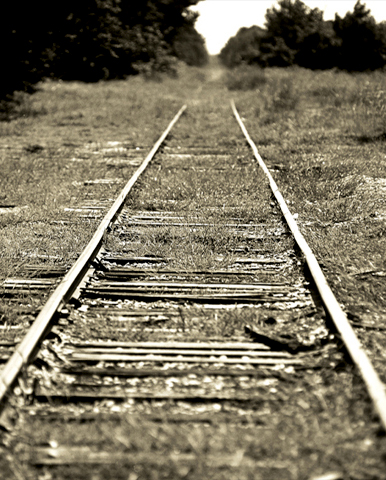
Train tracks, Mississippi

Seems like we want our info and we want it fast and easy to digest. The problem is we tend to lose sight of the things that aren’t on the top ten lists and lose focus on who we are.

I spent my summer redesigning our company’s website, editing a new motion reel and strategizing with my partner on marketing ideas. I am grateful for whatever outside forces motivated me creatively to have such a productive summer. I learned some of the pitfalls of following just the advice of “top ten” check lists when it came to editing our new motion reel. For example, these tips:

  • Pick music that sets the tone for your brand and footage.
  • Select only your best clips.
  • Cut on the action.
  • Cut to the music – to the beat
  • Have an opening that hooks the audience – gets their attention.
  • Include your company’s logo and/or info.
  • Pace it like a story with lows and peaks.

That’s not 10, I know, but that’s not the point. The point is that I had lost sight of the most important thing of all and that was I hadn’t shown our company’s vision. After months of work, I had picked the right music, culled through hours of footage and selected the very best clips, came up with an opening that I thought was intriguing and did my very best to cut to the beat of the music. I had shown what we have done, but I hadn’t shown who we are. So, I went back to the drawing board and re-edited the reel.

I realized that there are no short cuts to doing really good work. Good work comes from lots of trial and error and learning from our own experiences. It’s the journey that has its rewards.

By the way, we’re very close to launching the new site.  Stay tuned.

A Professional Photographer’s Manifesto

My creed:

  • I listen to a client’s needs and provide valuable solutions.
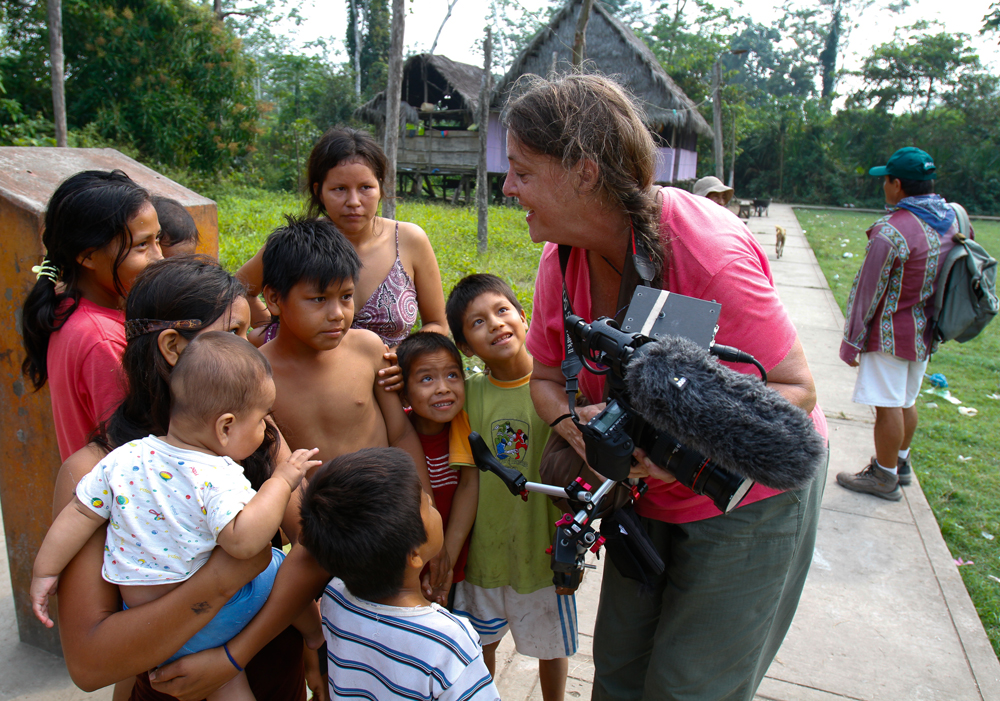
  • I have a strategy but I’m open to serendipity.Gail showing video to children of remote Amazon village, Peru
  • I evolve, explore and keep my skill set current and up to date.
  • I have a wealth of experience – on the job and in my life.
  • I don’t need to be “picked” or assigned to pursue what I love and that is to create.
  • I use my craft to create awareness and effect change.
  • I believe the message is just as, if not more important than the media.
  • I am a storyteller and use the medium that best fits the story that needs to be told.
  • I deliver on time and on budget.
  • I challenge myself and I’m not afraid to take risks.
  • I enjoy collaborating with people who are great at what they do.
  • I ask the right questions to get the job done.
  • I don’t make promises I can’t keep.
  • I’m a great producer because I think of all the details.
  • I am an observer of real life – and it shows in my work.
  • I have a strong desire to be the best I can be.
  • I care about my subjects and it shows.
  • I am curious and am always in pursuit of a project.
  • I am grateful that I love what I do and it provides value to my clients.
  • I am authentic and stay true to my spirit.

Having a Sounding Board

Sounding board: a person or group on whom one tries out an idea or opinion as a means of evaluating it


As a solo or semi-solo entrepreneur House on its own island, Thousand Islands, New York(my business partner is my husband), I have found that one of the most important things to have is a sounding board for my ideas. My husband and I are fortunate that we have each other to bounce ideas off of, but sometimes we need to seek out other people and solicit other perspectives.

Photographers are independent creatures. Take me for example; I’ve spent a great part of my life observing people and capturing the moments. Even though I refer to myself as a “people photographer”, being a street shooter can be a solitary activity. It’s easy to get accustomed to a lone lifestyle as a photographer, but I find that when it comes down to making decisions about promoting and marketing my business, I’m far better off to seek an outside perspective.

I’m lucky that I have people in my life that I can call on from time to time and bounce ideas around. I need to know if an idea that I think is going to rock the world, isn’t totally wacky or off kilter. Essentially, these folks are my sounding board. If you are stuck, or have been ignoring the ideas that come to you because you lack the confidence in them, consider reaching out to a sounding board of your own.

  • Solicit opinions from your colleagues; pick people who will give you their honest thoughts.
  • Seek opinions from the folks who you are targeting in your marketing – the people who will buy your services.
  • Test your ideas – it’s easy these days with social media. But go to the platforms that you trust. For example: when I am creating a trailer or a new reel, I’ll upload it to my Vimeo account, because I know I will get valuable feedback from my peers.
  • Remember, people are busy so build in extra time for them to respond when you ask them for their feedback. If you don’t hear from them in a reasonable amount of time or not at all – move on.  Maybe they’re not good contenders for your sounding board.
  • Reach out to different demographics – gender, age, socio-economic – depending on what you are working on and the message you want to deliver.
  • Even though it can be intimidating, seek the opinion of a pro.
  • Seek  out different people for different types of advice. I frequently ask my daughter’s opinion on music soundtrack choices. Music has been a big part of her life and she’s knowledgeable and savvy in that area.
  • Remember, at the end of the day, it’s your job to sort through all the opinions and suggestions and take away what you choose. The worst thing you can do is to try to incorporate everyone’s ideas because you’ll end up with something that’s neither here – nor there.

Staying “On Purpose” as a Creative

Have you ever felt like your hours and days are spent doing things that aren’t beneficial for you? I certainly have. I’m sure we all have. But, when I sort through and analyze how and where I spend my time, I realize that even the time I’ve spent on some mundane tasks or my self-inflicted distractions have had merit. Everything, in it’s own way plays a role in our lives. It’s up to us how we play that role.

I’ve been reflecting on this of late, because I’ve been feeling a shift happening in my life right now. I feel a creative surge and energy, fueled by ideas and the technology available to bring them to life. I’ve gone through many creative surges as well as the times when I didn’t have a single creative thought or idea. I’ve learned not to try and buck those tides, but rather go with the flo and recognize it all serves your “purpose”. Here are some things I do to get back “on purpose”:

  • Connect with an old friend. They’ll remind you of who you are.
  • Get away from electronic devices and do something simple – sit by a fire or on a beach, look at the clouds, let my imagination take over.
  • Go with the creative energy when it is present. I have been working on a redesign of our company’s website and have been frustrated by it, excited and totally energized – stay tuned.
  • Have conversations with people. Nothing formal or forced. The best ideas and observations come up organically.
  • Find interesting stories. I love stories – whether I read one in a book, watch one play out in film or listen to one on the radio. A good story provokes thought and that leads to a million possibilities.
  • I don’t stop myself from making a decision because I’m afraid it won’t be the right decision.
  • I remind myself that I’ve made a lot of decisions that didn’t seem like the right ones at the time……but they led me to the right path.
  • I listen to music.
  • I pay attention to small things that most of the time I barely notice.
  • I remind myself, I’m not here long and to make the most of it.

Cuba – The Forbidden Fruit

How can I possibly sum up a 5 day trip to Cuba, a country that up until recently was theMural, Havana, Cuba “forbidden fruit” for US citizens. That in and of itself is what made me want to go there. My childhood impressions of Cuba came from seeing Ricky Ricardo on the “I Love Lucy” show and watching the Cuban Missile Crisis play out in my living room on our

TV set. What I saw as a child, was enticing with its music and its passionHavana, Cuba, and threatening, all at the same time.

I had an opportunity to join a group of travel writers who were traveling to Cuba, on a “people to people” program. The purpose of the trip was to make cultural connections with the people of the country through various planned interactions. As a “people shooter” and a photographer who is drawn to capturing the spirit of a place” through my visuals, Cuba-3858I knew I had to go to Cuba at a time when the country was on the brink of change.

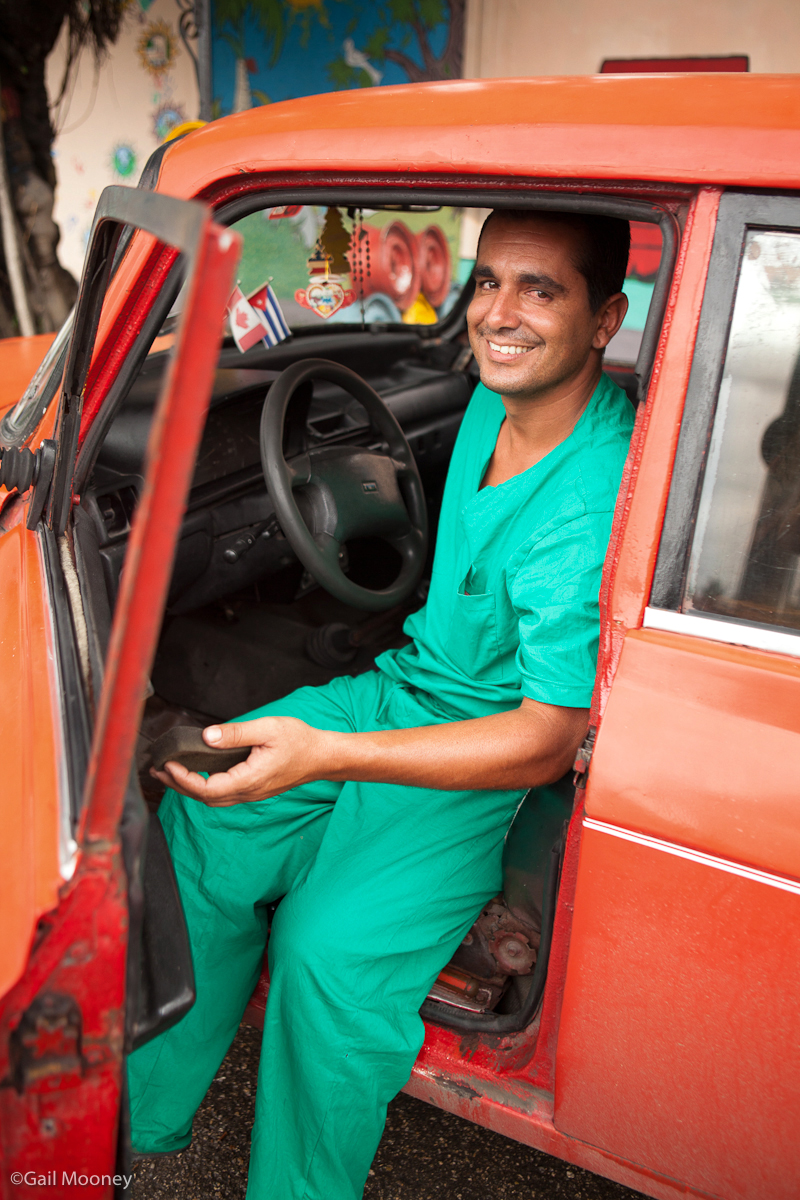
We had a lot of interesting experiences as a group and I had many more on my own exploring the streets of old Havana and walking along the Malecon. The people were open to being photographed, – that was my experience. When I’m street shooting and I come upon people that I want to photograph, initially I approach the situation in a candid way. After I take a few shots, I will engage the person and proceed to shoot more. Man with armarall, cleaning car. Havana, CubaOur interaction is usually natural and seamless, even though we don’t speak the same language. We communicate in another way.

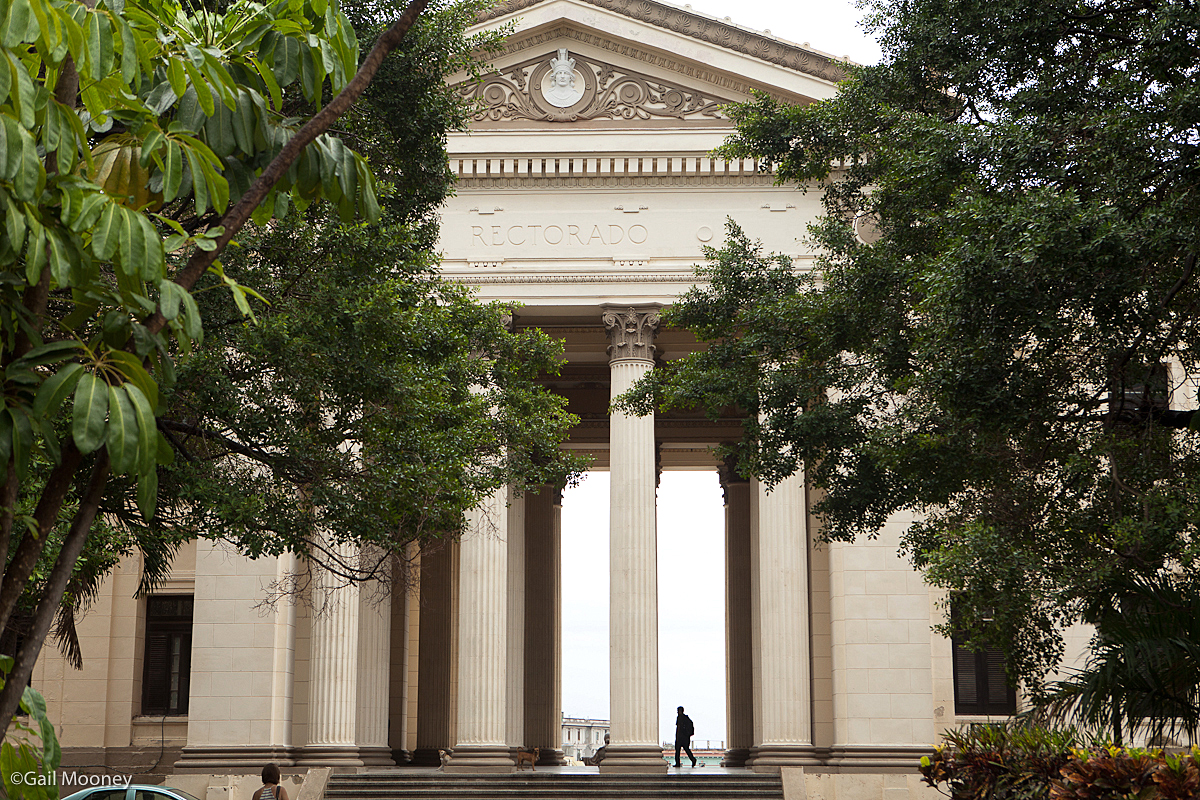
One day we met with a student at the University of Havana. University of Havana, CubaHe spoke about the day that President Obama met with President Raoul Castro in Panama.Havana, Cuba He said that all around the University, students and professors stopped what they were doing to watch the event on TV. As he told the story, his eyes filled with tears. He spoke of hope for his family, his people and his country and looked forward to the “embargo” being lifted so that Cuba can move forward. But he was also mindful of the potential downsides that come with rapid change.

Early on in our trip, we were driving through one of Havana’s neighborhoods that had been built during the “American years” and our guide said; “These are the good buildings built by the bad people”.Havana, Cuba As I look back at my interactions with the Cuban people, I hope that I had an impact on how they perceive Americans.

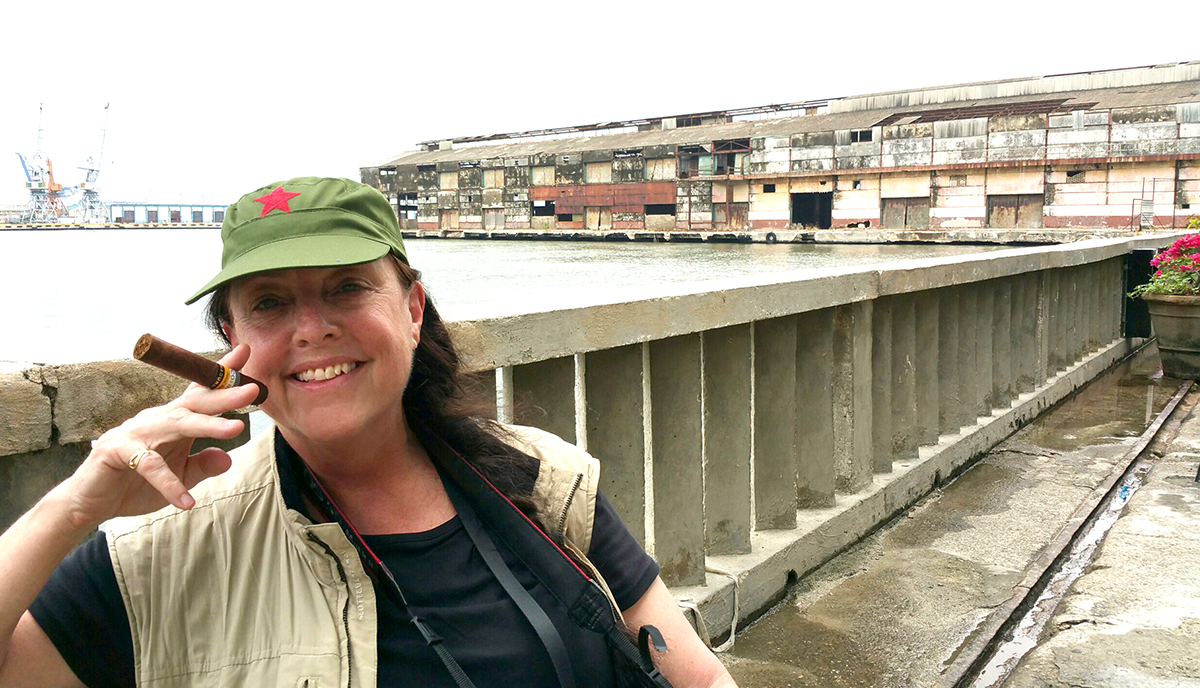
The Cuban people give true meaning to the word “resolve”. They’ve had over a half a century of practice.Gail in Havana, Cuba I will surely return to Cuba and see what’s yet to come in this country’s story.