
How does one find their passion? How does one even define the word – passion? The dictionary gives a few definitions. I’ll cite two:
– “intense or overpowering emotion such as love, joy, hatred, or anger.”
– “the object of somebody’s intense interest or enthusiasm”
Passion isn’t something you can teach someone – you just have to have it inside of yourself. If you’re passionate about something – you just know. I’m a photographer and a filmmaker . But my passion is “telling the story” and I use my craft as a means to that end. I’m interested in the human story and the cultural context that gives birth to those stories.
My insatiable desire to seek out and explore the human story has led me down many wonderful paths in my life. One of those paths led me to shoot a personal multimedia project on The Delta Blues Musicians. My goal was to shoot environmental still portraits– as well as shoot video interviews of them . I met my goal – at least in terms of creating an exhibition of still images and a short documentary – but I’ve never thought of this project as really being finished. And that’s because I’m so passionate about the subject – “the blues”.
This past Friday, I headed down to Mississippi for Pinetop Perkins homecoming. 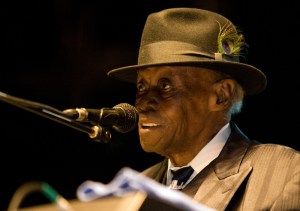 Pinetop Perkins is a legendary boogie woogie piano player in the blues world. He’s 96 years old and still going strong. He is living proof of a man who is “living his passion. I’ve become friends with Pinetop’s manager over the years and yesterday we got together over lunch to catch up on what was going on in our lives. I hadn’t been to the Delta for a few years and she was giving me the latest news on some of the musicians that I had interviewed for my film. Four have since died – Little Milton, Robert Lockwood Jr., Ike Turner and most recently Sam Carr.
Pinetop’s manager is a very interesting woman who used to be an Anthropology professor at University of California at Berkeley. She taught interview techniques as part of her ethnology classes. When I had originally called her up to request an interview with Pinetop – she turned me down. But not being one to take my first no – I asked her to check out my website and I also sent her a portrait I had taken of Sam Carr. When she saw the photo I had taken of Sam – she changed her mind – she gave me my time with Pinetop. She said that after she saw the portrait I took of Sam – she knew that I understood “cultural context”
Yesterday at lunch she paid me another high compliment. She told me that while she couldn’t quite dissect my “interview technique” (and she kind of rolled her eyes as she said it – because at times my techniques are quite comical) – she said that people just seem to be comfortable with me and because of that they wanted to talk. She also told me that I’ve been the only one to get a smile out of Robert Lockwood Jr. in an interview – but that’s another story. Those comments were rewards in themselves for the efforts I’ve made on this project over the years – but there have been so many more. Many rewards – all because of my passion for “the blues”.
Later that evening I got a chance to see Pinetop perform again. I was backstage at the main festival stage – it was unusually chilly and I had a blanket with me. Pinetop was sitting in the wings and I gave him my blanket as he waited for his cue. He seemed so small and fragile. When he got up to walk on stage and take his place at his keyboard before the crowd – he came alive. And when he played his first note – I caught “it” in his eyes – a passion for his music and more than that – a passion to play for “his people”. He didn’t want to leave last night – he played another song for “his people” and raised his arms in joy as the crowd embraced him. It was a moment I’ll never forget.
 in the process. We aren’t placing the value on what is unique in all of us – our vision. At the same time we’re placing too much value on the tool – in this case the camera. As technology accelerates the production of more sophisticated cameras that are cheaper and easier to use – and we’ve placed our value on being the technician – we’re in big trouble. Because ultimately anyone with a vision who has the “ability” to realize that vision, can put together a crew of technicians to facilitate their vision or idea – and do it cheaper these days because of technology. And there’s nothing wrong with that.
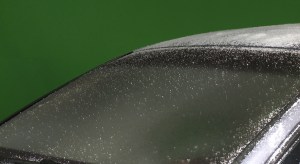 This used to be a tedious process and would involve a lot of work in post production. But thanks to some incredible plug-ins available – you can get a pretty amazing “key” without a lot of hours in the editing room.
 – close enough to commute if I were so inclined or had a “job” to commute to. But since I’m a self employed freelancer and always have been – I look at that short distance to the “city” as the bridge that connects my two worlds. The “city” can pretty much provide me with just about every cosmopolitan need that I may have and my other world – the idyllic little “bubble” where I live – a small rural town in Northwestern New Jersey – gives me space and serenity.
 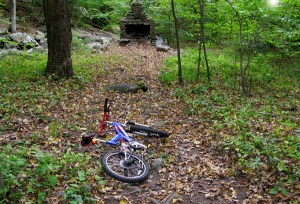 Both are important in my life and I don’t think I could give up one for the other.
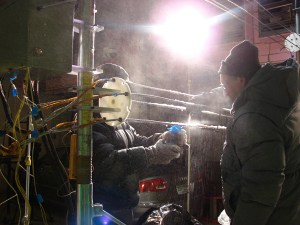 – brilliant electrical engineers – were pushing their own boundaries as they ran tests with ice on power lines and automobiles and as much as I was witnessing this work in sub zero temperatures – it was amazing to watch them work. If I hadn’t been so busy with my own technical challenges – I would have loved to just observe them and try to get into their head.
 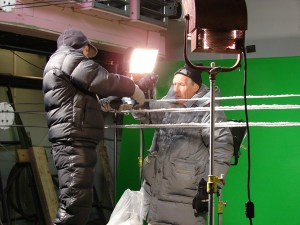 You could almost see their brains working – just by watching their faces. Then to see the triumph in their eyes when their experiments worked – what a thrill. I now need to go to Russia.
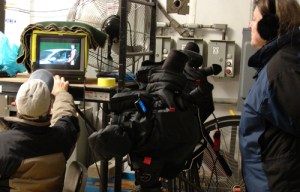 to keep them warm and swapped out the warm packs as we shot late into the night. We had to erect large “green screens” so that in post I can insert winter scenes. Problem was our green screens were large pieces of fabric and the chill blowers were blowing them all over the place. We tried to anchor them but in the end we had to turn the blowers off during the shoot. Thank goodness we didn’t need usable audio. We used hot lights and a lot of them. Used every extension cord we had and every outlet in the room – 10,000 watts. Ironic huh – hot lights in a “cold room”. Because of that we had to leave the lights on the entire time because we knew that when we turned them off – we’d get condensation on the bulbs. When we finally did break the set down at midnight – we turned the lights off, let them cool a bit and put garbage bags over them so that as they warmed we wouldn’t get moisture on them. Didn’t really work too well though.
 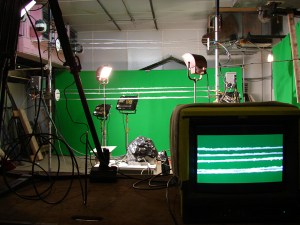 We did the same thing with the cameras and that worked great. Because we had the lights on all day and were using long extension cords – one cord got over heated and actually melted and fused to itself. The Russian electrical engineer noticed it – Thank God – or we would have burned down the building.
 Journeys of a Hybrid