What is Your Value as a Professional Photographer?

Let’s face it, these days, professional photographers Bouncer at Pure Night Club, Las Vegas, NVaren’t only competing with other pros – they are competing with anyone and everyone with an iPhone. Before you get upset and kill the messenger – ask yourself “What is my value proposition?” What do you offer that your competition doesn’t’?

I started making a list of things that professional photographers could offer to boost their value to potential clients:

  • Skills – Do you have any unique skills that can set you apart from your competition? If you define yourself by a specialized piece of gear that’s new – keep in mind, you may have just 5 years or less before ‘everyone” has it.
  • Vision – Make sure your “vision” comes from you and isn’t just a copy of what’s “hot” or trendy at the moment.
  • Access – Do you have access that others don’t? I realized when I was shooting for National Geographic that I was given access to a lot of photo opportunities that others didn’t have. Sometimes these opportunities yield photo opps that are off limits to others and make some stand out portfolio samples.
  • Rapport – If you are working in video and part of your job is doing interviews, then having a good rapport with your subjects will give you results that only you will get. Good interviews are dependent on social chemistry.
  • Your audience or following – These days, even getting a commissioned assignment may be dependent on your own social media following. Advertisers want to capitalize on that if it’s the same target audience they are trying to reach.
  • Project management skills – Getting the shot is only one skill set that photographers need to compete. Clients expect you to manage the project from soup to nuts and deliver the goods. That could mean wrangling large crews, getting access or simply making sure that everything that needs to get done to complete a project – is done.
  • Sensitivity – Be sensitive not only to your clients’ needs and problems but to whomever you are working with. I know a very good photographer who began burning most of his bridges with his clients. He was more interested in getting his point across and making demands than he was listening to the needs of his clients.
  • Likeability – Similar to above. There are just too many photographers out there to choose from that if you aren’t likable – well – you may want to look for work that doesn’t require any social skills.

If all this sounds simple –  it is. It’s applying it that’s the tough part. But if you do, you will set yourself apart from your competition.

Thinking of moving into motion?  Check out The Craft and Commerce of Video and Motion
Timing is Everything

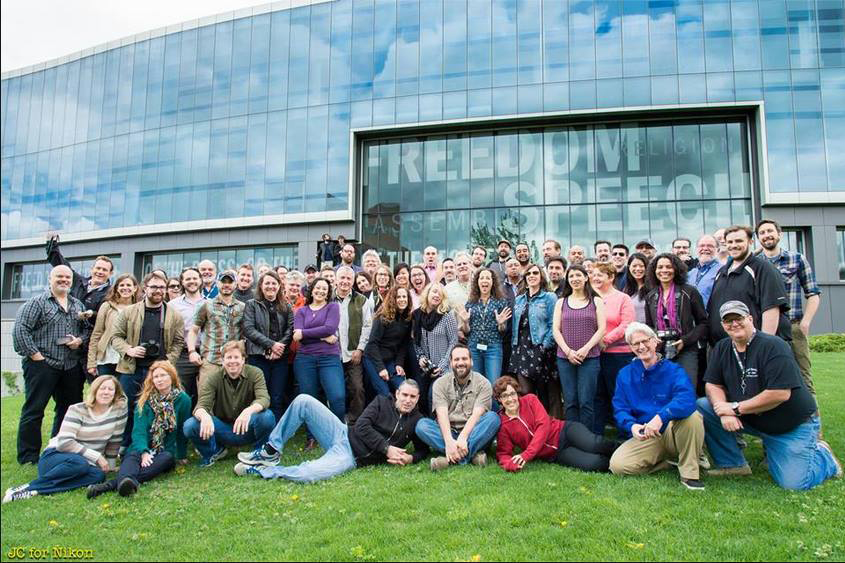
NPPA_MultimediaImmersionWorkshop
© 2014 J.C. Carey

Have you ever looked back at your life and wondered “How would things have turned out differently if…..I hadn’t have moved to a new part of the country when I was 13 years old or if I had stayed at Syracuse University instead of leaving school after completing my sophomore year and traveling around the world?  Or if I had taken the job at Boeing after graduating from Brooks Institute…..or  if I hadn’t seen that article in Time Magazine about “Indie” media ventures, referencing the 1st Digital Video Symposium that was going to take place at the American Film Institute?” Every one of those events at pivotal points in my life, carved out my next “chapter “ – determining who I was going to be and where I was headed. Some of my life’s twists and turns, I had no control over – like moving from Rochester, NY to the greater NYC Metro area when I was barely a teenager. But there have been a lot more pages turned in my life since then, and along with that a whole lot of decisions to be made along the way. The best decisions I’ve made in my life happened when I was open minded to possibilities and I listened to my gut. Last week I coached at the NPPA’s Multimedia Immersion Workshop.  It was a perfect example of peers helping peers and a wonderful collaboration between NPPA and ASMP, my trade association that I’m about to be President of next month.  Even though these workshops are exhausting in every way, I get as much as I give on so many levels. Ultimately the workshop is about learning good solid video journalism storytelling, but the technical learning curve can be daunting to many coming from a still photographer background.  Many of the students were totally green when it came to audio, movement, sequencing or the post-production editing process.  Some became so overwhelmed by the gear that they lost focus of the most important part of the workshop – “the story”. It’s easy to lose sight of the “story”. At the workshop, Bruce Strong from Newhouse School of Journalism gave a talk about “Storytelling Basics”.  He said something that really resonated with me “Ask the why behind the why.  Look for the emotional core of the story”. I realized that I needed a reminder at this particular time in my life, as to what was the essence of a good story. I’m currently working on a documentary film about a family that has a deep and rich history. To be honest, I had been floundering on the story aspects of the film as I had begun to get lost in the details and facts. I had an epiphany as I listened to Bruce and realized that my job wasn’t to document the timeline of this family, that had already been done in written form – my job was to “tell a story”. That epiphany may sound obvious and simple, but sometimes I get blindsided by the daily consumption of life, and the “obvious” gets overlooked.  But if I put myself in a different place, in body and mind, at a time in my life when I am open and receptive, the “right” path does become obvious.  That path was there the entire time, but perhaps it wasn’t the right time for me. As Orson Welles once said “If you want a happy ending, than it depends on where you stop the story”.

2014 NAB Wrap Up

Still photographers and motion shooters love to get a “first”  look at “new gear”. Here are a few interesting items I saw last week at the NAB Show (National Association of Broadcasters):

Cameras

  • Black Magic Ursa A 4K camera 2014 NAB Showat an affordable price (around $6,500) that will be shipping in July. They’re calling it the first user upgradable-camera because you can change the sensor and the lens mount. It looks like this will be a great camera for filmmaking and documentaries.
  • Sony A7s Sony’s latest mirrorless camera features a wide-dynamic-range sensor and amazing sensitivity. With this camera, Sony didn’t jump into the megapixel competition against other camera manufacturers, but instead concentrated on image quality at staggering ISO’s. I would use this camera more as a still camera, but it’s small and it also shoots 4Kvideo.
  • GoPro  This company continues to innovate and make products that provide shooters with the tools that allow them to come up with incredibly creative solutions, especially in sports/action content.

Storage/Monitors

  •  Atomos has created the Ninja Star, a tiny ProRes Recorder for theGoPro Hero 3 that has an HDMI-out port and allows you to loop the signal through the Ninja Star and out to a monitor for composition or review. Atomos also debuted their Shogun, a combination seven-inch monitor and recorder with 4K capability.
  • G-Speed Studio by G-Techology This product, a hardware RAID 4-Bay Thunderbolt 2 storage solution, won the “Best Storage of NAB 2014 Award.” The G-SPEED Studio is a storage device with room for four hard drives and is configurable to RAID 0, 1, 5, 6, or 10. You can bring the total storage up to 24TB; at a lesser amount, the sustained 660MB/s transfer rate will get your files going quick.

Sliders/Stabilizers/Helicopters

  • Kessler Unidrive This is a motion control system (slider) that’s automated to enhance your production values.
  • Shape ISEE 1 Camera Stabilizer for GoPro A very cool device to stabilize your action GoPRo footage. The SHAPE ISEE I is a handheld gimbal-based stabilizer for GoPro cameras and smartphones. The powered, self-calibrating ISEE I enables steady shots with the GoPro and features a joystick for up/down tilting of the camera.
  • DJI’s Phantom 2 Vision Plus with Gimbal and GPS The latest addition to DJI’s quadcopter lineup gives you stunning images at a super affordable price ($1,000, or $1,099 for a version with extra battery). The copter has a 1080P camera that supports Adobe DNG RAW, which is great for workflow. There are also features that allow you to stream video to your smartphone in real time and to synchronize your phone with the quadrocopter through WiFi up to 700 meters away.
  • Syrp Genie Time Lapse & Magic Carpet Slider This is a motion controller coupled with a simple slider that provides a relatively low-cost solution for great time-lapse photography.
  • GimbalGunner A new device designed for run-and-gun video shooting. It’s essentially a cross between a two-axis gimbal and shoulder-mounted rig.

Software

  • There were hundreds of booths demoing software, but perhaps the most impressive of the bunch for me was the iZotope RX 3 2014 NAB ShowThis audio postproduction software will take away your fears about working with sound. I saw a demo in which it fixed substantial audio issues with the push of a button. Technology continues to make our lives easier. There is an incredible deal on the software until May 1, with prices slashed from $749 to $249. I don’t advocate capturing bad audio, but you’ll want this repair tool if you do.

Lighting

  • Litepanels This company launched its new Hilio series, versatile panels that emit a raw, narrow beam that provides high-intensity light for long throws.

Business Tips for Photographers in a Multi-Media World

In the blogging world of photography and motion, there is a lot written about gear and how to use it, red camerabut precious little written about “the business”.  Chances are, if you are photographer who has been in business for more than 10 years, then you know that technology has not only changed our tools, it has changed the way we do business.

For starters, we are doing business in a global economy, and with that comes pluses and minuses. One big plus is that we are able to reach a much wider audience, than ever before. That is, if you have an understanding of how to do that and take advantage of the opportunities that are out there.  The minus or downside is, if we don’t adapt our dated business models, in a business that has seen monumental changes, we will not be able to compete.

Commercial photographers are in the visual communications business.  We create imagery that delivers a message or tells a story for a variety of “markets” including; advertising, corporate, architectural and editorial.  Each market has a need for visual content and these days that encompasses both still photography and video.  In the last couple of years, the lines dividing these two mediums have faded away, at least in terms of how content is consumed in our culture.

Here are a couple of tips to help photographers prosper in our “multi-media” world:

  • Decide what your company will offer.  Will you only provide still imagery?  Or will you expand your business and offer both still photography and video? Are you quick to answer: “I don’t want anything to do with video” ? The problem with that answer is that most of your clients will probably have a need for video.  Are you going to send them away to your competition?  Or will you keep your clients “in house” and take care of their video needs and hire or outsource your competition? That’s a different way of thinking and has the potential to broaden your revenue stream.
  • Decide what role you will play if your company does offer video?  Will you be the director and work with a camera operator?  Or will you assume the role of a DP (Director of Photography) and direct as well as operate the camera?
  • What will you outsource and what will you keep in house?  Maybe you want to expand your business by offering both still photography and motion, but you’d prefer to just shoot the still photography and outsource the video.  In that case, you could assume the role of producer and oversee or outsource the video production.
  • Reassess your insurance.  Video productions have a lot more variables. They also usually have larger crews.  More than likely, you will need to upgrade your current insurance policy to accommodate and cover that.
  • Change your paperwork.  Make sure that you go through your talent and property releases and modify the language for multi-media.  Change any boilerplate contract language to include video (motion).
  • Licensing.  Regardless, if you decide not to expand into video production, you will have to contend with the fact that your still images won’t always be used in a stand-alone fashion.  Many still images will be commissioned and/or licensed as part of multi-media projects and that has a dramatic effect on licensing. And if you do decide to expand into video production, in your role as a producer, you will be licensing other people’s work.
  • Understand new business models.  Let’s face it, things have changed in the business of photography.  Photography has become ubiquitous and the competition is fierce.  You are not only competing with professional photographers – you’re competing with semi-pros, amateurs AND video production companies.  One thing is certain, it’s never been more important to have an understanding of multiple mediums and to be unique and stand out amongst the noise. There are no templates you should follow.  You have to be authentic and true to yourself.

Check out more tips and information in my ePub, The Craft and Commerce of Video and Motion.

10 Tips For Getting GOOD Audio When Using a DSLR

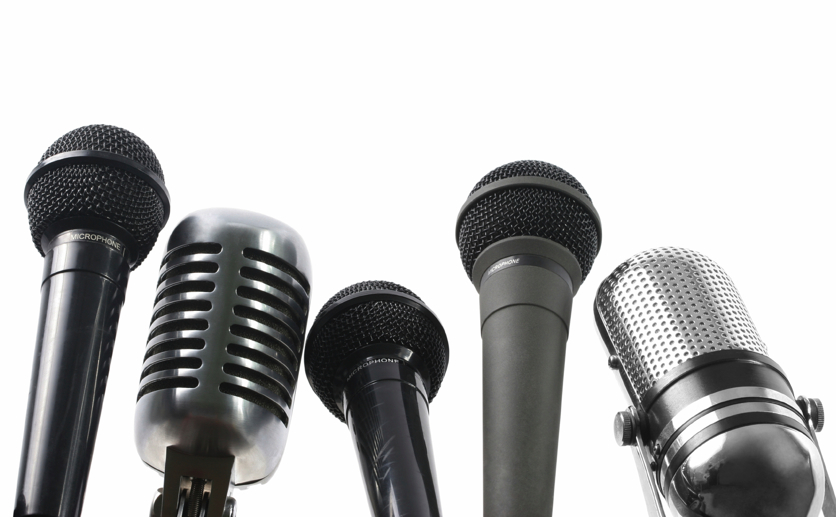
If you’re like most of the professional still photographers I know, you have either expanded your business and offer videomicrophones (in addition to your still photography) to your clients, or have plans to.  If you do have future plans to offer video to your clients, then you are either learning the particulars of that skill set, or you are collaborating with others who are in the know, or both.

Perhaps, one of the most daunting components of video, for still photographers is audio. Capturing audio is totally foreign to a still photographer, yet it is the most important component of all, in video production.

Here are a few tips for getting good audio:

  • You’ll never get good audio using the camera’s built in microphone, – at least not for interviews. Don’t turn the camera’s audio off however.  You can use it later for reference audio when syncing sound later in post-production.
  • Use external microphones for capturing audio interviews.  Ideally, you should record your interview audio using a digital recorder like the Samson Zoom H6 or the Tascam DR-60D with XLR connections.  I usually place a “lav” microphone on my subjects. I will also use a shotgun microphone, mounted (with shock mount) on a boom pole that’s on a fixed stand.  I rely on the microphone on the fixed stand, as opposed to hiring a boom operator, especially if I don’t have the budget for a big crew. If you should decide to use an amateur or assistant as a “boom operator”, rather than hire an experienced operator who knows how to capture “consistent” audio, you’ll most likely end up with poor audio captured at inconsistent levels. The shotgun microphone should be about 12-18 inches away from your subject. You can sync the sound with the video, later in post- production, using the software Plural Eyes.
  • Don’t cross your audio cords with your electrical cords. This causes a hum that you will detect if you are wearing headphones.
  • For run and gun” situations, you can probably get away with using a microphone mounted on the camera, as long as you are close to your audio source. You can either run a microphone (with a mini plug) directly to the camera OR you can run a microphone with an XLR adaptor through a pre-amp like a JuicedLink or a Beachtek, which will yield a cleaner audio capture. This works well for capturing ambient sound for b-roll or live action, and your audio will be recorded to the same card as your video. If you do want to capture your interview audio using a microphone mounted on the camera, make sure that you get your camera in close to your subject (not more than 18 inches away), and that you us a mixer or a pre-amp.
  • Microphones – Use an omni-directional or cardiod microphone when you are in a more controlled situation and you want your sound coming from more directions – like on a sound stage.  “Lav” microphones can be used for interviews, either hard wired or with a wireless kit. Be careful when you attach it to your subject and position it to avoid any unnecessary noise coming from hair or jewelry rubbing up against it. A good camera mounted microphone is the Sennheiser MKE 400 (compact shotgun). For interviews I use my cardiod Sennheiser ME66 with K6 powering module.
  • Use a wireless system only when you NEED to. In cities like New York you can get a lot of interference on various frequencies. Always go wired when you can. A great and affordable hard-wired “lav”, is the SonyECM44B And if you find yourself needing a wireless system, spend the money to get a system that has a good range.
  • Use a good windscreen or “dead cat” when outside. Even if you’re inside, on a windy day, with windows open, you can pick up wind noise.
  • Use headphones. Don’t just look at your meters.  Your meter may indicate that you are recording sound, but it may not be good sound – it could be you are picking up interference or getting distorted and clipped audio. Wear headphones and make sure that you are getting quality sound.
  • Always consider that you will be using the audio – even for your b-roll.  You will need clean usable audio for b-roll, even if it’s only intended as ambient, background sound.
  • Pay attention to audio. Start by letting your ears do more of the work. Every room and situation has its own sound. Listen up. Be quiet and tell your crew to be quiet as well. You never know when you’ll want to use the audio – even if you think you won’t need it.

You can read more about what I brought with me in the way of gear, when I literally circled the globe, creating my first feature length film.  The film is now available on DVD.

If you’d like to know more about “moving into motion”, check out my book, The Craft and Commerce of Motion and Video.

Letting Go

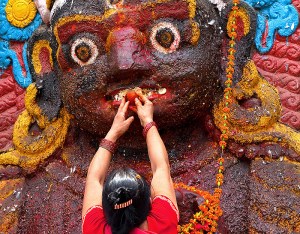
This past weekend our film, Opening Our Eyes, Kathmandu, Nepalhad its premiere in New York City. We have been in dozens of film festivals and events all over the world but for whatever insignificant reasons, we had never screened in New York.  I think of NYC as my “hometown”, even though I have never lived inside “the city”. It’s where many of our friends, clients and colleagues are and it has been our “home base” for over 35 years.

Despite the fact that the temperatures were in the single digits and there had been a major snowstorm the night before, so many of our oldest and dearest friends, along with some new ones, showed up. Even Nisha, a young Nepalese girl who is in the movie – came out on that cold night. I have been in front of many audiences over the years and have enjoyed it immensely, but I can honestly say that this was the most meaningful experience I’ve ever had. To be able to share my film – a body of work that I put a lot of hard work, heart and soul into – with my peers and people I’ve known since my beginnings, was pure joy.

In a way, the night brought things full circle in regards to the film.  A lot of filmmakers “open” or premiere in their hometowns.  Once again, I did things a little backwards, by “closing” in my home turf, as this may be the film’s last festival screening. I don’t have plans to pursue more festivals – but I never know what’s lies ahead, in the way of opportunities, and am open to possibilities.  This project and this journey have rewarded me in hundreds of ways and no doubt will continue to enrich my life. The film will still be available for screenings at educational venues and community events.  It’s also available on DVD and streaming.  My daughter, Erin and I made this film to inspire and motivate others to create positive change in our world, and we hope that message continues to spread globally.

A young filmmaker I met at one of the festivals I attended told me, “a filmmaker never finishes a film – he(she) just knows when to let go.”  I am able to “let go”,  because I know that this experience has set the stage for the next events in my life.

“Everyone has Oceans to fly, if they have the Heart to do it. Is it reckless? Maybe. But what do dreams know of boundaries?”
 
– Amelia Earhart

New Business Models in Photography and Motion – in a Global Economy

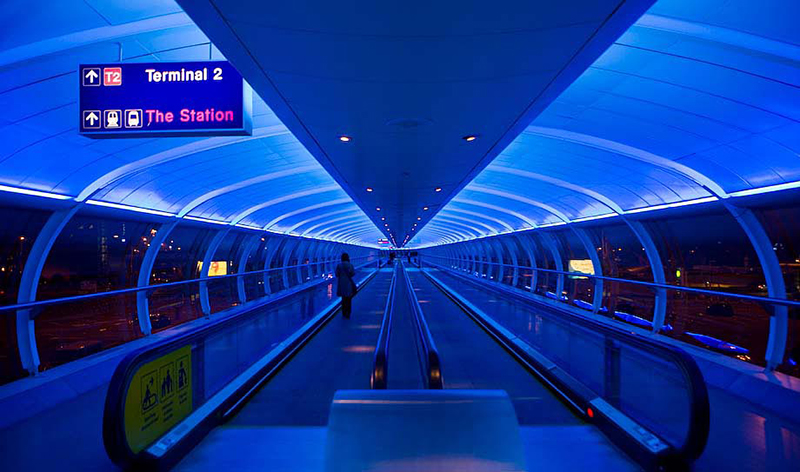
Manchester Airport, Manchester, England

This topic comes up a lot these days.  You  could apply “new business models” to just about any business – not just photography and video. Photography and video, in and of themselves are not business models at all, but rather they are mediums that are used commercially, non-commercially and personally. The business end of photography and video comes when you determine how you want to apply them in terms of today’s markets.

Today’s markets are global.  That’s good news and bad news, depending on the type of work you do.  If you are a stock photographer or even if you have expanded that into also shooting stock motion footage – your inventory or your content must be unique in some way in order to sustain that type of business model in our global economy. You will need to stand out and offer something unique,  if you pursue this type of market.

If you are a commissioned commercial or editorial photographer, cinematographer, or director, the competition is fierce and once again, if you don’t have a unique style or vision, most likely you will end up playing by others’ rules or signing “their” lopsided contracts.  It comes down to supply and demand of talent and work, and you will either compete with price or offer something that you do better than your competition.

The good news is, if you are willing to do the work, the world is your stage.  The portals for distribution of your “content” are open to all and as “creatives” we are no longer dependent on middlemen.  When I get asked to talk about “new business models”, I always look for where the new opportunities are.  Where will I be able to carve out my own “new business model”, rather than having to adapt others’ ideas of what that may be.  There is a big difference in those two approaches.

I am carving out a business model for who I am creatively, and where I see the most opportunities for what I do well.  When I am authentic to who I am and apply this to my work, I am able to deliver my own unique vision and reach the right audience,  while maintaining ownership and control over the licensing of my work.  I am able to do that not only because technology has enabled me to do that, but more importantly because I have set myself apart from everyone else who has a camera.

Think about it.  What are your strengths? What are your passions?  Now imagine a business model based on your answers. The world is our stage.

The Past Always Seems Better…….But Was It?

Chris Guillebeau struck a chord with his blog today ,“ The Past Wasn’t Better. Choose the Present Instead”, .  He relayed a story about a time his friends got together for a “gaming session”. They had ordered an emulator, which allowed them to play the games of their youth on the modern gaming console of the time.  They realized after a couple of hours of playing the “old games” that the games weren’t as fun as what they remembered.  They were very simplistic and hard – dying over and over again and not advancing to the next level wasn’t fun – it was frustrating.

Chris made the point that it’s easy to look back with fondness on the good ole days, but our memories get distorted as time passes and sometimes what we looked back on with fondness, never happened.

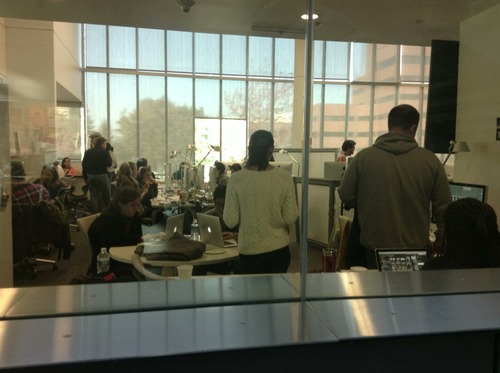
I had an interesting and somewhat similar experience this past weekend.  I had been invited to speak and coach at the 2013 Syracuse University Fall Workshops, which ASMP had contributed to as a sponsor.tumblr_muyzapUjbp1qe6iepo1_500  It was an intensely creative 3-day workshop where journalism students from the Newhouse School, came together with some of the best editors, designers, photographers and multimedia producers working in journalism. It was a hands-on workshop, where students worked with their coaches, to produce their projects (stories), under a tight 3-day deadline. What stood out to me this weekend, was that the “learning” wasn’t a one-way experience.  I learned as much as I shared – from the other coaches, as well as from the students. I’m sure I’m not the only coach, who picked up some tips from their students this weekend. I was also inspired and amazed at what is possible now, in terms of new ways to tell a story.

Sure, there are days when I’m simply overwhelmed by technology and the continued learning curve that comes with it.  And sometimes, I look back and fantasize how much better it was in the past.  At the workshop, one of my students had more than her share of technology mishaps.  At one point after losing hours of work, due to a software glitch along with not being able to access her audio files, somewhere in “the cloud”, she remarked with exasperation “ I wish things were like they used to be”.  She meant when things were tangible and analog. I quickly replied, “No you don’t because this 3 day workshop would have taken 3 months”. It was a moment when we both had the same realization that Chris Guillebeau had – our memories and perceptions of the old days are sometimes blurred and over glorified.

As much as we remember and long for the old days, the fact is we have it pretty good now.  There’s not a day that goes by that I don’t remind myself of that.  I choose to focus on what I am able to do in the present rather than look back at what was. If we choose to stay in the past and remember things being better then they are now, we’ll miss out on a whole lot of possibilities. As Chris beautifully sums it up: “Let go of the glory days.  Live in the present and build for the future.”

Past Predictions of the Future Have Been Greatly Exaggerated

One of the blogs that I regularly read is Copyblogger, which provides a lot of great information and insights into content marketing.  This past week, Brian Clark wrote a post entitled,  The Future of Content Marketing.   He writes:

“A bunch of really smart people got together in 1880 to predict the future, according to Jeff Stibel in his intriguing book Breakpoint. These experts were called on to predict how the rapidly growing Gotham would manage into the next century and beyond.

The prognosis was not positive.

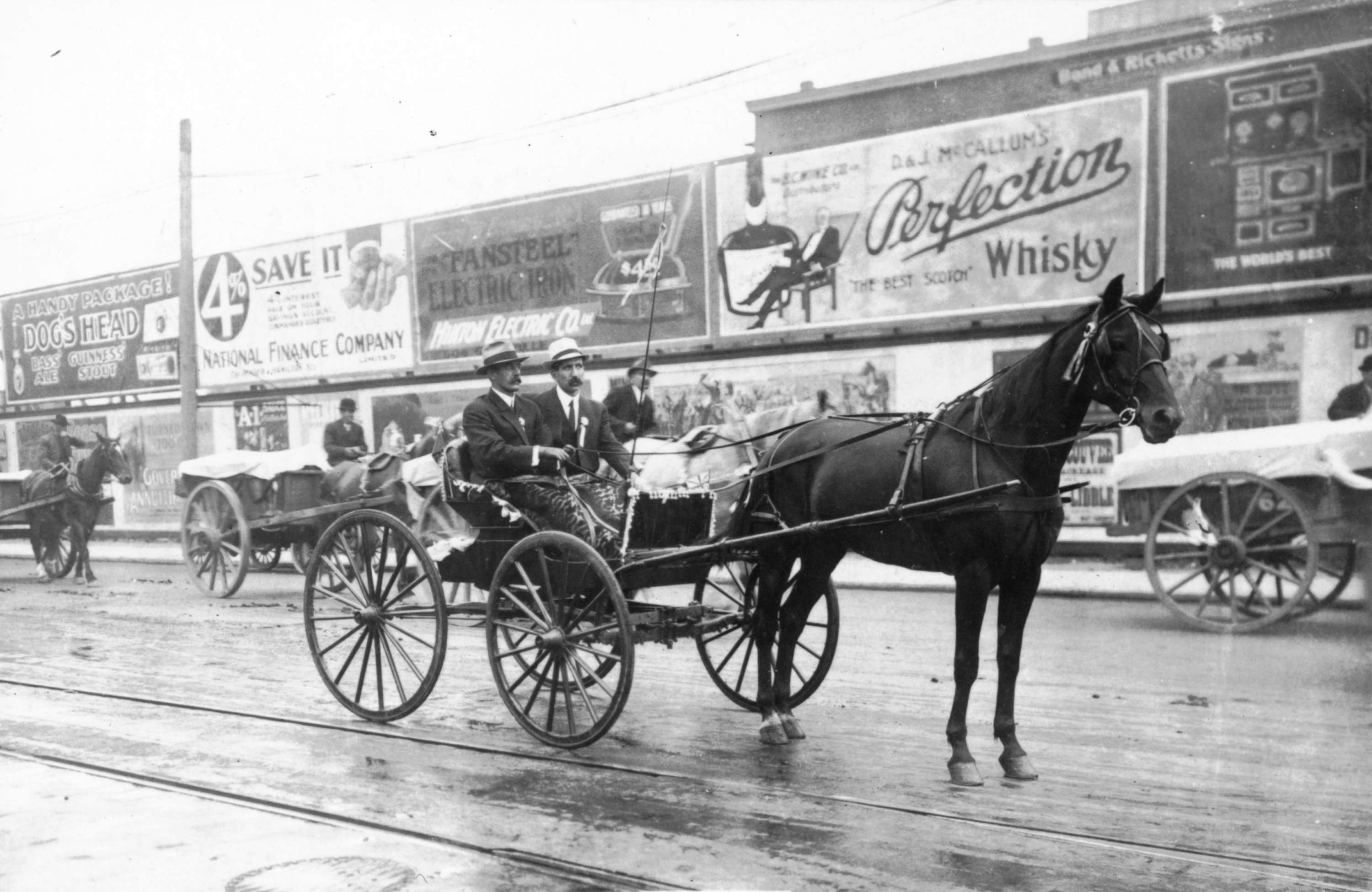
NYC was a major source of American innovation in 1880. Skyscrapers, subways, stock exchanges — and it was doubling in size every 10 years. abb36e44-0c30-4a09-9279-0cd3c3fefa9b-A01867The experts were concerned by this growth, because they projected by 1980, you’d need six million horses to transport all the people who would live there.”

Folks were predicting the future of New York City, looking at it through the eyes of what was technologically possible then.  They were more concerned about all the horses and the “crap” that would be produced, than they were about greenhouse gases, because nobody knew what that was.

When I re-ran a blog post How Motion is Changing the Future of Photography, I used a similar analogy, that Ray Kurzweil had given when I heard him speak at NAB.  Ray said that, at the turn of the century (the beginning of the 1900’s), if you thought of yourself as being in the “horse and buggy business”, you were doomed to fail because of advent of the automobile.  But if you saw yourself in the “transportation business”, you thrived, no doubt because you broadened your view to include the automobile.  In my blog, I compared that analogy to what is happening in the still photography business, as the mediums of still imagery and video converge.  I received a lot of responses from that post, mostly from people who argued that still photographs would always be around. I don’t disagree with them.  I do think there will still be still images in the future – however, I think the still photography business will drastically change from how it is now.

Interestingly enough, every year I’m asked to bid on a still photography assignment for a tourism client.  Yesterday, I received the bid packet and there was a profound change.  They were not asking for a quote for still photography.  They were asking for a quote for video – and not just video – but video shot on a RED camera so that they could pull frame grabs from the footage and use those “still images” in their ads.  Now, that’s a game changer.

There’s always a danger in predicting the future and that’s because we tend to use and be influenced by the information and the knowledge that we have now – in the present.  What I’ve learned in my many years on this Earth is that the future will be nothing like how we imagine it will be.   I know that because what I imagined the future to be, some 35 years ago when I set out to make a career as a still photographer, was very limited in terms of how technology has changed things.

The human need to create will continue to mold a future that is way beyond what most of us could ever imagine.

Hitting a Nerve

English: camera Français : video
English: camera Français : video (Photo credit: Wikipedia)

What an interesting week it has been. This past Friday (the day before a long holiday weekend), on impulse, and feeling a little lazy, I shared a link on Facebook to a blog that I had written 8 months ago, How Motion is Changing the Future of Photography.  I didn’t expect to get thousands of hits in 2 days time – it had barely gotten noticed when I posted it the first time, back in February, 2013.

What had happened was that Rob Haggart linked to it from his blog, APhotoEditor and it went viral after that – all around the world.  That’s what amazes me about the age we live in, that something someone says, or writes can be heard globally in record time.  It truly demonstrates the power of “one”.   It’s staggering and something I never would have imagined some 35 years ago when I began my career as a still photographer.  In fact, most of what is happening now in photography. I never could have imagined – not in my grandest dreams.

What surprised me most about the comments I received from that post, was that most folks just couldn’t begin to imagine the future that I was contemplating in my writings. With the convergence of cameras, in regards to stills and video, I imagined a future, where a still image might not be captured by a “still camera” or by a “still photographer” for that matter.  A still image may come from a “frame grab” captured by a video camera.  I struck a nerve for sure, and most people thought I was predicting the demise of still photographs – perhaps because of Ron’s headline, excerpted from my text “ I think we are at a tipping point as far as the future of the still photography business”.

To be clear, I do think the photography “business” is at a tipping point, but not just because of the convergence of still and video cameras, but because of the glut of imagery.  The iPhone has been the game changer in that sense. Everyone has become a photographer and has a camera on them at all times, taking, sending and sharing millions of still images globally every day.  What that means in terms of the still photography industry is that if you want to stay in business as a professional photographer, you will need to create something that is authentic and unique to only you AND more importantly, you will need to provide a product or service that a market is willing to pay for – and pay enough that will sustain you in an industry that requires a reinvestment in tech and gear every two years, minimally.

In my attempt to “get off easy”, by rerunning a blog that I had written and previously posted more than a half a year ago, I learned a couple of things:

  1. Timing is everything
  2. It’s all perspective.

That’s the one good thing about getting older; I have a lot more perspective.  I’ve learned that the future is not at all like I imagined it would be.  I never could have imagined half the things that are happening right now.  And I’m sure that if I’m still alive 20 years from now, it will be a future filled with things and ideas that I could never even begin to imagine.

I will be moderating a panel at PPE this year, sponsored by ASMP “How Motion is Changing the Future of Still Photography”.   Our panelists include, Vincent LaForet, Brian Storm and Chase Jarvis.  Join us, it will be a discussion you won’t want to miss.