Top 5 Business Mistakes Photographers Make With Video

In the last couple of years in the photography world, it seems like everyone is scrambling to learn video.  In particular, still photographers are jumping into this “genre” because their hybrid cameras have the capability of shooting motion.
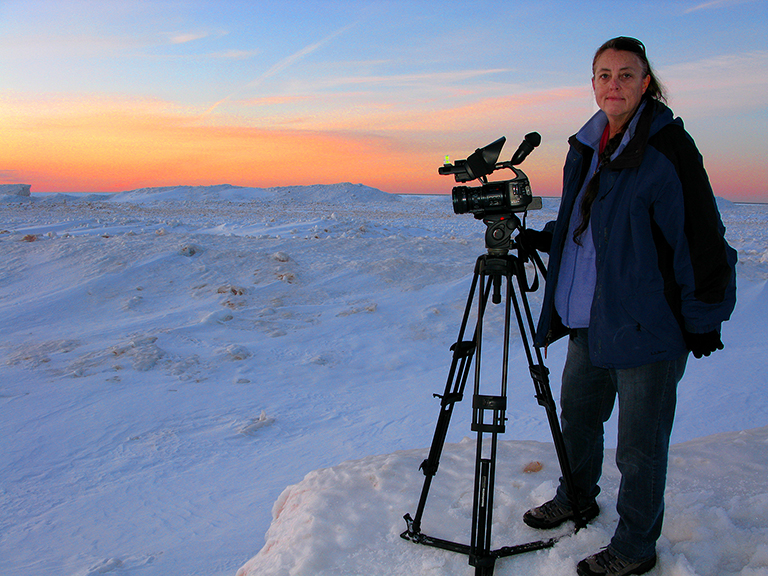
There are hundreds of seminars teaching the gear, but few point out the differences, when it comes to the “business of video”.

Here’s 5 mistakes I see still photographers make when they leap into motion:

  • 1.  They throw in video as part of the deal and don’t charge for it.  I hear about this a lot.  A client and photographer are on a still shoot and the clients sees that the photographer is shooting with a hybrid camera and asks the photographer to shoot some video clips.  The photographer obliges because he/she can and the money is left on the table.  Remember when still photography went digital and photographers became the labs but didn’t charge for the post-production?
  • 2.  They don’t update and upgrade their insurance policies.  Video production shoots are not covered on most still photographer’s policies.  Be prepared for a jump in what you need to spend on insurance to be adequately covered on video production jobs.
  • 3.  They don’t consider the ramifications when they are working with SAG or AFTRA talent and they are asked to also shoot some video of the talent on the job.  This crosses the line as far as the unions are considered.  While it may be OK for SAG/AFTRA talent to work on a “still” set – when you go into video mode – it’s not OK.
  • 4. They think of themselves as just shooters.  This is typical and is fine in the still photographic world, but in the collaborative world of video production, a shooter is a hired gun with no ownership in the intellectual property.  I like to position myself higher up the ladder as a producer and maintain control over the job and the content.
  • 5.  They look at video as a separate genre.  That’s changing radically as video is no longer a separate niche and genre, but part of almost every photography market from editorial to architecture. Even ad agencies are starting to merge their motion and still departments.

Add to FacebookAdd to DiggAdd to Del.icio.usAdd to StumbleuponAdd to RedditAdd to BlinklistAdd to TwitterAdd to TechnoratiAdd to Yahoo BuzzAdd to Newsvine

Resources, Sharing and Good Karma

I love the time we are living in.  If there is anything I want to find out about – and I do mean anything – and I can get “connected” online – I have access to a universe of information. For someone like me who always has a hundred questions running through my mind – it’s like the “time of Aquarius” – only better.

This morning I was poking around ASMP’s CameraCake, a cool new social bookmarking site.  It’s kind of like getting references to all sorts of interesting people, ideas and services from your colleagues. I posted a link to a great new online magazine that I had heard about from friend, David Sanger on Facebook.

So, now that information and link to Once Magazine will be shared with a lot more photographers and motion shooters than if it just appeared on my blog.  Why all this sharing?  I don’t know, but I do know that when you give, you get more in return and on many levels.

I spent two years, giving seminars for ASMP about transitioning to video.  In those two years, I got a lot of emails with questions from photographers as they added motion to their businesses and I  hope I answered each and everyone.  I’ve also shared a lot of info about video on this blog . That’s why I started it and titled it “Journeys of a Hybrid”, almost 3 years ago – it was a journey for all of us. I’ve recently started offering seminars in The Business of Video, because I see there is a hole to fill. There’s plenty of  “HDSLR” workshops out there, but rarely do any provide practical business models and/or guidance that speaks to the new media opportunities that are opening up in the hybrid area.

Giving seminars doesn’t provide me a living but it does help me in a business sense because by providing knowledge to my competition and people just starting out, I am helping all of us to sustain a decent living, working in a creative trade.

I also like to share because it makes me feel good.  I’ll be speaking at the PACA conference on Oct. 22nd, in New York.  ASPP asked me to talk about my film, Opening Our Eyes in a seminar entitled “Passion to Profitable Distribution”.  I’m delighted to do that because there’s nothing I like doing more than talking about what we as creatives are capable of doing and the global reach we have as individuals.  It’s an empowering time.

I’ll close with one small request and that is to share this link to our recently launched
campaign for Opening Our Eyes on IndieGoGo. The film is finished and is already making a difference, but we need to give it a push in order to “get it out there” and to be seen.

As Marian Kramer, one of our subjects said “We just have to shine each other up.”

Add to FacebookAdd to DiggAdd to Del.icio.usAdd to StumbleuponAdd to RedditAdd to BlinklistAdd to TwitterAdd to TechnoratiAdd to Yahoo BuzzAdd to Newsvine

Status Quo, Fear and Other Stupid Human Tricks

I went to my town meeting last night. It was a typical “town meeting” where everyone needed to be “right”, and no one was winning. A citizen came up to the mic during the public hearing session and made a statement that really resonated with me. He said “ No one ever wants to change the status quo It’s human nature not to want change. Everyone has their little power centers that they want to hold onto”.

I had a flashback that brought me back to a smoke filled room of dirty dishes with leftover remnants of brown rice and a whole lot of people having the same old discussion of how we all needed to stop “ the War” and change the world. That was almost 40 years ago but I’ll remember like it was yesterday when a “freak” came in and said “Why doesn’t somebody f……. do something? You’re all just sitting around and talking – like the status quo”

Photo Source Mr. Snodgrass

To be honest, I don’t think there is a status quo. Nothing ever stays the same. You either move forward or drop back, but there is no stepping in place. It’s not sustainable. And that’s nothing new – it’s always been true – but never more than today due to the exponential rise in technology. And it has never been more true in regards to the state of the photographic industry. I see so many photographers paralyzed by their own fears of taking a risk and thinking outside their own boxes.

Few people overcome their fear of change and rise to the occasion of “doing something” as opposed to reacting to something. Most plod along, feeling no control over their destiny – letting fate take its course. A lot of photographers are just hoping to “ride it out” until there is nothing left of their businesses.

Every once in a while, somebody makes a bold move and looks at “change” as an opportunity. History proves me right. If you look back through time, you will see a pattern. At the most pivotal times of change – the cream always rises to the top – and the sludge gets left behind – on the bottom.

As far as the photography industry – I think it’s time to decide if we are ready to “embrace” change and rise to the top or die a slow death. But we have to start seeing the opportunities that always come with change.

Add to FacebookAdd to DiggAdd to Del.icio.usAdd to StumbleuponAdd to RedditAdd to BlinklistAdd to TwitterAdd to TechnoratiAdd to Yahoo BuzzAdd to Newsvine

Somebody Should Do Something

Have you ever been in a situation or with a group of people when something is being discussed and someone says “somebody should do something”? It could be anything from a local school with a bully problem to helping victims of conflicts happening on the other side of the world. I hear that phrase too frequently. I used to say it myself. But the fact is the “somebody” is each one of us.

It seems like everyone is waiting for someone else to do something. There are some days it seems like people are in a stalled mood – everyone kind of waiting to “fix” things. There’s a lot of talk – the pundits on TV – the politicians – the short term capitalists – but nothing seems to be getting done.

I think people are basically “stuck” right now because everyone seems to be looking for that “one” perfect solution. We are so accustomed to thinking that way in our “made for TV culture” we overlook the ordinary simple things we all could be doing.

I’ve had a bit of a shift in my life over the last couple of years where I’ve really started being more conscious of my own actions and how those actions can affect my circle of influence. Just little things – but I know that the way to achieve any big goal is to break it down into little steps. One little thing I recently did was to design a simple cardboard DVD jacket for my film, rather than the traditional plastic case that DVD’s are packaged in. Committed people in grass roots groups like the  Plastic Pollution Coalition, made me aware of the huge problem with plastics and our environment.

The thing I realize though is that “doing something” – anything – is better than waiting for someone else to make things right. It feels good and it’s addictive. It’s probably one of the few addictive things that are beneficial. And it’s empowering.

Go out and create your day.

Add to FacebookAdd to DiggAdd to Del.icio.usAdd to StumbleuponAdd to RedditAdd to BlinklistAdd to TwitterAdd to TechnoratiAdd to Yahoo BuzzAdd to Newsvine

The Movie “One Sheet”

If I thought that by finishing my film, I was done – I was sorely mistaken.  My work has just begun.  What would have been the point of putting my heart and soul into a film for the past year and a half, if no one sees it? That means there’s a lot more work on my part, getting it out there – distributing it, marketing it and promoting it.  All that takes time, money and expertise.

I’ve been reading Jon Resiss’ book “Think Outside the Box Office” “The Ultimate Guide to Film Distribution and Marketing for the Digital Era”.  It’s become my bible. For starters, it lays out what a filmmaker needs to do to get their film out there, create an audience and make money.

In terms of publicity, every film needs a good press kit, which should include:
•    One Sheet – with tag line
•    Synopses – long and short
•    Cast and Crew Bios
•    Director’s statement or interview
•    Production stills and video interviews for the electronic press kit.
•    Production stories – something interesting about the making of the film.
•    Technical specs

When I first heard the term “one sheet”, I wasn’t quite sure what that was.  It’s pretty much what it says it is – a one-sheet piece of paper describing your film, but it it’s concise with provocative visuals and a catchy “tag line”, designed to peak interest, whether it is with the press or the movie going public.

A “one sheet” can also be what most of us call movie posters.  They are essentially the same thing – a one sheet with imagery and text to capture someone’s attention.   Some movie one sheets are works of art in their own right and become collectibles.  Think of some of the best ones that you have seen over the years.

Sounds like it should be fun – coming up with a “one sheet” for the movie, but even though I have a lot of great content for a “one sheet”, I don’t have the skills needed to create a composite for a movie poster. There are people who just design movie posters – that’s their niche.

I’ve learned a lot in the process of making a film.  The most important thing, I’ve learned is to make relationships and collaborate with others who can bring their expertise to the project.  It’s not only a rewarding process, but it raises the bar on the final outcome.

Add to FacebookAdd to DiggAdd to Del.icio.usAdd to StumbleuponAdd to RedditAdd to BlinklistAdd to TwitterAdd to TechnoratiAdd to Yahoo BuzzAdd to Newsvine

Licensing and Music

Music is the heart of any film, tv show, commercial and just about any other type of “content” that delivers a message.  Personally, I think that music is equally important to the visuals and dialog, in setting the feel and pace in any of those “products” I just mentioned. Imagine any of those things without music!

While working on the post production of a feature documentary recently, I became aware of just how important music was to the film and that I needed lots of it. In all I think we used over 53 pieces of music in a film that was 76 minutes long. And, I think we still could have used a little more in spots.

It’s amazing to me how many professional photographers don’t consider the licensing process when it comes to music. I’ve seen too many portfolio samples with “main stream” music that I know hasn’t been licensed because it’s prohibitively costly.
When you enter into the world of incorporating music into your creative projects and businesses be prepared to spend money and keep proper documentation. I learned a lot in this process and I’ll share with you some tips:

• Be prepared to spend money, especially if you are looking for broad rights. Even licensing royalty free music adds up if you want a mass market license. That would include everything from TV to a theatrical screenings to DVD’s and VOD, internationally.
• Even royalty free music in some cases comes with different tiers of licensing rights. One company I worked with www.neosounds.com had two options – Standard Licensing and Mass Market Licensing – the difference was that for TV broadcast, standard was national and mass market was worldwide.
• Make sure you keep all licensing agreements as well as any receipts for  music – both electronically and printed copies. You will need this documentation. If you want to mass duplicate DVD’s – you will be asked for proof of licensing.
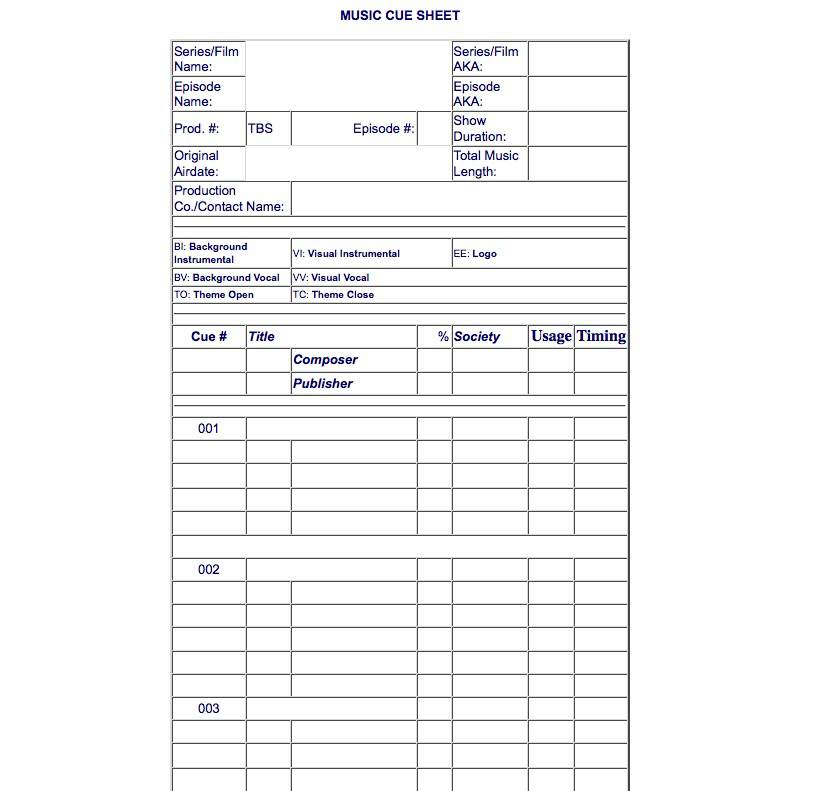
• Keep track of the music, the title, the publisher, the recording company, the artist, the songwriter as well as how much of the music was used (time) and where in the film. You’ll need all this info for your “cue sheet”. A cue sheet is basically a list of all the music that is used in a film in the order that it appears – with all the info above listed. If your film is accepted by a film festival they will ask for it.
• Don’t forget that most times you will need two licenses for a song. One is the “synchronization license” which is permission from the publisher to use the song and the other is the “master use license” which is permission from the recording company for a particular recording of that song.
Apple Loops is “free” to use as long as you aren’t reselling just those clips as clips. But you’ll still need to download that license on the Apple website.

I’ve learned a lot over the last couple of months in what it really means to be a producer – at least in terms of what is needed to get a film off the ground after the “fun” part of creating it is over. But, while this type of work isn’t “fun” – I’ve grown by the process.

The D.I.Y. Age

The world is full of possibilities these days.  In fact, for the individual and their “reach” globally – it’s staggering how many possibilities exist that didn’t just a couple of years ago.

We can not only create in a more affordable way with inexpensive equipment and leaner crews – we can also get our creations out to the world without the need for a publisher or a stock agency or a film distributor.

We can do all those things due to the exponential growth of technology.  But we also need to recognize that all those possibilities come with a cost, in terms of dollars as well as man-hours.  Each one of those possibilities takes time and money in order to become a reality.

Even the path to getting money or financing these days has changed because of crowd funding.  But like anything else you need to stand out amongst the noise, so who knows how long this trend can sustain itself.

If you’re planning a personal project, keep in mind that you will need to not only create it but find a way to get it out there after completion.  Expect to put time and money into:

•    Self – Publishing – this includes hiring a designer and researching self-publishing partners like www.lulu.com in the print publishing world. They also offer downloads. In the motion world, you have options like Amazon, iTunes and Netflix.
•    Marketing, PR and advertising – This is definitely an area where you will need money and expertise. Jon Reiss in his book “Think Outside the Box Office” suggests that it will take an investment for at least as much as you spent creating your film.
•    Crowd funding – The crowd funding sites provide you a portal if your project is accepted but you need to do the work as far as getting people to know about your project and fund it.
•    Bookings – Whether it is an exhibit or a movie or a lecture – you need someone to book venues for you.  This could also mean finding sponsors.

The bottom line is really kind of an old fashioned notion in a high tech age and that is – the prize is out there is you’re willing to do the work.

Add to FacebookAdd to DiggAdd to Del.icio.usAdd to StumbleuponAdd to RedditAdd to BlinklistAdd to TwitterAdd to TechnoratiAdd to Yahoo BuzzAdd to Newsvine

Don’t Re-Invent Yourself

I’ve come to hate the expression “re-invent” yourself.  It’s not only become a bit trite, but it’s caused a lot of unnecessary anxiety.

If one feels that they need to do a makeover, he/she is often coming from a place in one’s life where they feel they have failed.  They may be at a low point in their life, either financially or emotionally and they have the desire to become someone else.

I’ve been thinking that perhaps we all have it wrong.  I don’t think we need to abandon who we really are and try to become someone we aren’t.  That never works. Creatively speaking, whenever I have approached my work as in need of a “makeover”, I have fallen victim to trends.  We all do I suppose, in an effort to “look current”.

That may work for a while, at least financially speaking – but then again maybe not.  I think my best work has come from my true self.  It’s pure but it can be raw. It’s what I just can’t stop myself from doing.  That is what resonates with others.  I think that happens when I am very clear on my vision. It affects people in a primal, yet subtle way.

Maybe we shouldn’t try to re-invent ourselves. Maybe we should just listen to who we really are and trust that voice.

Add to FacebookAdd to DiggAdd to Del.icio.usAdd to StumbleuponAdd to RedditAdd to BlinklistAdd to TwitterAdd to TechnoratiAdd to Yahoo BuzzAdd to Newsvine

Google,Licensing,Copyright – and Free

I got this email the other day. A couple of weeks ago, Tom my partner got a cease and desist from Getty and an invoice for uploading his own images on the ASMP NJ Chapter website because the Picscout robots had picked them up, which is now owned by Getty.

The business of photography has changed because of the Internet in terms of value, licensing, awareness of copyright and all of the above.

I have posted the letter below for discussion and open dialog- please no rants or whining allowed.

Dear Ms Mooney,

I’m not sure if I am contacting the right person, however I am small custom home builder on the Jersey shore in Xxxxx near Atlantic City.  My wife downloaded a picture of a South Jersey beach scene from Google about a year ago and put it on my web site.  She unknowingly downloaded a picture that was copyright protected.  Today, July 15, we received a letter from xxxxxx a company that protects your work and they informed us that we used your picture and wanted 3000.00 to rectify the situation or buy the licence for 1020.00 we settled for the 1020 and took your picture down.

This picture was not a glamorized picture of a beach.  Just a dune and a dune grass fence.  A picture that could have been taken by anyone in South Jersey.  I just wanted to let you know that if this is your picture, it is dispicable that common, decent and hardworking people who have a small struggling business should be subjected to such a ridiculous fine.  The fact that we cannot google and download a beach
scene without worrying that someone OWNS it is outrageous.
Imagine that!  People own pictures of nature!

If this is not you, then my sincere apology, otherwise I think you should be ashamed of yourself and need to contact Google for having your picture available to millions of people.

Regards,

xxxxxxx

Add to FacebookAdd to DiggAdd to Del.icio.usAdd to StumbleuponAdd to RedditAdd to BlinklistAdd to TwitterAdd to TechnoratiAdd to Yahoo BuzzAdd to Newsvine

Pick Up the Phone

Maybe because today is Father’s Day, I’m thinking about ties and connections and how much has been lost over the years in the way we have chosen to communicate with one another.

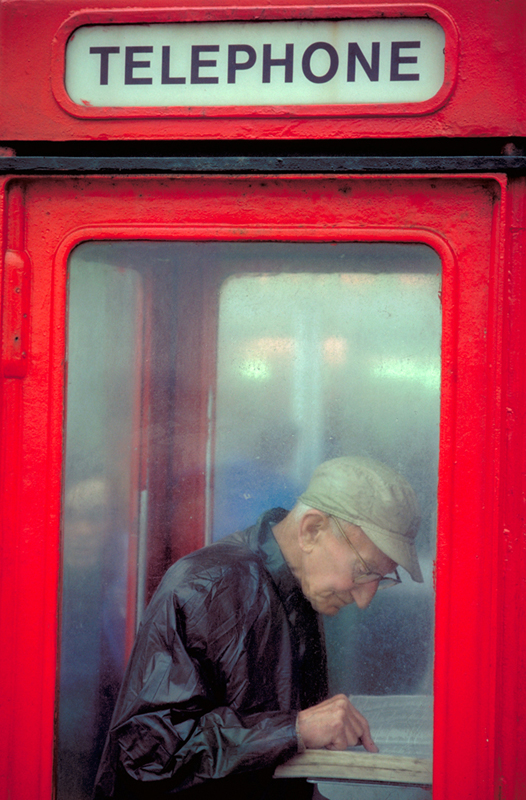
Pick up the phone and call

It’s an odd mix as far as behavior goes, in terms of how we communicate (or don’t), but regardless of whether we are communicating for business or personal – we seem to have lost the “personal” touch.

The memories I have of my Dad and others who are no longer here, are our conversations and just enjoying the dialog between the two of us.  These days, it seems as if people avoid one another – even when they are in the same room together.  There have been a few occasions over the last couple of months where I have been with a small group of friends and there has always been someone in the bunch – who is there in body – but not really –  because they are glued to their “device” and communicating with whomever isn’t there.

Call me “old” but I just don’t get that. I’ll always opt to have a conversation with someone face to face and my second choice is always  to have a conversation with him or her over the phone.  Why?  Because a phone conversation has interaction – in real time.  Emails can be exhausting with the back and forth banter and texting is even worse because of those little keys.  And of course when emails are ignored – there is no interaction – so what’s the point?

With all the options of how to communicate with everyone these days,  including all the social media forums, a personal connection is still the best way as far as I’m concerned.  Sure, you can’t take the time to talk to everyone on any given day, and I don’t.  But there are times, that I do want to connect with someone on an individual level – without blasting it out to the world on Facebook or Twitter and without it being a one sided conversation. And when it comes to business, nothing replaces the one on one face to face or a phone call.  That’s really the only way to emote your message and relay it in the manner it is meant to come across.

Today is Father’s Day.  If you have a Dad who is still in your life – pick up the phone and call him because I know it will make his day.  If my Dad were still alive, I would be making that call.  My only regrets are the times that I put those calls off.  But what I don’t remember is why I did it – the reasons couldn’t have been that important – but stupidly I rationalized they were at the time.

Add to FacebookAdd to DiggAdd to Del.icio.usAdd to StumbleuponAdd to RedditAdd to BlinklistAdd to TwitterAdd to TechnoratiAdd to Yahoo BuzzAdd to Newsvine