10 Things Freelance Photographers Should Do in 2016

Be optimistic – I’m going to start with the hardest one of all, because it’s really difficult to be optimistic these days.  But I find that if I can maintain a positive attitude and turn my thoughts to what is possible, I actually open myself up to more opportunities in my life, instead of creating more roadblocks.

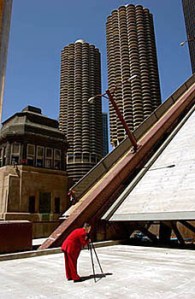
Be open to possibilities. – Be more flexible in how you perceive thingsphotographer on bridge, Chicago, IL and who you are. Change is always happening, but it’s usually gradual.  Most people don’t take notice until “change” forces their hand to act.  It’s always better to be proactive than reactive so embrace “change” as an ever-present fact of life that creates opportunities for those who are open to seeing them.
Collaborate – Photographers are very independent creatures and collaboration is not part of their norm. As the “photography” business continues to change, photographers will find that collaborating with other artists will make their own businesses stronger.

Diversify – I’m not quite so sure why so many photographers are so rigid in how they define who they are and what they do.  Having a “style” is great, but the trick is to not to be so narrowly defined by that style, so that when styles change, you don’t find yourself obsolete by your own design. It’s kind of like being type cast, where your audience or your clients can only see you in one way.

Concentrate more on “the story”– I had the opportunity to speak with a lot of still photographers and filmmakers this past year and I began to notice a difference in the conversations I was having with each.  Most times, filmmakers would be telling me a story, whereas still photographers would be telling me how they executed a photograph, or essentially telling me the “back story” of the creation of the image. It’s all interesting but “the story” is the bottom line – if that doesn’t come through to the viewer – the rest doesn’t matter – including how it was executed.

Be authentic – be true to yourself.  That means that you have to trust your gut instead of second guessing it.  This is hard, especially when things don’t always work out the way you had hoped.  Step away from the “noise” and listen to the voice inside.

Fail more. – Rejection is a tough pill to swallow but it usually means that you are either pushing yourself to try new things, you are too far ahead of your time or it just wasn’t meant to be.  If you look at successful people you’ll see that most have had failures and rejections in their lives but they stuck with it – instead of letting failure defeat them.

Self-Initiate more projects. – I don’t like to call non-commissioned work, “personal projects”. That co notates that there is no monetary value and these days, just the opposite could be true.  With more and more lopsided contracts  being presented to photographers for commissioned work, a photographer has a better chance to make more money and keep ownership of their work by creating self-initiated projects.  But they need to be prepared to work hard.

Forget about the past except to learn from mistakes. – You can’t change the past but you can learn from it and then, move on.  Look toward the future but make sure you take time to enjoy the “now”.

Realize that in the scheme of things, you are just one small speck in the universe. – I think we all get way too stressed about things that really don’t matter and we let those things control our life.  When we become more conscious of that, we really begin to live life.
What Does a Photographer Look Like?

When I started out as a commercial photographer more than three decades ago, it was a very different profession than it is today. It wasn’t just different in terms of technology – it was different culturally. When I went out into the workforce in 1977, it was definitely a man’s profession.

I never really thought of myself as a female photographer, just – a photographer. I didn’t think the additional gender adjective needed to be part of the conversation – yet it was at that time. Sometimes it surfaced in social settings. One time, an art director who I worked for, introduced me to a very famous photographer who shook my hand and said, “You don’t look like a photographer!” And I thought to myself, “what does a photographer look like?”

It was worse when the gender bias surfaced in the workplace. I’m not sure if having a male business partner made the situation better or worse. I do know that the assumption was always that my partner Tom Kelly, was the photographer and that I was either his rep or his assistant. That assumption negated itself during a pre-production meeting or on the job, but I needed to make my presence known.

Things have changed…….slowly, over the years in the photography profession. There are far more women in the industry now than when I first started. It’s certainly not the exclusive male dominated industry that it used to be, but there are plenty of professions that still are – the movie industry is a perfect example. There are plenty of other examples of gender bias in the workforce, which is what motivated my project, Like A Woman.

Like a Woman is a series of environmental still portraits and short films about women working in male dominated professions. The idea was first inspired by Lauren Greenfield’s Like A Girl campaign. I loved the campaign and even though I felt hopeful that younger girls are growing up a bit more empowered than girls of my generation, that statement “Like a Girl” still lingers as a demeaning remark. I wanted to flip the narrative and make the statement, Like A Woman an empowering expression said with pride.

To date, I’ve interviewed 5 women from all different professions – architecture, engineering, auto mechanics, organic farming and industrial photography.

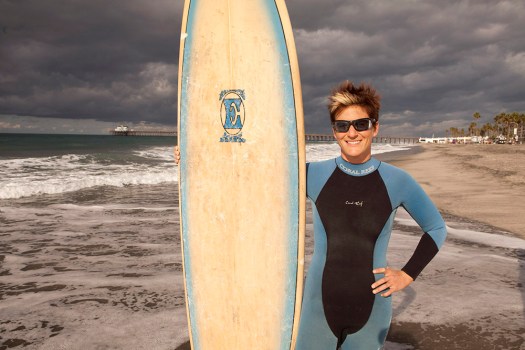
Jenna Close, Oceanside, CA
Jenna Close with surfboard, Oceanside, CA

I’ve just completed one on industrial photographer, Jenna Close. You can see it on the Like a Woman Vimeo Channel. Jenna demonstrates that women have come a long way in terms of having successful careers in photography, but she reminds me that there are still undertones of subtle gender bias. Things are changing, but until the gender adjectives disappear entirely from the conversation, we need to stay mindful and not drift into complacency.

If you know a woman working in a male dominated profession, who you think would make a great subject for Like A Woman, please contact me. mailto:gail@kellymooney.com

How to be Productive in a World Full of Distractions

I’m an organized person. I need to be organized otherwise I feel that my life is in chaos. Scraps of paperI’ve always been able to define an end goal and break down the tasks that need to be completed in order to attain that goal. I am able to prioritize tasks and assign deadline dates. I’ve always been pretty good at getting things done. I have to be – I’m an independent entrepreneur.

My business is visual communications. I create storytelling images and films for corporations and non-profits. I market myself to buyers who commission still photography and video production for that market. These buyers work for ad agencies, in-house corporate agencies, non-profits or publishing companies.

My business has changed dramatically since I opened shop over 3 decades ago. The possibilities and tools that are available to small independent entrepreneurs to use in their marketing strategies are endless. The problem is the vast amounts of opportunities ends up being a double-edged sword because it overwhelms most of us. There are endless ways to target a global audience through, social media channels, electronic ads, online portals/websites/blogs, emailer promotions, print promotions, print and online directories……….the list goes on and on.

It simply becomes overwhelming and seemingly impossible at times, for me to address all the needs of a small business, to keep our business afloat. What I’ve found is that it’s never been more important than it is now in our tech driven culture, to be organized and focused and not succumb to distractions.

Here are some tools that help:

Basecamp – essential management tool if you’re collaborating with others.

Wunderlist – organize your personal/business life. Notes, notifications, reminders, due dates and share lists with colleagues and family. Free

Post Planner – If you or your company engages their audience on Facebook, this app saves you time and boosts engagement. Schedules your posts – finds content.

Sweet Process – Do you feel like you have to learn all over again, every time you do the same things? It could be a workflow for creating emailers for example. This app systemizes and records your process. Essential in employee transitions.

Magical Pad – Organize – be more productive – get things done. Projects, Tasks, Brainstorming.

StayFocusd – Are you super distractible and find yourself spending hours on social media and not getting anything done? Perhaps you should install this app if you are a Chrome user. It will limit the amount of time that you can spend on time-wasting websites.

New Website, New Reel, New Look for Kelly/Mooney

It had been far too long since we did a redesign of our website – more than 5 years. Not only the industry (visual communications) has changed in the past 5 years, but so has our KM Logobusiness. More and more, clients are asking us to provide visual solutions in mixed mediums for a variety of uses – print, the web and social media. That’s been true especially with our editorial and corporate clients. It’s rare when a client comes to us for just one photograph for one usage.

With that said, we wanted a new website that would demonstrate the scope of our business. The first thing I did was to define the look and functionality of the website as well as what I wanted the website to communicate to potential buyers. We knew that a template site with just our still images no longer represented our business. We also knew that we wanted a website that would speak to our client’s needs and the services we provide that meet those needs.

My list of must haves for our website:

  • A site I could manage and update easily.
  • A site I could move to another server if I chose to do so.
  • A “scrolling” website. In researching numerous websites, the scrolling or parallax scrolling websites appealed to me and I began to see them everywhere – small and large film companies, graphic designers, non-profits, etc. We wanted a site that told the Kelly/Mooney story.
  • Messaging throughout the site communicating to potential buyers, what we do, the services we provide, how we work and who we are.
  • Intuitive navigation.
  • A site that would not only show our work but our experience as well.

I should point out that before I even got to this point, I had spent over a year culling through a vast archive of our work – literally terabytes of still images and footage – both digital and analog. I did the task over time, sifting through new work and old, trying to distill it down to the best representation of what we do, what we want to do and our self-initiated work. . Ultimately sorting through this body of work, not only served the purpose for the website but resulted in a new reel as well.

Challenges:

  • One of the biggest challenges we’ve always had was showing one unique vision because there are two of us. This website shows our combined work throughout the galleries, but it’s the first time we show individual galleries for Kelly & Mooney.
  • New reel – I took 7 hours of footage down to a 90 sec. reel. And then I re-edited it! That doesn’t take into account the time I spent sifting through music selections to pick the right piece for the soundtrack of the reel.
  • Picking images – We have a huge body of work because of the longevity of our careers. Ultimately we selected mostly recent work, but we didn’t want to discount our classic images so we decided to create a legacy gallery.
  • Realizing that I sized the images too big. In addition to the images having long load times, they bogged down the site by adding to the size making it a double digit Gig file. I had to go back to the images and resize them all. That was not fun as I’m not a big fan of going backwards.
  • Finishing the site at the beginning of the summer and then cutting it back all summer long because it was just too overwhelming. No doubt, there’s still editing that should be done on the site but at a certain point we had to launch. We finally did on Oct. 6, 2015. That in itself was traumatic. Right after we went live, somehow I deleted a critical file, which shut down the site. I was very fortunate that I had great support from our host server who had everything restored within the hour.
  • This is the first time I’ve ever built a website. It was frustrating, challenging and scary. I thought that my limited knowledge of  Wordpress  from working on my blog would be enough to create a WordPress website. It wasn’t, and it has been a huge learning curve for me. But I wasn’t the only one who worked on this website and I’d like to acknowledge the people who helped me through my meltdowns: my partner Tom Kelly, my colleague Jan Klier, and all the lifesavers at DreamHost (our host server) and folks at Envato who designed the WordPress theme.

This will continue to be a work in progress and I welcome comments and suggestions. http://kellymooney.com/

10 Tips to Nowhere

I realized recently that I had succumbed to the prevailing trend in editorial writing – the “top ten” syndrome – the top ten places to see in a lifetime, 10 tips on how to be more productive, 10 tips for taking better photos, the 10 best towns to live in – you get the picture.

Train tracks, Mississippi

Seems like we want our info and we want it fast and easy to digest. The problem is we tend to lose sight of the things that aren’t on the top ten lists and lose focus on who we are.

I spent my summer redesigning our company’s website, editing a new motion reel and strategizing with my partner on marketing ideas. I am grateful for whatever outside forces motivated me creatively to have such a productive summer. I learned some of the pitfalls of following just the advice of “top ten” check lists when it came to editing our new motion reel. For example, these tips:

  • Pick music that sets the tone for your brand and footage.
  • Select only your best clips.
  • Cut on the action.
  • Cut to the music – to the beat
  • Have an opening that hooks the audience – gets their attention.
  • Include your company’s logo and/or info.
  • Pace it like a story with lows and peaks.

That’s not 10, I know, but that’s not the point. The point is that I had lost sight of the most important thing of all and that was I hadn’t shown our company’s vision. After months of work, I had picked the right music, culled through hours of footage and selected the very best clips, came up with an opening that I thought was intriguing and did my very best to cut to the beat of the music. I had shown what we have done, but I hadn’t shown who we are. So, I went back to the drawing board and re-edited the reel.

I realized that there are no short cuts to doing really good work. Good work comes from lots of trial and error and learning from our own experiences. It’s the journey that has its rewards.

By the way, we’re very close to launching the new site.  Stay tuned.

Breaking Barriers – Like a Woman

I’ve been a photographer for the better part of my life. It’s who I am. I’m also a filmmaker and love telling stories in this medium. And, I’ve been a woman living in a man’s world. Photography and filmmaking are professions that are dominated by men. The still photography business has changed Changedramatically  since I started out – it has become far less technical and many more women have entered this industry. Nevertheless, I’ve spent a lifetime working in a profession where, as a woman, I was in the minority. I never really focused on being a minority. I didn’t have a corporate job and had to compete against men for equal pay and/or opportunities. I was an independent creative entrepreneur. My latest assignment photos were my calling card and they got me in the door and my next assignment. I worked hard, harder than most because I wanted to – I had a strong desire to do something good. There were times (probably more than I know) when I didn’t get the job because I was a woman and there were times, when I was paid less money because of my gender.

Things have gotten better for women in the business of photography as well as in other industries but it took the tenacity and commitment of countless women who needed to break down barriers. There have been gains for women but gender biases still exist and we can’t be lulled into complacency by saying, “well, it’s better than it used to be.” The movie industry is dismal in terms of gender equality, women are paid less and make up a small percentage in “behind the scene” roles in the industry, especially in certain sectors like directing and sound design. Other industries like engineering, architecture, computer programming, aviation, firefighting are all gender lopsided and less than 5% of Fortune 5oo companies are led by women. And that’s the key word “led”. We need more women leaders. It’s not just about equality and justice, but women’s leadership potential has been massively untapped. And that’s a fail for us all – economically and socially.

So, I’ve decided to do something about it. I am initiating a project called Breaking Barriers – Like a Woman. My plan is to use my craft (photography/ filmmaking) as I always have, to make a difference. My intention is to create still environmental portraits and short video stories of women who are working in male dominated professions – pilots, computer programmers, engineers, doctors, construction workers, mechanics etc. etc. I want to tell their stories about the barriers they had to break and are breaking. I want to share these stories with the hope they go viral and start a revolution that will empower other women and young girls. I have built a FB page and opened Twitter and Instagram accounts so please “follow” and “like”.   But, more importantly, please share with me and with others your own stories about barriers you’ve broken.

CALL TO ACTION Are you a women working in a profession that is male dominated? Or know someone who is? I am looking for subjects to photograph and film. Please contact me: gail@kellymooney.com

A Professional Photographer’s Manifesto

My creed:

  • I listen to a client’s needs and provide valuable solutions.
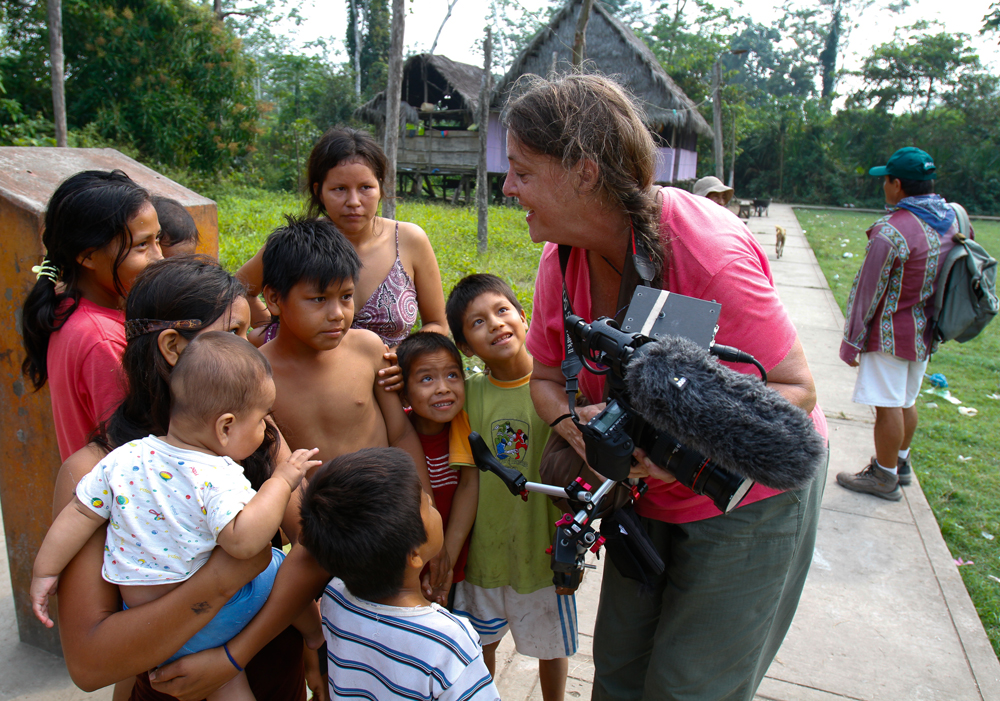
  • I have a strategy but I’m open to serendipity.Gail showing video to children of remote Amazon village, Peru
  • I evolve, explore and keep my skill set current and up to date.
  • I have a wealth of experience – on the job and in my life.
  • I don’t need to be “picked” or assigned to pursue what I love and that is to create.
  • I use my craft to create awareness and effect change.
  • I believe the message is just as, if not more important than the media.
  • I am a storyteller and use the medium that best fits the story that needs to be told.
  • I deliver on time and on budget.
  • I challenge myself and I’m not afraid to take risks.
  • I enjoy collaborating with people who are great at what they do.
  • I ask the right questions to get the job done.
  • I don’t make promises I can’t keep.
  • I’m a great producer because I think of all the details.
  • I am an observer of real life – and it shows in my work.
  • I have a strong desire to be the best I can be.
  • I care about my subjects and it shows.
  • I am curious and am always in pursuit of a project.
  • I am grateful that I love what I do and it provides value to my clients.
  • I am authentic and stay true to my spirit.

Having a Sounding Board

Sounding board: a person or group on whom one tries out an idea or opinion as a means of evaluating it


As a solo or semi-solo entrepreneur House on its own island, Thousand Islands, New York(my business partner is my husband), I have found that one of the most important things to have is a sounding board for my ideas. My husband and I are fortunate that we have each other to bounce ideas off of, but sometimes we need to seek out other people and solicit other perspectives.

Photographers are independent creatures. Take me for example; I’ve spent a great part of my life observing people and capturing the moments. Even though I refer to myself as a “people photographer”, being a street shooter can be a solitary activity. It’s easy to get accustomed to a lone lifestyle as a photographer, but I find that when it comes down to making decisions about promoting and marketing my business, I’m far better off to seek an outside perspective.

I’m lucky that I have people in my life that I can call on from time to time and bounce ideas around. I need to know if an idea that I think is going to rock the world, isn’t totally wacky or off kilter. Essentially, these folks are my sounding board. If you are stuck, or have been ignoring the ideas that come to you because you lack the confidence in them, consider reaching out to a sounding board of your own.

  • Solicit opinions from your colleagues; pick people who will give you their honest thoughts.
  • Seek opinions from the folks who you are targeting in your marketing – the people who will buy your services.
  • Test your ideas – it’s easy these days with social media. But go to the platforms that you trust. For example: when I am creating a trailer or a new reel, I’ll upload it to my Vimeo account, because I know I will get valuable feedback from my peers.
  • Remember, people are busy so build in extra time for them to respond when you ask them for their feedback. If you don’t hear from them in a reasonable amount of time or not at all – move on.  Maybe they’re not good contenders for your sounding board.
  • Reach out to different demographics – gender, age, socio-economic – depending on what you are working on and the message you want to deliver.
  • Even though it can be intimidating, seek the opinion of a pro.
  • Seek  out different people for different types of advice. I frequently ask my daughter’s opinion on music soundtrack choices. Music has been a big part of her life and she’s knowledgeable and savvy in that area.
  • Remember, at the end of the day, it’s your job to sort through all the opinions and suggestions and take away what you choose. The worst thing you can do is to try to incorporate everyone’s ideas because you’ll end up with something that’s neither here – nor there.

Labels, Finger Pointing, Fear, and the Real Value of Photography

I read an interesting blog post “On Real Photographers” by David duChemin recently. He talks about growing weary of the photographers’ complaints that “now everyone has a camera and suddenly everyone’s a photographer”.

My first experiences of being part of a group of my peers did not go well. My memories of being in school are mostly filled with my efforts to fit in, and the efforts of others to keep me out. The new kid. The smaller kid. The kid with the funny name. So I come honestly by my desire to see others included.

 So when I hear people complain that “now everyone has a camera and suddenly everyone’s a photographer” I hear the same old, fear-driven, mean-spirited, zeitgeist of the schoolyard.

 The same craft, beautiful for it’s democratic nature, that admitted you, and admitted me, will admit others. And with the same tools we picked up with such wonder, those others will make photographs. That’s what cameras do. And it’s what people who own them do. And they will, in that moment, become photographers: makers of photographs.

They are not faux-tographers. They are not necessarily “just camera-owners”. Neither are they DSLR-monkeys, or whatever other pejorative seems clever at the time. Shame on you. Shame on us as an industry.”

Gail shooting feature doc "Opening Our Eyes" at the Kopila Valley Primary School, Surkhet, Nepal
Gail shooting her feature documentary “Opening Our Eyes” at the Kopila Valley Primary School, Surkhet, Nepal

It hit home. As the perennial “new kid” (moving 11 times before I graduated from high school), being one of only six women when I attended Brooks Institute and now being dismissed or frequently feeling invisible because of my age, I’ve personally faced a lifetime of the “same old, fear-driven, mean-spirited, zeitgeist of the schoolyard.”

I despise our seemingly human need for “definitions and categories” and placing people into boxes defined by gender, age, race or religion. So I question why do we determine the creative value of photographers based on whether they are “professionals” or “amateurs” or if photography is their sole means of making a living? It’s exclusionary and judgmental based on fear and the notion that someone has to be excluded for the rest of us to win. This attitude has no business in a creative business because creativity has no boundaries dictated by “who’s in” or “who’s not”.

I have always been more interested in the power of what a good photograph or film can do – not who created it and what box that creator fits into. I’m interested in the story one has to tell. We are visual communicators and we are all unique but only if we listen to our own voice and create from that voice. Whenever I have trusted and listened to my internal voice and created from my own unique perspective and my life’s experiences, I have been “on purpose” and my work has resonated across genders, race and age. I suppose I could copy or mimic the “style du jour” whether it is HDR or photographing hipsters with tattoos and attempt to be someone I’m not. I don’t have the desire to do that because that is not why I became a photographer or filmmaker. That’s not to say that I don’t like and appreciate photographers who are following these styles but it’s not me and creativity doesn’t come from mimicking others. I’ve seen a lot of styles and techniques over the decades I’ve been in the photo business. They come and they go – just like the photographers who chase after the latest trend.

David states so eloquently:

‘Our categories are useless. Harmful, even. They separate us. They keep us siloed and cut off from generosity and openness and collaboration. They keep us focused on our own “qualifications” and not on the audiences and markets we should be finding new ways to serve, to inspire, to connect with. Our scarcity mentality is hurting us. It’s stopping us from being creative about making a living. The world owes us nothing, which is hard to accept when we’ve paid for a degree, invested in gear, or bought business cards, only to find out the universe doesn’t give a damn, and cares only about what value we bring.’

I too am weary of the blame, the finger pointing and all the stupid human tricks based on fear, and the notion that someone has to lose in order for me to win, because ultimately that comes from a place of insecurity and ego and rarely does that produce something of value. I don’t need a license that proclaims I’m a professional or feel the need to hide my age in order to compete. My value comes from a lifetime of experiences that made me who I am. If I choose to allow someone to define who I am or what I am capable of, or allow myself to be stopped by the naysayers, then I only have myself to blame.

It would have been so much easier to quit or stop myself every time someone threw roadblocks in my way based on their own notions of “what’s in” or “what’s not” and that would have led to an empty life. I chose instead to follow my heart and my convictions and accept the rejections that ultimately come when one faces their fears and stays true to who they are. It has never been easy but I’ve never sought easy. I’ve too busy living a full and rich life, using my craft to create awareness, impact social change or just to bring a smile to someone’s face and create a memory.

What’s Next for Still Photography? Things We Could Never Begin to Imagine.

Journeys of a Hybrid

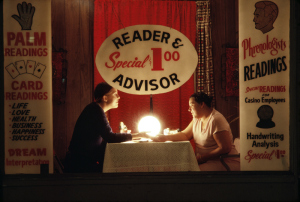
One of the only good things about getting older is that I have gained a lot of perspective. Fortune teller through window, Atlantic City, NJ I never speculate what the future will hold by limiting it to what’s possible now because…..

When I began studying photography at Brooks Institute in the early 1970’s

I never would have imagined:

  • That I would own a personal computer that would change the way I communicated with people and ran my business.
  • There would be the Internet, email and mobile phones.
  • There would be auto-focus cameras and lenses.
  • Cameras would be fully automated – if you so choose to use them that way. When I began my career as a photographer, I needed to be a technician, and that meant understanding aperture and shutter speed and a lot of other things that went into making a still image.
  • I would be shooting still images without film.
  • I wouldn’t be limited to…

View original post 398 more words