The Difference Between TV and New Media

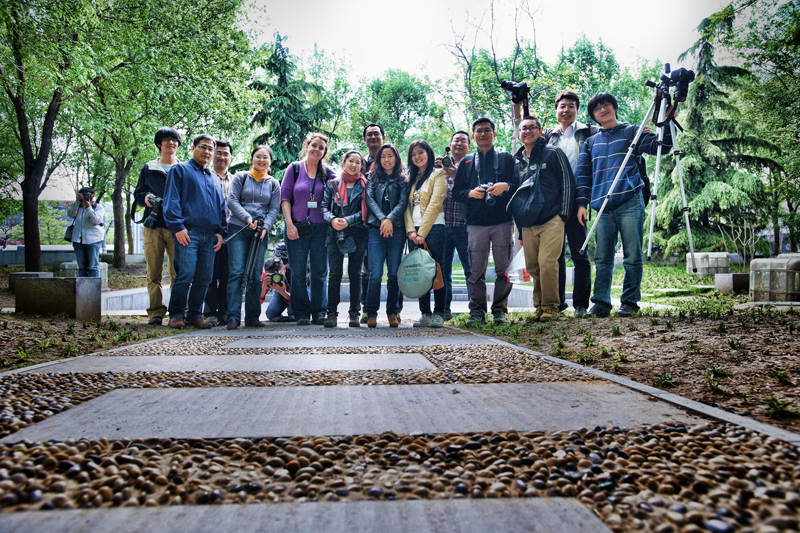
It’s been a tough 3 weeks teaching video to journalists in China – perhaps the toughest thing I’ve ever had to do.  It’s not the teaching part that’s hard – it’s knowing if what I am saying is being correctly translated to my students, it’s being away from friends and family and just being away for so long that makes it tough. I have one more week to go and will take a good long rest when I return to the US.

Last week was especially difficult but yet my amazing students got me through it.  They simply amazed me in how quickly they learned.  They learned in 4 days what it takes most photographers to learn in 4 weeks or months.

Every week I have a new group of students and each week there are always one or two students that I know really “get it”.  There was one student who I coined a nickname for “Mr. Question” because he asked more questions than most.  His questions weren’t just about what settings to use on his camera or how to do something in Adobe Premiere, but more about the “big picture”.  His questions always showed me he was thinking.

One question, this particular student asked me this week, really caught my attention.  He asked me “How are we (new media producers) different than TV?

Stephen-Lee-TV-News-Presenter SMALL
Stephen-Lee-TV-News-Presenter SMALL (Photo credit: Wikipedia)

I had just read an article online that addressed this very question and it talked about how newspaper video journalists are now winning more Emmys than TV news journalists.

I responded to my student by telling him:

  • TV news makes the reporter part of the story – sometimes even the “star”
  • New media tells the story through the voice of the subjects – making them the “stars”
  • TV news is delivered to us on the network channels – 3 times a day.
  • Online news is 24/7 and on demand.  We get the news online when we want it and wherever we want it – on our desktop computers, on our iPhones or on our iPads. We also can share the news and interact with others.  We become part of the delivery chain.
  • TV news journalists rush back to the studio to get the story on air by 5 o’clock. The stories are generally very short – limited to their broadcast slot.
  • As new media producers we have the luxury of working longer on feature stories and delivering them online to a global audience.  While print newspapers and magazines are folding – there has been a rebirth of the long documentary story that can now be delivered online.  We are communicating to a wider audience around the world, no longer being restricted by time and space.

In the 1960’s newspaper executives were lamenting about the good old days and predicting that TV would kill them.  I find it ironic that the shoe seems to be on the other foot now.  I teach “motion” and “video journalism” to a lot of still photographers.  There are some who buy their DSLR’s and aspire to make broadcast spots for TV.  There are some who aspire to make feature length films for Hollywood.  And then there are some who tell me that there is nothing new about video and that field is already glutted with videographers and cinematographers. Those are the old business models for video and motion.

The ones who “get it” are the hybrid creatures that recognize that there is a shift in the way we communicate.  They understand that video is really just another medium in which to tell their stories – not a business model, nor a niche market.

My student in China who asked me this question- he “gets it”.  He understands that he is part of the future of how Chinese journalists and others around the world, will deliver the news. That’s why they call it – new media.
Pioneering in Video

I’ve been in China for the past two weeks, teaching video journalism to some of the best photojournalists in China.  Last night at dinner, the top director of the program told me (via my interpreter) that Xinhua, China’s biggest news agency, was setting up their multimedia department to stay current with how news is communicated in this day and age.  She thanked me for teaching and inspiring her journalists in this medium and said that I was an honorable “pioneer”.

I never set out to be a pioneer when I first started shooting video and motion in the mid ‘90’s – I merely recognized that when the “tools” of this medium became affordable, it was now possible for me to tell my stories in another dynamic way.  But I never turned my back on still photography and I would say that it still makes up about 50% of my business – at least in the time that I devote to it.  I would also say that while I spend 50% of my time split between both mediums – I make more than 75% of my income from shooting motion – capitalizing on not just making income from shooting video but also on the other elements like editing.

I started thinking about the aspect of being a pioneer and the more I thought about it, the more I realized that I wasn’t trying to set new ground at all – I was really just challenging myself and more importantly staying true to why I became a photographer and that was to communicate.

I’ve given a lot of workshops to still photographers who want to move into video.  Generally there are two types of photographers – the ones who think that because they have been “shooting” for many years, they “just” need to understand a new mode on their cameras and the ones who embrace the fact that this is an entirely different medium and they understand that they are novices, and are eager to learn how to communicate in a different way.  It’s usually the cocky photographers that fail miserably and end up with a string of unconnected “moments in time” to a music track.

Ever since the first DSLR that incorporated a video mode hit the scene, I’ve seen more and more still shooters, move into motion.  After only a couple of months, I even see some of them teaching workshops.  It amazes me, because many times some of these same shooters have been hypercritical of “amateurs” coming into their profession with their auto everything “point and shoot” cameras.  I’ve had some shooters tell me that they aren’t going into motion, because they think that when these tools  become easier to use and more automated – the same thing that has happened to the profession of still photography will happen in video.  I disagree with this notion but more importantly I think that this attitude is usually a mechanism people use to talk themselves out of challenging themselves and are reluctant to “change. ” Just like when still photography moved from film to digital – the ones who got left behind were usually the ones who tried to convince themselves that digital would never be as good as film.

I cannot take credit for being a pioneer in video.  There are many who came before me that were true pioneers and I feel that would discredit them and their efforts.  I’m simply a storyteller and I’m happy that I’m still passionate enough about telling the story that I continue to find the best way to tell the stories that I am meant to tell.

Thanks to the gracious people in China and the Xinhua News Agency for recognizing and embracing the future and being keen to learn.  Perhaps many of these students will not shoot multimedia – but learning how to shoot in motion has made me a better still photographer and will make them better shooters as well.

Week One – Teaching in China

I’ve just wrapped up week one, teaching Chinese photojournalists, in Beijing, to think and shoot in motion.  Like any new job or new experience – the first day or the first week – is always the hardest.  The week flowed like any good story, with “ups” and “downs” but by Friday afternoon – my students triumphed and amazed me.

It’s difficult to teach any “still” photographer “motion” because so many photographers are so gear oriented, they underestimate the most important part of the process – thinking and shooting in motion.  I find that many times, still photographers think that all they need to do is switch their DSLR’s to “video mode” and shoot.  There’s a certain attitude amongst some professional photographers – that all they really need to do is get a camera that’s capable of shooting video.  But they quickly realize that there is a lot more to learn.

Day one, we talked about thinking and shooting in sequencing.  It took longer to get this message across, simply because everything needed to be translated into Chinese.  I showed examples that helped and then gave them an assignment to shoot a sequence of video clips that told the story.  The next day we reviewed the work of the students and they quickly understood the successful attempts and the not so successful results.  They also realized how different shooting motion is from shooting stills.  I had told them in class that “stills are moments in time” and “video is time in motion” but until they actually tried to shoot that way – and then analyzed their results in the critique – did they begin to understand. Many made the common mistake of moving the camera, rather than letting the motion happen in front of the camera and many produced video clips that didn’t relate to one another.

Day two we started to talk about audio.  That’s a subject that all still photographers underestimate because they don’t realize the importance of capturing good audio.  They think that their camera mics are sufficient in this task. After all, they are capturing sound.  It’s not until they can hear the difference between good audio and bad audio that they really begin to understand that audio is more important than the visual.  I could see the light bulbs going off the next day in the critique that they were beginning to understand this important concept.

Day three we talked more about the importance of audio and that when shooting with a DSLR camera, it is essential that they capture audio with an external microphone and a separate digital audio recorder.  After a morning in the classroom, we all headed out for a field trip.  I set up a situation where I did an interview of a subject and they shot the b-roll.  That evening, we broke into 3 groups (video is a collaborative effort) and they set off to capture a story, using everything we had learned in the past 3 days

Day four, we put a small dent into learning the vast editing application, Adobe Premiere.  That was perhaps the most challenging day for all of us.  I’m somewhat new to Premiere, since I’ve been editing in Final Cut Pro for the last 10 years, but it was the most viable solution since most of the students were using PC’s and Premiere is cross plat formed.  We learned the basics in the morning and in the afternoon – the hard work began.  The next day, we would be joining the other 3 groups who had been learning things like lighting and Lightroom and the clock was ticking to get their assignments edited.  I cannot even begin to tell you how amazed I was at how far these students had come in just 4 days – it was remarkable.

The next morning we showed our completed projects to the entire student body and other faculty.  Based on the resounding applause – I believe we amazed them as well. That evening we were all beyond exhausted, but my students invited me out for a “banquet”.  I was lucky  – many in my group spoke some English – so the evening was spent sharing stories and cultural experiences and food and drink.  It created a bank of memories that I will cherish.

We had two days of rest and our first day; we headed to a remote area of the Great Wall.  I shot some still images and then I needed to just take pause.  As the other 3 teachers continued to shoot – I knew I needed to stop and just take a moment to put the camera down and really “see” where I was.  I needed that time to absorb not only the week I had spent but to relish the “now” and think about where I was in the context of the world.  It’s those moments, when I put the camera down, that always create the memories that linger in my mind forever more.

10 Things I Learned by Making a Movie

I’m sitting in the airport lounge at LAX looking out over a rain soaked tarmac – in a mellow mood. One of those rare days when nothing really needs attention. I ran into a friend on the flight out from EWR to LAX , who had noticed that I hadn’t been writing as much of late. That’s true enough, for a couple of reasons but the simple answer is I just didn’t feel the urge.

I started writing when I needed to sort things out in my head or I happened to be thinking or experiencing something that seemed worth sharing. At times, I suppose I get very personal – that’s what I have been told. That’s comes with sorting things out in my head.

Today, I’m thinking about what brought me to LA and that is the fact that I made a film – a 76 minute documentary. I‘ve never had any formal training in the way of film school, although I have often fantasized about going to NYU and getting my Masters in film. But in the interest of time, at this point in my life – I did what I’ve done a lot in my life and that is , I just decided to “do it” – in this case, make a film.

So what did I learn?

1. The story is everything – it’s everything.
2. It IS possible to make a good film without a big crew and a Hollywood budget and lots of gear.
3. You have to have desire – when you have a small crew and a tiny budget, you do a lot more of the work yourself – so you have to be passionate about what you are working on.
4. Festivals are competitive – at least the “big” ones. Are they important? They are as far as building awareness, especially for a narrative film. For me, a festival provides an opportunity to interact with an audience and get feedback. I didn’t make this film to keep it a secret.
5. The film will take a lot more time than you can imagine, especially if you don’t have a big budget.
6. There is a cinematic language and necessary ingredients to any successful film – one being – a film needs contrasts and opposites or opposition.
7. PR and marketing is essential and most filmmakers do not dedicate enough money toward this end.
8. There are so many paths to distribution these days – DVD’s are dying out and VOD and downloads are taking their place.
9. It’s almost unheard of for a filmmaker to “own” their content – most have partners and/or investors – active and otherwise. I can’t tell you how many times, eyebrows have gone up when someone asks me who owns the film and I tell them, “I do”.
10. A film is never finished – but there comes a time when you are ready to let go.

Add to FacebookAdd to DiggAdd to Del.icio.usAdd to StumbleuponAdd to RedditAdd to BlinklistAdd to TwitterAdd to TechnoratiAdd to Yahoo BuzzAdd to Newsvine


Closing Thoughts and Best of Best

It’s been a very full year for me. I mean that in every sense of the word full – full of new experiences, full of hope, full of achievements – but also full of my share of rejections and disappointments. I’ve shared a lot of these experiences through this blog.

There have been times I haven’t written in a while because I didn’t feel like I’ve had anything worthwhile to say. And there have been times when I did write but I probably shouldn’t have because it wasn’t worth reading. I always told myself that when I didn’t feel like writing in my blog, that I just wouldn’t do it. So if there are long periods of time when I haven’t posted a new entry – it’s because for whatever reason, the desire may not be there. I have always appreciated the comments and feedback.

Here are the top 5 posts as far as number of hits:

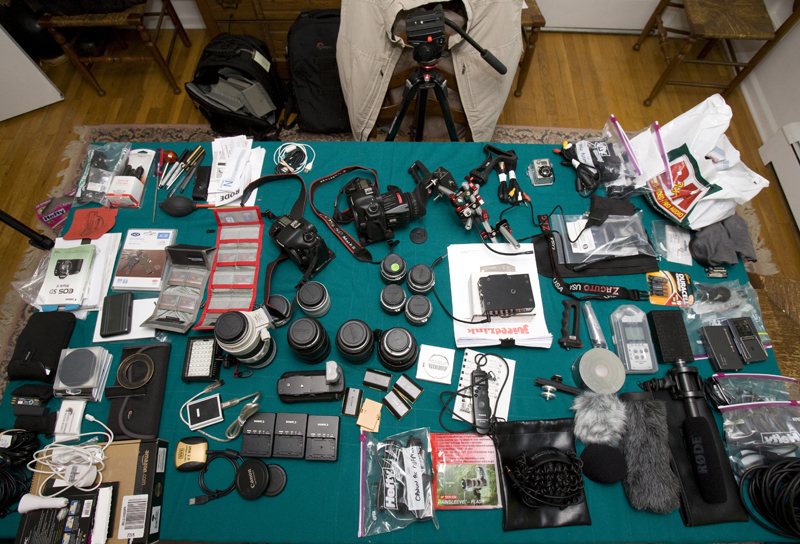
My DSLR Kit for a Three-Month Road Trip

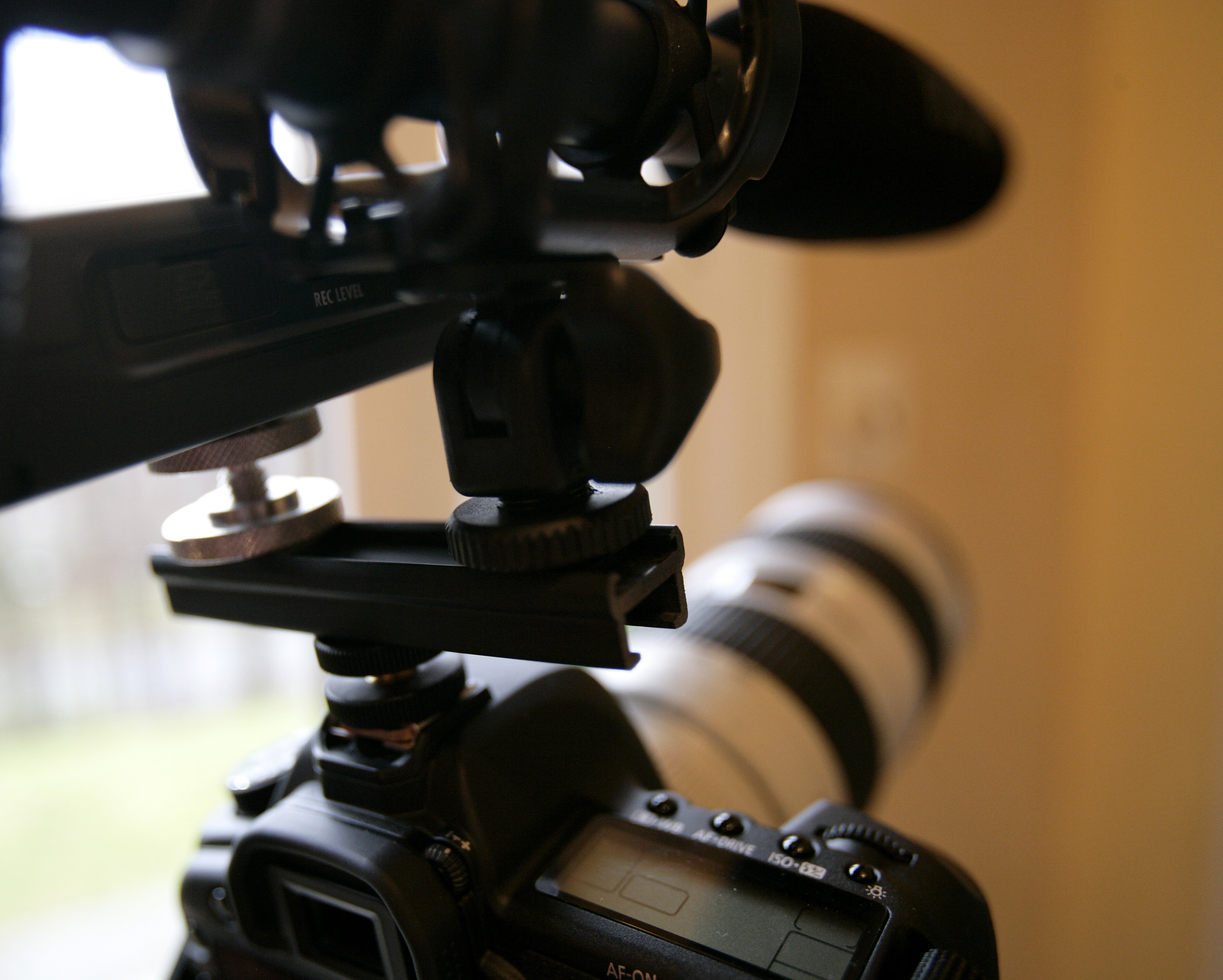
Gearing Up With HD DSLR’s


Standing on a 10-Foot Frozen Wave

Putting Together a DSLR Video Kit – and Why

Cultural Context and Photography

As you can see, the blogs about DSLR (for video) gear is where the interest was.  But I’d have to say that out of those 5 posts, “Standing on a 10 Foot Frozen Wave” was my favorite.  For me, it’s all about the story. And as Orson Welles once said “If you want a happy ending, it depends on where you stop the story”.

Happy New Year everyone.

Add to FacebookAdd to DiggAdd to Del.icio.usAdd to StumbleuponAdd to RedditAdd to BlinklistAdd to TwitterAdd to TechnoratiAdd to Yahoo BuzzAdd to Newsvine

The Problem With (Most) Video/Motion Workshops

This has been something that has been weighing on my mind for months now – ever since the seemingly “overnight sensation” of people giving video workshops as well as the growing number of still photographers that are feeling the need to take these workshops.

The biggest problem that I see with all the video/motion workshops that are out there is that they oversimplify video production and take the approach that the single independent still photographer can learn and do it all – produce, operate the camera, capture good audio and manage the post-production and edit.  I suppose to be fair – while it may be true that the independent still shooter can learn all facets of video production, that is not the best approach as far as setting up a viable business model for a video production company.

Video is a collaborative medium.  While I may be able take just about any video production from soup to nuts single handedly – I know that the production would suffer if I did.  I learned a long time ago to build a team of good sound people, editors and even camera operators that I can draw on to hire on a need be basis.  They make the production and me look good and that’s what keeps my clients coming back.  It also allows my business to grow because I can take on more projects. If I’m not entrenched in all aspects of the production. It frees me up to start production on another project while still in post-production of a previous project.  If you are a one-man band, you not only don’t have this option but you actually make yourself look small in the process.

Video and motion have many facets to them.  I advocate that the best business models are when one positions themselves at the top of the content creation ladder by overseeing the production of the whole and hiring the appropriate crew that will facilitate the process.  By recognizing the differences between this business model and the “solo” model that most independent photographers work under, you’ll have a much better shot of maintaining ownership of your work and creative vision as well as having the potential to grow your business beyond your own singular capabilities.

The other problem with workshops that over simplify the process of video production by promising that you will be up and running after a one day workshop is that they are centered around learning the gear and the software which changes by the month.  If you learn just the gear du jour and not focus on the business of video production you will be in competition with other independent dabblers and that’s a quick way to the poor house in terms of sustainability.

A week doesn’t go by when I don’t get at least a dozen calls or emails from still photographers who feel they need to get into video and are overwhelmed by the learning curve.  I tell them that the best thing they can do is NOT to try and learn all these skills themselves and that in fact that will only delay their entry into the video production, business if that is what they are after.  A better way is to keep your focus on your vision, apply that to a sustainable business model that will incorporate video and collaborate with others who will make you look good and help you grow your business.

Add to FacebookAdd to DiggAdd to Del.icio.usAdd to StumbleuponAdd to RedditAdd to BlinklistAdd to TwitterAdd to TechnoratiAdd to Yahoo BuzzAdd to Newsvine

How a Film Can Make a Difference

I never fully realized the power that is within me to make a difference, until recently.  Last summer, my daughter and I spent time with extraordinary people who were providing homes for orphans, feeding the hungry and curing the ill.  They were all people we met while making a documentary about the change makers in our world – people who are making our planet a better place.

Our goal was to inspire and motivate others as to what they can do to make a difference in their own communities. Our goal was to cause a shift, in culture and in thought – from “what in it for me?” to “what can I do?” We’ve just begun to submit this documentary to film festivals and show sneak previews to small audiences but I can already tell that this film has affected change and the potential it has to move people to action.

From our first sneak preview at the beautiful State Theater in Traverse City, MI to a recent screening at MIS in Sao Paulo, Brazil, I feel the energy in the room and the collective desire to strive for a better world.  I feel the power of film and the power within me as a storyteller and filmmaker. I feel the time for this film is now and that people are hungry for hope.

Many documentaries take the critical point of view and certainly have more conflict. Opening Our Eyes is different from other docs in that it shines a light on what IS being done to create positive change by individuals all over the world.  Somehow by showing the small acts, this film makes all of us believe that we can create change as well. It empowers us to believe in the possibilities and gives us the hope we seem to be yearning for these days.

When I first conceived of the idea for this film, inspired by friend and neighbor Maggie Doyne, I was looking for some positive hope myself.  I was tired of listening to the hundreds of “experts” on TV talking and all of them needing to be “right” – and nothing was getting any better. That was long before the Arab Spring and the Occupy movements. What I was sensing was the rest of the world was feeling the same way I was and decided to do something about it.

Time will tell if the film continues to create awareness and moves people to action, but at least I’m hopeful again.

Please consider supporting our effort by making a contribution to our IndieGoGo campaign, which only has a few weeks, left to go. And it’s tax deductible.

We can’t do it without your help.

Add to FacebookAdd to DiggAdd to Del.icio.usAdd to StumbleuponAdd to RedditAdd to BlinklistAdd to TwitterAdd to TechnoratiAdd to Yahoo BuzzAdd to Newsvine

Five Top Tips for Emerging Photographers

I talk to a lot of young aspiring photographers these days and invariably I am asked, “What advice would you give someone who is just starting their career in photography? – Is there a future? – Can I make a living?”

I don’t have a crystal ball but I do have 35 years of experience behind me but yet the enthusiasm and outlook of a 25 year old.  I remind myself of what I learned from my mentors when I was just starting out. One mentor, who shaped my career, was art director Adrian Taylor of Travel & Leisure Magazine. Adrian taught me a lot – about magazines, about the story, about style and taste and most importantly he gave me the confidence to believe in myself.  Adrian gave two young, naïve photographers, my partner and myself a chance and in return – we always gave it our all every time we set out to shoot a story.

Add to FacebookAdd to DiggAdd to Del.icio.usAdd to StumbleuponAdd to RedditAdd to BlinklistAdd to TwitterAdd to TechnoratiAdd to Yahoo BuzzAdd to Newsvine

With that said, I would not be where I am today if it had not been for mentors like Adrian Taylor and my greatest joy at this point in my life is to pay that forward to photographers just starting their careers.

  • Learn video – Video is no longer a “specialty niche” or in fact a separate genre at all.  In the very near future – which is already upon us – a photographer will need to know how to shoot both stills and motion – or partner with someone who does.
  • Stay true to what your inner voice is telling you.  For example, if your passion is to be a photojournalist, don’t listen to people who are telling you that photojournalism is dead and that newspapers are a thing of the past.  While “printed” newspapers may be dying out – journalism and photojournalism is not.  Don’t let others’ dogma determine what your path should be.
  • Collaborate with your peers.  When I was first starting out, photographers kept their clients, their techniques and their ideas to themselves.  But I have found that whenever I have collaborated with others – we all push the bar to the next level – each bringing their own strong suits to the project.  As a subject of my film Opening Our Eyes told me “We’ve got to shine each other up.”
  • You don’t need the validation of others to proceed with your idea and make it into a tangible plan and product.  As far as publishing and/or distribution is concerned – the gates to the kingdom are open and the kingdom is the entire world.  We are living in a time of empowerment for the individual and for a content creator that is profound.  If you are willing to do the work – the rewards are bountiful.
  • Act on the ideas that don’t go away.  It’s easy to let resistance sabotage you.  Resistance comes from many places – your loved ones, friends, your peers – but mostly yourself.  Stop talking yourself out of ideas and start acting on the ones that just won’t quit you.

I have made my work my pleasure in my life.  I have always found it difficult to separate the two.  When you feel that – you’ll know you are on the right path.

New Opportunities for Photography

For this post, I’m going to use a very broad definition for “photography”.  I will define photography as any image still or motion shot by any camera – still camera, video camera, hybrid or even and iPhone.

The business of photography has changed with technology. To start with it demands more than just “still captures” in terms of content. These days, our clients are asking us to create stills and motion content and sometimes even 3D.  On top of that technology has made it possible for almost anyone to take a reasonably good picture or video.

So where does that leave us as far as new opportunities in the business of photography? While some look in their rear view mirror and lament the passing of the good old days, I for one have my eye on the possibilities that are open to anyone willing to do the work.

My top 5 pick of opportunities out there:

  • Once Magazine – An online photo magazine made for the iPad. Photographs and video look great on the iPad and Once, magazine shares subscription revenue 50/50 with each issue’s contributors. You no longer need an assignment to shoot those long run stories you love and monetize them.
  • Crowdfunding – With Kickstarter, RocketHub
  • DistributionFilm DIYDistribber
  • Funding and marketing  – Sokap
  • PR and Marketing ToolsTopspin Media
  • Portal for e-commerce (also integrated websites) – Photoshelter

That’s a start.  It’s never before been more possible than it is now to create, promote, market and monetize your “photography.”  Be smart.  Be authentic. Be courteous. Have a plan and be prepared to do the work.  Anything is possible. Validation for your project is no longer necessary.

If you appreciate what I have shared – here’s one last link, a shameless plug to our funding campaign on IndieGoGo for our film, Opening Our Eyes.  If you can, please contribute. If not, please pass along the link.

Marian Kramer, one of our subjects in the film says:
 “We all just have to shine each other up.”

Add to FacebookAdd to DiggAdd to Del.icio.usAdd to StumbleuponAdd to RedditAdd to BlinklistAdd to TwitterAdd to TechnoratiAdd to Yahoo BuzzAdd to Newsvine

Top 5 Business Mistakes Photographers Make With Video

In the last couple of years in the photography world, it seems like everyone is scrambling to learn video.  In particular, still photographers are jumping into this “genre” because their hybrid cameras have the capability of shooting motion.

There are hundreds of seminars teaching the gear, but few point out the differences, when it comes to the “business of video”.

Here’s 5 mistakes I see still photographers make when they leap into motion:

  • 1.  They throw in video as part of the deal and don’t charge for it.  I hear about this a lot.  A client and photographer are on a still shoot and the clients sees that the photographer is shooting with a hybrid camera and asks the photographer to shoot some video clips.  The photographer obliges because he/she can and the money is left on the table.  Remember when still photography went digital and photographers became the labs but didn’t charge for the post-production?
  • 2.  They don’t update and upgrade their insurance policies.  Video production shoots are not covered on most still photographer’s policies.  Be prepared for a jump in what you need to spend on insurance to be adequately covered on video production jobs.
  • 3.  They don’t consider the ramifications when they are working with SAG or AFTRA talent and they are asked to also shoot some video of the talent on the job.  This crosses the line as far as the unions are considered.  While it may be OK for SAG/AFTRA talent to work on a “still” set – when you go into video mode – it’s not OK.
  • 4. They think of themselves as just shooters.  This is typical and is fine in the still photographic world, but in the collaborative world of video production, a shooter is a hired gun with no ownership in the intellectual property.  I like to position myself higher up the ladder as a producer and maintain control over the job and the content.
  • 5.  They look at video as a separate genre.  That’s changing radically as video is no longer a separate niche and genre, but part of almost every photography market from editorial to architecture. Even ad agencies are starting to merge their motion and still departments.

Add to FacebookAdd to DiggAdd to Del.icio.usAdd to StumbleuponAdd to RedditAdd to BlinklistAdd to TwitterAdd to TechnoratiAdd to Yahoo BuzzAdd to Newsvine