NAB Show 2011 Afterthoughts

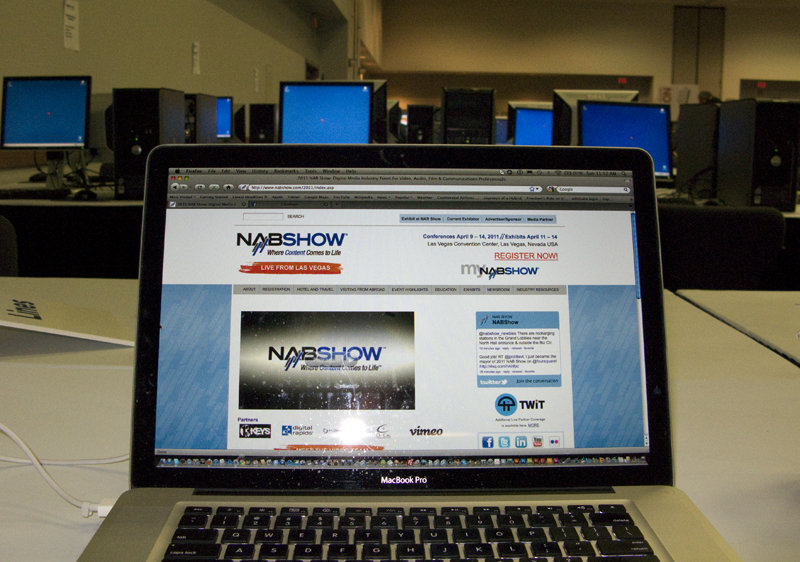
Whew!  I’m fatigued in every way imaginable – in a good way though as I always am after attending the National Association of Broadcaster’s annual show in Las Vegas.  It’s overwhelming and over stimulating and after I get home and decompress for a day I’ll make some sense out of what I learned and how to apply it in my hybrid world.

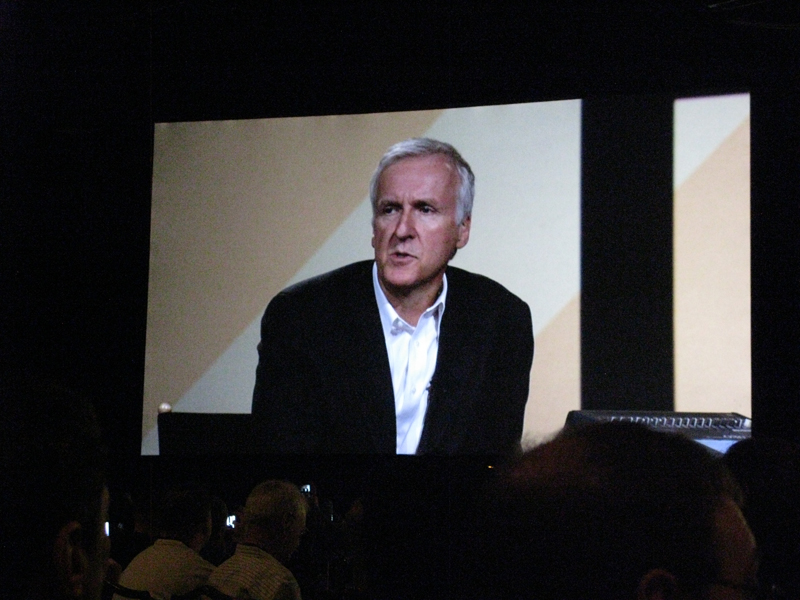
What springs to the forefront of my mind as I wait for my flight, which is delayed, is that convergence and/or “integration” continues at a rapid pace.  3D, which seemed to be the big topic last year is still present but not commanding all of the attention.  This year the conversation seemed to be centered on the integration of TV and Broadband.  But I couldn’t help but wonder as I went from James Cameron’s keynote where he talked about his continued thrust into 3D, to a session on TV and Broadband convergence – where does 3D fit into the Broadband world?

Many attendees infatuated with the HDSLR solution wondered why Canon didn’t roll out the next “hybrid”.  I’d like to think that Canon is working on a video camera that will utilize a “big chip” than working on  a still camera that has less work arounds in an attempt to make them more video friendly.

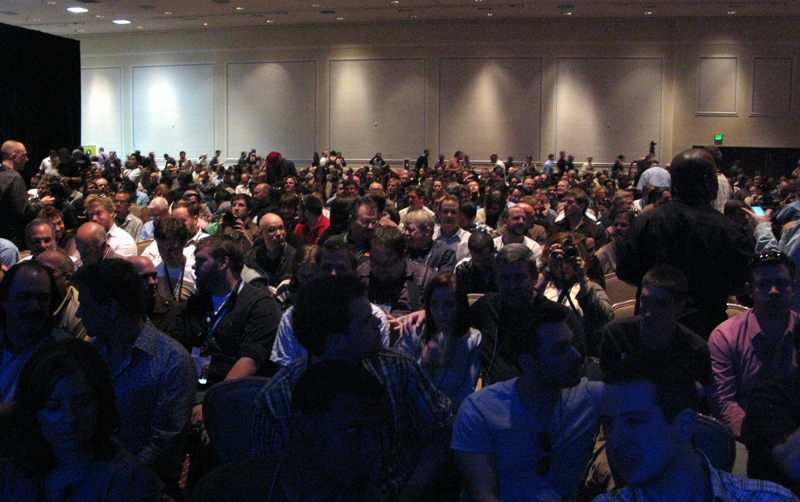
Adobe announced CS5.5 and the next day Apple made their worldwide premier of Final Cut Pro X at the Final Cut Pro Users Group Supermeet.  The crowd went wild as each new feature was demo’d – no transcoding, auto rendering in the background while still working, no more clip collisions and so forth.  At the end of the demo everyone’s jaw dropped when they announced the price at $299.  What Apple didn’t tell us – is if and how it will integrate with the other apps in Final Cut Studio like Soundtrack Pro, Motion, Compressor and Color.

Another very cool product was the Ninja by Atomos an Australian outfit.  The Ninja is a monitor  – but not just a monitor because it takes your media out as 8/10 bit uncompressed HDMI and stores it on insertable 500 G hard drives.  Unbelievable and at a price of less than $1000.  That means that compressed media gets output at a quality 8 – 10 times better than recording it to cards.  Sorry, DSLR users but it doesn’t work with Canon’s DSLR’s  because for some reason there is no way to record the data without the display.  That’s a question for Canon as to why it can’t over ride that and output and record without the display recorded on the data.

As always my favorite part of NAB is sitting in on the Super Sessions with big time directors, editors, CEO’s of broadcast networks and manufacturers.  That’s where you truly get to engage the movers and shakers in the industry and learn and ask questions.  One of my favorite sessions was with filmmaker Kevin Smith.  He is the kind of guy that constantly pushes the envelope and he made a comment that stuck with me.  He said “Hang with the people who ask why not – not the people who ask why”.  It’s a lot easier to question why and in the process never get anywhere but to have to courage to say “why not” – well that’s when things get created and invented.

So, as I head home thoroughly exhausted in a good way; I’ll hang onto that thought and seek out others who say “why not?”

Add to FacebookAdd to DiggAdd to Del.icio.usAdd to StumbleuponAdd to RedditAdd to BlinklistAdd to TwitterAdd to TechnoratiAdd to Yahoo BuzzAdd to Newsvine

Embrace Disruption

Every now and then disruption needs to take place and does.  Technology is causing disruption in all our lives but it need not be looked at as a negative thing.  We can embrace it and find opportunities or we can shut ourselves off and become obsolete.

It’s Day 3 of the NAB Show Every April the National Association of Broadcasters have one of the largest conferences in the world but these days this show is not just attended by broadcasters.  As TV converges with the Internet the attendees have become more and more diverse.

On a very small scale there is the DSLR contingent along with all the vendors that cater to this group with their third party add ons – a big business these days for sure. At Canon’s display, Hollywood DP’s and cinematographers like Gale Tattersall of House and Russell Carptenter of Titantic (to name just one of his films) tout the merits of the Canon 5d MarkII and make the point how these hybrid cameras have created a new aesthetic.  They are also quick to point out that these “affordable” cameras are not chosen because of budget but rather because they are small and discreet and create a beautiful image in low light.  One digital “rebel” filmmaker remarked how he shot a scene for his film on an airplane with an actor and no one even took notice because its such a low profile camera.

But back to the word disruption.  Convergence works both ways. As much as the DSLR has rocked the still photographic world and created a huge hunger amongst still photographers who want to learn how to shoot motion and capture good sound, it has also rocked the world of motion shooters who are providing stills for their clients and learning the language of photography.

TV and Internet are converging.  There is a whole generation that has no need for a cable hook up.  They watch what they want – when they want – online.  Just like they never get a landline – many never get hooked up to cable.  The small affiliate broadcast stations are feeling just as threatened these days as magazine photographers are because of the demise of print publications.  Their worlds have changed because the patterns of the end user have changed.

Director James Cameron (Titanic, Avatar) just formed a partnership with a 3D company.  As TV’s are manufactured with 3D capability and the tech hurdles are overcome, he feels that 3D will become mainstream. But he goes on to say that the big problem is content because the only content created now is coming from the motion picture industry.

And Apple made their worldwide announcement last night with Final Cut Pro X.  I was in the room and all I can tell you is that it is REVOLUTIONARY.  Watch out Adobe.

But at the end of the day – of every NAB day – as I sort through all the information and announcements – I ground myself and think about what I will choose to embrace.  How can I use technology and apply it to what I do and why.  If disruption means that I can tell my stories in a better way or reach more people – that I welcome it with open arms.

Add to FacebookAdd to DiggAdd to Del.icio.usAdd to StumbleuponAdd to RedditAdd to BlinklistAdd to TwitterAdd to TechnoratiAdd to Yahoo BuzzAdd to Newsvine

The Amazing Age of Convergence ….

…where anything is possible. I’ve haven’t written in awhile because I’ve been traveling. Last week I was in Chicago presenting a seminar at ASMP’s SB3 Seminar. It was the last one in a series and now I’m kind of going through withdrawal. There was so much sharing of information and ideas that no one wanted the conferences to end. But now we all need to initiate some of those ideas and apply some of the things we’ve learned. And that’s the part we can’t forget about – doing the work that will bring our ideas to fruition.

In my last blog I wrote about believing that the impossible is possible. I don’t mean to over simplify that notion and to say that all we have to do is have a positive mindset and things will happen for us. What I really mean to say is that without the belief that we have the power to do anything we put our minds to –we would never try – we would never give something a chance to happen. But along with that comes plenty of times when it just doesn’t happen – the first time, the second and third time and many times after that. And that’s when we need try again – and maybe harder.

The good news is that these days it seems like all our tools are converging to make just about anything possible. We no longer need someone to validate our ideas because we can validate our own. We have affordable cameras that shoot stunning still images and video. We have non-linear editing software to create the stories and we have Facebook and Twitter to get the word out about them. We have crowd funding sites like Kickstarter to raise money so that we can make our ideas a reality. And when our videos are finished we can upload them to YouTube or Vimeo and share them. We can also distribute our creations through image portals, downloaded Apps or through iTunes.

Last week I uploaded a trailer for my documentary Opening Our Eyes. As of today people in 71 countries have played the trailer! I sent the link to less than 30 people and they passed it on, embedded it on Facebook and blogs and it took on a life of its own. That simply amazes me because of the power that we now have to connect and communicate with just about anyone, anywhere in the world. That’s revolutionary. That’s a game changer. That’s powerful.

I’ve just arrived in Las Vegas to attend the NAB show. The National Association of Broadcasters has one of the world’s largest broadcast conferences in the world. All the movers and shakers of the broadcast world are here to network, make announcements about new products and learn. It will be another solid week of input overload with my head bursting with ideas and possibilities. And every one of the ideas has the real possibility of happening because of the age we live in.

If only I had more time.

Editing a Trailer

Like anything else the best way to learn how to do something is to “see” how it’s done.  I wanted to create a trailer for my documentaryI’m working with a professional editor on this project but while he is getting acquainted with over 160 hours of footage, I wanted to challenge myself to see if I could create a trailer.

For me, it’s always much harder to edit a very short piece. Everything becomes more critical – every cut – every shot – every sound bite and sound effect – every slate and every high and low in the music. And trailers are the ultimate shorts. You need to peak someone’s interest and make them wanting more.

I started paying attention to the trailers on DVD’s and online. I watched them to see how they were constructed. I analyzed them and paid close attention to things like sound effects, music and slates and if it made me want to see the movie.  There were a couple of trailers in particular that I really liked, each for different reasons.  One trailer was for the film I Am.  This trailer gave me some ideas on how to use music and text to deliver the story idea in a concise way and get people’s attention. I also liked it because it was just vague enough to intrigue me but not to confuse me.  Another trailer I like is Dennis Connor’s Breaking Boundaries; the Art of Alex Masket.  There are a lot of things I love about this trailer.  Dennis’s subject Alex Masket couldn’t communicate verbally so Dennis blended visuals of Alex using other people’s sound bites as the narrative.  He also had a beautiful jazzy musical score composed for the trailer.

My challenge was that I had to make a trailer for a film that was about 11 stories. The first thing that I needed to remind myself was that it really wasn’t about  11 stories.  It was about 11 people but ultimately one story.  With that thought I started pulling together  my strongest sound bites.  One benefit of spending all that time editing the past few months was that I was very intimate with the interview footage and I knew where to look for the gems.  I was looking for provocative remarks that left one wondering and they needed to be short and to the point.

Once I got the stand out sound bites on a timeline I started looking for some live action footage and other b-roll.  Then I began to interweave the appropriate visuals with the sound bites – pacing them – giving the piece a bit of time to breathe.  I also added slates with text to help tell the story.

Once I got it down to a reasonable length – in my case 3:45 – which is still a minute too long – I started looking for the perfect music.  I came across Neosounds.com a royalty free music site with some of the best RF music out there.  Picking music for me is like picking wallpaper, going back and forth until everything starts to sound the same.  After making a few painful decisions, I integrated my musical choices into the timeline.  There was still something missing and that was sound effects.  There are hundreds of great free sound effects that come with Soundtrack Pro.  I picked a couple of them to boost and emphasize certain spots in the trailer but I wanted to keep them subtle.  For example I used a sound effect of a motorcycle in one spot and a jet engine taking off in another.

What has resulted from this exercise are two variations of a trailer.  I am sharing these both with everyone because I would like feedback. I don’t want to influence opinion here, other than to say one trailer has a bit of more information than the other. One is also 15 sec. longer. Any and all comments are welcome.

Which one should I use?

Watch the links in this order.

http://www.vimeo.com/21241911

http://www.vimeo.com/21376387

Add to FacebookAdd to DiggAdd to Del.icio.usAdd to StumbleuponAdd to RedditAdd to BlinklistAdd to TwitterAdd to TechnoratiAdd to Yahoo BuzzAdd to Newsvine

Some Useful Information for Workflow

I made a few new discoveries this past week.  Forgive me if these items aren’t new but they’re new to me.

One item I discovered was Drop Box and the timing was perfect.  Drop Box is a sharing and storage site.  I can upload files and documents to their server and share those files with anyone who has Drop Box installed on their computer. For instance, I am able to share project files and updates with the editor that I am working with on Opening Our Eyes.  This past week, I was working on a new trailer for my film and I was able to share that updated project file with him, along with the RF music that I licensed for it.

The other thing that I love about Drop Box is that I can share files and info with the various computers that I work on.  No more emailing docs or copying media to a DVD so that I can transfer files over to my laptop.  With Drop Box installed, I can share files, media and calendars with any and all of my computers.  As a bonus, Drop Box acts as an off site storage solution as well.

My other discovery was a royalty free music site called Neosounds. I’ve been searching through hundreds of royalty free music libraries over the years and Neosounds is definitely the best source for high quality music that I’ve found.  It stands out amongst the rest because their music doesn’t sound like royalty free music.  Recently, I needed  music for a new trailer that I was making for OOE and I was googling around for some cinematic sounds. I found the perfect background music for my film’s trailer.  I’m still tweaking the trailer a bit, but you can listen to a clip of music from Neosounds that I used in a short video I made that appeared on a recent blog post.

One last item that I’ll mention is a great source for travel guides – the unconventional type. They are called Unconventional Guides and are brought to you by Chris Guillebeau. Since discovering Chris Guillebeau’s blog The Art of Non-Conformity, I’ve become a huge fan of Chris and his writings.  If you haven’t discovered Chris’s blog , then do so. He has an amazing outlook on life and he articulates his thoughts  so beautifully in his blog.  His global view of the world and how to live life is truly an inspiration to me.  He’s definitely, a kindred spirit.

Back to tweaking.  Stay tuned for my next blog with links to some new samples.

Add to FacebookAdd to DiggAdd to Del.icio.usAdd to StumbleuponAdd to RedditAdd to BlinklistAdd to TwitterAdd to TechnoratiAdd to Yahoo BuzzAdd to Newsvine

I Must Have Been Crazy to Think I Could Do It

….But I did.  Last night I shipped 3 hard drives with almost 5 terabytes of media to my editor. After 2 very long months of extremely long days – every day – I got through the “first edit” of my documentaryIt’s by no means finished, there’s a lot more editing needed to cut it down by half, there’s music to be composed and a narrative that has to be written, but I take great joy in the fact that I got through this part of the process – because it damn near killed me.

When shooting a documentary, you don’t work with a script or a storyboard – or at least I don’t.  I have a pretty solid idea of the “story” when I set out to shoot, but there’s always twists and turns with every situation and every interview.  But I love surprises and I make room for serendipity to happen.  What results is a lot of content that needs to be crafted and arced into a story.  And I’ve just finished defining that story and laying the foundation.

It hasn’t been easy.  In fact there have been times when I’ve wanted to walk away from this because it was so overwhelming.  Trying to tie 11 different stories into one, and looking through 150 hours of footage multiple times can be overwhelming for a team of editors, let alone one individual. I’ve also had my share of low moments these past few months with a grant application rejected and a broken promise by a friend, but somehow I got through it.  I got through it because I had desire.

Having a strong desire for whatever it is one wants to achieve is essential.  Many times we say we really want something, but that is far different than having a true desire to make something happen. In order to stick to something (anything) and follow through with it – no matter what – that desire must be strong and come from within.  It’s something that can’t be copied, taught or faked – you either have it or you don’t. It comes when you are true to yourself.

It’s hard to stay true to yourself.  Many times, well meaning friends or spouses try to distract you from your purpose.  I see this happen a lot when a significant other, who may not understand that in the creative world, the line between work and pleasure is quite blurred and sometimes may feel somewhat resentful of all the time their partner spends on “work”.  I’m lucky in that my husband is also my business partner and has a full understanding of those blurred lines between work and pleasure.  He also knows that when I have such a strong desire to do something, that he shouldn’t get in the way of me following that desire.  That is truly selfless and well meaning.

Since beginning this lofty project, I’ve gotten a lot of calls from people who are in a slump for one reason or another.  They look to me for some kind of guidance.  I don’t really know what to say, other than to tell them to listen to their true self – the one underneath the clutter of the ego – and to trust what it tells you. If I get one of those calls during one of those low moments in my life, I try really hard to stay positive even though I feel like a big fake, because I’ve temporarily succumbed to my own self doubts.  At those times, I try to be utterly honest, relaying the bitter with the sweet and say that bad times don’t last forever. But you have to let your spirit shine.

I wrote a blog once about the human spirit. I feel that the spirit inside me is ageless.  I know when people come up to me and say “you look good” – what they really see is my spirit – which never gets old because I keep it alive. When I’m true to myself, my spirit soars and I look back at my defeats and rejections with a different understanding and acceptance.

So today, with my spirit in tact and my desire ever so strong, I rejoice in the fact that I accomplished something – something that’s really meaningful.  That brings a big smile to my face and great joy in my heart.  What a feeling – it’s priceless.

Add to FacebookAdd to DiggAdd to Del.icio.usAdd to StumbleuponAdd to RedditAdd to BlinklistAdd to TwitterAdd to TechnoratiAdd to Yahoo BuzzAdd to Newsvine

Revisiting the Frozen Waves

There they were again, exactly a year ago but in another part of the state. Frozen waves. We had taken a quick drive up to Grosse Pointe, MI, just outside Detroit and were driving by the frozen waves on Lake Huron. Last year about this time, I wrote a blog entitled Standing on a 10 Foot Frozen Wave. I had been shooting up at Whitefish Point on the Upper Peninsula in Michigan. It was February and I was in one of the most remote places in the United States and I was standing on a 10 foot frozen wave on Lake Superior at sunset. It was an amazing – almost spiritual experience. I had never heard silence like that before in my life – nor since. No sounds at all – but even silence has its own sound.

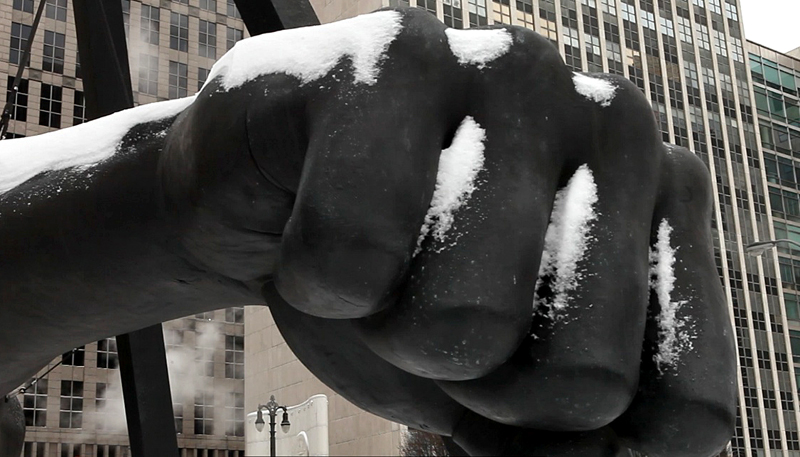
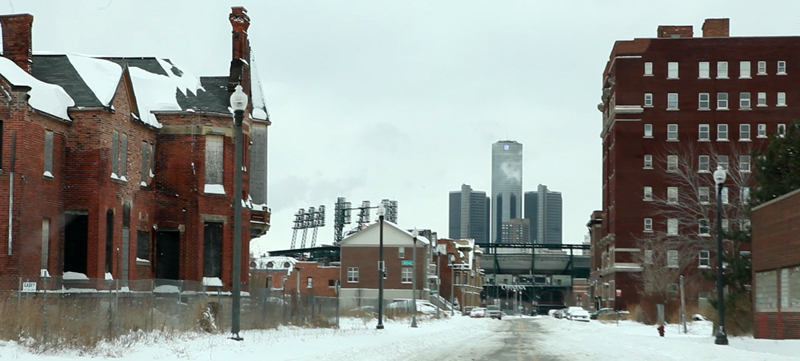
Last Sunday I arrived back in Michigan during the height of a big snow storm. This time I was in the city of
Detroit. I was there to film the last subject(s) of my documentary – two African American women fighting for the rights of the disadvantaged. God knows that Detroit has its share of disadvantaged people.

Because of the storm and the fact that Monday was a holiday, the next morning the streets were deserted in downtown Detroit. Not only were they deserted but they weren’t plowed. My subjects couldn’t get plowed out until early afternoon so that left me with the morning free. So, my daughter, husband and I decided to take a tour and do some b-roll shooting at the same time. We had the streets to ourselves, sometimes going the wrong way down one way streets or cruising very slowly, shooting out the window, but we handled it just fine in our 4 wheel drive. As we drove out of downtown, away from the glitz of the GM building and crossed over the highway, the landscape changed to vacant lots and abandoned buildings. Urban blight. I felt like I was shooting a winter version of the new Eminem commercial.

We eventually, rendezvoused with our subjects, shot interviews and b-roll at their offices and then planned to shoot a big demonstration in Lansing. This morning, six busloads of protesters headed to Lansing from Detroit to speak up against the city of Detroit selling off their water assets to private companies. It was cold, but sunny and energizing as various speakers came up to the podium, our subjects among them. Hundreds of students, teachers, mothers, fathers, children, seniors, gathered on the steps of the capitol with signs of protest just like in Wisconsin. Just like in Egypt. These people were here to make a difference and it was energizing.

So, now we’re facing that long 10 hour drive back to New Jersey, but I’m energized and I’m feeling very satisfied with finishing the shoot part of our film. I’m grateful I got to spend time with my daughter. This trip to Michigan was vastly different from when I was standing on those frozen waves surrounded by silence. This time I was surrounded by people fighting for their rights. It made me feel young again. I’m not sure which experience was best for my soul – perhaps both equally.

Add to FacebookAdd to DiggAdd to Del.icio.usAdd to StumbleuponAdd to RedditAdd to BlinklistAdd to TwitterAdd to TechnoratiAdd to Yahoo BuzzAdd to Newsvine

Editing 150 Hours of Footage From a DSLR

As I roll away the miles, driving the ten hour trip to Michigan to rendezvous with my daughter Erin to film the last of our subjects for our documentary Opening Our Eyes, I realize how desperately I needed a long road trip – just cruising down the highway.  I have been in utter isolation for the past month, editing over 150 hours of footage that we had shot over our ultimate road trip around the world this past summer.  Little did I know that the 99-day journey would be the easy part of this project.

This past month there have been many times that I became so overwhelmed with the process of editing that I wanted to throw my hands up in surrender and just give up.  But somehow I plowed through it, many days putting in 14 plus hours.  I was on a mission and listening to the words of my subjects got me through it.  After all these were some of the most inspirational people I had every met, so revisiting them through their interviews was a constant reminder of the goal of this film which is to create awareness and inspire and motivate others to make a difference and create change.

Ultimately, my challenge is to take ten (soon to be eleven) different stories of people across the globe who are making a positive difference in the world.  After finally getting the tedious tasks finished, of transcoding files and sorting through the good from the bad clips, I arrived at a point where I needed to start telling “THE” story.  Meaning I needed to determine how I could best structure the film to convey the common themes between my subjects.

In order to see the story clearly – I needed to get away from the technology. So as the miles roll by, the story becomes  more vivid in my head.  I see the hero(s), the themes, the commonality and the arc of the story as the stories intertwine.  I won’t give away too much information other than to say that the solution is simple.  They aren’t eleven different stories after all. It’s really a global story about the power of one.  How one individual can create positive change and not only effect generations to come but change themselves as well. It’s a basic human story that resonates with all of us.

When I started writing this blog I was going to talk about editing tech tips. Somehow as the miles rolled by and my head became clear of the intense electronic input from the past month, I not only saw the story, but I felt it.  I had gotten back on track and gotten to the heart of the story.

Add to FacebookAdd to DiggAdd to Del.icio.usAdd to StumbleuponAdd to RedditAdd to BlinklistAdd to TwitterAdd to TechnoratiAdd to Yahoo BuzzAdd to Newsvine

Telling the Story with the DSLR

The sub-title should read…”or with any camera for that matter”.  For those of you not new to this blog, you know that my mantra is “it’s not about the tool”.  And my other mantra is “embrace collaboration”.

But back to the thought behind this blog entry and that is “telling the story”.  I recently read a great book that a dear friend had given me about screenwriting called “Save the Cat” by Blake Snyder. Snyder’s book is geared more toward writing a fictional screenplay, as opposed to writing a narrative for a documentary, but I thought it would be helpful for me as far as learning more about the dynamics of story telling – and indeed it was.

Snyder talks about the different genres that most movies fall into.  The category that my documentary came closest to if I was writing a fictional piece was what he referred to as The Golden Fleece. Blake writes:

“The name comes from the myth of Jason and the Argonauts and yet it’s always about the same thing: A hero goes “on the road” in search of one thing and winds up discovering something else – himself.”

“Like the twists of any story, the milestones of The Golden Fleece are the people and incidents that our hero or heroes encounter along the way.  The theme of every Golden Fleece movie is internal growth, how the incidents affect the hero is, in fact, the plot.

“It’s not the mileage we’re racking up that makes a good Golden Fleece, it’s the way the hero changes as he goes”.

Wow, I thought as Snyder’s words resonated with me and how I “saw” the documentary that I was in the midst of editing.  In my case, I had many heroes who in setting out to make a positive difference in the world had also experienced intense and rewarding personal growth.  I too had changed and grown, along with my daughter who journeyed with me to tell our subjects’ stories.

As I read more of Snyder’s book, my vision of our film became much clearer in my head.  This week, I had a meeting with the editor who will be collaborating with me on this film.  I’m thankful that I was able to have a face to face meeting with him where we could both get a better feel for each other and more importantly  – the story.  We had a wonderful conversation about the story that I wanted to tell – the heroes – the conflicts – all those things that are part of a good story.  I knew we were on the same page when he said: “It’s not about the trip – it’s about the journey”.

Or as Snyder writes:
“It’s not the incidents encountered.  It’s what the hero(es) learn about himself from the incidents that make the story work.”

We’ll see if I can do my heroes justice in telling their stories, but I’m not alone in this task.  I’ll be collaborating with an editor who not only has an understanding of “the story” but the skills and ability to make it come to life. What joy.

Add to FacebookAdd to DiggAdd to Del.icio.usAdd to StumbleuponAdd to RedditAdd to BlinklistAdd to TwitterAdd to TechnoratiAdd to Yahoo BuzzAdd to Newsvine

Being Authentic

There are certain words and phrases that tend to become over used just because they seem to express the idea so well.  Ironically, the word authentic is becoming over used now in our culture and in a weird way is on the brink of becoming a contradiction to what it means.  So, I cautiously use the word “authentic” in the real sense to say – be who you are meant to be.  Be authentic.

When I returned from my round the world adventure this past Fall after completing the shooting aspect of a personal project, I discovered that people were responding to me in a different way. Perhaps they sensed there was something inside of me that they wanted to connect with.  It’s a very difficult thing to explain but I think what they were sensing, was my contentment.  I was content and feeling a sense of “satisfaction” because I was following “my purpose”, both personally and creatively and in the process I was discovering many other people,  all over the world, who were doing the same.

On the outside what may have seemed like just a very long, exotic “trip”, was really more of a journey.  It was a journey that I had begun a long time ago when I became an explorer, through my eyes and through my camera.  I use the word explorer in a literal and figurative sense. Throughout my life, in my never-ending nomadic need to explore the world and its peoples, I was finding my own vision and how I “saw” and I was sharing that with others.

Ethan G. Salwen expressed it beautifully in a recent post on his After Capture blog:

“We always say that learning photography is really learning to see, and this is true. But we tend to express this sentiment in relation to a very limited sense of seeing — the visual sense. Older photographers seem to continue to learn to see on a much deeper level, in terms of what it is to be a working artist and, most important, how this relates to their continual growth and satisfaction as an individual.”

I think Ethan nailed it by talking about “learning and seeing on a much deeper level and how this brings growth and satisfaction as an individual.”  I use the words “ being on purpose” to describe “satisfaction” within oneself.  I believe that as creative individuals, when we begin to find meaning in who we are and how that fits into the world, it will shine through our work.  Some use the word “vision” to describe that certain something that they see in someone’s creative work. Maybe that’s what was in the back of my mind when I came up with the title of my project and film, Opening Our Eyes.

In a way, I use my “eyes” and my camera to do what I do best – to share and connect with others.  When I travel, it is not to assimilate with a culture, but rather to learn and exchange our cultural uniqueness, embrace that and share it with others. When I’m being authentic and true to myself, that happens in a magical way.  When someone tells me that I’m the “real deal”, that is one of the highest compliments they can give me.

I think Susana Esmoris, one of the subjects of my documentary said it best.  “Live life intensely.  Wear the color that you want in life.  Dance what you want to dance.”

Add to FacebookAdd to DiggAdd to Del.icio.usAdd to StumbleuponAdd to RedditAdd to BlinklistAdd to TwitterAdd to TechnoratiAdd to Yahoo BuzzAdd to Newsvine