The Advantages of a Disadvantage

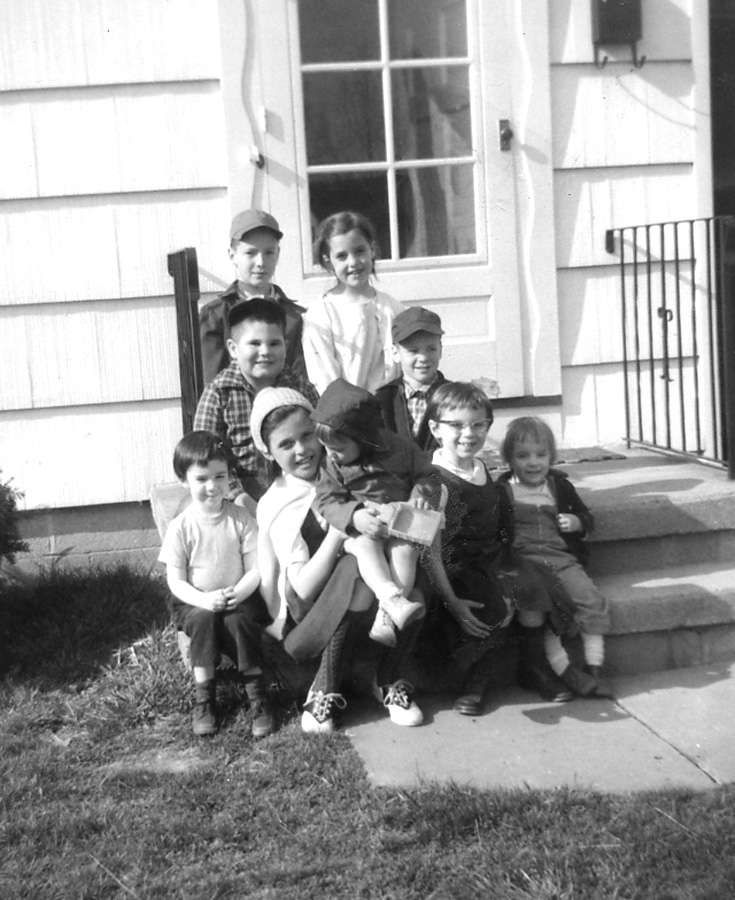
My gang of friends.  I'm on the top step.
One of my early childhood tribes, Rochester, NY  (I’m on top step)

I re-connected with an old friend last week.  We hadn’t seen each other in 43 years!  Other than my family members, I have known this friend longer than anyone else in my life, except for one other.  But we hadn’t been in contact with each other, until a few months ago.  We’ve had  a wonderful exchange of emails and a bit of serendipity that led to an in person reunion. It’s been a cathartic experience for both of us.

We were teenagers, who used to “hang out” together. We went to different schools and we lived in different neighborhoods but for a couple of quick years, he, I and a few other friends, hung out together, on the warm spring and summer evenings of our youth. Until I moved…..again.  It was probably the tenth time that I had moved and changed schools, and I was only 16 years old and mid-way through my junior year of high school.   I suppose you could say that I had lived the life of a rolling stone. But it was what I knew.  In one of our dialogs, I reminded him about that move, and he looked at it, as tragic.

In a way, I suppose growing up in a transient lifestyle was a bit tragic.  Just when I would make friends, and feel like I was part of my “new school”, we would move again, to a new community. My dad was climbing the “corporate ladder” and with each promotion came a series of moves. I was the perpetual “new kid” and I guess I was always in search of a “new tribe”.  I grew up, a product of change.

I recently finished reading Malcom Gladwell’s new book, “David and Goliath: Underdogs, Misfits and the Art of Battling Giants”.  He talks about people who have turned the disadvantages  that they’ve had in their lives, into advantages.  Each chapter unfolds into a story about a highly successful person who had to overcome obstacles or disadvantages in their lives – everything from losing a parent to being dyslexic.  One example Gladwell cites is about a high profile Hollywood producer who had worked his way from his impoverished beginnings to fame and fortune.  His children had everything, but he was worried about their future.  He knew that if they didn’t have to “work” for something, they wouldn’t know the feeling of accomplishment and success.  They would not have the “advantage” that he had growing up, the advantage of being poor.

I realized after reading Gladwell’s book that what I might have looked at as a disadvantage, my nomadic life, was probably the biggest advantage I had.  It has made me take chances in my life and not be afraid to initiate an interaction.  If I hadn’t, I wouldn’t have made friends.  It made me love school because I knew that was where I would connect to people in my new community. I learned to adapt to change.  If I didn’t I would have been miserable all the time or afraid – or both. Instead, I have lived my life, continually exploring my curiosities, whether it is visiting a foreign country, embarking on a new creative project or expanding my craft.

Would I have wished my nomadic life on my daughter?  Probably not, it wasn’t easy. But it certainly had its rewards.
The Value of Photography

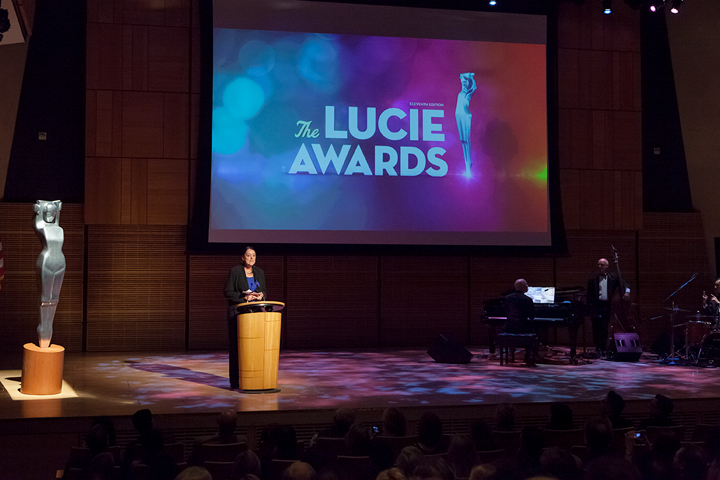
The who’s who of photography gathered last night, at Carnegie Hall to honor the “masters” of their trade at the Lucie Awards. The Lucies are like the Oscars of the “photographic industry”.

2013 Lucie Awards, Carnegie Hall ©Thomas Kelly
2013 Lucie Awards, Carnegie Hall
©Thomas Kelly

I had been asked to step in to present the “2013 Deeper Perspective Photographer of the Year Award”. on behalf of the ASMP when Executive Director, Gene Mopsik and President, Ed McDonald couldn’t attend.

I don’t usually get nervous about things like this, but I was last night. As I stood in the wings with photographer John H. White, who was waiting to go on stage to accept his Lucie, for Achievement in Photojournalism, I was mesmerized as I watched John.  He seemed to glow and I felt his grace, his humility and his gratitude.  It was a moment in my life that will stay with me forever.  It was calming. I watched and listened to his acceptance speech on the monitor backstage, and I was deeply touched.  So was the audience, as evidenced in their standing ovation.

John H. White is not a “rock star” type of photographer.  His images don’t “shock and awe”, not in the way a war photographer’s images do. John’s photographs capture the subtle moments of the human experience.  His legacy of images show us life as it really is.

This past spring, after 35 years with the Chicago Sun Times, John and the rest of the newspaper’s photographic staff were fired.  It was a huge blow to the photographic community, magnified by the fact that even John H. White, the “chairman” was “let go”, without even as much as a thank you. John wasn’t bitter about it though.  Michelle Agins wrote a wonderful article for the New York Times where she quoted John: “A job’s not a job because of labor law,” he said. “It’s just something you love. It’s something you do because it gives you a mission, a life, a purpose, and you do it for the service of others.”

All he had wanted to hear from the executives who let him go was two words that never came: thank you. But even then, he did not respond with anger.

John spoke more about the Sun Times’ firings in an interview with NPR where he said: “I will not curse the darkness. I will light candles. I will live by my three “F” words: faith, focus and flight. I’ll be faithful to life, my purpose in life, my assignment from life. Stay focused on what’s really important, what counts.” He repeated those three “F” words last night as he accepted his award.  The audience was humbled.  John had shed his light.

I have been thinking a lot lately, about the value of photography and the value that a professional brings to this craft.  John H. White and his archive of work is a stellar example.  His images, capturing the subtleties of life stand out amongst the noise.  They make us take notice of what is often over looked – the quieter moments of life.

As far as what a professional photographer brings to the world, I think John stated it best: “Every day, a baby is born. Every day, someone dies. Every single day. And we capture everything in between. You think of this thing called life and how it’s preserved. It’s preserved through vision, through photographs.”

As John walked off the stage and back into the wings, I felt enveloped by his glow that had seemed to magnify.  I caught his eye for a moment and said “thank you”. He nodded, and flashed his wonderful smile and in that moment, we connected and shared our understanding, of the “value” of photography.

What Happened to Attribution?

English: Logo of LIFE magazine.
English: Logo of LIFE magazine. (Photo credit: Wikipedia)

We lost one of the icons of photojournalism last week, Bill Eppridge.  If you haven’t heard of his name, then surely you have seen his photographs.  One of his photographs, a black & white image of the lifeless body of Senator Robert Kennedy on the floor of a hotel kitchen after he had been murdered, has become one of the signature images of the 1960’s. It has been etched into my memory since the first time I saw it in 1968.

Bill was one of his generation’s greatest photojournalists.  His images graced the pages of Life Magazine, documenting the tumultuous decade of the ‘60’s.  His colleagues at Life at that time included notables such as Alfred Eisenstaedt, George Silk, Paul Schutzer, Eve Arnold and Bob Gomel.  I know that because I used to pour over our weekly copy of Life Magazine and I saw their names printed under their photographs.

Imagine that, a photographer’s credit appearing under their image. I say that sarcastically because nowadays photographers’ credits seem to have all but disappeared.  If an image (especially a stock image) is credited in a magazine, many times it will only say “Getty Images” or “AP”.  Why is that?  It doesn’t cost the magazine any more money to credit the photographer who shot it – nor does it take anything away from Getty or AP.  Why not credit an image  ie: photographer name/Getty Images?  When and why did someone somewhere at Getty or a publishing house decide to omit a photographer’s name?

It seems to me, that in the virtual world we live in, where trust and authenticity has given way to blurred or hidden identities, we would want to know who the person was that took the picture we are looking at.  We all know a corporation didn’t go out and shoot it – sometimes putting their life on the line.

As a photographer, I insert a clause in my contracts that states that  a penalty will be charged if my credit is omitted. That is if it’s my contract, but too many times stock photo agencies don’t require a photographer’s credit and in fact don’t seem to want it.  Why?  I would love to know why. I also wonder if this new precedent will affect our future photographic archives by making them less tangible, less personal.  That would be a tragedy.  What makes an image linger in our minds, decades after a picture is taken is that it makes the captured moment – real.  I can assure you that when a photographer decides which moment to capture, it’s about as real and personal as it gets.  Why not give credit to that moment and that photographer who captured it? Don’t you think that future generations will appreciate it if we do?

Don’t Let Resistance Win

“Resistance is fueled by fear.  Resistance has no strength of its own.  Every ounce of juice it possesses comes from us.  We feed it with power by our fear of it.  Master that fear and we conquer Resistance.”

Steven Pressfield, “The War of Art

Resistance manifests itself in many ways. Jaipur, India Most of us do everything we can, not to recognize the “resistance” in our own lives.  We plod along through life, just trying to maintain the status quo of our daily existence and habits, that we never “see” the sharp reefs buried beneath the surface of our relationships, our careers or how we are living our life.   We don’t see the reefs, because we don’t want to.  We think it’s easier to live a life of denial and that’s exactly what resistance wants.

Misery loves company.  Somehow, it makes us feel better about ourselves, when we compare ourselves to other under achievers, procrastinators, people down on their luck or just ordinary people who are extremely unhappy.  Essentially, people who don’t take control of their lives, but rather blame circumstances or others.  These people are victims of resistance.

There’s a saying “When a door closes – a window opens”.  I’ve always been one to focus on the “open window”, rather than the “closed door” but it’s not easy.  Any time I’ve had a shift in my life, or a “door closed”, my first instincts are to curl up in a ball, bury my head in the covers, admit failure and give up – or give in to resistance. But I know that if I succumb to those instincts, I won’t even notice the windows that have opened.  The funny thing is, most times, those windows were always open – I just never saw them.

I try to recognize those open windows in my life, but in order to do that, I need to battle resistance. That may mean, closing some doors myself.

5 Ways to Get Out of Your Own Way

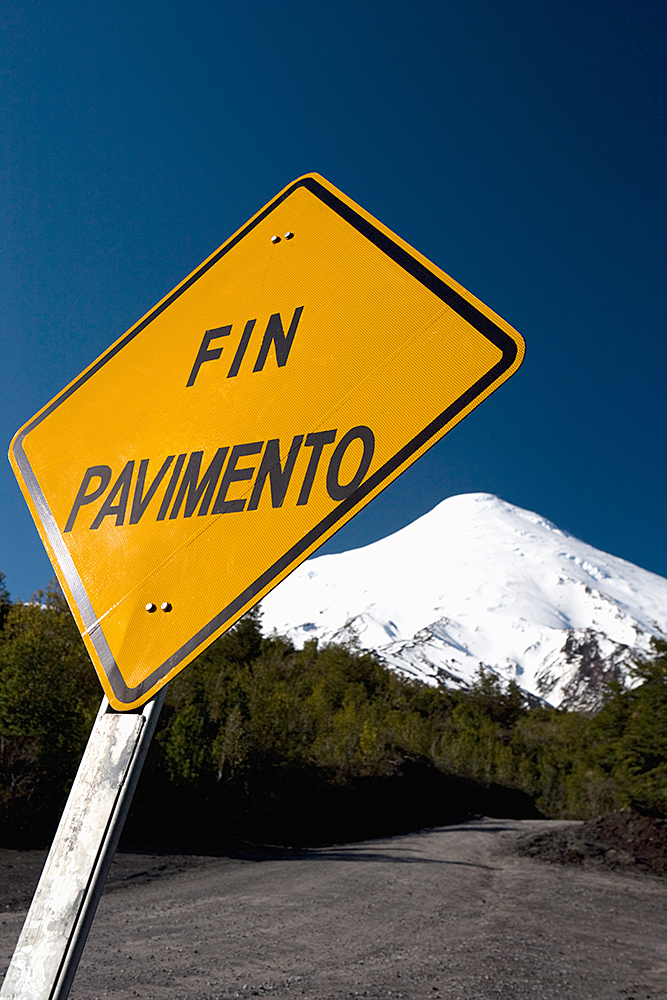
I’m sure I’m not the only one, who sabotages their self from time to time.  It could be I stop myself from saying or doing something that could help me in my career or in my relationships.  Or it could be that I didn’t stop myself from saying or doing something and paid the price.Fin Paviment (end of pavement) sign on Osorno Volcano, Lake Llanquihue, Lake District, Chile  Regardless, all those things should lead to lessons learned.  I’ve had to repeatedly learn some lessons.  Most times, I just need to get out of my own way.

Five ways to get out of your own way:

  • Let go – I am not a quitter by nature so it’s hard for me to know when to let go. When I’ve given someone or something my “all”, and things don’t work out like I may have hoped, I remind myself that I cannot control others or circumstances. I can only control how I let myself react to them.
  • Move Through It – It never seems to work if I try to ignore an uncomfortable situation.  It just prolongs the stress of the situation.  In the long run, it’s always better to deal with things head on and move through them – not around them.
  • Talk Yourself Into Things (not out of them) – We think we are being prudent to talk ourselves out of those “crazy” and risky ideas that we have, so we do.  That’s not prudent, it’s succumbing to resistance and it’s the kiss of death for someone in a creative career.
  • Don’t Expect Perfection – If you wait for things to be perfect, they usually don’t get done.  Nothing really is perfect – there is always room for improvement.  And, there never is a perfect time.  Don’t let perfectionism stop you.
  • Stop Over Thinking It – when what life throws at me overwhelms me, I need to remember to stop, breathe and try to just be in that one moment.  Whenever I begin to over think a situation, I tend to make more out of it than it really is, which only stresses me out more.  I remind myself to focus on the now and it puts things into a manageable perspective.

Orson Welles once said “If you want a happy ending, it depends on where you stop the story”. Life is a journey – let it play out.

One Million Miles

Yesterday, I took a look at my United Airlines frequent flyer statement, and realized that I had flown 822,571 miles with that airline!

United Airlines Boeing 777–200 landing in the ...
United Airlines Boeing 777–200 landing in the Blue Tulip livery. (Photo credit: Wikipedia)

I was 177,429 miles away from a million lifetime flight miles. And that’s just the miles that I’ve flown with United!  It doesn’t include all the miles I’ve flown on other airlines, nor any of the miles I’ve flown using reward tickets. And it doesn’t include the miles I flew traveling around the world during the making of my film, Opening Our Eyes.

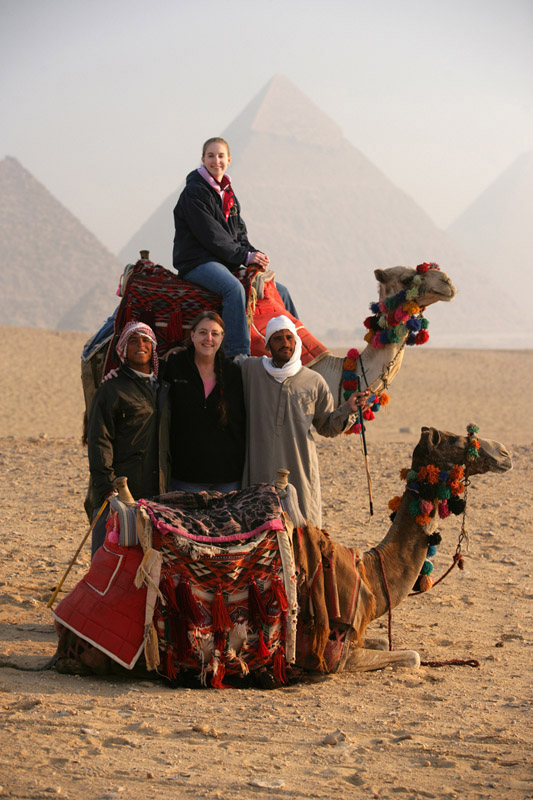
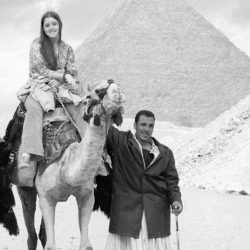
As I looked at that number, and thought about all those miles, Gail Mooney and daughter Erin Kelly, Giza, EgyptI couldn’t help but think about the destinations, the purpose and the motivation behind them. When I set out to live the life of a “traveler” at the young age of 19, I had absolutely no idea of how that would mold my life.  As a professional photographer, I’ve gone to the corners of the globe on dream assignments for magazines and corporations and loved every bit of it – my work has always been my pleasure.  When I wasn’t working, I’d still find a reason to travel, whether on a press junket or simply exploring the world with my husband and daughter.  Some of my favorite family memories are from our travels to Peru and Egypt.

I will always be a traveler.  I am a nomadic creature and I have a huge curiosity about our world and its people. For me, travel is more than going from point A to point B. Sure, there are plenty of times, on corporate jobs when I travel somewhere to photograph a particular person or a place and I’m never there long enough to get a sense of the place I am in.  But, for the most part, I travel to a destination to find out more about that place and tell the visual story of that particular place and its people.

As I thought about all those miles traveled, I started to think about reaching the “Million Miler” status with United.  I was only 177,429 miles away!  That may seem like a lot to many of you, and it might seem like no big deal to others, but to me it seems like a very attainable goal.  In fact, when I started to think about reaching that goal, I thought that I could easily attain that in 3 year’s time – just in time for a milestone birthday.  That’s something to consider and I shall.  I certainly have the motivation; I just need to define the destinations and more importantly the purpose.

Any suggestions?  I’m open to your thoughts.

Karma and Being Real

I had an awesome night last night.  My husband and I had tickets to a Jackson Browne concert. The seats were way up in the up most reaches of an old theater in New Brunswick, NJ.  They weren’t great tickets, but nevertheless, they were tickets to a concert by Jackson Browne, my favorite singer/songwriter.

During intermission, a guy, who had climbed four extremely steep flights of steps, walked into the “gallery” and announced that he had one available ticket in the third row and asked “Does anybody want it?” After a minute of trying to comprehend what the man had said, I spoke up and said “I’ll take it” and then asked  “Is it really in the third row?.  He confirmed, and then I asked my husband “you don’t mind do you?, gave him a kiss and flew down to my “new” seat.

It was an amazing night, JBto sit so close and be able to see and feel the music.  Jackson is one of the most intimate and real songwriters around and I got totally absorbed into his performance. I thought about my stroke of luck in getting that seat.  I thought perhaps my luck was changing after a very “trying” month. It was like a karmic blessing.

As I watched and listened to Jackson, I saw an artist whose talents and music have endured the test of time.  His topics and lyrics are just as relevant as they were when I first started following him, some 40 years ago.  That’s because he writes about the human experience – the triumphs and the failures that we all have.  He strikes a nerve with his truth and honesty.  Some say his music defines a generation.  Perhaps.  But Jackson’s music certainly defines who he is.  He’s about as authentic as you can be.

Jackson inspires me to create from my true self and do the work that I am meant to do.  He also inspires me to be a better person. After his encore, he waved to the audience and said, “Be good to each other”.  That said it all.

 From The Pretender, by Jackson Browne

I want to know what became of the changes
We waited for love to bring
Were they only the fitful dreams
Of some greater awakening
I’ve been aware of the time going by
They say in the end it’s the wink of an eye
And when the morning light comes streaming in
You’ll get up and do it again
Amen

Wipe Your Knees Before Entering

I just learned that Bob Gilka, legendary Director of Photography at the National Geographic for over 20 years passed away yesterday.  He was 96 years old.  Bob was the “real deal” and he will be missed by many, but his legacy lives on in all the photographers careers that he shaped and mentored. I am reposting a blog that I wrote about Bob on December 1, 2009.  Rest in peace Mr. Gilka.

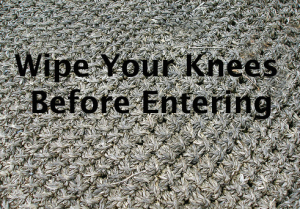
Back in the eighties when I was starting out, every six months or so I made the pilgrimage to Washington DC to see Bob Gilka, The Director of Photography at the National Geographic Magazine.  He was the guy who decided if you would shoot for the magazine. doormat2  He was accessible, answered his own phone and made appointments to look at work. How times have changed.

Gilka was a man of few words and because of that seeing him was always a bit intimidating.  If all you had were images to show – and nothing to say, you’d pretty much be in and out of his office in the amount of time it took to click through your slides. Knowing this, I did my homework prior to the appointment. I’d come up with about 10 query ideas, research back issues of the magazine to make sure they hadn’t been done before and have at least one idea written up in a story proposal.

I’ll never forget the first time I went to Gilka’s office.  His secretary met me in the lobby, and led me to a small area just outside his office.  There on his door was a doormat –with words that read “Wipe Your Knees Before Entering”.  Talk about feeling intimidated – as if it wasn’t intimidating enough just to be meeting with the Director of Photography  at the  National Geographic.

So every six months or so I would show my images and pitch my ideas.  This went on for about two years.  Each time I went I would almost test myself to see how long I could stay in his office.  I would do my best to sell my story pitches that I felt the strongest about and he would reply – “done it –doing it – or – don’t want to do it”.  This coupled with a few words of encouragement in regards to some of my photographs would pretty much be it as far as feedback.

Then one day he kept me waiting.  He had been detained in a meeting.  I had scheduled a pretty tight day to maximize my trip to Washington – so the delay had thrown a wrench into me keeping my other appointments that I had scheduled.  When Gilka did show up and apologized, I was already feeling quite anxious and showed it.  I told him that I didn’t have much time because I had to be across town at the Smithsonian in 20 minutes.  He picked up the phone, called Declan Haun, the picture editor I was headed to see at Smithsonian Magazine and explained that Gail Mooney was running late due to his tardiness.  Then he proceeded to look at my pictures and hear me out.

When I did get to the Smithsonian, it was amusing to see how curious Declan Haun was to find out who this Gail Mooney was that got Bob Gilka to call ahead for her. The very next month, I got a call from Bob Gilka offering me my first assignment.  Guess I just needed to show my real self. I had sufficiently shown my interest and determination in wanting to shoot for them. And I had demonstrated my photographic ability through my images.  But it was when I showed my true spirit that he knew that I could shoot for them.  I just had to get over my fright.

Dealing with Adversity

If there’s one thing I learned from my parents growing up is “you never get anywhere if you take the approach that someone has to lose, in order for you to win”.  They were trying to tell me that I can’t control the actions of others.  I can only control who I am and what I do.

My folks family easterare both gone now, and I’m grateful for all of their words of wisdom. I try my best to live my life with the strength of character that my parents had.  They weren’t perfect by any means and neither am I.  But when things get rough in my life, as they have this past month, I draw on what my parents taught me and I try to get back on track.

I’d like to share some other words of wisdom from my folks:

  • Be the best you can be, instead of trying to be better than someone else.
  • When someone treats you poorly, it’s rarely about you – it’s about them.
  • Humans have frailties – show compassion when they fall short.
  • Never expect more than you are willing to give.
  • When you stand up for what is “right” – realize you may be the only one standing.
  • Friends come and go.  Honor the ones who stick with you to the end.
  • There is only one truth.
  • Forgive those who hurt you – including yourself.
  • Stay clear of folks who bad mouth others because one day you will be the one they are bad mouthing.
  • Things are meant to happen for a reason.  Remember that at your darkest hours because it’s usually a signal that you need to make a change in your life.
  • Don’t feel sorry for yourself – there’s always someone who is worse off than you.
  • When you are afraid to take a risk in life, ask yourself “what’s the worst thing that could happen?”

Thanks Mom and Dad for what you have taught me.  You have given me the strength and courage when I have needed it the most.

Condensing a Life

I have lived in the house that I am in for 19 years. For a kid who grew up going to a new school every year until the fourth grade, this has been the longest I have ever lived anywhere.  My husband and I raised a child in this home.  We also work here, running our photography business out of a separate section of the house.  What that means is that we’ve done a lot of living in this house and with that comes the accumulation of “stuff”.

When you live the kind of life I do, always moving forward with new projects and exploring the world, you don’t realize what a past you’ve had until you begin the process of getting rid of things you no longer need.  That’s what I have been doing recently, sorting through years worth of “stuff” and tossing what I don’t need anymore.

I spent the day yesterday, taking on just one small corner of my office, going through folders that contained everything from old stock photo delivery memos, caption information for dozens of destinations, financial information, old contact info, lists of goals and good intentions and LOTS of correspondence.

And that’s where I got totally sidetracked from my mission, looking through almost 20 years of correspondence.  There were many letters from a friend who died long ago.  My friend had also been a mentor to me, and his letters were thoughtful, insightful and full of encouragement. I suppose I have kept those letters all these years to remind me of where I was at during that time in my life.

There were plenty of other letters and note cards from people who have been part of my life, including a card from my daughter withErin+Paris at the beach 1995 Happy Birthday Mommy a crayon drawing inside that she had made.  It brought back of vivid memory of when I had received it.  It was my birthday and I had been on a very long assignment, shooting in France, and as great as that sounds, (and it was) it was also hard because I missed my family terribly.

It was a bittersweet experience, going through decades of correspondence, but I’m grateful that I kept some of it.  It was like tangible evidence of chapters of my life and it somehow felt more real than my electronic archives do.  And so, while I spent hours shredding documents, feeling like I was in the movie Argo, there’s just some things I’m not quite ready to let go of. For now those tangible memoirs will stay in that corner of the office until the next edit.