Status Quo, Fear and Other Stupid Human Tricks

I went to my town meeting last night. It was a typical “town meeting” where everyone needed to be “right”, and no one was winning. A citizen came up to the mic during the public hearing session and made a statement that really resonated with me. He said “ No one ever wants to change the status quo It’s human nature not to want change. Everyone has their little power centers that they want to hold onto”.

I had a flashback that brought me back to a smoke filled room of dirty dishes with leftover remnants of brown rice and a whole lot of people having the same old discussion of how we all needed to stop “ the War” and change the world. That was almost 40 years ago but I’ll remember like it was yesterday when a “freak” came in and said “Why doesn’t somebody f……. do something? You’re all just sitting around and talking – like the status quo”

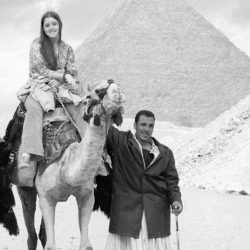
Photo Source Mr. Snodgrass

To be honest, I don’t think there is a status quo. Nothing ever stays the same. You either move forward or drop back, but there is no stepping in place. It’s not sustainable. And that’s nothing new – it’s always been true – but never more than today due to the exponential rise in technology. And it has never been more true in regards to the state of the photographic industry. I see so many photographers paralyzed by their own fears of taking a risk and thinking outside their own boxes.

Few people overcome their fear of change and rise to the occasion of “doing something” as opposed to reacting to something. Most plod along, feeling no control over their destiny – letting fate take its course. A lot of photographers are just hoping to “ride it out” until there is nothing left of their businesses.

Every once in a while, somebody makes a bold move and looks at “change” as an opportunity. History proves me right. If you look back through time, you will see a pattern. At the most pivotal times of change – the cream always rises to the top – and the sludge gets left behind – on the bottom.

As far as the photography industry – I think it’s time to decide if we are ready to “embrace” change and rise to the top or die a slow death. But we have to start seeing the opportunities that always come with change.

Add to FacebookAdd to DiggAdd to Del.icio.usAdd to StumbleuponAdd to RedditAdd to BlinklistAdd to TwitterAdd to TechnoratiAdd to Yahoo BuzzAdd to Newsvine

The Eyes of Our Times

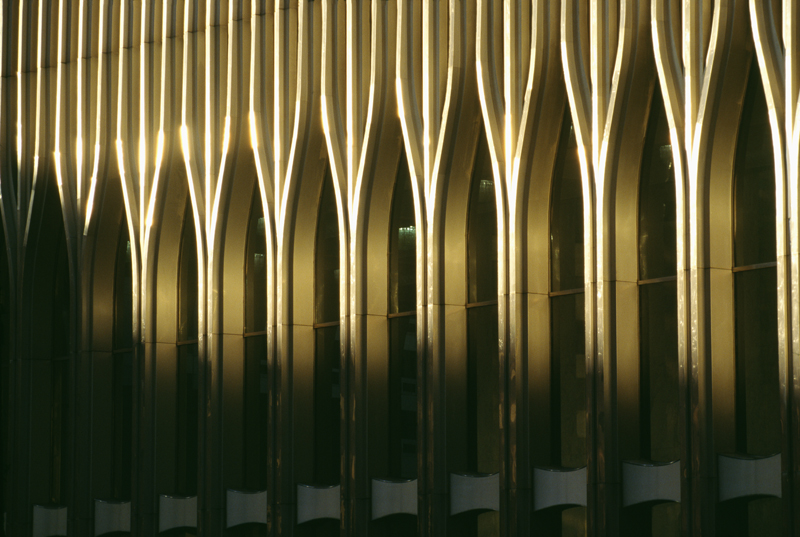
I was looking through my emails and social media posts and I saw something on my Facebook feed that Daymon J. Hartley posted. It was a link to a lightbox of 9/11 images on Time Magazine’s website. It was a collection of images that had run in a variety of magazines and newspapers in the days that followed that tragic event. Along with the images ran comments from the picture editors, why they had chosen that particular image.

As I looked through the images, I was overcome with emotion and moved right back to a very deep place within, remembering the pain, the fear and disbelief of what happened that day. This time I looked at the images online. Ten years ago I first saw these photographs in print publications. Regardless of how I saw these images, in print or electronically – the effect was still the same.

It reminded me of how powerful our photographs and videos are. We are the eyes of our times, the ones to document history. We not only record history in imagery, sound and motion, but we have the power to create the future. History has been rewritten by imagery. Take the Civil Rights Movement in the 1960’s in America. Photographs created awareness of what was happening in the South and put the eyes of the world upon us. That forced change.

As photojournalists and video journalists and non-professionals as well, we need to realize the power of what we do and the influence it can make. It’s a responsibility I take seriously. I feel that it’s not just my duty to document history as it unfolds, but it’s my right to do so as well. These days those rights are being questioned in some places. We need to be diligent in keeping those rights in America. Isn’t that what makes our country different?

As we race towards a destination unknown with technology quickening the pace – let’s be mindful who is controlling the portals of the future – so that future generations can learn from the past.

Add to FacebookAdd to DiggAdd to Del.icio.usAdd to StumbleuponAdd to RedditAdd to BlinklistAdd to TwitterAdd to TechnoratiAdd to Yahoo BuzzAdd to Newsvine

The Power of Music on 9/11

Today is a day of remembrance – it’s been 10 years since the Twin Towers came down in NYC, changing the Manhattan skyline and our lives forever.  We all can probably remember exactly where we were and what we were doing that terrible day.

As for me, I not only remember that day vividly, but the weeks that followed, even though I felt like I was living in a daze.  What I remember most was the healing power of music.  In fact, music was one of the few things we humans could let into our hearts and minds to try to begin to soothe our souls and deal with our pain and our fears.

Music is a universal language.  Regardless of where we are in the world, music is one of those things that can still define a culture and a people, even in a world that seems so homogenous in so many other ways.  I think that’s why it resonates with me, it speaks to the place I’m in, even though I may not be able to communicate with words. Music transcends any language and connects us on a deeper more primal level that goes straight to the heart. When I was interviewing blues musician Willie “Big Eyes” Smith, he told me “If you sing me the blues – I know exactly where you’re coming from”.

I think all of us can define moments in our life by a song that we remember.  We have all been exhilarated by music and have danced the night away or conversely been healed by music when it seems like we just can’t make it through the day.  What else has that kind of power?

Today, I will pause and remember that tragic day 10 years ago that changed our lives forever and as I do, I will heal my soul with music. I know if Willie “Big Eyes” could heard me singing the blues today – he’d know exactly where I was coming from.

Add to FacebookAdd to DiggAdd to Del.icio.usAdd to StumbleuponAdd to RedditAdd to BlinklistAdd to TwitterAdd to TechnoratiAdd to Yahoo BuzzAdd to Newsvine

The Definition of Insanity

It’s been said that doing things over and over again the same way and expecting a different outcome is the definition of insanity.  I’m not totally sure about that.  I think it depends on what you are talking about and how it may affect other people.

I suppose that if one were to use the example of somebody who consistently breaks promises, yet still expects people to trust him/her – well, then that could support this theory. But, even so. I don’t think they are “insane” – I just think they are self-centered – they don’t consider how they affect others through their actions.

Add to FacebookAdd to DiggAdd to Del.icio.usAdd to StumbleuponAdd to RedditAdd to BlinklistAdd to TwitterAdd to TechnoratiAdd to Yahoo BuzzAdd to Newsvine

But, I look at this statement differently. I’ve learned that just because I make an attempt at something and it doesn’t succeed right away, it doesn’t necessarily mean that I’m insane to try again. Even if I don’t alter what I’m doing or how I approach it, it could succeed if I give it another chance. It could have been that my timing wasn’t right the first time around. If it’s something I believe in, I’ll be persistent in order to make it happen – no matter how many times I have to try.  Doe this mean that because I WON’T give up and I keep trying – I’m insane? If that’s the definition of insanity then I’m insane.

Sometimes, it takes that one person, who is crazy enough to believe in their dream and make it a reality, that makes us take notice.  You know the story of the overnight success and the years it took to get there.  The world is full of people with stories like that – people who just keep trying and hoping for a different outcome – even though they may have failed a dozen times. But they didn’t really fail.  It just wasn’t the right time.

Everything happens in its own time, when it’s meant to happen.  Just because it didn’t work out the way you had hoped the first time – doesn’t mean you’re insane to keep trying and hoping for a different outcome.  When you are true to your core and stick to your beliefs, the right people sense it and come into enter life because of it.   But you have to be crazy enough to think it can happen.

More Stuff I Learned While Making a Movie

The day finally arrived – our first screening of Opening Our Eyes – a film that I have poured my heart and soul into over the last year and a half.  Sounds like a cliché, but this project has consumed me in every way imaginable – good and bad.

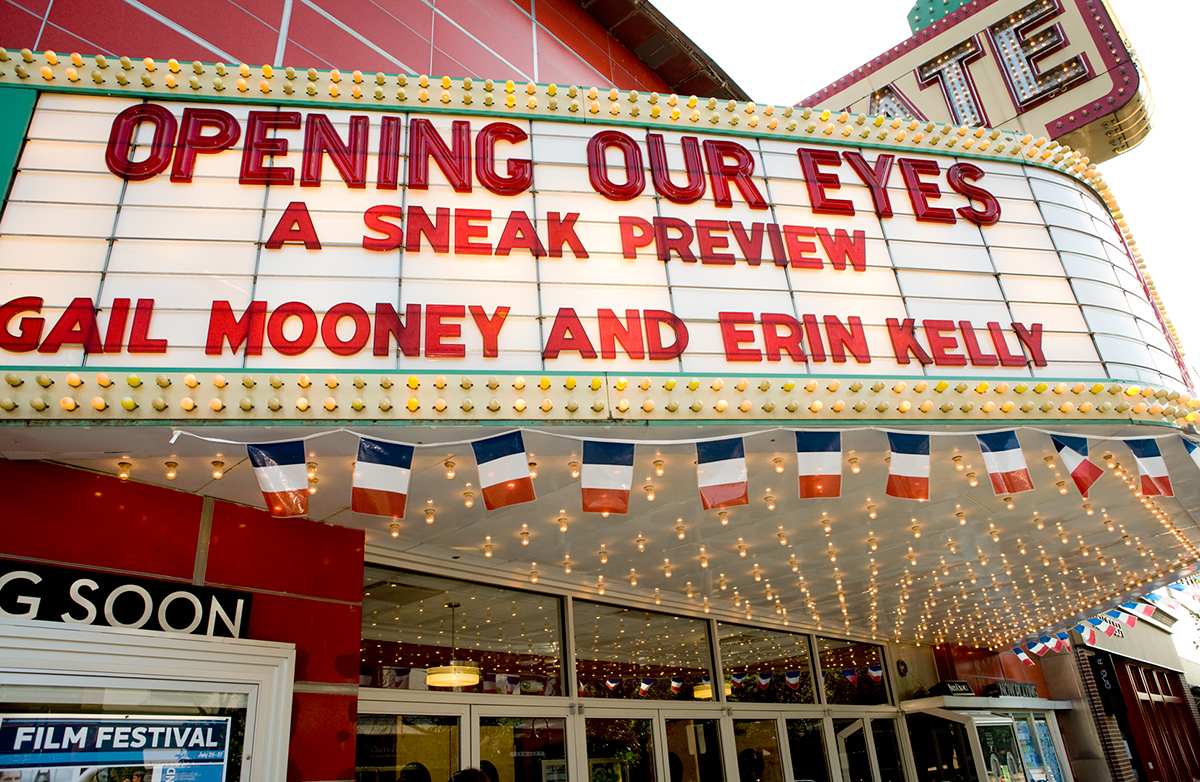
As I looked up at the marquee of the State Theater in Traverse City, MI last Sunday morning, it hit me – we had done it.  My daughter Erin and I had set out to make a film last Spring about people all over the world who were making it a better place – and we did it.
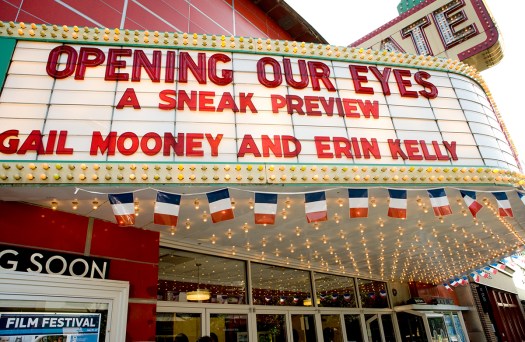
It was and will continue to be a lot of work – a lot more than I ever could have imagined.  There have been some of the lowest of lows and the highest of highs along the way.  There have been times of disappointment from unexpected sources and times of encouragement and support from remarkable people who came into my life because of this project.

I have learned so much since embarking on this journey – here are just a few things:

Believe in your dream.  Lots of us have dreams but most of us don’t really believe in them.  I think that makes all the difference as far as making your dream a reality – the ability to believe that your dream will happen.  I have felt that this would happen from the first moment that I conceived the idea – I saw it – I heard it – This idea picked me – not the other way around.

Trust – I knew all along that for this film to be what I had envisioned it to be – I couldn’t do it alone.  It could only succeed through the support  of all the people who have contributed to this project from the beginning, whether by supporting it financially or just by being there  for me to spring ideas off of.  I really had to open myself up and trust that would happen  – and it did.  That’s not to say that I haven’t had my share of disappointments along the way, but I had to get past them and then learn to trust – again.

Work with people who share your vision.  I used to think I could edit.  but after working with my brilliant editor, Erik Freeland – now I just think I’m a hack.  Finding Erik was a blessing.  It’s not all that hard to find a good editor,  but to find an editor who has the same drive and passion as I do for what this film is or can be – is a rare gift – and I know that. There have been a handful of times in my life, when this serendipity has happened and sometimes, I’ve been too busy to take notice – but this time, I not only took notice – I welcomed Erik’s vision.  Because I was open to what Erik could bring to the film – it’s so much stronger.

Friends – As much as I know that I should never do anything for the sake of other people’s approval, there is always a part of me (my ego) that surfaces and seeks that approval or validation.  Funny thing is that when you create something that is coming from such a sincere place in your own heart – a project that you’re so passionate about – people come into your life because of it.  They are drawn in by your own enthusiasm.  So when others, disappoint you or even take no notice at all – you realize their approval doesn’t really matter.
Chris Guillebeau has a wonderful blog post about this.

Feedback – One reason I had a couple of sneak previews this past week was to solicit feedback.  When I get consumed with the mechanics of making a movie, especially the editing of the movie, I often get caught up in the nit picky stuff, (which is very important) but I need to step back and digest it as the overall movie.  It’s tough when I’m so close to it, so I always solicit other’s input. I know I can’t accommodate everyone’s suggestions because I’d end up with a big mess if I tried.  Some comments ring true and I may take them to heart, while other comments aren’t really along the same line of my thinking,  so I discount them.  Some people’s comments are brutal and cut deep, but after I get past the initial hurt, I realize sometimes, that the comments that cut deepest are the one’s that strike closest to the heart of the matter – and my inner voice takes notice.

Overcoming resistance – The most important thing of all.  I did what I set out to do and that is to make a film that will motivate others and move them to action. During the first Q&A last week, a man stood up and thanked me for making the film.  He told me that he hadn’t even intended to see a movie that morning – he had been looking at the posters announcing the lineup for the TC film festival this week and saw the marquee and came in.  He told me that it changed his way of thinking – that it changed his life.  And then he told me that I needed to screen this film for as many people as possible.  That’s my ultimate goal – to share this film with others – and if one person in every audience reacts that way – well what more could I ask for?

This film may not be perfect and it may not be for everybody (certainly not the cynics), but I did something a lot of others never do – I executed my idea – rather than give myself lots of goods reasons why I couldn’t.   I could cite plenty of reasons right now that could have or should have stopped me in my tracks.  But I didn’t stop because I had such a strong belief in this dream – I saw it too clearly.

Whenever I pull back from my dreams and succumb to my own resistance, I stop and think about a line from a Joni Mitchell tune where she writes about old friends being “cynical and drunk and boring someone in some dark café”.  I stop and I think about that. I sure don’t want to end up being one of those people who piss away their own life by passing judgment about other people’s efforts or causes. And then, I get out and do something.  That’s how I’m making a difference.

Add to FacebookAdd to DiggAdd to Del.icio.usAdd to StumbleuponAdd to RedditAdd to BlinklistAdd to TwitterAdd to TechnoratiAdd to Yahoo BuzzAdd to Newsvine

How to Deal with Criticism

As I get ready to show a sneak preview of my film Opening Our Eyes this week in Traverse City, Michigan, I do so with excitement – but also trepidation.  I have to be prepared for whatever the response and feedback might be.  Most likely, it will be a mixture of praise and criticism – and everything in between.  I also know when taking a chance and entering into new territory – like making a feature film – I open myself up to both positive and not so positive thoughts and comments.

It’s not easy to accept criticism, yet I have found that if I stay true to what it is that I am trying to accomplish and put the criticisms and comments in perspective – I’m far better off.

I try to keep the following things in mind:

Not to take harsh comments personally.  This is tough, because let’s face it when you’ve put your heart and soul into something, it can be very hurtful to hear unkind comments and criticisms. Since, I have made my life’s work – my life’s passion – there’s a fine line between the personal and the work. So I remind myself to think of all criticisms as related to my work.

Consider the source.  I try to remember that this is just one person’s opinions and even if that person is an “expert” or think they are – their perspective can be coming from a whole different place than what I had envisioned.  I’ve also found that many times, the worst criticisms come from people who may have their own issues they are reflecting on.

Step back and think before reacting.  I have learned “to be still” and to take time to digest all comments before reacting positively or negatively to them. Many times harsh words need to be heard – and can be the push I need to make “it” better.  Then it’s up to me to decide if I should respond to those comments and incorporate those suggestions into whatever I am creating – or not. In the past, I have made the mistake of taking everyone’s helpful comments and suggestions to heart, only to end up with a big mess that’s neither “here nor there”.

Trust my instincts. I try to keep in mind that I need to stay true to my own vision. If comments and suggestions are helpful in guiding me there – then I take them to heart. There are times when even though I know the message or story that I want to tell – I need guidance on how to do that.  So, I try to consider all feedback, but to keep it in context with my own vision.

Remind myself that I have done something. This is the most important thing of all – to remind myself that even though what I have created is not perfect – I have done what a lot of others never do and that is bring my idea to reality.  Many times the harshest critics are people frustrated that they have not overcome their own inertia.

Steven Pressfield writes about resistance and criticism in the The War of Art:

“ If you find yourself criticizing other people, you’re probably doing it out of resistance. When we see others beginning to live their authentic selves, it drives us crazy if we have not lived out our own.

Individuals who are realized in their own lives almost never criticize others. If they speak at all, it is to offer encouragement.  Watch yourself.  Of all the manifestations of “resistance” most only harm ourselves. Criticism and cruelty harm others as well.”

Add to FacebookAdd to DiggAdd to Del.icio.usAdd to StumbleuponAdd to RedditAdd to BlinklistAdd to TwitterAdd to TechnoratiAdd to Yahoo BuzzAdd to Newsvine

Ten Things I Learned While Making a Movie With a DSLR

1. It will take twice as long as you think. This is especially true if you have a limited budget. With a limited budget comes a smaller crew and therefore you need to do a lot more of the work yourself – if you can.
2. It will take more money than you think. Everything adds up. There are a lot of costs in post-production – licensing music is a big one and a feature film needs lots of music – and having the sound professionally mixed, makes all the difference and is well worth the money – so anticipate that cost.
3. If you need to transcode files for your editing application – then make that the first thing you do. In fact, I used the Log and Transfer plug-in on Final Cut Pro to do a pre-edit on all my clips as well as add  metadata to the files.
4. Hire a professional editor. Smartest thing I did. I raised funds on Kickstarter so that I could hire a pro. I know how to edit – or at least I thought I did – till I worked with a professional editor. My editor crafted the story and cut it like a musical composition with beautiful timing and rhythm.
5. You will need twice the memory or drives than you thought you would. Even, when working with a professional editor – in fact because I was collaborating with an editor, we had duplicate projects and media on 3 – 2 terabyte drives each!
6. Stay focused on the story. Don’t even go into the editing room without a clear idea of what story you want to tell.
7. Define your target audience. Iit’s important, especially in terms of how you want to craft the story and the rhythm of the piece.
8. Plan ahead as far as screenings or putting content online. Many film festivals have strict guidelines about previous screenings, premiers etc. I wanted to show my film on a big screen, but I couldn’t have it open to the public or charge money, so I opted to have an “invitation only” event and called it a “sneak preview”. Test screenings are done all the time with studios. It gives you a chance to get feedback.
9. Utilize social media. Have a website for the film and a fan page on Facebook.
10. Don’t try to be what you’re not. And don’t try to be all things to all people in your film. Stay true to your vision. Push yourself to try new things. Go with your gut.

Add to FacebookAdd to DiggAdd to Del.icio.usAdd to StumbleuponAdd to RedditAdd to BlinklistAdd to TwitterAdd to TechnoratiAdd to Yahoo BuzzAdd to Newsvine

s

Fear of Failure – Fear of Success

Which is it? Which one of these paradigms rules your own behavior? If you are like me, then it’s a little bit of both.

Lately, I think I’ve been leaning more toward fearing success – than failing. I don’t usually contemplate my fears – most times, rushing into the unknown like a young child. I think that’s my inner voice that is calling and I blindly follow. And when I do follow, good things happen. And that’s when I start to get afraid.

Odd isn’t it – being afraid when things are going as I planned, even as I dreamed. I guess for me, fearing success stems from my own lack of self-confidence and questioning myself “Am I deserving of these good things that are happening in my life?

If I stop and think about it – that it was my hard work that led to those “good things” – then I’m OK. But when hard work comes from a place of passion, deep within me, I lose sight that it is work at all. Sure, there are days when things overwhelm me and days when everything I do seems to “fail”, but mostly my work is my joy.

The only thing I really fear is to wake up one day and not feel joy in what I’m doing. I hope that if that happens, I face my fears and change things.

Add to FacebookAdd to DiggAdd to Del.icio.usAdd to StumbleuponAdd to RedditAdd to BlinklistAdd to TwitterAdd to TechnoratiAdd to Yahoo BuzzAdd to Newsvine

Working With a Professional Editor

I know how to edit. Well, I should say I know Final Cut Pro. Knowing how to use a particular software and knowing how to edit – to tell the story, are two different things. Just like taking a photograph skillfully is more than just knowing how to use a camera.

I have done a relatively decent job editing projects in the past, but nothing has ever been longer than a half hour in length. Nothing has ever been as demanding as what I have been working on over this past year and a half.

After traveling around the world last summer, on a 99-day adventure, shooting a feature length film about people who are making a difference, with just a slim crew (myself and my daughter), and an even slimmer budget, financed with airline miles and hotel rewards, I returned with over 150 hours of footage and 5000 still images.

After a bleak winter of endless days of trying to make sense and order of all my content, I managed to get a very rough storyline down with interview sound bites and do a first cut on the b-roll. But there was a long way to go to get this looking like the film that I imagined in my head. I knew I wanted to work with a professional editor who would not only help me, but also would bring their own vision and craft to the film and most importantly “move the story”.

I’ve been working with Erik Freeland, from Springhouse Films over the past few months and I am simply in awe of what he has brought to the film. I’ve learned so much by collaborating with Erik. Not, little tips and shortcuts in terms of Final Cut but how to tell a story cinematically. I’m beginning to learn about the craft of editing and how the nuances of timing and juxtaposition of clips and interviews can move the story forward – or not.

As a shooter, I’m paying attention to movement in a scene and following the action. An editor looks for just the right part of the action in the clip – and how that clip will juxtapose with another clip. Not only the timing of the action within the clip is important, but also the timing of the duration of the clip itself is critical to the pacing of the film.

Timing is everything in editing – it’s almost like making a musical composition timing and pacing the highs and the lows of the story. In fact a big part of the editing process is integrating the music, adding yet another dimension to weave the viewer in and out of the story. Music is the heart of a film, the emotional backbone. Without music – the film has no heart.

So in a way, a good editor is a mixture between a technician, a storyteller and someone who has rhythm. An interesting combination for sure. It’s been a wonderful experience collaborating with my editor, Erik and I think what has made it work so well is that we have respect for what each other has brought to this project. We have both learned and grown along the way and pushed ourselves creatively. What more can you hope for? That’s the beauty of collaboration.

Add to FacebookAdd to DiggAdd to Del.icio.usAdd to StumbleuponAdd to RedditAdd to BlinklistAdd to TwitterAdd to TechnoratiAdd to Yahoo BuzzAdd to Newsvine

The NON Convergence of Still Photography and Video

Many people, myself included have written about the convergence of stills and video. In fact ever since Vincent LaFloret paved the way, shooting video in a cinematic way with the Canon Eos 5D Mark II, it seems like every still  photographer wants to shoot video with a DSLR . At the same time, high end “video cameras” – not still cameras that also shoot video – but a high end camera like the RED is capable of capturing stunning stills from frame grabs and they aren’t just good enough – they’re great.

I suppose in this sense one could argue that there is not only a convergence of our tools – meaning a camera that is capable of shooting high quality video and still images – but that it also may mean – the end of still photography. I don’t have a crystal ball but if one defines a still image as a “moment in time” then still photography will never go away. If you have a camera that shoots hi res video and can pick and choose the exact frame that fits your still image needs – then we need to realize that this is a convergence of our “tools”  not the the end of creating still imagery.

I love to point out the differences of still photography and video because for me, and many others who shoot both still photographs and video, we think differently when shooting these mediums.

  • A still image is a moment in time.
  • Video is time in motion
  • A still image is one that is meant to linger on – where one can take pause
  • Motion imagery is made up of  a variety of shots and sequences
  • Video provides more information – there’s sound and  movement
  • Still images leave more for viewer interpretation
  • Still images deliver a message visually
  • Video delivers a message utilizing sight and sound

Everyone of these differences requires us to put our minds in a different place. When shooting video, I need to think about what shot will come before and what shot will come after the shot I’m about to shoot. I have to think that way or I won’t have the goods to cut with in the editing room. The message or story gets crafted further in post production with music and interviews and each element plays its part in the feel and arc of the story.

When I’m shooting still images, I must tell the story in that one frame and timing is everything – it’s the “decisive moment”. So, one must ask is it the same – is it even fair – to grab that “moment in time” from a video clip where the camera operator didn’t make a conscious decision when shooting that decisive moment ?

The point is with everyone talking about “convergence” and taking that to mean the demise of still photography – I have to wonder. Is it the end of still photography? Personally, I don’t think so. I think that it merely means a convergence of the tools – not what we create with those tools.

Add to FacebookAdd to DiggAdd to Del.icio.usAdd to StumbleuponAdd to RedditAdd to BlinklistAdd to TwitterAdd to TechnoratiAdd to Yahoo BuzzAdd to Newsvine