Re-Charging and Seeing

A friend reminded me recently that I needed to take some time for myself and “recharge my batteries”.  This past month has sailed by – I’ve been out of town 25 % of the time and the rest of the time, deeply focused on editing my documentary.  I needed a break from technology, airports and work. So I took his advice and with my husband, headed down to the NJ Shore for a weekend getaway.

A friend of ours had invited us to her beach house in Ocean Grove, NJ, a shore town where time seems to have stood still – especially in the month of October.  Ocean Grove is an old bible town just down the boardwalk from Asbury Park, the town where Springsteen had gotten his start at the Stone Pony decades ago.
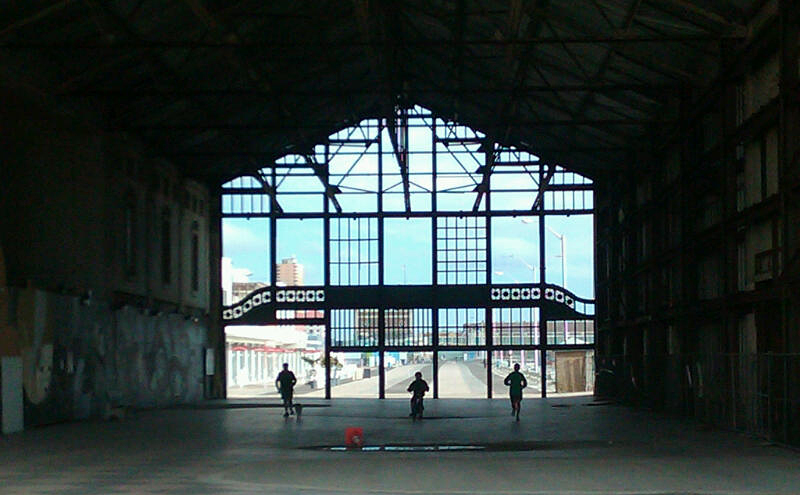
Asbury Park, NJ

Asbury Park is a town that’s slowly coming back from a state of decay and dilapidation over the last 40 years and vastly different from its religious neighbor to the south.

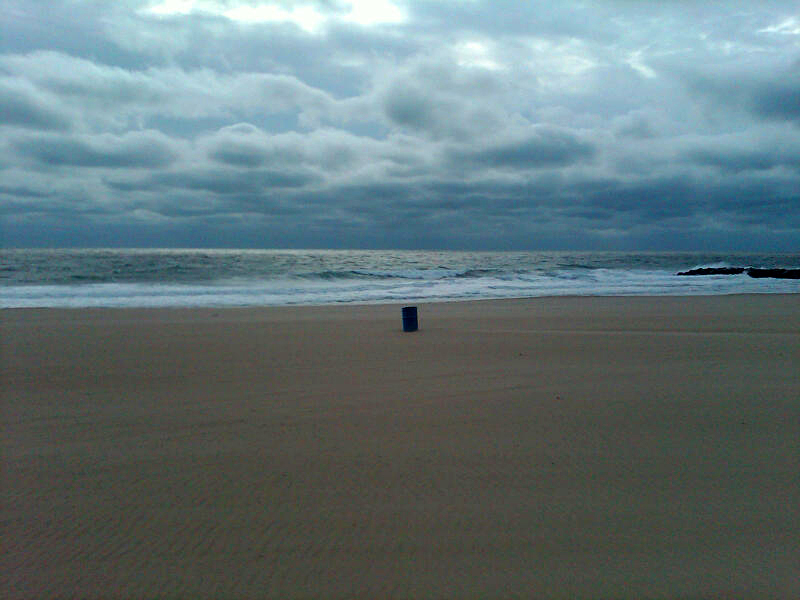
It was typical October weather – sunny and brilliant one moment –

Ocean Grove, NJ

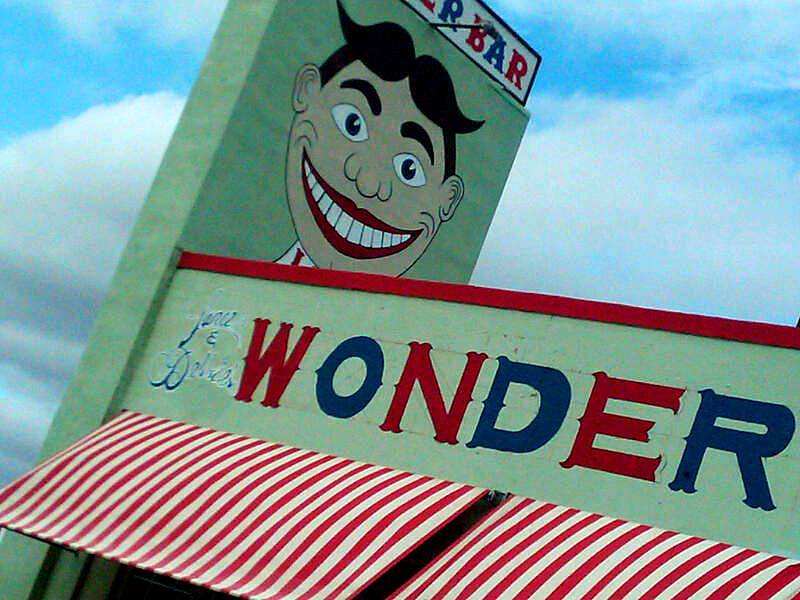
then changing to moody and melancholy, the next.  Sunday, I woke up early, got my bike and headed to the boardwalk for a ride.  I didn’t have a camera with me because I thought that I needed a break from technology.  But as I rode down the boardwalk – I started “seeing”.  I was observing everything – noticing the mundane – the ordinary

Wonder Bar, Asbury Park, NJ

– the old and the new – not the exotic that I had become accustomed to on my recent 99-day journey around the world.
I immediately thought back to when my husband and I had just moved back to the East Coast after living in Santa Barbara, CA.  Our first summer back on the East Coast, we headed “down the shore” every weekend, taking our cameras and our bikes, going to different parts of the shore each time.  We’d hop on our bikes and just ride the boardwalks – shooting and documenting things and people that we observed.  It was a wonderful summer –biking, shooting and at night, sometimes getting a room at a rooming house if we felt like splurging, or most times, sleeping in our van, awakening the next morning to explore again.

As I bicycled down the boardwalk this weekend, I realized that I had a camera in my Blackberry, which I rarely used.
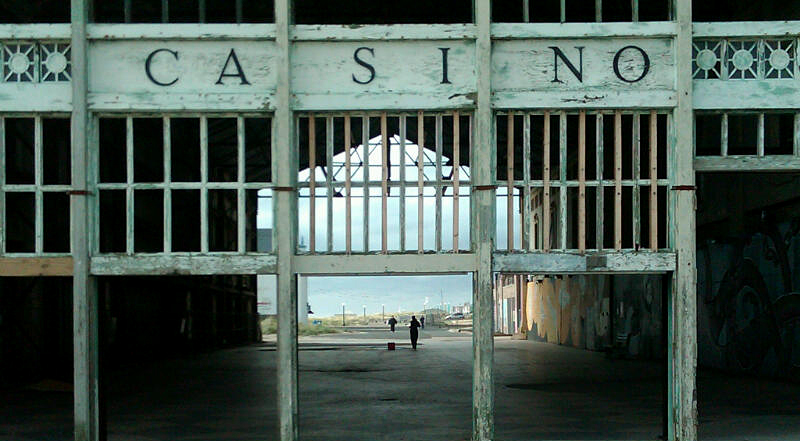
Asbury Park, NJ

I pulled it out and started taking photos of my observations – just like I had done so many years earlier – and I was having the time of my life doing it.  I was  “seeing” and documenting what I saw- no preconceived notions or plans – just letting serendipity happen. Ironically, because of technology and the fact that my cell phone can capture images – I had simplified the process and gotten down to the basics of just “seeing”.

My batteries are sufficiently recharged with fresh air, solid sleep and getting back to the basics.  Perhaps, this weekend has even triggered a new project idea – or at least has planted the seed. We’ll see.

Add to FacebookAdd to DiggAdd to Del.icio.usAdd to StumbleuponAdd to RedditAdd to BlinklistAdd to TwitterAdd to TechnoratiAdd to Yahoo BuzzAdd to Newsvine

My Screw Ups Shooting Video With a DSLR

Today is my last day in Buenos Aires, the final leg on our 99-day journey, shooting our documentary Opening Our Eyes.  This was not the first documentary that I have shot in video, but it was the first where I used HDSLR’s.  Luckily, I was not new to shooting video, thinking in motion or ignorant about capturing good audio.  If I had been, I would have been overwhelmed.  But even with 11 years of video experience – I made my fair share of mistakes.  I got the goods and then some – but I did screw up at times.  I’m feeling generous and confident this morning so I’ll share some of my favorite screw up moments with you.

  • Out of sync – this is so easy to do when you are capturing audio with another device.  For interviews I had two external mics – one lav on the subject and a shotgun mic on a boom stand.  Both were plugged into my Samson H4N Zoom.  I learned the hard way that I should turn the digital recorder on and leave it on.  I had to start and stop the camera because you can only record for 12 minutes at a time.  When I stopped the digital recorder as well – I forgot to start it again a couple of times.  Since audio is not memory intensive – just leave the digital recorder on.  It eats up batteries but it’s better than not getting good audio.
  • Brought a compact tripod – big mistake.  I brought a tripod that would fit in a suitcase so that I would only have one checked piece of luggage. I struggled with it the entire time.  Not tall enough but most importantly wasn’t precise and/or fluid enough in its movements.
  • I got lazy and tried to handhold the camera. Even though I’ve been shooting video for over ten years, instinctively, coming from a still photography background, I tended to think of these cameras in that way and hand held it at times.  I got away with it when I was shooting with a wide lens – but it just didn’t cut it with a focal lens of more than 70mm.
  • I attempted to do some pans and follow focus.  Forget pans with these cameras because of the “jello effect” where vertical lines in the image go askew.  Pans aren’t really good form anyway in video and take up too much screen time.  I also tried to follow focus while filming, focusingon a person or object and then changing the focus to another point in the image. I was not successful because I wasn’t using the right lenses nor was I using a follow focus knob.  To do this properly, you need to have a follow focus ring affixed to the lens and you need to use prime lenses that are meant for cinematography.
  • I made assumptions.  I was a victim of myself – twice.  Once when I hadn’t read the manual for the Zoom digital recorder thoroughly, and changed the batteries without turning off the unit.  Some of my audio files got corrupted. I was lucky in that for those files I can use the camera audio because it will be dialed down and become background audio with a translated voiceover that will be recorded in post.  Had I read the manual – I would have seen the warning. The second time, I was literally in a boat on the Amazon River in Peru and had a major meltdown thinking that my 5D was broken because it wasn’t working in manual mode – which is essential in video.  Unbelievably, my Blackberry was getting a signal so I sent off an email to my partner alerting him to the problem and asked him to have Canon send a replacement to Buenos Aires – my next stop.  I would have to use my 7D in the jungles of Peru and I was happy to have the backup.  To make a long story short, my partner got on the phone with the Canon repair technician, and started relaying to me things to try via email and we finally discovered that the technician had changed some settings in the custom area – that I hadn’t thought to look in after getting the camera back.  I assumed that the technician had set the camera back to factory defaults and I had only reset the settings back to as how I had the camera set up.

So there you have it – my screw-ups revealed.  I’m sure there are more that I’m conveniently forgetting but perhaps I can spare you the pain by learning from my mistakes.  Anyone care to chime in with some of their favorite “off” moments?


10 Things I’ve Learned Circling the Globe

I came across an interesting blog yesterday “20 Things I’ve Learned From Traveling Around the World for Three Years”, by Gary Arndt. It was pretty much on target with my observations from my very short journey of a little more than 3 months. But it got me thinking about what I have learned on these travels.

Erin and Gail and children of village along Amazon River, Peru

To travel is to experience and learn and also an opportunity to show other people from other cultures what an American (U.S. citizen) really is, beyond the news, the music and Hollywood movies.

1. People are good – Like Gary, I’d have to agree that for the most part most human beings are good. Sure there are schemers, con artists and thieves in just about every culture, but for the most part – people are good.
2. Government policies don’t always reflect who the people are – U.S. citizens are not all warmongers and not every Afghani is a terrorist.
3. The media exaggerates – Because we all get our news these days in abbreviated and sensationalized TV content – it’s distorted. I almost changed my plans to go to Thailand because of the coverage of the political unrest, which in actuality was contained to only certain sections of Bangkok.
4. There aren’t just “ugly Americans” there are “ugly tourists” – people around the world seem to equate badly behaving tourists as “ugly Americans”. I have found bad behavior is not solely exclusive to “Americans” or U.S. citizens – I have witnessed really bad manners from all types of tour groups – French, German, British, Japanese, Argentinean – you name it. I think it is more of a reflection of a “group” dynamic than a cultural one.
5. U.S. citizens are misunderstood – I find this is more common in countries that are more “westernized” than countries where you would think more of a discord would be present. For example – I found the people in Egypt friendly, curious and informed, unlike other “westernized” countries where the attitude was more of one of disdain. In other words, the more “westernized” a country was there seemed to be more of a preconceived yet narrow minded and naïve attitude about what an “American” was.
6. Cultural naiveté – Guess what folks – when you join those tour groups and they take you to the “untouched villages” along the Amazon River or to the hill tribe villages in the mountains of northern Thailand – they’re probably bringing you to government sanctioned tribal villages where the people have made it a business of “dressing up” for you. Some locals that I met referred to these places as “human zoos”. It’s kind of like expecting to see everyone in the U.S. wearing cowboy attire – I mean outside of Texas and Montana that doesn’t really exist anymore.
7. The Internet has changed the travel experience – you can pretty much get connected anywhere – anytime. My blackberry worked in some of the most remote places in the world. I could almost always get a cell signal – the irony was that I didn’t always have electricity to charge my battery. If you want to really get away – leave your laptop, iphones and blackberrys behind.
8. Go with the flow – don’t focus on what you miss from home whether that is a Starbucks coffee or a hamburger – discover the richness of the country you are in – the food – the music. As we become more and more connected with each other across the globe – we are beginning to lose our cultural differences.
9. I am a diplomat for my country – sure there are things that I don’t like about my country, the United States. But when I travel, I feel that this is my opportunity to interact with the people where I am visiting and to give them perhaps a more true picture of what an American is – beyond what the news and Hollywood portrays us as. That is if people give me a chance – if they haven’t closed their mind.
10. I am grateful that I can travel – and I think that everyone should travel – outside his or her country and culture. Don’t just visit the tourist sites but try to get out of the cities and interact with the people. The best thing about this journey is that our purpose was not to see the sights but to connect with the people. That made it meaningful and memorable.

Add to FacebookAdd to DiggAdd to Del.icio.usAdd to StumbleuponAdd to RedditAdd to BlinklistAdd to TwitterAdd to TechnoratiAdd to Yahoo BuzzAdd to Newsvine

Behind the Scenes DVD – or Not?

In a little more than a week, my 99-day journey trekking around the world with my daughter shooting a documentary, Opening Our Eyes will be over.  Or will it?  My work is really just beginning as I contemplate all we’ve done, people we’ve met and interviewed and how I will put this all together in an edited, finished film.

There are hundreds of ways I can edit this documentary and quite honestly, beginning the process and deciding the direction is always the most difficult.  But there will be a moment when the light bulb goes off and the vision will be clear as to how to make sense of it all.  Then it becomes easy as the story unfolds – as it should from my heart.  It’s the story that can only be told by me and this case, me and my daughter.

My daughter and others have urged me to do a behind-the-scenes DVD

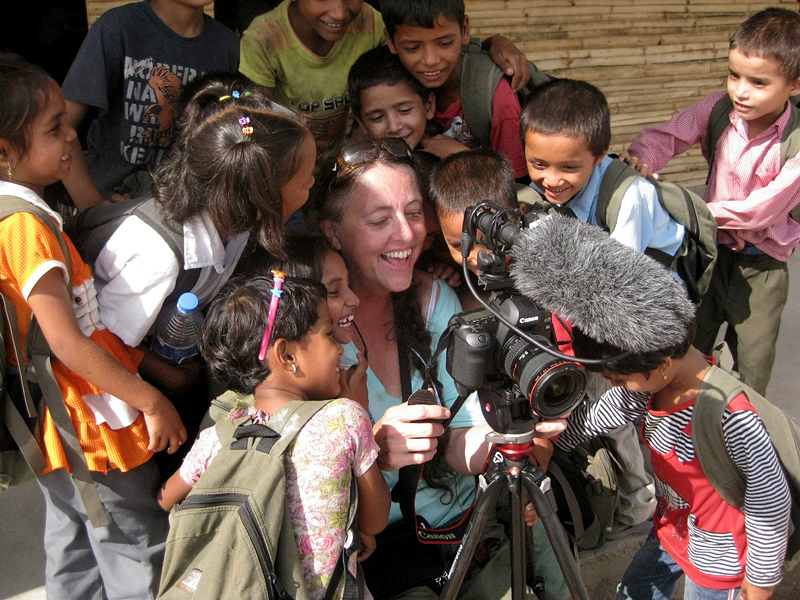
Gail at the Kopila Valley Primary School, Surkhet, Nepal

– she tells me “that’s what people want”,  to know more about the making of the film – more about the people behind the film.  As much as I agree with her and understand this interest on the part of the viewer, there is also a resistance to make myself part of the documentary.  With that said, a separate “behind-the-scenes” chapter could be the solution – to provide more information, without inserting the two of us into the film itself.

One thought does keep popping into my head that motivates me to provide a commentary on the why’s and how’s of this journey and the making of this film. Too many times when I’ve visited museums, I’ve been taken aback by some of the things that I over hear docents talking about in relation to the paintings.  They analyze and interpret what the artist meant by his choice of color, brush stroke and placement of objects within the art and how that related to what was going on in his life at that point in time.  I often wonder how they know that or even how can they be so sure?  Is it documented or is it really just someone’s interpretation that has become fact over the years?

My daughter and I do plan to sit down this week and attempt to do on-camera interviews – while we are still in the moment and before we get back to our normal lives.  Here’s where we need your help – tell us what you want to know.  Maybe you’re curious about how we survived the dynamic of a mother/daughter team for three plus months.  Maybe you want to know why we did this – or how we funded it.  Or maybe the questions are even more basic – what did we like? – what was difficult?– any surprises? etc. etc.  Perhaps you want to know more about the craft of shooting the doc– and how I went about that.  And maybe you don’t really want to know anything at all and just want to know about the subjects of our film.

But please tell me what you’re curious about – as far as the behind-the-scenes making of this film.  All questions are welcome – from the seemingly obvious to the more provocative.

Add to FacebookAdd to DiggAdd to Del.icio.usAdd to StumbleuponAdd to RedditAdd to BlinklistAdd to TwitterAdd to TechnoratiAdd to Yahoo BuzzAdd to Newsvine

Does a Canon 5D Mark II Make You a Cinematographer?

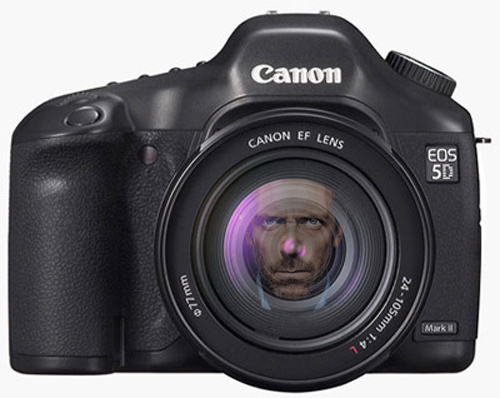
I read somewhere that a recent episode of the TV show “Housewas shot entirely with the Canon 5D Mark II.  A dozen thoughts ran through my head – Who would have thought that a prime time TV show would be shot with a still camera?  – Isn’t it amazing what technology has made possible? With a big production budget, why did they choose this camera? Did they back it up – just in case?

But the biggest thought that ran through my head was that this article oversimplifies the production process and leads you to believe that now just about anyone with a few thousand dollars can become a DP on a prime time TV show. In other words – when talking just about the camera, things get taken out of context.

What about the fact that they most likely had dozens of these hybrid cameras on set, with a crew of hundreds? Or that the sound guys were capturing the audio with tens of thousands of dollars worth of sophisticated equipment.  And then of course there is the post-production aspect where the file from the camera gets tweaked, modified and enhanced by professional colorists.

I think many times still photographers overlook the fact that there is a lot more to a large scale production than just the shoot and the camera.  And most of the time it goes way beyond the capabilities and role of the individual photographer who is used to working in a solo manner as opposed to collaboration.

Don’t get me wrong, there is a big part of me that absolutely loves my 5D and my 7D.  It allows me to deliver a motion product with a stunning visual.  But after shooting motion for 11 years, in addition to my 35 years shooting stills – I know that not only do I need to think differently when I shoot in motion but I also need to collaborate with others to be able to fulfill the needs of the production.

So when you hear that an entire movie was shot with the 5D – think beyond the camera.

Add to FacebookAdd to DiggAdd to Del.icio.usAdd to StumbleuponAdd to RedditAdd to BlinklistAdd to TwitterAdd to TechnoratiAdd to Yahoo BuzzAdd to Newsvine

What Makes a Successful Photographer?

I woke up this morning before dawn, not able to sleep anymore and my mind spinning with random thoughts about where I’ve been and where I’m going. I’m in Iquitos, Peru right now, the last major outpost before the real jungle begins along the Amazon River.

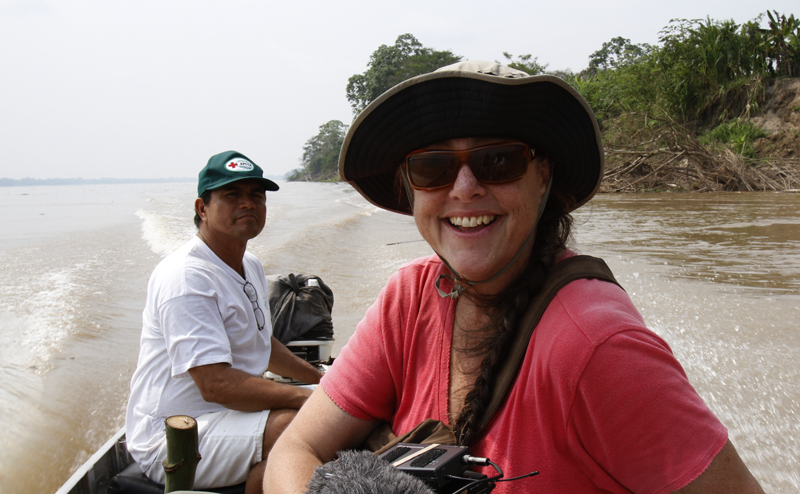
Gail on the Amazon River, Peru

I had just spent a week visiting the jungle villages along the river as part of my documentary, Opening Our Eyes.

As I lay in bed, I thought about a recent conversation I had with someone about what it means to be a success. This person had made a comment to me that I must be a very successful photographer. This is not the first time that someone has made that remark and it always takes me by surprise and makes me think about the meaning of that word “success”.

I think that in this lukewarm economy and with the incredible changes that have affected the profession of photography (and print), I would have to say that a successful photographer is one who doesn’t need another job to support themselves. That they are able to make a living shooting photographs (or video).
But how does one achieve that, if that defines success?

Personally, I think that with any creative and competitive field, you have to be passionate about it and have the desire to pursue it no matter what. In other words you have to want to pick up a camera and take photographs without someone paying you or “validating” you in some way to do it. If you think about it from a buyer’s standpoint – why would they want to hire someone who isn’t passionate about it? So shoot and shoot for yourself – always have a personal project you’re doing.

So the question – how do you find the passion or keep it begs to be asked. There isn’t one answer to this question because it’s different for each of us but for me I need to be involved with other things besides photography to keep my interest in photography alive. I need to get beyond the science of photography and even the art. I’m interested in music, cooking, sewing, film, looking at impressionist paintings, taking walks in the woods and even people watching in New York City. I do all of these things and more to recharge myself and keep my passion alive for what I’m doing.

Photography is a visual means of communication. If you don’t have anything to say because you’ve just consumed yourself with the technical aspects of photography, then how will you be able to deliver a visual message – whether it be for a magazine or an annual report or even an advertisement.

Lastly, photography is something that you have to “do” to get better at it. You can’t just read about it in a book – you have to shoot – practice – perform. That is why shooting for yourself is imperative. If it’s been two months since you’ve picked up a camera and you head out to shoot a job – you do a disservice to your client. I don’t care how long you’ve been in business.

Here is how others have defined success:

“Successful people are simply those with successful habits”
Brian Tracy

“Your net worth to the world is usually determined by what remains after your bad habits are subtracted from your good ones”
Benjamin Franklin

“Practice means to perform over and over again in the face of all obstacles, some act of vision, of faith, of desire. Practice is a means of inviting the perfection desired.”
Martha Graham

So, am I a successful photographer? Perhaps – but there are photographers way more successful than me. But I am determined and I definitely have the desire and there is always something that I still want to achieve.

Add to FacebookAdd to DiggAdd to Del.icio.usAdd to StumbleuponAdd to RedditAdd to BlinklistAdd to TwitterAdd to TechnoratiAdd to Yahoo BuzzAdd to Newsvine

Why Video Is So Hot

These days video is a hot topic amongst still photographers and has been for over a year.  But there’s nothing new about video so what’s the big deal?

For starters the camera manufacturers came out with the hybrids so as still photographers bought new “still cameras”, they also got a camera with video capabilities.  At the same time, the publishing business is changing rapidly.  Print is giving way to electronic delivery via iPhones, iPads, cell phones and the web.  So you’ve got what you call a changing paradigm.

Is video a trend – no not in my mind.  It’s just another medium to communicate in.  When you have a message to deliver that needs motion and sound – video is the right choice.  Does that mean still photography is dead.  Absolutely not and neither is print.

Will still camera manufacturers lead the way in the next wave of “video cameras” with hi res images.  My guess is no and that’s because traditional video camera manufacturers like Panasonic have already rolled out video cameras with large chips – and with good audio capture capabilities without work arounds like the hybrids.

Nobody can predict the future but I don’t think it takes a crystal ball to see that video isn’t just a hot topic for the moment or a trend, but has become a way that we get our news, our products pitched to us and our stories told.

Add to FacebookAdd to DiggAdd to Del.icio.usAdd to StumbleuponAdd to RedditAdd to BlinklistAdd to TwitterAdd to TechnoratiAdd to Yahoo BuzzAdd to Newsvine

HDSLR in the Field – Recap of The First 70 Days of 99 Day Project Around the World (Tales of an Insomniac)

I woke up at 4 AM this morning after only a few hours of sleep – my body going through some major jet lag after over 22 hours of flying from Sydney, Australia to New York City via Los Angeles. Yesterday, my full day back, was spent taking care of essentials – like getting my gear to Canon for a full check up and cleaning,

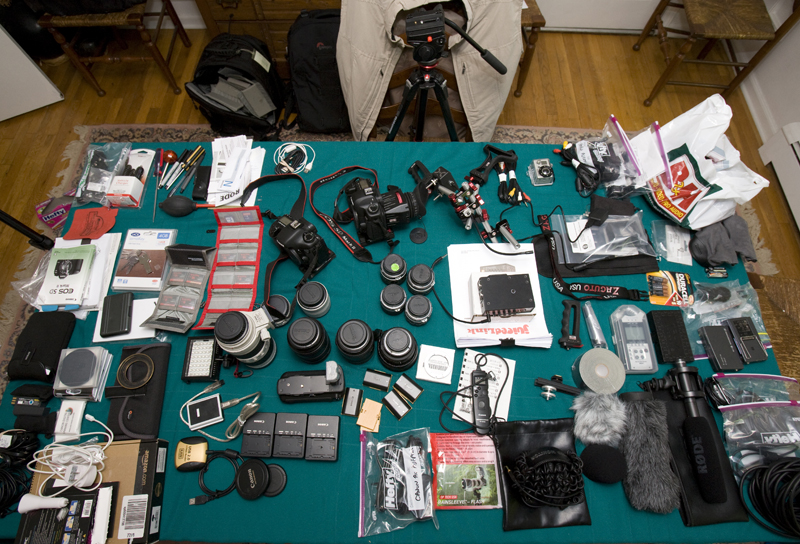
Gear for my first go round.

and a visit to the Apple Genius Bar because my new laptop seems to have a living organism living behind the monitor which shrinks and grows depending on the climate I’m in, and of course taking care of my own personal needs.

As I lay awake in the pre-dawn hours, my mind was spinning with thoughts on what I had to get done before heading to South America on Saturday for the second leg of our documentary Opening Our Eyes. I have only 4 days to recuperate, rest up and gear up for the next leg. The bad part is, I’ve only got 4 days – the good part is, I have those 4 days, and can approach the second leg of this journey with the advantage of having a fresh experience in the field to draw from and make some changes in terms of gear I’m taking on the next leg. More importantly, because my turn around is short, I’m able to stay focused and remain in the mindset of the project.

So as I go over the gear that I brought on my first leg with lessons learned in my head and prepare for the next stint, I’ll share my thoughts with you:

• A good tripod is critical – if you don’t have a decent tripod for video, you can’t get fluid movement, so don’t even try. A locked down shot is better than a jerky shot in motion. I needed to travel light with all the flights that I faced, so I went for a carbon tripod with a fluid head that would fit in a suitcase to eliminate the need for another check on bag. So, for this next leg, I’m seriously thinking of taking my larger tripod because I don’t have as many flights where excess baggage charges could mount up.

• You can never have enough batteries when shooting with a DSLR workflow and by that I mean everything from the camera batteries (and buy lots of them if you can find them for the Canon 5D and 7D) to the expendables for the  DT454 JuicedLink audio preamp, which takes 9 volts to the Samson H4N Zoom which takes AA’s.  By the way, speaking of batteries, don’t make the mistake I made once by not powering the H4N Zoom off before changing the batteries. The manual mentions that by doing so, files can get corrupted. A couple of my audio files did get corrupted – the information was there, but it couldn’t be read.

• I’m leaving my over priced Nikon to Canon lens converter, along with my old Nikon glass at home – I never used them – never felt the need for what I was shooting.

• Can’t wait to edit my timelapse material that I shot using the Canon 7D camera and the Canon timer remote controller TC-80N3.

• I want to get more attachments for my GoPro Hero Cam because there are so many ways to use this camera – it’s amazing and I’m having a ball thinking of all the possibilities in how I can use it. The Hero cam will always be part of my gear kit.

• Always check what audio cords you’ll be needing. I embarrassed to say that I carried around my wireless kit but couldn’t use it with the Zoom because I needed a mini to male XLR cord  and didn’t have it.

• Take 10-20% more memory storage than you think you will need when you’re shooting video. Video is a memory glut. I had been warned by some people that the Lacie Rugged hard drives that I were taking with me, didn’t have a very good track record – but as I write this, my content backups from my Lacie Rugged drives ( over 2000 gigabytes (doubled) ) are transferring to my desktop OWC terabyte drives and seem to be fine so the Lacies did their job. However, they are bulky and I’m going to be getting a couple of 500 gig drives that are more compact. Any suggestions for compact firewire external drives?

• Wish I bought the follow focus with my Zacuto rig. It’s expensive but would have been a real added bonus for visually highlighting one of the beauties of these cameras – the depth of field range that they have.

• Also wish I had a portable dolly like the Indislider but just couldn’t fit it in this trip. As it was, there were some items that I didn’t need to take and will be leaving behind this next leg.

• Wish I brought more mini tools – screwdrivers, allan wrenches etc.

• My Blackberry Tour Verizon phone blew me away. Even when I was in the northern hill tribe villages of Thailand, staying in a bamboo hut without electricity and plumbing – I was able to get my email on my phone! I’m impressed Verizon – I really am. Finding electricity to charge my phone was another matter.

• I could not have survived the 30 flights circling around the world i if I didn’t have my iPod. Thanks Apple.

Feel free to comment and share your thoughts of what has or hasn’t worked for you in the field and you can save me from making potential mistakes as I take on my next leg of this Journey August 7th. We are first headed to the Amazon area of Peru and then down to Buenos Aires, Argentina – again two diverse areas in terms of culture and climate.

Add to FacebookAdd to DiggAdd to Del.icio.usAdd to StumbleuponAdd to RedditAdd to BlinklistAdd to TwitterAdd to TechnoratiAdd to Yahoo BuzzAdd to Newsvine

The Power of Possibility

In my laziness and urge to get outside and make the most of my last two days in Sydney, Australia, I am cross posting a post that was on my Opening Our Eyes blog – so forgive me if you follow me there.

Yesterday, I uploaded this photo on my Facebook status

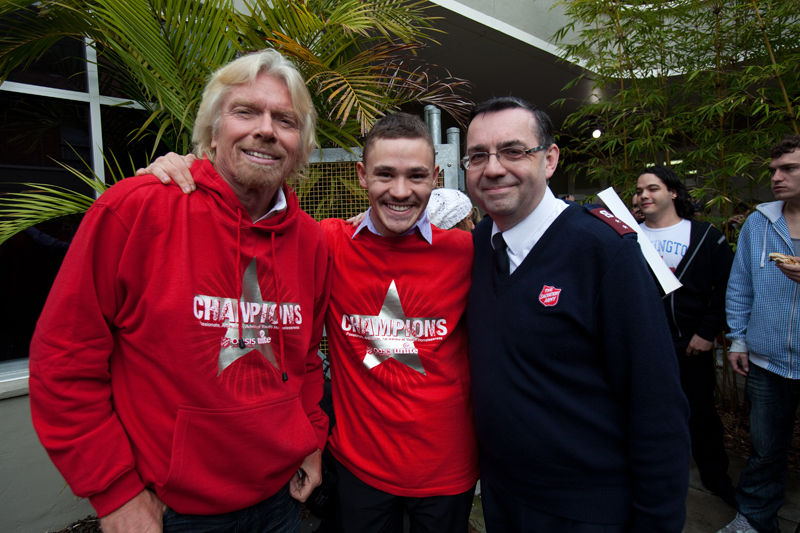
Sir Richard Branson, Damien, Captain Paul Moulds at Oasis in Sydney, Australia
. It got noticed as “celebrity” always does and one person remarked “hanging with the superstars”. I commented back saying that they were all “superstars”. Certainly, Captain Paul Moulds for the work that we devotes himself to with Oasis and reaching out to homeless youth in Australia and Sir Richard Branson for his generous support and making it possible.

But perhaps the biggest “superstar” is Damien, the young man in the middle who turned his life around from being on the streets with barely any hopes and dreams at all to having a job, a place to live and a bright future.

I was attending an event yesterday at Oasis where Branson was cutting the ribbon on the opening of a fitness center that his company Virgin had funded. But prior to the opening of the center, Branson and others listened to the stories of the “champions”, young people like Damien who against all odds, had redirected their lives to a better future. The stories were difficult to hear – stories about being abused – physically, sexually and emotionally. Stories about wanting to die and the attempts that they made on their lives because they felt unwanted and that they had no purpose.

I can’t even begin to really understand the horrors that these kids have faced in their young lives. I can’t even imagine how difficult it was for them to tell their stories, and yet they did so with grace, dignity and compassion for one another. They were there for each other and to show their gratitude to people like Paul Moulds and Richard Branson who make places like Oasis possible. One young man said – “without Oasis, I’d be dead”.

I will never forget that morning and it went far and beyond the thrill of meeting Sir Richard Branson and eating an egg sandwich that he had cooked on the grill. The most important thing I walked away from was being around a group of people with a like-minded purpose. A purpose of doing whatever they can to make a difference – a positive difference in the world. I could see, hear and feel the impact that Moulds and Branson had made in these young people’s lives. It was tangible and real – not just words on the pages of a foundation’s annual report.

As we wind up our time in Australia and head home for a few days break before heading down to South America, I am energized by something that Paul had mentioned during his interview. He was talking about an amazing documentary that was made about Oasis and the issues facing homeless youth in Australia. The documentary was two years in the making and gave an up close look into life on the street for these young people. Paul told me that after the documentary aired on Australian TV, the response and support that followed was astounding. It had made a real impact and prompted people into action – to help with donations or wanting to volunteer.

So I’m energized going forward that our little film will also create awareness and prompt others into action and what they can do to make a positive difference in the world. It’s a simple yet powerful thought and full of possibility – the power that’s within all of us to create change and make the world a better place for those that are less fortunate. The power of possibility – think about it.

Add to FacebookAdd to DiggAdd to Del.icio.usAdd to StumbleuponAdd to RedditAdd to BlinklistAdd to TwitterAdd to TechnoratiAdd to Yahoo BuzzAdd to Newsvine

True Convergence With the DSLR Cameras

I read today that mega publishing company Conde Nast “names a new president as company seeks new business model”. http://adage.com/mediaworks/article?article_id=145071

“The historical priorities that have served our company so well — great content, best-in-class magazines, key client relationships – remain the cornerstone of what we do, but we need to move beyond the magazine,” said Mr. Townsend, who remains CEO, in the statement.”

Wow – so one of the biggest publishing companies is realizing that electronic delivery and the internet isn’t an afterthought or an add on to their print pubs.  That would have been unheard of just 2 years ago, but with the proliferation of mobile devices, including the iphone, ipad and other “i” devices, we really are seeing a shift in the way we communicate.

Photographers should definitely take notice of this and understand that they need to think differently themselves. Imagery and workflow that worked in the print world just isn’t going to fly in the world of “i” devices. You need to think and see differently when creating for electronic devices that are capable of showcasing still images, video and sound.  And it’s no longer sufficient to just regurgitate still imagery for the web or pick up a hybrid camera and switch into live mode and shoot video that will adequately convey a message in motion.  It goes beyond the tool – it’s thinking, seeing and anticipating in motion.  After 11 years of shooting motion and over 30 years of shooting still images, my mind seamlessly makes the switch a hundred times a day between thinking and seeing in “moments in time” or “time in motion”. It’s a bit analogous to being fluent in a foreign language when you find yourself thinking in the language rather than needing to do the translations anymore in your head.

Many still shooters who are just beginning to shoot video are so consumed with the technical aspects of the tool, they forget that they need to think and shoot differently when shooting video.  I see a lot of people moving the camera, rather than letting movement take place in front of the camera.  And I see a lot of independent clips shot and then put together in a video timeline, but with no connection to one another or unity in a sequence.  Basically, a slide show of video clips – but not a story sequence.

It takes time to get to the point where you think in motion, especially if you’ve been a still shooter for many years.  My instincts are now that I know when to pick up the right tool – a video camera or a still camera, rather than choose the tool without meaning to the subject that I will be shooting.  I choose the tool that will best communicate the message.

The best advice I can give to still shooters who want to move into video is for them to stop compartmentalizing the two mediums.  Don’t define yourself as a videographer or a still shooter that does sports or weddings or commercial work.  As print gives way to electronic delivery, our clients need to communicate in a different way and we need to be creative in delivering their message and choose the best tool that will do that.  If we can think like that then there is true convergence – not only with our tools but the way we think.

It’s no wonder that publishing houses are hiring shooters with skills entrenched in both mediums.  They need creative’s who think differently – not just in moments in time or time in motion, but a true blend that only a hybrid shooter can deliver.  That’s my best advice that I can offer to people just starting out as photographers or videographers – don’t separate the two – become a hybrid and learn to communicate creatively with the right tool at the right time.

Add to FacebookAdd to DiggAdd to Del.icio.usAdd to StumbleuponAdd to RedditAdd to BlinklistAdd to TwitterAdd to TechnoratiAdd to Yahoo BuzzAdd to Newsvine