Being Yourself

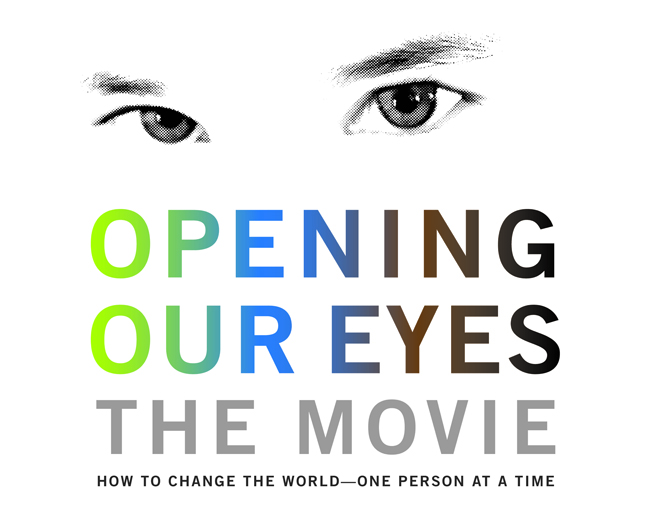
Yesterday, I gave a talk and showed a bit of my film, Opening Our Eyes,
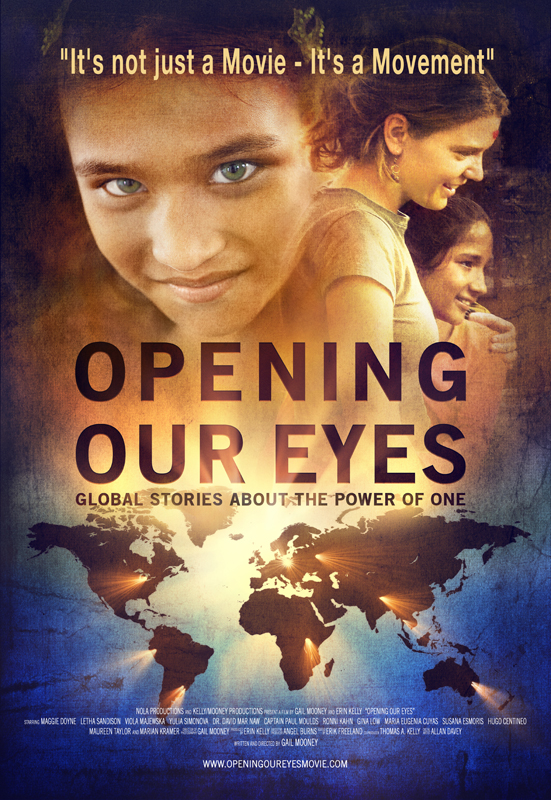
Movie poster for Opening Our Eyes

at the PACA conference in New York City.  I had been asked by ASPP to speak about the making of the film and my plans for distribution.  To tell you the truth, even though I’m always thrilled to show and/or talk about the film, I was a bit nervous with this crowd.  PACA stands for the Picture Archive Council of America and its member include some of the biggest stock photo agencies in the world, including Getty, Corbis, Masterfile and Alamy. I was nervous because part of my message was that I no longer needed the validation or others to get my stories to market.

I thought my message would be somewhat threatening, because I was telling the audience that content creators no longer needed the traditional gatekeepers of the past, to get their stories “out there.”  That because of technology, it was possible for the individual to have a global reach and if one is willing to do the work – the prize is all theirs – meaning the monetary rewards.

I had a tough time slot to speak – right after lunch  –  I knew that I would be dimming the lights for the film and that is never a good thing to do in that time slot.  But, Tom Kennedy had given his very inspirational talk about new media and new opportunities in the  marketplace.  I had heard Tom’s talk  as part of ASMP’s SB 3 series this past year – and I knew that my presentation was a great follow up to his – and in fact it was almost like a case study example of what Tom was talking about.

My presentation went amazingly well and as I looked out into the dimly lit audience as the film was playing – I couldn’t see any closed eyes.  I felt that I made a connection, and that perhaps in some small way, I had made a difference.  Maybe, I just got people thinking about what they could do to make a difference in their own lives.  And maybe I had influence beyond that.  But, I know that I stayed true to myself.  My intent was not to come off as threatening  – but I did want to make people feel a tiny bit uncomfortable.  It’s when we get uncomfortable that we push ourselves to a better place.

My message was simple.  Someone doesn’t need to lose – in order for someone else to win.

Add to FacebookAdd to DiggAdd to Del.icio.usAdd to StumbleuponAdd to RedditAdd to BlinklistAdd to TwitterAdd to TechnoratiAdd to Yahoo BuzzAdd to Newsvine

Happy Birthday John and Jackson and Goodbye Steve

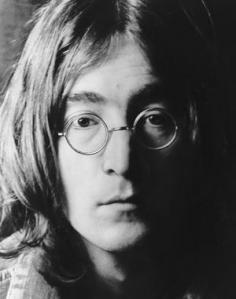
Today John Lennon would have turned 71 years old, had his life not been snuffed out by a man with a gun in New York City over 30 years ago.  John was always someone I revered – in the beginning as a heartthrob – later as an activist for peace and for living his life the way he wanted to live it  – despite what others thought.

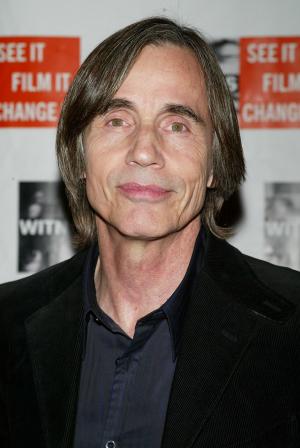
Today is also singer/songwriter Jackson Browne’s birthday.  His music and lyrics have resonated with me since I first became acquainted with his songs back in the early 70’s when I was living out in California. I’ve been in and out of touch with his music over the years, but recently I’ve been influenced by his songs as well as his social activism. Jackson uses his craft to create awareness, gets people to think and moves  people to action.

Jackson Browne

A line from his song “Alive in the World” inspired the title of my documentary Opening Our Eyes, and I have been extremely fortunate to obtain his permission to use his song in our movie for community screenings and film festivals.  Next week, I will get the opportunity to personally thank Jackson when I get to meet him after his concert at the Wellmont Theater in Montclair, NJ.

Last week we lost one of the “great ones” – Steve Jobs. 

Steve Jobs

I’ve always admired Jobs for his vision and for what he brought into all of our lives.  But mostly I admire Jobs for remembering to “Stay hungry and foolish”. And for reminding us to march to our own tune.  He sums it up more eloquently than I in his 2005 Stanford University commencement speech:

“Your time is limited, so don’t waste it living someone else’s life. Don’t be trapped by dogma — which is living with the results of other people’s thinking. Don’t let the noise of others’ opinions drown out your own inner voice. And most important, have the courage to follow your heart and intuition. They somehow already know what you truly want to become. Everything else is secondary.”

I admire these three men for  listening to their hearts and for following their dreams – for daring to be different. They have made our world a better place and have inspired me to do the same.  I don’t know how much more time I have on this earth, but I do know that I wake up each day and remind myself to make it count.

Add to FacebookAdd to DiggAdd to Del.icio.usAdd to StumbleuponAdd to RedditAdd to BlinklistAdd to TwitterAdd to TechnoratiAdd to Yahoo BuzzAdd to Newsvine

New Opportunities for Photography

For this post, I’m going to use a very broad definition for “photography”.  I will define photography as any image still or motion shot by any camera – still camera, video camera, hybrid or even and iPhone.

The business of photography has changed with technology. To start with it demands more than just “still captures” in terms of content. These days, our clients are asking us to create stills and motion content and sometimes even 3D.  On top of that technology has made it possible for almost anyone to take a reasonably good picture or video.

So where does that leave us as far as new opportunities in the business of photography? While some look in their rear view mirror and lament the passing of the good old days, I for one have my eye on the possibilities that are open to anyone willing to do the work.

My top 5 pick of opportunities out there:

  • Once Magazine – An online photo magazine made for the iPad. Photographs and video look great on the iPad and Once, magazine shares subscription revenue 50/50 with each issue’s contributors. You no longer need an assignment to shoot those long run stories you love and monetize them.
  • Crowdfunding – With Kickstarter, RocketHub
  • DistributionFilm DIYDistribber
  • Funding and marketing  – Sokap
  • PR and Marketing ToolsTopspin Media
  • Portal for e-commerce (also integrated websites) – Photoshelter

That’s a start.  It’s never before been more possible than it is now to create, promote, market and monetize your “photography.”  Be smart.  Be authentic. Be courteous. Have a plan and be prepared to do the work.  Anything is possible. Validation for your project is no longer necessary.

If you appreciate what I have shared – here’s one last link, a shameless plug to our funding campaign on IndieGoGo for our film, Opening Our Eyes.  If you can, please contribute. If not, please pass along the link.

Marian Kramer, one of our subjects in the film says:
 “We all just have to shine each other up.”

Add to FacebookAdd to DiggAdd to Del.icio.usAdd to StumbleuponAdd to RedditAdd to BlinklistAdd to TwitterAdd to TechnoratiAdd to Yahoo BuzzAdd to Newsvine

Resources, Sharing and Good Karma

I love the time we are living in.  If there is anything I want to find out about – and I do mean anything – and I can get “connected” online – I have access to a universe of information. For someone like me who always has a hundred questions running through my mind – it’s like the “time of Aquarius” – only better.

This morning I was poking around ASMP’s CameraCake, a cool new social bookmarking site.  It’s kind of like getting references to all sorts of interesting people, ideas and services from your colleagues. I posted a link to a great new online magazine that I had heard about from friend, David Sanger on Facebook.

So, now that information and link to Once Magazine will be shared with a lot more photographers and motion shooters than if it just appeared on my blog.  Why all this sharing?  I don’t know, but I do know that when you give, you get more in return and on many levels.

I spent two years, giving seminars for ASMP about transitioning to video.  In those two years, I got a lot of emails with questions from photographers as they added motion to their businesses and I  hope I answered each and everyone.  I’ve also shared a lot of info about video on this blog . That’s why I started it and titled it “Journeys of a Hybrid”, almost 3 years ago – it was a journey for all of us. I’ve recently started offering seminars in The Business of Video, because I see there is a hole to fill. There’s plenty of  “HDSLR” workshops out there, but rarely do any provide practical business models and/or guidance that speaks to the new media opportunities that are opening up in the hybrid area.

Giving seminars doesn’t provide me a living but it does help me in a business sense because by providing knowledge to my competition and people just starting out, I am helping all of us to sustain a decent living, working in a creative trade.

I also like to share because it makes me feel good.  I’ll be speaking at the PACA conference on Oct. 22nd, in New York.  ASPP asked me to talk about my film, Opening Our Eyes in a seminar entitled “Passion to Profitable Distribution”.  I’m delighted to do that because there’s nothing I like doing more than talking about what we as creatives are capable of doing and the global reach we have as individuals.  It’s an empowering time.

I’ll close with one small request and that is to share this link to our recently launched
campaign for Opening Our Eyes on IndieGoGo. The film is finished and is already making a difference, but we need to give it a push in order to “get it out there” and to be seen.

As Marian Kramer, one of our subjects said “We just have to shine each other up.”

Add to FacebookAdd to DiggAdd to Del.icio.usAdd to StumbleuponAdd to RedditAdd to BlinklistAdd to TwitterAdd to TechnoratiAdd to Yahoo BuzzAdd to Newsvine

The Eyes of Our Times

I was looking through my emails and social media posts and I saw something on my Facebook feed that Daymon J. Hartley posted. It was a link to a lightbox of 9/11 images on Time Magazine’s website. It was a collection of images that had run in a variety of magazines and newspapers in the days that followed that tragic event. Along with the images ran comments from the picture editors, why they had chosen that particular image.

As I looked through the images, I was overcome with emotion and moved right back to a very deep place within, remembering the pain, the fear and disbelief of what happened that day. This time I looked at the images online. Ten years ago I first saw these photographs in print publications. Regardless of how I saw these images, in print or electronically – the effect was still the same.

It reminded me of how powerful our photographs and videos are. We are the eyes of our times, the ones to document history. We not only record history in imagery, sound and motion, but we have the power to create the future. History has been rewritten by imagery. Take the Civil Rights Movement in the 1960’s in America. Photographs created awareness of what was happening in the South and put the eyes of the world upon us. That forced change.

As photojournalists and video journalists and non-professionals as well, we need to realize the power of what we do and the influence it can make. It’s a responsibility I take seriously. I feel that it’s not just my duty to document history as it unfolds, but it’s my right to do so as well. These days those rights are being questioned in some places. We need to be diligent in keeping those rights in America. Isn’t that what makes our country different?

As we race towards a destination unknown with technology quickening the pace – let’s be mindful who is controlling the portals of the future – so that future generations can learn from the past.

Add to FacebookAdd to DiggAdd to Del.icio.usAdd to StumbleuponAdd to RedditAdd to BlinklistAdd to TwitterAdd to TechnoratiAdd to Yahoo BuzzAdd to Newsvine

Google,Licensing,Copyright – and Free

I got this email the other day. A couple of weeks ago, Tom my partner got a cease and desist from Getty and an invoice for uploading his own images on the ASMP NJ Chapter website because the Picscout robots had picked them up, which is now owned by Getty.

The business of photography has changed because of the Internet in terms of value, licensing, awareness of copyright and all of the above.

I have posted the letter below for discussion and open dialog- please no rants or whining allowed.

Dear Ms Mooney,

I’m not sure if I am contacting the right person, however I am small custom home builder on the Jersey shore in Xxxxx near Atlantic City.  My wife downloaded a picture of a South Jersey beach scene from Google about a year ago and put it on my web site.  She unknowingly downloaded a picture that was copyright protected.  Today, July 15, we received a letter from xxxxxx a company that protects your work and they informed us that we used your picture and wanted 3000.00 to rectify the situation or buy the licence for 1020.00 we settled for the 1020 and took your picture down.

This picture was not a glamorized picture of a beach.  Just a dune and a dune grass fence.  A picture that could have been taken by anyone in South Jersey.  I just wanted to let you know that if this is your picture, it is dispicable that common, decent and hardworking people who have a small struggling business should be subjected to such a ridiculous fine.  The fact that we cannot google and download a beach
scene without worrying that someone OWNS it is outrageous.
Imagine that!  People own pictures of nature!

If this is not you, then my sincere apology, otherwise I think you should be ashamed of yourself and need to contact Google for having your picture available to millions of people.

Regards,

xxxxxxx

Add to FacebookAdd to DiggAdd to Del.icio.usAdd to StumbleuponAdd to RedditAdd to BlinklistAdd to TwitterAdd to TechnoratiAdd to Yahoo BuzzAdd to Newsvine

Ten Things I Learned While Making a Movie With a DSLR

1. It will take twice as long as you think. This is especially true if you have a limited budget. With a limited budget comes a smaller crew and therefore you need to do a lot more of the work yourself – if you can.
2. It will take more money than you think. Everything adds up. There are a lot of costs in post-production – licensing music is a big one and a feature film needs lots of music – and having the sound professionally mixed, makes all the difference and is well worth the money – so anticipate that cost.
3. If you need to transcode files for your editing application – then make that the first thing you do. In fact, I used the Log and Transfer plug-in on Final Cut Pro to do a pre-edit on all my clips as well as add  metadata to the files.
4. Hire a professional editor. Smartest thing I did. I raised funds on Kickstarter so that I could hire a pro. I know how to edit – or at least I thought I did – till I worked with a professional editor. My editor crafted the story and cut it like a musical composition with beautiful timing and rhythm.
5. You will need twice the memory or drives than you thought you would. Even, when working with a professional editor – in fact because I was collaborating with an editor, we had duplicate projects and media on 3 – 2 terabyte drives each!
6. Stay focused on the story. Don’t even go into the editing room without a clear idea of what story you want to tell.
7. Define your target audience. Iit’s important, especially in terms of how you want to craft the story and the rhythm of the piece.
8. Plan ahead as far as screenings or putting content online. Many film festivals have strict guidelines about previous screenings, premiers etc. I wanted to show my film on a big screen, but I couldn’t have it open to the public or charge money, so I opted to have an “invitation only” event and called it a “sneak preview”. Test screenings are done all the time with studios. It gives you a chance to get feedback.
9. Utilize social media. Have a website for the film and a fan page on Facebook.
10. Don’t try to be what you’re not. And don’t try to be all things to all people in your film. Stay true to your vision. Push yourself to try new things. Go with your gut.

Add to FacebookAdd to DiggAdd to Del.icio.usAdd to StumbleuponAdd to RedditAdd to BlinklistAdd to TwitterAdd to TechnoratiAdd to Yahoo BuzzAdd to Newsvine

s

The Making of a Movie with a DSLR

It’s been a wild ride since I first began this journey of making a feature film with a DSLR camera – in my case, the Canon Eos 5D Mark II. I had already completed three short documentaries to date – all made with traditional video cameras from my first Canon XL-1 to my current HD Sony EX-1. But this time I was heading out on a 99-day journey around the globe, with my 23 year old daughter in search of ordinary people on six continents, who were making a difference in the world, and we had to pack light.

We were “the crew” – the two of us. We had to work efficiently and with gear that would fit into two backpacks and would endure the adventure as we traveled to 17 different countries on 30 flights. I also wanted to shoot both still images and motion, so I opted for the DSLR solution. Of course, I was enchanted by the “big chip” and the cinematic look of these cameras, but I was also thinking of my gear in practical terms – how I was traveling – how I would be shooting – and of course the desired outcome.

You can read more about the gear I took here.

So with my daughter “running sound”, doing the interviews with our subjects, shooting still images, and navigating us through the subway systems in Moscow and Buenos Aires, and me taking care of all the logistics and  shooting both video and stills, we came back 99 days later with almost 3000 gigabytes of content – that’s approx. 150 hours of footage and 5000 still image captures!

I wasn’t mentally prepared for what came next and that was 2 intensive months on my part ingesting all the content into my editing system, transcoding and adding metadata to the files and culling through hours of interview soundbites until I had cut it down to three . It was grueling and my winter months were spent putting in 14 hour days – 7 days a week. I was overwhelmed, yet somehow driven by some force.  It was a lot of work, it was tedious and it was daunting – but yet it was my passion and somehow this inexplicable “force” got me through it.

I raised money along the way through crowd funding on Kickstarter and with that, I hired an editor. After I handed the project off to my editor, Erik Freeland of Springhouse Films, there was a huge sigh of relief on my part. I knew the post production had a long way to go but, I also knew that I had to let it go for a while and step back. Working with Erik has been amazing in itself and he has brought enormous value to this project and film. I have learned a lot from his insights and his talents in knowing how to” tell a story”, and we are finally coming to the completion of this film. Or at least in getting the “first cut” done for a sneak preview on July 17th, at the State Theater in Traverse City, Michigan. The screening is by invitation only and if you would like to attend, just drop me an email at gail@openingoureyes.net and tell me how many people would like to attend.

Since I first dreamed up this project in the final days of 2009, to the departure of our trip in the Spring of 2010, to where we are now, it has been a continual journey on every level imaginable. And I have had many angels working on my behalf – my husband Tom Kelly who has been the “wind beneath my wings” and without his support none of this would have been possible, my extended family who have been amused over the years with my schemes and dreams, my dear friends Angel Burns and Ally Raye who have believed in me and this project and have made incredibly exciting things happen for this film. (I’m not quite ready to divulge some of those exciting things publicly, just yet), Maria Grillo and Jason Harvey at The Grillo Group who have been so giving with their time and talents and created all the graphic design for the film’s release, and so many other “angels” who have helped me with foreign translations, been financial backers, helped me spread the word globally, and every person who was there for me when I needed support and encouragement. I am deeply grateful to have all these people in my life.

We live in an empowering time. When I began my career as a still photographer, over 30 years ago, I never would have imagined doing any of this. In fact just two years ago, none of this would have been possible. Our dreams are as big as we want them to be. I have seen this dream clearly from the start and each day I get closer and closer to seeing it become a reality.

Watch the Trailer

Add to FacebookAdd to DiggAdd to Del.icio.usAdd to StumbleuponAdd to RedditAdd to BlinklistAdd to TwitterAdd to TechnoratiAdd to Yahoo BuzzAdd to Newsvine

A Year Ago Today – The Beginning of Our Documentary and the DSLR

It was exactly a year ago today that I left with my daughter on a 99-day journey around the world to create a documentary about people on six continents who were making a difference in the world. I was not new to video or documentaries, having shot motion for over twelve years and completing three short films.  But this was big – not in the sense of “big production” or “big crew” or certainly not “big budget” – it wasn’t any of those things but it was indeed BIG.

I had no idea how big it turned out to be.  The trip in itself was almost the easy part, although don’t get me wrong – it was arduous on every level.  What was overwhelming was taking the project from idea to completion.  Had I known how overwhelming it has been at times, I may have reconsidered – or at the very least had a bigger crew.

The crew was my daughter and myself.  I shot video. She shot stills.  She interviewed the subjects and ran sound.  I operated the camera and shot B-Roll.  She research, scheduled and pre-interviewed the subjects and I worked on all the logistics – travel, travel needs and gear.  I thought about gear long and hard and decided to go with the hybrid cameras, in my case the Canon 5D Mark II and the Canon 7D.  I wanted to capture both stills and video, but I didn’t want to bring two separate camera systems, so I chose the hybrids. I have written a lot about the gear but the all time most popular post I wrote was about my gear for this 99-day journey.

We returned in September with over 150 hours of footage and over 5000 still images.  Wow!  Talk about overwhelming. I spent 2 solid months of my winter getting the footage into a manageable rough timeline – or at least the sound bites. I handed it off to my editor Erik Freeland of Springhouse Films and he hopes to get me his rough cut this weekend.  I’ve had many conversations with Erik over the past month or so about the story(s) and the arc of the film and he truly understands how to tell a story.  I am extremely grateful that I was able to hire a professional editor and it never would have been possible, without my successful run with Kickstarter.

I have been working a lot in the back scenes with distribution options and I am thrilled with what I am finding.  This is the time for “the documentary”.  It’s possible with small budgets and crews to make a powerful film that can be seen in hundreds of various venues well past the big screen movie houses and film festivals.  It’s an amazing time for “the individual” and what can be accomplished because of technology. That’s another blog for another time though.

I’m headed to California this afternoon to speak at Cal Poly tomorrow evening. Join me if you’re in the area.  For old time’s sake, I took my Eagle Creek bag  – which I had circumvented the globe with.  It seemed like the right thing to do.

Add to FacebookAdd to DiggAdd to Del.icio.usAdd to StumbleuponAdd to RedditAdd to BlinklistAdd to TwitterAdd to TechnoratiAdd to Yahoo BuzzAdd to Newsvine

The “Real” Cost of Shooting Video With the DSLR

There was an interesting thread on  ASMP’s video listservlast week. It started when a still photographer asked if a particular

My DSLR Gear

DSLR camera would help him get into the game  – of video.

Jan Allklier, a Seattle based photographer, shooting both stills and motion summed it up:

“If you simply want to ‘explore the medium’ a hybrid DSLR may well be the right ROI, although it really will only give you a flavor for moving images, not the workflow of professional moving image production, which encompasses a wide range all the way from feature film, to corporate work, to webisodes for small business; and many tools and skills well beyond the image capture device at hand.”

Kevin Kamin, Minneapolis based shooter, reminds us that it’s not just about the camera (or tool), but about the story:

“I understand why some photographers are looking to expand into video, it’s definitely doable, but I believe there is a tremendous underestimation of what  is required to do so. I feel like video is being perceived as simply moving photographs-95% of the videos I’ve seen on commercial photographer’s website are not at a professional level (most feel like overly long, clunky, rough cuts that lack sophistication and a clarity of message). They say that ‘people who are good with a hammer tend to think everything is a nail’ So along that idea, many 
of the videos feel like videos made by photographers, who haven’t fully grasped the spirit of the medium. People can enjoy a still photograph for a minute or 
two, if it is compelling and engaging, but if you have three seconds of video footage that doesn’t move the story or lingers 15 frames too long, you just lost your viewer no matter how pretty it looks. Photography functions differently 
within time based media. 
 Storytelling is the core of video. “

And Chuck Fadely, of the Miami Herald, connects the dots for us, first by passing along a link to Shane Hurlbut Visuals blog that lists the “standard” movie making rental gear for DSLR video. More importantly, Chuck  reminds us that shooting motion is a skill set.  It’s a different way of seeing and shooting.

“The hardest thing about video for a still photographer is learning to shoot in a totally different way. You’ve got to learn to shoot in sequences, with transitions. It takes years to overcome the habits you’ve built up as a still photog — like reframing, adjusting exposure, following action — which are death in video. 

I was a news and feature photog with several decades of experience, with extensive lighting skills, good technical ability, and a knack for learning new stuff. I switched over to video full time and it was shocking how little transferred over. Video is a different beast.”

This was one of the easiest blog posts that I’ve ever written and maybe the most beneficial for readers.  It brings up another important point and that is how much we can learn from each other.  When I started shooting motion back in the mid ‘90’s – there really weren’t any listservs or social media forums where my peers were so forthcoming with information.

When people ask me why I’m so giving and sharing with my knowledge, I always tell them that I get back so much more than I give. What a great time to be alive.

Add to FacebookAdd to DiggAdd to Del.icio.usAdd to StumbleuponAdd to RedditAdd to BlinklistAdd to TwitterAdd to TechnoratiAdd to Yahoo BuzzAdd to Newsvine