What Does a Photographer Look Like?

When I started out as a commercial photographer more than three decades ago, it was a very different profession than it is today. It wasn’t just different in terms of technology – it was different culturally. When I went out into the workforce in 1977, it was definitely a man’s profession.

I never really thought of myself as a female photographer, just – a photographer. I didn’t think the additional gender adjective needed to be part of the conversation – yet it was at that time. Sometimes it surfaced in social settings. One time, an art director who I worked for, introduced me to a very famous photographer who shook my hand and said, “You don’t look like a photographer!” And I thought to myself, “what does a photographer look like?”

It was worse when the gender bias surfaced in the workplace. I’m not sure if having a male business partner made the situation better or worse. I do know that the assumption was always that my partner Tom Kelly, was the photographer and that I was either his rep or his assistant. That assumption negated itself during a pre-production meeting or on the job, but I needed to make my presence known.

Things have changed…….slowly, over the years in the photography profession. There are far more women in the industry now than when I first started. It’s certainly not the exclusive male dominated industry that it used to be, but there are plenty of professions that still are – the movie industry is a perfect example. There are plenty of other examples of gender bias in the workforce, which is what motivated my project, Like A Woman.

Like a Woman is a series of environmental still portraits and short films about women working in male dominated professions. The idea was first inspired by Lauren Greenfield’s Like A Girl campaign. I loved the campaign and even though I felt hopeful that younger girls are growing up a bit more empowered than girls of my generation, that statement “Like a Girl” still lingers as a demeaning remark. I wanted to flip the narrative and make the statement, Like A Woman an empowering expression said with pride.

To date, I’ve interviewed 5 women from all different professions – architecture, engineering, auto mechanics, organic farming and industrial photography.
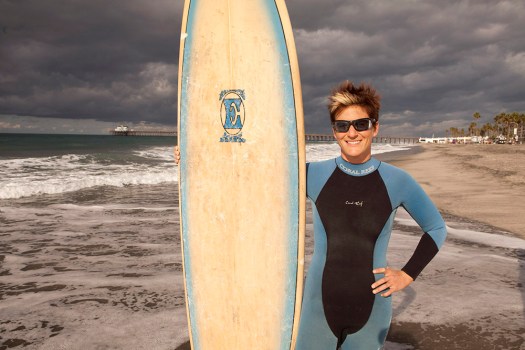
Jenna Close, Oceanside, CA
Jenna Close with surfboard, Oceanside, CA

I’ve just completed one on industrial photographer, Jenna Close. You can see it on the Like a Woman Vimeo Channel. Jenna demonstrates that women have come a long way in terms of having successful careers in photography, but she reminds me that there are still undertones of subtle gender bias. Things are changing, but until the gender adjectives disappear entirely from the conversation, we need to stay mindful and not drift into complacency.

If you know a woman working in a male dominated profession, who you think would make a great subject for Like A Woman, please contact me. mailto:gail@kellymooney.com
How to be Productive in a World Full of Distractions

I’m an organized person. I need to be organized otherwise I feel that my life is in chaos. Scraps of paperI’ve always been able to define an end goal and break down the tasks that need to be completed in order to attain that goal. I am able to prioritize tasks and assign deadline dates. I’ve always been pretty good at getting things done. I have to be – I’m an independent entrepreneur.

My business is visual communications. I create storytelling images and films for corporations and non-profits. I market myself to buyers who commission still photography and video production for that market. These buyers work for ad agencies, in-house corporate agencies, non-profits or publishing companies.

My business has changed dramatically since I opened shop over 3 decades ago. The possibilities and tools that are available to small independent entrepreneurs to use in their marketing strategies are endless. The problem is the vast amounts of opportunities ends up being a double-edged sword because it overwhelms most of us. There are endless ways to target a global audience through, social media channels, electronic ads, online portals/websites/blogs, emailer promotions, print promotions, print and online directories……….the list goes on and on.

It simply becomes overwhelming and seemingly impossible at times, for me to address all the needs of a small business, to keep our business afloat. What I’ve found is that it’s never been more important than it is now in our tech driven culture, to be organized and focused and not succumb to distractions.

Here are some tools that help:

Basecamp – essential management tool if you’re collaborating with others.

Wunderlist – organize your personal/business life. Notes, notifications, reminders, due dates and share lists with colleagues and family. Free

Post Planner – If you or your company engages their audience on Facebook, this app saves you time and boosts engagement. Schedules your posts – finds content.

Sweet Process – Do you feel like you have to learn all over again, every time you do the same things? It could be a workflow for creating emailers for example. This app systemizes and records your process. Essential in employee transitions.

Magical Pad – Organize – be more productive – get things done. Projects, Tasks, Brainstorming.

StayFocusd – Are you super distractible and find yourself spending hours on social media and not getting anything done? Perhaps you should install this app if you are a Chrome user. It will limit the amount of time that you can spend on time-wasting websites.

What’s Next for Still Photography? Things We Could Never Begin to Imagine.

Journeys of a Hybrid

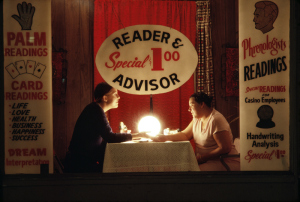
One of the only good things about getting older is that I have gained a lot of perspective. Fortune teller through window, Atlantic City, NJ I never speculate what the future will hold by limiting it to what’s possible now because…..

When I began studying photography at Brooks Institute in the early 1970’s

I never would have imagined:

  • That I would own a personal computer that would change the way I communicated with people and ran my business.
  • There would be the Internet, email and mobile phones.
  • There would be auto-focus cameras and lenses.
  • Cameras would be fully automated – if you so choose to use them that way. When I began my career as a photographer, I needed to be a technician, and that meant understanding aperture and shutter speed and a lot of other things that went into making a still image.
  • I would be shooting still images without film.
  • I wouldn’t be limited to…

View original post 398 more words

10 Mistakes Photographers Make When Shooting Motion

1.  They forget about the story – it’s not your camera that tells the story – it’s the person using the camera. Pretty visuals, slapped into a motion timeline with music, doesn’t necessarily tell a story.  Video is a story telling medium – don’t forget that.

2.  They think they already know how to shoot – if you think because you are a professional photographer and all you need to do is get a camera with a “video mode” on it, you are mistaken. Shooting in motion is far different than shooting still images. An experienced motion shooter can spot a video shot by a still photographer with little know how, right away.

3.  Thinking audio isn’t important – audio is more important than the visual when producing video.  Hire a sound person to do it right, but don’t discount it.

4.  Thinking the DSLRcamera is all you need for video productions – this is a biggie.  How are you going to go after professional video jobs if this is the only tool in your kit?  Sure you can rent a RED – but make sure you are as proficient with this tool as your competition is before hanging out your “motion” shingle.

5.  Positioning themselves just as DP’s or Directors and thinking you’ll maintain ownership of your work. If you assume the role of a camera operator, DP or even a director – you will be in a work for hire position in most markets.  Position yourself as a producer – shoot if you want to – and direct – but realize that you’ll be just one rung on the “content ladder”.

6.  They don’t learn interview skills – this is what separates the pros from the still shooters who have DSLR cameras and think that’s all they need.  I’d say about  70% of my work includes on camera interviews.  Even though I ask the questions- I’m not on camera, my subject is.   I not only need to know how to ask the right questions and get great audio, but I need to produce a usable interview clip for an editor. That means knowing how to get great soundbites. This is one area I excel in – it’s all about rapport with your subject.

7.  They try to compete in “old business model” markets – Everyone wants to shoot broadcast spots and feature films (or short films) so they think that after shooting motion for only a few months – or even a year – they will be able to compete in the high end business of video production.  First, this market, like the still photography market,  has changed drastically, mostly marginalized by still photographers who are just starting to shoot motion,  shooting jobs for next to nothing because they have no understanding of this “business”.

8.  Learning the “how to’s” in terms of gear – but nothing about the business – this is also a biggie.  There are so many “how to shoot motion” workshops and roadshows out there but no one seems to be teaching the business end of things.  Still photographers think they already know “the business” but quickly realize that they don’t, and they put themselves out of business in this medium – before they’ve barely started.

9.  Teaching “how to” workshops in video with little or no experience – I can’t tell you how many photographers have called me for technical advice about some pretty basic stuff in terms of video,  and four months later they are teaching workshops. Please don’t become part of the problem and send more shooters out into this field without teaching them something about business. And if you are considering taking a workshop – do your homework and take the workshop from someone who is accomplished in this field and has done something.

10. They forget about the story – I know that’s #1 but it needs reinforcing.


Working from Home- Avoiding the Pitfalls

A lot of my photographer friends have closed their studios, due to a lousy economy and changes with the type of work they do. They’ve set up offices in their home, and some have faired better than others. GailMaggieI think it’s kind of a “hunter/gatherer” type thing where some people feel the need to head off to a “place of work” and if they don’t have that – they feel less “legitimate”.


This winter one of my friends was having a particularly tough time making this transition and he was ready to pack it all in and get a “real” job. He called me because he knew that I’ve always worked from home, and he wanted to know how I dealt with it and stayed productive. We had a long and very honest conversation and he thanked me. I saw him at a party recently and he came up to me, thanked me again and told me things were looking up for him. Quite honestly, I had forgotten the conversation but he reminded me of some things I said to him and suggested that I blog about it. So here goes.


Some tips to do and some things to avoid:

  • Start off by calling it your “home office” – not “working from home”. Somehow it’s different psychologically.
  • Be prepared for well meaning family and friends to encourage you to get a “real job”. This happens a lot with people who have creative careers. It’s hard, but you need to explain to your loved ones that what you do IS a real job. Just because you’ve had to lower your overhead and work from a home office, doesn’t mean that you’ve failed. It does mean that you’ve had to make adjustments just like a lot of others have had to do these days to make ends meet.
  • Avoid falling into the trap of taking care of personal tasks during your business hours. My friend found himself spending a lot of time on errands that his spouse asked him to do – “since he was home”. That’s fine once in awhile, but if you find yourself spending half your day doing personal stuff – you are sabotaging yourself and your business. And personal stuff includes putting together Aunt Ann’s birthday bash photos in a fun presentation for all to see. Sure do that – but not during business hours because this is not your hobby – it’s your business.
  • Don’t get overly complacent as soon as you get rid of the expense of your studio. I’ve seen this happen a lot. The pressure to make that overhead is gone so you let your guard down and along with that your clients start to disappear. But it’s because you’ve disappeared – you’re not marketing yourself anymore – and you’re off your clients’ radar.
    • • Have a routine just like you would if you walked out the door to go to work.
    • • Get up at a set time and get dressed – sounds simple but it’s important
    • • Have set work hours
    • • Have a plan – just because you’re in your home doesn’t mean you shouldn’t have a business plan with action items.
    • • Avoid distractions – tough one. If you find yourself doing something that a “boss” wouldn’t approve of – then stop yourself. You’re the boss so stop cheating yourself.
  • Network and connect with your peers and colleagues. This is important, especially in a creative business. You need to have people you can bounce things off of. I have a couple of friends in my life that I’m really grateful for because I know I can share my vulnerabilities and ideas with them without being judged. Friends can do that for you because they don’t have anything personally at stake and can look at things with unbiased eyes. These connections are critical when working from home. These days it’s easy to connect with others. If you can’t do a face-to-face – you’ve got hundreds of other options with social media, listservs or just pick up the phone.
  •  Remember on your darkest days when it seems like it’s hopeless and you’re ready to pack it in and get one of those “real jobs” – don’t totally abandon your dream just yet – leave the door cracked open at least. Maybe get a part time job to start. It will take some of the pressure off and if photography or music or writing or whatever – is your passion – then you’ll quickly find out that a “real job” may not be what makes you happy. The cynics may say that you shouldn’t expect happiness with a job and that the expectation of a job should be to just pay your bills. Maybe so, but do you want to spend most of your life being miserable or counting down the hours to your next vacation? Many times that part time job gives you the push you need to re-invigorate your business because you’ve had a taste of the alternative.
  • Don’t burn your bridges. If you’ve had even the slightest bit of success in the past, following your passions but are in a slump – don’t be so quick to announce to the world that you’re moving on to another career – unless you are thoroughly convinced that you will never have any regrets making that decision. You get the best light from a burning bridge – but it’s usually too late by then. If there’s one thing I’ve learned the hard way – it’s not to burn bridges – because life has a way of making you regret it.


The Value of Photography – (a reminder)

I wrote this blog in the fall of October 2013, after the Chicago Sun Times fired its entire staff of photographers.  Yesterday, the Sun Times laid off its video staff.  I thought that it would be a good time to repost this blog,  about the value of what a professional photographer brings to photography and to our lives.

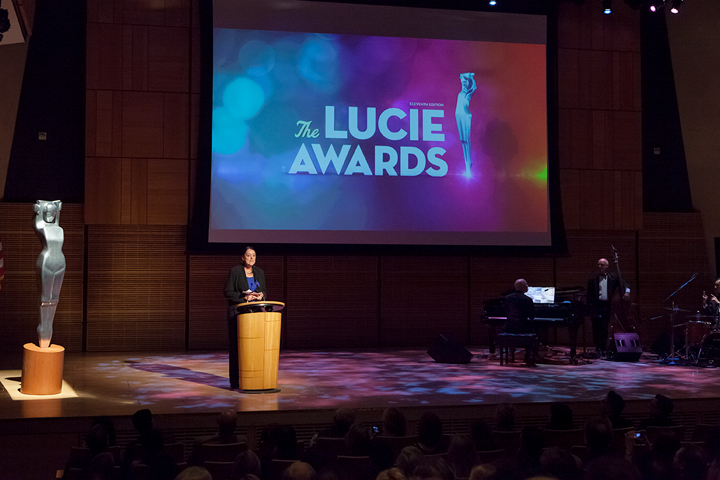
The who’s who of photography gathered last night, at Carnegie Hall to honor the “masters” of their trade at the Lucie Awards. The Lucies are like the Oscars of the “photographic industry”.

2013 Lucie Awards, Carnegie Hall ©Thomas Kelly
2013 Lucie Awards, Carnegie Hall
©Thomas Kelly

I had been asked to step in to present the “2013 Deeper Perspective Photographer of the Year Award”. on behalf of the ASMP when Executive Director, Gene Mopsik and President, Ed McDonald couldn’t attend.

I don’t usually get nervous about things like this, but I was last night. As I stood in the wings with photographer John H. White, who was waiting to go on stage to accept his Lucie, for Achievement in Photojournalism, I was mesmerized as I watched John.  He seemed to glow and I felt his grace, his humility and his gratitude.  It was a moment in my life that will stay with me forever.  It was calming. I watched and listened to his acceptance speech on the monitor backstage, and I was deeply touched.  So was the audience, as evidenced in their standing ovation.

John H. White is not a “rock star” type of photographer.  His images don’t “shock and awe”, not in the way a war photographer’s images do. John’s photographs capture the subtle moments of the human experience.  His legacy of images show us life as it really is.

This past spring, after 35 years with the Chicago Sun Times, John and the rest of the newspaper’s photographic staff were fired.  It was a huge blow to the photographic community, magnified by the fact that even John H. White, the “chairman” was “let go”, without even as much as a thank you. John wasn’t bitter about it though.  Michelle Agins wrote a wonderful article for the New York Times where she quoted John: “A job’s not a job because of labor law,” he said. “It’s just something you love. It’s something you do because it gives you a mission, a life, a purpose, and you do it for the service of others.”

All he had wanted to hear from the executives who let him go was two words that never came: thank you. But even then, he did not respond with anger.

John spoke more about the Sun Times’ firings in an interview with NPR where he said: “I will not curse the darkness. I will light candles. I will live by my three “F” words: faith, focus and flight. I’ll be faithful to life, my purpose in life, my assignment from life. Stay focused on what’s really important, what counts.” He repeated those three “F” words last night as he accepted his award.  The audience was humbled.  John had shed his light.

I have been thinking a lot lately, about the value of photography and the value that a professional brings to this craft.  John H. White and his archive of work is a stellar example.  His images, capturing the subtleties of life stand out amongst the noise.  They make us take notice of what is often over looked – the quieter moments of life.

As far as what a professional photographer brings to the world, I think John stated it best: “Every day, a baby is born. Every day, someone dies. Every single day. And we capture everything in between. You think of this thing called life and how it’s preserved. It’s preserved through vision, through photographs.”

As John walked off the stage and back into the wings, I felt enveloped by his glow that had seemed to magnify.  I caught his eye for a moment and said “thank you”. He nodded, and flashed his wonderful smile and in that moment, we connected and shared our understanding, of the “value” of photography.

Still Photographers and the New Media Landscape

I’ve been around long enough to know that nothing lasts forever. I’ve experienced the up and down cycles of business and life in general and can tell you that nothing ever stays the same. Having an understanding and acceptance of that gives me the freedom to look around corners for opportunities red cameraand think outside the confines of my box. What I’m seeing is a growing demand for mixed media storytelling content from communications and marketing people to fill a plethora of needs –social media campaigns, TV spots, online pre-roll ads, and print ads.

Last September while attending the Next Video Conference and Expo in Pasadena, CA a light bulb went off after seeing a presentation given by Max Kaiser, Founder/Director of Hand Crank Films called Make Content That Resonates and Multi-Purpose. It was eye opening. Max explained how he demonstrates to clients the value of creating content that not only resonates with an audience but can also be multi-purposed and fill their other visual needs – including provide still images from his frame grabs. He said because he shoots 6K – he is able to produce high quality still images.  I could see that still photographers aren’t just competing with other still photographers any more, they’re competing with guys like Max and small production companies that are providing solutions to all their visual needs.

There’s no reason still photographers can’t provide mixed media for their clients’ visual needs, but they need to scale the way they think about their business and their role and become more of a visual assets producer. Most photographers are producers anyway, so why not provide more services to a client and keep them in house – in your house.

I think sometimes it seems easier to give ourselves reasons not to do something but change is going to happen regardless if you embrace it or not.

Some things to keep in mind:

Video is not a business model – It’s a medium and one that is well suited for storytelling.

There is a demand for mixed media. Video is not new. But these days it’s easier, faster and cheaper to distribute, stream and watch motion content online – anytime -anywhere. Our phones and other mobile devices are our “go to” platforms for news, shopping and even entertainment. Position your brand and business to fit with today’s communication needs.

Make content that resonates and multi-purpose it. Video + Stills + Sound = Storytelling messaging. Content should be well-planned, scripted with high production values and should feel authentic. Create from your own point of view and identify the niches and needs in the marketplace that fit with your vision and style. Demonstrate value to a client by providing solutions to more of their visual needs.


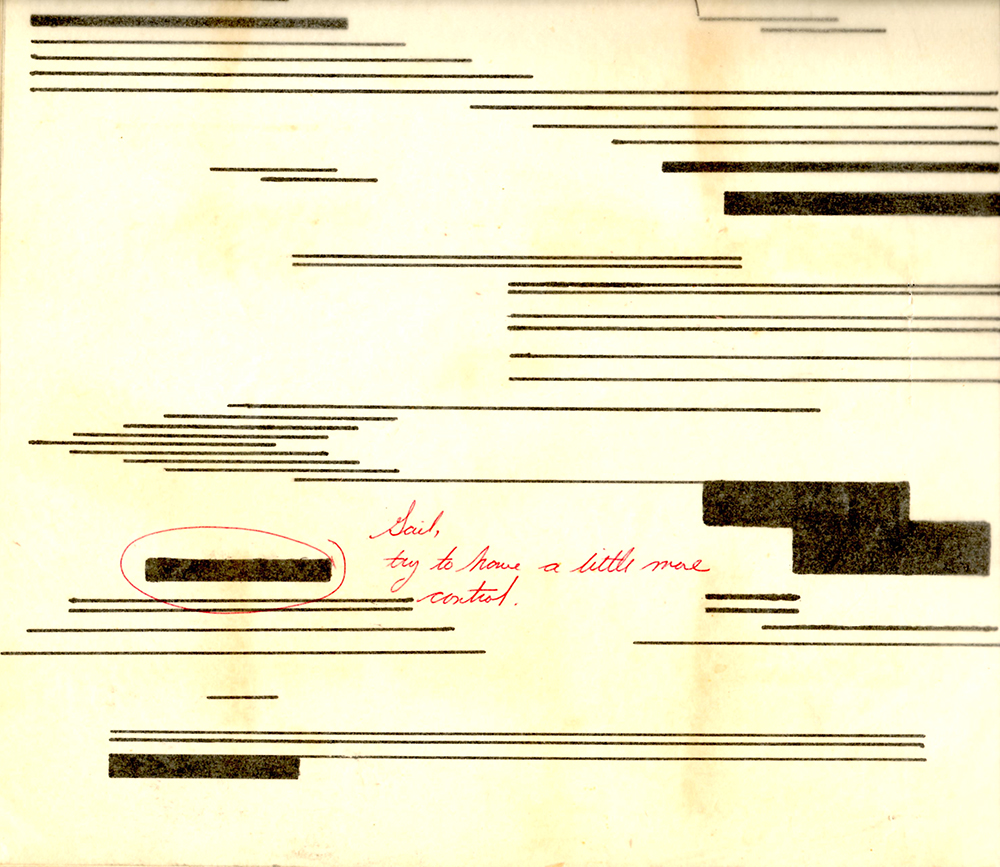
“Try to have a little more control”

I’ve been spending a lot of time lately purging – getting rid of a lot of stuff I don’t need any longer. I came across a portfolio of architectural drawings that I had made during my days as an architectural student at Syracuse University. Stuck inside the portfolio were graded copies of the drawings with remarks from the professor. The comments were consistent and repeatedly pointed out Gail's college architural renderingsmy lack of “control”.

“Try to have a little more control!”

“Without control of lines and line quality, solution is lost!”

Back then I used a rapidograph (technical pen) for rendering these drawings. Unlike a lot of my fellow architectural students, I had very little training in the way of art classes before coming to Syracuse and my skills as an artist were terrible. Drawing fine straight lines with a rapidograph was my downfall. The ink would blotch or would seep under the ruler or triangle that I was using and my drawing would usually end up being a big mess.

I think my lack of “control” as an artist ultimately turned me away from pursuing architecture as a career. Instead, I changed my path and pursued a career in photography. Today, architectural students use CAD for their drawings and I would imagine that perfecting one’s skill with a rapidograph is no longer a requirement.

I wonder if things would have been different as far as the path I chose, if I had the tools available to me, that we have today? It’s an interesting question to ponder, but ultimately I don’t think I was well suited for a career in architecture and it went beyond the fact that I had poor drafting skills. I was a “big picture” thinker and not focused on the details.

Fundamentally, I haven’t changed. I’m still a big picture thinker. I am able to clearly visualize, my creation or project as a “whole” and know usually know what I need to do to achieve that end, but in determination to finish, I sometimes overlook the details. I’ve trained myself over the years, to not be in such a rush to complete something, that I compromise the quality. I’ve also accepted the person I am – what I’m good at and what I’m not so good at and found that I’ve produced my most gratifying work in collaboration with others.

I will always be a big picture thinker – the bigger the idea and the more possibilities – the more I love it. I have learned to have more control, but I still love to color outside the lines and push the boundaries.

What Every Photographer Needs to Know About Video?

Video is not a business model – it’s a medium – a medium that is well suited for storytelling and that’s in vogue right now for branding. Consumers today want to know more about a brand before they “buy into” it. 2014 NAB ShowWhen choosing a company’s product or a service, they want to know more about the company. They want to know the company’s story. They also have a limited attention span and want to be entertained. Video is in high demand right now and if you can fulfill your clients video needs, it can be good for your business. It all depends on how you position yourself in the marketplace.

In September, I attended the Next Video Conference and Expo in Pasadena, CA. One session, Make Content That Resonates and Multi-Purpose, given by Max Kaiser, Founder/Director of Hand Crank Films, really opened my eyes, to not only seeing how still photographers should be positioning themselves in today’s marketplace, but what they need to know about their competition. Max up sells his clients by listening to their needs and creating visual solutions to get their message out in a variety of different ways. A client may come to him and ask for a proposal to create a web video for a company’s website. Max shows the client how they can multi-purpose the content he creates for them for; YouTube pre-roll ads, sales meeting videos, TV spots, emails, social media platforms AND still images pulled from frame grabs. Max explained that because he shoots 6K, he is able to fulfill more of a client’s needs as well as put more money in his pocket.

A still photographer’s competition is not only other still photographers, but video production companies that are fulfilling more of a client’s communication needs. If you’re a photographer working in certain genres or markets like editorial, corporate or fashion you will need to provide mixed media solutions. There’s no reason a still photographer can’t provide mixed media for their clients, but they need to scale-up their way of thinking about their business and the role they play and become more of a visual assets producer, as fellow member and colleague Jan Klier calls himself.

Some things to keep in mind:

Greater demand – for mixed, integrated media. Video is not new. What’s new is that it is easier, faster and cheaper to distribute, stream and watch motion content online – anytime – anywhere. We are using our phones more and more as our go to place for news, shopping and even entertainment. Keep that in mind when you position your business and how your brand and products that you create,  fit into today’s communication channels.

Create from your own point of view and identify “the market” – Find a need and fill it – in your style. Market yourself to potential clients by listening to what their needs are and telling them how you can help them. Many times a client has a hard time articulating what they need in creative terms. That’s your job, translating how you can help them sell their brand in a creative way.

Make content that resonates and multi-purpose it. Video + Stills + Sound = Story telling messaging. Content should be well planned, scripted with high production values and should feel authentic. Up sell a client by explaining that they will get more – not just more footage or better quality footage – but more mileage out of it. That demonstrates value to a client by fulfilling more of their needs. When you demonstrate value – you can charge more and you keep the money in house (your house) It’s a win/win.

What Changed in Professional Photography and Why I’m Grateful

In a word – digital. The digital revolution has been a game changer, and not just for professional photographers, but just about anyone and everyone who has been in the “workforce” for more than 10 years.

When a “change” is so profound that it creates a cultural shift, as digital has in the way we do business and communicate with one another, we can’t ignore it. It’s pretty tough to be, as Joe Walsh says “I’m an analog man in a digital world”. It may seem like the “digital revolution” happened over night, but in fact it started many decades ago. Technology’s pace has risen exponentially over the last decade and will continue to escalate, thrusting change upon us. I think what we are experiencing now, is merely the tip of the iceberg.

Tom and I have been spending time recently “purging” ourselves of all the things we’ve accumulated over the last 3 + decades that we really don’t need any longer. One of our biggest tasks has been to cull through hundreds of thousands of analog images – from 35mm “chromes” to 4×5 transparences as well as B&W and color negatives. It’s a daunting task and it’s super easy to get sidetracked down memory lane. But, we are steadily making progress sifting through the analog archives – digitizing anything worthy – Old transparenciesand tossing the rest.

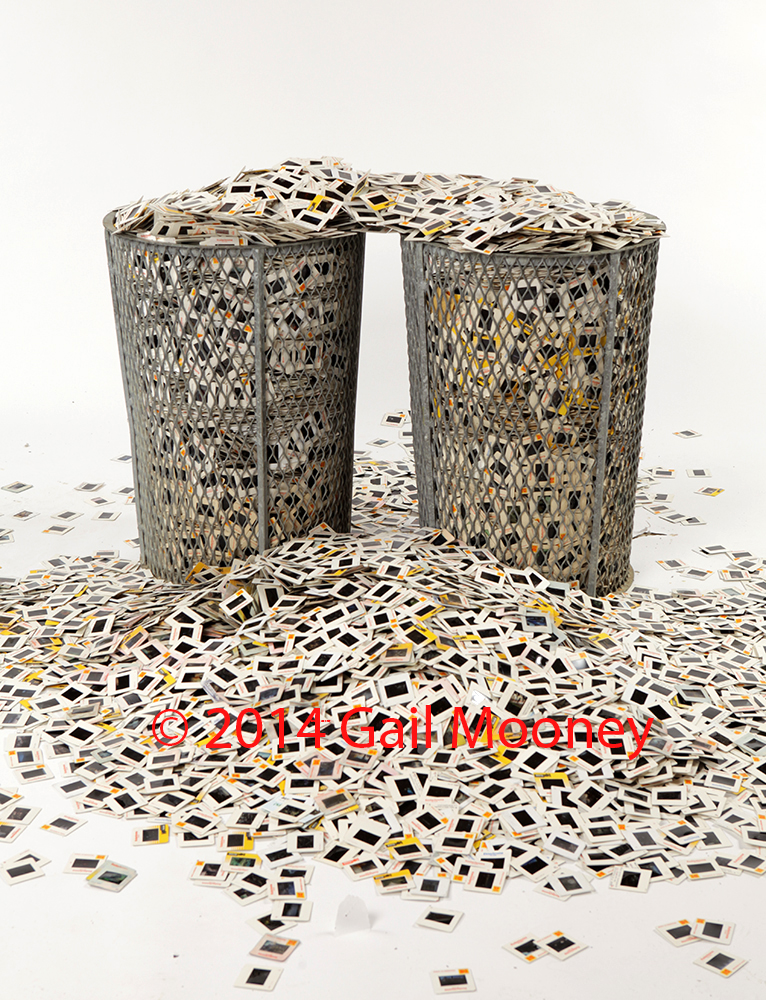
When we first began our careers in still photography, we used to toss our assignment rejects (chromes) into big wire trash bins, like the ones you’d see on NYC sidewalks. Back then, photographers had to pretty much “nail” their exposures or the images got thrown away. Those were the days before auto focus cameras and many images also got tossed because they were out of focus. These bins filled up a long time ago, but for whatever reason we held onto them. So, now we are asking ourselves – should we take a 2nd look or just haul the bins of images out to the trash?

No doubt, we’ll just trash the images, but we did take a look at a few of them and I could see in an instant how our profession has changed for good. The technological skills that a professional photographer needed to learn and master just 10-15 years ago, have been replaced by highly advanced gear and software, making just about anyone able to shoot a reasonably good image, and call themselves a photographer. And whether we like it or not – that’s our competition.

In looking back, I realized that the single one thing that has kept me in business all these years, is that I never put technology first. Rather, I always focused on the “idea”. Nowadays, people call it “vision”, but regardless, the idea always came first and then figure out how to use technology to execute it. Funny thing is a lot of my ideas were ahead of the times, in terms of the possibility of making them happen – but that has changed. It seems like anything is possible now. I am grateful for the perspective I’ve gained over the many years that I’ve been in this business. One thing is for certain, change is a constant and I look forward to a future where I can make more of my ideas and dreams come true.