Packing for 3-Month HDSLR Shoot – Too Much or Too Little?

When I embarked on my 3-month journey to create a documentary Opening Our Eyes, I posted a blog entry about what I was packing. http://tiny.cc/7pc9f
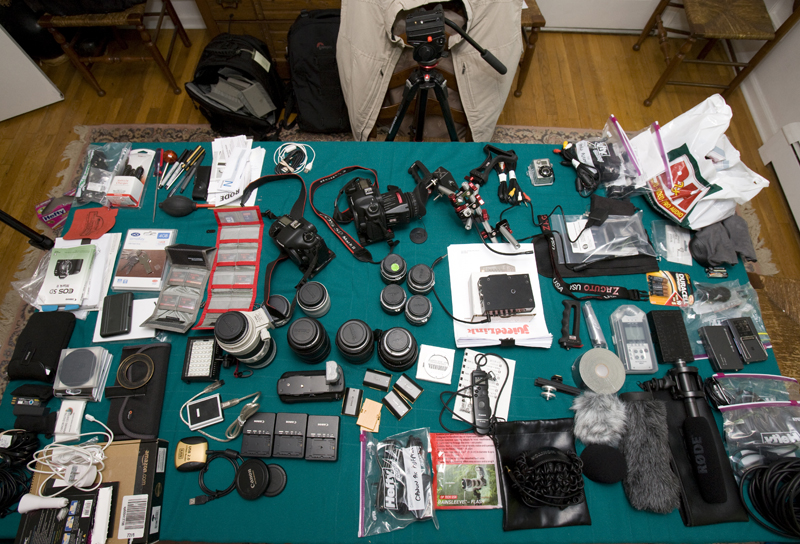
I received quite a few comments – publicly posted and otherwise and many people remarked that I was taking too much. After one month into this sojourn, I thought perhaps an update would be in order.

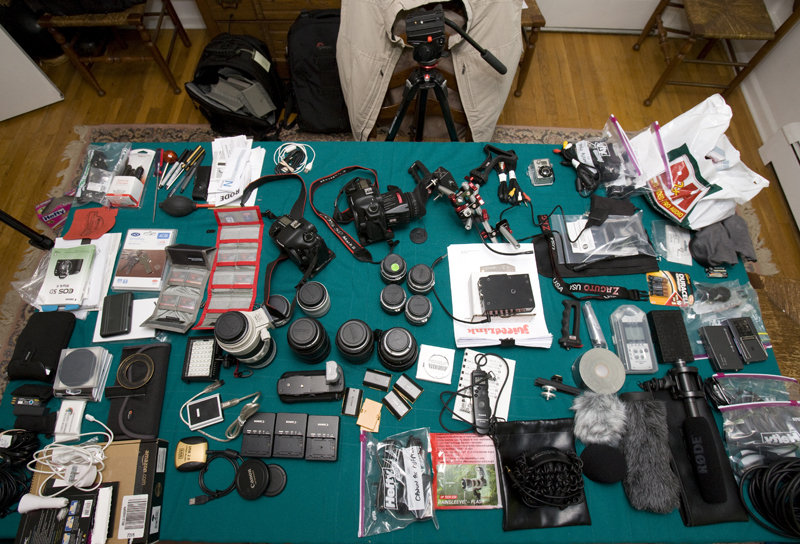
The main verdict is – my hunches were pretty much on target and I didn’t over pack. Sure it’s a lot to carry – but there are two of us and it all fits into two medium sized photo backpacks. I have used all the lenses that I brought except my old Nikon fixed lenses that I planned to use with the converter. Those I could have left behind – but the trip is not over yet so I’ll have to wait on that determination.

Bringing two camera bodies is a must if only from a back up point of view but when shooting stills as well as video, it’s a lot faster to have one dedicated for video and one for stills, especially when shooting with the Zacuto Z-Finder and rig.

And bringing two laptops has proven to be a very smart move. I had recently purchased a new Mac laptop with the latest operating system and there have been numerous times when I could not connect with the Internet – but the older laptop (2 years old) has had no problems. That and with limited Internet time, when we are able to get online, having two computers has saved a lot of arguments over computer time between my daughter and myself. We take full advantage in the airline club lounges to upload items and check email while waiting for flights. I have also had to rely on my extra laptop battery for the older Mac as the original battery was no longer holding a charge for more than an hour.

My audio equipment is sufficient and I am constantly switching back and forth between capturing my audio directly to the camera cards with the JuicedLink DT454 and separately with the H4n Zoom. One item I do not have that I really need is a male-to-male XLR cord. I found out that I couldn’t use my wireless set with either the JuicedLink or the Zoom because they both need male ends and I only have male to female XLR cords. I keep thinking there must be a solution that I’m overlooking so if someone has any thoughts – please let me know.

The small Matthews boom stand rig that I put together is terrific. It was meant to be used for table top studio shooting but for me it is perfect because it breaks down into multiple pieces, is light weight and easy to use.

I’m backing everything up onto two hard drives and I have just now used up the first two (500 G) drives. That leaves me with 6 more drives which is just about perfect depending on how much I will shoot.

Lastly, my iPod has helped with my sanity on these long flights and layovers and my Blackberry Tour phone has worked everywhere and it simply amazes me. Many times it has been our only connection to home. So I have to give kudos to Verizon and their global service. I’m truly impressed. Still a lot of remote places to go – so we’ll see how well it does as we move on.

I stop and think about the equipment we are carrying and the new technology and how this would not have been possible just 5 years ago. It’s an amazing time we live in and I’m taking full advantage of it. Can’t wait to see what the future will bring.

Add to FacebookAdd to DiggAdd to Del.icio.usAdd to StumbleuponAdd to RedditAdd to BlinklistAdd to TwitterAdd to TechnoratiAdd to Yahoo BuzzAdd to Newsvine

The Problems and Pitfalls of HDSLR’s and Video

I have been working intensively with the Canon 5D Mark II and the Canon 7D, filming a documentary Opening Our Eyes.  I have discovered the good and the bad with the video functions of these cameras.

The visual is stunning and there is no argument there but there is a lot more to video than the image and therein lies the difference between the HDSLR’s and a traditional video camera.

First and foremost the audio is a bit clunky.  I’m shooting both interviews and b-roll.  For my interviews, I opted to capture my audio separately and I will sync it later in postproduction.  I am using the Samson H4N digital recorder.  It is a phenomenal tool but I did discover one big issue that I should make everyone aware of – especially those of you that don’t like to read manuals.  You can use this device with “AA” batteries or with an AC adaptor.  Because of some of the remote locations I’m working in, I am mostly using it in battery mode.  It devours batteries.  It says the battery life is about 6 hours – but I think perhaps it’s more like 4 hours realistically.  It seems like we barely get through an interview session and we need to change batteries.

Here is where I need to issue a WARNING – when changing batteries – always turn the unit off or you can corrupt the audio files.  I found that out the hard way and I had numerous files corrupted.  The information was there but it could not be accessed.  Had I fully read the manual – I would have known this problem, but I didn’t and in my haste so as not to keep my subject waiting, I didn’t turn the unit off because it takes some time to boot up again.  Luckily in my case I have the camera audio, which I always use as a reference, and even though the audio is not ideal, I will only be using the audio as a low-level background audio with an interpreter’s voiceover as the primary audio.

Another problem I have with these cameras is the short durations that you can film – less than 12 minutes for the Canons.  A couple of times my subjects have been deep in conversation with very emotional moments – and the camera stops.  I know this will happen, but what am I to do – stop them in mid sentence as they tell their stories with tears in their eyes?  So for me working in documentary style as opposed to storyboarded films – these short durations is a major issue.

Lastly, the fact that you can change lenses has its pluses and minuses.  The pluses are obvious but when shooting video I am shooting lots of variations – wide, medium and tight shots from different angles and moving quickly as I do.  It slows me down to change lenses and since I’m shooting journalistically, I’m apt to miss some good moments when I do.

Like anything else, these cameras have their pros and cons.  But what I’d really like to see is a video camera with a big chip.  I’m hoping the manufacturers are listening and that will be the next generation of cameras.

Add to FacebookAdd to DiggAdd to Del.icio.usAdd to StumbleuponAdd to RedditAdd to BlinklistAdd to TwitterAdd to TechnoratiAdd to Yahoo BuzzAdd to Newsvine

Back to My Beginnings

I became a visual artist , not as a photographer, not as a filmmaker, but as a storyteller using images and later video to tell the tales of other cultures, lands and people through my eyes and my journeys. My camera was my tool – it was a means to an end. The end being the story that needed to be told.

I’ve spent the last 30 some years documenting the world through my lens, whether it be for magazines like the National Geographic Traveler, Smithsonian or Travel & Leisure or for major corporations. I’ve been blessed and have truly lived a charmed life. But there have been times when I’ve started to go off kilter – or stray from the essence of my being. It’s easy to do, especially in a culture that is obsessed with the drive to succeed – the definition of success being to make a lot of money and have a lot of “things”. Don’t get me wrong – I also enjoy the rewards that money brings – but for me that means having the resources that help me to live a full life.

A few years back I was shooting a documentary on the Delta Blues Musicians and I spent a memorable afternoon with blues drummer Sam Carr. As we were winding up our conversation under the shade of old tree he sat back and said “I’ve lived a rich man’s life in a poor man’s shoes”. That comment has stayed with me over time and when Sam died last year, I was told that his family was grateful for the interview that I captured that day and used his comment as his epitaph. I was humbled and honored, but mostly felt richly rewarded that my personal project had touched the lives of others.

As we wind up our first stop in Africa on our round-the-world trip, some of the fears and trepidations I had that came with taking a risk, and heading out to the unknown for 3 months, have vanished. In their place is the calming realization that this was what I needed to do at this point in my life and I was grateful I had the means to do it and the stamina to travel on a shoestring budget. Africa puts things into perspective – this vast continent is so wild, colorful, rich, poor, exhausting and exhilarating all at the same time. Africa has taken its hold on me and has sparked my true spirit.

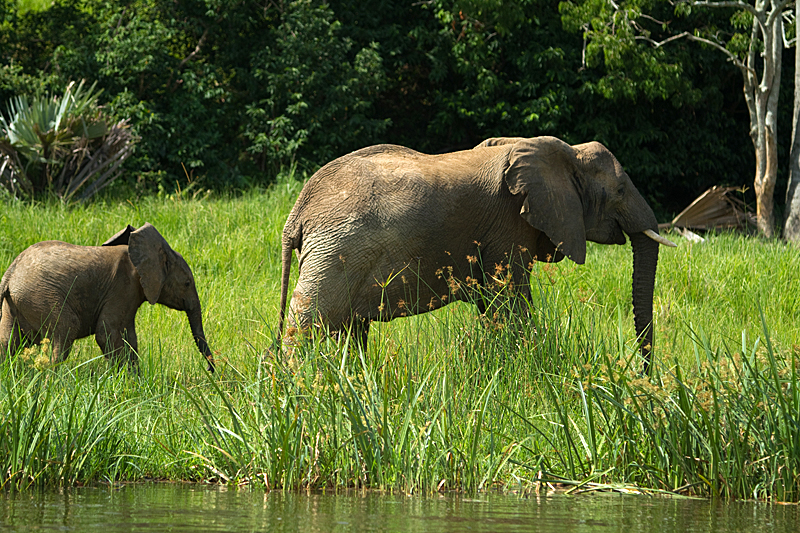
My daughter and I decided to take some time to get out of the city and go to Murchison Falls National Park, after shooting the first part of our documentary about people making a positive difference in the world. We saw

Elephants along the Nile

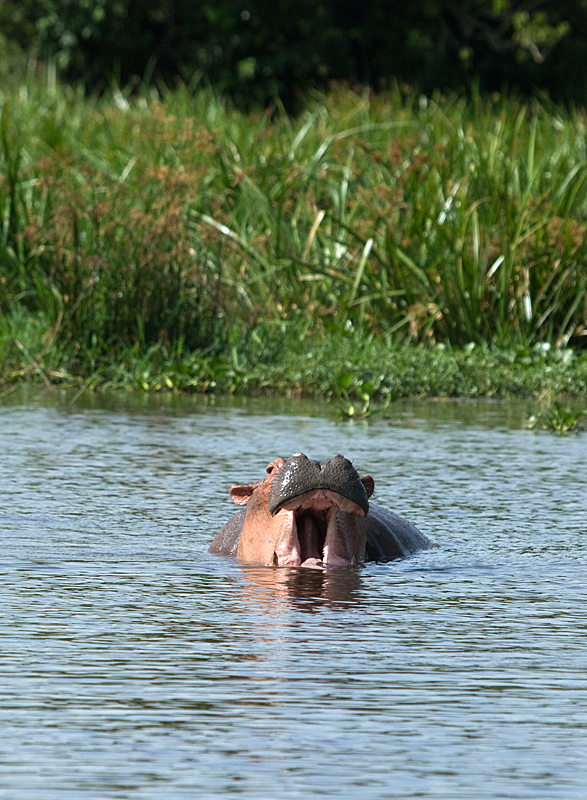
elephants, hippos,

Hippo on the Nile

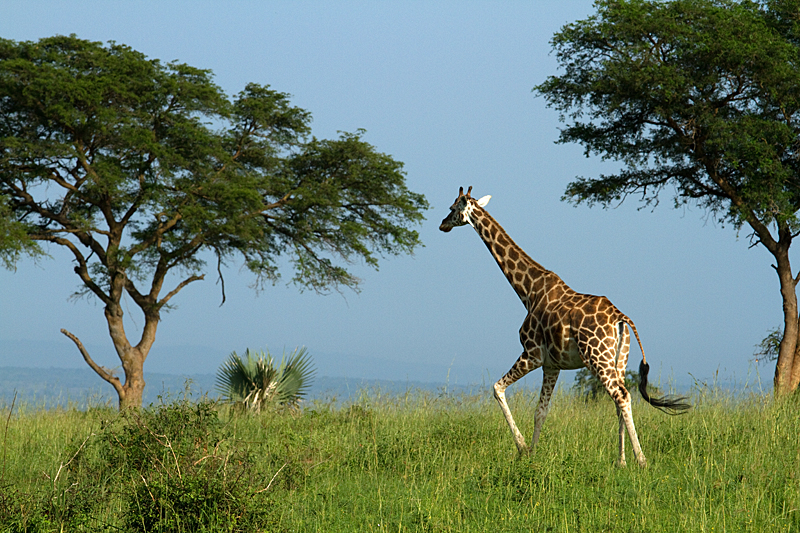
giraffes,

Giraffe, Murchison Falls National Park, Uganda

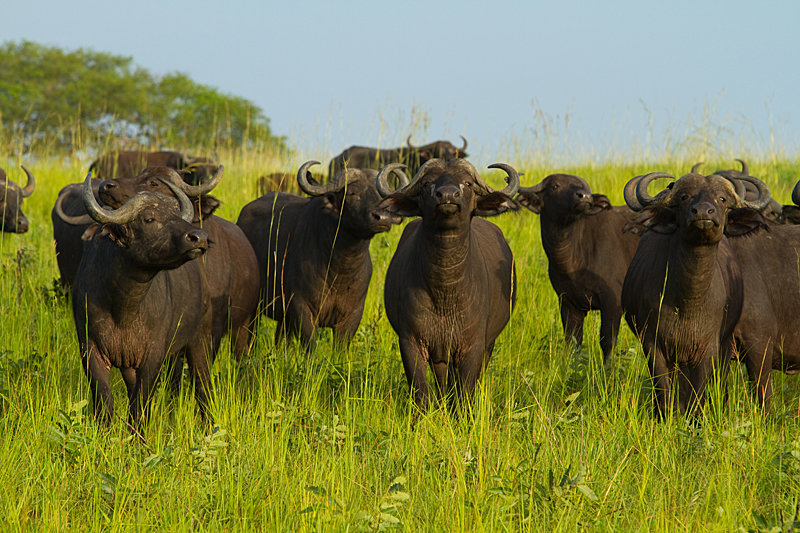
antelope, cape buffalo, baboons,

Baboon, Murchison Falls National Park, Uganda

slept in a tent and sat by a fire in the evenings under a canopy of stars that stretched from horizon to horizon. We chatted with people from countries all over the globe – all of us different yet with a common cause – the love of the journey.

Of course I shot still photos

Cape Buffalo, Murchison Falls National Park, Uganda

as well as some VIDEO but more importantly I absorbed this rich experience and it energized my spirit and my soul. This is the “fire” that I need every now and then. I think we all need a spark every once in awhile and to get past the science of the photographic craft and back to the essence of the art and the story. That is what ultimately leads us to create the kind of visuals that will resonate with others. That spark is different for all of us but nevertheless an essential ingredient for the creative process. It’s not the tools, nor the techniques that define the message or create the images that strike a lasting chord with those who see them. I was fortunate that I learned that years ago and now I’m reminded of those lessons as I get back to my beginnings.

We leave Africa today and continue our journey – next stop Istanbul, Turkey and then on to Poland where our next subject awaits.

Add to FacebookAdd to DiggAdd to Del.icio.usAdd to StumbleuponAdd to RedditAdd to BlinklistAdd to TwitterAdd to TechnoratiAdd to Yahoo BuzzAdd to Newsvine

Photographers and Video

I’ve been reading a lot of the still photography forums over the past few weeks and I’ve seen a lot of questions about capturing sound with the hybrid HDSLR’s.  I’ve also seen some misleading information so I’ve decided to take a few minutes to clear up some misconceptions.

First – Audio is everything in video.  People can tolerate a mediocre image but if they can’t understand or hear the audio – they won’t watch.  See for yourself – turn the sound down on your TV and see how long you stay interested in the program – even if the image is stunning.

Second – You have many options of capturing audio with the HDSLR’s depending on what you are shooting.  I think many still photographers assume everyone is going to be shooting “indie films” with crews.  One of the things I find appealing about some of the new technology is that you don’t necessarily need a large crew and a Hollywood budget.  And sometimes, if discretion is in order, you’re better off with a small crew.  With that said – you should know how to capture good audio.

Third – NEVER use the camera to capture audio – it just isn’t good enough.  And I would probably say that you shouldn’t plug an external mic into the camera via the mini plug.  I don’t think the audio quality is good enough, especially for an interview.

Fourth – Either use a pre-amp with XLR inputs like a Beachtek or JuicedLink and an external microphone.  Make sure you get the mic close to the audio you want to capture.  And most importantly monitor the audio through a good set of headphones.

Fifth
– Capture your audio independently with a good quality digital recorder like the Samson H4n Zoom and sync it later in post.  Syncing sound in post is a snap with a great software application called Plural Eyes.

Lastly – Audio is everything!  And remember as you add video to your skill set, you’ll be using your ears as much as your eyes.

Add to FacebookAdd to DiggAdd to Del.icio.usAdd to StumbleuponAdd to RedditAdd to BlinklistAdd to TwitterAdd to TechnoratiAdd to Yahoo BuzzAdd to Newsvine

Outside My Comfort Zone

The older one gets and the more settled one gets in their own ways, the more difficult it is to push oneself outside their own comfort zone.  I know this full well, as I am now immersed in a project and a journey where I’m pushing myself every minute of my day and will be doing so for the next three months.

I’m in Uganda, Africa right now and every day I face several challenges.  Everything from attending to my personal needs and safety, to negotiating taxi rides and reconfirming upcoming flights to making sure that I’m getting the content that I will need to create the documentary I’m working on, Opening Our Eyes.  Little things become much harder and take a lot longer to deal with than if I were at home.  And every minute it seems like I’m facing a new learning curve.

Last night, for some inexplicable reason I couldn’t get an internet connection with my laptop.  Nothing had changed from the night before when I was online for a good 3 hours, yet all of a sudden – I couldn’t get online.  Since I’m working with a digital workflow and totally dependent on a computer, I brought a backup laptop just in case.  The “just in case” scenario has already come into play and that backup laptop has become my connection.  A few weeks ago when I wrote the blog My DSLR Kit for My 3-Month Road Trip, I received numerous comments telling me that I was taking too much stuff.  A part of me agreed but after only one week into this trip, I have used every piece of gear that I had packed.  Call it paranoia or the voice of experience but I’m glad that I have the backup, regardless of the extra gear it necessitates.

Building a comfort zone happens gradually, where you set up your business and lifestyle and things click into place over time.  But nothing ever stays the same in life and if you’re not proactive, before you know it you get in a rut – whether it be a creative rut or otherwise and when change happens – and it always does – your comfort zone disappears regardless if you were the one that made that a conscious decision or not.

I’ve always known when to “rock my own boat”  – when I’ve become dangerously too complacent.  I knew at this point in my life it was time that I really push myself outside my norm and as hard as it is at times, I’m confident it will bring great rewards my way.  It already has.

Any time I leave the country, especially since I’m usually shooting when I do, I challenge myself on many levels.  Yesterday, we were following one of our subjects through a crowded downtown area in Kampala as she went about her errands and searched for just the right fabric in various shops. It was chaotic and a test of nerves as we made our way through the crowded streets dodging vendors, scooters and buses.  We were also testing our GoPro Hero helmet cam which was a lot of fun.  It was hard enough to blend in being the only “mzungus” (whites) on the street, let alone wearing a camera on your forehead.  But check out the VIDEO and see for yourself how it is to negotiate your way through the streets of Kampala.  And that’s what I love about this little “adventure sports” camera – it makes the viewer feel like they are part of the action.  You can also see what I mean when I say that I am pushing myself out of my comfort zone.

Add to FacebookAdd to DiggAdd to Del.icio.usAdd to StumbleuponAdd to RedditAdd to BlinklistAdd to TwitterAdd to TechnoratiAdd to Yahoo BuzzAdd to Newsvine

Shooting Video in the Field with the Canon 5D Mark II

The first two days of our Round the World Journey, shooting the documentary Opening Our Eyes has been quite full and I’ve faced numerous situations – really putting my tools to the test.

Our first full day was spent at the offices of Wrap Up Africa, which are located in Kampala, Uganda. In addition to shooting b-roll of tailors at work, we shot several interviews. Our main interview was with Wrap Up Africa’s founder, Letha Sandison, followed by interviews of a couple of her staff members. We also did interviews of some of the cancer victims that Letha has helped. Here is where I not only needed to be attentive to my technical details but be sensitive to the situation and the people that I was interviewing. Hearing some of their stories is heartbreaking and hard for many Americans to fathom. Sure, we all watch the travesties taking place throughout the world on the nightly news, but it’s quite another experience to speak with people who have experienced horrendous tragedies in their lives that are simply unimaginable.

One woman, Evelyn who works for Letha had been abducted and held captive by the LRA, which stands for the Lord’s Resistance Army, and is not exactly a charitable group. She managed to escape after most of her family had been killed in front of her. She is now raising three orphans who had been victims as well and works with Letha, helping others.

Our set up was simple and deliberately so. I set up the Canon 5D Mark II and captured my audio separately with the H4N Zoom. I had two mics – one shotgun on a small boom stand and another lav. I will sync them later in post. We chose a room that had ample window light as we are traveling with only a small camera light and nothing else. Our biggest challenge was that the cabinet installer decided to do his work the day we were shooting – so the sounds of hammering and drilling made up our ambient background sound. But the mics were placed close to our subjects and did a pretty good job of boosting their audio above the din of the environment.

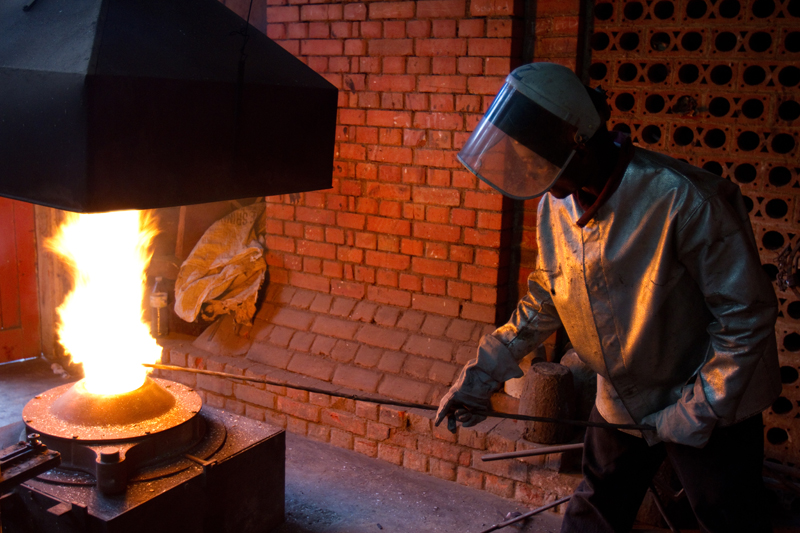
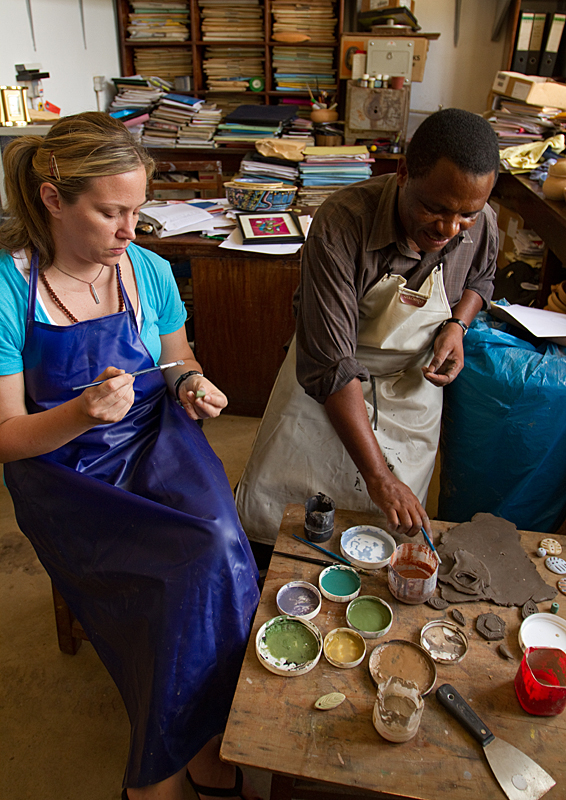
The next situation we faced was shooting b-roll in the dirty environments of a potter’s studio and a foundry. Again we used the Zoom to pick up the ambient sound of the environments. After a morning with the artists, we packed up quickly and headed to Mulago Hospital to visit the children’s cancer ward. We were not allowed to shoot video but we did shoot some still images and was happy to have the hybrid cameras that captured beautiful files – far better than frame grabs from a traditional video camera.

Then we headed to the market, which as usual is always a trying experience. For anyone who has traveled to congested third world environments, you know what I mean by “trying experience”. You must be aware of your personal belongings at all times, while shooting and I wish at times that I had eyes in the back of my head. On top of that I’m sensitive to those that don’t want to be photographed. It’s exhausting but at the same time exhilarating because of the exotic nature of the environment. My daughter wore the GoPro Hero helmet cam that is a tiny camera made for adventure sports but she had a lot of fun walking through the market recording the event with running video as we walked through the market.

I was shooting video with the Canon 5D Mark II and used a shotgun mic on top of the camera and run through a JuicedLink audio mixer. I’m embarrassed to say that somehow, even after lots of testing – I came back with no audio! Luckily the helmet cam Hero picked up very good ambient audio so I’m able to use that and layer it in post. In the chaos and confusion of the market, I probably didn’t set it up right and today I will do additional testing so as not to make that mistake in the future. But the video was captured beautifully and I will interweave those clips into the documentary with sound from the interviews and ambient sound from the Hero.

I am realizing one thing though and that there is nothing easy or streamlined when shooting video with these hybrid cameras. The results are stunning, but the shoot and workflow are much more tedious than when shooting with a video camera. Perhaps at the end of this three-month journey, I’ll be singing a different tune – I certainly hope so.

I’ll keep you posted as I get access to the Internet, which is iffy, and we’ve been off line for the last two days. But there’s something humbling about being off the grid and I’m learning to take it in stride and appreciate what I have. Today is Sunday and we are resting and storing up a bit of energy for the coming week. Please read more about our journey at Opening Our Eyes.

Add to FacebookAdd to DiggAdd to Del.icio.usAdd to StumbleuponAdd to RedditAdd to BlinklistAdd to TwitterAdd to TechnoratiAdd to Yahoo BuzzAdd to Newsvine

Arriving in Uganda Under the Full Moon

It’s early morning in Kampala, the sky is just getting bright and the animals are making their music.

Our first day in Uganda was a full but relaxing one. We had arrived the night before under a full moon after over 22 hours of flying. We had left JFK on Tuesday morning and got here Wednesday night, so somehow we lost a day but we’ll make it up after we’ve completed our circle around the world, three months from now. Security in the three airports (New York, Johannesburg and Entebbe) had been a breeze and even though my daughter and I had backpacks full of camera gear, computers and hard drives, no one even blinked an eye, let alone opened anything up.

Letha Sandison of Wrap Up Africa, our first subject of our film, picked us up at 9AM and after changing money, getting a mobile phone with a local number and getting a bite to eat, we went to the local university to meet with two artists. The artists, Bruno, a potter and Sega at metalsmith were working with Letha to make buttons for the garments that she creates for her foundation Wrap Up Africa. Letha’s foundation is two-fold and is a great example of sustainability. She trains family members who have children ill with cancer to be tailors and in turn they sell the garments that they make through her foundation so they can pay for their children’s chemotherapy and hospitalization.

Even treatable cancer can be a death sentence in Uganda if a family doesn’t have the resources for medical treatment. Letha created her foundation to help these families who are dealing with cancer but her task is not an easy one and finding funding is difficult in a country and continent where Aids is so widespread and becomes a priority.

After visiting the university we went to the offices of Wrap Up Africa and entered a room where women were busy sewing. We met her staff and made a plan for shooting there today.

So we are off to start our first day of filming. We’ll shoot some interviews, do some b-roll as well as some stills. Last night we did some testing and I gave my daughter some lessons in capturing audio. She’s a quick study and has the trained ear of a musician so I’m confident she’ll make a great audio person. At any rate after 3 months, we’ll both find our groove. So we’re off and running.

Add to FacebookAdd to DiggAdd to Del.icio.usAdd to StumbleuponAdd to RedditAdd to BlinklistAdd to TwitterAdd to TechnoratiAdd to Yahoo BuzzAdd to Newsvine

Heading Off Around the World

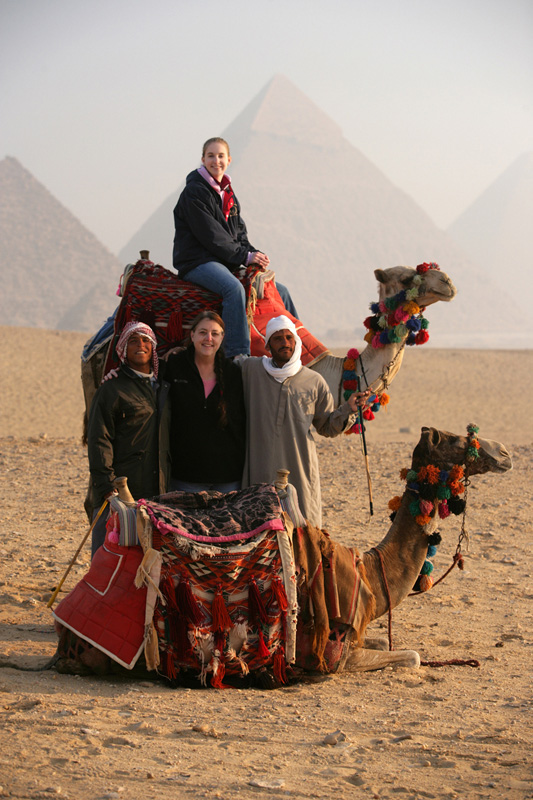
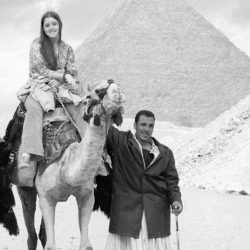
Gail and Erin in Egypt in 2006

It’s very early in the morning, my favorite time of day – no distractions and a whole new day ahead of me. But today’s a bit different, it’s the day before I leave on a 3-month journey around the world to take on probably the biggest personal project of my life and I have a million details running through my heads.

Just the other day I wrote about the “what if mentality” and how we sometimes fall victim of sabotaging ourselves by talking ourselves out of doing things. And today I have a whole host of “what if’s” running through my head. What if we can’t get into Bangkok or get out? There’s a State Department warning advising Americans not to travel to Thailand and we’ll be traveling with a doctor going into the northern hills – not an easy place to get in and out of in peaceful times. What if one of us gets sick? What if something gets stolen? What if one of our 27 flights get canceled or delayed? What if I don’t get the material I’m after for the documentary?

Certainly, lots of trepidations but I’m a pretty savvy traveler and I’m about as prepared as anyone can be. I try to remind myself of that and focus on the incredible journey ahead of us. I’ll be sharing this experience with my 23-year-old daughter and that in itself will be something we’ll never forget and create a special bond between us for the rest of our lives. We’ll not only be circling the globe together, we’ll be working together to create a documentary on people who are making a positive change in the world. Those connections will be life changing, and in fact one of our hopes is that our film will inspire others to do the same.

So one more day of details and then we’re off – first stop Entebbe, Uganda by way of Johannesburg, South Africa. Our last stop is Buenos Aires, Argentina via the jungles of Peru. Lots in between – lots of laughs, tears, lands and miles. I will be writing as often as I can and uploading when “connected”. And if I disappear at times – you’ll know why. You can follow our journey at Opening Our Eyes.

Add to FacebookAdd to DiggAdd to Del.icio.usAdd to StumbleuponAdd to RedditAdd to BlinklistAdd to TwitterAdd to TechnoratiAdd to Yahoo BuzzAdd to Newsvine

My DSLR Kit for a Three-Month Road Trip

For those who have been following this blog you know that I’m getting ready to depart for a 3-month trip around the world creating a documentary with my daughter – Opening Our Eyes.  Here is what I’ve managed to fit into two backpacks – it just fits.  Thank goodness there’s two of us.
Please follow our journey http://www.openingoureyes.wordpress.com

Canon 5D Mark II
Canon 7D
Canon 16-35mm 2.8
Canon 24-70mm 2.8
Canon 70-200mm 2.8
Canon 70-300mm 4.5
Canon 1.4X tele extender
Canon 2X tele extender
Nikon/Canon lens adaptor
Nikkor 14mm rectilinear lens f2.8
Nikkor 50mm 1.4
Nikkor 85mm f2
6 Batteries for Canon
1 Battery grip for 5D
3 Battery chargers
Remote control for Canon
AC adaptor for Canon
Rycote Hot shoe extension
4 – 16 GB flash cards – all cards – Sandisk UGMA
4 – 8 GB flash cards
2 – 8 GB SDHC cards
2  – 4 GB SDHD cards
Neutral density filter kit
Polarizer
Epson P6000 digital wallet
Zoom H4n digital audio recorder
JuicedLink DT454  audio preamp
Rode shotgun mic
Tram lav mic
Sennheiser Transmitter/Wireless kit
“Dead Cats” (windscreens)
XLR cords
Headphones
HD Hero helmet camera with attachments
Flip HD
ManfrottoTripod and fluid head
Small Matthews boom stand for mic
Reflector
Zacuto Z-Finder

Zacuto Striker Rig
Flex DSLR remote
Lacie Rugged Hard drives – 4000 GB memory!
Firewire and USB cords
3 – card readers
2 MacBookPro Laptops
1 extra laptop battery
1 extra AC adaptor for laptop
Kindle
iPod
Blackberry Tour
2 Scotte Vests – with 22 pockets in each

Add to FacebookAdd to DiggAdd to Del.icio.usAdd to StumbleuponAdd to RedditAdd to BlinklistAdd to TwitterAdd to TechnoratiAdd to Yahoo BuzzAdd to Newsvine

Photographers/Filmmakers as Publishers/Producers

It’s been a busy year, trying to manage jobs and lots of road trips giving seminars for ASMP to photographers who may be contemplating video.  I’ve enjoyed meeting my peers and sharing information through my presentations as well as on my blog, but I need to take some time to get back in the field and capture my own “moments” and “motion”. I need to spend some time “doing” right now and ultimately that will make what I have to share that more valuable and meaningful. So I will be embarking in a couple of weeks on a “passion project” that will take me around the world for 99 days.

It’s an exciting time to be working on a personal project because of various distribution possibilities and portals that are in everybody’s hands.  Ten years ago when I got started in video, technology made it possible for me to create documentaries and films without the need of large crews and big budgets.  And now with the web, fast download speeds, video host sites, mobile devices and itunes – I can – we all can be publishers and producers and get our content out globally. The pipelines have been democratized and it’s a very empowering position.

I’ve spent a career on the road and on assignment for various publications and corporations.  I’ve been fortunate to have worked for magazines like National Geographic Traveler, Smithsonian and Travel & Leisure shooting stories on destinations and people all over the world. I suppose you could say that I lived the life I dreamed of. I was shooting these assignments at a time when magazines were giving me ample time in the field to come back with a story – back when travel magazines ran stories as opposed to survey pieces or celebrity profiles. More importantly, I maintained the copyright of my images and was free to market them as I wished after a standard embargo period was over – usually around 90 days.

These days many publishers issue “work for hire” contracts, so essentially photographers are giving up their copyright. Photographers have always been strong advocates for copyright and I include myself in that position.  But in our advocacy to keep strong copyright laws in place, we end up fighting for that right for large corporations and publishing empires who ultimately take away our copyright in lopsided contracts.  And for the most part these contracts are not negotiable.  You either agree and take the job or you don’t.

These days because of technology we can be our own publishers and deliver our stories and other content in a number of different ways.  Sure it means taking the risk up front but that in itself brings its own rewards. It’s very liberating to be shooting and answering only to myself – not second-guessing someone else.  I take more chances creatively because I’m not afraid to fail.  And every time I’ve ever done that, I’ve grown and the rewards have been many – both creatively and financially.

I don’t know exactly how and where my Opening Our Eyes project will be distributed when I complete my journey.  But these days – it could be a book, a multimedia exhibition, a feature film distributed through itunes or on a DVD through Amazon, various magazine articles or broadcast.  I could package the journey and the back-story and give talks to universities.  An endless sea of possibilities.  What an amazing time we live in where we can all make our dreams come true.

Add to FacebookAdd to DiggAdd to Del.icio.usAdd to StumbleuponAdd to RedditAdd to BlinklistAdd to TwitterAdd to TechnoratiAdd to Yahoo BuzzAdd to Newsvine