They don’t understand the importance of audio and don’t use external microphones. Audio is everything in video.
They think in “moments in time” and start shooting video too late or stop shooting too soon. You need to let the camera linger longer.
They don’t shoot sequences with a beginning, middle and end.
They don’t think in “storyboard mode” – You should ask yourself “How will I get into and out of a shot and what’s next in the story?”
They don’t shoot enough B-roll with variations in angles and focal lengths – very important in the editing process.
They move the camera instead of letting the motion take place in front of the camera.
They turn the camera vertically. There aren’t too many vertical TV sets and monitors.
They don’t use a tripod forgetting that video is “time in motion”. It’s one thing to hold a camera steady for 1/60th of a second and quite another to hold the shot steady for 10 seconds.
They don’t consider the frame rate and how that will affect workflow and editing.
Aren’t careful keeping their sensors clean from dust. Retouching video is a lot more involved than spotting still images.
They “throw” some video clips in with the still photography job, not putting an added value on them and thus setting a bad precedent with clients.
They don’t consider the output and the type of file to be delivered. There are dozens of formats and codecs in video. Choose according to your target audience and viewing platform or device.
Just yesterday I was talking about the good and bad of social media and the potential pitfalls with time management. My routine each morning is to check for any news items on Twitter or Facebook or bookmarked blogs after catching up on my email. This morning there was one post on Facebook that caught my eye and was definitely worth the click through.
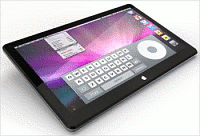
Via Mashable.com was Time Inc. Show Us Their Idea of The Future of Magazines [Video]. It was about how publishers are preparing digital versions of their magazines for the Apple Tablet.Apple hasn’t even officially confirmed they are working on this device. Embedded in the post was a pretty sophisticated demo of Sports Illustrated.
Amazing as the demo was – it had its critics. Check out Gizmodo’s post Time’s Manhattan Project Will Explode Like the Atomic Bomb It Is. The article questions how it’s any different from a web page and at ten times the cost. They state it’s pretty packaging but still stale and dead.
The future of publishing is an interesting debate. I suppose it really all comes down to how we the consumers want our information. What do you think?
It seems like this has been the year of the video capable DSLR or VSLR. Not only are manufacturers continuing to roll out new models but third party companies have made a big business out of selling attachments or add-ons for these cameras.
Dabblers as well as professional still photographers have gotten into video because the entry level has become easier and more affordable with the advent of these cameras. While traditional news crews haven’t embraced the new hybrid cameras yet, filmmakers have created a cult around them. I must confess that although technically I have had my hands on these cameras, I have not done any test runs using them in the field. But it is on my list of things to do.
What’s Out There Now
The Nikon D90 shooting 720p was the first DSLR camera to shoot video in HD. Canon followed with its impressive 5D Mark II which raised the bar by shooting full frame 1080p with external mic input and recently rolled theyout the Canon 7D with variable frame rates for under $2000!
The most attractive features of these hybrid cameras besides the price, is the ability to change lenses, have controllable depth of field and large sensors that work phenomenally in low light situations. However there are limitations that traditional video cameras that come at a higher price don’t have. Camera stability is one problem due to how the shooter needs to hold the camera because they are designed to shoot in video mode with the mirror up. Since the camera operator must see and focus using the LCD monitor instead of steadying their eye up against the viewfinder, it’s harder to stabilize the camera when hand holding it. Audio capture is very basic as well and must be supplemented in some way.
Third Party Options
Because of these limitations, third party manufacturers have gotten in the game by designing add-ons. Zacuto
Z-Finder
has come up with a few interesting items. One item is theZ-Finder DSLR Viewfinder, which is a device that fits over a 3” LCD and provides magnification for better focusing. It runs around $400. Hoodmanprovides a lower cost version called the Hoodloupe without the same optics but at a quarter of the cost.
An added benefit to using these viewfinders is that it provides another contact point with the shooter’s body and therefore provides more stability. There are also camera support systems available that help remedy the need for better stability in “run and gun”
Rapid Fire
situations where the shooter can’t use a tripod. Zacuto makes two stabilization devices, the DSLR Rapid Fire and the Quick Draw each designed with a different type of shooting situation in mind. In addition a Cavision has come up with a shoulder mount device the RS5DM2SET-S.
Cavision shoulder mount
As far as audio is concerned, if you want to move beyond a supplemental external mic that’s plugged into the camera and use a more professional audio solution you’ll need balanced XLR inputs which will also enable you to use multiple external mics off the camera. Beachtek makes the DXA-5D for around $375 and juiceLink has come up with the juicedLink CX231 for about $300.
Samson H4n
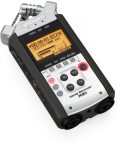
Or you can capture your audio with a stand-alone recorder like the Samson Zoom H4n, also around $300 and sync it later in post.
Regardless of how you ultimately “trick out” your VSLR (video single lens reflex) you can be sure that there will continually be newer models and solutions as technology keeps moving forward. Pro Video Coalition puts out a great newsletter online keeping us abreast of the latest tools. Check out their DSLR Shootout where they test these hybrids and adaptors. Take Dirck Halstead’s Platypus Workshop now incorporating the new DSLR’s in the program. And become a Facebook fan of From Still to Motion for ongoing information and updates. It’s an exciting time with loads of possibilities.
Up early again, my mind restless and spinning with ideas, thoughts and reflections on last week’s Photo Expo in New York City. Ironically this year’s Expo didn’t really reveal anything “new” for me in the way of new toys and tools of the trade. What was new was the obvious absence of Adobe on the exhibitor floor – a sign of the economic times? Or is it a sign of how the photographic business is shifting – from professional to prosumer?
While in NYC I took time to see Robert Frank’s exhibition “The Americans” at the MET. His beautiful images have stayed in my head and no doubt will provoke me to jump-start one of the many projects that continue to bubble to the surface in my mind. But there was one thing I read in context of the exhibition and that was a statement made about the camera being a “tool of change” during Frank’s time. I started thinking about that and realize that the camera, whether it be a still camera or a motion camera is still a “tool of change”. James Natchwey’s images are powerful examples of that.
What is radically different today is our means of distribution – of getting our imagery seen. No tool has the power to make a difference or a change if what it creates is never seen. I started thinking about the demise of newspapers and print in general and I was dismayed about the future and the still photos that may never be seen.
With the Internet and global distribution, the playing field has been leveled and democratized and anyone can share anything they create with the rest of the world – right? Maybe not – because ultimately the web is controlled. It’s controlled by what search engines find and how information is ranked. Listen to Eric Schmidt, Google’s CEO talk about the Internet of the future. Even Facebook now is deciding which friends will see our news feed. That default can be changed of course – but you have to be aware of it to change it. How many of us are aware? And I mean that in the broadest sense, meaning aware of what and how our information is delivered.
All the “free” content we get these days over the web excites us all. It’s great – but even free comes at a price. I can only hope that future generations will understand the underlying cost of “free content” and be aware of who is controlling distribution in this new paradigm.
Anyone who reads my blog knows that I’m not one to get overly infatuated with the “tools of the trade” – but this week a few new cameras and upgrades were announced.
Sony announced two new cameras the PMW-EX1R – a revision of the EX-1 and the PMW-350 with a 2/3” chip. Redesigned viewfinders on both cameras make them attractive upgrades but there are many other added features as well.
Canon announced that it is currently developing a firmware for their hybrid camera – the EOS 5D Mark II enabling the camera to record at 24fps, obviously responding from user feedback.
Canon also announced their latest still camera (that also shoots video) the EOS 1D Mark IV. The sensor however, is a non full frame but the autofocus system has been totally revamped.
All for now as I am headed into New York for Photo Plus Expo, where I’m sure to see more new toys. More later.
I’ve been attending the Photo Expo for as long as I can remember, back when it used to be at the old Convention Center at Columbus Circle. It changed over the years, growing in size, moving to Javits and now shrinking, taking up ½ the floor space it used to. That could be yet another sign of the economy, or how the photographic industry has changed over the years – or both.
This year is the first year there will be a Video Pavilion, where manufacturers can showcase their products and attendees can get a glimpse of how the converging industries of photography and video continue to change the paradigm of how we deliver our visual message.
Another profound change on the floor this year is the absence of the Adobe booth. I can’t remember a time when Adobe has not been an exhibitor at Photo Expo. Has the economy played a part in that – or is it another sign of changing times in the photography business?
It will be interesting this year to observe who is exhibiting and what the new “cool” tools are? Like last year when Canon displayed their first hybrid camera the 5D – a still camera that also shoots video – their booth, along with Nikon will be the “main attraction”. Video continues to be the hot topic.
Gone are the manufacturers of lab equipment, along with the last vestiges of film. Gone are Apple and Adobe – maybe next year? Or will next year look more like NAB”s (National Association of Broadcasters) show in Las Vegas as we continue to move from ink and print to electronic delivery?
It’s 4AM as I write this entry. I can’t sleep. That often happens when my mind is in overdrive as it has been all week – over stimulated by the process of editing video. I’ve also spent a lot of time this past week speaking with quite a few photographers who are working in both the still photography and video mediums. Some shooters I spoke with got into video because the entry level became cheaper when hybrid cameras that shoot both stills and video came on the market. Other people I talked to weren’t “camera operators” at all – they were DP’s or Directors of Photography on high-end commercial broadcast productions.
One question I asked these shooters was “What do you call yourself these days?” Personally I’m struggling with that question myself. Am I a photographer?, a videographer? (I hate that term), a DP?, a media producer? Who am I ? What do I call myself? I have yet to answer that question for myself, but the answers that I got from everyone I spoke with, ran the gamut, encompassing all the titles above. As I replayed these conversations in my head, I realized that for me the problem was I was trying to define myself by my tool. And that just doesn’t work.
The problem is if we define ours by our tools – then we are diminishing the value of our creativity or our vision in the process. We aren’t placing the value on what is unique in all of us – our vision. At the same time we’re placing too much value on the tool – in this case the camera. As technology accelerates the production of more sophisticated cameras that are cheaper and easier to use – and we’ve placed our value on being the technician – we’re in big trouble. Because ultimately anyone with a vision who has the “ability” to realize that vision, can put together a crew of technicians to facilitate their vision or idea – and do it cheaper these days because of technology. And there’s nothing wrong with that.
Professional photographers get defensive when a potential client places no value on what is unique about them (their vision) and approaches them with the attitude that if you won’t work for the prices they dictate – they will just find another photographer. But what they are really saying is that they feel that they can “just” find another camera operator. The problem is that these photographers haven’t presented their vision and because of that they are perceived as being interchangeable. That’s not a good place to be and never will be. And for that reason when a professional still photographer comes to me and says that they are interested in getting into video and asks the question “What video camera should I buy?” I gently tell them – well sometimes not so gently tell them – it’s not about the camera.
How does one define what they are? Great question that has a lot of answers, as it should. Technology is amazing – but it’s the human part of the process that excites me because we’re all so different in how we see.
Many still photographers get started in video with a “hybrid” camera. Canon just came out with the EOS 7D to add to their already popular EOS 5D Mark II. Nikon has their – D90 and Panasonic has the Lumix DMC-GH1K.
There is plenty of information online particular to all of these cameras so rather than repeat what others have written, I’ll list some tips on shooting with these cameras.
1. Don’t shoot verticals when in the video mode – the reason should be obvious but nevertheless because these cameras look and feel like still cameras (and are) turning the camera vertically is a common mistake photographers make.
2. Use an external mic if audio is important and it usually is.
3. Use a tripod – hand holding video is far different than hand holding a still camera where just the “moment” has to be sharp.
4. Don’t try to be sneaky in venues that prohibit video by pretending to shoot just stills. It’s just not ethical.
5. Remember when shooting video it’s a motion medium – so seek out subjects with motion.
6. Make sure your sensor and lenses are always spotless – while you can retouch video it’s quite labor intensive or can be.
7. Editing files from some of these cameras can be slow and clunky in the edit room, especially when trying to blend with other video shot at a different frame rate like 24p. If you’re shooting with the 5D which shoots in 30p you may want to convert your files to the standard Apple Pro Res at 24p to make everything compatible first.
8. If you’ve been hired to shoot stills for a client and they ask you to “just” shoot some video footage for them from the same camera – don’t just throw that content in for free. There’s added value there and you’ll short change yourself as well as set a bad precedent for your future video clips.
To be honest, I don’t own a “hybrid” and most of these tips have been collected by hearing complaints and advice from others. So please add your own tips and cautions.
Every once in awhile I see a blog or a video that really strikes a chord. Today I saw a video that caught my attention for all the right reasons. It was a video that was produced by a photographer Alexx Henry demonstrating how he used technology in a new way to create a One Sheet, commonly referred to as a movie poster.
He had an idea to make the typically static movie poster, come to life with motion. His ultimate goal was to shoot the movie poster and have it appear like a still photograph in his customary style – but with the surprise of coming alive with motion. He chose as his tool the amazing HD video camera, THE RED. But first he needed to do some testing and to sell the idea to his client. For that he used the hybrid camera, the Canon 5D Mark II. He also needed to use hot lights. Because he was shooting motion, he couldn’t use flash. He chose to use HMI lights to get the same look and feel of the lighting style he brings to his still photographs.
Watch the video – it will give you more insight into his project. I loved his last statement. “A great photographer once told me that if you deliver exactly what a client expects, you aren’t doing your job”. He not only delivered the “surprise” he was looking for, but then some.
Many of my clients who do business on the internet recognize the power of online video as a marketing tool. Online video can promote their brand by connecting with their customers. It also can give some insight into their company’s personality by providing extra information. And if done well, your online video will be shared virally on social media sites, potentially building a following.
I’ve done testimonial web videos for clients where their customers tell their story. I’ve been hired by publishers to shoot video interviews with authors to talk about themselves and their book – in a sense, like a video book jacket. I’ve shot “how to’s” for companies to show how to use their products. I’ve produced many web videos for the travel/resort markets which is the ultimate way to promote a destination because you can work in the sights and sounds of a place.
I have also created web videos for educational institutions to recruit students who respond much better to the internet than print brochures that are mailed. I’ve created videos for non profits to create awareness and aid in their fund raising . And I have produced and shot numerous online videos for editorial markets. Online video stories are becoming more and more popular with magazine publishers.
What’s most important in creating online videos is that they must be authenticate and entertaining. Those ingredients will not only attract viewers but will cause a viewer to share the video and spread the word. Be sincere and be engaging. Keep them short. Make sure your video can be embedded and emailed so that it can be shared on different social media sites. Web videos can be inserted on websites, blogs, electronic newsletters and can be the most affordable and effective way of getting your message out. But remember – this is your brand so be consistent. Approach it with the same quality as you would in other promotions. Give it a personality without the hard sell.






 and the still photos that may never be seen.
 That could be yet another sign of the economy, or how the photographic industry has changed over the years – or both.
 in the process. We aren’t placing the value on what is unique in all of us – our vision. At the same time we’re placing too much value on the tool – in this case the camera. As technology accelerates the production of more sophisticated cameras that are cheaper and easier to use – and we’ve placed our value on being the technician – we’re in big trouble. Because ultimately anyone with a vision who has the “ability” to realize that vision, can put together a crew of technicians to facilitate their vision or idea – and do it cheaper these days because of technology. And there’s nothing wrong with that.
 Journeys of a Hybrid