What’s Next for Still Photography? Things We Could Never Begin to Imagine.

One of the only good things about getting older is that I have gained a lot of perspective. Fortune teller through window, Atlantic City, NJ I never speculate what the future will hold by limiting it to what’s possible now because…..

When I began studying photography at Brooks Institute in the early 1970’s

I never would have imagined:

  • That I would own a personal computer that would change the way I communicated with people and ran my business.
  • There would be the Internet, email and mobile phones.
  • There would be auto-focus cameras and lenses.
  • Cameras would be fully automated – if you so choose to use them that way. When I began my career as a photographer, I needed to be a technician, and that meant understanding aperture and shutter speed and a lot of other things that went into making a still image.
  • I would be shooting still images without film.
  • I wouldn’t be limited to 36 frames on a roll of film.
  • I could change the ISO on my camera, as need be.
  • I could change the white balance on my camera, as need be. (No need for different types of film)
  • I wouldn’t need to “get it right” in the camera because I could “fix it later in post” with Photoshop or hundreds of other apps.
  • I could see what I shot – right after I shot it.  Without waiting for the film to come back from the lab or taking Polaroids.
  • There would be data cards and hard drives able to store thousands of images at affordable prices.
  • I could transmit my images digitally and globally with ease and speed.
  • I could share my portfolio electronically with virtually anyone, anywhere in the world.
  • That still cameras would be able to shoot video.
  • That video cameras would be able to shoot at high resolution with fast shutter speeds – good enough to take still images from the frame grabs.
  • My mobile phone would be able to shoot high res still images and video.
  • Magazines and newspapers would publish electronically,  running stories online with static and moving imagery  – and sound.
  • I would be able to watch a movie in my own home.  (without being wealthy enough to build a home theater with analog projector and sound system).  This was before the VCR and DVR were invented.
  • That feature movies and TV shows (other than soap operas) would be shot in video.
  • I would be able to make a feature length film without a Hollywood budget and big crew.
  • I could self-publish and distribute a book or a movie without a publisher or movie studio.
  • My TV would have access to the Internet (I couldn’t even imagine the Internet)
  • The Internet would give birth to  “new networks” producing original content.
  • I would be competing and doing business on a global scale  – as a small business owner.

A lot of the things I listed seem commonplace or even old technology nowadays.  But, I when I first began my career as a photographer, I never would have imagined any of them – not in my wildest dreams.

What do you imagine the future will bring?  There’s one thing for certain, if you limit your imagination to what’s possible now – you probably won’t even come close to what’s in store in the future.

Hitting a Nerve

English: camera Français : video
English: camera Français : video (Photo credit: Wikipedia)

What an interesting week it has been. This past Friday (the day before a long holiday weekend), on impulse, and feeling a little lazy, I shared a link on Facebook to a blog that I had written 8 months ago, How Motion is Changing the Future of Photography.  I didn’t expect to get thousands of hits in 2 days time – it had barely gotten noticed when I posted it the first time, back in February, 2013.

What had happened was that Rob Haggart linked to it from his blog, APhotoEditor and it went viral after that – all around the world.  That’s what amazes me about the age we live in, that something someone says, or writes can be heard globally in record time.  It truly demonstrates the power of “one”.   It’s staggering and something I never would have imagined some 35 years ago when I began my career as a still photographer.  In fact, most of what is happening now in photography. I never could have imagined – not in my grandest dreams.

What surprised me most about the comments I received from that post, was that most folks just couldn’t begin to imagine the future that I was contemplating in my writings. With the convergence of cameras, in regards to stills and video, I imagined a future, where a still image might not be captured by a “still camera” or by a “still photographer” for that matter.  A still image may come from a “frame grab” captured by a video camera.  I struck a nerve for sure, and most people thought I was predicting the demise of still photographs – perhaps because of Ron’s headline, excerpted from my text “ I think we are at a tipping point as far as the future of the still photography business”.

To be clear, I do think the photography “business” is at a tipping point, but not just because of the convergence of still and video cameras, but because of the glut of imagery.  The iPhone has been the game changer in that sense. Everyone has become a photographer and has a camera on them at all times, taking, sending and sharing millions of still images globally every day.  What that means in terms of the still photography industry is that if you want to stay in business as a professional photographer, you will need to create something that is authentic and unique to only you AND more importantly, you will need to provide a product or service that a market is willing to pay for – and pay enough that will sustain you in an industry that requires a reinvestment in tech and gear every two years, minimally.

In my attempt to “get off easy”, by rerunning a blog that I had written and previously posted more than a half a year ago, I learned a couple of things:

  1. Timing is everything
  2. It’s all perspective.

That’s the one good thing about getting older; I have a lot more perspective.  I’ve learned that the future is not at all like I imagined it would be.  I never could have imagined half the things that are happening right now.  And I’m sure that if I’m still alive 20 years from now, it will be a future filled with things and ideas that I could never even begin to imagine.

I will be moderating a panel at PPE this year, sponsored by ASMP “How Motion is Changing the Future of Still Photography”.   Our panelists include, Vincent LaForet, Brian Storm and Chase Jarvis.  Join us, it will be a discussion you won’t want to miss.

Change

  • “The secret of change, is to focus all of your energy, not on fighting the old, but on building the new.”  Socrates
  • “Change before you have to.”  Jack Welch
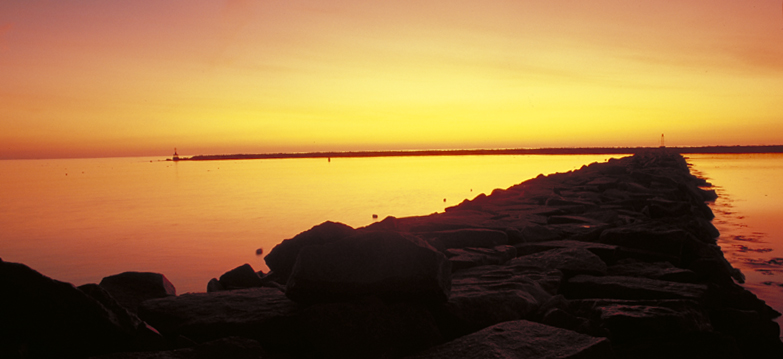
  • “Never believe that a few caring people can’t change the world. For, indeed, that’s all who ever have.”            Margaret Mead   block-isle-jetty
  • “If you do not change direction, you may end up where you are heading.”  Lao Tzu
  • “It is not the strongest of the species that survives, nor the most intelligent that survives. It is the one that is the most adaptable to change.”  Charles Darwin
  • “For the past 33 years, I have looked in the mirror every morning and asked myself: ‘If today were the last day of my life, would I want to do what I am about to do today?’ And whenever the answer has been ‘No’ for too many days in a row, I know I need to change something.”  Steve Jobs
  • “Progress is impossible without change, and those who cannot change their minds cannot change anything.”  George Bernard Shaw
  • “Change brings opportunity.”  Nido Qubein
  • “To improve is to change; to be perfect is to change often.”  Winston Churchill
  • “If you want to make enemies, try to change something.”  Woodrow Wilson
  • “There is nothing permanent except change.”  Heraclitus
  • “It’s the most unhappy people who most fear change.”  Mignon McLaughlin
  • “If there is no struggle, there is no progress.”  Frederick Douglass
  • “Progress is a nice word. But change is its motivator. And change has its enemies.”  Robert Kennedy
  • “One of my favorite philosophical tenets is that people will agree with you only if they already agree with you. You do not change people’s minds.”  Frank Zappa

5 Ways to Get Out of Your Own Way

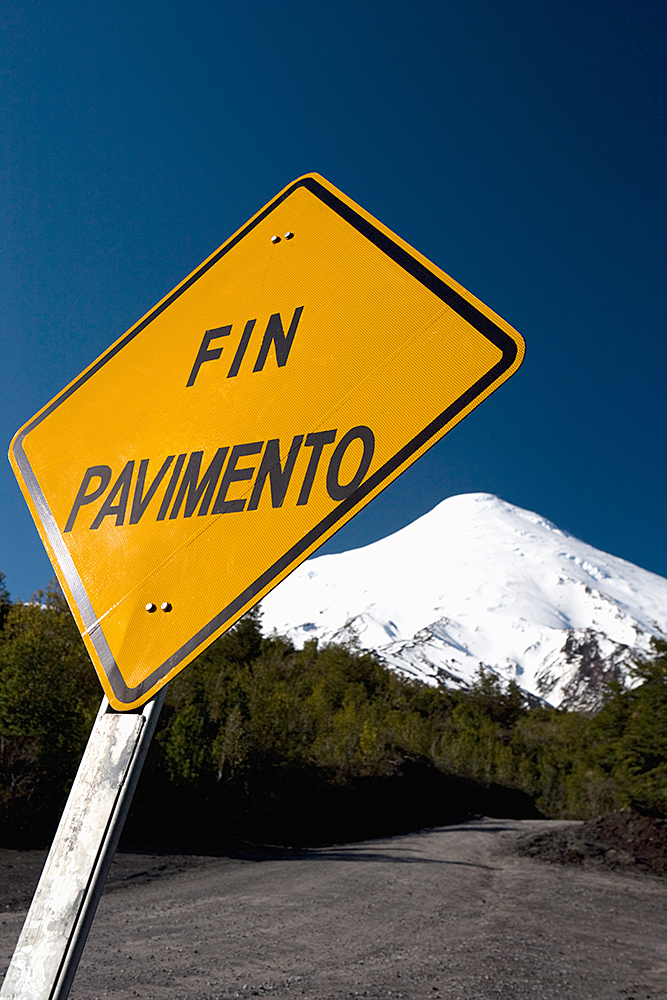
I’m sure I’m not the only one, who sabotages their self from time to time.  It could be I stop myself from saying or doing something that could help me in my career or in my relationships.  Or it could be that I didn’t stop myself from saying or doing something and paid the price.Fin Paviment (end of pavement) sign on Osorno Volcano, Lake Llanquihue, Lake District, Chile  Regardless, all those things should lead to lessons learned.  I’ve had to repeatedly learn some lessons.  Most times, I just need to get out of my own way.

Five ways to get out of your own way:

  • Let go – I am not a quitter by nature so it’s hard for me to know when to let go. When I’ve given someone or something my “all”, and things don’t work out like I may have hoped, I remind myself that I cannot control others or circumstances. I can only control how I let myself react to them.
  • Move Through It – It never seems to work if I try to ignore an uncomfortable situation.  It just prolongs the stress of the situation.  In the long run, it’s always better to deal with things head on and move through them – not around them.
  • Talk Yourself Into Things (not out of them) – We think we are being prudent to talk ourselves out of those “crazy” and risky ideas that we have, so we do.  That’s not prudent, it’s succumbing to resistance and it’s the kiss of death for someone in a creative career.
  • Don’t Expect Perfection – If you wait for things to be perfect, they usually don’t get done.  Nothing really is perfect – there is always room for improvement.  And, there never is a perfect time.  Don’t let perfectionism stop you.
  • Stop Over Thinking It – when what life throws at me overwhelms me, I need to remember to stop, breathe and try to just be in that one moment.  Whenever I begin to over think a situation, I tend to make more out of it than it really is, which only stresses me out more.  I remind myself to focus on the now and it puts things into a manageable perspective.

Orson Welles once said “If you want a happy ending, it depends on where you stop the story”. Life is a journey – let it play out.

Rejection Therapy

©Mike Rode
©Mike Rohde

A few weeks ago, I attended the World Domination Summit in Portland, OR.  Any time I‘ve mentioned this conference to my friends, their eyes get wide and they all want to know more about it.  Essentially, WDS is a worldwide gathering of creative, unconventional people who want to live a remarkable life in a conventional world.

This was my second time attending WDS and I was inspired, enlightened, invigorated and awed by the speakers like Jonathan Fields, Nancy Duarte, Tess Vigeland, Chase Jarvis and many others.  There was one speaker Jia Jiang that really resonated with me.  He talked about his 100-day “rejection therapy” project. You can watch Jia’s talk online. He must have struck a chord with a lot of other people as well, because he brought the house down.

I’m certainly not a stranger to knowing what rejection feels like.  The last two years of my life I have been rejected more times than I have probably in my entire life.  It’s not that I’ve been seeking ways to get rejected.  It’s because I’ve pushed myself into new and foreign territories – I mean that both literally and figuratively.  For example, I challenged myself in my career by producing a big film project that literally took me around the world.  But when I think about the “journey” part and the production of that film, it pales compared to the hard work, time, blood, sweat and plenty of tears on getting the film seen. I got scads of rejection letters and emails from film festivals, distributors and agents but most outsiders see only my successes.

When I heard Jia talk about his rejections that led to his “rejection therapy”, I understood exactly how he felt.  In a way, I’ve lived my life like Jia’s rejection therapy. But, it wasn’t because I set out to heal myself from some missteps and misses that didn’t work out for me.  As I look back at some of the things that I’ve done in my life, I realize now that I was simply naively bold enough to do them.

I can’t really say that I have ever gotten used to rejection.  It continues to hit me hard at times.  But when that happens, I stop and I think about all the wonderful and crazy things that I’ve done in my life that never would have happened if I had let my past rejections stop me. I suppose I’m like one of those blow up punching bags that keeps popping back up.

Karma and Being Real

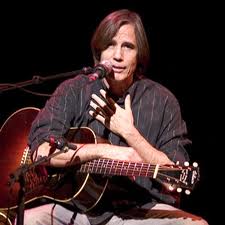
I had an awesome night last night.  My husband and I had tickets to a Jackson Browne concert. The seats were way up in the up most reaches of an old theater in New Brunswick, NJ.  They weren’t great tickets, but nevertheless, they were tickets to a concert by Jackson Browne, my favorite singer/songwriter.

During intermission, a guy, who had climbed four extremely steep flights of steps, walked into the “gallery” and announced that he had one available ticket in the third row and asked “Does anybody want it?” After a minute of trying to comprehend what the man had said, I spoke up and said “I’ll take it” and then asked  “Is it really in the third row?.  He confirmed, and then I asked my husband “you don’t mind do you?, gave him a kiss and flew down to my “new” seat.

It was an amazing night, JBto sit so close and be able to see and feel the music.  Jackson is one of the most intimate and real songwriters around and I got totally absorbed into his performance. I thought about my stroke of luck in getting that seat.  I thought perhaps my luck was changing after a very “trying” month. It was like a karmic blessing.

As I watched and listened to Jackson, I saw an artist whose talents and music have endured the test of time.  His topics and lyrics are just as relevant as they were when I first started following him, some 40 years ago.  That’s because he writes about the human experience – the triumphs and the failures that we all have.  He strikes a nerve with his truth and honesty.  Some say his music defines a generation.  Perhaps.  But Jackson’s music certainly defines who he is.  He’s about as authentic as you can be.

Jackson inspires me to create from my true self and do the work that I am meant to do.  He also inspires me to be a better person. After his encore, he waved to the audience and said, “Be good to each other”.  That said it all.

 From The Pretender, by Jackson Browne

I want to know what became of the changes
We waited for love to bring
Were they only the fitful dreams
Of some greater awakening
I’ve been aware of the time going by
They say in the end it’s the wink of an eye
And when the morning light comes streaming in
You’ll get up and do it again
Amen

Wipe Your Knees Before Entering

I just learned that Bob Gilka, legendary Director of Photography at the National Geographic for over 20 years passed away yesterday.  He was 96 years old.  Bob was the “real deal” and he will be missed by many, but his legacy lives on in all the photographers careers that he shaped and mentored. I am reposting a blog that I wrote about Bob on December 1, 2009.  Rest in peace Mr. Gilka.

Back in the eighties when I was starting out, every six months or so I made the pilgrimage to Washington DC to see Bob Gilka, The Director of Photography at the National Geographic Magazine.  He was the guy who decided if you would shoot for the magazine. doormat2  He was accessible, answered his own phone and made appointments to look at work. How times have changed.

Gilka was a man of few words and because of that seeing him was always a bit intimidating.  If all you had were images to show – and nothing to say, you’d pretty much be in and out of his office in the amount of time it took to click through your slides. Knowing this, I did my homework prior to the appointment. I’d come up with about 10 query ideas, research back issues of the magazine to make sure they hadn’t been done before and have at least one idea written up in a story proposal.

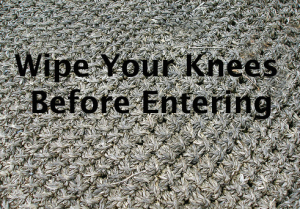
I’ll never forget the first time I went to Gilka’s office.  His secretary met me in the lobby, and led me to a small area just outside his office.  There on his door was a doormat –with words that read “Wipe Your Knees Before Entering”.  Talk about feeling intimidated – as if it wasn’t intimidating enough just to be meeting with the Director of Photography  at the  National Geographic.

So every six months or so I would show my images and pitch my ideas.  This went on for about two years.  Each time I went I would almost test myself to see how long I could stay in his office.  I would do my best to sell my story pitches that I felt the strongest about and he would reply – “done it –doing it – or – don’t want to do it”.  This coupled with a few words of encouragement in regards to some of my photographs would pretty much be it as far as feedback.

Then one day he kept me waiting.  He had been detained in a meeting.  I had scheduled a pretty tight day to maximize my trip to Washington – so the delay had thrown a wrench into me keeping my other appointments that I had scheduled.  When Gilka did show up and apologized, I was already feeling quite anxious and showed it.  I told him that I didn’t have much time because I had to be across town at the Smithsonian in 20 minutes.  He picked up the phone, called Declan Haun, the picture editor I was headed to see at Smithsonian Magazine and explained that Gail Mooney was running late due to his tardiness.  Then he proceeded to look at my pictures and hear me out.

When I did get to the Smithsonian, it was amusing to see how curious Declan Haun was to find out who this Gail Mooney was that got Bob Gilka to call ahead for her. The very next month, I got a call from Bob Gilka offering me my first assignment.  Guess I just needed to show my real self. I had sufficiently shown my interest and determination in wanting to shoot for them. And I had demonstrated my photographic ability through my images.  But it was when I showed my true spirit that he knew that I could shoot for them.  I just had to get over my fright.

Dealing with Adversity

If there’s one thing I learned from my parents growing up is “you never get anywhere if you take the approach that someone has to lose, in order for you to win”.  They were trying to tell me that I can’t control the actions of others.  I can only control who I am and what I do.

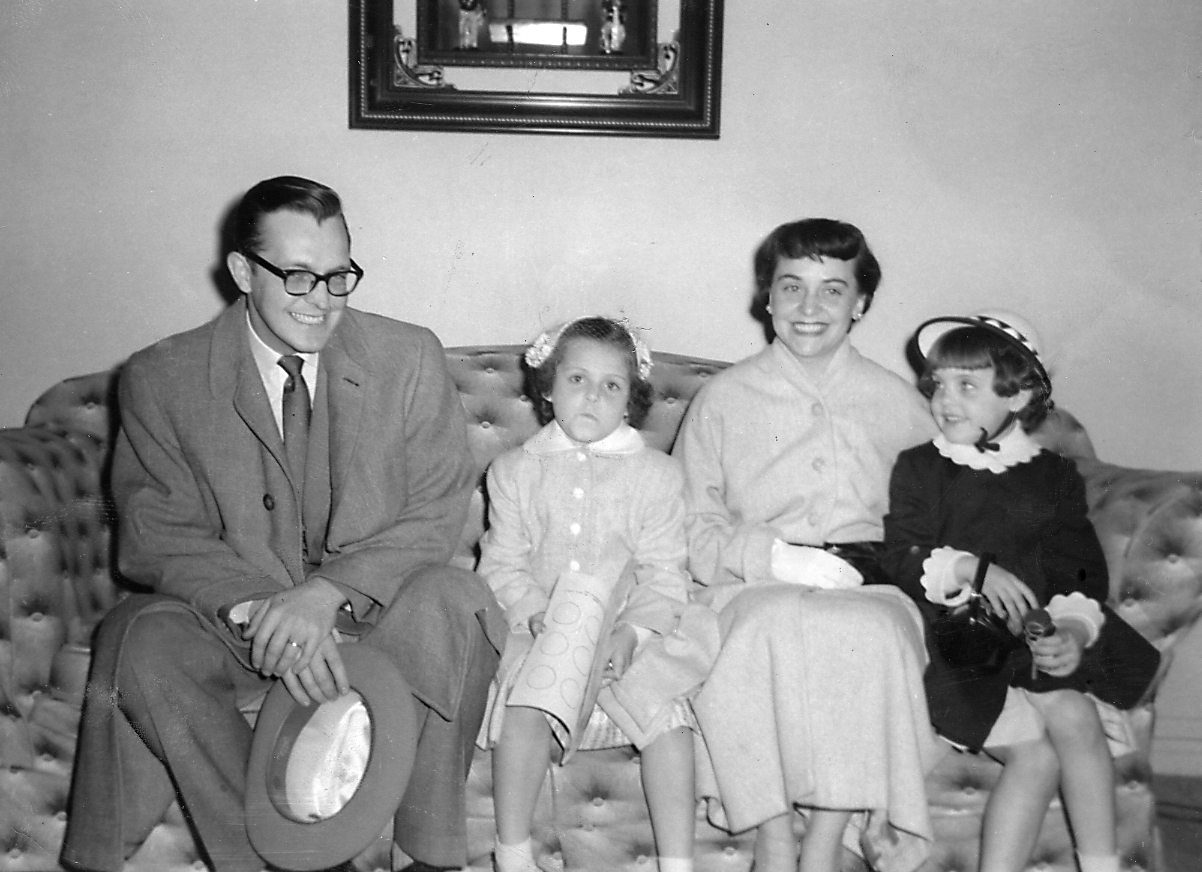
My folks family easterare both gone now, and I’m grateful for all of their words of wisdom. I try my best to live my life with the strength of character that my parents had.  They weren’t perfect by any means and neither am I.  But when things get rough in my life, as they have this past month, I draw on what my parents taught me and I try to get back on track.

I’d like to share some other words of wisdom from my folks:

  • Be the best you can be, instead of trying to be better than someone else.
  • When someone treats you poorly, it’s rarely about you – it’s about them.
  • Humans have frailties – show compassion when they fall short.
  • Never expect more than you are willing to give.
  • When you stand up for what is “right” – realize you may be the only one standing.
  • Friends come and go.  Honor the ones who stick with you to the end.
  • There is only one truth.
  • Forgive those who hurt you – including yourself.
  • Stay clear of folks who bad mouth others because one day you will be the one they are bad mouthing.
  • Things are meant to happen for a reason.  Remember that at your darkest hours because it’s usually a signal that you need to make a change in your life.
  • Don’t feel sorry for yourself – there’s always someone who is worse off than you.
  • When you are afraid to take a risk in life, ask yourself “what’s the worst thing that could happen?”

Thanks Mom and Dad for what you have taught me.  You have given me the strength and courage when I have needed it the most.

Embrace Unpopularity

There have been more than a few times in my life when I have said something or spoken my mind that made me “unpopular”.   You would think that I would learn.  Learn to keep my mouth shut.  Learn to be more diplomatic.  Learn to say the things that people want to hear, rather than say the things that I feel need to be said.  But, yet I seem to have a knack of saying and doing things that make me “unpopular”.

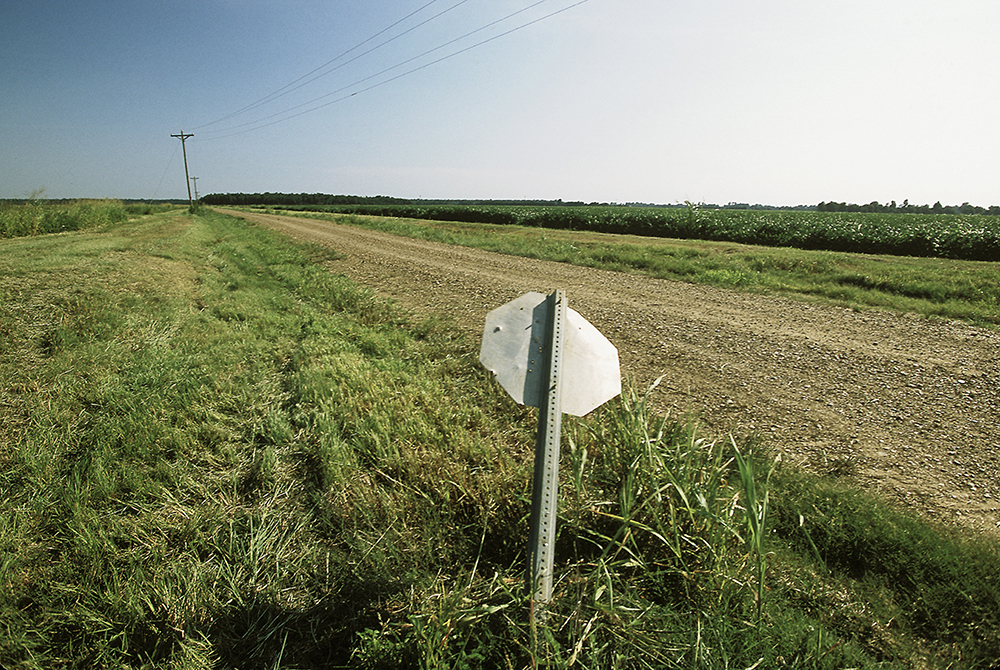
I just can’t seem to help myself from being true to who I am.  And each time, I’ve done or said something that seems to polarize the status quo; I beat myself up for it.  Bent stop sign at crossroads, Mississippi DeltaYou would think I would learn.  After listening to this TED talk this morning, I have learned.  And what I have learned is that maybe I’ve been trying to appeal to the wrong demographic.

In the talk, speaker Erika Napoletano, states:  “We spend our lives trying to build ourselves into something that other people think that we should be, when in fact we should be spending our time trying to actively polarize our audience.  Give them tools to help them know whether or not they should love us and give it early and give it often. Because that’s when we stop wasting time, both ours and every one else’s”.  Erika went on to say some things that really resonated with me because she was being perfectly honest.

I am a creative being – a photographer, a filmmaker, a writer and an explorer of what the world has in store.  After listening to Erika’s talk, I realized that I have wasted an awful lot of time and effort trying to appeal to the wrong demographic – the “popular” and the “majority”.  When I think about the things that I have created that I am most proud of, and that have been the most gratifying, I realize that every one of those triumphs have come when I’ve been honest and true to myself.  In other words – I’m at my best, when I stop apologizing for who I am and instead, I embrace it.

So, when I wake up on those mornings after I’ve beaten myself black and blue for being who I am, I try to remember that “being myself” is better than the alternative – trying to politely appeal to the “popular” crowd.  While, it may be easier to fall in step with the “status quo”, it is not only counter-productive to being true to oneself, it stifles creativity.

It’s tough to stay true to oneself in a society that often teaches us to favor politeness over honesty but at the end of the day, it’s far more rewarding.

“Here’s to the Crazy Ones.  The misfits.  The rebels. The troublemakers. The round pegs in the square holes.  The ones who see things differently”.  Steve Jobs

The Top 5 Mistakes the Chicago Sun-Times Made

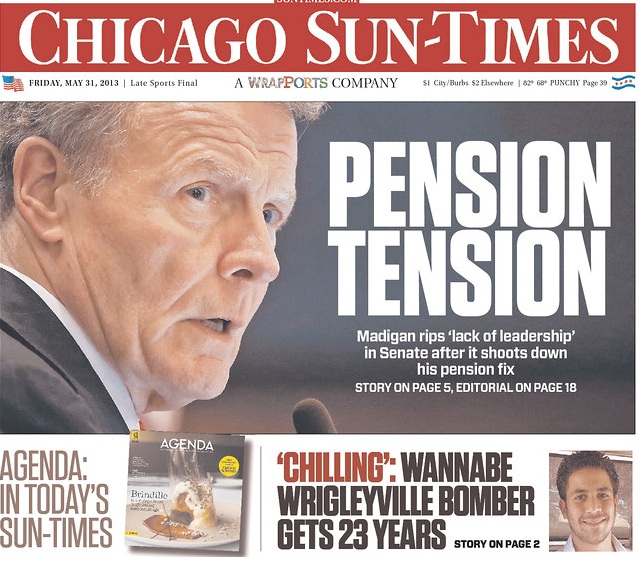
There’s been quite a lot of talk over the last couple days about the Chicago Sun-Times ChicagoSunTimeslaying off their entire staff of photographers.  When media writer Robert Feder posted on his Facebook Page , he was flooded with nasty comments about what the paper was doing.

“Sun-Times reporters begin mandatory training today on “iPhone photography basics” following elimination of the paper’s entire photography staff. “In the coming days and weeks, we’ll be working with all editorial employees to train and outfit you as much as possible to produce the content we need,” managing editor Craig Newman tells staffers in a memo.”

There has been general outrage amongst professional photographers on listservs and social media channels adding to the extreme angst that already exists in this demographic.  I’ve been giving this a lot of thought, not only over the last couple of days but over the last decade as technology has thrust enormous change on my industry.  If I allow myself to look at the state of professional photography as an unsustainable profession because of these technological changes, than that’s what it will be – an unsustainable profession for me.  But if I turn the “problem” into an “opportunity” and realize that technology has brought me a lot more possibilities in how to monetize my craft, then I will have a profession that I will be able to sustain.

Biggest Mistakes that the Sun-Times Made when they got rid of their staff photographers:

  1. Cheated their readers.  Their readers will see the difference in the photographs that their paper is running.  A professional photojournalist doesn’t just take a picture – they capture a storytelling image.  They are visual communicators and they are good at it.  They make the viewer feel, empathize or connect with their images. I don’t think it will take a long time before their readers see that the paper’s photos aren’t any better than theirs or their friends and have no reason to get the story from the Sun-Times.
  2. Focused on the technology – the iphone.  How many times have I said “It’s not about the tool”?  Do I think that the iphone isn’t a viable tool for taking good photos?  No, in fact if it is the only “camera” you have on hand when a story is breaking – then it becomes the best camera for the job.  On the other hand, the same day the paper sent the memo out to their staff about the layoffs, their front page was covered with images that one wouldn’t have a chance of getting if all they had was an iphone.
  3. Burdened their writers with another job.  Let’s face it, something is going to suffer.  Just like when I try to shoot both video and still images on the same job myself, I always feel like I have the wrong camera for the wrong moment.  A lot of my writer friends can take pretty good photographs, and some merely make a “reference” shot of what’s happening, instead of an image that captures a story.  A writer’s workflow is different than that of a photographer.  Writers go out in the field and gather facts and write the story for the most part, back at the office.  A photographer does pretty much everything in the field.  Nowadays, many times that includes the edit.  Something will suffer, when one person sets out to do two totally different types of jobs.
  4. Made their “cuts” in the wrong place.  They undermined what a professional photojournalist brings to their paper.  You can’t find a more passionate, committed group than photojournalists.  They work long hours, under terrible conditions – many times dangerous ones, receive a lousy pay, but will go above and beyond to deliver “the story”.  Some say this was a “union busting” move and that after a decent amount of time, the paper will begin to hire photographers who will work for less and no benefits.  If that’s the case, then shame on them for cutting out health benefits for such a committed group of people. In the long run,  that is not a sustainable business model.
  5. They forgot that technology works both ways.  Let’s hope that photographers don’t forget that they can use technology to their advantage – that is if they can get past their fear.  Alex Garcia of the Chicago Tribune, writes in a blog post:  “Fear is the worst and greatest enemy of photographers. Why? Physiologically, fear triggers the fight or flight complex. You can’t think creatively, imaginatively and proactively when your entire body is pumping blood and adrenaline to the parts of your body necessary to fight barbarians at the gate. It pushes your body into a reactive-about-to-become-a-victim state of mind. The very creativity that is your unique selling proposition as a photographer is crippled. Your body become’s your mind’s worst enemy.

We no longer need a publisher to publish our images.  With technology we can create and publish with a variety of platforms and portals.  Just take a look at Issuu a portal for digital publishing. With a modest amount of effort, I put together a test for a new magazine called “The Back Story”.  Future issues will be composed of my image outtakes from the dozens of commissioned assignments that I’ve shot over the years.  Maybe, down the road it will include other photographers’ work and give the readers an opportunity to see the images that never ran and get “the back story.”

Fear not, my fellow professional photographers.  We are in a position of opportunity if we begin to realize that and make a conscious effort to change our mindset.  We don’t have  control over the choices that the Sun-Times or any other newspaper makes. We only have control over how we react to those changes. If we think and act smart and not from a position of fear, maybe one of the best business decisions we can make is to take control, and create and publish story telling images that the public will want to see.  And the public  won’t be finding those kinds of images in the Chicago Sun-Times.