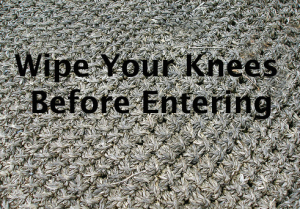
Wipe Your Knees Before Entering

I just learned that Bob Gilka, legendary Director of Photography at the National Geographic for over 20 years passed away yesterday.  He was 96 years old.  Bob was the “real deal” and he will be missed by many, but his legacy lives on in all the photographers careers that he shaped and mentored. I am reposting a blog that I wrote about Bob on December 1, 2009.  Rest in peace Mr. Gilka.

Back in the eighties when I was starting out, every six months or so I made the pilgrimage to Washington DC to see Bob Gilka, The Director of Photography at the National Geographic Magazine.  He was the guy who decided if you would shoot for the magazine. doormat2  He was accessible, answered his own phone and made appointments to look at work. How times have changed.
Gilka was a man of few words and because of that seeing him was always a bit intimidating.  If all you had were images to show – and nothing to say, you’d pretty much be in and out of his office in the amount of time it took to click through your slides. Knowing this, I did my homework prior to the appointment. I’d come up with about 10 query ideas, research back issues of the magazine to make sure they hadn’t been done before and have at least one idea written up in a story proposal.

I’ll never forget the first time I went to Gilka’s office.  His secretary met me in the lobby, and led me to a small area just outside his office.  There on his door was a doormat –with words that read “Wipe Your Knees Before Entering”.  Talk about feeling intimidated – as if it wasn’t intimidating enough just to be meeting with the Director of Photography  at the  National Geographic.

So every six months or so I would show my images and pitch my ideas.  This went on for about two years.  Each time I went I would almost test myself to see how long I could stay in his office.  I would do my best to sell my story pitches that I felt the strongest about and he would reply – “done it –doing it – or – don’t want to do it”.  This coupled with a few words of encouragement in regards to some of my photographs would pretty much be it as far as feedback.

Then one day he kept me waiting.  He had been detained in a meeting.  I had scheduled a pretty tight day to maximize my trip to Washington – so the delay had thrown a wrench into me keeping my other appointments that I had scheduled.  When Gilka did show up and apologized, I was already feeling quite anxious and showed it.  I told him that I didn’t have much time because I had to be across town at the Smithsonian in 20 minutes.  He picked up the phone, called Declan Haun, the picture editor I was headed to see at Smithsonian Magazine and explained that Gail Mooney was running late due to his tardiness.  Then he proceeded to look at my pictures and hear me out.

When I did get to the Smithsonian, it was amusing to see how curious Declan Haun was to find out who this Gail Mooney was that got Bob Gilka to call ahead for her. The very next month, I got a call from Bob Gilka offering me my first assignment.  Guess I just needed to show my real self. I had sufficiently shown my interest and determination in wanting to shoot for them. And I had demonstrated my photographic ability through my images.  But it was when I showed my true spirit that he knew that I could shoot for them.  I just had to get over my fright.
Dealing with Adversity

If there’s one thing I learned from my parents growing up is “you never get anywhere if you take the approach that someone has to lose, in order for you to win”.  They were trying to tell me that I can’t control the actions of others.  I can only control who I am and what I do.

My folks family easterare both gone now, and I’m grateful for all of their words of wisdom. I try my best to live my life with the strength of character that my parents had.  They weren’t perfect by any means and neither am I.  But when things get rough in my life, as they have this past month, I draw on what my parents taught me and I try to get back on track.

I’d like to share some other words of wisdom from my folks:

  • Be the best you can be, instead of trying to be better than someone else.
  • When someone treats you poorly, it’s rarely about you – it’s about them.
  • Humans have frailties – show compassion when they fall short.
  • Never expect more than you are willing to give.
  • When you stand up for what is “right” – realize you may be the only one standing.
  • Friends come and go.  Honor the ones who stick with you to the end.
  • There is only one truth.
  • Forgive those who hurt you – including yourself.
  • Stay clear of folks who bad mouth others because one day you will be the one they are bad mouthing.
  • Things are meant to happen for a reason.  Remember that at your darkest hours because it’s usually a signal that you need to make a change in your life.
  • Don’t feel sorry for yourself – there’s always someone who is worse off than you.
  • When you are afraid to take a risk in life, ask yourself “what’s the worst thing that could happen?”

Thanks Mom and Dad for what you have taught me.  You have given me the strength and courage when I have needed it the most.

Embrace Unpopularity

There have been more than a few times in my life when I have said something or spoken my mind that made me “unpopular”.   You would think that I would learn.  Learn to keep my mouth shut.  Learn to be more diplomatic.  Learn to say the things that people want to hear, rather than say the things that I feel need to be said.  But, yet I seem to have a knack of saying and doing things that make me “unpopular”.

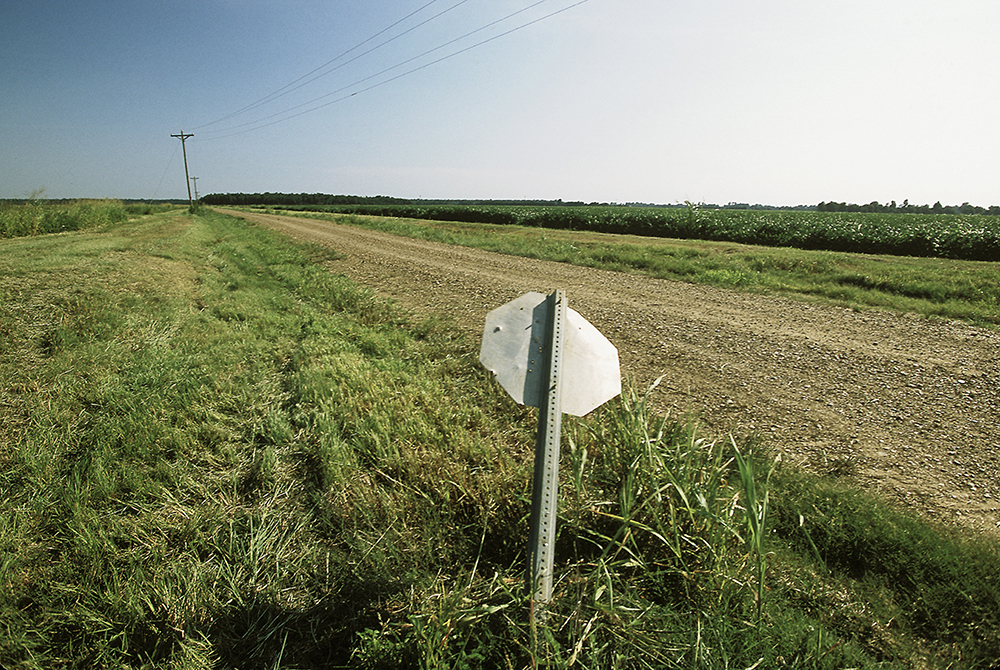
I just can’t seem to help myself from being true to who I am.  And each time, I’ve done or said something that seems to polarize the status quo; I beat myself up for it.  Bent stop sign at crossroads, Mississippi DeltaYou would think I would learn.  After listening to this TED talk this morning, I have learned.  And what I have learned is that maybe I’ve been trying to appeal to the wrong demographic.

In the talk, speaker Erika Napoletano, states:  “We spend our lives trying to build ourselves into something that other people think that we should be, when in fact we should be spending our time trying to actively polarize our audience.  Give them tools to help them know whether or not they should love us and give it early and give it often. Because that’s when we stop wasting time, both ours and every one else’s”.  Erika went on to say some things that really resonated with me because she was being perfectly honest.

I am a creative being – a photographer, a filmmaker, a writer and an explorer of what the world has in store.  After listening to Erika’s talk, I realized that I have wasted an awful lot of time and effort trying to appeal to the wrong demographic – the “popular” and the “majority”.  When I think about the things that I have created that I am most proud of, and that have been the most gratifying, I realize that every one of those triumphs have come when I’ve been honest and true to myself.  In other words – I’m at my best, when I stop apologizing for who I am and instead, I embrace it.

So, when I wake up on those mornings after I’ve beaten myself black and blue for being who I am, I try to remember that “being myself” is better than the alternative – trying to politely appeal to the “popular” crowd.  While, it may be easier to fall in step with the “status quo”, it is not only counter-productive to being true to oneself, it stifles creativity.

It’s tough to stay true to oneself in a society that often teaches us to favor politeness over honesty but at the end of the day, it’s far more rewarding.

“Here’s to the Crazy Ones.  The misfits.  The rebels. The troublemakers. The round pegs in the square holes.  The ones who see things differently”.  Steve Jobs

The Top 5 Mistakes the Chicago Sun-Times Made

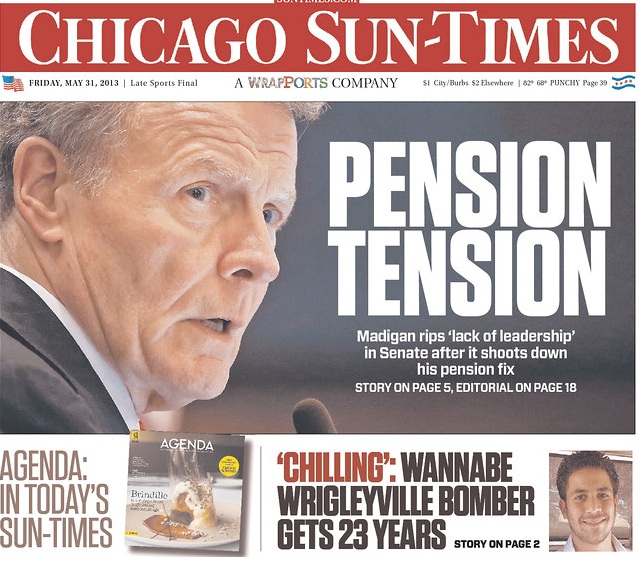
There’s been quite a lot of talk over the last couple days about the Chicago Sun-Times ChicagoSunTimeslaying off their entire staff of photographers.  When media writer Robert Feder posted on his Facebook Page , he was flooded with nasty comments about what the paper was doing.

“Sun-Times reporters begin mandatory training today on “iPhone photography basics” following elimination of the paper’s entire photography staff. “In the coming days and weeks, we’ll be working with all editorial employees to train and outfit you as much as possible to produce the content we need,” managing editor Craig Newman tells staffers in a memo.”

There has been general outrage amongst professional photographers on listservs and social media channels adding to the extreme angst that already exists in this demographic.  I’ve been giving this a lot of thought, not only over the last couple of days but over the last decade as technology has thrust enormous change on my industry.  If I allow myself to look at the state of professional photography as an unsustainable profession because of these technological changes, than that’s what it will be – an unsustainable profession for me.  But if I turn the “problem” into an “opportunity” and realize that technology has brought me a lot more possibilities in how to monetize my craft, then I will have a profession that I will be able to sustain.

Biggest Mistakes that the Sun-Times Made when they got rid of their staff photographers:

  1. Cheated their readers.  Their readers will see the difference in the photographs that their paper is running.  A professional photojournalist doesn’t just take a picture – they capture a storytelling image.  They are visual communicators and they are good at it.  They make the viewer feel, empathize or connect with their images. I don’t think it will take a long time before their readers see that the paper’s photos aren’t any better than theirs or their friends and have no reason to get the story from the Sun-Times.
  2. Focused on the technology – the iphone.  How many times have I said “It’s not about the tool”?  Do I think that the iphone isn’t a viable tool for taking good photos?  No, in fact if it is the only “camera” you have on hand when a story is breaking – then it becomes the best camera for the job.  On the other hand, the same day the paper sent the memo out to their staff about the layoffs, their front page was covered with images that one wouldn’t have a chance of getting if all they had was an iphone.
  3. Burdened their writers with another job.  Let’s face it, something is going to suffer.  Just like when I try to shoot both video and still images on the same job myself, I always feel like I have the wrong camera for the wrong moment.  A lot of my writer friends can take pretty good photographs, and some merely make a “reference” shot of what’s happening, instead of an image that captures a story.  A writer’s workflow is different than that of a photographer.  Writers go out in the field and gather facts and write the story for the most part, back at the office.  A photographer does pretty much everything in the field.  Nowadays, many times that includes the edit.  Something will suffer, when one person sets out to do two totally different types of jobs.
  4. Made their “cuts” in the wrong place.  They undermined what a professional photojournalist brings to their paper.  You can’t find a more passionate, committed group than photojournalists.  They work long hours, under terrible conditions – many times dangerous ones, receive a lousy pay, but will go above and beyond to deliver “the story”.  Some say this was a “union busting” move and that after a decent amount of time, the paper will begin to hire photographers who will work for less and no benefits.  If that’s the case, then shame on them for cutting out health benefits for such a committed group of people. In the long run,  that is not a sustainable business model.
  5. They forgot that technology works both ways.  Let’s hope that photographers don’t forget that they can use technology to their advantage – that is if they can get past their fear.  Alex Garcia of the Chicago Tribune, writes in a blog post:  “Fear is the worst and greatest enemy of photographers. Why? Physiologically, fear triggers the fight or flight complex. You can’t think creatively, imaginatively and proactively when your entire body is pumping blood and adrenaline to the parts of your body necessary to fight barbarians at the gate. It pushes your body into a reactive-about-to-become-a-victim state of mind. The very creativity that is your unique selling proposition as a photographer is crippled. Your body become’s your mind’s worst enemy.

We no longer need a publisher to publish our images.  With technology we can create and publish with a variety of platforms and portals.  Just take a look at Issuu a portal for digital publishing. With a modest amount of effort, I put together a test for a new magazine called “The Back Story”.  Future issues will be composed of my image outtakes from the dozens of commissioned assignments that I’ve shot over the years.  Maybe, down the road it will include other photographers’ work and give the readers an opportunity to see the images that never ran and get “the back story.”

Fear not, my fellow professional photographers.  We are in a position of opportunity if we begin to realize that and make a conscious effort to change our mindset.  We don’t have  control over the choices that the Sun-Times or any other newspaper makes. We only have control over how we react to those changes. If we think and act smart and not from a position of fear, maybe one of the best business decisions we can make is to take control, and create and publish story telling images that the public will want to see.  And the public  won’t be finding those kinds of images in the Chicago Sun-Times.


Condensing a Life

I have lived in the house that I am in for 19 years. For a kid who grew up going to a new school every year until the fourth grade, this has been the longest I have ever lived anywhere.  My husband and I raised a child in this home.  We also work here, running our photography business out of a separate section of the house.  What that means is that we’ve done a lot of living in this house and with that comes the accumulation of “stuff”.

When you live the kind of life I do, always moving forward with new projects and exploring the world, you don’t realize what a past you’ve had until you begin the process of getting rid of things you no longer need.  That’s what I have been doing recently, sorting through years worth of “stuff” and tossing what I don’t need anymore.

I spent the day yesterday, taking on just one small corner of my office, going through folders that contained everything from old stock photo delivery memos, caption information for dozens of destinations, financial information, old contact info, lists of goals and good intentions and LOTS of correspondence.

And that’s where I got totally sidetracked from my mission, looking through almost 20 years of correspondence.  There were many letters from a friend who died long ago.  My friend had also been a mentor to me, and his letters were thoughtful, insightful and full of encouragement. I suppose I have kept those letters all these years to remind me of where I was at during that time in my life.

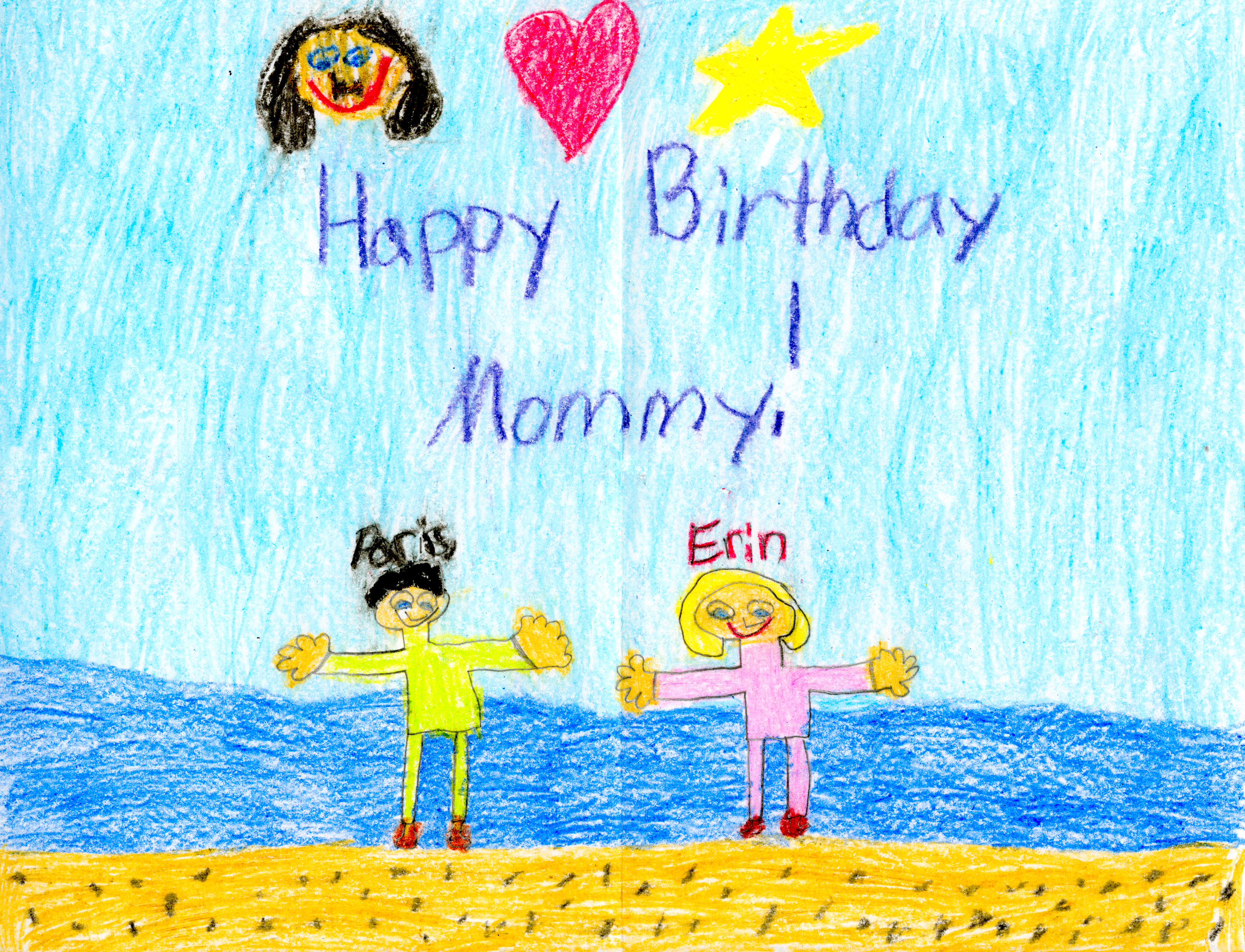
There were plenty of other letters and note cards from people who have been part of my life, including a card from my daughter withErin+Paris at the beach 1995 Happy Birthday Mommy a crayon drawing inside that she had made.  It brought back of vivid memory of when I had received it.  It was my birthday and I had been on a very long assignment, shooting in France, and as great as that sounds, (and it was) it was also hard because I missed my family terribly.

It was a bittersweet experience, going through decades of correspondence, but I’m grateful that I kept some of it.  It was like tangible evidence of chapters of my life and it somehow felt more real than my electronic archives do.  And so, while I spent hours shredding documents, feeling like I was in the movie Argo, there’s just some things I’m not quite ready to let go of. For now those tangible memoirs will stay in that corner of the office until the next edit.

Fear and Innovation

One Fear illustration from Book of Fears
One Fear illustration from Book of Fears (Photo credit: Wikipedia)

We are taught from an early age to conform.  Think about it.  Schools emphasize conformity with rules, regulations and a system built on recitation and memorization. We are told there are two types of answers – “right” and “wrong” ones. I suppose when speaking about math and science, it could be stated that there are only two types of answers or conclusions – it’s either right or wrong.  But is that true?  Are there really only two types of answers?  Or is that merely a mechanism that makes it easier to grade tests and papers?

Is it any wonder that we are programmed from an early age NOT to be innovative or creative with our thinking?  Is it any wonder that we are afraid or fearful to take a leap and question something?  But what are we afraid of? Essentially, we are afraid to be wrong.  We are afraid to fail.  So what do we do?  We let our fear stop us and in doing so we stifle creativity and innovation.

We have been trained to obey rules, comply, sit and stand in an orderly fashion, “don’t rock the boat”, “be a good soldier”, and in the process we stifle innovation and growth.  The problem is that “system” left over from the industrial age doesn’t work anymore. The world has changed.  These days, people are entering a “workforce” that is no longer contained within geographic boundaries with an established set of rules and controls. It’s out of our control. Wow, that’s enough to make anyone afraid.

So, what do most people do when their world is changing and they are scared to death?  Sadly, they tend to desperately hold onto a system that is broken and no longer serves them well.  They spend enormous amounts of energy defending this broken system from the past because it’s all they know.

We can either succumb to change, and merely react to it little by little over time, until there isn’t much left of a life we once knew, or we can face our fears and take responsibility for our lives.  In order to do that, we need to change our outlook and identify what it is we are really afraid of.  Ironically, what most of us fear is failing, so in an effort to protect ourselves from this fear – we ultimately fail because we end up with a life that brings few rewards.

Listen to what Sue Bryce and Seth Godin have to say on this topic.

Storytelling – Words or Pictures?

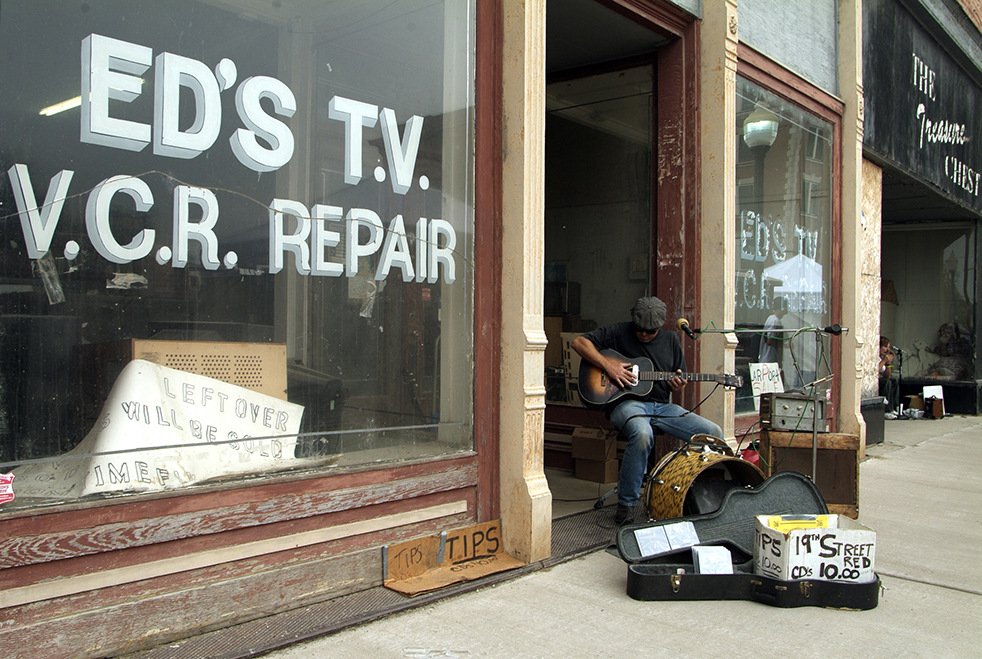
I have always been a visual communicator.  For over 35 years I have been making a living taking photographs for magazines all over the world.  I have always “seen” the world and captured its stories through visuals.  Somehow, it was far easier for me to communicate with images than with words.  Sidewalk performer King Biscuit Festival Helena, ArkansasBut it was also a bit frustrating for me because many times when I was photographing a person, I felt like I was leaving a portion of their story untold.

When I photograph people, invariably I spend a good deal of time talking and listening to them.  It’s this rapport that usually enables me to capture a more intimate photograph. For me, this has always been my favorite part of the “process”, yet I never had an outlet for my subjects’ words, other than through the captions of my photographs.

When I started producing documentaries, my conversations with my subjects finally had an outlet through their recorded interviews that became the backbone of the “script”.  Even though the script was not something that I wrote using my own words, I was instrumental in the process because I was selecting the words and giving them an order.  I was involved in the process and structure of screenwriting.

In recent years, I have become fascinated with story structure and screenwriting.  I have read numerous books on the topic of screenwriting and this past weekend I decided to immerse myself in an intensive 3-day workshop with John Truby.  John has taught some of the best screenwriters around.  I knew going into this, it was going to be a great and informative workshop, but I had no idea how rewarding it would be.  Essentially, John gave me knowledge of the “process” and the structure of storytelling to enable me to take an idea and turn it into a really good story.

I have come away from this workshop with a deeper understanding and respect for a well-written story.   We can all spot poor writing in a film.  It stands out.  Even the layman who knows nothing about “the process” or story structure can identify really bad writing.  The audience may not know why the story or the film doesn’t work – they just know it doesn’t and they’re not buying it.  Like any other craft, screenwriting has gone through stylistic changes over the years, but the fundamentals remain.  After all, telling stories is as old as time and there has always been a constant – and that is “the audience”.  Ultimately the audience will decide if a writer has done their job well.

I think those of us who are “content creators” in this era of multi-media communications need to broaden our understanding of all kinds of mediums in order to effectively communicate.  Many times, I see creatives become too narrowly focused on their one set of tools and in the process lose sight of their end goal  – and that is to deliver the message or story to the audience.  Ultimately, the audience will always let you know if you’ve hit the mark or not because they are looking at the “whole” and not the “parts” of the story.

Opportunities for Self-Initiated Projects

There seems to be a prevailing attitude of doom and gloom. We have an economy that can’t seem to turn itself around and we’re bombarded by change that technology continues to thrust upon us. We’re scared to death of the unknown and nobody seems to know what to do next and how to make any money doing it.

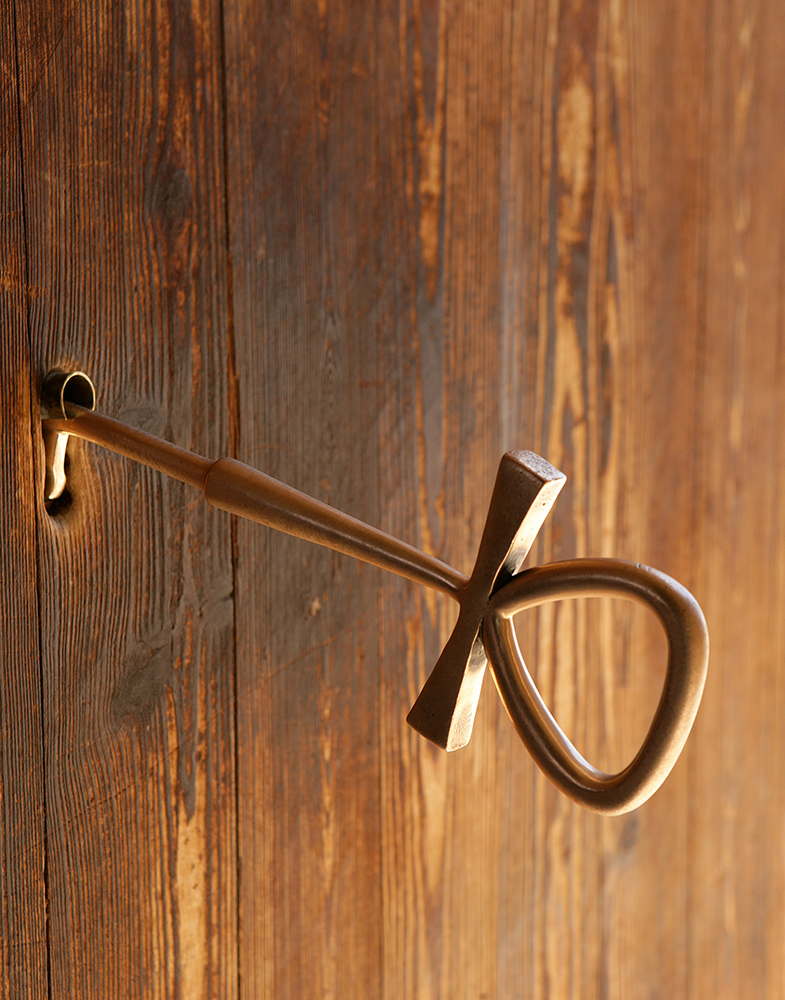
Yet, I’ve never been more hopeful in my life. Why? Key of Life, Temple of Abu Simbel, Egypt Because I no longer need someone else to validate my ideas – and that is a powerful notion.  Those of us in the communication business seem to be particularly fearful. Some believe that the “news” business is dying because print publications – newspapers and magazines are folding every week.  But the “news” business is not dying – it’s just being delivered  in another way – electronically and globally.  There are no longer just a few gatekeepers with a lock on the playing field.

Human beings are social animals and we will always have the need to communicate with each other.  These days we can communicate with one another globally.  An idea or creation can be shared around the world in a matter of minutes.  Think of the power in that and think of how we can use that power and the opportunities it presents.  I could digress into a discussion on the ethics of this thought but I’d like to focus more on the reach and influence that each one of us has in creating awareness.

Many of us get enamored with the latest devices that enable us to deliver and receive information with speed and ease. As technology’s exponential growth continues to change our lives in every way imaginable, we will constantly be incorporating and upgrading new gadgets and devices as part of our lives.  We need to be mindful that these “toys” are merely enablers and that each one of us can use these tools to create and distribute our words, images, designs and ideas across the planet.

I think that we as creative’s or journalists underestimate ourselves sometimes.  Perhaps because we chose professions that aren’t lucrative – at least in terms of money.  However, what one is paid doesn’t necessarily correlate with one’s worth. We live in a time now where we can use our creative skills to really make a difference and to tell the stories that we feel need to be told. Mass communication has been democratized. We no longer need the traditional gatekeepers to validate our ideas.

I never would have dreamed that I would be able to circumvent the globe, create a documentary with only one other person in my crew  – my daughter and then distribute it internationally. I never imagined that I would have the power to create awareness on a global level like I did when I uploaded my trailer to Vimeo.  In less than a month after it was uploaded, that trailer has been played in almost half the countries on the planet.  Staggering thought.

This was not a commissioned project by a network or a motion picture studio. If I had waited for that – it never would have happened. I assigned myself.  I was able to fund it by using my airline points, hotel rewards and doing trades with manufacturers for equipment.  I also successfully raised money via Kickstarter a crowd funding site  that made it possible for me to hire a professional editor. My daughter and I have been building an audience  since we started blogging about our journey. Our readers got more and more engaged as they followed us on our 99-day adventure around the world. They spread the word through Facebook and Twitter and via their own blogs and pretty soon word of our project spread virally. That was precisely our goal.  To use our tools and skills to create a film about the change makers of our world so that others would be inspired and motivated as to what they can do.

I often think about how things in my life and in history would have been different if we had the Internet when I was growing up.  For starters it would have had a huge effect on the Civil Rights Movement of the 1960’s and the Vietnam War.  But everything happens in its own time and when it is meant to happen.  Change can be scary or it can be embraced and sometimes both at the same time.

Never stop dreaming. Never stop learning. Always listen to that inner voice.  Then use the means and the tools of the day to do the dance you are meant to do.

Mentors and Lessons Learned

I recently visited with one of my mentors, Adrian Taylor who had been instrumental in my career.  I met Adrian when he was art director at Travel & Leisure Magazine.  He had just taken that job and relocated to NYC from San Francisco where he had been based for almost 20 years.  My partner, Tom and I had just graduated from Brooks Institute and were young eager photographers when we met Adrian. Looking back, I think that meeting was perhaps the most instrumental and fortunate bit of fate in our beginning careers.

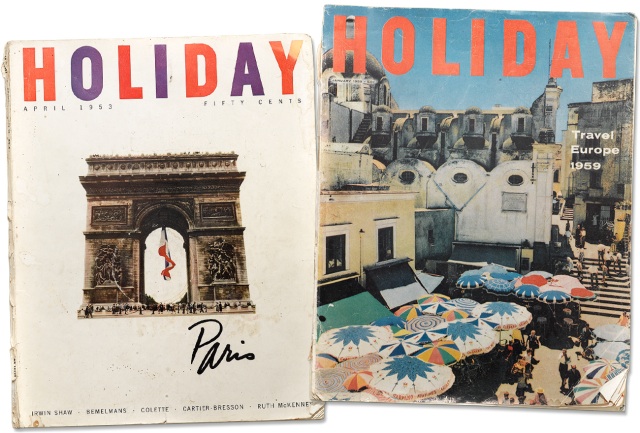
During our visit, Adrian started recanting his amazing stories of when he first got started as an art director.  He was also young and eager to learn, when Frank Zachary, editor of Holiday Magazine took him under his wing.  Adrian was reminiscing because Vanity Fair had just run a story about those early days of cn_image.size.holiday-magazineHoliday and the legendary writers and photographers who contributed to it at the time.  The contributors read like a who’s who:  John Steinbeck, Carier-Bresson, Slim Aarons, Fred Maroon, John Lewis Stage and so on.  At one point in referring to Zachary, Adrian said “he encouraged me.” Without missing a beat Tom replied, “That’s what you did for us too.”

I’ve been thinking about how important “encouragement” is for someone just starting out.  Learning technique and business tips from a mentor are very important things for young photographers to learn when first starting out, but I think perhaps the greatest gift a mentor can give is his or her encouragement.   If there were one thing that I can point to that I got from Adrian it would be just that.  He encouraged us to be the best we could be.  He believed in me so much that I couldn’t not believe in myself and that made me challenge myself and grow with every assignment.

Years later, I had a friend who became a mentor to me when I first started to write.  He too encouraged me.  At times he praised me and other times he was incredibly harsh with his comments, but I learned and I got better because of his encouragement.  He is no longer here, but his encouragement, as well as the lessons learned have played a part in my life. In fact, he gave me the courage to take on one of the most challenging projects of my life.

Mentors come and go in one’s life each making their own mark as they do.  If you should be so lucky to have people like this in your life, make sure you do one thing – take the time to make an impact on someone else’s life.  You never know what will come of that but no doubt it will make a difference, not only in that person’s life, but in your own as well.

We Are All Broadcasters

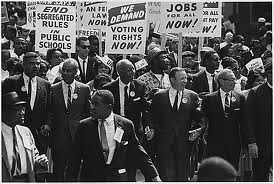
Back in the early1960’s, during the height of the Civil Rights Movement marchersthe world watched as violence and hatred played out every night on TV.  A few years later, we watched the horrors of the Vietnam War taking place on the other side of the globe, from the comfort of our living rooms. Those broadcasts made an indelible mark on me at the time, growing up in my fairly sheltered life in suburbia.  They opened my eyes to the world and I took it all in.

Yesterday, a tragic bombing occurred during the Boston Marathon that took the lives of three people and injured dozens more.  Seconds, after the first of the two bombs went off, everyone who was connected to the Internet, immediately knew what had happened, regardless of where they were in the world.  Photos, video and sound recordings went viral – globally and instantly.  Along with the “bonified” news broadcasts transmitted in real time, rumor and speculation spread instantly as well.

In the 50 plus years that have gone by since those early days of “live” news coverage, bringing “awareness” into our homes, technology continues to impact our lives in a profound way.  We are connected globally and there’s no turning back that clock.  We are no longer isolated from what is taking place anywhere and everywhere on the planet.

We are all collective participants. We can tweet, blog, post images and video on Facebook and numerous other social media platforms without really needing anyone’s validation, permission or vetting whatsoever.  Think of the power in that.  It gives everyone a voice on a global scale.  But along with that comes responsibility. It used to be that if you saw something written in a newspaper or heard it on the evening nightly news on TV, it was true and you could believe it.  But now what do we do?  How can we decipher and determine what we see and hear online is true and accurate? Ultimately, we need to make those judgments ourselves.

I’ve been thinking about this all morning, and I can only hope that as we become more connected through technology, that we start to embrace our similarities as human beings, instead of being split apart by our differences.  For those of us who are documenting the world through images and video, whether professionally or not, we are broadcasting on a global scale, on a daily basis.  Think about the power of that and the responsibility.