The Power We Have as Visual Creators

The last two weeks have been enlightening and humbling for me, and I’ll try to share some of the thoughts that have been racing through my mind.

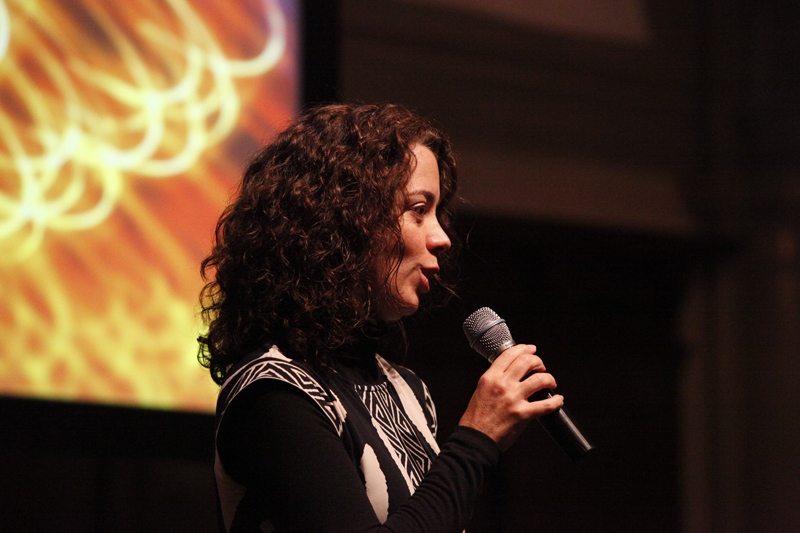
I was honored to be asked to speak about video, at ASMP’s Ohio Valley Chapter’s Photo Tech conference last week.  It’s a great event and an enthusiastic and engaged group of people.  I also had the pleasure of seeing Walt Jones presentation:  “CGI – Friend or Foe”.  Walt is a talented photographer and CGI artist.  He is in my opinion a new breed of visual communicators.  He started out by showing examples of “images” and asking the audience if they were photos or CGI.  I was 100% wrong with every one of my guesses.  The point is – I couldn’t tell the difference.  I was in awe of the power of these relatively new tools that we as “image creators” have at our fingertips.

It really got me thinking that “seeing is NOT believing” anymore and the ramifications of that.  I started thinking of the ethical consequences and how in the wrong hands this power can be misused. But as I tossed those thoughts around in my head, I realized that this is really nothing new as far as the power we, as visual creators have, to manipulate an image or skew the story or the message.  Even before Photoshop and similar applications hit the scene, we as image creators could sway opinion or belief, just by what we chose to show, or not show.  If you look back in history, photographs, film and TV, have swayed public opinion long before the tools of Photoshop and CGI.

Yesterday, I got an email from a photographer, Aaron Huey, with a link to his Ted talk.  He told the story of the Lakota Sioux Indians through his words and his images.  He presented a timeline of this tribe’s history through his words, as he showed his images of modern day Lakota on their reservation or as he refers to it – their prisoner of war camp.  It was one of the most powerful Ted talks, I have ever seen.  It also reinforced the notion of the “power” that we all have as visual creators.

I’ve been thinking about that power a lot, and the responsibility that comes with it and that I believe that we all have the obligation, to use it wisely.  A few years ago, I created a documentary entitled Freedom’s Ride, a story about two diverse groups of high school students who rode the bus together to Alabama, tracing back the Civil Rights Movement of the 1960’s. The words of one teacher that I interviewed have stayed with me.  He said, “we can pass all the laws we want – but we can’t legislate morality”.   I’ve been thinking about that statement a lot this week.  It’s never been more important than it is now, because of the tools of technology, that we make sure our moral compasses are in check and headed in the right direction.

Add to FacebookAdd to DiggAdd to Del.icio.usAdd to StumbleuponAdd to RedditAdd to BlinklistAdd to TwitterAdd to TechnoratiAdd to Yahoo BuzzAdd to Newsvine

Should You Be Thinking About Video?

For the past two years I’ve been traveling around the country presenting a seminar called “Should I Be Thinking of Video” for ASMP (American Society of Media Photographers.  This seminar had become quite popular with still photographers as interest in video escalated, partly due to the hybrid cameras and partly due to the increased demand for video content for the web and mobile devices.  The iPad in particular is a game changer and everyone seems to be keen on either creating video content or buying it.

With this rush to find or produce video, I’ve seen quite of few people attend these seminars because they feel they have to get onboard.  A few weeks ago, someone in the audience, who appeared quite annoyed, raised their hand and said, “but you didn’t answer the question – should I be thinking of video”.  He went on to say that there was nothing new about video and weren’t there plenty of videographers already out there. I replied that he needed to answer that question himself.  I could only provide him with background information about video production but that decision as far as if he should embrace video was for him to make.  I also said that yes there were plenty of videographers out there working in traditional markets that have been around for decades.  What is new is the increased demand for video because we as a society are moving more toward an electronic means of communication and away from print.

I think the most important point here is that no matter what creative path you may wish to pursue, you need to have a reason for doing it.  For me, I started shooting video more than a decade ago because as a storyteller, I felt the need for motion and sound to adequately tell the stories that I wanted to tell.  I certainly wasn’t chasing a trend – not that video is a trend.  Just like in still photography, it’s not about the tool or the camera, it’s about your vision and if you don’t know why or if you should be shooting video then how can you possibly have a clear vision.

I can probably better answer the question “should you be thinking of video?” this way.  If it’s because you have a camera that is also capable of shooting in video mode then then the answer is no – you shouldn’t be thinking of video, because you will be a technician or a button pusher and will compete with every other person who has that same tool. But if you are thinking, seeing and feeling projects and stories that are all about motion and sound, then you’ve answered that question for yourself.

Add to FacebookAdd to DiggAdd to Del.icio.usAdd to StumbleuponAdd to RedditAdd to BlinklistAdd to TwitterAdd to TechnoratiAdd to Yahoo BuzzAdd to Newsvine

“Kickstarting” a Passion Project

For anyone who has been reading my blog, you know a few things about me – I love to dialog and share with others, my work and my pleasure are one in the same and I always have a passion project that I’m working on.

I can’t say that I’ve always been like this.  In the beginning of my career it was a lot harder to dialog and share with people – pre-social media and email.  And as my career took hold and I became busier with work, I didn’t have time for sharing or personal projects.  But for someone like me who is a dreamer, I was starting to burn out.

When I started exploring the video medium in the late 90’s, it triggered a spark in me.  I started thinking and dreaming about all the stories that I wanted to tell – that would be possible for me to tell – through this medium.  One of my first attempts at telling a story with video was a short documentary I did on my daughter’s youth symphony.  I couldn’t have picked a harder subject if I tried because it was all about sound, which I knew nothing about.  And anyone who has ever shot a musical concert knows that it’s almost impossible to do with only one camera.  But I naively pursued with this project and learned a lot in the process.

My next passion project was The Delta Blues Musicians that I envisioned as a multimedia project combining still environmental portraits of these musicians along with video interviews, capturing their life’s stories.  It was a lot of work and for the most part, I went it alone – doing everything myself.  For anyone who has ever tried to shoot both stills and video on the same job, you know it’s not an easy thing to do.  That project will always be near and dear to my heart and continues to reward me in ways that I never knew were possible.

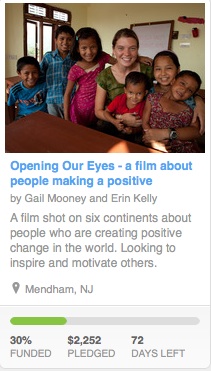
There have been other passion projects since these first two and my head is usually full of ideas that are rumbling around, just waiting for the right time to surface. I am in the midst of a project now, Opening Our Eyes that is perhaps the most ambitious one I’ve ever dreamed up. This past weekend I launched the project on Kickstarter.  Kickstarter is a website that posts creative projects for the purposes of finding funds. It’s a perfect example of crowd funding where one can donate anywhere from $1 to $10,000 to the project of their choice, and in the process make someone’s idea come to life.

I launched Opening Our Eyes on Thursday and within 3 days we reached 30 % of our goal. We still have a long way to go and have another 71 days to get fully funded.  The way Kickstarter works is that if you don’t get funded 100%, then all bets are off and you don’t receive anything.  So, I’m doing my best to do what I like the least and that is make a pitch for pledges.  My intent is to secure enough funds so that I can collaborate with a professional editor and raise the bar on the film that my daughter and I shot this past summer on our 99-day adventure around the world, about people who are making a positive difference in the world.

It’s really a win/win for anyone who chooses to give – even a pledge of $25 will get us closer to our goal and you’ll receive a DVD of our film when it’s finished.  So please check out our project on Kickstarter and pass this link along to others.  Ultimately our goal is to inspire and motivate other change-makers through the power of our film. We know we can do it with everyone’s help and it will make you feel good to give – it always does.

Add to FacebookAdd to DiggAdd to Del.icio.usAdd to StumbleuponAdd to RedditAdd to BlinklistAdd to TwitterAdd to TechnoratiAdd to Yahoo BuzzAdd to Newsvine

Fear and Isolation

I see it everywhere – people reacting – frozen by their fears. And it seems to be catching.  That’s because fearful people like company.  Somehow they feel that if they can get others to bind with them in spreading their doom, that their own fears and trepidations will be validated.

People are so angry these days because their world is changing and they feel threatened.  I see it in government where the tone these days is angry – full of hatred and fear and more time is spent pointing the finger of blame at others than in coming up with solutions to problems.

I see groups and organizations taking on a “we versus them” insular attitude, thinking that somehow by keeping people out of their exclusive group – they will have more for themselves.

I see relationships where one person may feel threatened or insecure and tries to exclude other people and relationships from their insular lives. They foolishly believe this will make their relationship stronger – the two of them against the world so to speak.

I understand why the fearful act this way.  Somehow they think that if they can convince others to go along with them in their pursuit of eliminating competition or outside influences– they will receive more.  But it doesn’t work that way.  It never has and it never will.  The simple reason is that people who spend their time telling themselves and others what won’t work or focus just on themselves, instead of embracing others and being open to possibilities, become insular and ultimately create their own demise. They are bringing nothing positive into the world – no motivation for growth – only reasons why they should stop themselves.  They predict the future in negative ways and in the process create that reality and then say, “see I told you”.

The group that tries so hard to keep things the same and feels threatened by newcomers ultimately becomes a group of old thinkers who die out.  The person who attempts to gain more attention from their mate by keeping them from their friends and outside interests, soon finds out that doesn’t bring them more attention, but rather resentment because it’s unsustainable.

There have been times in my life that I’ve been sucked into these negative mindsets and I can tell you that not only it didn’t bring anything good into my life – it kept good out.  These days, I have been giving more of myself.  I have been getting out there and meeting people, sharing with people and I’m finding out that in the process, I’ve gotten a lot more in return. But I don’t give with the expectation to receive in return – I give because in the long run, everyone benefits.

We become stronger when we allow others in our lives to give to and to learn from. We should strive to allow people in our lives who want us to succeed, because those people understand that in helping and supporting us in turning our dreams into reality – they are also creating a better environment for themselves.  And when a couple understands that when they love their mate enough to let them and their spirit soar by not manipulating or placing restrictions, their relationship will ultimately get stronger and will stand the test of time.

Think about this today.  What kind of life do you want to live?  Do you want a life of possibilities or one of predictable doom by keeping your “community” narrow and insular? You never know – that person that you decided to exclude, may have been the one who could have changed your life – in a positive way.

Add to FacebookAdd to DiggAdd to Del.icio.usAdd to StumbleuponAdd to RedditAdd to BlinklistAdd to TwitterAdd to TechnoratiAdd to Yahoo BuzzAdd to Newsvine

The Power of Yes

I’ve just experienced one of the most extraordinary weekends of my life – all because I said yes.  Barely more than a week ago, I sent an email with a link to the trailer of my documentary to Rebecca Self,

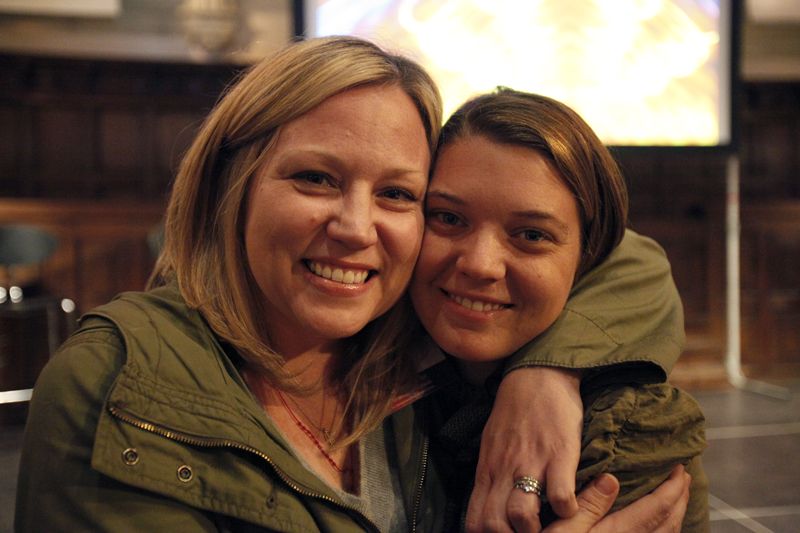
Rebecca Self at the European Summit for Global Transformation

who I was introduced to by two of the subjects in my film, Letha Sandison and Maggie Doyne.

Letha Sandison and Maggie Doyne

Rebecca is an amazing woman – she’s a connector of change makers.  The day after Rebecca got my email, she replied “Would you consider coming to Amsterdam this weekend and showing your trailer at The European Summit for Global Transformation.  My first thought was “wow” – and with a title like that, it was bound to be a gathering of very interesting people.  My next thought was, “it’s not possible – there’s not enough time – the airfare will be high” etc. etc.  All very practical thoughts – right?

And then I flipped it and told myself all the reasons I should say yes. I ‘d have the opportunity to show a culturally diverse audience a sample of my film and talk about the idea behind it. I would get to see Letha and Maggie again because they were going to be speaking.  And most importantly, I would be spending the weekend with people that not only believed that anything is possible – but are making the impossible happen, together. So I replied to Rebecca and said YES.

For two days I listened, as all kinds of people told their stories – people who are actively doing things that are making our world a better place. They awed me with their courage, their commitment and their passion.  But the most empowering part of the conference was connecting with these people, who were not only there to talk about what they were doing, but also to network with others to help them make their commitments a reality.

As I write this, on my last night in Amsterdam. I’m ready to head out to have one final dinner with some of the most fascinating  people I have ever met.  It has been a powerful weekend, being part of this group of people, from all over the world that are making extraordinary things happen.  This is what my film is all about – the power of the individual, working together to make things happen – across the globe.

To be able to show my ten-minute trailer to these amazing change makers was an honor and reward in itself.  But to spend the weekend with such a unique group of people who believe that anything is possible, was extraordinary and fortified me as I go forward in editing over 150 hours of footage.

I have a friend who is always telling me that I need to say “no” more often – because I tend to spread myself too thin.  But this time, I was glad I said “yes”.

Add to FacebookAdd to DiggAdd to Del.icio.usAdd to StumbleuponAdd to RedditAdd to BlinklistAdd to TwitterAdd to TechnoratiAdd to Yahoo BuzzAdd to Newsvine

Behind the Scenes DVD – or Not?

In a little more than a week, my 99-day journey trekking around the world with my daughter shooting a documentary, Opening Our Eyes will be over.  Or will it?  My work is really just beginning as I contemplate all we’ve done, people we’ve met and interviewed and how I will put this all together in an edited, finished film.

There are hundreds of ways I can edit this documentary and quite honestly, beginning the process and deciding the direction is always the most difficult.  But there will be a moment when the light bulb goes off and the vision will be clear as to how to make sense of it all.  Then it becomes easy as the story unfolds – as it should from my heart.  It’s the story that can only be told by me and this case, me and my daughter.

My daughter and others have urged me to do a behind-the-scenes DVD

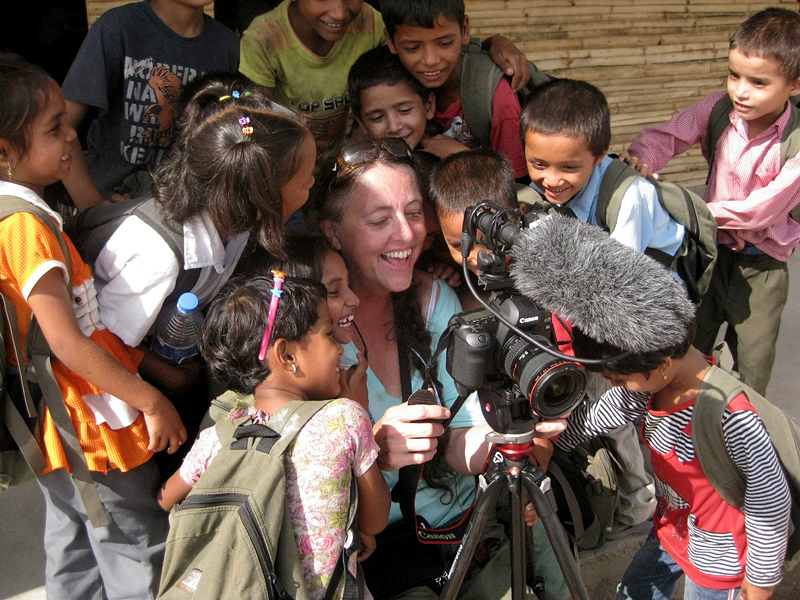
Gail at the Kopila Valley Primary School, Surkhet, Nepal

– she tells me “that’s what people want”,  to know more about the making of the film – more about the people behind the film.  As much as I agree with her and understand this interest on the part of the viewer, there is also a resistance to make myself part of the documentary.  With that said, a separate “behind-the-scenes” chapter could be the solution – to provide more information, without inserting the two of us into the film itself.

One thought does keep popping into my head that motivates me to provide a commentary on the why’s and how’s of this journey and the making of this film. Too many times when I’ve visited museums, I’ve been taken aback by some of the things that I over hear docents talking about in relation to the paintings.  They analyze and interpret what the artist meant by his choice of color, brush stroke and placement of objects within the art and how that related to what was going on in his life at that point in time.  I often wonder how they know that or even how can they be so sure?  Is it documented or is it really just someone’s interpretation that has become fact over the years?

My daughter and I do plan to sit down this week and attempt to do on-camera interviews – while we are still in the moment and before we get back to our normal lives.  Here’s where we need your help – tell us what you want to know.  Maybe you’re curious about how we survived the dynamic of a mother/daughter team for three plus months.  Maybe you want to know why we did this – or how we funded it.  Or maybe the questions are even more basic – what did we like? – what was difficult?– any surprises? etc. etc.  Perhaps you want to know more about the craft of shooting the doc– and how I went about that.  And maybe you don’t really want to know anything at all and just want to know about the subjects of our film.

But please tell me what you’re curious about – as far as the behind-the-scenes making of this film.  All questions are welcome – from the seemingly obvious to the more provocative.

Add to FacebookAdd to DiggAdd to Del.icio.usAdd to StumbleuponAdd to RedditAdd to BlinklistAdd to TwitterAdd to TechnoratiAdd to Yahoo BuzzAdd to Newsvine

What Makes a Successful Photographer?

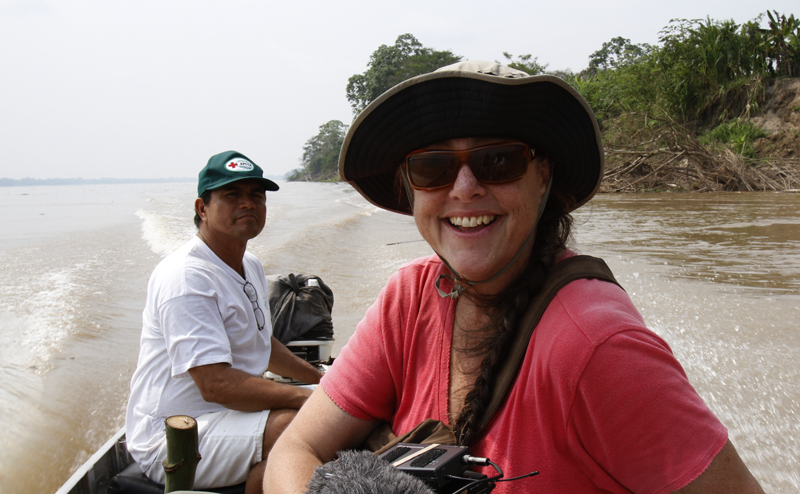
I woke up this morning before dawn, not able to sleep anymore and my mind spinning with random thoughts about where I’ve been and where I’m going. I’m in Iquitos, Peru right now, the last major outpost before the real jungle begins along the Amazon River.

Gail on the Amazon River, Peru

I had just spent a week visiting the jungle villages along the river as part of my documentary, Opening Our Eyes.

As I lay in bed, I thought about a recent conversation I had with someone about what it means to be a success. This person had made a comment to me that I must be a very successful photographer. This is not the first time that someone has made that remark and it always takes me by surprise and makes me think about the meaning of that word “success”.

I think that in this lukewarm economy and with the incredible changes that have affected the profession of photography (and print), I would have to say that a successful photographer is one who doesn’t need another job to support themselves. That they are able to make a living shooting photographs (or video).
But how does one achieve that, if that defines success?

Personally, I think that with any creative and competitive field, you have to be passionate about it and have the desire to pursue it no matter what. In other words you have to want to pick up a camera and take photographs without someone paying you or “validating” you in some way to do it. If you think about it from a buyer’s standpoint – why would they want to hire someone who isn’t passionate about it? So shoot and shoot for yourself – always have a personal project you’re doing.

So the question – how do you find the passion or keep it begs to be asked. There isn’t one answer to this question because it’s different for each of us but for me I need to be involved with other things besides photography to keep my interest in photography alive. I need to get beyond the science of photography and even the art. I’m interested in music, cooking, sewing, film, looking at impressionist paintings, taking walks in the woods and even people watching in New York City. I do all of these things and more to recharge myself and keep my passion alive for what I’m doing.

Photography is a visual means of communication. If you don’t have anything to say because you’ve just consumed yourself with the technical aspects of photography, then how will you be able to deliver a visual message – whether it be for a magazine or an annual report or even an advertisement.

Lastly, photography is something that you have to “do” to get better at it. You can’t just read about it in a book – you have to shoot – practice – perform. That is why shooting for yourself is imperative. If it’s been two months since you’ve picked up a camera and you head out to shoot a job – you do a disservice to your client. I don’t care how long you’ve been in business.

Here is how others have defined success:

“Successful people are simply those with successful habits”
Brian Tracy

“Your net worth to the world is usually determined by what remains after your bad habits are subtracted from your good ones”
Benjamin Franklin

“Practice means to perform over and over again in the face of all obstacles, some act of vision, of faith, of desire. Practice is a means of inviting the perfection desired.”
Martha Graham

So, am I a successful photographer? Perhaps – but there are photographers way more successful than me. But I am determined and I definitely have the desire and there is always something that I still want to achieve.

Add to FacebookAdd to DiggAdd to Del.icio.usAdd to StumbleuponAdd to RedditAdd to BlinklistAdd to TwitterAdd to TechnoratiAdd to Yahoo BuzzAdd to Newsvine

Why Video Is So Hot

These days video is a hot topic amongst still photographers and has been for over a year.  But there’s nothing new about video so what’s the big deal?

For starters the camera manufacturers came out with the hybrids so as still photographers bought new “still cameras”, they also got a camera with video capabilities.  At the same time, the publishing business is changing rapidly.  Print is giving way to electronic delivery via iPhones, iPads, cell phones and the web.  So you’ve got what you call a changing paradigm.

Is video a trend – no not in my mind.  It’s just another medium to communicate in.  When you have a message to deliver that needs motion and sound – video is the right choice.  Does that mean still photography is dead.  Absolutely not and neither is print.

Will still camera manufacturers lead the way in the next wave of “video cameras” with hi res images.  My guess is no and that’s because traditional video camera manufacturers like Panasonic have already rolled out video cameras with large chips – and with good audio capture capabilities without work arounds like the hybrids.

Nobody can predict the future but I don’t think it takes a crystal ball to see that video isn’t just a hot topic for the moment or a trend, but has become a way that we get our news, our products pitched to us and our stories told.

Add to FacebookAdd to DiggAdd to Del.icio.usAdd to StumbleuponAdd to RedditAdd to BlinklistAdd to TwitterAdd to TechnoratiAdd to Yahoo BuzzAdd to Newsvine

True Convergence With the DSLR Cameras

I read today that mega publishing company Conde Nast “names a new president as company seeks new business model”. http://adage.com/mediaworks/article?article_id=145071

“The historical priorities that have served our company so well — great content, best-in-class magazines, key client relationships – remain the cornerstone of what we do, but we need to move beyond the magazine,” said Mr. Townsend, who remains CEO, in the statement.”

Wow – so one of the biggest publishing companies is realizing that electronic delivery and the internet isn’t an afterthought or an add on to their print pubs.  That would have been unheard of just 2 years ago, but with the proliferation of mobile devices, including the iphone, ipad and other “i” devices, we really are seeing a shift in the way we communicate.

Photographers should definitely take notice of this and understand that they need to think differently themselves. Imagery and workflow that worked in the print world just isn’t going to fly in the world of “i” devices. You need to think and see differently when creating for electronic devices that are capable of showcasing still images, video and sound.  And it’s no longer sufficient to just regurgitate still imagery for the web or pick up a hybrid camera and switch into live mode and shoot video that will adequately convey a message in motion.  It goes beyond the tool – it’s thinking, seeing and anticipating in motion.  After 11 years of shooting motion and over 30 years of shooting still images, my mind seamlessly makes the switch a hundred times a day between thinking and seeing in “moments in time” or “time in motion”. It’s a bit analogous to being fluent in a foreign language when you find yourself thinking in the language rather than needing to do the translations anymore in your head.

Many still shooters who are just beginning to shoot video are so consumed with the technical aspects of the tool, they forget that they need to think and shoot differently when shooting video.  I see a lot of people moving the camera, rather than letting movement take place in front of the camera.  And I see a lot of independent clips shot and then put together in a video timeline, but with no connection to one another or unity in a sequence.  Basically, a slide show of video clips – but not a story sequence.

It takes time to get to the point where you think in motion, especially if you’ve been a still shooter for many years.  My instincts are now that I know when to pick up the right tool – a video camera or a still camera, rather than choose the tool without meaning to the subject that I will be shooting.  I choose the tool that will best communicate the message.

The best advice I can give to still shooters who want to move into video is for them to stop compartmentalizing the two mediums.  Don’t define yourself as a videographer or a still shooter that does sports or weddings or commercial work.  As print gives way to electronic delivery, our clients need to communicate in a different way and we need to be creative in delivering their message and choose the best tool that will do that.  If we can think like that then there is true convergence – not only with our tools but the way we think.

It’s no wonder that publishing houses are hiring shooters with skills entrenched in both mediums.  They need creative’s who think differently – not just in moments in time or time in motion, but a true blend that only a hybrid shooter can deliver.  That’s my best advice that I can offer to people just starting out as photographers or videographers – don’t separate the two – become a hybrid and learn to communicate creatively with the right tool at the right time.

Add to FacebookAdd to DiggAdd to Del.icio.usAdd to StumbleuponAdd to RedditAdd to BlinklistAdd to TwitterAdd to TechnoratiAdd to Yahoo BuzzAdd to Newsvine

HDSLR Video – The Camera is Just the Beginning

Many still shooters make the same mistake when jumping over to video – they only think about the camera and the shoot. When this happens, what quickly follows is mild to severe panic when they realize that audio is even more important than the visual and post-production is video is far different than in stills. On top of that, if you shoot video like a still photographer – you’ll want to kick yourself when you get in the editing room.

The good news is there are plenty of resources when embracing these various skills and learning curves than when I started shooting video over ten years ago.

Here’s a few great sites, listservs and blogs that you should bookmark:

http://asmp.org/tutorials/video-tutorial.html

http://photocinenews.com

http://www.cinema5d.com/index.php

http://phillipbloom.net

newspaperVideo@yahoogroups.com

http://worldwide-studios.com/Worldwide_Studios/Resources.html

So have fun and remember, the more your learn, the more you realize you need to know.

Add to FacebookAdd to DiggAdd to Del.icio.usAdd to StumbleuponAdd to RedditAdd to BlinklistAdd to TwitterAdd to TechnoratiAdd to Yahoo BuzzAdd to Newsvine