The Race To The Bottom and/or Video

I’m waking up to a beautiful day in San Diego and thinking about my old California days when I lived in Santa Barbara and attended Brooks Institute.  That was a long time ago but whenever I’m in southern California, my head goes back to my beginnings – my beginnings with my husband and partner and my beginnings of my career as a photographer.

Sounds funny now when I mention career and photographer in the same sentence.  But that’s the way it was back then (mid ‘70’s) when you had to be technically savvy to make a good photograph – a technically good photograph that is.  These days just about anybody can create a technically good photograph because of how technology has changed the tools of our trade.  And that’s why it’s gotten harder and harder to make a career out of photography.

It seems like there’s a race to the bottom in photography these days. By that I mean that a lot of photographers will do just about anything to get the job – from giving away rights to almost doing the job for nothing.  I almost can’t blame them when they are facing mounting bills and the phone rings less and less and they consistently get undercut by their peers.  On the other hand I have to wonder, is technology totally to blame for the race to the bottom or did we do it to ourselves?

I talk to lots of photographers these days because I give short seminars about video. A lot of photographers have clients who are asking for video and they want to respond to that.  A lot of photographers see their business dwindling as print needs dry up and as we move to electronic publishing. With that of course comes even more of a demand for video content. And a lot of photographers are there because still cameras are now capable of shooting video.

I cringe when I hear that someone’s motivation for getting into video is because of a tool.  I cringe because I know that it’s not about the tool and that one should really focus on what makes them unique – and how they “see” things.  Right now, you have to still be technically savvy to be able to produce decent videos – with good sound and edited well. Is it only a matter of time before technology makes these tools so good that just about anybody can shoot good video? Perhaps.

I strongly suggest that photographers get out of their solo independent ways of thinking and embrace collaboration when they move into video.  Get away from the tool centric way of thinking.  Surround yourself with people who you can work with – sound people, editors, and musicians.  Place more importance on thinking in motion and storytelling in motion.  And most importantly, produce your own videos, even if that means taking a chance.  Work directly with clients instead of being just one rung on the ladder.  Otherwise you’ll be on the content rung, which is way down at the bottom of ladders these days.

So, while I’m sitting here on a beautiful morning in San Diego and California dreaming – I’m remembering a lot of my peers from my old Brooks Institute days.  I think about what they are doing now – are they still working in photography?  I think the ones who are the ones who shot images that had some soul and went way beyond being technically perfect.

Add to FacebookAdd to DiggAdd to Del.icio.usAdd to StumbleuponAdd to RedditAdd to BlinklistAdd to TwitterAdd to TechnoratiAdd to Yahoo BuzzAdd to Newsvine

The “Dancing Inca” and Video

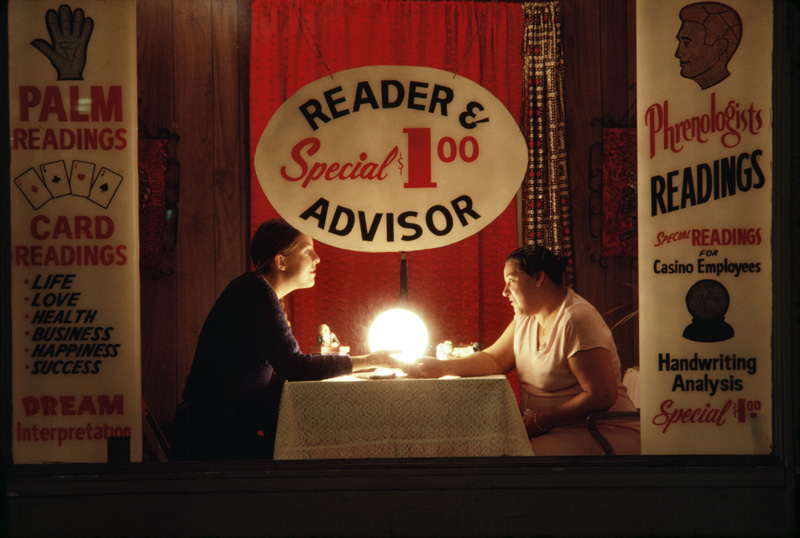
When I was a young woman, newly married, my mother decided to have a psychic come to her house one evening and hold individual sessions with all of her family members. My mother was searching for something at the time, which I didn’t know then but I do know now – but that’s a story for another time.

There were two things that I remember from that “psychic reading”. One was that he told me that in a past life I had been an Inca and that I had fallen off a cliff and had broken my hip. The second thing he told me was that I was going to be shooting video.

As for the Inca past life comment – I recently had to consult a chiropractor after a night of dancing at a fundraiser had left my right hip inflamed, sending shooting pains down my sciatic nerve. When the chiropractor asked me what I did to cause this, I told him about the dancing, but not the Inca part – that was probably best left unsaid.

As far as the video prediction, he had a crystal ball into my future, but at the time I thought – video? Are you kidding? I equated video with soap operas and really bad late night commercials. I was a young still photographer just getting a name in the magazine world and starting to make some money in the corporate sector. I couldn’t have been less interested in video at that time.

Fast forward to now. I’ve been shooting video with traditional video tools for over ten years. I give seminars to still photographers who may be thinking of getting into video and I have just made a big investment in both money and mental power and have embraced the HD DSLR tools for an upcoming project I am working on Opening Our Eyes.

I’m not the only still photographer thinking of video these days – it seems like everybody is. As print platforms give way to electronic ones like the iPad that debuted this past weekend, the way we communicate is rapidly changing and along with that there is a huge demand for video. On the April 12th cover of Time Magazine is a portrait of Steve Jobs and inside a review of the iPad entitled “Do We Need the iPad?” The writer Lev Grossman wraps up the article nicely:

“If I have a beef with the iPad, it’s that while it’s a lovely device for consuming content, it doesn’t do much to facilitate its creation. The computer is the greatest all-purpose creativity tool since the pen. It put a music studio, a movie studio, a darkroom and a publishing house on everybody’s desk. The iPad shifts the emphasis from creating content to merely absorbing and manipulating it. It mutes you, turns you back into a passive consumer of other people’s masterpieces. In that sense, it’s a step backward. Not much of a fairy-tale ending. Except for the people who are selling content. Read more: http://www.time.com/time/business/article/0,8599,1976932-2,00.html#ixzz0k3oIUDqY

In Time’s editor’s column “Ushering In a New Era”, Managing Editor Richard Stengel talks about making the magazine available on electronic devices like the iPad and Time will soon be delivering it’s entire contents to paying customers as a self contained application that can be downloaded to the iPad. Sports Illustrated is ready to go electronic as well.

If this doesn’t send a signal to still photographers the need to diversify and embrace video – what will?  With print moving to electronic delivery – the demand for video will increase. I sit on the National Board of ASMP and we recognize this changing paradigm. In fact that is exactly how I came to be involved with the Board of ASMP. I was asked to run for the Board because of my video experience. It’s been a year since I’ve been on the board and in that time I have set up a motion/video committee with the intention of gathering and sharing information about video production.  So far, through the efforts of the committee  an online resource for video was developed and has been uploaded to the ASMP website.

I continue to learn as technology drives us forward and I continue to network and collaborate with people. One person that I’ve learned a lot from is Richard Harrington of Rhed Pixel. Richard is one of those guys that never seem to sleep. He runs a successful business, teaches, writes and shares a lot of information on various forums like Creative Cow and on his own blog. I’ve also worked with Richard’s team of motion graphics animators on an industrial that I produced last year. I continue to learn from Richard who has just written a book called “From Still to Motion” that I can’t wait to get my hands on. It’s all about working with the hybrid DSLR cameras.

Looks like that psychic was right – at least about the video. Not sure about the past life Inca thing but it makes you wonder doesn’t it? Was it destiny? Or was it just that I was a restless soul at the time wanting to learn more about how I could tell a story and with what tools.  Not really sure – I’m just glad that I followed those instincts.

Add to FacebookAdd to DiggAdd to Del.icio.usAdd to StumbleuponAdd to RedditAdd to BlinklistAdd to TwitterAdd to TechnoratiAdd to Yahoo BuzzAdd to Newsvine

What Video Storytelling is Not

It was bound to happen – still photographers shooting video like still images – as DSLR’s became hybrids, capable of shooting both stills and video.  I’m starting to see video clips strung together in a timeline – like a pagination of images in a magazine – but without a cohesive storyline told through edited sequences or an audio/narrative track telling the story.   It’s neither here nor there – not achieving the lingering power of a still photograph, nor utilizing the power of motion and sound to give a story more dimension.
The problem as I see it when I come across these “samples” is that these still photographers are not thinking in motion.

I think totally differently when I shoot video than when I shoot stills.  Stills are moments in time – video is time in motion.  That means that when I shoot video I’m always thinking about the big picture – how will I get into and out of a shot.  What is coming before this shot and what is coming after?  I know to think this way because I’ve edited my own material.  Editing video is a great way to learn how to be a better shooter.  It becomes very clear in the editing room – what you should have shot to be able to cut together a cohesive story.

I learned video storytelling at one of the Platypus Workshops from Dirck Halstead and PF Bentley.  PF continues to inspire me with his storytelling skills in the video medium as he explores shooting with an HD-DSLR.  Check out a couple of his videos – beautiful storytelling and creatively executed.

So once again – it’s not about the tool – the camera.  Don’t think that because you buy a DSLR capable of shooting video that’s all there is to it.  If you really want to use the power of these new cameras – it starts with your vision and how to relay that in motion.

Add to FacebookAdd to DiggAdd to Del.icio.usAdd to StumbleuponAdd to RedditAdd to BlinklistAdd to TwitterAdd to TechnoratiAdd to Yahoo BuzzAdd to Newsvine

Gearing Up With HD DSLR’s

Last week was incredibly stressful. I had been dealing with obtaining visas – a somewhat monumental task of which I had no control over, in preparation for my upcoming project Opening Our Eyes, that will literally take me around the world.

On one of my many trips to New York City, I went to B&H and purchased some gear I needed for the Opening Our Eyes documentary that I will be shooting. The gear I bought included – Canon 5D and Canon 7D cameras with extra batteries, (2) 16 GB Sandisk Extreme compact flash cards (I’ll need more), Manfrotto 190CX3 light weight carbon fiber tripod with the Manfrotto 701 fluid head (I needed a small tripod and head that will fit in a backpack),  Samson Zoom H4N digital audio recorder, 2 GB Sandisk SD card for audio, recorder, Rode Shotgun mic with “dead cat”, Delvcam Camera Mount Adaptor (this attaches to bottom of H4N Zoom recorder giving it a hot shoe plate), Rycote Hot Shoe Extension/Extender (this attaches to the hot shoe on the top of the camera giving you extra room for devices – for me, the H4N Zoom recorder and a shock mount for the Rode mic) an adaptor so I can hardwire my Tram lav to the Zoom digital recorder, XLR cords of various lengths, and a couple of Rugged Lacie portable hard drives (500GB)

This weekend, I decided to familiarize myself with the new gear and do some testing. I was looking forward to getting back to my “purpose” for the trip and leave the administrative nightmares behind. I am not a shopper, nor am I a gadget freak. I buy new equipment when I have a need for it as opposed to because it exists. There’s something to be said about sticking with gear that you are comfortable with so that you can concentrate solely on the creative, but because of the pace of technology we are somewhat forced to keep current with our tools.

Whenever I add a new tool to my bag of tricks – I go through a process. First experiencing the thrill of something brand new in my hands. When I first took the Samson H4N Zoom out if it’s little coffin like plastic case and held it in my hands it was a sensual experience because of its design and what they make it out of. The second phase of the “new gear process” is reading the manuals and figuring out how things work. With the Zoom this was a bit frustrating and I am one who is already familiar with audio devices, so I can only imagine the frustration for someone who is not audio savvy. It’s such a sophisticated little mixer with so many choices that it took some time getting used to it. After much testing I settled on the 4Channel mode.

Over the weekend I tested both the Canon 5D and 7D cameras, recording sound with their internal mics as well as with a shotgun mic on camera plugged directly into the camera with an XLR to mini plug cord. I also tested both cameras, recording the audio separately through the H4N Zoom using the shotgun on the camera, and with the shotgun on a boom closer to the subject. Then I tested my Tram mic hard wired into the recorder and finally I did a test with the Tram and shotgun mics recorded on separate tracks on the Zoom.

After the tests, I brought both the video and audio files into Final Cut Pro. I had also purchased Philip Blooms 7D tutorial and in the workflow section he mentions how sluggish and problematic it is to work with the H264 files that come directly out of the camera. He recommends converting the files to Apple Pro Res LT either using compressor or MPEG StreamClip which is faster. I tried it both ways and he’s right the MPEG StreamClip is much faster. After I converted the files into Apple Pro Res LT, I imported them into Final Cut along with the WAV audio files. Incidentally, I shot everything at 24 frames a second and recorded the audio as WAV files at 48KHZ. In addition, I recorded sound through the camera, even though I was capturing my audio with an independent device. I knew I would use it as a reference when syncing the sound in post. My next step was to sync the audio files with the video/audio files coming from the camera. I used a clapper when recording so syncing was pretty easy. Philip Bloom mention using a software called PluralEyes for help with syncing audio and video in post but I have not yet purchased it. I did find out that you need to keep good organizational notes when shooting so that you can easily match up the audio files with the camera files later on. I decided that I like using the 4Channel mode with the digital recorder and using two external mics along with the stereo pair on the recorder. In post I can uncheck “stereo pair” and work on each channel independently.

So after a weekend of playing with the new gear, I went through the gamut of emotions from the thrill of newness to the incredible frustration of learning something new before the light bulb goes off. It will take a while to get to the third phase of the “new gear process” and that’s becoming very comfortable with the tools. And I can almost guarantee when that comfortable feeling start to happen, there will be something new that I’ll need to buy.

Add to FacebookAdd to DiggAdd to Del.icio.usAdd to StumbleuponAdd to RedditAdd to BlinklistAdd to TwitterAdd to TechnoratiAdd to Yahoo BuzzAdd to Newsvine

Ten Things Still Photographers Need to Know About Video

1.    Buying a DSLR is only a start.  Choose the right tool for the job.  A DSLR might not be the right tool for many video productions.  And keep in mind that most shooters spend sometimes twice as much as the price of these cameras on add-ons to make these cameras a viable solution.
2.    It’s more than just the shoot. There are many facets to video production. In fact positioning yourself as just a camera operator may not be the best business model.
3.    Shooting video is a different mind set than shooting still images.  I think differently when shoot video.  I think in sequences and in storyboard mode – not in moments in time.
4.    Audio is everything.  You can have the best visual in the world but if you don’t capture your audio properly – you’ve got nothing.
5.    Shoot horizontals.  There are no vertical TV sets – yet.
6.    Editing – Again the shoot is just one part of video production.  Editing is just as important and there is a steep learning curve that comes with it. But learning to edit and editing your own material will make you a better shooter.
7.    There’s no standardization of codec’s and formats.  It’s like the Wild West when it comes to standardization of codec’s.  There is no standardization!  Every time a new camera gets rolled out – it seems like there’s yet another format.
8.    Output – Here’s where a lot of people get confused.  How are you going to output it?  What type of file?  What platform – TV, web, big screen?
9.    Interviews – A lot of video productions require on camera interviews.  Many times the interviews drive the story – or create the backbone of the audio track.  Pay attention to good interviews and interviewers to learn the art  of getting good sound bites.
10.    Collaboration – Video production is ripe for collaboration.  Still photographers are more independent creatures.  Learn to surround yourself with people that will make you look god.

Add to FacebookAdd to DiggAdd to Del.icio.usAdd to StumbleuponAdd to RedditAdd to BlinklistAdd to TwitterAdd to TechnoratiAdd to Yahoo BuzzAdd to Newsvine

Fast, Cheap and Good

A colleague of mine, Blake Discher just wrapped up a seminar series for ASMP entitled I Stink at Negotiating. In his presentation, Blake says I tell my clients when they ask for fast, cheap and good – they can pick two.  Such a simple statement – but right on target as far as advice for negotiating.

Photographers want their clients to know the difference between what they can offer as professionals compared to any amateur with a camera.  They want to be paid accordingly for their experience.  They want their clients to understand the difference between what they bring to the table compared to a non professional.

But there seems to be a disconnect between that philosophy and how still photographers perceive themselves in terms of adding video to their business. Many think that by buying a DSLR camera that shoots stunning video visuals, that’s all it takes to get into the video production business. The problem is they are thinking the same way their clients are who can’t discern the difference between a professional and someone who has a camera that also shoots video.

Technology has once again lowered the bar for entry level into video production. And still photographers who equate buying a still camera capable of shooting video with being a professional motion shooter or videographer are forgetting some real important factors.

1.    You think totally differently when shooting video.
2.    There’s a lot more facets to video production than just the shoot.
3.    Most people who are working on professional motion productions and are using a DSLR or VSLR camera have spent more than twice the price of the camera on third party accessories.
4.    There’s a steep learning curve of other aspects of video production – namely capturing good audio, editing, and output.
5.    Video is a collaborative process with an entirely different workflow than still photography.

Still photographers have a hard time with #5 because by nature they are independent creatures used to controlling and doing everything themselves.  But video is all about collaboration and as soon as one realizes the power of networking, collaborating and partnerships – they understand the concept of video production and raising their own bar by collaborating with others.

I recently gave a seminar in Portland, OR where I had a chance to talk to Andy Batt who is quite knowledgeable with VSLR’s and has produced some beautiful work with them.  I learned a lot from Andy about some of the idiosyncrasies of theses cameras.  I don’t own one yet, although I will be purchasing a Canon 5d and 7D along with additional Zacuto accessories for a personal project I’ll be working on, where I will be shooting both stills and video and will be living out of a backpack for three months. So to economize on space – this seemed like the right way to go.
Andy and I do totally different things and work in totally different markets but we can learn from each other.  Andy works with large crews and on big productions.  I work more journalisticaly, with small crews in direct corporate and institutional markets.  But we both know that it’s not just about the equipment and it’s not a one size fits all when it comes to choices made in that regard.  We also know that it’s not a one size fits all when it comes to pricing and in terms of usage and licensing.  What might play in one market – simply won’t in another.

The point is buying a VSLR isn’t what will get you in the game of video production.  There’s more to it.  And there isn’t just a rack of template prices that apply to all.  We are hired for who we are, how we see, how we work and our experience. The ones who will be successful will understand that it’s not about just having a camera capable of shooting good visuals.  The ones who don’t understand will be expected to deliver Fast, Cheap and Good.

Add to FacebookAdd to DiggAdd to Del.icio.usAdd to StumbleuponAdd to RedditAdd to BlinklistAdd to TwitterAdd to TechnoratiAdd to Yahoo BuzzAdd to Newsvine

Tips for Getting Good Video Interviews

More and more still photographers are getting into video because of the appeal of the hybrid still cameras that also shoot video. Photographers love the visual coming out of these big chip cameras – what’s not to love? But they quickly find out that if they aren’t just going to be laying visuals down to a music track, they will need to start thinking about their audio – specifically a narrative track or one driven by sound bites from interviews. I work in the corporate sector, as well as create documentaries, so I do a lot of interviews. The interviews, along with a scripted voiceover comprise my audio track and drive the story.

I love doing interviews. That’s because I’ve always been a curious person and like to ask questions. I enjoy the “conversation”. I don’t want to become part of the video, even though I am usually the one asking the subject questions. My voice and my questions will not be heard in the final video, so I need to coach my subjects to paraphrase the question when they relay their answers. But before I get to the interview, I research my subject and come up with a good solid list of questions to ask in advance.

Here are some tips for getting good interviews:
1. Ask leading questions – not yes or no questions. Example: Instead of asking where do you work? Ask: Tell me about where you work.
2. Ask subject to paraphrase the question if you don’t want the interviewer to be part of the video.
3. Don’t step on your subject’s lines. Instruct your subject to pause before answering the question. In addition, make sure that you pause after your subject answers the question. Many times someone will add more insightful information to fill in that pause.
4. Ask the question more than once.
5. If your subject rambles – ask them to summarize their thoughts.
6. Use gestures to encourage and guide subjects – remember you don’t want to hear your comments.
7. Be a good listener – many times my best questions are follow up questions to something that the interviewee just said.
8. Pay attention to your subject’s answers because you’ll need to illustrate what the subject is talking about with B-roll.
9. Pick a suitable location for sound. Find a quiet environment and turn off all fans, motors, radios etc.
10. Record room tone – you’ll need it when you edit the sound bites

Add to FacebookAdd to DiggAdd to Del.icio.usAdd to StumbleuponAdd to RedditAdd to BlinklistAdd to TwitterAdd to TechnoratiAdd to Yahoo BuzzAdd to Newsvine

Funding A Personal Project

I have learned from past experience with other personal projects that getting funding for an idea is no easy task.  But I have also found that with a lot of careful planning, saving and budgeting I have been able to self fund my projects and have been compensated on many levels later on – after the projects are underway or near completion. As I continue to blog and to talk to people about Opening Our Eyes, the documentary my daughter and I are creating which involves us traveling around the world, I get asked a lot of questions.  One question that is asked quite frequently is “who is funding your project?”  The short answer is – we are self-funding our trip and our documentary.

I had managed to save up about 330,000 miles with Continental Airlines and another 329,000 points with American Express over the years.  I was saving them for something, just didn’t know what until a few months ago when I decided to cash all my points and miles in to subsidize our journey around the world.

So far, I have exhausted all but 4,000 Continental miles in ticketing my Round The World plane ticket as well as getting my daughter and I to, from and around South America.  My husband Tom donated his Continental miles to my daughter Erin for her Round The World fare.  I will still need to pay for airplane tickets to Iquitos, Peru from Lima as well as for flights to Nepal from Delhi, India. That still leaves picking up the costs of air or train tickets from Istanbul to Warsaw and Moscow. I will use about a third of my Amex points to pay for the flights from Lima to Iquitos, Peru because those tickets are costly.

I’ll use the rest of my American Express points to fund some of our accommodations, along with any hotel points that I have.  We’ll be staying at guesthouses, people’s homes and budget hotels whenever possible.  We’ll use public transportation for getting us around once we get to our destinations because renting a car isn’t in our budget.

Of course there’s food and miscellaneous expenses on the road like Internet and admission fees.  The vaccinations for the two of us have cost more than $1500 and the visa costs may reach $1000.  And we’ll both need backpacks and other personal needs for the trip.

My biggest expense will be for photo/video gear but that is the purpose of the trip.  I have pretty much figured out the gear that I’ll need: read my blog entry Putting Together a DSLR Video Kit.  When all is said and done, including buying an additional laptop as a backup, I’ll have spent about $12,000 on equipment needs.

So, how will I pay for it?  When my mother died about six years ago she left me a little money.  I never really wanted to spend it and was fortunate that I never had to – so I will use it for this project and this trip.  Somehow, I think she would love the idea of what her daughter and granddaughter were doing.  And if she were still here she might very well have wanted to join us.

I’ll be reaching out to Canon, Apple and others as potential sponsors.  I’m also reaching out to my friends and connections that I have made over the years for donations in kind. If you have any hotel points that you may not be using and would like to donate those points to our trip it would be greatly appreciated.  Or any other type of “in kind” donations you may provide.

Please email: gail@kellymooney.com or call 973-543-6868

Add to FacebookAdd to DiggAdd to Del.icio.usAdd to StumbleuponAdd to RedditAdd to BlinklistAdd to TwitterAdd to TechnoratiAdd to Yahoo BuzzAdd to Newsvine

Putting Together a DSLR Video Kit – And Why

I was in Chicago a couple of weeks ago and stopped by Zacuto. Zacuto is a business that has made outfitting DSLR cameras for video a specialty. They have cleverly engineered an assortment of their 3rd party add-ons that take these cameras to a higher level. They have also provided solutions to overcome some of these cameras shortcomings. Depending on the genre you are working in, documentary work, corporate, indie films or photojournalism will ultimately determine which way you’ll need to “trick” these cameras out.

I was looking for products that were designed to help with camera stability, focus aids and audio when using the Canon 5D or 7D which I will soon be purchasing. My motivation for buying these cameras wasn’t because I was moving to video for the first time, because I’ve been shooting video for 11 years and already have a high-end HD camera – the Sony EX-1.   The main reason that I will be buying these hybrid cameras is that I am undertaking a global project where I will be shooting both still images and video where I will literally be traveling around the world for a three month period and I can only bring what I can carry on my back. So taking two camera systems was out of the question.

I tested quite a few items at Zacuto but finally settled on the following solutions. For my audio needs I will use my existing Sennheiser shot gun mic and lav/transmitter/receiver kit. But I decided to capture my audio independently using the Samson H4 Zoom digital audio recorder and will sync it later in post. I also opted for the EZ-Finder that is an eyepiece that snaps on over the monitor. This not only makes it easier to focus in the sunlight, but provides a point of stabilization as well. Speaking of stabilization, I have also opted for the DSLR Sharp Shooter rig that comes with a shoulder mount, Zgrip Z-mount and mini baseplate with quick release adaptor. I supplemented that rig with a FLEX-DSLR remote trigger and a 3.4 lb. counterbalance weight.

I’m glad that I personally visited Zacuto and tried out the rig – fitted to me. It felt right and fit with the way I am accustomed to shooting. A hybrid solution that bridges the still photo and video worlds. I’ll need a lighter weight tripod and am hoping to keep my Manfrotto fluid head. I’ll need to purchase a backup MacBook Pro and portable hard drives because my workflow will be tapeless and therefore redundant.

That’s going to be a lot of gear on my back. Guess I’ll be packing light when it comes to my personal needs.

Add to FacebookAdd to DiggAdd to Del.icio.usAdd to StumbleuponAdd to RedditAdd to BlinklistAdd to TwitterAdd to TechnoratiAdd to Yahoo BuzzAdd to Newsvine

Booking a Round the World Airline Ticket

I am embarking on a personal project with my daughter this summer. Our goal is to create a feature length documentary on “people who are making a difference”. Ordinary people who are doing extraordinary things. Ultimately we will end up with 7 stories on 7 continents – each story standing on its own as a 10 minute web video and becoming a part of the whole – a feature length film. I’ve set up a website just for the project: Opening Our Eyes. But I’ll probably talk about parts of this project on this blog as I proceed with the logistics – certainly the photographic/video filming logistics.

I spent the better part of last week on the phone with the airlines creating our round the world itinerary and ticket which wasn’t all that easy given the fact that there were two of us traveling and we were using airline miles – 160,000 miles each to be exact. As a side note – the fact that I had so many miles piled up is one small thing that prompted this trip, and when Erin became a part of this – Tom gave her his miles so she could come. That should tell you something about Tom – that he would do that for his wife and daughter.

Our initial plan was to depart from the US in mid-June, heading first to Namibia to visit a friend and then on to Uganda for our first story. Our first hurdle was that the Star Alliance airline partner that went from the US to Africa was South African Air and there were no award seats into or out of Johannesburg for the entire month of June – Johannesburg is hosting the World Cup and everything is sold out. I was told that we couldn’t connect through Europe on another carrier like Lufthansa because that would mean going back thru Europe after leaving Uganda and the rules didn’t allow this. I’m broken hearted that we can’t get to Namibia because it means that another opportunity is lost in connecting with my friend while she is living there – but it wasn’t meant to be.

The airline agent could get us to Entebbe, Uganda but in order to make that work, we had to move up our departure date to May 25th giving me a slight panic attack knowing how much I still needed to do before leaving for this journey – vaccinations, visas, lodging arrangements, not to mention getting my gear ready for filming. I’ll talk about my gear in another blog, but essentially since I want to shoot both stills and video – I’m opting to use a hybrid DSLR system because I need to pack light and can only bring one camera format. If it doesn’t fit on our backs – it’s not coming. But I digress.

Our next challenge in ticketing was going from Uganda to our next destination on the European continent. I was aiming for Warsaw or Moscow but we settled on flying from Entebbe, Uganda to Istanbul, Turkey. We’ll figure out how to go to Warsaw and Moscow on our own – that will be a piece of cake. Incidentally, there are a lot of rules on these round the world award tickets – you must keep going in the same direction (can’t backtrack) and you’re only allowed so many segments – I got answers anywhere from 12 to 16. And you can’t go back to a continent more than once – that came in handy going to Istanbul when the airline agent and I had a lively debate as to which continent Istanbul was on. I think the agent liked my creative way of solving the problem and gave me a little leeway.

In the end after many hours on the phone – we created an itinerary: NY > Entebbe, Uganda > Entebbe connecting in Cairo to Istanbul, Turkey > Istanbul connecting thru Frankfurt, Germany to Delhi, India (somehow that was ok) > Delhi to Bangkok, Thailand > Bangkok to Melbourne, Australia > Sydney connecting thru LAX to NY. The agent told me to call back the following day because all the carriers needed to make confirmations. She also told me our reservations would only be held for 48 hrs till they needed to be ticketed.

The next day, I called the airline and was told that there was a leg missing on Erin’s itinerary – Istanbul to Delhi – she corrected it and told me everything looked in order but to check back that afternoon. I did and found out that we were still waiting on Thai Air to confirm our flights from Delhi to Bangkok and then on to Australia. The agent said, “don’t worry – Thai Air is slow – call back tomorrow”. Being the worrier I am, I knew that “tomorrow” was the day the tickets needed to be purchased or our reservations would be dropped, so if there was a problem I needed at least to know about a plan B. So I asked what other airlines flew that route – Delhi>Bangkok>Melbourne. I was told that Singapore Air flew that route but connected through Singapore.

The next morning – the day the tickets needed to be purchased – I called the airlines and was told that all my Thai Air flights had been canceled but Erin’s had been confirmed. I didn’t freak out – instead I suggested that the agent route us using Singapore Air – which he did. He put a rush on the confirmation process and told me to call back that evening.

To cut to the end of the story – I literally purchased the tickets right down to the deadline hour. I didn’t get everything I wanted – but I did get what I needed. We’ll be leaving May 25th and returning August 3rd. We’ll have to purchase separate tickets to get us to and from our destination in South America sometime in August and we are still trying to nail down those story ideas and dates.

People ask me why I didn’t use a travel agent. I have been handling my travel logistics for over 30 years and my answer is – I’m the one who will be doing the flying and I want to have control over that. Even if it looks doable on paper to have a one-hour connection in Frankfurt when flying from NY to Lagos, Nigeria – even for an optimist like me – I know better than to tempt fate like that.

All total – flying 7 different airlines, 12 flight segments and traveling across 5 continents I managed to get us 2 tickets for $263.44 each – that’s for the taxes. Now I need to look into vaccinations and visas. Yesterday I discovered that my passport, which is still good for another 4 years, has only two pages left in it for visas – and India requires that you have two empty pages for their visa. Another thing to add to my “to do” list.

Add to FacebookAdd to DiggAdd to Del.icio.usAdd to StumbleuponAdd to RedditAdd to BlinklistAdd to TwitterAdd to TechnoratiAdd to Yahoo BuzzAdd to Newsvine