Closing Thoughts and Best of Best

It’s been a very full year for me. I mean that in every sense of the word full – full of new experiences, full of hope, full of achievements – but also full of my share of rejections and disappointments. I’ve shared a lot of these experiences through this blog.

There have been times I haven’t written in a while because I didn’t feel like I’ve had anything worthwhile to say. And there have been times when I did write but I probably shouldn’t have because it wasn’t worth reading. I always told myself that when I didn’t feel like writing in my blog, that I just wouldn’t do it. So if there are long periods of time when I haven’t posted a new entry – it’s because for whatever reason, the desire may not be there. I have always appreciated the comments and feedback.

Here are the top 5 posts as far as number of hits:

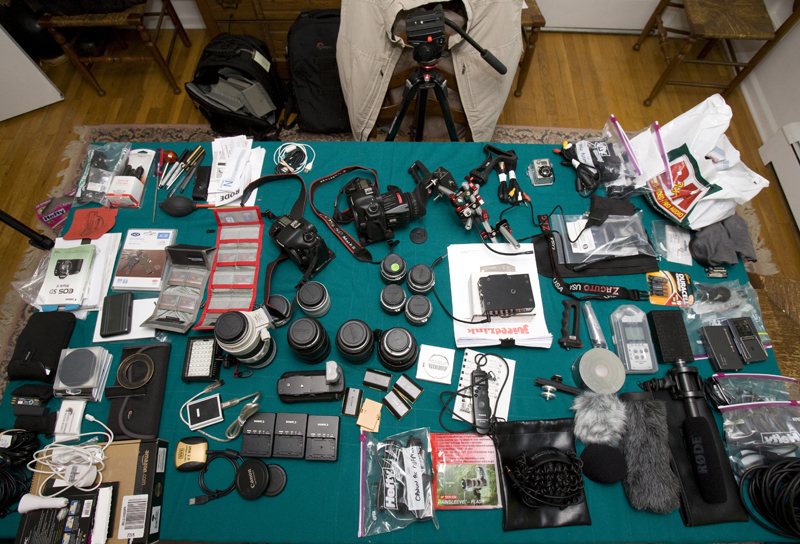
My DSLR Kit for a Three-Month Road Trip

Gearing Up With HD DSLR’s


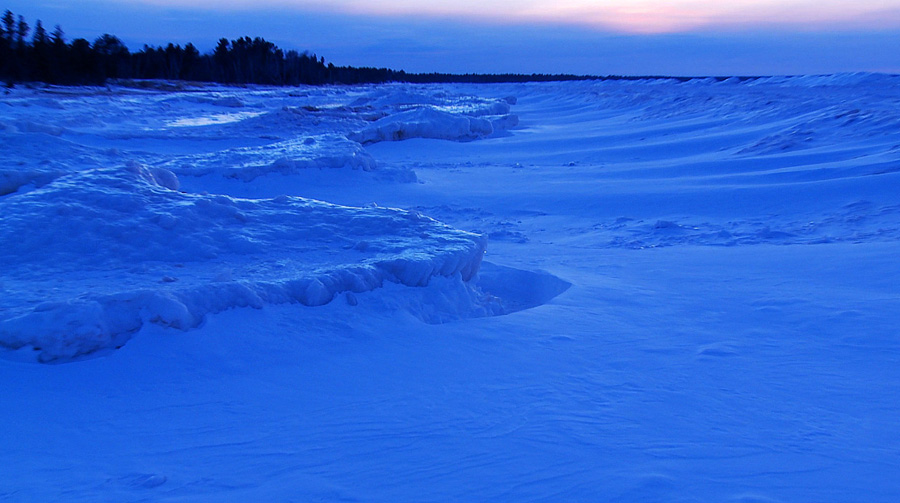
Standing on a 10-Foot Frozen Wave

Putting Together a DSLR Video Kit – and Why

Cultural Context and Photography

As you can see, the blogs about DSLR (for video) gear is where the interest was.  But I’d have to say that out of those 5 posts, “Standing on a 10 Foot Frozen Wave” was my favorite.  For me, it’s all about the story. And as Orson Welles once said “If you want a happy ending, it depends on where you stop the story”.

Happy New Year everyone.

Add to FacebookAdd to DiggAdd to Del.icio.usAdd to StumbleuponAdd to RedditAdd to BlinklistAdd to TwitterAdd to TechnoratiAdd to Yahoo BuzzAdd to Newsvine

Being Yourself

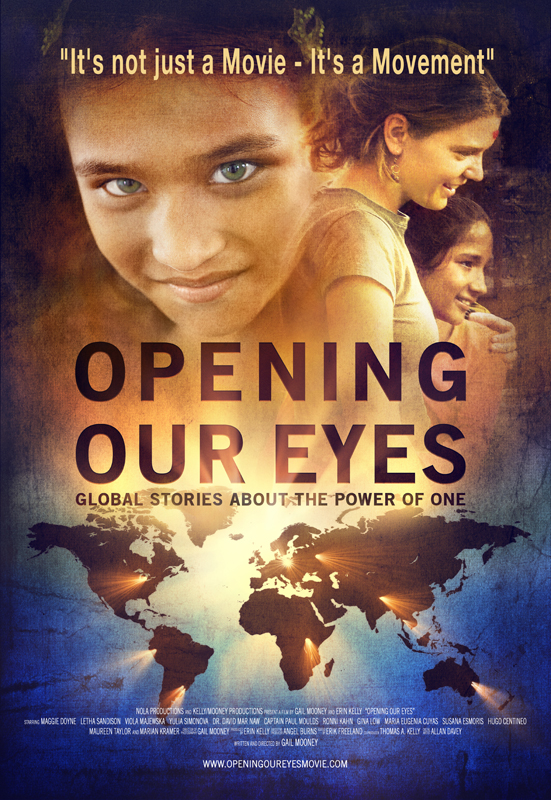
Yesterday, I gave a talk and showed a bit of my film, Opening Our Eyes,

Movie poster for Opening Our Eyes

at the PACA conference in New York City.  I had been asked by ASPP to speak about the making of the film and my plans for distribution.  To tell you the truth, even though I’m always thrilled to show and/or talk about the film, I was a bit nervous with this crowd.  PACA stands for the Picture Archive Council of America and its member include some of the biggest stock photo agencies in the world, including Getty, Corbis, Masterfile and Alamy. I was nervous because part of my message was that I no longer needed the validation or others to get my stories to market.

I thought my message would be somewhat threatening, because I was telling the audience that content creators no longer needed the traditional gatekeepers of the past, to get their stories “out there.”  That because of technology, it was possible for the individual to have a global reach and if one is willing to do the work – the prize is all theirs – meaning the monetary rewards.

I had a tough time slot to speak – right after lunch  –  I knew that I would be dimming the lights for the film and that is never a good thing to do in that time slot.  But, Tom Kennedy had given his very inspirational talk about new media and new opportunities in the  marketplace.  I had heard Tom’s talk  as part of ASMP’s SB 3 series this past year – and I knew that my presentation was a great follow up to his – and in fact it was almost like a case study example of what Tom was talking about.

My presentation went amazingly well and as I looked out into the dimly lit audience as the film was playing – I couldn’t see any closed eyes.  I felt that I made a connection, and that perhaps in some small way, I had made a difference.  Maybe, I just got people thinking about what they could do to make a difference in their own lives.  And maybe I had influence beyond that.  But, I know that I stayed true to myself.  My intent was not to come off as threatening  – but I did want to make people feel a tiny bit uncomfortable.  It’s when we get uncomfortable that we push ourselves to a better place.

My message was simple.  Someone doesn’t need to lose – in order for someone else to win.

Add to FacebookAdd to DiggAdd to Del.icio.usAdd to StumbleuponAdd to RedditAdd to BlinklistAdd to TwitterAdd to TechnoratiAdd to Yahoo BuzzAdd to Newsvine

It’s All Connected

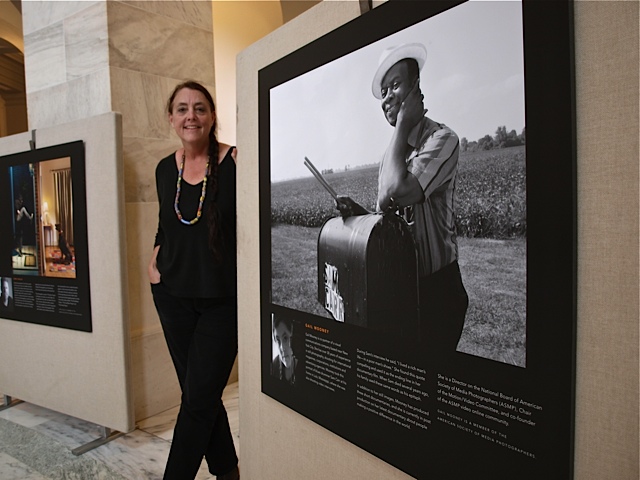
Over the past couple of weeks, I’ve had numerous experiences where things I’ve done in the past have resurfaced in ways I couldn’t have imagined. Last week blues musician Willie “Big Eyes” Smith passed away. He was one of the only two Delta blues musicians still living who had been part of my first short documentary The Delta Bluesmen. That same week, I had a photograph hanging in an exhibit by the Copyright Alliance, Recording Our History: Faces Behind the Camera, in the Senate building rotunda in our nation’s capitol. It was a portrait of blues drummer Sam Carr, who I had photographed and interviewed for that same project, over ten years ago.

I knew if Sam were alive he would have been humbled and honored,

Gail Mooney with her portrait of blues drummer Sam Carr in Senate Rotunda, Washington DC ©Eugene Mopsik

as was I, to have his portrait displayed in such a historic setting. I couldn’t help but “feel” proud at that moment in time. Sure, I felt proud of myself and Sam but I also felt a sense of pride to live in a country where I could still freely walk the halls of the Senate building, past the offices of the powerful of today and the ghosts from yesterday. I didn’t expect to feel that way. I was surprised and comforted that we still have this kind of access to our representatives.

It got me thinking about the trip I took last summer with my daughter when we left the country for 99 days, shooting Opening Our Eyes. We had circled the globe and had visited countries that crossed the spectrum politically, economically and socially. Our journey truly did open our eyes and when we returned to the U.S., it was a big adjustment. What hit me most was that everyone needed to be right, especially in Washington DC. I couldn’t watch TV for months because all I saw was 500 channels of “experts” pontificating and no one was getting anywhere. Worse yet, we all suffer.  I remember a time, when I was growing up during the Kennedy era and we asked what we could do for others, instead of what we could “gain” for ourselves.

It’s a year later and I still don’t watch much TV. I’ve found myself  absorbed back into the “culture” of America. But as I walked through those venerable halls of the Senate building, I was reminded of my purpose. I’m a storyteller. I voice the stories of people like Sam Carr so that future generations will remember the way things used to be. History gives us perspective and we can learn from it – or not. Without perspective – we can’t remain free.

Add to FacebookAdd to DiggAdd to Del.icio.usAdd to StumbleuponAdd to RedditAdd to BlinklistAdd to TwitterAdd to TechnoratiAdd to Yahoo BuzzAdd to Newsvine

A Sad Day

This is out of the norm for this site, but I post this news to remind everyone to live their life each day as if it were their last. It’s a reminder to us all,  to not put off those things you want to do or leave your words unsaid.

I write when I have something on my mind or feel that I have something to say and pass along.  Today, I write because I’m heartbroken.  I need to share some thoughts and then close out.

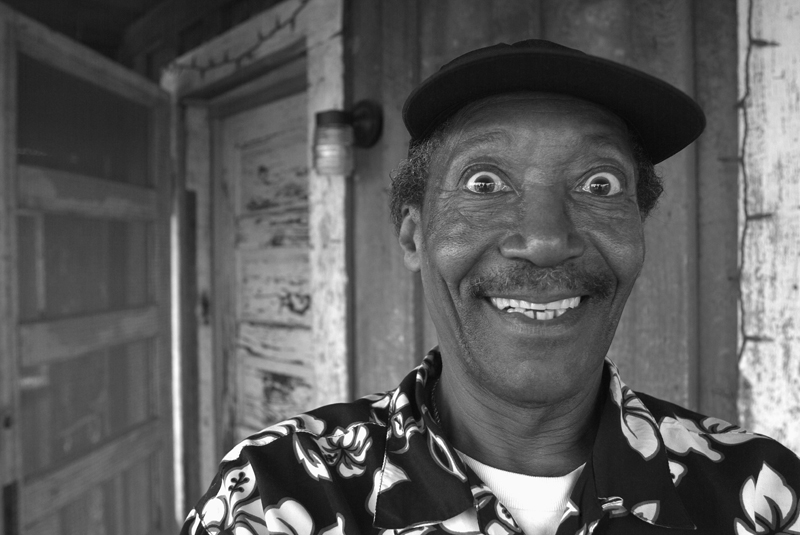
Willie “ Big Eyes” Smith – legendary blues musician, passed away – suddenly from a stroke.  He was one of the seven Delta blues musicians that I interviewed for one of my first short documentaries back in 2002, The Delta Blues Musicians.  They are all gone now – but one.

I’ll always remember the day I sat down to talk to Willie.  It was relaxed and we had the most wonderful conversation, sitting on the porch of an old sharecropper shack at Hopson’s Plantation in Clarksdale, MS.  I feel good that I captured his thoughts and words that day and preserved them for future generations.  I feel that my purpose in life is to do just that – to document, record and capture the peoples and cultures of our times. I feel that is what I am here to do.  When I stay on that course, I have peace inside.  When I drift from that – I don’t feel right.  I think I’ve always known that – but nowadays I try to stay focused on that path.

Willie’s passing reminds me yet again, how precious life is and to appreciate the now.  For the most part, I do live in the now.  I try to live my life as if this may be my last day on earth.  It frees me from a lot of needless fears that stops lots of people from “doing”.  It reminds me to tell my people that I love them because I may not get that chance again.

We all put things off or leave things left unsaid. Seven years ago,  mom died suddenly, without warning. It seems like yesterday because the pain is still real and there is a hole left in my heart.  I remember quite clearly the week before she died.  It was a busy week and I had planned to give my mom a call because it had been awhile.  I never did get that chance – and those words will go unsaid – forever.

We lost another blues legend earlier this year, Pinetop Perkins.  Pinetop and Willie had just won a Grammy for the album “Joined at the Hip” that they worked on together.  I had been meaning to head down to the Delta next month to the Arkansas Blues and Heritage Festival – I had missed the festival last year and I wanted to hear Pinetop and Willie play. Sadly, I won’t get that chance to see and hear them in concert again.  But I do have their records and I’ll always have their words, both on tape and tucked away in the recesses of my mind.

We’ll miss you Willie.

Add to FacebookAdd to DiggAdd to Del.icio.usAdd to StumbleuponAdd to RedditAdd to BlinklistAdd to TwitterAdd to TechnoratiAdd to Yahoo BuzzAdd to Newsvine

Conversation with Director/Editor Erik Freeland

I was extremely fortunate that Erik Freeland of Springhouse Films was the editor on our film Opening Our Eyes.  I learned a lot from Erik through our collaboration.  I thought I would share some of Erik’s insights about the art of editing.

What makes a good editor?

Knowing a little bit about everything. Art history, popular culture, physics, linguistics, music… it gives you more points of reference for understanding and presenting the story. Attention to detail is very important because in the end, nothing goes unnoticed by the audience. I guess I’d have to say patience is tremendously important –– even though computers do amazing things, editing is at its core a tedious process.

We all seem to wear more than one hat these days – do you? If so do those skill sets complement each other and how?

I started in this business as an editor but really wanted to have more control over the material I was editing. I’ve have been fortunate to be able to also have a career as a director. Understanding those two disciplines and knowing what is possible in each allows me to visualize the editing process more during the shoot.

I know from editing projects myself, it has made me a better shooter. For still photographers who may not want to edit their own projects – what tips can you give to them about shooting video and motion?

Don’t cut too soon. Be patient and let a shot evolve.

When shooting a scene or a moment in time, think of it as different framings: the wide establishing shot, a medium shot of the main action or subject and little details that can serve as cutaways to prolong the scene or intercut the other shots while masking breaks in continuity.

Plan your movement of the camera and commit to it. When you start a pan, resist the temptation to reframe the shot mid-move. Keep it moving for long enough to make the shot usable in the edit and cut only if it really falls apart.

Keep in mind how much footage you are shooting vis a vis what you will want to end up with. You don’t want to miss anything important but a lot of redundant footage can really be a liability in your edit.

What does a well-edited film mean to you?

Many things. I think first and foremost, it’s about clear storytelling. It shouldn’t be confusing and leave the viewer behind. The editing shouldn’t stylistically overpower the story. Secondly, the rhythm of the cutting should help move the film and should be sympathetic to its tone. Third, it should move you, surprise you, change your mind, do something… I suppose I could say the same things are equally important in directing a film.

As an editor, you can have a lot of influence over the meaning and arc of a story. How much influence should an editor have? Does it depend on the director?

An editor should exercise as much as they can… without upsetting the collaborative balance. Everyone involved in the film should influence it to the best of their ability. Otherwise, their contribution to the process is short-changed. Of course, every working relationship is different and some are less collaborative.

What makes a good director?

I think some of the same qualities that make a good editor are part of a being good director. Knowing a little bit about everything as a director for instance, allows you to tell many types of stories and immerse yourself in the subject matter. Attention to detail, multi-tasking capabilities, being able to verbally communicate about visuals are of course all important skills. There is also a balance between focus and objectivity. A good director is fused with the film –– totally absorbed in every detail. At the same time, they have to be able to look at it and all decisions objectively and from a distance, almost like the eventual viewer.

What makes a good story?

Characters you care about, conflict and location, location, location…

What’s more difficult – editing a 2 minute piece for the web or a feature length film?

Hmmm, that’s a hard one. Kind of like asking which is better night or day.

Does editing have trends? Maybe you can point out a couple of examples of style over the years.

OK, first I don’t profess to be a film historian but I try to keep up on things. I tend to watch the films I like the most over and over. Technology has certainly created trends in film editing and directing. Advancements in keying technologies, motion tracking and motion capture as well as realistic CGI environments are but some of the major trends that have changed the way films look and are edited. Probably the closest things to trends specific to editing have been related to timing and pacing. The time-lapse of “Koyaanisqatsi” in the early 80’s, the repetition and multiple outcomes of “Run Lola Run” and the quick cutting shorthand jump-cuts and time-compression in Guy Ritchie’s films like “Snatch” have all had a huge influence over the editing of their time.

The “Real” Cost of Shooting Video With the DSLR

There was an interesting thread on  ASMP’s video listservlast week. It started when a still photographer asked if a particular

My DSLR Gear

DSLR camera would help him get into the game  – of video.

Jan Allklier, a Seattle based photographer, shooting both stills and motion summed it up:

“If you simply want to ‘explore the medium’ a hybrid DSLR may well be the right ROI, although it really will only give you a flavor for moving images, not the workflow of professional moving image production, which encompasses a wide range all the way from feature film, to corporate work, to webisodes for small business; and many tools and skills well beyond the image capture device at hand.”

Kevin Kamin, Minneapolis based shooter, reminds us that it’s not just about the camera (or tool), but about the story:

“I understand why some photographers are looking to expand into video, it’s definitely doable, but I believe there is a tremendous underestimation of what  is required to do so. I feel like video is being perceived as simply moving photographs-95% of the videos I’ve seen on commercial photographer’s website are not at a professional level (most feel like overly long, clunky, rough cuts that lack sophistication and a clarity of message). They say that ‘people who are good with a hammer tend to think everything is a nail’ So along that idea, many 
of the videos feel like videos made by photographers, who haven’t fully grasped the spirit of the medium. People can enjoy a still photograph for a minute or 
two, if it is compelling and engaging, but if you have three seconds of video footage that doesn’t move the story or lingers 15 frames too long, you just lost your viewer no matter how pretty it looks. Photography functions differently 
within time based media. 
 Storytelling is the core of video. “

And Chuck Fadely, of the Miami Herald, connects the dots for us, first by passing along a link to Shane Hurlbut Visuals blog that lists the “standard” movie making rental gear for DSLR video. More importantly, Chuck  reminds us that shooting motion is a skill set.  It’s a different way of seeing and shooting.

“The hardest thing about video for a still photographer is learning to shoot in a totally different way. You’ve got to learn to shoot in sequences, with transitions. It takes years to overcome the habits you’ve built up as a still photog — like reframing, adjusting exposure, following action — which are death in video. 

I was a news and feature photog with several decades of experience, with extensive lighting skills, good technical ability, and a knack for learning new stuff. I switched over to video full time and it was shocking how little transferred over. Video is a different beast.”

This was one of the easiest blog posts that I’ve ever written and maybe the most beneficial for readers.  It brings up another important point and that is how much we can learn from each other.  When I started shooting motion back in the mid ‘90’s – there really weren’t any listservs or social media forums where my peers were so forthcoming with information.

When people ask me why I’m so giving and sharing with my knowledge, I always tell them that I get back so much more than I give. What a great time to be alive.

Add to FacebookAdd to DiggAdd to Del.icio.usAdd to StumbleuponAdd to RedditAdd to BlinklistAdd to TwitterAdd to TechnoratiAdd to Yahoo BuzzAdd to Newsvine

Top 5 Mistakes Photographers Make Moving From Stills to Motion

1.    Give it away – One of the best opportunities that still photographers have when expanding their businesses with video is to offer their new services to their existing clients.  I hear from so many still photographers who squash this opportunity from the start by throwing in the video clips for free  because they are still learning.  First of all, I’m not a fan of learning on the job, but more importantly if you give your new skills away because you’re still learning, then the question is “At what point will you be good enough or have learned enough to charge for it?” Who decides that you or your client?
2.    Audio is an afterthought – Capturing good audio is more important than making a great  image.  If a viewer cannot understand the dialog, they will walk away.  Don’t make audio an afterthought.  Hire a good sound person.
3.    Position themselves as “just” a shooter – If you position yourself as just a camera person, then you will not only lose a lot of creative control, but you will leave money on the table by not making a profit on the other aspects of a video production.  I position myself as a producer.  That’s not to say that I don’t also shoot a job, but I oversee the entire production and charge accordingly for pulling together all the pieces.
4.    Don’t collaborate  – Get over the one man band, solo creature model and surround yourself with a crew of experts that will make you look good.  Build a team of editors, sound mixers, motion graphics artists etc.
5.    Forget about the story – Every good product, including commercial videos have a great story.  You can have the best production values in the world, but if you don’t tell a good story, it will not resonate with your audience or your client.

Add to FacebookAdd to DiggAdd to Del.icio.usAdd to StumbleuponAdd to RedditAdd to BlinklistAdd to TwitterAdd to TechnoratiAdd to Yahoo BuzzAdd to Newsvine

Change

Change Who likes change? Other than needing a change of scenery every now and then, change is usually tough to take. I grew up with change. My family moved 10 times before I got out of high school.

Kindergarten, Chicago, IL

I was always the “new kid”. (Hint: I’m in the second to last row. I was also the “tall kid” even in Kindergarten)

No, my dad wasn’t in the military and we weren’t on the lam – he was just climbing the corporate ladder. He’d get promoted or there would be a new sibling and we’d move to a bigger house or he’d get promoted and transferred and we’d move to a totally different place leaving our friends and familiarities behind.

I’m not complaining, nor saying that I feel slighted by having that constant change in my life. It was the life I knew and I suppose I always looked at it with open eyes and curiosity about what was next to come. Of course, if I thought about the friends and sometimes family that I was leaving behind, it made it much harder.

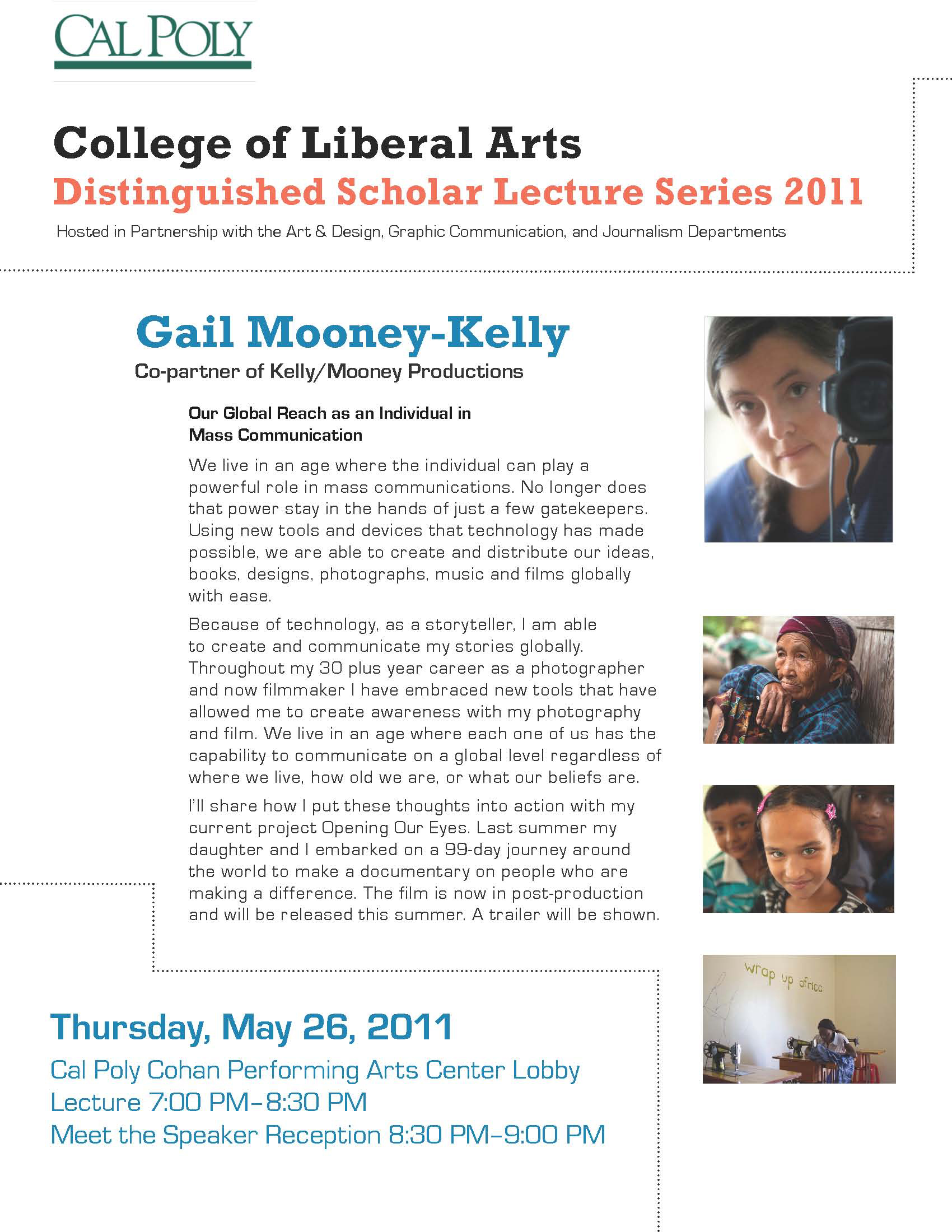
Perhaps growing up in a constant state of change made me more flexible in dealing with all the changes affecting my business these days. Both still photography and video production have been profoundly changed by a bad economy and technology. Kind of like a double whammy. At least with technology the sword cuts both ways and also provides opportunities. It’s usually during the tough times when the economy is bad when innovation happens. Sometimes people just have to be forced to make changes in their lives, even if what they have been doing hasn’t been working. I was asked to speak at Cal Poly on the theme The Role of Mass Communication and Media Technology in Today’s Global Economy: A Multidiscipline Approach. Specifically, they wanted me to talk about how I was using technology to communicate in a global market. I started thinking about how this past year I had vigorously embraced new tools and a new business model, integrated with the Internet and social media to create a mixed media project that will ultimately result in a feature film, a book, an e-book and maybe even an exhibition. I didn’t have a big team behind me, nor did I have a lot of money. We had a two-person crew- myself and my daughter, an editor and my husband working the PR, the social media and the back support. We raised some money on Kickstarter with the help of our backers and we’ve had musicians offer us their music and talents to our film. We are extremely grateful for all of the support worldwide and it could never have happened without advances in technology.

The fact is that we live in such an amazing time where something like this is even possible. It is a time of empowerment for the individual. Technology is democratizing and is leveling the playing field especially in terms of distribution. The locks are gone and the gates to distribution are open and affordable. Within a month of uploading the trailer to my film on Vimeo, it has been played in 95 countries – that’s almost ½ the countries in the world. What a staggering thought in terms of mass communication!

Going forward my ultimate plan at this point in time is to distribute the film through iTunes or Netflix and DVD’s through Amazon. More importantly, I would like to set up 100’s of screenings in communities all over America – maybe even all over the world – and use the film to move people to action. Kind of like a grass roots effort to motivate people to make a difference in their communities. Imagine what kind of an effect that would have if it spread virally through the world. Just Imagine.

Add to FacebookAdd to DiggAdd to Del.icio.usAdd to StumbleuponAdd to RedditAdd to BlinklistAdd to TwitterAdd to TechnoratiAdd to Yahoo BuzzAdd to Newsvine

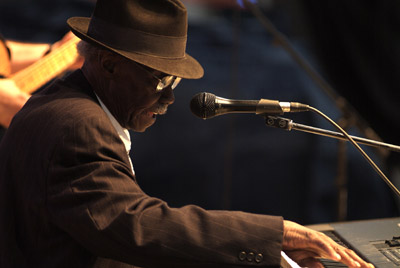
We’ve Lost a Blues Legend – Pinetop Perkins July 7, 1913 – March 21, 2011

Yesterday, legendary bluesman Pinetop Perkins died. Pinetop was 97 years old. He was one of the greatest boogie-woogie piano players ever to strike those keys. I could go on and list all of his awards and accolades because Pinetop has received some of  music’s highest distinctions. He recently received a Grammy, making him the oldest Grammy winner on record bumping George Burns. He had previously been awarded a lifetime achievement Grammy.

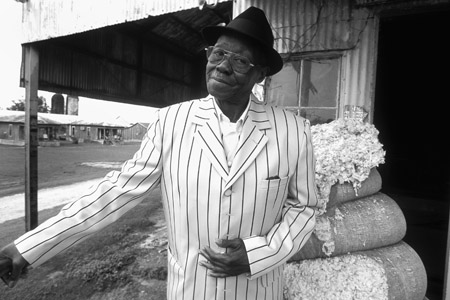
But rather than go on and list more of Pinetops achievements, which can be quickly googled, I’d like to share some personal experiences I had with Pinetop over the years. I first met Pinetop and his manager Pat Morgan in 2001 when I was shooting my Delta Bluesmen Project. It was my very first multimedia project where I was shooting still environmental portraits of blues musicians, images and b-roll video of the Mississippi Delta region and interviews of legendary blues musicians from this part of America. I had no idea what I was taking on by myself – I just had this crazy idea that I needed to document these men before they died and I had no time to waste since the youngest was in his 70’s. So, I just decided to do it with the unstoppable enthusiasm of a kid.

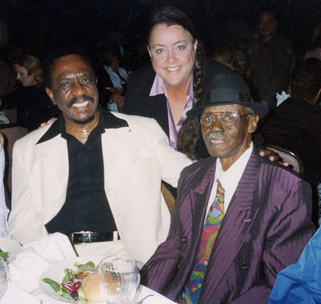
When I first contacted Pinetop’s manager Pat to set up an on camera interview with Pine, she quite firmly rejected my request. Pat was very protective of Pinetop and never wanted to overload him with interviews and fan requests and she had already granted an interview to another filmmaker, so I was out of luck. But I was persistent and Pat finally said that I should come to Pinetop’s homecoming party at Hopson’s Plantation in Clarksdale, MS and get what I could catch of Pinetop there. The day of the homecoming, I was allowed to put a lav on Pinetop to get better audio of his interactions with people throughout the day. One reason Pat thought the homecoming would be a good opportunity for me was because Ike Turner was going to be there. Pinetop had taught Ike to play piano during the 1940’s when they were both working at Hopson’s Plantation and this was going to be a true homecoming.

I put the wireless on Pinetop and kind of forgot about it as the day went on. I was roving around the plantation getting great b-roll and then went into the commissary where there was a big music jam going on. I had taken my earphones off outside, but quickly put them back on to protect my hearing in this incredibly loud environment. I dialed the audio way down on the camera mic but Pinetop’s wireless was still loud and clear. All a sudden I heard Pine and Pat talking about giving Ike a little tour and showing him Pinetop’s old sharecropper shack. I glanced around the commissary looking for them and couldn’t see them – I could just hear them. So, I raced outside, camera in hand just in time to see Pat, Pinetop, Ike Turner and a couple of other people walking across the grounds of the plantation headed toward Pinetop’s shack, just as the sun was setting. I caught up to the group and managed to get some great b- roll and audio of this historic moment. With camera running, I followed them inside the shack where Pinetop naturally sat down at the piano and started to play with Ike chiming in. I was in b-roll heaven and just hoping I was getting it right in camera.

After that little tour was over Pat came up to me and told me that she had worked with a lot of photographers and filmmakers over the years but had never seen instincts like mine. She said she was blown away when I just showed up out of nowhere to film this mini event. Then she told me that if I could come by the next morning, I could get an interview with Pinetop. I did come back the next day and spent a memorable morning with Pinetop on the porch of his old shack. I will never forget that morning – the quiet and the warmth of the place and the man and the moment. You can see some of that footage in this 7 minute sample of my film. The still images and video component of that project is still being exhibited around the country.

I’ve stayed in touch with Pat and Pinetop over the years. In 2005 when Pinetop was awarded the Lifetime Achievement Grammy, the producers used some of my interview footage of Pine in his tribute film. I was there with Pinetop and Pat and a whole lot of rock legends like Jerry Lee Lewis, Ike Turner and Jimmi Page. Another memory etched in my mind.

The last time I saw Pinetop was at the Arkansas Blues and Heritage Festival (aka King Biscuit) in 2009. We were driving somewhere with Pat and she noticed that we had a small army blanket in our car and asked to borrow it for Pinetop that evening. It was a chilly October evening and she didn’t want Pinetop (95 years old then) to get cold that evening as he waited in the wings to go on stage. That night when I was shooting from the photo pit I saw Pinetop sitting just off stage with my army blanket wrapped around him and his customary cigarette hanging out of his mouth. I thought for a second, “I hope he doesn’t burn a hole in my blanket” and then I quickly thought that I wouldn’t mind if he did. In fact if he did burn a hole, I’d be reminded of him every time I saw it. The blanket was returned unscarred – but I still think of Pinetop every time I see that blanket in the back of my car.

I’ll miss you Pinetop. But I sure am glad I got to know you. We’ll always have your music and the wonderful memories you gave us all.

Add to FacebookAdd to DiggAdd to Del.icio.usAdd to StumbleuponAdd to RedditAdd to BlinklistAdd to TwitterAdd to TechnoratiAdd to Yahoo BuzzAdd to Newsvine

Some Useful Information for Workflow

I made a few new discoveries this past week.  Forgive me if these items aren’t new but they’re new to me.

One item I discovered was Drop Box and the timing was perfect.  Drop Box is a sharing and storage site.  I can upload files and documents to their server and share those files with anyone who has Drop Box installed on their computer. For instance, I am able to share project files and updates with the editor that I am working with on Opening Our Eyes.  This past week, I was working on a new trailer for my film and I was able to share that updated project file with him, along with the RF music that I licensed for it.

The other thing that I love about Drop Box is that I can share files and info with the various computers that I work on.  No more emailing docs or copying media to a DVD so that I can transfer files over to my laptop.  With Drop Box installed, I can share files, media and calendars with any and all of my computers.  As a bonus, Drop Box acts as an off site storage solution as well.

My other discovery was a royalty free music site called Neosounds. I’ve been searching through hundreds of royalty free music libraries over the years and Neosounds is definitely the best source for high quality music that I’ve found.  It stands out amongst the rest because their music doesn’t sound like royalty free music.  Recently, I needed  music for a new trailer that I was making for OOE and I was googling around for some cinematic sounds. I found the perfect background music for my film’s trailer.  I’m still tweaking the trailer a bit, but you can listen to a clip of music from Neosounds that I used in a short video I made that appeared on a recent blog post.

One last item that I’ll mention is a great source for travel guides – the unconventional type. They are called Unconventional Guides and are brought to you by Chris Guillebeau. Since discovering Chris Guillebeau’s blog The Art of Non-Conformity, I’ve become a huge fan of Chris and his writings.  If you haven’t discovered Chris’s blog , then do so. He has an amazing outlook on life and he articulates his thoughts  so beautifully in his blog.  His global view of the world and how to live life is truly an inspiration to me.  He’s definitely, a kindred spirit.

Back to tweaking.  Stay tuned for my next blog with links to some new samples.

Add to FacebookAdd to DiggAdd to Del.icio.usAdd to StumbleuponAdd to RedditAdd to BlinklistAdd to TwitterAdd to TechnoratiAdd to Yahoo BuzzAdd to Newsvine