Ten Things I Learned While Making a Movie With a DSLR

1. It will take twice as long as you think. This is especially true if you have a limited budget. With a limited budget comes a smaller crew and therefore you need to do a lot more of the work yourself – if you can.
2. It will take more money than you think. Everything adds up. There are a lot of costs in post-production – licensing music is a big one and a feature film needs lots of music – and having the sound professionally mixed, makes all the difference and is well worth the money – so anticipate that cost.
3. If you need to transcode files for your editing application – then make that the first thing you do. In fact, I used the Log and Transfer plug-in on Final Cut Pro to do a pre-edit on all my clips as well as add  metadata to the files.
4. Hire a professional editor. Smartest thing I did. I raised funds on Kickstarter so that I could hire a pro. I know how to edit – or at least I thought I did – till I worked with a professional editor. My editor crafted the story and cut it like a musical composition with beautiful timing and rhythm.
5. You will need twice the memory or drives than you thought you would. Even, when working with a professional editor – in fact because I was collaborating with an editor, we had duplicate projects and media on 3 – 2 terabyte drives each!
6. Stay focused on the story. Don’t even go into the editing room without a clear idea of what story you want to tell.
7. Define your target audience. Iit’s important, especially in terms of how you want to craft the story and the rhythm of the piece.
8. Plan ahead as far as screenings or putting content online. Many film festivals have strict guidelines about previous screenings, premiers etc. I wanted to show my film on a big screen, but I couldn’t have it open to the public or charge money, so I opted to have an “invitation only” event and called it a “sneak preview”. Test screenings are done all the time with studios. It gives you a chance to get feedback.
9. Utilize social media. Have a website for the film and a fan page on Facebook.
10. Don’t try to be what you’re not. And don’t try to be all things to all people in your film. Stay true to your vision. Push yourself to try new things. Go with your gut.

Add to FacebookAdd to DiggAdd to Del.icio.usAdd to StumbleuponAdd to RedditAdd to BlinklistAdd to TwitterAdd to TechnoratiAdd to Yahoo BuzzAdd to Newsvine

s

Editing a Trailer

Like anything else the best way to learn how to do something is to “see” how it’s done.  I wanted to create a trailer for my documentaryI’m working with a professional editor on this project but while he is getting acquainted with over 160 hours of footage, I wanted to challenge myself to see if I could create a trailer.

For me, it’s always much harder to edit a very short piece. Everything becomes more critical – every cut – every shot – every sound bite and sound effect – every slate and every high and low in the music. And trailers are the ultimate shorts. You need to peak someone’s interest and make them wanting more.

I started paying attention to the trailers on DVD’s and online. I watched them to see how they were constructed. I analyzed them and paid close attention to things like sound effects, music and slates and if it made me want to see the movie.  There were a couple of trailers in particular that I really liked, each for different reasons.  One trailer was for the film I Am.  This trailer gave me some ideas on how to use music and text to deliver the story idea in a concise way and get people’s attention. I also liked it because it was just vague enough to intrigue me but not to confuse me.  Another trailer I like is Dennis Connor’s Breaking Boundaries; the Art of Alex Masket.  There are a lot of things I love about this trailer.  Dennis’s subject Alex Masket couldn’t communicate verbally so Dennis blended visuals of Alex using other people’s sound bites as the narrative.  He also had a beautiful jazzy musical score composed for the trailer.

My challenge was that I had to make a trailer for a film that was about 11 stories. The first thing that I needed to remind myself was that it really wasn’t about  11 stories.  It was about 11 people but ultimately one story.  With that thought I started pulling together  my strongest sound bites.  One benefit of spending all that time editing the past few months was that I was very intimate with the interview footage and I knew where to look for the gems.  I was looking for provocative remarks that left one wondering and they needed to be short and to the point.

Once I got the stand out sound bites on a timeline I started looking for some live action footage and other b-roll.  Then I began to interweave the appropriate visuals with the sound bites – pacing them – giving the piece a bit of time to breathe.  I also added slates with text to help tell the story.

Once I got it down to a reasonable length – in my case 3:45 – which is still a minute too long – I started looking for the perfect music.  I came across Neosounds.com a royalty free music site with some of the best RF music out there.  Picking music for me is like picking wallpaper, going back and forth until everything starts to sound the same.  After making a few painful decisions, I integrated my musical choices into the timeline.  There was still something missing and that was sound effects.  There are hundreds of great free sound effects that come with Soundtrack Pro.  I picked a couple of them to boost and emphasize certain spots in the trailer but I wanted to keep them subtle.  For example I used a sound effect of a motorcycle in one spot and a jet engine taking off in another.

What has resulted from this exercise are two variations of a trailer.  I am sharing these both with everyone because I would like feedback. I don’t want to influence opinion here, other than to say one trailer has a bit of more information than the other. One is also 15 sec. longer. Any and all comments are welcome.

Which one should I use?

Watch the links in this order.

http://www.vimeo.com/21241911

http://www.vimeo.com/21376387

Add to FacebookAdd to DiggAdd to Del.icio.usAdd to StumbleuponAdd to RedditAdd to BlinklistAdd to TwitterAdd to TechnoratiAdd to Yahoo BuzzAdd to Newsvine

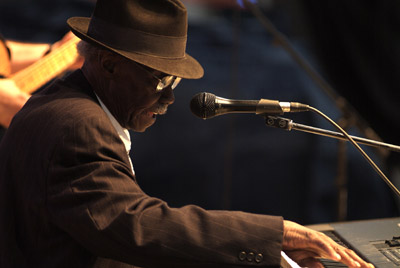
We’ve Lost a Blues Legend – Pinetop Perkins July 7, 1913 – March 21, 2011

Yesterday, legendary bluesman Pinetop Perkins died. Pinetop was 97 years old. He was one of the greatest boogie-woogie piano players ever to strike those keys. I could go on and list all of his awards and accolades because Pinetop has received some of  music’s highest distinctions. He recently received a Grammy, making him the oldest Grammy winner on record bumping George Burns. He had previously been awarded a lifetime achievement Grammy.
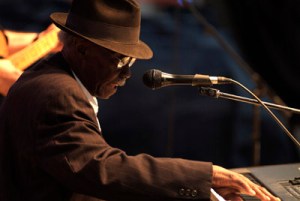
But rather than go on and list more of Pinetops achievements, which can be quickly googled, I’d like to share some personal experiences I had with Pinetop over the years. I first met Pinetop and his manager Pat Morgan in 2001 when I was shooting my Delta Bluesmen Project. It was my very first multimedia project where I was shooting still environmental portraits of blues musicians, images and b-roll video of the Mississippi Delta region and interviews of legendary blues musicians from this part of America. I had no idea what I was taking on by myself – I just had this crazy idea that I needed to document these men before they died and I had no time to waste since the youngest was in his 70’s. So, I just decided to do it with the unstoppable enthusiasm of a kid.
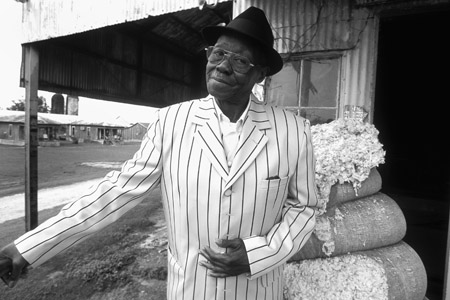
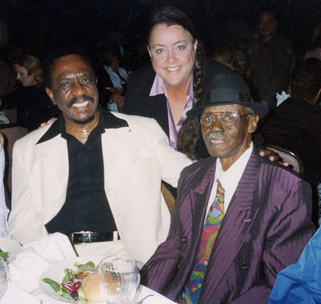
When I first contacted Pinetop’s manager Pat to set up an on camera interview with Pine, she quite firmly rejected my request. Pat was very protective of Pinetop and never wanted to overload him with interviews and fan requests and she had already granted an interview to another filmmaker, so I was out of luck. But I was persistent and Pat finally said that I should come to Pinetop’s homecoming party at Hopson’s Plantation in Clarksdale, MS and get what I could catch of Pinetop there. The day of the homecoming, I was allowed to put a lav on Pinetop to get better audio of his interactions with people throughout the day. One reason Pat thought the homecoming would be a good opportunity for me was because Ike Turner was going to be there. Pinetop had taught Ike to play piano during the 1940’s when they were both working at Hopson’s Plantation and this was going to be a true homecoming.

I put the wireless on Pinetop and kind of forgot about it as the day went on. I was roving around the plantation getting great b-roll and then went into the commissary where there was a big music jam going on. I had taken my earphones off outside, but quickly put them back on to protect my hearing in this incredibly loud environment. I dialed the audio way down on the camera mic but Pinetop’s wireless was still loud and clear. All a sudden I heard Pine and Pat talking about giving Ike a little tour and showing him Pinetop’s old sharecropper shack. I glanced around the commissary looking for them and couldn’t see them – I could just hear them. So, I raced outside, camera in hand just in time to see Pat, Pinetop, Ike Turner and a couple of other people walking across the grounds of the plantation headed toward Pinetop’s shack, just as the sun was setting. I caught up to the group and managed to get some great b- roll and audio of this historic moment. With camera running, I followed them inside the shack where Pinetop naturally sat down at the piano and started to play with Ike chiming in. I was in b-roll heaven and just hoping I was getting it right in camera.

After that little tour was over Pat came up to me and told me that she had worked with a lot of photographers and filmmakers over the years but had never seen instincts like mine. She said she was blown away when I just showed up out of nowhere to film this mini event. Then she told me that if I could come by the next morning, I could get an interview with Pinetop. I did come back the next day and spent a memorable morning with Pinetop on the porch of his old shack. I will never forget that morning – the quiet and the warmth of the place and the man and the moment. You can see some of that footage in this 7 minute sample of my film. The still images and video component of that project is still being exhibited around the country.
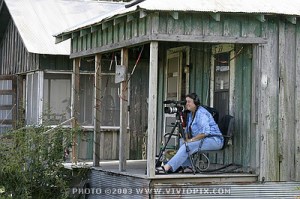
I’ve stayed in touch with Pat and Pinetop over the years. In 2005 when Pinetop was awarded the Lifetime Achievement Grammy, the producers used some of my interview footage of Pine in his tribute film. I was there with Pinetop and Pat and a whole lot of rock legends like Jerry Lee Lewis, Ike Turner and Jimmi Page. Another memory etched in my mind.
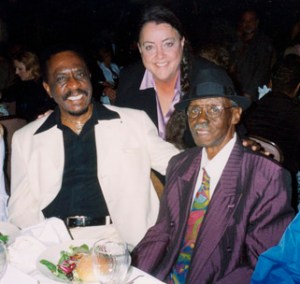
The last time I saw Pinetop was at the Arkansas Blues and Heritage Festival (aka King Biscuit) in 2009. We were driving somewhere with Pat and she noticed that we had a small army blanket in our car and asked to borrow it for Pinetop that evening. It was a chilly October evening and she didn’t want Pinetop (95 years old then) to get cold that evening as he waited in the wings to go on stage. That night when I was shooting from the photo pit I saw Pinetop sitting just off stage with my army blanket wrapped around him and his customary cigarette hanging out of his mouth. I thought for a second, “I hope he doesn’t burn a hole in my blanket” and then I quickly thought that I wouldn’t mind if he did. In fact if he did burn a hole, I’d be reminded of him every time I saw it. The blanket was returned unscarred – but I still think of Pinetop every time I see that blanket in the back of my car.

I’ll miss you Pinetop. But I sure am glad I got to know you. We’ll always have your music and the wonderful memories you gave us all.

Add to FacebookAdd to DiggAdd to Del.icio.usAdd to StumbleuponAdd to RedditAdd to BlinklistAdd to TwitterAdd to TechnoratiAdd to Yahoo BuzzAdd to Newsvine

Some Useful Information for Workflow

I made a few new discoveries this past week.  Forgive me if these items aren’t new but they’re new to me.

One item I discovered was Drop Box and the timing was perfect.  Drop Box is a sharing and storage site.  I can upload files and documents to their server and share those files with anyone who has Drop Box installed on their computer. For instance, I am able to share project files and updates with the editor that I am working with on Opening Our Eyes.  This past week, I was working on a new trailer for my film and I was able to share that updated project file with him, along with the RF music that I licensed for it.

The other thing that I love about Drop Box is that I can share files and info with the various computers that I work on.  No more emailing docs or copying media to a DVD so that I can transfer files over to my laptop.  With Drop Box installed, I can share files, media and calendars with any and all of my computers.  As a bonus, Drop Box acts as an off site storage solution as well.

My other discovery was a royalty free music site called Neosounds. I’ve been searching through hundreds of royalty free music libraries over the years and Neosounds is definitely the best source for high quality music that I’ve found.  It stands out amongst the rest because their music doesn’t sound like royalty free music.  Recently, I needed  music for a new trailer that I was making for OOE and I was googling around for some cinematic sounds. I found the perfect background music for my film’s trailer.  I’m still tweaking the trailer a bit, but you can listen to a clip of music from Neosounds that I used in a short video I made that appeared on a recent blog post.

One last item that I’ll mention is a great source for travel guides – the unconventional type. They are called Unconventional Guides and are brought to you by Chris Guillebeau. Since discovering Chris Guillebeau’s blog The Art of Non-Conformity, I’ve become a huge fan of Chris and his writings.  If you haven’t discovered Chris’s blog , then do so. He has an amazing outlook on life and he articulates his thoughts  so beautifully in his blog.  His global view of the world and how to live life is truly an inspiration to me.  He’s definitely, a kindred spirit.

Back to tweaking.  Stay tuned for my next blog with links to some new samples.

Add to FacebookAdd to DiggAdd to Del.icio.usAdd to StumbleuponAdd to RedditAdd to BlinklistAdd to TwitterAdd to TechnoratiAdd to Yahoo BuzzAdd to Newsvine

Editing Tips for Multimedia and Video

A few days ago, I wrote a blog about “having a point” – or telling a story when you create multimedia pieces. Of course you have to have an overall idea and focus to start with, but below are some editing tips on how to make it come together in the editing room.

  • Edit with a purpose. Why are you making the “cut” where you are? Are you cutting on the action? Are you cutting on the beat of the music? What’s the reason behind your cut?
  • Set a pace or rhythm. Just like writing, where you have pauses in sentences with commas, edit your visuals to your narrative or interview soundbites, cutting after words and phrases.
  • Use image sequences to transition between different ideas and themes.
  • Let your images linger on the screen, giving time to breathe between them.
  • Cut on the beat or against the beat of music. Edit the music and let it become part of your piece, rather than just a background soundtrack.
  • Adjust the volume of your music – lowering it during interviews and raising it when there is no narrative or dialog.
  • Use audio fades between music cuts to soften the cut.
  • Insert room tone between cuts in interview soundbites, making the cuts less apparent.
  • Use interview footage sparingly – when introducing someone or when someone is expressing emotion on the screen.
  • Identify interview subject with name and title text in lower third.
  • Use text that’s easy to read and break it up over many slates. Leave the slate on the screen long enough to read twice.
  • Always start with your strongest images.
  • Don’t “move” all your still images – leave some static on the screen.
  • Don’t use dissolves.
  • When working with media from DSLR cameras, keep the media in the DCIM folders for logging and transferring into Final Cut Pro with the plug-in. If you have taken your media out of the DCIM folders – then create a new DCIM folder for the purposes of importing the media into FCP.

Remember to keep the story in mind at all times. When you think you have the story laid down in a rough cut – have friends over to watch it. Ask them what the story was. If they don’t know or can’t tell you, then you have more work to do.

Add to FacebookAdd to DiggAdd to Del.icio.usAdd to StumbleuponAdd to RedditAdd to BlinklistAdd to TwitterAdd to TechnoratiAdd to Yahoo BuzzAdd to Newsvine

“Here’s an Idea – Have a Point”

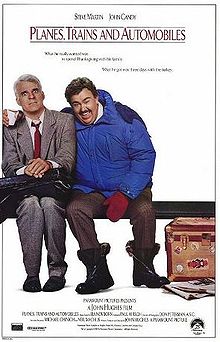
One of my favorite holiday movies is “Planes, Trains and Automobiles” with Steve Martin and John Candy. There’s a great scene in the movie where Steve Martin loses it and starts a rant directed toward Candy’s character, Del Griffith. Del, is a “nice guy” who talks incessantly. Martin’s character, Neal Page, an uptight ad man, frustrated by the day’s travel mishaps, finally explodes at his travel companion Del after one too many stories and says – “here’s an idea – when you tell a story, have a point!”

Am I the only one who has been oversaturated with multimedia and video pieces that are little more than pretty visuals to music? Don’t get me wrong, there are plenty of pieces that I do like, but there are far too many where I get bored and bail mid-way through because there is no point – there is no story.

Worse yet, the audio or music track many times feels like it has no connection to the visuals. It may be a great piece of music and provide pacing for the video, but it doesn’t complement the story. And there are times that the music is the most interesting part about the piece – if you take it away, what do you have? Most likely a pagination of moving and/or still images – like pages in a magazine or prints on a gallery wall. Independent and isolated vignettes with a music track – but no story- just eye candy.

What holds my interest is a story, where all the elements of audio, music, video clips, stills, text and narrative are parts of the whole and each one is integral in telling the story. I don’t think I’m alone in being interested in the story. Humans have enjoyed “the story” since the beginning of time. It doesn’t matter if it’s told verbally in a one on one conversation, in a multimedia piece, or in a major motion picture – a good story is a key ingredient for human interest. We all love a good story.

Personally, there is so much out there to watch these days on any given site that hosts videos, if I’m going to invest time in viewing something – I want it to have a point. If it doesn’t when I get to the end – I feel somehow let down.

I’m sure some of you will disagree with me on these thoughts and many of you may get loads of satisfaction from watching pretty visuals laid down to music and that’s OK. I’ve just had my fill of pretty content splashed before me, becoming a blurred palette in my head.

So, here’s an idea – have a point.

Add to FacebookAdd to DiggAdd to Del.icio.usAdd to StumbleuponAdd to RedditAdd to BlinklistAdd to TwitterAdd to TechnoratiAdd to Yahoo BuzzAdd to Newsvine

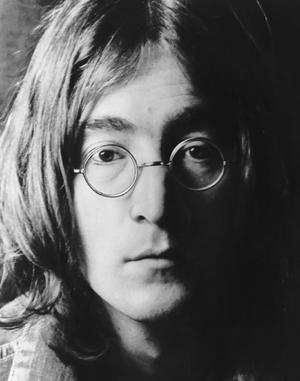
30 Years Ago Today – John Lennon Murdered

It’s hard to believe that it’s been 30 years since John Lennon was shot and killed outside outside The Dakota, his apartment building in New York City.

From the first time I saw the Beatles perform on The Ed Sullivan Show as a young girl in February, 1964, I decided that John was “my favorite Beatle”. There was something about him that appealed to me. Sure Paul was the cute one – but John was the …. well he just sort of struck me as more rebellious which was very exciting, even back then.

John followed his own path and used his voice to speak for Peace. After the Beatles broke up, he went on to have a great solo career and then when his son Sean was born, he pretty much left the limelight. He had recently resurfaced and had recorded a new album – and then he was killed.

I’ll always remember that night. I was watching the local NYC 11 o’clock news that had been delayed because a football game had gone into overtime. Half way through the anchor’s report came a breaking news bulletin saying that an unnamed man had been shot outside the Dakota, on West 72nd St. I instantly got a jolt and somehow knew that it was John Lennon and within a half hour it was confirmed that Lennon was dead.

The following week was a sad one in NYC. People gathered in Strawberry Fields, a section of Central Park that John and Yoko used to frequent. Night after night there were candlelight vigils and people took comfort in the collective.

The entire world mourned the loss of John and along with that went any and all hopes that the Beatles would get together again.

Rest in peace John. You made a difference in many people’s lives.

Add to FacebookAdd to DiggAdd to Del.icio.usAdd to StumbleuponAdd to RedditAdd to BlinklistAdd to TwitterAdd to TechnoratiAdd to Yahoo BuzzAdd to Newsvine

Don’t Let the Music Die Inside You

Einstein said “Logic will take you from A to B but imagination will take you anywhere.”

I have always had a vivid imagination, spending many waking and sleeping hours dreaming and picturing myself in all sorts of situations. Some of my dreams were just crazy ideas running through my head and some were very real dreams that I believed would come true. I was thinking about what I wanted in my life – not what I didn’t want.

Everyone has dreams for how they want their life to be but not everyone believes their dreams will manifest. The future has to become the present in one’s imagination. And one needs to commit to their idea for it to happen – not just have intentions. Intentions without conviction is a waste of energy.

At this point in my life, I have been focusing more and more on pursuing my thoughts and ideas that have been running through my head. It was a year ago, that I made the decision to embark on the biggest personal project of my life, Opening Our Eyes. I’m now in the midst of editing hundreds of hours of footage. It’s tedious because there is so much, and there are interviews in foreign languages that need to be translated and transcribed before I can edit them. All the files need to be transcoded, which is taking far longer than I imagined it would, but now that I have my workflow down, it’s going faster.

When I’m finished with this film, it will be the most satisfying and successful project I’ve ever worked on. I use the word successful to mean that it was an incredible accomplishment for me personally and professionally. That’s not to say that it won’t be financially rewarding, and in fact every personal project I have ever self-funded has always been profitable, just not immediately.

More importantly, by executing my ideas, without needing validation from someone else, I am following my purpose. I am doing what I’m meant to be doing in my life. That in itself is the biggest reward of all.

We all have our own music inside of us. Find yours. Don’t die with the music still inside of you.

Add to FacebookAdd to DiggAdd to Del.icio.usAdd to StumbleuponAdd to RedditAdd to BlinklistAdd to TwitterAdd to TechnoratiAdd to Yahoo BuzzAdd to Newsvine

Remembering John Lennon on His 70th Birthday

Lennon would have turned 70 years old today.  That’s hard to believe. It’s been 30 years since his tragic death and I often wonder, like so many others, what John would have done over the past three decades if he had lived. No doubt he would have been true to himself, because he always was.  That was his appeal.

Even as a young girl, I was drawn to John, he was “my favorite Beatle”. There was something exciting about him – and I always felt like he was giving it to me “straight”.  People just seemed to connect with him because of his sincerity. He was his own person and he was following his own path.  When his second son Sean was born, Lennon dropped out of the music limelight to raise him. A lot of people thought he was crazy to do that – to take a break from the music scene at the pinnacle of his career.  But that was John following his bliss, staying true to himself.

“People say I’m crazy doing what I’m doing,
Well they give me all kinds of warnings to save me from ruin,
When I say that I’m o.k. they look at me kind of strange,
Surely your not happy now you no longer play the game,”

“People asking questions lost in confusion,
Well I tell them there’s no problem,
Only solutions,
Well they shake their heads and they look at me as if I’ve lost my mind,
I tell them there’s no hurry…
I’m just sitting here doing time,”

I’ve been very fortunate over these past few months, to be around other extraordinary people, the subjects of my film, who are staying true to their own convictions as they pursue the life they are meant to live. You can read more about these people here.  Like John, they are imagining the world to be a better place.  They are activists for change and they live their lives in that pursuit. John would have loved them.

So, today my thoughts are on John and what he left us – his music of course, but more importantly his beautiful spirit and his belief that things can be better.  In traversing around the world this summer, I met so many other inspiring people who believed the same thing and were following their own bliss,  making the world a better place for all of us.

Happy Birthday John, you are missed.

Add to FacebookAdd to DiggAdd to Del.icio.usAdd to StumbleuponAdd to RedditAdd to BlinklistAdd to TwitterAdd to TechnoratiAdd to Yahoo BuzzAdd to Newsvine

the

Telling Stories in Multimedia and Video

Rather than paraphrase here what I have already written, I will simply direct you to an article that I wrote for Adbase that just went online http://tiny.cc/h5kWV

Several tips on how to tell the “story” through the medium of motion to how to size images to achieve that timeless Ken Burns effect.

Bottom line – it’s all about the story.

Add to FacebookAdd to DiggAdd to Del.icio.usAdd to StumbleuponAdd to RedditAdd to BlinklistAdd to TwitterAdd to TechnoratiAdd to Yahoo BuzzAdd to Newsvine