We’ve Lost a Blues Legend – Pinetop Perkins July 7, 1913 – March 21, 2011

Yesterday, legendary bluesman Pinetop Perkins died. Pinetop was 97 years old. He was one of the greatest boogie-woogie piano players ever to strike those keys. I could go on and list all of his awards and accolades because Pinetop has received some of  music’s highest distinctions. He recently received a Grammy, making him the oldest Grammy winner on record bumping George Burns. He had previously been awarded a lifetime achievement Grammy.
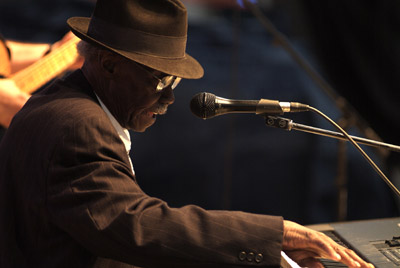
But rather than go on and list more of Pinetops achievements, which can be quickly googled, I’d like to share some personal experiences I had with Pinetop over the years. I first met Pinetop and his manager Pat Morgan in 2001 when I was shooting my Delta Bluesmen Project. It was my very first multimedia project where I was shooting still environmental portraits of blues musicians, images and b-roll video of the Mississippi Delta region and interviews of legendary blues musicians from this part of America. I had no idea what I was taking on by myself – I just had this crazy idea that I needed to document these men before they died and I had no time to waste since the youngest was in his 70’s. So, I just decided to do it with the unstoppable enthusiasm of a kid.
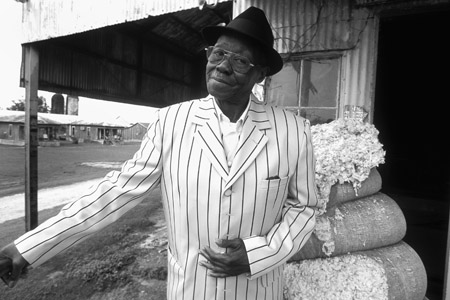
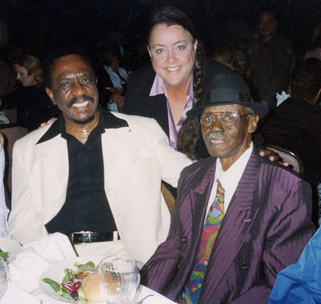
When I first contacted Pinetop’s manager Pat to set up an on camera interview with Pine, she quite firmly rejected my request. Pat was very protective of Pinetop and never wanted to overload him with interviews and fan requests and she had already granted an interview to another filmmaker, so I was out of luck. But I was persistent and Pat finally said that I should come to Pinetop’s homecoming party at Hopson’s Plantation in Clarksdale, MS and get what I could catch of Pinetop there. The day of the homecoming, I was allowed to put a lav on Pinetop to get better audio of his interactions with people throughout the day. One reason Pat thought the homecoming would be a good opportunity for me was because Ike Turner was going to be there. Pinetop had taught Ike to play piano during the 1940’s when they were both working at Hopson’s Plantation and this was going to be a true homecoming.

I put the wireless on Pinetop and kind of forgot about it as the day went on. I was roving around the plantation getting great b-roll and then went into the commissary where there was a big music jam going on. I had taken my earphones off outside, but quickly put them back on to protect my hearing in this incredibly loud environment. I dialed the audio way down on the camera mic but Pinetop’s wireless was still loud and clear. All a sudden I heard Pine and Pat talking about giving Ike a little tour and showing him Pinetop’s old sharecropper shack. I glanced around the commissary looking for them and couldn’t see them – I could just hear them. So, I raced outside, camera in hand just in time to see Pat, Pinetop, Ike Turner and a couple of other people walking across the grounds of the plantation headed toward Pinetop’s shack, just as the sun was setting. I caught up to the group and managed to get some great b- roll and audio of this historic moment. With camera running, I followed them inside the shack where Pinetop naturally sat down at the piano and started to play with Ike chiming in. I was in b-roll heaven and just hoping I was getting it right in camera.

After that little tour was over Pat came up to me and told me that she had worked with a lot of photographers and filmmakers over the years but had never seen instincts like mine. She said she was blown away when I just showed up out of nowhere to film this mini event. Then she told me that if I could come by the next morning, I could get an interview with Pinetop. I did come back the next day and spent a memorable morning with Pinetop on the porch of his old shack. I will never forget that morning – the quiet and the warmth of the place and the man and the moment. You can see some of that footage in this 7 minute sample of my film. The still images and video component of that project is still being exhibited around the country.

I’ve stayed in touch with Pat and Pinetop over the years. In 2005 when Pinetop was awarded the Lifetime Achievement Grammy, the producers used some of my interview footage of Pine in his tribute film. I was there with Pinetop and Pat and a whole lot of rock legends like Jerry Lee Lewis, Ike Turner and Jimmi Page. Another memory etched in my mind.
The last time I saw Pinetop was at the Arkansas Blues and Heritage Festival (aka King Biscuit) in 2009. We were driving somewhere with Pat and she noticed that we had a small army blanket in our car and asked to borrow it for Pinetop that evening. It was a chilly October evening and she didn’t want Pinetop (95 years old then) to get cold that evening as he waited in the wings to go on stage. That night when I was shooting from the photo pit I saw Pinetop sitting just off stage with my army blanket wrapped around him and his customary cigarette hanging out of his mouth. I thought for a second, “I hope he doesn’t burn a hole in my blanket” and then I quickly thought that I wouldn’t mind if he did. In fact if he did burn a hole, I’d be reminded of him every time I saw it. The blanket was returned unscarred – but I still think of Pinetop every time I see that blanket in the back of my car.

I’ll miss you Pinetop. But I sure am glad I got to know you. We’ll always have your music and the wonderful memories you gave us all.

Add to FacebookAdd to DiggAdd to Del.icio.usAdd to StumbleuponAdd to RedditAdd to BlinklistAdd to TwitterAdd to TechnoratiAdd to Yahoo BuzzAdd to Newsvine

Open Yourself to Possibilities

Thank goodness February is over. It’s been a long, cold, snowy winter here in New Jersey and February felt particularly brutal.  I can cope with cold weather pretty well but “cabin fever” can be deadly for me. And last month it almost killed me.  I had been in isolation editing video for 14 hours a day – every day. It was almost inhuman.

This weekend I headed down to Philadelphia to present a seminar at

©Douglas Bovitt

ASMP’s SB3.  It was just what I needed.  I needed to connect with people.  Conferences like SB3 are meant for stimulation and learning and everyone walks away with their heads exploding with new ideas – attendee and presenter alike.  But I walk away with so much more. What I get from interacting with people, learning from them, sharing with them is immeasurable.

Some things that stuck with me:

“Be awesome” Colleen Wainwright

“Hang out with people better than you” Blake Discher

And from Tom Kennedy
F.A.I.T.H

Freedom – to see – to be open to opportunities
Authenticity – be yourself
Intentionality – live intentionally – be proactive
Trust – in yourself
Hospitality – be open to the world

And I learned about a blog that truly resonates with me The Art of Non-Conformity
As all the conversations still run through my mind, I remember one in particular.  I was speaking with someone who had taken his own path – traveling a lot before going to college and pursuing other passions in life before settling down on a career.  He wanted to know if I would mentor him but he had so many questions, he was concerned he would infringe too much on my time. I smiled and told him that I was quite accessible and to feel free to call anytime. And that I’d let him know if he was wearing out his welcome He smiled back and said, “you have a hard time saying no don’t you?” My answer to him was “yes” and that I liked that word much more.  It opens up so many more possibilities.

If you haven’t attended on of the three SB3 events – there’s still one more in Chicago April 1- 3.  Check out what people are saying on Facebook. And then come and join us in Chicago and prepared for lots of “ah ha” moments. It could be life changing.  You just never know.

Add to FacebookAdd to DiggAdd to Del.icio.usAdd to StumbleuponAdd to RedditAdd to BlinklistAdd to TwitterAdd to TechnoratiAdd to Yahoo BuzzAdd to Newsvine

Abandoned Expectations

Have you had any lately?  Expectations that you may have had – pinned your hopes on and had to abandon?  I have had to let go of more than a few hopes, dreams, and desires over this past month alone.  My struggles seem to always come in cycles and there are some days when it seems like I’d be better off not having any hopes and dreams at all. Those dark days are tough and tax everything I have and am, but I try to remind myself of one very important thing – and that is – that all this “bad stuff” has to happen in order for me to grow and be the person I am meant to be.

If you are like me (and many creative people are) the passions inside of you can act like a double-edged sword.  They can move you up and down on a roller coaster of emotions and wreak havoc inside your head. But rather than succumb and be a victim to those emotions, I try to channel them into something more positive and productive.  Writing helps me a lot. Just trying to articulate how I’m feeling, seems to move me through whatever it is I’m struggling with.

I imagine that most people who may be reading this are creatives, and have had their share of “strawberry days” and “onion days”.  Strawberry days that are so sweet and onion days where you just want to break down and cry. But maybe that’s just how it should be – because that means that you are “feeling” and “trying” – both essential ingredients for personal growth.  I know that my onion days make my strawberry days that much sweeter.  I also know that every successful person has had more failures than triumphs along the way.  Its just part of the process.

So, here are a few things that I do when I hit a string of onion days:

  • I remind myself that those days will pass and there will be better days because of them.
  • I reach out to my friends.  Your true friends will be the ones who are listening.
  • I tell myself that everything happens for a reason in order to get me to where I need to be.
  • I walk.
  • I meditate.
  • I think about everything I have that I’m grateful for.
  • I think about others and I try to help them with their own challenges.
  • I find something to love about who I am.
  • I seek to understand others.
  • I carry on and do the dance I was meant to do.
  • And I listen to music.

With that said I’ll leave you with some wise words (lyrics) from Jackson Browne:

From For a Dancer:

Keep a fire for the human race.
Let your prayers go drifting into space.
You never know what will be coming down
Perhaps a better world is drawing near
And just as easily it could all disappear.
Along with whatever meaning you might have found
Don’t let the uncertainly turn you around
(the world keeps turning around and around)
Go on and make a joyful sound

Into a dancer you have grown
From a seed somebody else has thrown
Go on ahead and throw some seeds of your own
And somewhere between the time you arrive
And the time you go
May lie a reason you were alive
But you’ll never know

Add to FacebookAdd to DiggAdd to Del.icio.usAdd to StumbleuponAdd to RedditAdd to BlinklistAdd to TwitterAdd to TechnoratiAdd to Yahoo BuzzAdd to Newsvine

Grow or Die

I’m borrowing the title from Ian Summers, a creative coach and visionary. Through personal sessions with Ian as well as from his writings, I’ve learned that there is joy in any exploration, especially the exploration of the creative self. Ian expresses what he does more beautifully on his blog: Heartstorming

“ I co-create an environment where people are safe to bring what they love and what matters to come into being by being a compassionate teacher and expressive painter.”

There is so much to learn simply because it’s such an amazing age we live in. I try to take advantage of that and embrace new skills and knowledge to further my creative self. Learning and exploration is a necessary ingredient in my life. It stimulates me, it brings me wonder and joy and it empowers me. The more I learn, the more I grow, and the more the universe opens to me and sets my creative spirit free to be the one I am meant to be. Learning is happiness.

Here are some links to some wonderful sources for learning – some technical and some inspirational – but all valuable in their own way.

To start with don’t miss Selina Maitreya’s Clarion Call 2011, a free 2-day professional photography telesummit.
I’ll be on at 10AM Friday, Feb. 11th.

If you’d rather have the benefit of networking face to face with your peers then sign up for ASMP’s Strictly Business 3
Next one coming up is in Philadelphia Feb. 25-27, 2011.

Here’s a few a my favorite links to continued learning:

Video Vimeo School – Tutorials, articles
Creative Cow – Tutorials, forums, articles
2 Pop – Forum, articles
Ken Stone –Tutorials video

If you have any real or virtual places that you frequent to learn, please feel free to share.

The key of course to learning is to apply the knowledge that you’ve learned. So be ready to grow when you set out on your explorations of learning. Embrace that thought and ready your mind to be open and receptive to new ideas and ways of seeing.

Add to FacebookAdd to DiggAdd to Del.icio.usAdd to StumbleuponAdd to RedditAdd to BlinklistAdd to TwitterAdd to TechnoratiAdd to Yahoo BuzzAdd to Newsvine

Collaboration in Video and….

During one portion of my career, I spent a lot of time shooting still photography assignments for magazines like the National Geographic Traveler, Smithsonian and Travel & Leisure, to name a few. I was hired to shoot the images. A writer was hired to write the story.

Every magazine and every story worked differently as far as how I would collaborate with the writer. Sometimes the writer and I would just have a conversation about focus and approach and then we’d be off on our own, each bringing our own perspective to the piece.

Sometimes, I’d be given a manuscript that had already been written and I was expected to illustrate it. This worked well when I, the writer and the magazine would agree on the focus of the “story” and match our talents to that end. But there were times when a magazine would want very literal illustrations of the words, which not only stifled the images but weakened the words. One time I was asked to photograph “the lurkage of limousines.”

And then there were times when I went to a destination with a writer to do a story on that destination and even though we were there at the same time, we came back with different stories. I got my story done on site and the writer did most of his/her work after returning from the destination.

With video collaboration is essential because there are so many facets, each calling for different skill sets. Some collaborations occur simultaneously on set and some later in post-production but all have to work well in order to get to the same end in harmony. Harmony meaning, not just being able to get along but to communicate and work well together as one, but also where each respects each other’s role in the process.

It’s very tricky to assemble the right mix of people, but here are some important things to look for when building a team or even a partnership:

  • Trust – You have to be able to count on someone to do their job. And likewise, you have to also commit to uphold your end of the deal. The team is only as good as the weakest link. That becomes even more critical, the smaller the team is. If you’re only working with one person and you can’t count on them – you’ll be doing the work yourself. It’s important to know that someone has your back.
  • Working Style – While it’s not important for all to be morning people or night people or have similar working styles in that sense, it can be extremely frustrating for all concerned if there are procrastinators on the team. That’s because timing in video production is important for workflow. If someone doesn’t deliver when they promised – it holds up the whole production. We had one situation where a motion graphics artist held the entire post-production up for months.
  • Expertise – Surround yourself with experts. They will make you look good. But remember, just because someone is expensive doesn’t mean they are the best for your job. There could be someone who is more right for the project who is less expensive. Keep style and vision in mind. Talk to potential crew members and get references.
  • Right for the job – The “best” editor in terms of the commercial world might not be the right person for your project. For me, I want to work with an editor that is also interested in the project besides the money it pays. I look for an editor who will also bring a different perspective as to how the story gets told.
  • Bottom line – Work with people you can count on – otherwise the job might not get done.

Add to FacebookAdd to DiggAdd to Del.icio.usAdd to StumbleuponAdd to RedditAdd to BlinklistAdd to TwitterAdd to TechnoratiAdd to Yahoo BuzzAdd to Newsvine

Don’t Become a Photo”saur”

A lot of people tell me that I’m way ahead of things since I got into video/motion over ten years ago. Most still photographers weren’t even thinking about video ten years ago. Neither was I. Nor did I have a crystal ball. But I am a visual communicator and that means that I am always looking for the best way to communicate the message or tell the story. And twelve years ago, it became possible and affordable for me to deliver the message with another medium. Not instead of still photography but in addition to it.

My desire to explore video and motion at the time, wasn’t coming from a “tool” point of view. It was coming from a cultural one. When I think about it, I wasn’t fascinated by the technology – I was fascinated by what people were doing with the technology. Fast forward a decade later and I’m just wowed by where all this has gone. Our culture has changed dramatically in the last ten years because of technology. And while that is still “fascinating” and like creative adrenalin, it’s also a game changer in how it has affected the business of photography.

Don’t get me wrong and think that my message is to tell you to get into video or multimedia so as not to become a photo”saur” and become extinct. That’s not what I’m saying. What I am saying is that the cultural psyche has changed. Take notice and adapt. That doesn’t just mean, change the subject matter you shoot or how you shoot it to stay “fresh”. And it doesn’t mean to buy a video camera or a hybrid and start shooting motion. Those are probably good ideas but probably not going to be what keeps you in business.

The old days aren’t coming back. The ways of doing business have changed. Technology is democratizing when it’s placed in everyone’s hands. Understand that. Know that your clients understand that. So, think past the tool and technique and focus more on who you are and what you can bring to your customers to stay relevant. Some thoughts to ponder:

• Who are you? (why do your customers come to you and not your competition?)
• What services do you offer your client? If you don’t offer video and your client needs to look elsewhere – you’ve lost an opportunity.
• Are you still a one-man band? I don’t mean you need a large staff but have you considered setting up a virtual company when you need it with editors, sound people etc.?
• Do you continue to learn?
• Are you still using a dated business model ? Consider different licensing strategies for new media.
• Do you utilize social media?
• Are you noticing who’s “coming up” – the new talent? Do you try to see them through your customer’s eyes.
• Are you interested in other things besides photography?
• Are you willing to take risks? Creatively and otherwise.
• Ask yourself the question – how would I have approached this if I was just starting out?
• Think of solutions – then look at those decisions at a total 180.

Learn. Grow. Adapt.

Don’t become a photo”saur” and become extinct.

Add to FacebookAdd to DiggAdd to Del.icio.usAdd to StumbleuponAdd to RedditAdd to BlinklistAdd to TwitterAdd to TechnoratiAdd to Yahoo BuzzAdd to Newsvine

Should You Be Thinking About Video?

For the past two years I’ve been traveling around the country presenting a seminar called “Should I Be Thinking of Video” for ASMP (American Society of Media Photographers.  This seminar had become quite popular with still photographers as interest in video escalated, partly due to the hybrid cameras and partly due to the increased demand for video content for the web and mobile devices.  The iPad in particular is a game changer and everyone seems to be keen on either creating video content or buying it.

With this rush to find or produce video, I’ve seen quite of few people attend these seminars because they feel they have to get onboard.  A few weeks ago, someone in the audience, who appeared quite annoyed, raised their hand and said, “but you didn’t answer the question – should I be thinking of video”.  He went on to say that there was nothing new about video and weren’t there plenty of videographers already out there. I replied that he needed to answer that question himself.  I could only provide him with background information about video production but that decision as far as if he should embrace video was for him to make.  I also said that yes there were plenty of videographers out there working in traditional markets that have been around for decades.  What is new is the increased demand for video because we as a society are moving more toward an electronic means of communication and away from print.

I think the most important point here is that no matter what creative path you may wish to pursue, you need to have a reason for doing it.  For me, I started shooting video more than a decade ago because as a storyteller, I felt the need for motion and sound to adequately tell the stories that I wanted to tell.  I certainly wasn’t chasing a trend – not that video is a trend.  Just like in still photography, it’s not about the tool or the camera, it’s about your vision and if you don’t know why or if you should be shooting video then how can you possibly have a clear vision.

I can probably better answer the question “should you be thinking of video?” this way.  If it’s because you have a camera that is also capable of shooting in video mode then then the answer is no – you shouldn’t be thinking of video, because you will be a technician or a button pusher and will compete with every other person who has that same tool. But if you are thinking, seeing and feeling projects and stories that are all about motion and sound, then you’ve answered that question for yourself.

Add to FacebookAdd to DiggAdd to Del.icio.usAdd to StumbleuponAdd to RedditAdd to BlinklistAdd to TwitterAdd to TechnoratiAdd to Yahoo BuzzAdd to Newsvine

Photo Plus Expo 2010 Etc.

What a difference a year makes.  I’ve been going to Photo Expo since it started, whenever that was some 20 or 30 years ago. It used to be held at the Coliseum, New York’s old convention center, when it was much smaller.  Over the years Photo Expo got bigger and bigger, with huge sections of the floor devoted to lab equipment and hundreds of other booths displaying everything from cameras to computer software.

The last few years the Expo has gotten smaller.  Gone is all the lab equipment of course, but also not present are some of the big vendors like Adobe and Apple.  This year was the first year there was another photographic event happening simultaneously, called “Shoot NYC….an advanced photography forum”.  This event was hosted by Hasselblad and Broncolor, and just few blocks away from Javits. I didn’t get a chance to get down there but I heard rave reviews from those who went saying it felt like it was geared more for the “professional”.

One difference I have noticed over the years of attending Photo Expo is the shift in the attendees, more toward retail photographers and prosumers. That was reflected both on the floor and in the seminar selections. There was an entire seminar track this year devoted to weddings and portraits. Another sign of the times was seeing an entire seminar track devoted to video and multimedia, as opposed to one or two seminar choices in previous years. I could only find one seminar this year about stock photography; actually it was about microstock in particular. That’s a big change from when there were a dozen seminars relating to stock photography to choose from.

I presented a seminar with Paula Lerner called “Multimedia and Video” and was part of a panel for a seminar called “Ethics and Photography” which was streamed live globally, but I did find time to sit in on a couple of very interesting sessions.  One of my favorites was “Affordably Simple Marketing”, given by Juliette Wolf Robin.  She provided a lot of terrific tangible information.   I also enjoyed seeing and hearing Lauren Greenfield talking about her documentary work.  And even though I’m not a teacher, I found “Teaching in the 21st Century” quite interesting.  As always Blake Discher’s seminar on “Sales and Negotiating for Photographers” was fantastic and fresh. I also attended ASMP‘s annual member meeting where Tom Kennedy spoke about the new media landscape which was right on target.

The floor was smaller and as mentioned before, Adobe and Apple not present.  Canon and Nikon had a lot of action and interest with their hybrid DSLR cameras as expected and I saw a lot more third party gear for the hybrids displayed – Zacuto rigs, Redrock Micro rigs, and Glidecams, along with fluid head video tripods.  This trend is not going away and in fact isn’t a trend at all, as we move more and more toward electronic publishing with magazines scrambling to produce versions for the iPad and get their app designed.

The annual “bash” was more of a bust, leaving people hungry and thirsty due to no food being offered (except bags of potato chips) and a cash bar.  It was held at the Intrepid, which sounded like it was going to be interesting, but not a great venue for a party.  But it was nice to see my friends and colleagues and catch up with them.

It will be interesting to see what this event will look like next year – I can only guess that there will be plenty more changes.

Add to FacebookAdd to DiggAdd to Del.icio.usAdd to StumbleuponAdd to RedditAdd to BlinklistAdd to TwitterAdd to TechnoratiAdd to Yahoo BuzzAdd to Newsvine

The Thin Line Between Work and Pleasure

I’ve always been lucky because there’s a very thin line between my work and my personal life. That’s because I’ve never looked at what I do for a living as work, or at least if one defines work in negative terms.

I became a photographer and later a filmmaker because I’m a born storyteller and the camera is a means to that end for me. I come from a long line of storytellers, as evidenced by boxes of old letters telling the tales of family long gone. While they may have told their tales by pen, through their words, I have chosen the camera as my tool to tell the stories that I have to tell. So how could I possibly equate the word work with the professional life that I’ve built – telling the stories of people and companies around the world? It’s in my blood.

Sure, there have been jobs through the years that seem a lot more like work than others, especially when a client hasn’t trusted their instincts in why they hired me by allowing me to trust mine. But there have been so many other jobs where I’ve had to pinch myself to believe that they’re real.

I’m also a firm believer in following my instincts and that has led to many rewarding opportunities in my life. I’ve been doing that a lot lately and the universe is opening up for me. I’ve stopped waiting for someone else to validate me in order for me to pursue a project that I’m passionate about. I’ve stopped telling myself all the reasons that I shouldn’t do something and I’ve replaced them with all the reasons that I should. I think about the pros and don’t dwell on the cons. And that’s because I’ve blurred the lines between work and pleasure.

I’ve just completed a 99-day journey shooting a documentary on change makers – people who were making a positive difference in the world. Over the weekend I got an email, inviting me to show my ten-minute tease at the opening of the European Summit For Global Transformation in Amsterdam, this weekend. I immediately started to discount it, telling myself that I didn’t have enough notice etc. etc. Then I saw it differently – I saw it as an incredible opportunity to not only show the tease of my film but to network with like minded people. So, this evening I’m headed to Amsterdam.

Years ago when I was traveling a lot, shooting for magazines like Travel & Leisure and National Geographic Traveler, as I departed for my trips, my mother always used to say – “have a nice vacation”. I used to get annoyed because I thought that she didn’t recognize the fact that I was working and not going on vacation. But, as I reflect back on the “work dynamic” that I’ve set up for myself, I think – maybe she was the one that had it right. It’s been one long pleasure trip.

Add to FacebookAdd to DiggAdd to Del.icio.usAdd to StumbleuponAdd to RedditAdd to BlinklistAdd to TwitterAdd to TechnoratiAdd to Yahoo BuzzAdd to Newsvine

HDSLR in the Field – Recap of The First 70 Days of 99 Day Project Around the World (Tales of an Insomniac)

I woke up at 4 AM this morning after only a few hours of sleep – my body going through some major jet lag after over 22 hours of flying from Sydney, Australia to New York City via Los Angeles. Yesterday, my full day back, was spent taking care of essentials – like getting my gear to Canon for a full check up and cleaning,

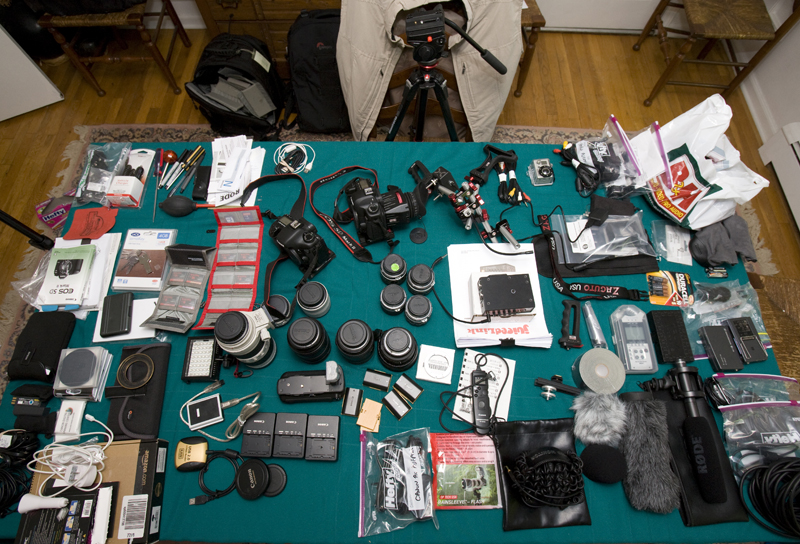
Gear for my first go round.

and a visit to the Apple Genius Bar because my new laptop seems to have a living organism living behind the monitor which shrinks and grows depending on the climate I’m in, and of course taking care of my own personal needs.

As I lay awake in the pre-dawn hours, my mind was spinning with thoughts on what I had to get done before heading to South America on Saturday for the second leg of our documentary Opening Our Eyes. I have only 4 days to recuperate, rest up and gear up for the next leg. The bad part is, I’ve only got 4 days – the good part is, I have those 4 days, and can approach the second leg of this journey with the advantage of having a fresh experience in the field to draw from and make some changes in terms of gear I’m taking on the next leg. More importantly, because my turn around is short, I’m able to stay focused and remain in the mindset of the project.

So as I go over the gear that I brought on my first leg with lessons learned in my head and prepare for the next stint, I’ll share my thoughts with you:

• A good tripod is critical – if you don’t have a decent tripod for video, you can’t get fluid movement, so don’t even try. A locked down shot is better than a jerky shot in motion. I needed to travel light with all the flights that I faced, so I went for a carbon tripod with a fluid head that would fit in a suitcase to eliminate the need for another check on bag. So, for this next leg, I’m seriously thinking of taking my larger tripod because I don’t have as many flights where excess baggage charges could mount up.

• You can never have enough batteries when shooting with a DSLR workflow and by that I mean everything from the camera batteries (and buy lots of them if you can find them for the Canon 5D and 7D) to the expendables for the  DT454 JuicedLink audio preamp, which takes 9 volts to the Samson H4N Zoom which takes AA’s.  By the way, speaking of batteries, don’t make the mistake I made once by not powering the H4N Zoom off before changing the batteries. The manual mentions that by doing so, files can get corrupted. A couple of my audio files did get corrupted – the information was there, but it couldn’t be read.

• I’m leaving my over priced Nikon to Canon lens converter, along with my old Nikon glass at home – I never used them – never felt the need for what I was shooting.

• Can’t wait to edit my timelapse material that I shot using the Canon 7D camera and the Canon timer remote controller TC-80N3.

• I want to get more attachments for my GoPro Hero Cam because there are so many ways to use this camera – it’s amazing and I’m having a ball thinking of all the possibilities in how I can use it. The Hero cam will always be part of my gear kit.

• Always check what audio cords you’ll be needing. I embarrassed to say that I carried around my wireless kit but couldn’t use it with the Zoom because I needed a mini to male XLR cord  and didn’t have it.

• Take 10-20% more memory storage than you think you will need when you’re shooting video. Video is a memory glut. I had been warned by some people that the Lacie Rugged hard drives that I were taking with me, didn’t have a very good track record – but as I write this, my content backups from my Lacie Rugged drives ( over 2000 gigabytes (doubled) ) are transferring to my desktop OWC terabyte drives and seem to be fine so the Lacies did their job. However, they are bulky and I’m going to be getting a couple of 500 gig drives that are more compact. Any suggestions for compact firewire external drives?

• Wish I bought the follow focus with my Zacuto rig. It’s expensive but would have been a real added bonus for visually highlighting one of the beauties of these cameras – the depth of field range that they have.

• Also wish I had a portable dolly like the Indislider but just couldn’t fit it in this trip. As it was, there were some items that I didn’t need to take and will be leaving behind this next leg.

• Wish I brought more mini tools – screwdrivers, allan wrenches etc.

• My Blackberry Tour Verizon phone blew me away. Even when I was in the northern hill tribe villages of Thailand, staying in a bamboo hut without electricity and plumbing – I was able to get my email on my phone! I’m impressed Verizon – I really am. Finding electricity to charge my phone was another matter.

• I could not have survived the 30 flights circling around the world i if I didn’t have my iPod. Thanks Apple.

Feel free to comment and share your thoughts of what has or hasn’t worked for you in the field and you can save me from making potential mistakes as I take on my next leg of this Journey August 7th. We are first headed to the Amazon area of Peru and then down to Buenos Aires, Argentina – again two diverse areas in terms of culture and climate.

Add to FacebookAdd to DiggAdd to Del.icio.usAdd to StumbleuponAdd to RedditAdd to BlinklistAdd to TwitterAdd to TechnoratiAdd to Yahoo BuzzAdd to Newsvine