Working With a Professional Editor

I know how to edit. Well, I should say I know Final Cut Pro. Knowing how to use a particular software and knowing how to edit – to tell the story, are two different things. Just like taking a photograph skillfully is more than just knowing how to use a camera.

I have done a relatively decent job editing projects in the past, but nothing has ever been longer than a half hour in length. Nothing has ever been as demanding as what I have been working on over this past year and a half.

After traveling around the world last summer, on a 99-day adventure, shooting a feature length film about people who are making a difference, with just a slim crew (myself and my daughter), and an even slimmer budget, financed with airline miles and hotel rewards, I returned with over 150 hours of footage and 5000 still images.

After a bleak winter of endless days of trying to make sense and order of all my content, I managed to get a very rough storyline down with interview sound bites and do a first cut on the b-roll. But there was a long way to go to get this looking like the film that I imagined in my head. I knew I wanted to work with a professional editor who would not only help me, but also would bring their own vision and craft to the film and most importantly “move the story”.

I’ve been working with Erik Freeland, from Springhouse Films over the past few months and I am simply in awe of what he has brought to the film. I’ve learned so much by collaborating with Erik. Not, little tips and shortcuts in terms of Final Cut but how to tell a story cinematically. I’m beginning to learn about the craft of editing and how the nuances of timing and juxtaposition of clips and interviews can move the story forward – or not.

As a shooter, I’m paying attention to movement in a scene and following the action. An editor looks for just the right part of the action in the clip – and how that clip will juxtapose with another clip. Not only the timing of the action within the clip is important, but also the timing of the duration of the clip itself is critical to the pacing of the film.

Timing is everything in editing – it’s almost like making a musical composition timing and pacing the highs and the lows of the story. In fact a big part of the editing process is integrating the music, adding yet another dimension to weave the viewer in and out of the story. Music is the heart of a film, the emotional backbone. Without music – the film has no heart.

So in a way, a good editor is a mixture between a technician, a storyteller and someone who has rhythm. An interesting combination for sure. It’s been a wonderful experience collaborating with my editor, Erik and I think what has made it work so well is that we have respect for what each other has brought to this project. We have both learned and grown along the way and pushed ourselves creatively. What more can you hope for? That’s the beauty of collaboration.

Add to FacebookAdd to DiggAdd to Del.icio.usAdd to StumbleuponAdd to RedditAdd to BlinklistAdd to TwitterAdd to TechnoratiAdd to Yahoo BuzzAdd to Newsvine

The Making of a Movie with a DSLR

It’s been a wild ride since I first began this journey of making a feature film with a DSLR camera – in my case, the Canon Eos 5D Mark II. I had already completed three short documentaries to date – all made with traditional video cameras from my first Canon XL-1 to my current HD Sony EX-1. But this time I was heading out on a 99-day journey around the globe, with my 23 year old daughter in search of ordinary people on six continents, who were making a difference in the world, and we had to pack light.

We were “the crew” – the two of us. We had to work efficiently and with gear that would fit into two backpacks and would endure the adventure as we traveled to 17 different countries on 30 flights. I also wanted to shoot both still images and motion, so I opted for the DSLR solution. Of course, I was enchanted by the “big chip” and the cinematic look of these cameras, but I was also thinking of my gear in practical terms – how I was traveling – how I would be shooting – and of course the desired outcome.

You can read more about the gear I took here.

So with my daughter “running sound”, doing the interviews with our subjects, shooting still images, and navigating us through the subway systems in Moscow and Buenos Aires, and me taking care of all the logistics and  shooting both video and stills, we came back 99 days later with almost 3000 gigabytes of content – that’s approx. 150 hours of footage and 5000 still image captures!

I wasn’t mentally prepared for what came next and that was 2 intensive months on my part ingesting all the content into my editing system, transcoding and adding metadata to the files and culling through hours of interview soundbites until I had cut it down to three . It was grueling and my winter months were spent putting in 14 hour days – 7 days a week. I was overwhelmed, yet somehow driven by some force.  It was a lot of work, it was tedious and it was daunting – but yet it was my passion and somehow this inexplicable “force” got me through it.

I raised money along the way through crowd funding on Kickstarter and with that, I hired an editor. After I handed the project off to my editor, Erik Freeland of Springhouse Films, there was a huge sigh of relief on my part. I knew the post production had a long way to go but, I also knew that I had to let it go for a while and step back. Working with Erik has been amazing in itself and he has brought enormous value to this project and film. I have learned a lot from his insights and his talents in knowing how to” tell a story”, and we are finally coming to the completion of this film. Or at least in getting the “first cut” done for a sneak preview on July 17th, at the State Theater in Traverse City, Michigan. The screening is by invitation only and if you would like to attend, just drop me an email at gail@openingoureyes.net and tell me how many people would like to attend.

Since I first dreamed up this project in the final days of 2009, to the departure of our trip in the Spring of 2010, to where we are now, it has been a continual journey on every level imaginable. And I have had many angels working on my behalf – my husband Tom Kelly who has been the “wind beneath my wings” and without his support none of this would have been possible, my extended family who have been amused over the years with my schemes and dreams, my dear friends Angel Burns and Ally Raye who have believed in me and this project and have made incredibly exciting things happen for this film. (I’m not quite ready to divulge some of those exciting things publicly, just yet), Maria Grillo and Jason Harvey at The Grillo Group who have been so giving with their time and talents and created all the graphic design for the film’s release, and so many other “angels” who have helped me with foreign translations, been financial backers, helped me spread the word globally, and every person who was there for me when I needed support and encouragement. I am deeply grateful to have all these people in my life.

We live in an empowering time. When I began my career as a still photographer, over 30 years ago, I never would have imagined doing any of this. In fact just two years ago, none of this would have been possible. Our dreams are as big as we want them to be. I have seen this dream clearly from the start and each day I get closer and closer to seeing it become a reality.

Watch the Trailer

Add to FacebookAdd to DiggAdd to Del.icio.usAdd to StumbleuponAdd to RedditAdd to BlinklistAdd to TwitterAdd to TechnoratiAdd to Yahoo BuzzAdd to Newsvine

A Year Ago Today – The Beginning of Our Documentary and the DSLR

It was exactly a year ago today that I left with my daughter on a 99-day journey around the world to create a documentary about people on six continents who were making a difference in the world. I was not new to video or documentaries, having shot motion for over twelve years and completing three short films.  But this was big – not in the sense of “big production” or “big crew” or certainly not “big budget” – it wasn’t any of those things but it was indeed BIG.

I had no idea how big it turned out to be.  The trip in itself was almost the easy part, although don’t get me wrong – it was arduous on every level.  What was overwhelming was taking the project from idea to completion.  Had I known how overwhelming it has been at times, I may have reconsidered – or at the very least had a bigger crew.

The crew was my daughter and myself.  I shot video. She shot stills.  She interviewed the subjects and ran sound.  I operated the camera and shot B-Roll.  She research, scheduled and pre-interviewed the subjects and I worked on all the logistics – travel, travel needs and gear.  I thought about gear long and hard and decided to go with the hybrid cameras, in my case the Canon 5D Mark II and the Canon 7D.  I wanted to capture both stills and video, but I didn’t want to bring two separate camera systems, so I chose the hybrids. I have written a lot about the gear but the all time most popular post I wrote was about my gear for this 99-day journey.

We returned in September with over 150 hours of footage and over 5000 still images.  Wow!  Talk about overwhelming. I spent 2 solid months of my winter getting the footage into a manageable rough timeline – or at least the sound bites. I handed it off to my editor Erik Freeland of Springhouse Films and he hopes to get me his rough cut this weekend.  I’ve had many conversations with Erik over the past month or so about the story(s) and the arc of the film and he truly understands how to tell a story.  I am extremely grateful that I was able to hire a professional editor and it never would have been possible, without my successful run with Kickstarter.

I have been working a lot in the back scenes with distribution options and I am thrilled with what I am finding.  This is the time for “the documentary”.  It’s possible with small budgets and crews to make a powerful film that can be seen in hundreds of various venues well past the big screen movie houses and film festivals.  It’s an amazing time for “the individual” and what can be accomplished because of technology. That’s another blog for another time though.

I’m headed to California this afternoon to speak at Cal Poly tomorrow evening. Join me if you’re in the area.  For old time’s sake, I took my Eagle Creek bag  – which I had circumvented the globe with.  It seemed like the right thing to do.

Add to FacebookAdd to DiggAdd to Del.icio.usAdd to StumbleuponAdd to RedditAdd to BlinklistAdd to TwitterAdd to TechnoratiAdd to Yahoo BuzzAdd to Newsvine

Top 5 Mistakes Photographers Make Moving From Stills to Motion

1.    Give it away – One of the best opportunities that still photographers have when expanding their businesses with video is to offer their new services to their existing clients.  I hear from so many still photographers who squash this opportunity from the start by throwing in the video clips for free  because they are still learning.  First of all, I’m not a fan of learning on the job, but more importantly if you give your new skills away because you’re still learning, then the question is “At what point will you be good enough or have learned enough to charge for it?” Who decides that you or your client?
2.    Audio is an afterthought – Capturing good audio is more important than making a great  image.  If a viewer cannot understand the dialog, they will walk away.  Don’t make audio an afterthought.  Hire a good sound person.
3.    Position themselves as “just” a shooter – If you position yourself as just a camera person, then you will not only lose a lot of creative control, but you will leave money on the table by not making a profit on the other aspects of a video production.  I position myself as a producer.  That’s not to say that I don’t also shoot a job, but I oversee the entire production and charge accordingly for pulling together all the pieces.
4.    Don’t collaborate  – Get over the one man band, solo creature model and surround yourself with a crew of experts that will make you look good.  Build a team of editors, sound mixers, motion graphics artists etc.
5.    Forget about the story – Every good product, including commercial videos have a great story.  You can have the best production values in the world, but if you don’t tell a good story, it will not resonate with your audience or your client.

Add to FacebookAdd to DiggAdd to Del.icio.usAdd to StumbleuponAdd to RedditAdd to BlinklistAdd to TwitterAdd to TechnoratiAdd to Yahoo BuzzAdd to Newsvine

The Amazing Age of Convergence ….

…where anything is possible. I’ve haven’t written in awhile because I’ve been traveling. Last week I was in Chicago presenting a seminar at ASMP’s SB3 Seminar. It was the last one in a series and now I’m kind of going through withdrawal. There was so much sharing of information and ideas that no one wanted the conferences to end. But now we all need to initiate some of those ideas and apply some of the things we’ve learned. And that’s the part we can’t forget about – doing the work that will bring our ideas to fruition.

In my last blog I wrote about believing that the impossible is possible. I don’t mean to over simplify that notion and to say that all we have to do is have a positive mindset and things will happen for us. What I really mean to say is that without the belief that we have the power to do anything we put our minds to –we would never try – we would never give something a chance to happen. But along with that comes plenty of times when it just doesn’t happen – the first time, the second and third time and many times after that. And that’s when we need try again – and maybe harder.

The good news is that these days it seems like all our tools are converging to make just about anything possible. We no longer need someone to validate our ideas because we can validate our own. We have affordable cameras that shoot stunning still images and video. We have non-linear editing software to create the stories and we have Facebook and Twitter to get the word out about them. We have crowd funding sites like Kickstarter to raise money so that we can make our ideas a reality. And when our videos are finished we can upload them to YouTube or Vimeo and share them. We can also distribute our creations through image portals, downloaded Apps or through iTunes.

Last week I uploaded a trailer for my documentary Opening Our Eyes. As of today people in 71 countries have played the trailer! I sent the link to less than 30 people and they passed it on, embedded it on Facebook and blogs and it took on a life of its own. That simply amazes me because of the power that we now have to connect and communicate with just about anyone, anywhere in the world. That’s revolutionary. That’s a game changer. That’s powerful.

I’ve just arrived in Las Vegas to attend the NAB show. The National Association of Broadcasters has one of the world’s largest broadcast conferences in the world. All the movers and shakers of the broadcast world are here to network, make announcements about new products and learn. It will be another solid week of input overload with my head bursting with ideas and possibilities. And every one of the ideas has the real possibility of happening because of the age we live in.

If only I had more time.

Editing a Trailer – Part II

First let me thank everyone for his or her comments and suggestions.  It’s very difficult to cut a short trailer because I’m so close to the story(s) that it’s hard not to make assumptions or see the obvious.  I’ve always found that getting feedback from people is important at a certain point in the process.  I want to be far enough along in the edit that it’s “almost” there but not so far that I’m reluctant to change things.

My first impulse after reading everyone’s comments was to take all the suggestions to heart and I started implementing the changes. I quickly realized it was starting to feel like a corporate job that had been designed by committee and it was somehow missing the mark.  I was trying to cover all bases, trying to please everyone and I was losing sight of my own insights.

I took the weekend to revisit the trailer every now and then, in between socializing with my brothers and sister and their families.  It was the first time we had all been together since my mother died, over 7 years ago.  My brother was up from Florida and it was his kids first time seeing snow.  It brought out the kid in all of us – throwing snowballs and sledding down our front yard, which is pretty steep, and not for the timid.

As usual, taking a break from the technology brought everything back into perspective.  This morning I knew what I needed to do.  I shuffled some things around, cut 20% out, adjusted the sound and the text and came up with something I think that I can live with.  It’s not perfect but like Maggie says in the trailer “If I waited for things to be perfect, I never would have done it”. So I’m throwing this out to the universe and see what transpires.

http://www.vimeo.com/21598761

Thanks again to all who took the time to watch and comment on my previous renditions.  I appreciate your comments more than you know.  Occasionally, when I’m at a conference or another professional event, someone will come up to me and thank me for what I share in my blog or tell me that something I said inspired them.  The truth is it works both ways because I get so much in return.

Add to FacebookAdd to DiggAdd to Del.icio.usAdd to StumbleuponAdd to RedditAdd to BlinklistAdd to TwitterAdd to TechnoratiAdd to Yahoo BuzzAdd to Newsvine<!–


Editing a Trailer

Like anything else the best way to learn how to do something is to “see” how it’s done.  I wanted to create a trailer for my documentaryI’m working with a professional editor on this project but while he is getting acquainted with over 160 hours of footage, I wanted to challenge myself to see if I could create a trailer.

For me, it’s always much harder to edit a very short piece. Everything becomes more critical – every cut – every shot – every sound bite and sound effect – every slate and every high and low in the music. And trailers are the ultimate shorts. You need to peak someone’s interest and make them wanting more.

I started paying attention to the trailers on DVD’s and online. I watched them to see how they were constructed. I analyzed them and paid close attention to things like sound effects, music and slates and if it made me want to see the movie.  There were a couple of trailers in particular that I really liked, each for different reasons.  One trailer was for the film I Am.  This trailer gave me some ideas on how to use music and text to deliver the story idea in a concise way and get people’s attention. I also liked it because it was just vague enough to intrigue me but not to confuse me.  Another trailer I like is Dennis Connor’s Breaking Boundaries; the Art of Alex Masket.  There are a lot of things I love about this trailer.  Dennis’s subject Alex Masket couldn’t communicate verbally so Dennis blended visuals of Alex using other people’s sound bites as the narrative.  He also had a beautiful jazzy musical score composed for the trailer.

My challenge was that I had to make a trailer for a film that was about 11 stories. The first thing that I needed to remind myself was that it really wasn’t about  11 stories.  It was about 11 people but ultimately one story.  With that thought I started pulling together  my strongest sound bites.  One benefit of spending all that time editing the past few months was that I was very intimate with the interview footage and I knew where to look for the gems.  I was looking for provocative remarks that left one wondering and they needed to be short and to the point.

Once I got the stand out sound bites on a timeline I started looking for some live action footage and other b-roll.  Then I began to interweave the appropriate visuals with the sound bites – pacing them – giving the piece a bit of time to breathe.  I also added slates with text to help tell the story.

Once I got it down to a reasonable length – in my case 3:45 – which is still a minute too long – I started looking for the perfect music.  I came across Neosounds.com a royalty free music site with some of the best RF music out there.  Picking music for me is like picking wallpaper, going back and forth until everything starts to sound the same.  After making a few painful decisions, I integrated my musical choices into the timeline.  There was still something missing and that was sound effects.  There are hundreds of great free sound effects that come with Soundtrack Pro.  I picked a couple of them to boost and emphasize certain spots in the trailer but I wanted to keep them subtle.  For example I used a sound effect of a motorcycle in one spot and a jet engine taking off in another.

What has resulted from this exercise are two variations of a trailer.  I am sharing these both with everyone because I would like feedback. I don’t want to influence opinion here, other than to say one trailer has a bit of more information than the other. One is also 15 sec. longer. Any and all comments are welcome.

Which one should I use?

Watch the links in this order.

http://www.vimeo.com/21241911

http://www.vimeo.com/21376387

Add to FacebookAdd to DiggAdd to Del.icio.usAdd to StumbleuponAdd to RedditAdd to BlinklistAdd to TwitterAdd to TechnoratiAdd to Yahoo BuzzAdd to Newsvine

Some Useful Information for Workflow

I made a few new discoveries this past week.  Forgive me if these items aren’t new but they’re new to me.

One item I discovered was Drop Box and the timing was perfect.  Drop Box is a sharing and storage site.  I can upload files and documents to their server and share those files with anyone who has Drop Box installed on their computer. For instance, I am able to share project files and updates with the editor that I am working with on Opening Our Eyes.  This past week, I was working on a new trailer for my film and I was able to share that updated project file with him, along with the RF music that I licensed for it.

The other thing that I love about Drop Box is that I can share files and info with the various computers that I work on.  No more emailing docs or copying media to a DVD so that I can transfer files over to my laptop.  With Drop Box installed, I can share files, media and calendars with any and all of my computers.  As a bonus, Drop Box acts as an off site storage solution as well.

My other discovery was a royalty free music site called Neosounds. I’ve been searching through hundreds of royalty free music libraries over the years and Neosounds is definitely the best source for high quality music that I’ve found.  It stands out amongst the rest because their music doesn’t sound like royalty free music.  Recently, I needed  music for a new trailer that I was making for OOE and I was googling around for some cinematic sounds. I found the perfect background music for my film’s trailer.  I’m still tweaking the trailer a bit, but you can listen to a clip of music from Neosounds that I used in a short video I made that appeared on a recent blog post.

One last item that I’ll mention is a great source for travel guides – the unconventional type. They are called Unconventional Guides and are brought to you by Chris Guillebeau. Since discovering Chris Guillebeau’s blog The Art of Non-Conformity, I’ve become a huge fan of Chris and his writings.  If you haven’t discovered Chris’s blog , then do so. He has an amazing outlook on life and he articulates his thoughts  so beautifully in his blog.  His global view of the world and how to live life is truly an inspiration to me.  He’s definitely, a kindred spirit.

Back to tweaking.  Stay tuned for my next blog with links to some new samples.

Add to FacebookAdd to DiggAdd to Del.icio.usAdd to StumbleuponAdd to RedditAdd to BlinklistAdd to TwitterAdd to TechnoratiAdd to Yahoo BuzzAdd to Newsvine

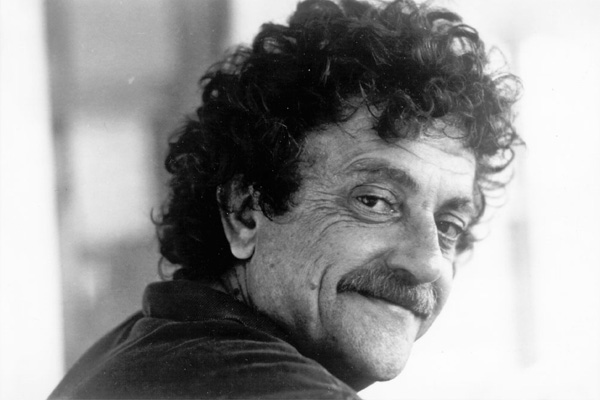
Editing Tips From Kurt Vonnegut

Recently I came across a blog article entitled “Writing Tips from Kurt Vonnegut” which was posted on Melody Godfred’s blog “Write in Color”. It was short and sweet and to the point, listing 8 great tips. Two of those tips really resonated with me because at the time I read them, I was entrenched in editing my documentary and I was struggling with a couple of story issues.

  • Write to please just one person. If you open a window and make love to the world, so to speak, your story will get pneumonia.
  • Start as close to the end as possible.

For the most part when I write I’m usually writing with someone in mind. But I realized when I was editing the 11 stories of this documentary, I was getting caught up in trying to tell too many stories for too many people with their needs in mind. And in the process, I wasn’t getting anywhere in telling the central story of the film. After reading these words of wisdom from Vonnegut, the master of storytelling, I stepped back and envisioned myself with a friend, telling the story of my film and it became clear what I needed to do.

One thing I’ve always done when editing video is to create the beginning and the end first and then fill in the middle. So when I read the tip about starting as close to the end as possible, it reinforced the idea that I needed to have a very clear idea on how I was going to end this film. I had already decided that I wanted to contrast the beginning and the ending visuals so I applied this thinking to the story itself.

I get a lot of questions from people about the mechanics of editing video – like how to do certain things in Final Cut Pro or Adobe Premiere – and I answer the best I can. But I also point out that it’s easy to get caught up in what the software can do and forget about the story that you’re trying to tell. My advice is to read as much as you can about the craft of storytelling. I learned a lot about story structure from Blake Snyder’s book Save the Cat. I learned that every good story has a few key ingredients – irony, conflict, resolution, a hero, change – all basic universal themes. Tutorials on Final Cut aren’t going to help your storytelling skills and without a good story – you might just have some “eye candy” to music.

There is just one more tip from Vonnegut that I’ll leave you with – make sure you check out the other 5 tips.

  • Use the time of a total stranger in such a way that he or she will not feel the time was wasted.

Add to FacebookAdd to DiggAdd to Del.icio.usAdd to StumbleuponAdd to RedditAdd to BlinklistAdd to TwitterAdd to TechnoratiAdd to Yahoo BuzzAdd to Newsvine

I Must Have Been Crazy to Think I Could Do It

….But I did.  Last night I shipped 3 hard drives with almost 5 terabytes of media to my editor. After 2 very long months of extremely long days – every day – I got through the “first edit” of my documentaryIt’s by no means finished, there’s a lot more editing needed to cut it down by half, there’s music to be composed and a narrative that has to be written, but I take great joy in the fact that I got through this part of the process – because it damn near killed me.

When shooting a documentary, you don’t work with a script or a storyboard – or at least I don’t.  I have a pretty solid idea of the “story” when I set out to shoot, but there’s always twists and turns with every situation and every interview.  But I love surprises and I make room for serendipity to happen.  What results is a lot of content that needs to be crafted and arced into a story.  And I’ve just finished defining that story and laying the foundation.

It hasn’t been easy.  In fact there have been times when I’ve wanted to walk away from this because it was so overwhelming.  Trying to tie 11 different stories into one, and looking through 150 hours of footage multiple times can be overwhelming for a team of editors, let alone one individual. I’ve also had my share of low moments these past few months with a grant application rejected and a broken promise by a friend, but somehow I got through it.  I got through it because I had desire.

Having a strong desire for whatever it is one wants to achieve is essential.  Many times we say we really want something, but that is far different than having a true desire to make something happen. In order to stick to something (anything) and follow through with it – no matter what – that desire must be strong and come from within.  It’s something that can’t be copied, taught or faked – you either have it or you don’t. It comes when you are true to yourself.

It’s hard to stay true to yourself.  Many times, well meaning friends or spouses try to distract you from your purpose.  I see this happen a lot when a significant other, who may not understand that in the creative world, the line between work and pleasure is quite blurred and sometimes may feel somewhat resentful of all the time their partner spends on “work”.  I’m lucky in that my husband is also my business partner and has a full understanding of those blurred lines between work and pleasure.  He also knows that when I have such a strong desire to do something, that he shouldn’t get in the way of me following that desire.  That is truly selfless and well meaning.

Since beginning this lofty project, I’ve gotten a lot of calls from people who are in a slump for one reason or another.  They look to me for some kind of guidance.  I don’t really know what to say, other than to tell them to listen to their true self – the one underneath the clutter of the ego – and to trust what it tells you. If I get one of those calls during one of those low moments in my life, I try really hard to stay positive even though I feel like a big fake, because I’ve temporarily succumbed to my own self doubts.  At those times, I try to be utterly honest, relaying the bitter with the sweet and say that bad times don’t last forever. But you have to let your spirit shine.

I wrote a blog once about the human spirit. I feel that the spirit inside me is ageless.  I know when people come up to me and say “you look good” – what they really see is my spirit – which never gets old because I keep it alive. When I’m true to myself, my spirit soars and I look back at my defeats and rejections with a different understanding and acceptance.

So today, with my spirit in tact and my desire ever so strong, I rejoice in the fact that I accomplished something – something that’s really meaningful.  That brings a big smile to my face and great joy in my heart.  What a feeling – it’s priceless.

Add to FacebookAdd to DiggAdd to Del.icio.usAdd to StumbleuponAdd to RedditAdd to BlinklistAdd to TwitterAdd to TechnoratiAdd to Yahoo BuzzAdd to Newsvine