Monetization of Photography in Spite of a Lousy Economy

I talk to a lot of photographers. I don’t define the word “photographer” by the type of camera he or she shoots with. Whether someone is shooting with a still camera, a traditional video camera, a motion picture film camera or a hybrid camera that shoots both stills and motion – a “photographer” these days is apt to embrace more than one of these tools.

Regardless of the tools you may use, I’ve come up with a few tips on how photographers can stay afloat and make money in this continued stagnant economy.
  • Think outside the box – don’t think of yourself as one who just shoots still images. Even your “still” clients will have a need for motion imagery these days.  It may not warrant the need for them to hire a big video production crew to make a broadcast spot.  But it could be one of your corporate clients needs a “talking head” for their website. Even if you don’t shoot motion or don’t want to – collaborate with someone who has these skills to fill your client’s needs instead of sending your clients  elsewhere.
  • You don’t need someone else to commission your services in order for you to make a living. When photographers take on personal projects, not only are they creating a buzz and getting noticed by potential clients, they are also creating their own “content” to monetize. It is possible now to get our content to market without the need of a middleman. Portals are open and plentiful to all.
  • Take advantage of what is “free”, rather than be put out of business by it. There are so many ways to build your brand and get noticed without spending a fortune. The costs of building and maintaining a website have dropped significantly because of advances in technology. And utilizing social media to create a buzz and get the word out about your company is virtually free with Facebook, Twitter,LinkedIn and YouTube. But be prepared to do the work and discipline yourself because this territory is ripe with distractions.
  • Re-purpose your content. If you’ve been blogging or have something useful to share – consider packaging your “knowledge” into ePubs, podcasts or “how to” webinars. One thing I’ve learned about making an ePub is that you can either do it yourself or hire a formatter so that it gets to market quickly – via Amazon, Barnes and Noble or the iTunes platform. Price it right – and offer more than one ePub at a time. (I’m working on my 2nd ePub now) In this market, if someone has just spent $3 or $4 to buy your ePub and they see you have another one for sale – it’s not a big stretch for them to buy that other book you offer at the same time.
  • Collaborate with others. Partner with others to put on webinars, podcasts, call in phone seminars etc. Use this opportunity to build your own brand. Don’t always feel that you have to be the only “act” offered. In fact many times, if you join forces with other creatives, it will get you further than if you are the only speaker in a half filled room. Get out there and get noticed and learn from your colleagues at the same time.
  • Be authentic. I cringe when I write that word because it has become a bit trite. I guess in a way I have always been authentic. In fact I just can’t help myself. If you are true to yourself, you will be ready, eager and able to work hard on your dreams. And hard work is exactly what is necessary to make it in this profession.  You’ve got to want it bad enough in order to do the work. If you are a clone of other photographers, you’re career will be short lived. I guarantee the photographers that you are emulating will be “moving on” because their passion is driving them to new things. So, what happens to the cloned versions then?
  • Don’t focus solely on the money. Easy to say and really hard to embrace when you can’t pay your mortgage. But look at any successful person – I don’t care which business you choose to look toward in terms of finding successful people – but you’ll see that most people who have “made it big” were not driven by the money. I’m not saying that money is not important, but if you are solely focused on the money and not on the act of creating – it will show.   Being too focused on the  money part of the equation, can sometimes push it away. People sense it. It’s human nature to want to be around a “winner” – not someone who is begging for a job to keep them afloat financially.
  • Be patient. Everything turns around. While the old days and ways of doing things won’t come back, better opportunities will replace them. Don’t be paralyzed by your own fears. Do what you can that won’t cost you a lot of money and there is plenty you can do. Work social media, learn new skills – audio, editing, writing etc., network with people, create new content for ePubs, webinars, and podcasts. Use your imagination, pursue what you are passionate about and when the economy turns around – you’ll be ready.

Add to FacebookAdd to DiggAdd to Del.icio.usAdd to StumbleuponAdd to RedditAdd to BlinklistAdd to TwitterAdd to TechnoratiAdd to Yahoo BuzzAdd to Newsvine

Being Yourself

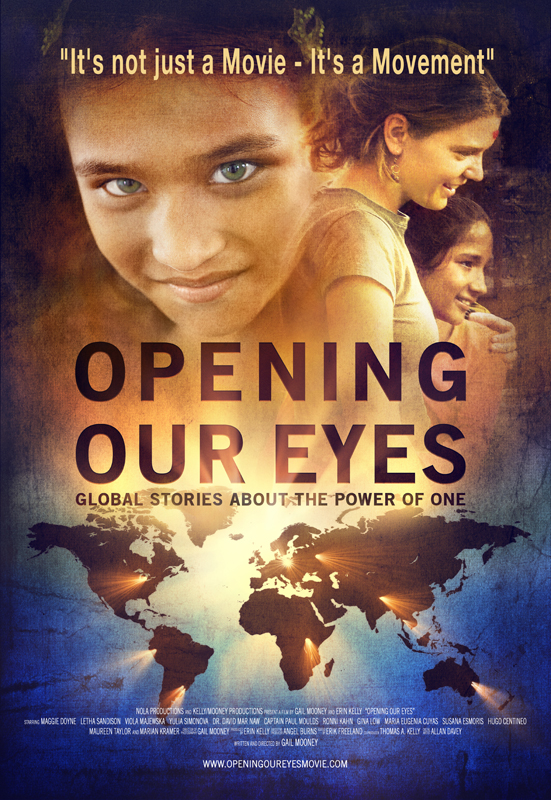
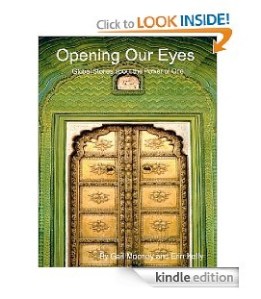
Yesterday, I gave a talk and showed a bit of my film, Opening Our Eyes,

Movie poster for Opening Our Eyes

at the PACA conference in New York City.  I had been asked by ASPP to speak about the making of the film and my plans for distribution.  To tell you the truth, even though I’m always thrilled to show and/or talk about the film, I was a bit nervous with this crowd.  PACA stands for the Picture Archive Council of America and its member include some of the biggest stock photo agencies in the world, including Getty, Corbis, Masterfile and Alamy. I was nervous because part of my message was that I no longer needed the validation or others to get my stories to market.

I thought my message would be somewhat threatening, because I was telling the audience that content creators no longer needed the traditional gatekeepers of the past, to get their stories “out there.”  That because of technology, it was possible for the individual to have a global reach and if one is willing to do the work – the prize is all theirs – meaning the monetary rewards.

I had a tough time slot to speak – right after lunch  –  I knew that I would be dimming the lights for the film and that is never a good thing to do in that time slot.  But, Tom Kennedy had given his very inspirational talk about new media and new opportunities in the  marketplace.  I had heard Tom’s talk  as part of ASMP’s SB 3 series this past year – and I knew that my presentation was a great follow up to his – and in fact it was almost like a case study example of what Tom was talking about.

My presentation went amazingly well and as I looked out into the dimly lit audience as the film was playing – I couldn’t see any closed eyes.  I felt that I made a connection, and that perhaps in some small way, I had made a difference.  Maybe, I just got people thinking about what they could do to make a difference in their own lives.  And maybe I had influence beyond that.  But, I know that I stayed true to myself.  My intent was not to come off as threatening  – but I did want to make people feel a tiny bit uncomfortable.  It’s when we get uncomfortable that we push ourselves to a better place.

My message was simple.  Someone doesn’t need to lose – in order for someone else to win.

Add to FacebookAdd to DiggAdd to Del.icio.usAdd to StumbleuponAdd to RedditAdd to BlinklistAdd to TwitterAdd to TechnoratiAdd to Yahoo BuzzAdd to Newsvine

New Opportunities for Photography

For this post, I’m going to use a very broad definition for “photography”.  I will define photography as any image still or motion shot by any camera – still camera, video camera, hybrid or even and iPhone.

The business of photography has changed with technology. To start with it demands more than just “still captures” in terms of content. These days, our clients are asking us to create stills and motion content and sometimes even 3D.  On top of that technology has made it possible for almost anyone to take a reasonably good picture or video.

So where does that leave us as far as new opportunities in the business of photography? While some look in their rear view mirror and lament the passing of the good old days, I for one have my eye on the possibilities that are open to anyone willing to do the work.

My top 5 pick of opportunities out there:

  • Once Magazine – An online photo magazine made for the iPad. Photographs and video look great on the iPad and Once, magazine shares subscription revenue 50/50 with each issue’s contributors. You no longer need an assignment to shoot those long run stories you love and monetize them.
  • Crowdfunding – With Kickstarter, RocketHub
  • DistributionFilm DIYDistribber
  • Funding and marketing  – Sokap
  • PR and Marketing ToolsTopspin Media
  • Portal for e-commerce (also integrated websites) – Photoshelter

That’s a start.  It’s never before been more possible than it is now to create, promote, market and monetize your “photography.”  Be smart.  Be authentic. Be courteous. Have a plan and be prepared to do the work.  Anything is possible. Validation for your project is no longer necessary.

If you appreciate what I have shared – here’s one last link, a shameless plug to our funding campaign on IndieGoGo for our film, Opening Our Eyes.  If you can, please contribute. If not, please pass along the link.

Marian Kramer, one of our subjects in the film says:
 “We all just have to shine each other up.”

Add to FacebookAdd to DiggAdd to Del.icio.usAdd to StumbleuponAdd to RedditAdd to BlinklistAdd to TwitterAdd to TechnoratiAdd to Yahoo BuzzAdd to Newsvine

Resources, Sharing and Good Karma

I love the time we are living in.  If there is anything I want to find out about – and I do mean anything – and I can get “connected” online – I have access to a universe of information. For someone like me who always has a hundred questions running through my mind – it’s like the “time of Aquarius” – only better.

This morning I was poking around ASMP’s CameraCake, a cool new social bookmarking site.  It’s kind of like getting references to all sorts of interesting people, ideas and services from your colleagues. I posted a link to a great new online magazine that I had heard about from friend, David Sanger on Facebook.

So, now that information and link to Once Magazine will be shared with a lot more photographers and motion shooters than if it just appeared on my blog.  Why all this sharing?  I don’t know, but I do know that when you give, you get more in return and on many levels.

I spent two years, giving seminars for ASMP about transitioning to video.  In those two years, I got a lot of emails with questions from photographers as they added motion to their businesses and I  hope I answered each and everyone.  I’ve also shared a lot of info about video on this blog . That’s why I started it and titled it “Journeys of a Hybrid”, almost 3 years ago – it was a journey for all of us. I’ve recently started offering seminars in The Business of Video, because I see there is a hole to fill. There’s plenty of  “HDSLR” workshops out there, but rarely do any provide practical business models and/or guidance that speaks to the new media opportunities that are opening up in the hybrid area.

Giving seminars doesn’t provide me a living but it does help me in a business sense because by providing knowledge to my competition and people just starting out, I am helping all of us to sustain a decent living, working in a creative trade.

I also like to share because it makes me feel good.  I’ll be speaking at the PACA conference on Oct. 22nd, in New York.  ASPP asked me to talk about my film, Opening Our Eyes in a seminar entitled “Passion to Profitable Distribution”.  I’m delighted to do that because there’s nothing I like doing more than talking about what we as creatives are capable of doing and the global reach we have as individuals.  It’s an empowering time.

I’ll close with one small request and that is to share this link to our recently launched
campaign for Opening Our Eyes on IndieGoGo. The film is finished and is already making a difference, but we need to give it a push in order to “get it out there” and to be seen.

As Marian Kramer, one of our subjects said “We just have to shine each other up.”

Add to FacebookAdd to DiggAdd to Del.icio.usAdd to StumbleuponAdd to RedditAdd to BlinklistAdd to TwitterAdd to TechnoratiAdd to Yahoo BuzzAdd to Newsvine

Ten Things I Learned While Making a Movie With a DSLR

1. It will take twice as long as you think. This is especially true if you have a limited budget. With a limited budget comes a smaller crew and therefore you need to do a lot more of the work yourself – if you can.
2. It will take more money than you think. Everything adds up. There are a lot of costs in post-production – licensing music is a big one and a feature film needs lots of music – and having the sound professionally mixed, makes all the difference and is well worth the money – so anticipate that cost.
3. If you need to transcode files for your editing application – then make that the first thing you do. In fact, I used the Log and Transfer plug-in on Final Cut Pro to do a pre-edit on all my clips as well as add  metadata to the files.
4. Hire a professional editor. Smartest thing I did. I raised funds on Kickstarter so that I could hire a pro. I know how to edit – or at least I thought I did – till I worked with a professional editor. My editor crafted the story and cut it like a musical composition with beautiful timing and rhythm.
5. You will need twice the memory or drives than you thought you would. Even, when working with a professional editor – in fact because I was collaborating with an editor, we had duplicate projects and media on 3 – 2 terabyte drives each!
6. Stay focused on the story. Don’t even go into the editing room without a clear idea of what story you want to tell.
7. Define your target audience. Iit’s important, especially in terms of how you want to craft the story and the rhythm of the piece.
8. Plan ahead as far as screenings or putting content online. Many film festivals have strict guidelines about previous screenings, premiers etc. I wanted to show my film on a big screen, but I couldn’t have it open to the public or charge money, so I opted to have an “invitation only” event and called it a “sneak preview”. Test screenings are done all the time with studios. It gives you a chance to get feedback.
9. Utilize social media. Have a website for the film and a fan page on Facebook.
10. Don’t try to be what you’re not. And don’t try to be all things to all people in your film. Stay true to your vision. Push yourself to try new things. Go with your gut.

Add to FacebookAdd to DiggAdd to Del.icio.usAdd to StumbleuponAdd to RedditAdd to BlinklistAdd to TwitterAdd to TechnoratiAdd to Yahoo BuzzAdd to Newsvine

s

The “Real” Cost of Shooting Video With the DSLR

There was an interesting thread on  ASMP’s video listservlast week. It started when a still photographer asked if a particular

My DSLR Gear

DSLR camera would help him get into the game  – of video.

Jan Allklier, a Seattle based photographer, shooting both stills and motion summed it up:

“If you simply want to ‘explore the medium’ a hybrid DSLR may well be the right ROI, although it really will only give you a flavor for moving images, not the workflow of professional moving image production, which encompasses a wide range all the way from feature film, to corporate work, to webisodes for small business; and many tools and skills well beyond the image capture device at hand.”

Kevin Kamin, Minneapolis based shooter, reminds us that it’s not just about the camera (or tool), but about the story:

“I understand why some photographers are looking to expand into video, it’s definitely doable, but I believe there is a tremendous underestimation of what  is required to do so. I feel like video is being perceived as simply moving photographs-95% of the videos I’ve seen on commercial photographer’s website are not at a professional level (most feel like overly long, clunky, rough cuts that lack sophistication and a clarity of message). They say that ‘people who are good with a hammer tend to think everything is a nail’ So along that idea, many 
of the videos feel like videos made by photographers, who haven’t fully grasped the spirit of the medium. People can enjoy a still photograph for a minute or 
two, if it is compelling and engaging, but if you have three seconds of video footage that doesn’t move the story or lingers 15 frames too long, you just lost your viewer no matter how pretty it looks. Photography functions differently 
within time based media. 
 Storytelling is the core of video. “

And Chuck Fadely, of the Miami Herald, connects the dots for us, first by passing along a link to Shane Hurlbut Visuals blog that lists the “standard” movie making rental gear for DSLR video. More importantly, Chuck  reminds us that shooting motion is a skill set.  It’s a different way of seeing and shooting.

“The hardest thing about video for a still photographer is learning to shoot in a totally different way. You’ve got to learn to shoot in sequences, with transitions. It takes years to overcome the habits you’ve built up as a still photog — like reframing, adjusting exposure, following action — which are death in video. 

I was a news and feature photog with several decades of experience, with extensive lighting skills, good technical ability, and a knack for learning new stuff. I switched over to video full time and it was shocking how little transferred over. Video is a different beast.”

This was one of the easiest blog posts that I’ve ever written and maybe the most beneficial for readers.  It brings up another important point and that is how much we can learn from each other.  When I started shooting motion back in the mid ‘90’s – there really weren’t any listservs or social media forums where my peers were so forthcoming with information.

When people ask me why I’m so giving and sharing with my knowledge, I always tell them that I get back so much more than I give. What a great time to be alive.

Add to FacebookAdd to DiggAdd to Del.icio.usAdd to StumbleuponAdd to RedditAdd to BlinklistAdd to TwitterAdd to TechnoratiAdd to Yahoo BuzzAdd to Newsvine

Avoiding the Pitfalls When Working from Home

A lot of my photographer friends have closed their studios this year, due to a lousy economy and changes with the type of work they do. They’ve set up offices in their home and some have faired better than others. It seems like this transition is a lot harder for some of my male friends than my female friends.

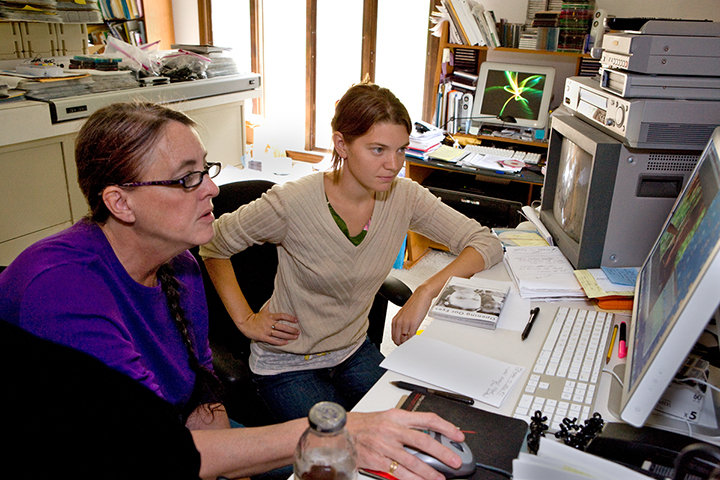
Gail in her "home office" - cluttered but productive.

I think it’s kind of a “hunter/gatherer” type thing where some men feel the need to head off to a “place of work” and if they don’t have that – they feel less “legitimate”.

This past winter one of my friends was having a particularly tough time making this transition and he was ready to pack it all in and get a “real” job. He called me because he knew that I’ve always worked from home, and he wanted to know how I dealt with it and stayed productive. We had a long and very honest conversation and he thanked me.

I saw him at a party this weekend and he came up to me, thanked me again and told me things were looking up for him. Quite honestly, I had forgotten the conversation but he reminded me of some things I said to him and suggested that I blog about it. So here goes.

Some tips and some things to avoid:

  • Start off by calling it your “home office” – not “working from home”. Somehow it’s different psychologically.
  • Be prepared for well meaning family and friends to encourage you to get a “real job”. This happens a lot with people who have creative careers. It’s hard, but you need to explain to your loved ones that what you do IS a real job. Just because you’ve had to lower your overhead and work from a home office, doesn’t mean that you’ve failed. It does mean that you’ve had to make adjustments just like a lot of others have had to do these days to make ends meet.
  • Avoid falling into the trap of taking care of personal tasks during your business hours. My friend found himself spending a lot of time on errands that his spouse asked him to do – “since he was home”. That’s fine once in awhile, but if you find yourself spending half your day doing personal stuff – you are sabotaging yourself and your business. And personal stuff includes putting together Aunt Ann’s birthday bash photos in a fun presentation for all to see. Sure do that – but not during business hours because this is not your hobby – it’s your business.
  • Don’t get overly complacent as soon as you get rid of the expense of your studio. I’ve seen this happen a lot. The pressure to make that overhead is gone so you let your guard down and along with that your clients start to disappear. But it’s because you’ve disappeared – you’re not marketing yourself anymore – and you’re off your clients’ radar.
    • • Have a routine just like you would if you walked out the door to go to work.
    • • Get up at a set time and get dressed – sounds simple but it’s important
    • • Have set work hours
    • • Have a plan – just because you’re in your home doesn’t mean you shouldn’t have a business plan with action items.
    • • Avoid distractions – tough one. If you find yourself doing something that a “boss” wouldn’t approve of – then stop yourself. You’re the boss so stop cheating yourself.
  • Network and connect with your peers and colleagues. This is important, especially in a creative business. You need to have people you can bounce things off of. I have a couple of friends in my life that I’m really grateful for because I know I can share my vulnerabilities and ideas with them without being judged. Friends can do that for you because they don’t have anything personally at stake and can look at things with unbiased eyes. These connections are critical when working from home. These days it’s easy to connect with others. If you can’t do a face-to-face – you’ve got hundreds of other options with social media, listservs or just pick up the phone.
  •  Remember on your darkest days when it seems like it’s hopeless and you’re ready to pack it in and get one of those “real jobs” – don’t totally abandon your dream just yet – leave the door cracked open at least. Maybe get a part time job to start. It will take some of the pressure off and if photography or music or writing or whatever – is your passion – then you’ll quickly find out that a “real job” may not be what makes you happy. The cynics may say that you shouldn’t expect happiness with a job and that the expectation of a job should be to just pay your bills. Maybe so, but do you want to spend most of your life being miserable or counting down the hours to your next vacation? Many times that part time job gives you the push you need to re-invigorate your business because you’ve had a taste of the alternative.
  • Don’t burn your bridges. If you’ve had even the slightest bit of success in the past, following your passions but are in a slump – don’t be so quick to announce to the world that you’re moving on to another career – unless you are thoroughly convinced that you will never have any regrets making that decision. You get the best light from a burning bridge – but it’s usually too late by then. If there’s one thing I’ve learned the hard way – it’s not to burn bridges – because life has a way of making you regret it.

Add to FacebookAdd to DiggAdd to Del.icio.usAdd to StumbleuponAdd to RedditAdd to BlinklistAdd to TwitterAdd to TechnoratiAdd to Yahoo BuzzAdd to Newsvine

Change

Change Who likes change? Other than needing a change of scenery every now and then, change is usually tough to take. I grew up with change. My family moved 10 times before I got out of high school.

Kindergarten, Chicago, IL

I was always the “new kid”. (Hint: I’m in the second to last row. I was also the “tall kid” even in Kindergarten)

No, my dad wasn’t in the military and we weren’t on the lam – he was just climbing the corporate ladder. He’d get promoted or there would be a new sibling and we’d move to a bigger house or he’d get promoted and transferred and we’d move to a totally different place leaving our friends and familiarities behind.

I’m not complaining, nor saying that I feel slighted by having that constant change in my life. It was the life I knew and I suppose I always looked at it with open eyes and curiosity about what was next to come. Of course, if I thought about the friends and sometimes family that I was leaving behind, it made it much harder.

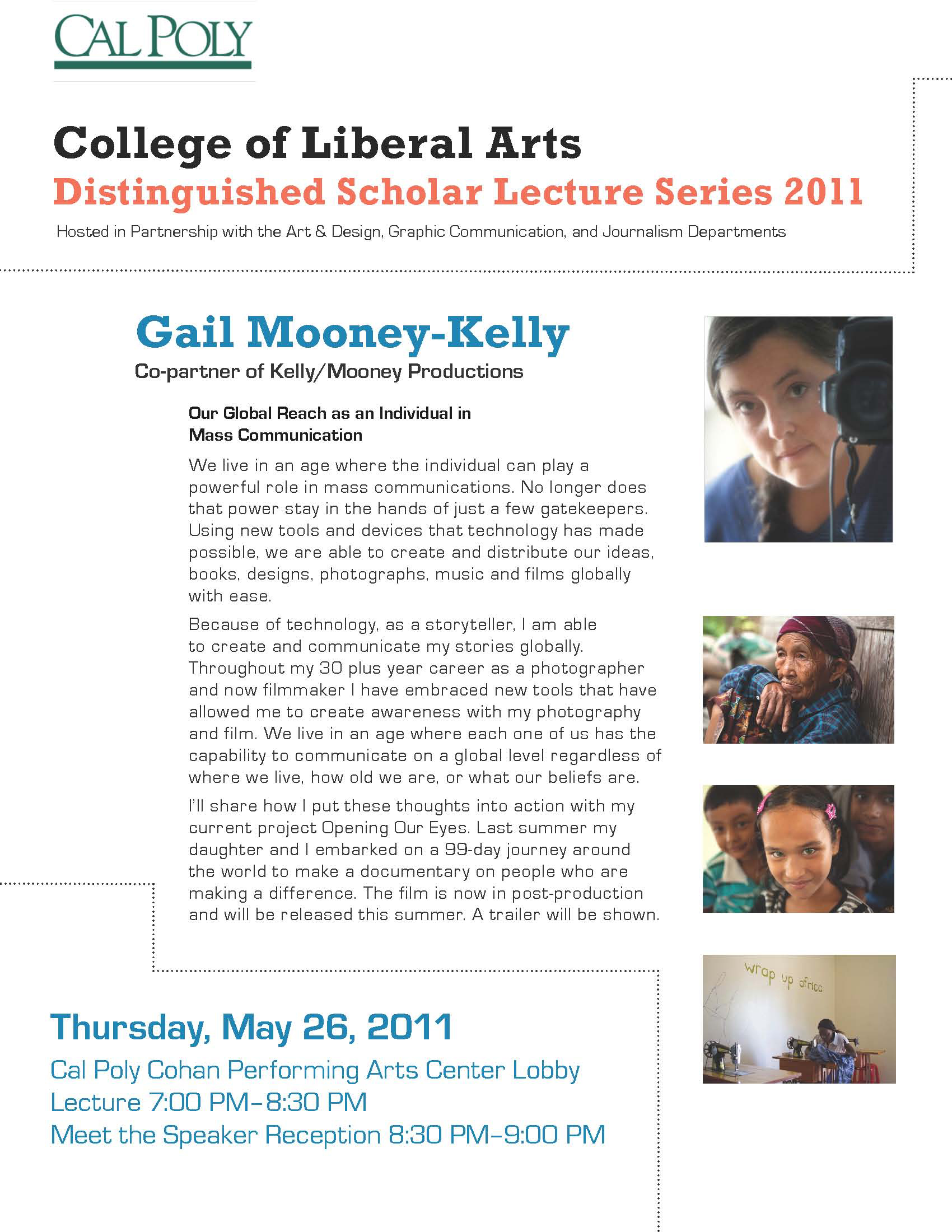
Perhaps growing up in a constant state of change made me more flexible in dealing with all the changes affecting my business these days. Both still photography and video production have been profoundly changed by a bad economy and technology. Kind of like a double whammy. At least with technology the sword cuts both ways and also provides opportunities. It’s usually during the tough times when the economy is bad when innovation happens. Sometimes people just have to be forced to make changes in their lives, even if what they have been doing hasn’t been working. I was asked to speak at Cal Poly on the theme The Role of Mass Communication and Media Technology in Today’s Global Economy: A Multidiscipline Approach. Specifically, they wanted me to talk about how I was using technology to communicate in a global market. I started thinking about how this past year I had vigorously embraced new tools and a new business model, integrated with the Internet and social media to create a mixed media project that will ultimately result in a feature film, a book, an e-book and maybe even an exhibition. I didn’t have a big team behind me, nor did I have a lot of money. We had a two-person crew- myself and my daughter, an editor and my husband working the PR, the social media and the back support. We raised some money on Kickstarter with the help of our backers and we’ve had musicians offer us their music and talents to our film. We are extremely grateful for all of the support worldwide and it could never have happened without advances in technology.

The fact is that we live in such an amazing time where something like this is even possible. It is a time of empowerment for the individual. Technology is democratizing and is leveling the playing field especially in terms of distribution. The locks are gone and the gates to distribution are open and affordable. Within a month of uploading the trailer to my film on Vimeo, it has been played in 95 countries – that’s almost ½ the countries in the world. What a staggering thought in terms of mass communication!

Going forward my ultimate plan at this point in time is to distribute the film through iTunes or Netflix and DVD’s through Amazon. More importantly, I would like to set up 100’s of screenings in communities all over America – maybe even all over the world – and use the film to move people to action. Kind of like a grass roots effort to motivate people to make a difference in their communities. Imagine what kind of an effect that would have if it spread virally through the world. Just Imagine.

Add to FacebookAdd to DiggAdd to Del.icio.usAdd to StumbleuponAdd to RedditAdd to BlinklistAdd to TwitterAdd to TechnoratiAdd to Yahoo BuzzAdd to Newsvine

Validation No Longer Necessary

There seems to be a prevailing attitude of doom and gloom. We have an economy that can’t seem to turn itself around and we’re bombarded by change that technology continues to thrust upon us.  We’re scared to death of the unknown and nobody seems to know what to do next and how to make any money doing it.

Yet, I’ve never been more hopeful in my life. Why?  Because I no longer need someone else to validate my ideas – and that is a powerful notion.  Those of us in the communication business seem to be particularly fearful. Some believe that the “news” business is dying because print publications – newspapers and magazines are folding every week.  But the “news” business is not dying – it’s just being delivered  in another way – electronically and globally.  There are no longer just a few gatekeepers with a lock on the playing field.

Human beings are social animals and we will always have the need to communicate with each other.  These days we can communicate with one another globally.  An idea or creation can be shared around the world in a matter of minutes.  Think of the power in that and think of how we can use that power and the opportunities it presents.  I could digress into a discussion on the ethics of this thought but I’d like to focus more on the reach and influence that each one of us has in creating awareness.

Many of us get enamored with the latest devices that enable us to deliver and receive information with speed and ease. As technology’s exponential growth continues to change our lives in every way imaginable, we will constantly be incorporating and upgrading new gadgets and devices as part of our lives.  We need to be mindful that these “toys” are merely enablers and that each one of us can use these tools to create and distribute our words, images, designs and ideas across the planet.

I think that we as creative’s or journalists underestimate ourselves sometimes.  Perhaps because we chose professions that aren’t lucrative – at least in terms of money.  However, what one is paid doesn’t necessarily correlate with one’s worth. We live in a time now where we can use our creative skills to really make a difference and to tell the stories that we feel need to be told. Mass communication has been democratized. We no longer need the traditional gatekeepers to validate our ideas.

I never would have dreamed that I would be able to circumvent the globe, create a documentary with only one other person in my crew  – my daughter and then distribute it internationally. I never imagined that I would have the power to create awareness on a global level like I did when I uploaded my trailer to Vimeo.  In a little more than a week’s time people in over 72 countries had played that video. Now in less than a month’s time, that trailer has been played in almost half the countries on the planet.  Staggering thought.

This was not a commissioned project by a network or a motion picture studio. If I had waited for that – it never would have happened. I assigned myself.  I was able to fund it by using my airline points, hotel rewards and doing trades with manufacturers for equipment.  I also successfully raised money via Kickstarter a crowd funding site  that made it possible for me to hire a professional editor. My daughter and I have been building an audience for our film since we started blogging about our journey. Our readers got more and more engaged as they followed us on our 99-day adventure around the world. They spread the word through Facebook and Twitter and via their own blogs and pretty soon word of our project spread virally. That was precisely our goal.  To use our tools and skills to create a film about the change makers of our world so that others would be inspired and motivated as to what they can do.

I often think about how things in my life and in history would have been different if we had the Internet when I was growing up.  For starters it would have had a huge effect on the Civil Rights Movement of the 60’s and the Vietnam War.  But everything happens in its own time and when it is meant to happen.  Change can be scary or it can be embraced and sometimes both at the same time.

Never stop dreaming. Never stop learning. Always listen to that inner voice.  Then use the means and the tools of the day to do the dance you are meant to do.

Add to FacebookAdd to DiggAdd to Del.icio.usAdd to StumbleuponAdd to RedditAdd to BlinklistAdd to TwitterAdd to TechnoratiAdd to Yahoo BuzzAdd to Newsvine

Commitment

I was stunned yet not surprised yesterday when I heard the tragic news that Tim Hetherington had been killed in Libya.  I’m grateful that I had seen Hetherington speak and present his work at Photo Plus in 2009. I remember being awed by the intimacy of his photographs and motion.  The viewer felt that they were right there in the action because Hetherington had been – and relayed that story to us.

We know about Hetherington and his work mostly because his documentary Restrepo had been nominated for an Oscar last year.  But how many other men and women who document the wars and the natural disasters, putting themselves in harms way on a daily basis, do we ever even hear about? That’s because it is not about them, it’s about what they are photographing or filming or writing about.  It’s about making others aware.

I once thought that I wanted to be a hard news photojournalist because there is a big part of me that loves to be where the action is.  But I also know that living that kind of life takes its toll especially on ones personal life.  I didn’t know if I could achieve the kind of balance in my life that I felt was important, pursuing that type of photography.  So I went the way of shooting more editorial feature pieces with a focus on people. I also thought that I might be the type of person who would become overly emotionally invested when on site and perhaps not able to fulfill my journalistic responsibilities.

I will always have the utmost respect and admiration for all the working journalists, photojournalists and video journalists out there who give us these incredibly intimate stories, risking their own safety over and over again. They do it for precious little financial reward.  They do it because good journalism is necessary for a healthy society. I’m forever grateful.