This time of year we all try to spend more time with our families and loved ones. It’s also a time when we reflect on the people who are no longer with us. For the most part we rely on our memories and some scattered photographs or home movies.
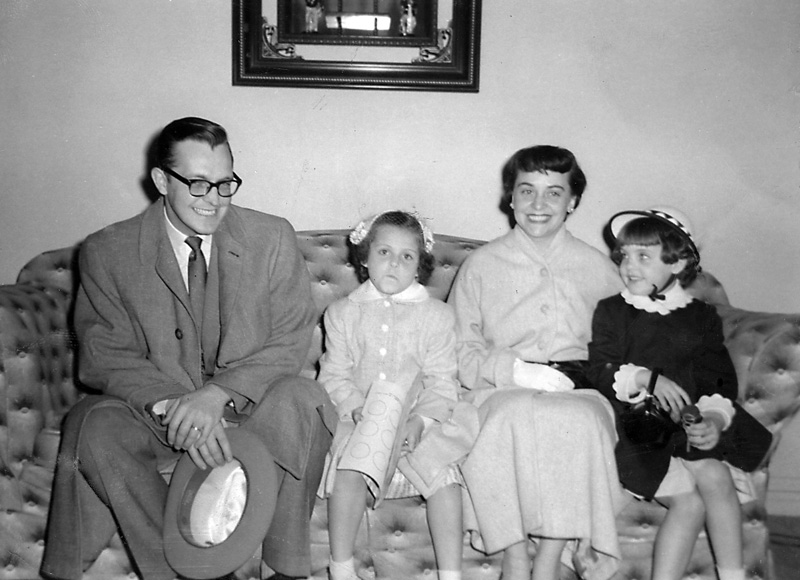
Mooney family dressed up for Easter. I'm the child smiling.
Some of the fondest memories I have of my mother, father and grandparents are of us sitting around the dinner table, long after the meal was over and listening to the family stories. Of course each person would tell the same story in an entirely different way – the way they remembered it.
Every family has stories – mine certainly does and I have started to collect information, photographs and even recordings of family members while they are still around to tell them. It’s such an easy thing to do with all the tools that technology has provided in the way of cameras and audio recorders.
I often think that as photographers and filmmakers we are not only the keepers of our own family stories but we are documenting the stories for other families through our images, recordings and videos. Here’s a recording of my Uncle Dorlen talking about fishing in Northern Michigan in the winter.
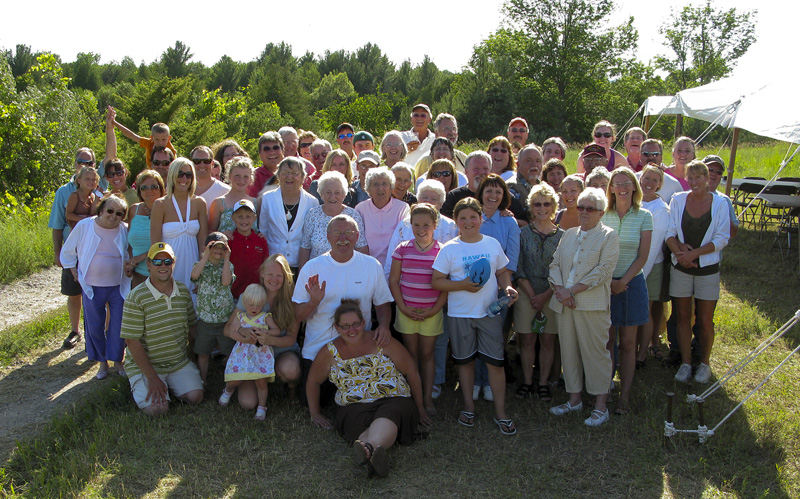
Family gathering at my Uncle "Frenchy's" memorial.
Essentially, we are creating an archive of our loved ones and the memories. And that is the most precious gift that I can give someone through the talents of my craft.
I was recently looking at someone’s vacation snapshots and it occurred to me just how precious those images are, certainly for the people in them and the people they know. I have always taken the family snapshots and have recently started video recording my relatives telling their stories through their own voices, preserving them for future generations.
So think about that – even if you just take out your iPhone or Flip this holiday season, start capturing life’s moments. You’ll be glad you did.
They don’t understand the importance of audio and don’t use external microphones. Audio is everything in video.
They think in “moments in time” and start shooting video too late or stop shooting too soon. You need to let the camera linger longer.
They don’t shoot sequences with a beginning, middle and end.
They don’t think in “storyboard mode” – You should ask yourself “How will I get into and out of a shot and what’s next in the story?”
They don’t shoot enough B-roll with variations in angles and focal lengths – very important in the editing process.
They move the camera instead of letting the motion take place in front of the camera.
They turn the camera vertically. There aren’t too many vertical TV sets and monitors.
They don’t use a tripod forgetting that video is “time in motion”. It’s one thing to hold a camera steady for 1/60th of a second and quite another to hold the shot steady for 10 seconds.
They don’t consider the frame rate and how that will affect workflow and editing.
Aren’t careful keeping their sensors clean from dust. Retouching video is a lot more involved than spotting still images.
They “throw” some video clips in with the still photography job, not putting an added value on them and thus setting a bad precedent with clients.
They don’t consider the output and the type of file to be delivered. There are dozens of formats and codecs in video. Choose according to your target audience and viewing platform or device.
What started out as a mileage run to the West Coast on Friday, turned out to be a day of interesting connections. My plan was to fly out to San Francisco on Friday morning and return the next morning. I needed one more flight – the cost of a cheap ticket – to reach the next level of my airline elite status. I have a pretty full travel schedule next year and the upgrade in status will be beneficial.
Since I had the time, I decided reconnect with an old college friend whom I hadn’t seen in over 25 years. He picked me up at the airport and from the moment I got into the car until we parted company later that afternoon, it was like we hadn’t missed a beat. Both older, yet fundamentally the same people we were back in college. There was a comfortable feeling being with each other even though so many years had gone by.
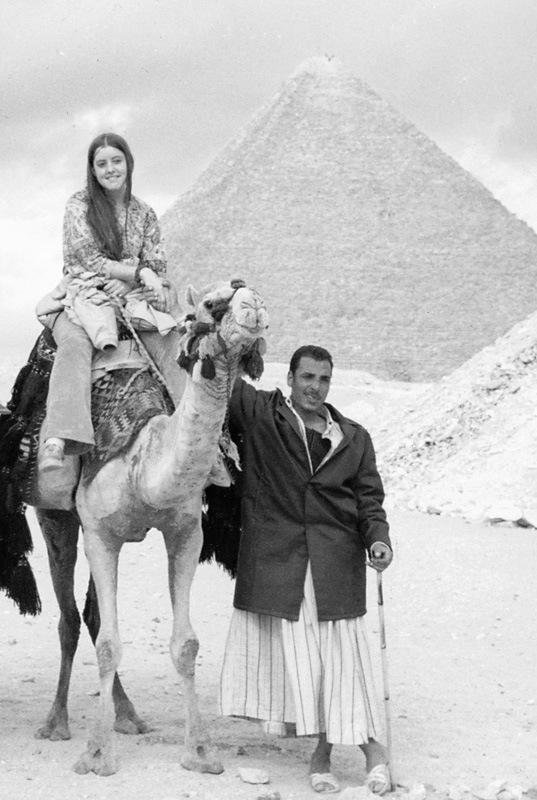
Later that evening I had drinks with a colleague whom I had met a few years back at SATW’s (Society of American Travel Writers) conference in England. During the evening I mentioned a personal project I was embarking on “People Making a Difference” and queried him about story ideas and people he may know. That conversation led us to talking about the travels we’ve each had over the years. We quickly discovered that we had made similar backpacking odysseys back in the early 70’s. We began to retrace the paths we had each taken – I spoke of traveling from Cairo to Beirut, then on to Damascus and through Iraq to Kuwait. He followed with a nearly identical itinerary and picked up the journey from Kuwait by boat to Abadon, Iran and overland to Afghanistan. We soon realized that we had been to the same places during the same period of time.
We both commented on the fact that we never come across people in our lives that have had that kind of parallel experience. He then told me a funny story. He had traveled back to India with his grown son when a young traveler came up to him asking for money so he could get something to eat. My friend told the traveler about his own journeys when he was his age. The young traveler responded by saying “Whoa – you’re one of the Ancient Ones”. My friend relayed this story to me and pointed out that traveler’s comment had been spoken in a manner of respect, the same manner of respect with which native indigenous peoples refer to their elders or “ancient ones”.
It was an unusual day where I set out to take a trip for the sake of miles and ended up reconnecting with my past on a couple of different levels. I tend to look forward in my life rather than at the past but sometimes reconnecting with your past connects circles and reminds of us who we really are. I kind of like being an Ancient One.
I flew out to LA on Friday and had a free afternoon before giving a seminar the next day. I had packed light. I was only in town for a short stay and most of it devoted to my presentation. So I left my cameras at home.
I was staying in Santa Monica so when I got into LA that Friday afternoon I headed to the Santa Monica Pier. It was the quintessential California day – weather wise bringing back a lot of memories from when I used to live in Santa Barbara. For anyone who has ever been to the pier you’ll understand when I say it was like a circus of vibrant visuals. Within a matter of minutes I was regretting the fact that I didn’t have a camera. And then a funny thing happened – I started recording the visuals in my head and using words instead.
Colorful bumper cars against a bright green wall that vibrated in the late afternoon light.
Two men crossing paths each recording their own observations with their mobile devices silhouetted against the glare of the sun on the water.
Garry King “on the scene” the street musician doing his own thing pumping out smooth sounds that drifted off in the wind.
A man who looked like Santa Claus and sounded like Cat Stevens singing the House of the Rising Sun, quickly followed by I’m Dreaming of a White Christmas.
A fisherman weathered and alone.
A 400 lb mime painted silver and pulling his pedestal down the pier behind him.
Today as I headed to the airport in my rented hybrid car an old flatbed pick up, era 1920’s pulled up beside me at the light. For an instant I locked eyes with the old Mexican gentlemen who gave me a quick smile and I thought to myself – and me without a camera.
Maybe it’s time for me to get an iPhone. If only the phone part was better.
Just yesterday I was talking about the good and bad of social media and the potential pitfalls with time management. My routine each morning is to check for any news items on Twitter or Facebook or bookmarked blogs after catching up on my email. This morning there was one post on Facebook that caught my eye and was definitely worth the click through.
Via Mashable.com was Time Inc. Show Us Their Idea of The Future of Magazines [Video]. It was about how publishers are preparing digital versions of their magazines for the Apple Tablet.Apple hasn’t even officially confirmed they are working on this device. Embedded in the post was a pretty sophisticated demo of Sports Illustrated.
Amazing as the demo was – it had its critics. Check out Gizmodo’s post Time’s Manhattan Project Will Explode Like the Atomic Bomb It Is. The article questions how it’s any different from a web page and at ten times the cost. They state it’s pretty packaging but still stale and dead.
The future of publishing is an interesting debate. I suppose it really all comes down to how we the consumers want our information. What do you think?
John Lennon once voiced in a song “everybody’s talking and no one says a word”. That was 30 years ago – way before social media. Nowadays it seems like everyone is talking – everywhere – a constant electronic pipeline into our lives. But with all this talking I wonder sometimes if anybody is really being heard. And isn’t that the point – to be heard?
I admit I’m guilty of the same thing. The very fact that I write a blog adds to the cyber babble. To be honest I really do it for myself. It helps me focus my thoughts. Sometimes what I write is not meant for anyone other than myself or maybe a close friend. Other times, I put it out there when I feel I have something to share. And every once in a while I say something that resonates with someone “out there” and a connection is made. And that can be a powerful thing.
That’s the appeal of social media – to connect with others. A basic human need. Ironically sometimes we spend so much time in the cyber world “connecting” we become more insular in the process. And when we do spend face-to-face time with others – many of us are multitasking plugged into whatever portable devices we have at the time. In other words not totally “there”.
These days I try to manage the time I spend on Facebook, Twitter, Linkedin, YouTube and so on. It can be a real time suck if you’re not careful about managing your time. I go online with the social media sites 2 or 3 times a day and I give myself time limits when I do. It’s all about maintaining a balance.
Ultimately all this talking we do on social media platforms is not good or bad – it’s not that black and white. I’ve made some incredible connections through social media. I’ve also reconnected with people I’ve lost track of over the years. I’ve promoted my business utilizing social media and gotten work from people I wouldn’t have connected with otherwise. But I’ll always prefer a real connection with people – outside the cyber world. I think most people do – that’s just being human.
Back in the eighties when I was starting out, every six months or so I made the pilgrimage to Washington DC to see Bob Gilka, The Director of Photography at the National Geographic Magazine. He was the guy who decided if you would shoot for the magazine. He was accessible, answered his own phone and made appointments to look at work. How times have changed.
Gilka was a man of few words and because of that seeing him was always a bit intimidating. If all you had were images to show – and nothing to say, you’d pretty much be in and out of his office in the amount of time it took to click through your slides. Knowing this, I did my homework prior to the appointment. I’d come up with about 10 query ideas, research back issues of the magazine to make sure they hadn’t been done before and have at least one idea written up in a story proposal.
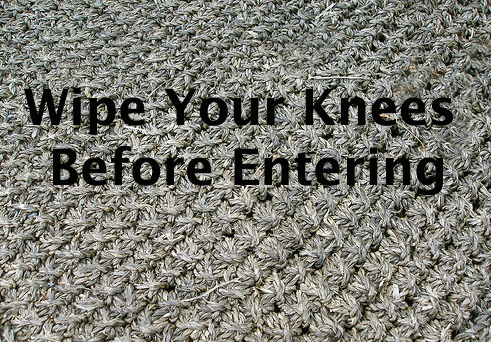
I’ll never forget the first time I went to Gilka’s office. His secretary met me in the lobby, and led me to a small area just outside his office. There on his door was a doormat –with words that read “Wipe Your Knees Before Entering”. Talk about feeling intimidated – as if it wasn’t intimidating enough just to be meeting with the Director of Photography at the National Geographic.
So every six months or so I would show my images and pitch my ideas. This went on for about two years. Each time I went I would almost test myself to see how long I could stay in his office. I would do my best to sell my story pitches that I felt the strongest about and he would reply – “done it –doing it – or – don’t want to do it”. This coupled with a few words of encouragement in regards to some of my photographs would pretty much be it as far as feedback.
Then one day he kept me waiting. He had been detained in a meeting. I had scheduled a pretty tight day to maximize my trip to Washington – so the delay had thrown a wrench into me keeping my other appointments that I had scheduled. When Gilka did show up and apologized, I was already feeling quite anxious and showed it. I told him that I didn’t have much time because I had to be across town at the Smithsonian in 20 minutes. He picked up the phone, called Declan Haun, the picture editor I was headed to see at Smithsonian Magazine and explained that Gail Mooney was running late due to his tardiness. Then he proceeded to look at my pictures and hear me out.
When I did get to the Smithsonian, it was amusing to see how curious Declan Haun was to find out who this Gail Mooney was that got Bob Gilka to call ahead for her. The very next month, I got a call from Bob Gilka offering me my first assignment. Guess I just needed to show my real self. I had sufficiently shown my interest and determination in wanting to shoot for them. And I had demonstrated my photographic ability through my images. But it was when I showed my true spirit that he knew that I could shoot for them. I just had to get over my fright.
Maybe it started after seeing James Natchwey speak at Photo Plus Expo – the desire to create awareness with my camera. But I think it started long ago and in fact goes back to my roots and why I wanted to be a photographer. Simply put, I know that a camera can be a powerful tool in bringing awareness to a cause and with that the ability to bring about change.
I’ve always been interested in the power of the individual, those that are so passionate about a conviction they let nothing stop them. One young woman Maggie Doyne who graduated from high school with my daughter 5 years ago, decided to travel instead of going off to college. She wound up in a small village in Nepal and using her babysitting money, started a school/orphanage for Nepalese children orphaned by war. Learn more about Maggie’s Kopila Valley Children’s Home.
But what’s equally impressive about Maggie is that she speaks to students about how they can make a difference, thus planting seeds in the minds of our youth. That’s a powerful thing and each one of those people she speaks to has the potential do something that could make a difference.
This leads me to the point of this blog and how you can help. I’m embarking on an international project – to make a documentary that features people who are truly making a difference around the world. I am currently searching for those people who have a compelling story to tell. For this project, I am not looking for those who are specifically working for an NGO or some type of organization, such as the Peace Corps, because their stories – the stories of those organizations – have already been widely told.
I am searching for individuals who have embarked on their own personal projects to help make the world a better place – people who have followed their passions, ambitions, dreams, to start something that they care about. Their projects do not have to be massive or overly ambitious – it could be something as basic as restoring old churches in Russia. The people can be natives of their country or expatriates, young or old. Ideally, I would like to find 7 people, one on each continent.
So, if you know someone who is making a difference, please let me know. gail@kellymooney.com And if you don’t know someone, please pass this blog along and get the word out virally. My hope is that by using my skills to tell these stories, I will play my part in paying it forward.
It seems like this has been the year of the video capable DSLR or VSLR. Not only are manufacturers continuing to roll out new models but third party companies have made a big business out of selling attachments or add-ons for these cameras.
Dabblers as well as professional still photographers have gotten into video because the entry level has become easier and more affordable with the advent of these cameras. While traditional news crews haven’t embraced the new hybrid cameras yet, filmmakers have created a cult around them. I must confess that although technically I have had my hands on these cameras, I have not done any test runs using them in the field. But it is on my list of things to do.
What’s Out There Now
The Nikon D90 shooting 720p was the first DSLR camera to shoot video in HD. Canon followed with its impressive 5D Mark II which raised the bar by shooting full frame 1080p with external mic input and recently rolled theyout the Canon 7D with variable frame rates for under $2000!
The most attractive features of these hybrid cameras besides the price, is the ability to change lenses, have controllable depth of field and large sensors that work phenomenally in low light situations. However there are limitations that traditional video cameras that come at a higher price don’t have. Camera stability is one problem due to how the shooter needs to hold the camera because they are designed to shoot in video mode with the mirror up. Since the camera operator must see and focus using the LCD monitor instead of steadying their eye up against the viewfinder, it’s harder to stabilize the camera when hand holding it. Audio capture is very basic as well and must be supplemented in some way.
Third Party Options
Because of these limitations, third party manufacturers have gotten in the game by designing add-ons. Zacuto
Z-Finder
has come up with a few interesting items. One item is theZ-Finder DSLR Viewfinder, which is a device that fits over a 3” LCD and provides magnification for better focusing. It runs around $400. Hoodmanprovides a lower cost version called the Hoodloupe without the same optics but at a quarter of the cost.
An added benefit to using these viewfinders is that it provides another contact point with the shooter’s body and therefore provides more stability. There are also camera support systems available that help remedy the need for better stability in “run and gun”
Rapid Fire
situations where the shooter can’t use a tripod. Zacuto makes two stabilization devices, the DSLR Rapid Fire and the Quick Draw each designed with a different type of shooting situation in mind. In addition a Cavision has come up with a shoulder mount device the RS5DM2SET-S.
Cavision shoulder mount
As far as audio is concerned, if you want to move beyond a supplemental external mic that’s plugged into the camera and use a more professional audio solution you’ll need balanced XLR inputs which will also enable you to use multiple external mics off the camera. Beachtek makes the DXA-5D for around $375 and juiceLink has come up with the juicedLink CX231 for about $300.
Samson H4n
Or you can capture your audio with a stand-alone recorder like the Samson Zoom H4n, also around $300 and sync it later in post.
Regardless of how you ultimately “trick out” your VSLR (video single lens reflex) you can be sure that there will continually be newer models and solutions as technology keeps moving forward. Pro Video Coalition puts out a great newsletter online keeping us abreast of the latest tools. Check out their DSLR Shootout where they test these hybrids and adaptors. Take Dirck Halstead’s Platypus Workshop now incorporating the new DSLR’s in the program. And become a Facebook fan of From Still to Motion for ongoing information and updates. It’s an exciting time with loads of possibilities.
If anyone’s been paying attention to my last few posts you would have noticed that I’ve been very introspective of late. That’s usually what happens to me when I’m about to make a change or embark on a personal project. I have found that when unexpected and random events happen in my life and I take notice and then question why – I’m ready for my next chapter.
I have a friend who is a freelance writer and lives nearby. We frequently take long walks through the miles of preserved natural open land that lie within our community. We are both creatives and we’ve discovered that it’s a wonderful environment for conversation and bouncing ideas off of one another. On a recent walk I was talking about an idea that just won’t leave my head and another thought that’s just starting to morph into a more concrete plan.
At one point she questioned that perhaps I should segway the ideas into assignments from magazines or online publishers – like that would somehow legitimize my effort. I told her that if I have an idea that I feel so strongly about that I’m ready to proceed on my own – then I didn’t feel the need to get validation from someone else. That my passion for the subject matter usually carried me through and was all the validation I needed.
I’ve worked on a quite few personal projects over the years, both still photography and video as well as combinations of both. There hasn’t been one project that hasn’t been rewarding on many levels. Of course there’s the personal satisfaction and growth that I initially receive. And there’s the incredible feeling I get from knowing my work has touched someone or had an impact on them. And there are always the residual rewards that lead to new connections and future projects or jobs.
Someone once told me “pay attention to those thoughts in your head that just won’t quit ya”. So I think I will.








 I have found that when unexpected and random events happen in my life and I take notice and then question why – I’m ready for my next chapter.
 Journeys of a Hybrid