Why I (Still) Shoot Still Images

Even though I’ve been shooting motion for over 10 years, I still spend half my time shooting still images. When my story can be or should be told with images that are “moments in time” then a still camera is always my tool of choice.

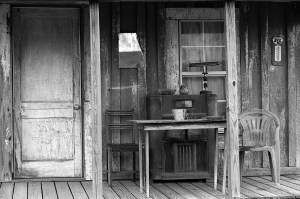
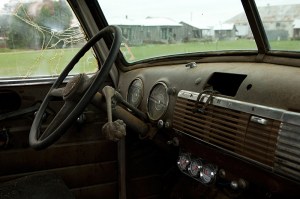
For me there is a certain timeless quality of a still image. Still images are meant to be explored by the eye while lingering on the “moment” captured. Perhaps a better way to explain the power that I find within still photographs is to show you some recent images I shot. Hopsons_shack

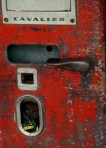
This past weekend I visited a favorite spot of mine. It’s an old plantation in Mississippi and every time I visit, I see it in a different way. But I always see it in a timeless way – it’s like time just stopped there.Hopsons_vending_J2X8487 Even though this plantation is worlds away from my cultural norm – I get a feeling of comfort mixed with a bit of melancholy for my own past when I’m there.

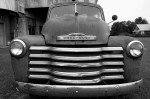
I could put these images in a multimedia format and add a narrative or a music track. But the question I ask myself is why? Hopsons_car_grillJ2X8622Will it add or will it distract? What piece of music should I use and what will that add to the story? Will the music overpower the piece – because many times it can. And too many times people try to add music to mediocre images to make them more exciting.Hopsons_car_J2X8561

A still image has the power to capture the eye of the viewer and make them want to know more. If an image I make draws the viewer in – to see that moment in time – just as I saw it – when I shot it – then I’ve done my job as a storyteller.

Add to FacebookAdd to DiggAdd to Del.icio.usAdd to StumbleuponAdd to RedditAdd to BlinklistAdd to TwitterAdd to TechnoratiAdd to Yahoo BuzzAdd to Newsvine

Finding Your Passion

How does one find their passion?  How does one even define the word – passion?  The dictionary gives a few definitions. I’ll cite two:
– “intense or overpowering emotion such as love, joy, hatred, or anger.”
– “the object of somebody’s intense interest or enthusiasm”

Passion isn’t something you can teach someone – you just have to have it inside of yourself.  If you’re passionate about something – you just know.  I’m a photographer and a filmmaker .  But my passion is “telling the story” and I use my craft as a means to that end.  I’m interested in the human story and the cultural context that gives birth to those stories.

My insatiable desire to seek out and explore the human story has led me down many wonderful paths in my life. One of those paths led me to shoot a personal multimedia project on The Delta Blues Musicians.  My goal was to shoot environmental still portraits– as well as shoot video interviews of them .  I met my goal – at least in terms of creating an exhibition of still images and a short documentary – but I’ve never thought of this project as really being finished.  And that’s because I’m so passionate about the subject – “the blues”.

This past Friday, I headed down to Mississippi for Pinetop Perkins homecoming.  PinetopPinetop Perkins is a legendary boogie woogie piano player in the blues world.  He’s 96 years old and still going strong.  He is living proof of a man who is “living his passion.  I’ve become friends with Pinetop’s manager over the years and yesterday we got together over lunch to catch up on what was going on in our lives. I hadn’t been to the Delta for a few years and she was giving me the latest news on some of the musicians that I had interviewed for my film.  Four have since died – Little Milton, Robert Lockwood Jr., Ike Turner and most recently Sam Carr.
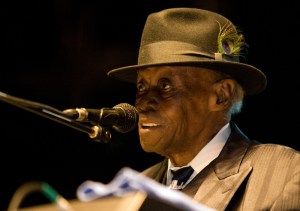
Pinetop’s manager is a very interesting woman who used to be an Anthropology professor at University of California at Berkeley.  She taught interview techniques as part of her ethnology classes.  When I had originally called her up to request an interview with Pinetop – she turned me down.  But not being one to take my first no – I asked her to check out my website and I also sent her a portrait I had taken of Sam Carr.  When she saw the photo I had taken of Sam – she changed her mind – she gave me my time with Pinetop.  She said that after she saw the portrait I took of Sam – she knew that  I understood “cultural context”

Yesterday at lunch she paid me another high compliment.  She told me that while she couldn’t quite dissect my “interview technique” (and she kind of rolled her eyes as she said it – because at times my techniques are quite comical) – she said that people just seem to be comfortable with me and  because of that they wanted to talk.  She also told me that I’ve been the only one to get a smile out of Robert Lockwood Jr. in an interview – but that’s another story.  Those comments were rewards in themselves for the efforts I’ve made on this project over the years – but there have been so many more.  Many rewards – all because of my passion for “the blues”.

Later that evening I got a chance to see Pinetop perform again.  I was backstage at the main festival stage – it was unusually chilly and I had a blanket with me.  Pinetop was sitting in the wings and I gave him my blanket as he waited for his cue.  He seemed so small and fragile.  When he got up to walk on stage and take his place at his keyboard before the crowd – he came alive.  And when he played his first note – I caught “it” in his eyes – a passion for his music and more than that – a passion to play for “his people”.  He didn’t want to leave last night – he played another song for “his people” and raised his arms in joy as the crowd embraced him.  It was a moment I’ll never forget.

Why Shoot Video Instead of Stills

Video seems to be the “hot” topic these days.  There’s nothing really new about video – it’s been around for quite some time.  So why do we see and hear it everywhere? You Tube gets one billion hits a day!  Perhaps the short, simple answer is because society interacts and communicates more and more via the web through social media sites.  And because of broadband capabilities – we “can” watch videos without the painful experience of watching stuttering video while it downloads.

So as the economy stays soft and still photographers try to stay afloat and camera manufacturers incorporate video capabilities  into still cameras – there seems to be more and more photographers who feel the need to start shooting video.  I’m a big advocate of video – but for all the right reasons and those reasons are different for each and everyone of us.  But – you must have a reason why to shoot video from a story point of view.  Because visual communication should be all about telling the story or relaying a message.

I used to shoot a lot of stories for the National Geographic Traveler – mostly city stories.  I spent quite a bit of my time – observing life and waiting for the “moments”.  I’d also spend a lot of time talking to people and listening to their stories.  I stored a lot of those conversations in my head over the years but because I am a photographer – my images were published – but not those conversations. So in a sense there was a large part of my experience that was never shared.

When I started shooting video projects, along with it came the need to do interviews. A big part of many of my videos are interviews that drive the narrative of the story.   Interviewing someone on video can be a powerful thing. That is truly one of the most powerful aspects of video  and the reason “why” I choose that tool when I do.  When I sit down and speak with someone  face to face – I get the type of experience and interview that one can only get in person.  I pick up on all the nuances – the body language – of the subject.  When I really care about my subject – the connection becomes that much stronger – the questions are answered not only with words but with the body and the eyes and everything in between.  And that shows – on camera and can drive the story in a meaningful way.

So when I need to tell someone’s story and that person tells their story not solely through their words but with every inflection of their voice and body – then video is my tool of choice.  That choice is made because it makes the story stronger.  Not just because I “can” because my camera has video capabilities. Choose your tool wisely.  I’d love to hear how and why others decide on which tool to choose. There’s so many reasons.

My Hybrid World

This is kind of off topic in the sense that it speaks a bit to my personal lifestyle as opposed to my professional one – yet in a way it’s the perfect analogy to my hybrid existence of working in both the still and the video worlds.

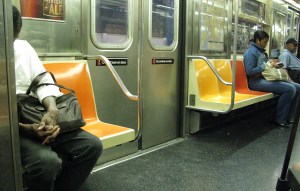
I live 38 miles west of Manhattan Island subway– close enough to commute if I were so inclined or had a “job” to commute to. But since I’m a self employed freelancer and always have been – I look at that short distance to the “city” as the bridge that connects my two worlds. The “city” can pretty much provide me with just about every cosmopolitan need that I may have and my other world – the idyllic little “bubble” where I live – a small rural town in Northwestern New Jersey – gives me space and serenity. bicycleBoth are important in my life and I don’t think I could give up one for the other.
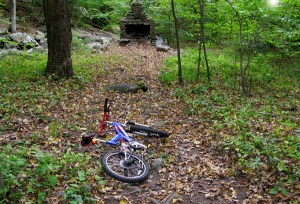
I feel this way in terms of working with both still photography and video. They each in their own way are creatively fulfilling. Because I’m a storyteller – I look to each medium in terms of being the right tool to tell the story. I think differently in each medium and for this reason it’s very difficult for me to shoot both stills and video on the same job – although I have done that on many occasions. But my head is in a totally different place – depending on which medium I am working in.

I’ve said many times that it’s not about the tool – I can’t just swap out the tool because it’s really not that simple. With still imagery it’s all about the moment in time. With video it’s time in motion. With still imagery I’m selecting that precise moment where the story gets told. With video I’m telling the story through a sequence of imagery – always thinking in terms of the beginning, middle and end and ultimately with the “whole” piece in mind.

I could never make a choice between the two mediums at this point in my life because they are each needed in their own unique ways. Each serving their own purpose in how I choose to communicate – visually and creatively. Just like the hybrid personal world that I live in.

Staying Outside The “box”

A friend of mine recently reminded me that I have said that I like to stay outside the “box”.  That I have spent much of my career trying not to be categorized or pigeon holed into one specialty of photography.  Perhaps not the greatest business decision, but nevertheless a series of mini decisions to continually depart from whatever my norm is or has been.

Even as a child I discovered early on that I wanted to explore – in the broadest sense of the word.  I surely did that in my days right out of high school and college when I embarked on a year long backpacking odyssey across half the globe.

Mooney, Peace Hotel, Shanghai, China 1983

But it was after that sojourn that I pursued a career in photography to facilitate a somewhat vagabond life.  And that I did combining a photographic career with my quest for discovering people and cultures. I ‘ve been  fortunate over the years to have garnered assignments from high profile magazines like National Geographic Traveler, Smithsonian and Travel & Leisure.  And I loved the path that I had chosen.

It was about ten years ago that my restlessness pushed me into the medium of video.  Technology was making it possible and affordable for me to shoot my “stories” in this medium with sound and motion.  But I was more focused on adding those new dimensions to “the story” rather than on the “tools” itself. Getting into video proved to be a great move, certainly a good business move as society has gravitated more toward the web.

So in my desire to live a life “outside the box”, I’ve come full circle and realize that “decision” has not only been “good” for  business – it’s led to a very interesting and rewarding way to live life.

Family Biographies

I think one of the most gratifying areas I create videos for is in documenting family stories. This past weekend, I traveled to Michigan for a large family gathering. Because this part of my family is over 800 miles from me, I don’t get to see them as often as I like. I also know that the years go by like minutes these days and that many of my aunts, uncles and cousins are getting on in years.

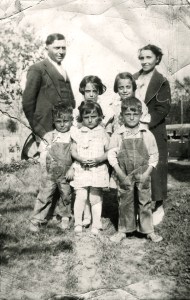
On this particular trip I pushed myself out of my comfort zone and decided to set up time to get my relatives to sit down for video interviews. I wanted to archive their stories for future generations of our family. Mom,Jereta, Joyce, Dorlen, Frenchie

We took an afternoon and one by one, each aunt and uncle told me stories of growing up and the hard, but happy life they had on the family farm. They talked a bit about my mother and I’m grateful for that because she is no longer here to tell her story.

At times the tales were funny and it times they were quite emotional. But I think at the end of the day we all agreed that what we had accomplished in taping their stories,  was an important thing to do. Video is such a wonderful tool for documenting a family’s story because they are telling their stories in their own way, with their own voice. Creating family biographies is one of the most rewarding areas that I work in. And it’s also the most appreciated.  I’d like to think in my own small way that I’m continuing a legacy for future generations to come.