Driveby Culture

Seth Godin’s blog post today “Driveby culture and the endless search for wow” really hit home with me. Godin writes:

“Should I write blog posts that increase my traffic or that help change the way (a few) people think?”

I think about this a lot – should I write about something that I know will get a lot of eyeballs or should I write about something that I’ve been thinking about that may make others think? Ironically, when I don’t think about what will attract an audience and just write from an open and honest point of view – I end up with a lot of eyeballs. And those are the eyeballs that I want to attract – the ones who I click with.
Godin goes on to say:

“More and more often, we’re seeing products and services coming to market designed to appeal to the momentary attention of the clickers.”

“Mass marketing used to be able to have it both ways. Money bought you audience. Now, all that buys you a mass market is wow and speed. Wow keeps getting harder and dives for the lowest common denominator at the same time.”

We live in a culture of “shock and awe” and sound bites. We don’t read anything lengthy – we want bullet points. Magazines don’t run stories anymore – they do survey pieces – the ten best………….. We want packaging and fizz – wowy zowy. We want exotic imagery and special effects. If it doesn’t grab our attention – we’re bored and off to the next thing. We’ve become so busy clicking around and multi-tasking we hardly take notice that we’re not getting satisfied. We’re left kind of empty feeling even though we’ve just been to a smorgasbord.

Every once in a while something comes along – a simple movie with a powerful message – an image that lingers in our minds – a story that took us to another place. Timeless thoughts, ideas and imagery that continue to resonate with the human spirit and every now and then we take pause and notice. Something makes us all stop and think – beyond the glitter, the eye-candy and the headlines.

Godin questions:

“What works to change mindsets, to spread important ideas and to create an audience for work that matters? What’s worth your effort and investment as a marketer or creator?”

For me the answer is just being myself – open and honest. There’s only one Gail Mooney and that’s what I have to share.

Add to FacebookAdd to DiggAdd to Del.icio.usAdd to StumbleuponAdd to RedditAdd to BlinklistAdd to TwitterAdd to TechnoratiAdd to Yahoo BuzzAdd to Newsvine

Tips for Getting Good Video Interviews

More and more still photographers are getting into video because of the appeal of the hybrid still cameras that also shoot video. Photographers love the visual coming out of these big chip cameras – what’s not to love? But they quickly find out that if they aren’t just going to be laying visuals down to a music track, they will need to start thinking about their audio – specifically a narrative track or one driven by sound bites from interviews. I work in the corporate sector, as well as create documentaries, so I do a lot of interviews. The interviews, along with a scripted voiceover comprise my audio track and drive the story.

I love doing interviews. That’s because I’ve always been a curious person and like to ask questions. I enjoy the “conversation”. I don’t want to become part of the video, even though I am usually the one asking the subject questions. My voice and my questions will not be heard in the final video, so I need to coach my subjects to paraphrase the question when they relay their answers. But before I get to the interview, I research my subject and come up with a good solid list of questions to ask in advance.

Here are some tips for getting good interviews:
1. Ask leading questions – not yes or no questions. Example: Instead of asking where do you work? Ask: Tell me about where you work.
2. Ask subject to paraphrase the question if you don’t want the interviewer to be part of the video.
3. Don’t step on your subject’s lines. Instruct your subject to pause before answering the question. In addition, make sure that you pause after your subject answers the question. Many times someone will add more insightful information to fill in that pause.
4. Ask the question more than once.
5. If your subject rambles – ask them to summarize their thoughts.
6. Use gestures to encourage and guide subjects – remember you don’t want to hear your comments.
7. Be a good listener – many times my best questions are follow up questions to something that the interviewee just said.
8. Pay attention to your subject’s answers because you’ll need to illustrate what the subject is talking about with B-roll.
9. Pick a suitable location for sound. Find a quiet environment and turn off all fans, motors, radios etc.
10. Record room tone – you’ll need it when you edit the sound bites

Add to FacebookAdd to DiggAdd to Del.icio.usAdd to StumbleuponAdd to RedditAdd to BlinklistAdd to TwitterAdd to TechnoratiAdd to Yahoo BuzzAdd to Newsvine

Frozen Waves and Instincts

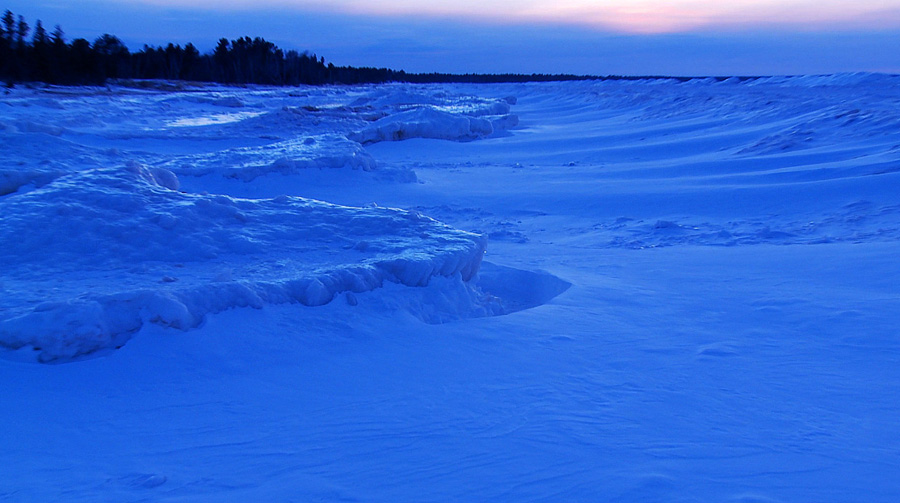
A couple of weeks ago I stood on top of a 10 foot frozen wave on Lake Superior. I was in an amazing place, both physically and spiritually.  The next day, we had an 8-hour drive from the Upper Peninsula to Detroit.  I pulled out my computer and I wrote a blog about my experience on the ice, the day before.  I really didn’t think much of it at the time – I just jotted down my thoughts.

When I got to Detroit, I uploaded the blog to my wordpress site and didn’t check my email or look at any social media sites until very late the next evening.  When I did, I saw that the hits on my blog had gone through the roof – over 2000!  When I checked my email, I noticed there was one from a wordpress editor telling me that my blog had landed on their home page.  No wonder.  Judging by the dozens of comments people had written – I realized the blog has resonated with people.  Not just the icy image, but my thoughts and feelings that I had shared.  I had written from my instincts.

I’ve lived my life taking chances and trusting my instincts.  You kind of have to trust your instincts when you take chances – that comes with the territory.  If you don’t – most likely you won’t be putting yourself out there.  I honed my instincts in my early years, when I was a 19 year old woman hitchhiking around the world.  I had to make snap judgments about people when they pulled over and offered me a ride.  Should I or shouldn’t I get in that car?  I developed a sixth sense if you will – and to this day I go where my gut is telling me to go.

The funny thing is my instincts aren’t always right – not 100% anyway.  Maybe only 70% or 80% of the time.  So that means that 20-30% of the time – my instincts are wrong.  When that happens – I fail.  And when I fail – it’s really hard to trust my instincts again.  But if I question myself (and I do) and I talk myself out of doing something – I know – I’ve guaranteed – that “something” has absolutely no chance of happening.

Sooner or later, I usually get another idea to pursue or an opportunity presents itself and I have to make a decision on which path to follow.  And once again I need to trust my instincts.  It’s scary – it’s always been scary.  That’s why it’s called risk.

I’m pushing myself in a lot of new directions at this point in my life.  I’m not going to pretend that I don’t get afraid – because I do.  So I need to dig down deep inside myself and trust my most basic instincts and hope they serve me right.

Add to FacebookAdd to DiggAdd to Del.icio.usAdd to StumbleuponAdd to RedditAdd to BlinklistAdd to TwitterAdd to TechnoratiAdd to Yahoo BuzzAdd to Newsvine

Funding A Personal Project

I have learned from past experience with other personal projects that getting funding for an idea is no easy task.  But I have also found that with a lot of careful planning, saving and budgeting I have been able to self fund my projects and have been compensated on many levels later on – after the projects are underway or near completion. As I continue to blog and to talk to people about Opening Our Eyes, the documentary my daughter and I are creating which involves us traveling around the world, I get asked a lot of questions.  One question that is asked quite frequently is “who is funding your project?”  The short answer is – we are self-funding our trip and our documentary.

I had managed to save up about 330,000 miles with Continental Airlines and another 329,000 points with American Express over the years.  I was saving them for something, just didn’t know what until a few months ago when I decided to cash all my points and miles in to subsidize our journey around the world.

So far, I have exhausted all but 4,000 Continental miles in ticketing my Round The World plane ticket as well as getting my daughter and I to, from and around South America.  My husband Tom donated his Continental miles to my daughter Erin for her Round The World fare.  I will still need to pay for airplane tickets to Iquitos, Peru from Lima as well as for flights to Nepal from Delhi, India. That still leaves picking up the costs of air or train tickets from Istanbul to Warsaw and Moscow. I will use about a third of my Amex points to pay for the flights from Lima to Iquitos, Peru because those tickets are costly.

I’ll use the rest of my American Express points to fund some of our accommodations, along with any hotel points that I have.  We’ll be staying at guesthouses, people’s homes and budget hotels whenever possible.  We’ll use public transportation for getting us around once we get to our destinations because renting a car isn’t in our budget.
Of course there’s food and miscellaneous expenses on the road like Internet and admission fees.  The vaccinations for the two of us have cost more than $1500 and the visa costs may reach $1000.  And we’ll both need backpacks and other personal needs for the trip.

My biggest expense will be for photo/video gear but that is the purpose of the trip.  I have pretty much figured out the gear that I’ll need: read my blog entry Putting Together a DSLR Video Kit.  When all is said and done, including buying an additional laptop as a backup, I’ll have spent about $12,000 on equipment needs.

So, how will I pay for it?  When my mother died about six years ago she left me a little money.  I never really wanted to spend it and was fortunate that I never had to – so I will use it for this project and this trip.  Somehow, I think she would love the idea of what her daughter and granddaughter were doing.  And if she were still here she might very well have wanted to join us.

I’ll be reaching out to Canon, Apple and others as potential sponsors.  I’m also reaching out to my friends and connections that I have made over the years for donations in kind. If you have any hotel points that you may not be using and would like to donate those points to our trip it would be greatly appreciated.  Or any other type of “in kind” donations you may provide.

Please email: gail@kellymooney.com or call 973-543-6868

Add to FacebookAdd to DiggAdd to Del.icio.usAdd to StumbleuponAdd to RedditAdd to BlinklistAdd to TwitterAdd to TechnoratiAdd to Yahoo BuzzAdd to Newsvine

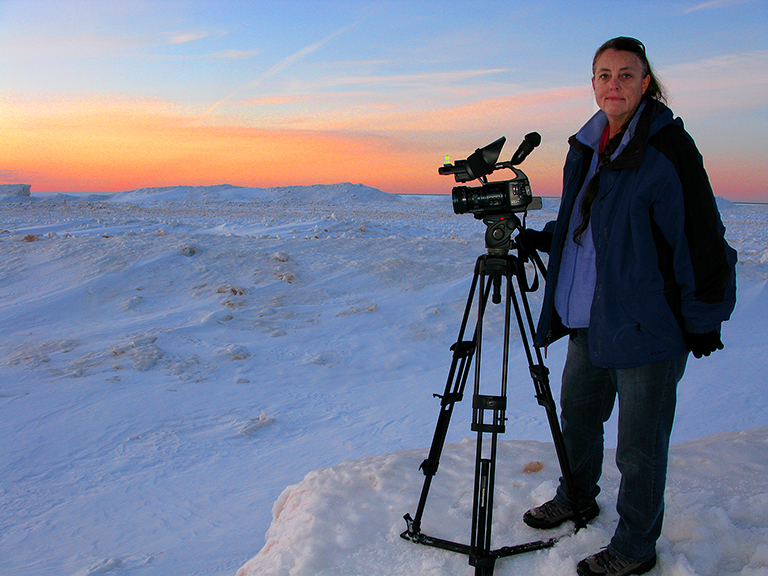
Standing on a 10 Foot Frozen Wave

Yesterday I stood on top of a 10 foot frozen wave looking out over the vast icy seascape of Lake Superior. I was shooting footage of this endless field of frozen waves as the setting sun turned them every shade of blue, purple and orange. It was quiet – incredibly quiet – no car or airplane noise, no voices, and no sound of splashing water, not even the sound of a bird. The audiometers on my camera barely registered a blip and yet there was audio. Even dead silence has a sound.

I’ve been on the Upper Peninsula in the far northern reaches of Michigan, shooting footage for a family biography that I’m working on. I had recorded interviews with my mother’s siblings this past summer while attending a family reunion and I had been planning on returning to capture some winter footage to illustrate the stories they told during the interviews. My mother, her siblings and her parents grew up in northern Michigan during the Depression, farming, lumbering, and fishing – pretty much doing whatever they could to survive. Times were hard and living in such a remote, harsh climate didn’t make it any easier. Everyone did what he or she had to do.

While I’ve been in the UP, I’ve met a lot of people who are doing all types of things to survive during this lousy economy. Most I’ve met have several part time jobs. A couple of times I stopped to eat at a restaurant, there would be one woman tending the bar, waiting on tables and cooking the food. Because of it’s geographic location and its sparse population, the Upper Peninsula is kind of like a frontier and the people who live here, have the spirit to go with it.

As I stood on the top of this frozen wave in absolute silence I contemplated resiliency of the human spirit in the context of my own world. Certainly my business has changed – due to technology and the lousy economy. Because of technology, I am able to do more things than I could ten years ago. Because of the poor economy, I’ve had to do more things. Most other photographers I have talked to this past year have diversified their businesses – some shooting weddings, some shooting video and some working in other retail markets. I suppose we’re all just doing what we can to get through these changing times.

So I looked out over the endless view of frozen waves and into the orange glow of the setting sun. For an instant I became fearful of where I was when I looked behind me and saw a deep crevice that I could easily fall into if I lost my footing. But then I looked ahead to the orange glow on the horizon and I felt hope and with that a sense of security because I knew where I came from and I have the heart and spirit to survive.

Add to FacebookAdd to DiggAdd to Del.icio.usAdd to StumbleuponAdd to RedditAdd to BlinklistAdd to TwitterAdd to TechnoratiAdd to Yahoo BuzzAdd to Newsvine

Cultural Context and Photography

I became a photographer because of my passion for people and the cultures of the world. Photography has given me access to all sorts of people from various cultures and backgrounds. My camera is my tool – my means to my end. And that is to tell peoples’ stories through my images – whether they be still or moving.

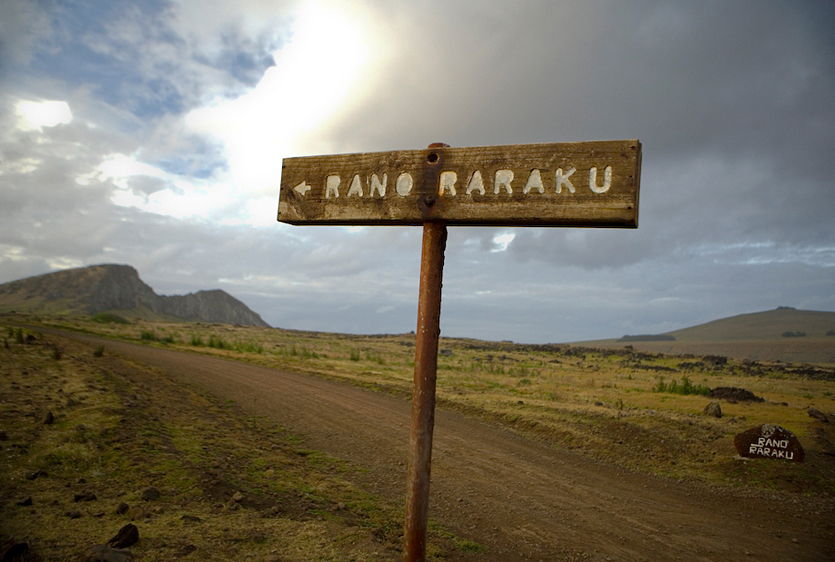
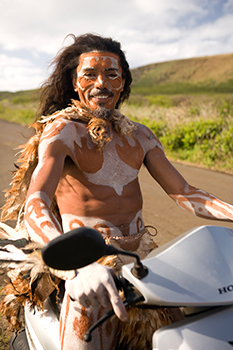
I was going through some images this week that I had shot in Easter Island a few years ago. Easter Island had always been a destination high on my list of “must sees” and it lived up to my every expectation. It was remote and wild with a constant wind that energized me. A place in the world that somehow felt untouched, unlike so many other destinations in the world that have suffered from the negative effects of the onslaught of visitors due to their own intrigue or beauty. In Easter Island the culture still felt real.

The first few days my partner and I spent driving around the island, which isn’t hard to do because of the virtue of its size. In the main town, I noticed that most of the people I saw out and about were men. Men with exotic looks riding through town bareback on horses with their long black hair blowing in the wind. It was quite a provocative sight speaking both as a photographer and as a woman.

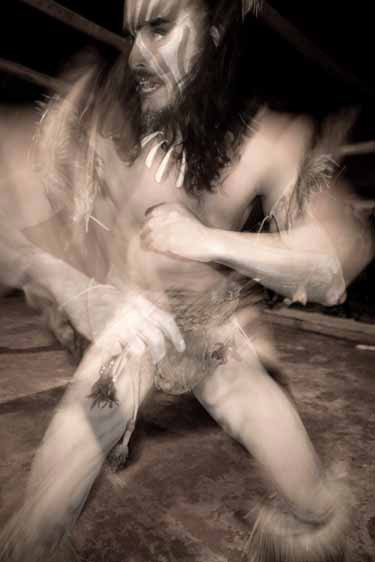
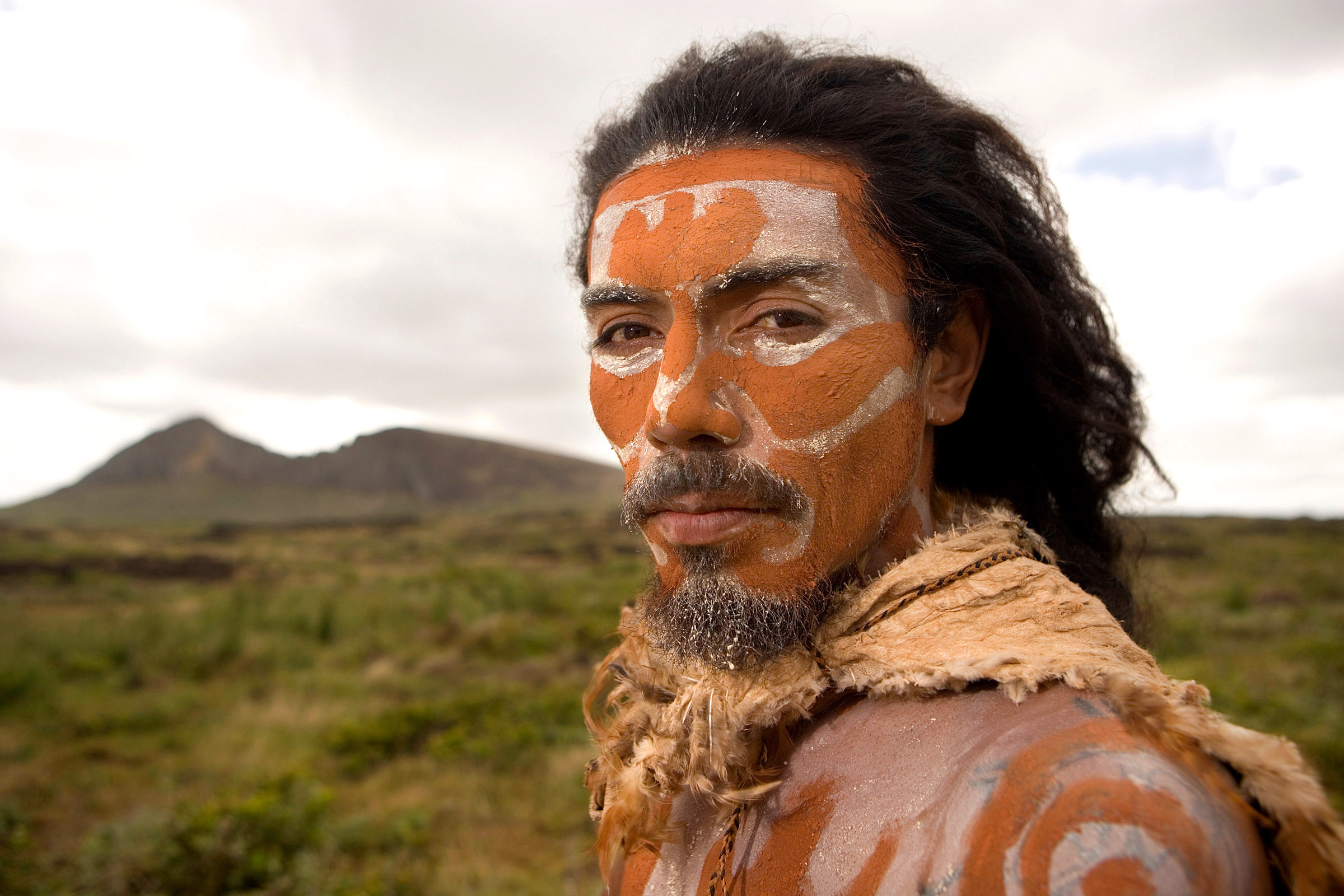
After attending a dance performance one evening I made arrangements to photograph one of the dancers – out in the natural environs of the island. I wanted to capture the spirit and the feeling of the people and the land. Tom, my partner and I met up with our subject who was in typical “western” attire and not made up. He asked us if we would transport his “weapons” in our vehicle as he couldn’t manage that on his scooter, and we obliged.

He followed behind us on his scooter to the location that we had previously scouted and then he proceeded to strip down to nothing. Here we were in this incredible wild environment between an extinct volcano and the sea with a native man totally naked standing in the road – applying his makeup, using the side mirror of our car. I instinctively knew that even though these were not the images that I had planned in my head – these were images that told the story of his culture in a unique context.

We went on to photograph a wonderful array of environmental portraits and at the end of the day we took a “crew” photo of our little group. And then he got back on his modern day scooter, in all his tribal glory and I took a few parting shots. It’s days like this that is why I became a photographer.

Add to FacebookAdd to DiggAdd to Del.icio.usAdd to StumbleuponAdd to RedditAdd to BlinklistAdd to TwitterAdd to TechnoratiAdd to Yahoo BuzzAdd to Newsvine

Telling Stories in Multimedia and Video

Rather than paraphrase here what I have already written, I will simply direct you to an article that I wrote for Adbase that just went online http://tiny.cc/h5kWV

Several tips on how to tell the “story” through the medium of motion to how to size images to achieve that timeless Ken Burns effect.

Bottom line – it’s all about the story.

Add to FacebookAdd to DiggAdd to Del.icio.usAdd to StumbleuponAdd to RedditAdd to BlinklistAdd to TwitterAdd to TechnoratiAdd to Yahoo BuzzAdd to Newsvine

On the Road (Again)

I’ve been doing a lot of traveling these days, quick one or two-day stays in cities all around the US. But that’s not the kind of traveling I do when I’m on a destination shoot where get totally absorbed in a city because I’m there to tell that city’s story through my images.

These days a lot of my travels are quick trips in and out of cities all around the country, giving seminars for AMSP to still photographers who are thinking about getting into video. So I rarely have time to see the “sights” of the cities and really get my bearings on where I am.

One thing I do try to do while I’m on the road is walk because that is what I do when I’m home and it helps me get clarity on the day. This morning I went out for a walk in the area just outside my hotel. As I walked by various chain restaurants and stores, I almost forgot where I was, because it could have been just about anywhere in America. And that kind of made me sad – that in the US, our towns and cities have lost their unique attributes.

When I got back to my hotel, I saw a posting from a friend on Facebook on how photography introduces you to people whose lives and stories humble you. His words really hit home because I became a photographer for this very reason – to allow me the privilege of meeting people and hearing their stories. For me, photography and my camera have always been a “means to an end”.

Then I realized, that a place isn’t really defined or not defined by its stores and restaurants but by its people. And that even though I may only be in a place for a quick overnight – I always try to connect with the people. Whether that may be a chat with a taxi driver or a waitress or with some of the wonderful people I meet when I do a seminar.

Such is my life, enjoying and being humbled by all the people and their stories as I continue my travels. How lucky I am – to be able to combine my career in photography with my passions.

Add to FacebookAdd to DiggAdd to Del.icio.usAdd to StumbleuponAdd to RedditAdd to BlinklistAdd to TwitterAdd to TechnoratiAdd to Yahoo BuzzAdd to Newsvine

The Power of Social Media

My last blog entry, I wrote about the DO’s and DON’T’s of Social Media. The next day I put some of some of those tips to work.

I am embarking on a personal project, Opening Our Eyes. The idea behind the project is to make a documentary that features people who are making a difference around the world – people who have followed their dreams, passions and ambitions and started their own personal projects that help make the world a better place. Ordinary people who are doing extraordinary things.

In looking for these people or subjects of the documentary, I wanted to utilize the power of social media and my connections and friends, to not only find “leads” but also to make the entire project an interactive experience from the start. So, two days ago I launched a simple website and blog and gave the idea a name, “Opening Our Eyes – Global Stories About the Power of One”.

My daughter Erin is teaming up with me on this project. She lives in Chicago – I live in NJ – but with social media we can bridge that divide as well as get the involvement of all our separate “friends”. Using a company called SquareSpace and their amazing publishing software, I was able to set up a simple blog and website and get it online in less than a day. It site will grow as we both continue to add content and relevant links and information, but by getting the idea “out there” and providing a way for feedback and dialog to take place – we are building our own community at the same time.

After the site was created, I created a fan page on Facebook with information about the project and links to the website. I also registered the blog with Network Blogs and inserted a “follow this blog” button on the fan page. And then I tweeted about project on Twitter, which automatically shows up, on my own personal FB . I also sent out about 50 emails to people I know.

The response has been overwhelming. Within a day I have received over 50 ideas about people and their projects. We’ve had well over 300 hits on the site and almost 40 fans on Facebook. Now that might not seem like a lot to some people – but to us it was an amazing response in such a short time.

As the project takes shape fueled by the interest and eagerness of our participants we are building a community and opening others’ eyes to the “power of one”.

Add to FacebookAdd to DiggAdd to Del.icio.usAdd to StumbleuponAdd to RedditAdd to BlinklistAdd to TwitterAdd to TechnoratiAdd to Yahoo BuzzAdd to Newsvine

The Power of Nostalgia

I’m not one to “look back” much, but I watched a story today on the news magazine show Sunday Morning about nostalgia that got me thinking about the past. Apparently, according to the “experts” who were interviewed on the show, being nostalgic

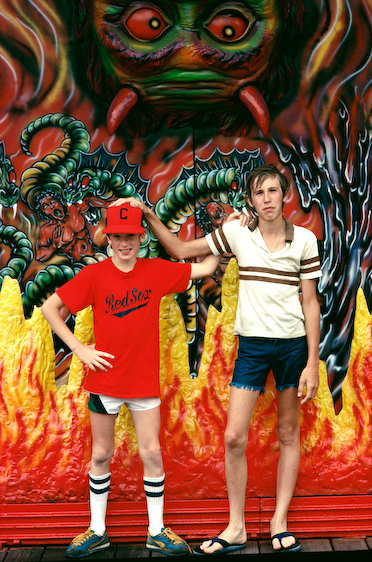
Gang of friends. I'm on top step.

and looking back into our past isn’t such a bad thing for us to do.

But being nostalgic wasn’t always looked at as being “good” for us. In fact in the 17th and 18th centuries, nostalgia was considered a medical disease and as recent as the 20th century, it was classified as a psychiatric disorder.

Nowadays, many psychologists think it’s healthy for us to look back at our past and recognize that we have overcome hardships and setbacks in our lives and in doing so we gain the inner strength we need to move forward. With time comes perspective and with that comes a certain resolve.

Advertisers have capitalized on the power of nostalgia for years. They pitch and promote new products by connecting them to people’s fond memories of the past or how they perceive the past to have been. Pepperidge Farm commercials were intended to provoke memories of home baked goodies from our childhood and associate them with their products. Or as the fictional character Don Draper from Mad Men said when referring to the power of nostalgia “ It takes us to a place where we ache to go again – it’s delicate but profound”.

So as we close out another year and in fact the first decade of the new century, take a few moments to think about the past. I think most of us will realize that all the obstacles that seemed insurmountable at the time, ended up being necessary for all the other things to happen in our lives. Just like George Bailey in the film “It’s a Wonderful Life” found out when he had been given a glimpse into how things would have been different had he never been born – he really did have a wonderful life. He just needed to look back and take notice.

Add to FacebookAdd to DiggAdd to Del.icio.usAdd to StumbleuponAdd to RedditAdd to BlinklistAdd to TwitterAdd to TechnoratiAdd to Yahoo BuzzAdd to Newsvine